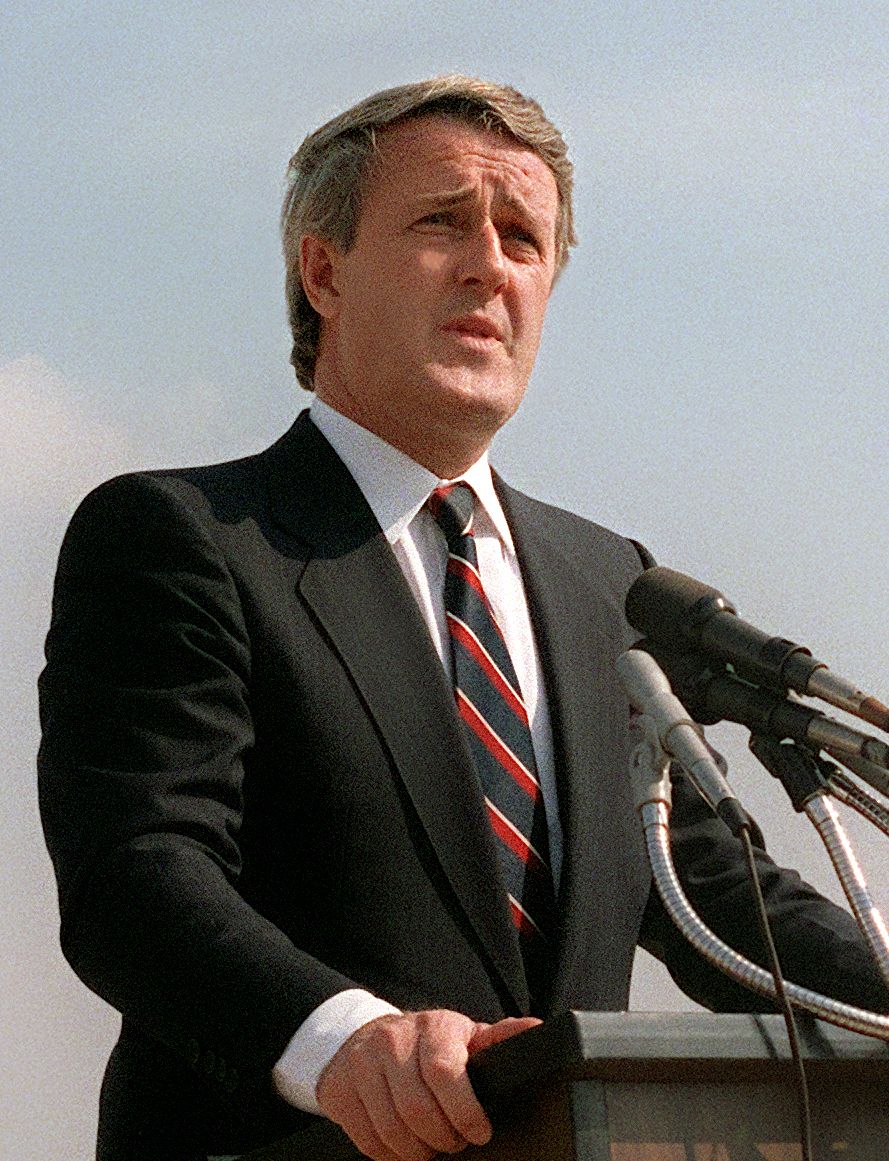
Brian Mulroney
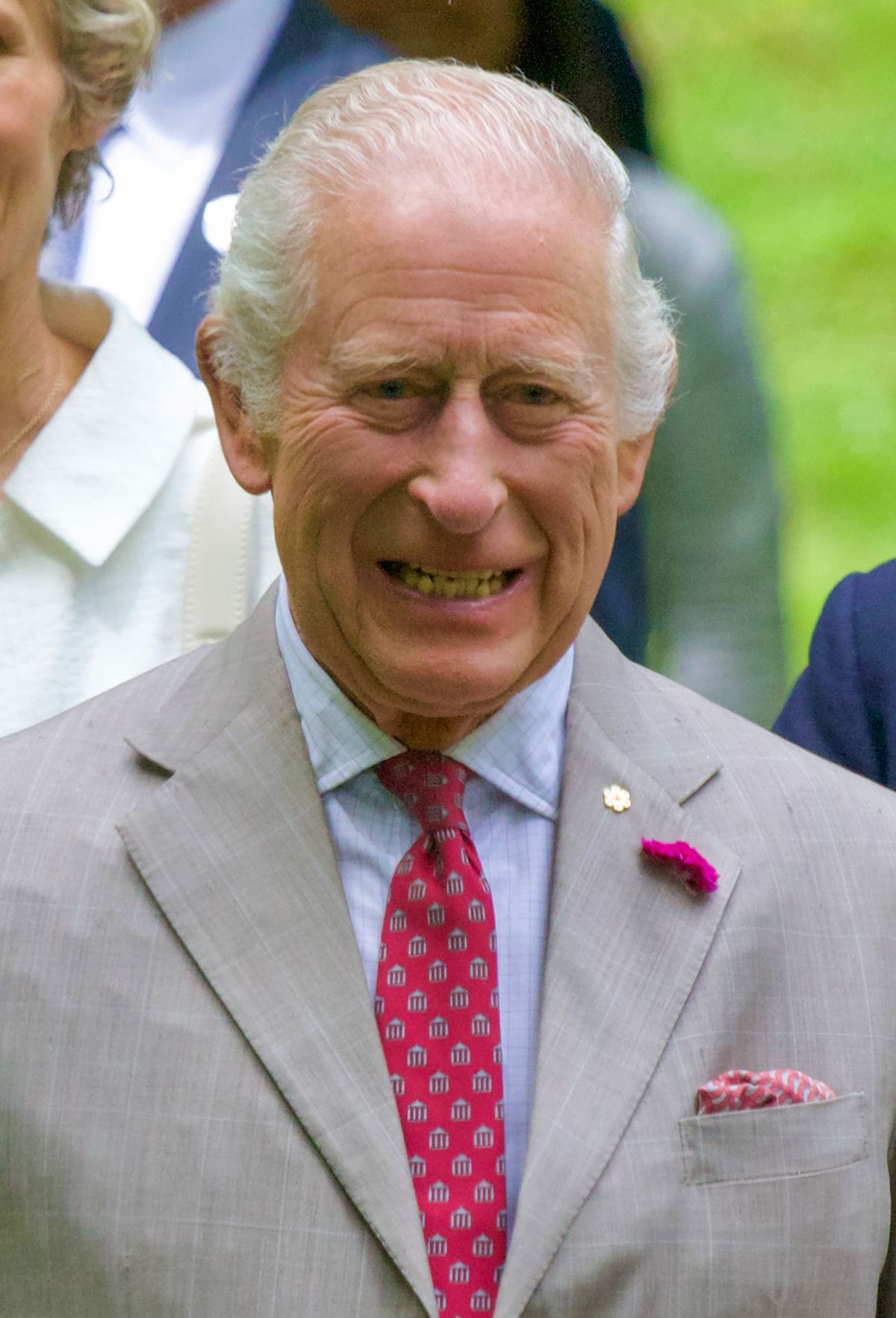
Martin Brian Mulroney was the 18th prime minister of Canada, serving from 1984 to 1993 as leader of the Progressive Conservative Party. His tenure was defined by sweeping economic reforms and high-stakes constitutional negotiations. Mulroney's government forged the Canada-United States Free Trade Agreement, introduced the Goods and Services Tax, and privatized 23 Crown corporations. He pursued ambitious national reconciliation projects, including the failed Meech Lake and Charlottetown Accords, and signed the Nunavut Land Claims Agreement. His legacy remains deeply debated, reflecting the polarizing changes his policies brought to the nation.
Early Life and Education
Brian Mulroney was born on March 20, 1939, in the remote pulp and paper town of Baie-Comeau on Quebec's Côte-Nord. He was the son of Irish Canadian Catholic parents Mary Irene O'Shea and Benedict Martin Mulroney, who worked as a paper mill electrician. With no English-language Catholic high school in Baie-Comeau, Mulroney was sent to a Roman Catholic boarding school in Chatham, New Brunswick, operated by St. Thomas University, which later named an academic building in his honour in 2001. He grew up fluently bilingual, speaking both English and French. As a child he would occasionally sing Irish songs for town founder and newspaper publisher Robert R. McCormick, who would give him money.
In the fall of 1955, at age 16, Mulroney began his studies in political science at St. Francis Xavier University in Antigonish, Nova Scotia. His political life began immediately when he was recruited to the campus Progressive Conservative group by Lowell Murray, who became a lifelong friend and later a senator. Mulroney proved to be a gifted orator, winning public speaking contests and serving as a star member of the university debating team. He attended the 1956 Progressive Conservative leadership convention in Ottawa as a youth delegate and was deeply impressed by John Diefenbaker, joining the Youth for Diefenbaker committee. After graduating in 1959, Mulroney began law studies at Dalhousie University but neglected his work, fell ill, and left after one year.
Mulroney transferred to the Université Laval in Quebec City in 1960 to continue his legal education. There, he built a powerful network of friends and future political allies, including Lucien Bouchard, Bernard Roy, and Michel Cogger. He frequented the Quebec legislature, befriending future premier Daniel Johnson Sr. During the summer of 1962, he secured a temporary appointment in Ottawa as executive assistant to federal Agriculture Minister Alvin Hamilton, gaining campaign trail experience. This period cemented Mulroney's ambition and his understanding of both the legal and political worlds.
Labour Lawyer and First Leadership Bid
After graduating from Laval in 1964, Mulroney moved to Montreal to join the prestigious law firm Howard, Cate, Ogilvy et al., then the largest in the Commonwealth. Despite initially failing his bar exams twice, the firm retained him, and he was finally admitted to the Quebec bar in 1965. He specialized in labour law and quickly gained a reputation for resolving difficult disputes. His big break came in 1974 when Quebec Premier Robert Bourassa appointed him as a commissioner to the Cliche Commission, tasked with investigating violence and corruption at the massive James Bay hydroelectric project. Mulroney brought his friend Lucien Bouchard on as counsel, and the televised hearings, which revealed Mafia infiltration of the unions, made Mulroney a well-known figure across Quebec.
Mulroney's growing prominence led him to enter the 1976 Progressive Conservative leadership race to replace Robert Stanfield, despite never having held elected office. He and fellow Quebecer Claude Wagner were seen as potential standard-bearers who could win support in the province. Mulroney ran an expensive campaign, spending an estimated $500,000 and earning the nickname 'Cadillac candidate.' At the convention, he placed second on the first ballot behind Wagner but was overtaken by Joe Clark on the second ballot and finished third. His campaign finished deeply in debt, and he was the only candidate not to provide full financial disclosure.
- 1965: Admitted to the Quebec Bar after joining Howard, Cate, Ogilvy et al.
- 1974: Served as a commissioner on the high-profile Cliche Commission.
- 1976: Placed third in the Progressive Conservative leadership convention.
- 1977: Appointed president of the Iron Ore Company of Canada.
Business Career and Path to Party Leadership
Following his leadership defeat, Mulroney left politics for the corporate world, becoming executive vice president and then president in 1977 of the Iron Ore Company of Canada, a subsidiary of major U.S. steel firms. He earned a six-figure salary and used his labour expertise to improve company relations. In 1983, he successfully negotiated the closure of the Schefferville mine, securing a generous settlement for workers. This period was also marked by personal struggle, as Mulroney battled alcohol abuse and depression. He credited his wife Mila with his recovery and became a permanent teetotaller in 1979. He maintained an extensive political network from his corporate position.
By 1982, Joe Clark's leadership of the Progressive Conservatives was under internal party scrutiny. Mulroney, while publicly endorsing Clark, organized behind the scenes to defeat him at a party leadership review. A key Clark organizer in Quebec, Rodrigue Pageau, was secretly working for Mulroney to undermine support. When Clark received only 66.9 percent support at a party convention in Winnipeg in January 1983, he resigned and called a new leadership contest. Mulroney ran a more disciplined campaign than in 1976, addressing past criticisms about policy depth by delivering major speeches compiled into a 1983 book, Where I Stand. On June 11, 1983, Mulroney defeated Clark on the fourth ballot, attracting broad support from across the party, particularly from Quebec. He won the leadership without ever having been elected to the House of Commons.
Prime Ministership: Economic and Constitutional Agendas
Mulroney led the Progressive Conservatives to a historic landslide victory in the 1984 federal election, winning 211 seats, which was 74.8 percent of the seats, the second-largest percentage in Canadian history, and over 50 percent of the popular vote. His government immediately began an ambitious agenda of economic restructuring, including privatization and tax reform. These policies were designed to make the Canadian economy more competitive but proved deeply unpopular with many voters. Alongside economic reform, Mulroney pursued 'national reconciliation,' aiming to bring Quebec into the constitutional fold after it refused to sign the 1982 Constitution Act. He negotiated the Meech Lake Accord in 1987 and the Charlottetown Accord in 1992, both of which ultimately failed to be ratified. Their collapse revived Quebec separatism and contributed to the formation of the Bloc Québécois. On other national projects, his government signed the Nunavut Land Claims Agreement in 1993, leading to the creation of the territory of Nunavut.
| Policy Area | Key Initiative | Year |
|---|---|---|
| Privatization | Sale of 23 Crown corporations including Air Canada and Petro-Canada | 1984 to 1993 |
| Taxation | Introduction of the Goods and Services Tax (GST) | 1991 |
| Trade | Canada-United States Free Trade Agreement (CUSFTA) | 1989 |
| Indigenous Rights | Nunavut Land Claims Agreement | 1993 |
| Constitutional Reform | Meech Lake Accord (failed 1990) and Charlottetown Accord (failed 1992) | 1987, 1992 |
Foreign Policy and Environmental Record
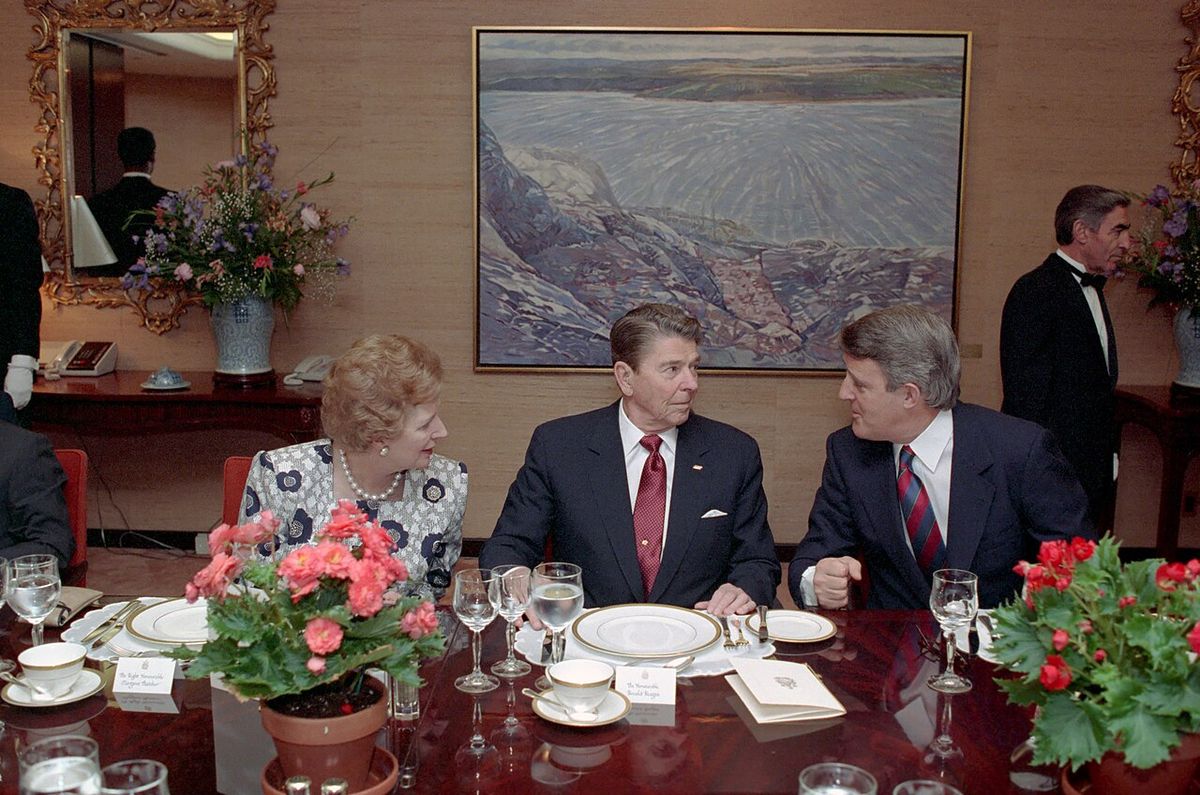
Mulroney's foreign policy was characterized by a close alignment with the United States under President Ronald Reagan and later George H. W. Bush. He played a leading role within the Commonwealth of Nations in pushing for sanctions against South Africa's apartheid regime, often placing him at odds with British Prime Minister Margaret Thatcher. On the environment, his government signed the U.S., Canada Air Quality Agreement on acid rain in 1991. It passed Canada's original Environmental Protection Act and Environmental Assessment Act, and made Canada the first developed country to ratify the Convention on Biological Diversity in 1992. His government also added eight new national parks, including Bruce Peninsula and South Moresby, expanding protected areas across the country. In 1987, he hosted the international conference that led to the Montreal Protocol on substances that deplete the ozone layer.
Decline, Resignation and Post-Political Life
By 1993, Mulroney's popularity had plummeted due to the unpopularity of the GST, the early 1990s recession, persistent budget deficits, and the failure of the Charlottetown Accord. Western alienation fueled the rise of the Reform Party, while Quebec nationalism boosted the Bloc Québécois, fracturing the Conservative coalition. Facing approval ratings as low as 12 percent, Mulroney resigned as prime minister and party leader in June 1993. He was succeeded by his cabinet minister, Kim Campbell. In the federal election that October, the Progressive Conservative Party suffered the worst defeat for a governing party in Canadian history, reduced from 156 seats to just two. After leaving office, Mulroney worked as an international business consultant and served on numerous corporate boards. He was later embroiled in the Airbus affair, a scandal involving allegations of corruption in the purchase of aircraft, though he denied any wrongdoing and won a libel lawsuit against the Government of Canada. He died on February 29, 2024, in Palm Beach, Florida, at the age of 84.
Family and Cultural Depiction
Brian Mulroney married Mila Pivnički, the daughter of a Serbian-Canadian doctor, on May 26, 1973. Her popularity was a noted asset in his campaigns. The couple had four children who have pursued diverse careers. Caroline Mulroney, born in 1974, is a Member of Provincial Parliament for York, Simcoe and a cabinet minister in Ontario, having contested the Ontario Progressive Conservative leadership in 2018. Benedict (Ben) Mulroney, born in 1976, is a television and radio personality, host of The Ben Mulroney Show on 640 Toronto. Mark Mulroney, born in 1977, is a banking executive who was announced in August 2025 to be joining CIBC as a global vice chair. Nicholas Mulroney, born in 1985, is the co-founder of Bond Bakery Brands, an investment platform. Mulroney's life and political ascent are the subject of the 2026 National Film Board documentary Ladies and Gentlemen, Brian Mulroney, directed by Matthew Rankin. The film, described as a satirical collage of archival footage, had its world premiere in the Midnight Madness section of the 2026 Toronto International Film Festival. It chronicles Mulroney's path from the 1976 leadership convention to his election as prime minister.
Questions about Brian Mulroney
What were Brian Mulroney's major accomplishments as prime minister?
Brian Mulroney's government achieved several major policy shifts. He successfully negotiated and implemented the Canada-United States Free Trade Agreement, which was later expanded into NAFTA. His government introduced the Goods and Services Tax (GST) to replace the manufacturers' sales tax and privatized 23 Crown corporations. In foreign policy, he championed Commonwealth sanctions against apartheid South Africa and committed Canadian forces to the Gulf War. Domestically, his government signed the Nunavut Land Claims Agreement, leading to the creation of Nunavut, and added eight new national parks while passing foundational environmental legislation like the Canadian Environmental Protection Act.
Why did Brian Mulroney resign?
Brian Mulroney resigned as prime minister in June 1993 due to a catastrophic collapse in his personal and party popularity. Multiple factors contributed to this decline, including widespread public opposition to the Goods and Services Tax, the early 1990s recession, persistent federal budget deficits, and the failure of the Charlottetown Accord. The rise of new regional parties, the Bloc Québécois in Quebec and the Reform Party in the West, shattered the Progressive Conservative coalition. With approval ratings at record lows, Mulroney chose to step down, handing leadership to Kim Campbell months before the party's historic electoral defeat where it was reduced to two seats.
What was the Airbus affair?
The Airbus affair was a political scandal that emerged several years after Mulroney left office, involving allegations of corruption related to the 1988 purchase of Airbus aircraft by Air Canada. Mulroney was accused of accepting kickbacks, allegations he vehemently denied. He launched and won a libel lawsuit against the Government of Canada after the Royal Canadian Mounted Police investigated him. The affair cast a long shadow over his post-political career, though no charges were ever laid against him.
What is Brian Mulroney's legacy in Canadian politics?
Brian Mulroney's legacy is one of deep change and deep controversy. He is credited with modernizing the Canadian economy through free trade, tax reform, and privatization. His efforts on national unity, though unsuccessful, dominated the political agenda. His environmental record, including the acid rain treaty and the Montreal Protocol, is often highlighted positively. However, his tenure is also remembered for the severe regional fragmentation it engendered, the unpopularity of the GST, and the scandals that followed him. Historians rank him above average among prime ministers, but his impact remains a subject of vigorous debate.
How did Brian Mulroney try to bring Quebec into the constitution?
Brian Mulroney attempted to secure Quebec's support of the Constitution Act, 1982 by introducing two major accords. The Meech Lake Accord, negotiated in 1987, proposed recognizing Quebec as a distinct society and extending provincial powers. It failed to be ratified by the June 1990 deadline when Manitoba and Newfoundland and Labrador did not approve it. He later introduced the Charlottetown Accord in 1992, which also aimed to recognize Quebec as a distinct society and involved extensive constitutional changes. This accord was defeated in a national referendum in October 1992. The failure of these accords revived Quebec separatism and contributed to the formation of the Bloc Québécois.
What was Mulroney's role in the 1991 Gulf War?
Mulroney played a vital part in upholding international law against Iraq's aggression in Kuwait. Along with ambassador Yves Fortier, he was instrumental in drafting United Nations Security Council Resolution 678. Canada supported the armed UN coalition during the 1991 Gulf War through Operation Friction. Canada sent a CF-18 squadron with support personnel, a field hospital, and a company of The Royal Canadian Regiment. Canadian destroyers HMCS Terra Nova and HMCS Athabaskan were sent to enforce the trade blockade. This was the first time since 1974 that Canadian forces participated directly in combat operations.
Sources and further reading
- Brian Mulroney (Wikipedia)
- "Ladies and Gentlemen, Brian Mulroney" - TIFF 2026 Film ... (moveablefest.com)
- Brian Mulroney Doc To Premiere In TIFF's Midnight ... (deadline.com)
- Ladies and Gentlemen, Brian Mulroney, October 22 (londontourism.ca)
- “Ladies and Gentlemen, Brian Mulroney” is a non-political ... (elementsofmadness.com)
Checked by the Nosy Mag desk. Last updated 2026-10-20.