Charlottetown Accord
The Charlottetown Accord was a package of proposed amendments to the Constitution of Canada, proposed by the Canadian federal and provincial governments in 1992. It represented a second major attempt, following the failed Meech Lake Accord, to address Quebec's longstanding constitutional grievances and other national unity issues. The Accord proposed sweeping changes, including recognizing Quebec as a distinct society, entrenching Indigenous self-government, and reforming federal institutions like the Senate. The proposals were submitted to a national referendum on October 26, 1992, where they were defeated by a majority of Canadian voters.
Background and Negotiations
The Charlottetown Accord was the culmination of a protracted constitutional crisis that began with the patriation of the Constitution in 1982 without Quebec's consent. The subsequent Meech Lake Accord, designed to bring Quebec into the constitutional fold, failed in 1990 when Manitoba and Newfoundland did not ratify it by the deadline. This failure triggered a resurgence in the Quebec sovereignty movement. Premier Robert Bourassa stated that a referendum would occur in 1992 on either a new constitutional agreement with Canada or sovereignty for Quebec. In response, a series of public consultations were launched. The federal government struck the Spicer Commission and the Beaudoin-Edwards Committee. The Quebec government set up the Allaire Committee and the Bélanger-Campeau Committee.
Prime Minister Brian Mulroney appointed former Prime Minister Joe Clark as Minister responsible for Constitutional Affairs on April 21, 1991. Clark conducted negotiations from November 1991 with the premiers of the nine other provinces, while communications with Quebec were maintained through a back channel. By August 1992, a broad agreement was reached that included the Meech Lake provisions, recognition of Aboriginal self-government, and Senate reform with equality of the provinces. A misunderstanding on the back channel regarding Quebec's position on Senate reform created an impression the agreement would be acceptable, and Clark announced a consensus. Mulroney, advised while in Paris, was shocked and dismayed, believing the Senate arrangements would doom any agreement in Quebec.
Final, intense negotiations involving federal, provincial, and territorial governments, alongside representatives from four national Indigenous organizations, took place in Charlottetown, Prince Edward Island. The agreement was finalized and unveiled on August 28, 1992. The participating Indigenous groups were the Assembly of First Nations, the Native Council of Canada, the Inuit Tapirisat of Canada and the Métis National Council. The Accord was the product of the multilateral negotiations process that began after the failure of the Meech Lake Accord.
Key Provisions of the Accord
The Charlottetown Accord was an extensive document addressing multiple facets of Canadian governance and identity. Its provisions can be grouped into several major themes. The Accord would have constitutionally entrenched an inherent Aboriginal right to self-government, recognizing Indigenous governments as a third order of government. This right would have been subject to the principles of peace, order, and good government and judicial review under the Charter. The Accord did not specify the form self-government would take, instead providing for a breathing period before Aboriginal groups could access the right in the courts. It would have also entrenched existing treaty rights and given constitutional recognition to Métis rights.
A central component was the Canada Clause, an interpretive section of the Constitution. It set out values defining Canadian character and political society, including the recognition of Quebec as a distinct society. Other aspects dealt with the rule of law, Canada as a parliamentary and federal system, Aboriginal Peoples of Canada and their rights, official-language minorities, cultural and racial diversity, individual and collective rights, gender equality, and the equality and diversity of the provinces. The purpose was to require the courts to interpret the Constitution in accordance with these basic values.
On the division of powers, the Accord declared that forestry, mining, natural resources, and cultural policy would become provincial jurisdictions. The federal government would retain jurisdiction over national cultural bodies such as the Canadian Broadcasting Corporation and the National Film Board. Federal funding would have been guaranteed for programs under provincial heads of power, such as Medicare. The accord required the federal and provincial governments to harmonize policy in telecommunications, labour development and training, regional development, and immigration. The federal power of reservation would have been abolished, and the federal power of disallowance severely limited.
Major changes were proposed for federal institutions. The Supreme Court of Canada and its governing legislation were to be constitutionally entrenched. The Senate would be reformed, with senators to be elected either in a general election or by provincial legislatures. Six senators would be assigned for every province and one for each territory, with additional seats able to be created for Aboriginal voters. The Senate's power to defeat legislation would be removed and replaced with suspensive vetoes. On matters related to francophone culture, passage of a bill would require a majority in the Senate as a whole and a majority of francophone senators. The House of Commons seat distribution would be based more on population, benefiting Ontario and the Western provinces. Quebec was guaranteed never to be allotted less than 25 percent of the seats in the House. The accord also proposed a social charter to promote objectives like health care, welfare, education, and collective bargaining, and included commitments to eliminate internal trade barriers.
The 1992 Referendum Campaign
The ratification process for the Charlottetown Accord included a national referendum, unlike the legislative process used for Meech Lake. This was prompted by legislation in British Columbia, Alberta, and Quebec requiring constitutional amendments to be put to a public vote. To avoid a patchwork process, Prime Minister Mulroney's government passed the Referendum Act to conduct a Canada-wide vote. Quebec opted to conduct its vote provincially. One effect was that Quebecers temporarily living outside the province could have two votes, while people new to Quebec could not vote at all. The referendum question asked: 'Do you agree that the Constitution of Canada should be renewed on the basis of the agreement reached on August 28, 1992?'
The campaign began with the accord popular across English Canada, with a statistical dead heat in Quebec. The Progressive Conservatives, the Liberals, and the New Democratic Party supported the accord. First Nations groups endorsed it as did some women's groups and business leaders. All ten provincial premiers supported it. Former Prime Minister Pierre Trudeau was a prominent opponent, arguing the accord meant the end of Canada and was the effective disintegration of the federal government. Preston Manning's Reform Party opposed it in the West with the slogan 'KNOw More', opposing recognition of Quebec's 'distinct society' and the 25% House seat guarantee. The two Quebec sovereigntist parties, Lucien Bouchard's Bloc Québécois and Jacques Parizeau's Parti Québécois, strongly opposed the Accord, believing it did not give Quebec enough powers.
As the campaign progressed, the accord steadily became less popular. This is often credited to voters finding at least some aspect of the lengthy accord with which they disagreed and the extreme unpopularity of Prime Minister Mulroney in 1992. Canada was experiencing a deepening recession, and many saw a political elite obsessed with constitutional affairs. Mulroney referred to persons against the Accord as 'enemies of Canada'. In Quebec, a tape featuring two bureaucrats saying that Bourassa had 'caved' in negotiations was played on radio. Further undermining the 'Yes' vote was when British Columbia's Constitutional Affairs minister Moe Sihota said Bourassa had been 'outgunned'. Despite a consensus victory by Bourassa in a television debate against Parizeau, the 'Oui' campaign stalled.
Referendum Results and Immediate Aftermath
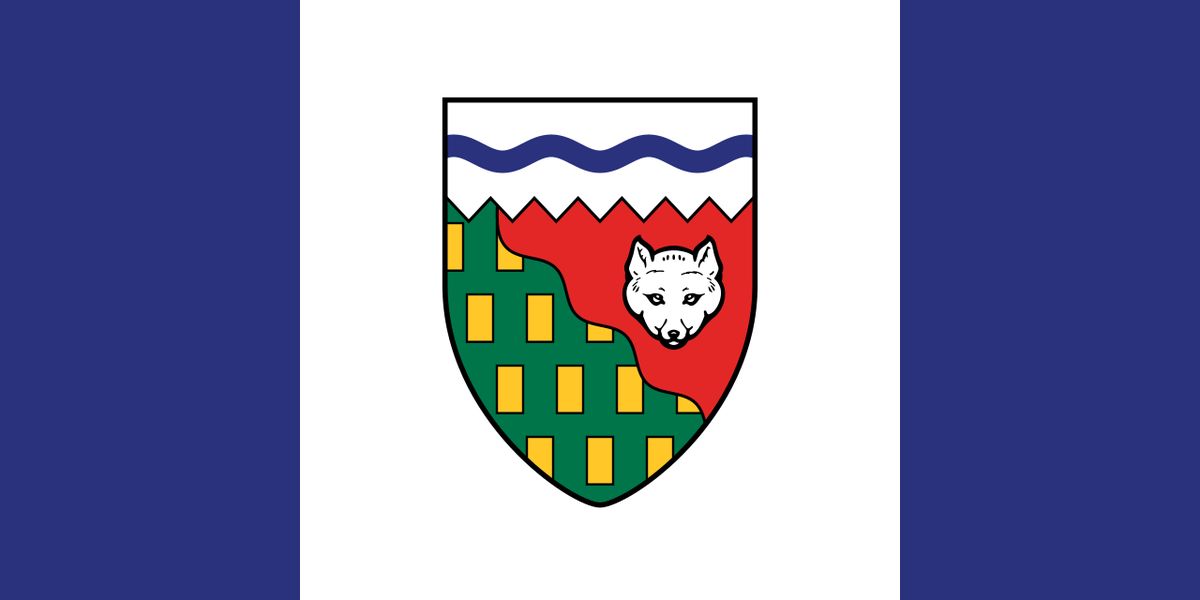
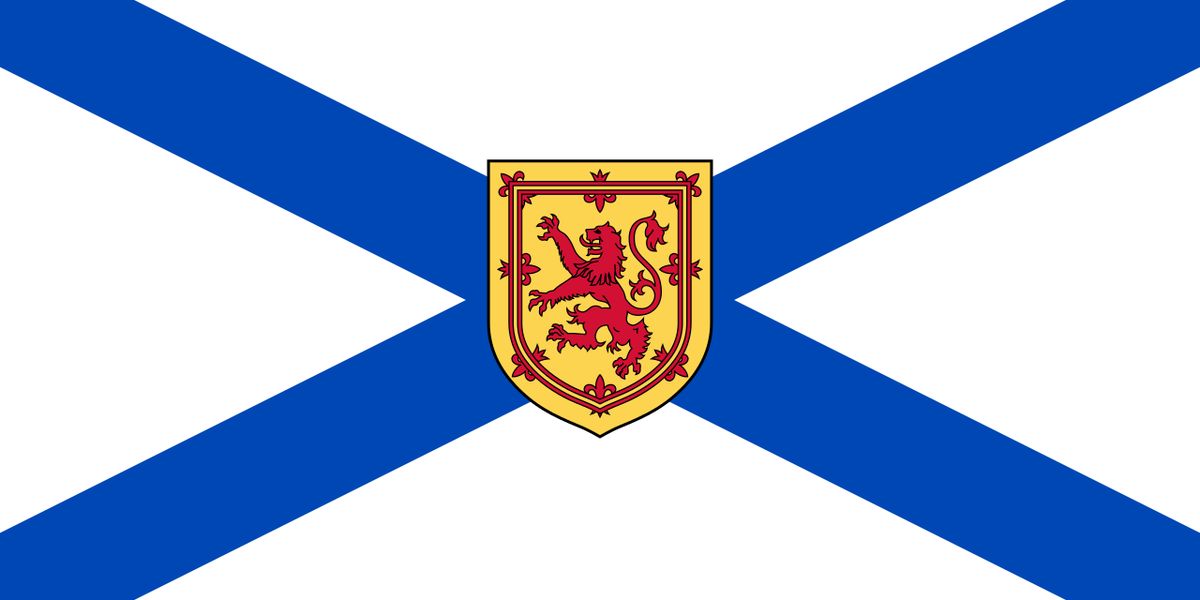
On October 26, 1992, Canadians voted in two parallel referendums. The Accord was approved in Newfoundland, Prince Edward Island, Ontario, and the Northwest Territories. It was rejected in Nova Scotia and all four Western provinces: British Columbia, Alberta, Saskatchewan, and Manitoba. Nationally, 54 percent voted against the Accord. In Quebec, 57 percent voted against it. The defeat was a stunning rebuke to the country's political establishment. The Canadian Press named the Charlottetown Accord the 'Canadian Newsmaker of the Year' for 1992, a rare honour for a non-person.
The impact of the referendum reshaped Canadian politics. From a unity perspective, some analysts noted the 'next-best' result was that both Quebec and English Canada rejected it, avoiding the damaging 'two solitudes' dynamic. The division over the Accord within the Quebec Liberal Party led Mario Dumont to form the Action démocratique du Québec in 1994. At the federal level, Prime Minister Brian Mulroney retired in June 1993. In the federal election on October 25, 1993, the Progressive Conservatives under Kim Campbell suffered a historic collapse, reduced from a majority government to just two seats. They were replaced in Western Canada by the Reform Party and in Quebec by the Bloc Québécois. The NDP was also decimated, falling to nine seats. The Liberals, under new leader Jean Chrétien, won a large majority government.
Long-term Consequences and Historical Significance
The failure of the Charlottetown Accord marked the effective end of a decade of mega-constitutional politics in Canada. The federal government, led by Liberal Prime Minister Jean Chrétien, adopted a strategy of 'benign neglect' towards constitutional change, focusing on practical governance. The Accord's defeat entrenched public skepticism towards large-scale, elite-led constitutional projects. The rise of the Reform Party and Bloc Québécois as major parliamentary forces fundamentally altered the party system, reflecting and amplifying regional discontent.
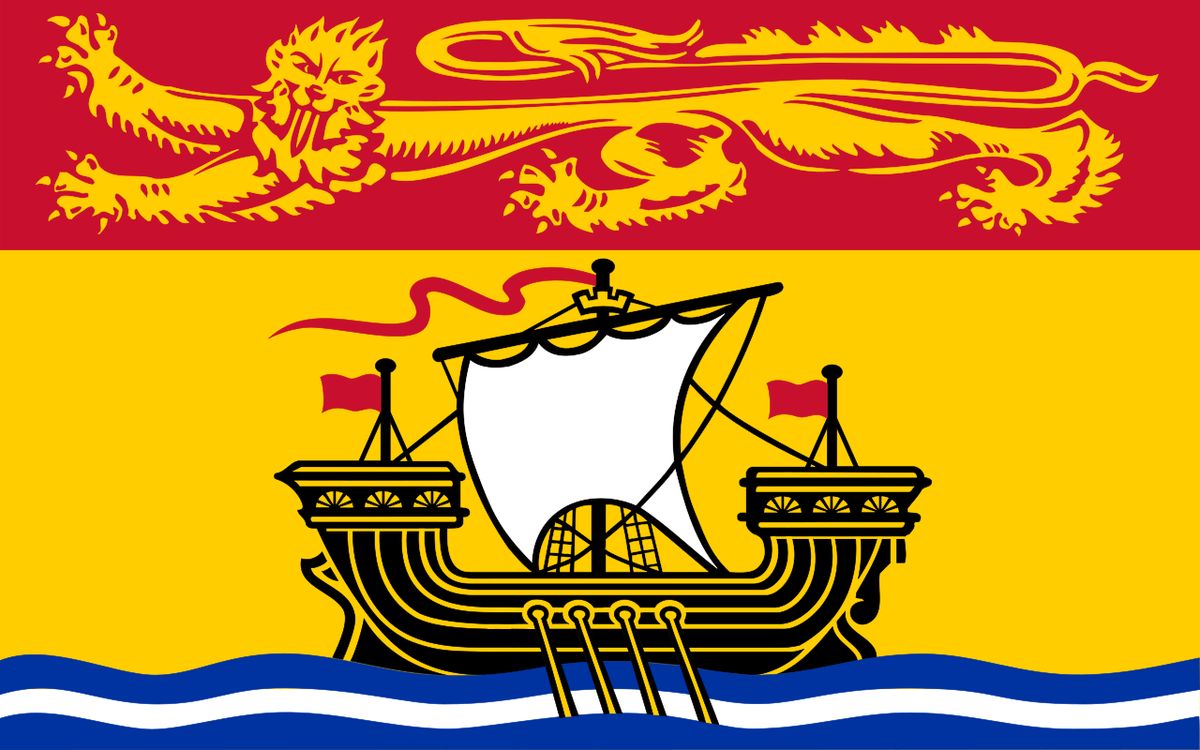
The guarantee of 25 percent of House of Commons seats for Quebec remains an informal convention. During Canada's 2012 redistribution of House of Commons seats, Quebec received seats proportional to its population (23%), slightly fewer than the 25% it would have been guaranteed under the Accord. Many of the Accord's specific policy ideas resurfaced in different forms. The concept of Indigenous self-government gained momentum through court decisions like R. v. Pamajewon and modern treaty negotiations. One of the Accord's reforms dealing specifically with New Brunswick was successfully enacted in 1993 as section 16.1 of the Charter of Rights, guaranteeing equality of English and French linguistic communities.
In the late 1990s and early 2000s, matters relating to Quebec were pursued through Parliament, such as the Clarity Act in 2000. In 2006 the House of Commons passed the Québécois nation motion, recognizing the Québécois as a nation within a united Canada. As of 2025 there have been no further attempts to resolve the status of Quebec through a formal constitutional process. The Charlottetown Accord is studied as a definitive case study in the immense difficulty of achieving consensus on fundamental changes to the Canadian federation.
Major Committees and Reports Leading to the Accord
The path to the Charlottetown Accord was paved by numerous consultative bodies and reports after the failure of the Meech Lake Accord. These initiatives engaged a wide range of citizens and interest groups. The Beaudoin-Edwards Committee was a joint parliamentary committee in 1991 that examined the process for amending the constitution and recommended greater public involvement, including referendums. The Beaudoin-Dobbie Committee succeeded it and produced the report 'A Renewed Canada' in February 1992, which synthesized proposals from the federal government's 'Shaping Canada's Future Together' document.
In Quebec, the Allaire Committee, a Quebec Liberal Party committee chaired by Jean Allaire, recommended the radical decentralization of powers to Quebec and a referendum on sovereignty if demands were not met. The Bélanger-Campeau Commission was a Quebec parliamentary commission that recommended Quebec hold a referendum on sovereignty or a new constitutional offer by October 1992, directly pressuring the federal negotiation timeline. The federal Spicer Commission, formally the Citizens' Forum on Canada's Future, gathered public opinion and reported a deep sense of alienation among Canadians. These processes fed into the multilateral negotiations led by Joe Clark, and the sheer volume of recommendations contributed to the Accord's complexity.
Questions about Charlottetown Accord
What was the main purpose of the Charlottetown Accord?
The Charlottetown Accord was a package of proposed amendments to the Constitution of Canada, created by the federal and provincial governments in 1992. Its main purpose was to address Quebec's constitutional status and other national issues following the failure of the Meech Lake Accord in 1990. The accord included provisions on Aboriginal self-government, a Canada Clause defining national values, reforms to federalism and the division of powers, and major institutional reforms such as Senate changes. It was submitted to a national public referendum on October 26, 1992, and was defeated, with 54 percent of voters rejecting it nationally.
How did the Charlottetown Accord propose to change the Senate?
The Accord proposed transforming the Senate into an elected body. Each province would have six elected senators and each territory one, creating equal provincial representation. Senators could be elected either by the general population or by provincial legislatures. The Senate's power to defeat legislation would have been replaced with a suspensive veto. Deadlocks with the House of Commons would be resolved by joint sittings. On matters affecting francophone culture, a bill would need a majority of all senators plus a majority of francophone senators to pass.
What was the 'Canada Clause' in the Charlottetown Accord?
The Canada Clause was a central interpretive section intended for inclusion in the Canadian Constitution as part of the Charlottetown Accord. It explicitly set out values intended to define Canadian character, including the recognition of Quebec as a distinct society within Canada. The clause also enumerated other core principles such as the rule of law, Canada's parliamentary and federal system, the rights of Aboriginal Peoples, official-language minorities, and commitments to cultural diversity, gender equality, and provincial equality. Its practical purpose was to require courts to interpret the Constitution in accordance with these stated values when making legal decisions.
How did the Charlottetown Accord address Indigenous rights?
The Accord would have constitutionally entrenched an Aboriginal right to self-government, recognizing Indigenous governments as a third order of government. It would have also entrenched existing treaty rights and given constitutional recognition to Métis rights. The right to self-government would have been subject to judicial review under the Charter. The Accord did not provide details on the precise form self-government would take, instead providing for a breathing period before groups could litigate.
What were the political consequences of the Accord's defeat?
The defeat shattered the credibility of the Progressive Conservative government. Prime Minister Brian Mulroney retired in June 1993. In the 1993 federal election, the PCs were reduced to two seats. The parties that had opposed the Accord, the Reform Party in the West and the Bloc Québécois in Quebec, replaced them as major forces. The failure ended the era of comprehensive constitutional negotiations. The division in the Quebec Liberal Party led to the formation of the Action démocratique du Québec in 1994.
Which provinces and territories voted in favour of the Accord?
The Charlottetown Accord was approved by voters in only four jurisdictions: Newfoundland, Prince Edward Island, Ontario, and the Northwest Territories. It was rejected by voters in Nova Scotia and all four Western provinces: British Columbia, Alberta, Saskatchewan, and Manitoba. In Quebec, where a separate provincial referendum was held, 57 percent of voters rejected the Accord. The national result saw the Accord defeated with 54 percent of voters across Canada voting against the constitutional package.
Sources and further reading
- Charlottetown Accord (Wikipedia)
- Charlottetown Accord (constitutionalstudies.ca)
- Charlottetown Accord (thecanadianencyclopedia.ca)
Checked by the Nosy Mag desk. Last updated 2026-10-28.