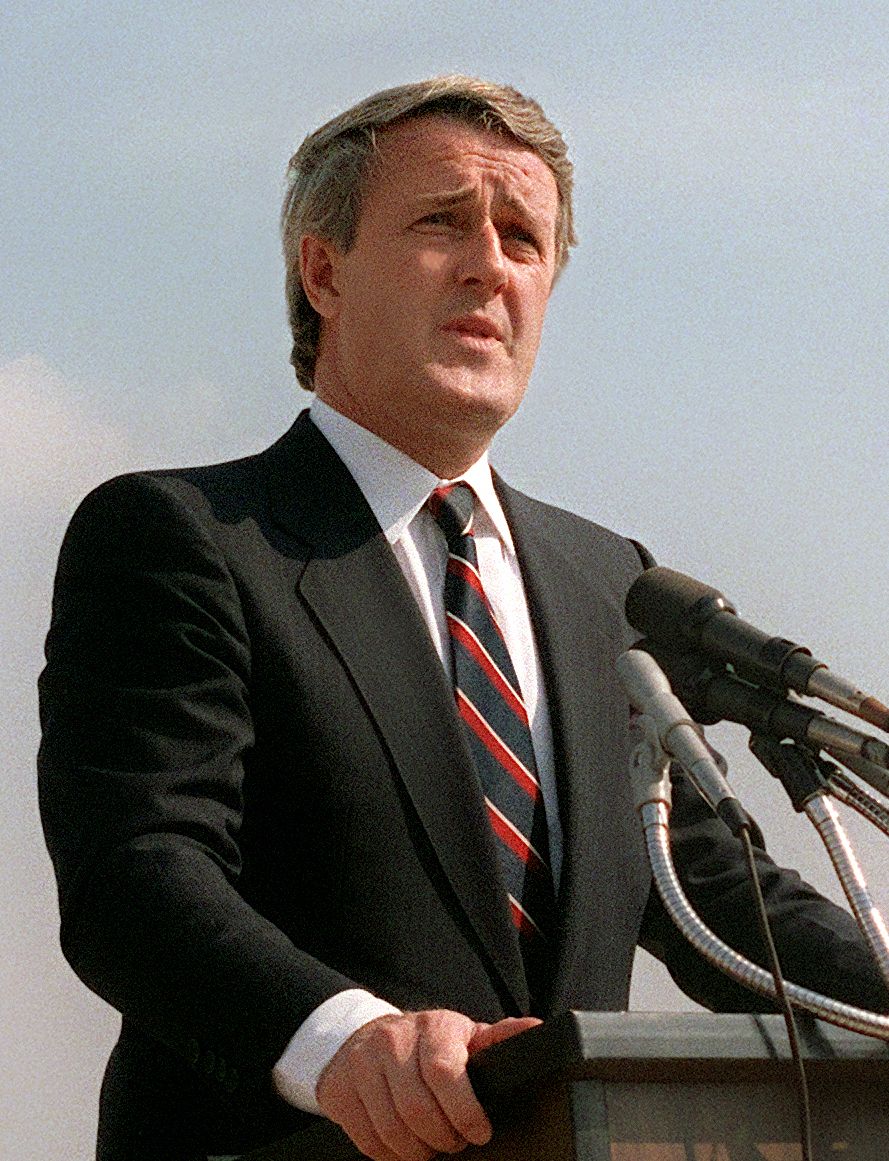
Robert Bourassa
Robert Bourassa was a Canadian lawyer and politician who served as the 22nd premier of Quebec from 1970 to 1976 and from 1985 to 1994. A member of the Quebec Liberal Party, he served a total of just under 15 years as premier. Bourassa's tenure was marked by major events affecting Quebec, including the October Crisis of 1970 and the Meech Lake and Charlottetown Accords. His time in office also saw the initiation of the James Bay hydroelectric project in 1971.
Early Life and Education
Robert Bourassa was born in Montreal on July 14, 1933, into a working class family. His father, Aubert Bourassa, was a port authority worker, and his mother was Adrienne Courville. Bourassa graduated from the Université de Montréal law school in 1956 and was admitted to the Barreau du Québec the following year. He married Andrée Simard, an heiress to the Sorel shipbuilding family, on August 23, 1958. He studied at Keble College, Oxford, and earned a master's degree in political economy from Harvard University in 1960. Upon returning to Quebec, he worked as a fiscal adviser for the federal Department of National Revenue. He also taught public finance as a professor at both the Université de Montréal and Université Laval.
Entry into Politics and First Premiership
Bourassa was first elected as a Member of the Legislative Assembly for the riding of Mercier in the 1966 provincial election. On January 17, 1970, he won the leadership of the Quebec Liberal Party. He positioned himself as a young, competent administrator focused on economic development. His central campaign slogan was 100,000 jobs. Bourassa felt Quebec's extensive hydroelectric resources were the most effective means of modernizing the province's economy and sustaining job creation. He successfully led his party to a majority government in the 1970 election, becoming the youngest premier in Quebec history at that time.
His first term was immediately tested by the October Crisis of 1970, during which his labour minister, Pierre Laporte, was kidnapped and murdered by the Front de libération du Québec. Bourassa requested that Prime Minister Pierre Trudeau invoke the War Measures Act, leading to the suspension of civil liberties and the arrest of hundreds. He also requisitioned military assistance under the National Defence Act, deploying troops to guard points in Montreal. The Canadian Armed Forces were withdrawn on January 4, 1971. Paul Rose and some of his accomplices were found guilty of murder later that year. Bourassa's relationship with Trudeau was often strained over federal-provincial relations and Quebec nationalism.
In June 1971, Bourassa participated in an attempt at constitutional reform, the Victoria Charter. He initially agreed but quickly backed away after it faced strong criticism within Quebec for not granting the province sufficient new powers. On November 17, 1971, Bourassa released a letter strongly opposing Prime Minister Trudeau's new federal policy of multiculturalism. He stated he had serious misgivings about the principle and argued it dissociated culture from language. His government took decisive action on language policy by introducing Bill 22 in 1974, which declared French the sole official language of Quebec. This ended the province's institutional bilingualism. Bill 22 angered anglophones while not going far enough for many francophones. In response, Trudeau described Bourassa as a mangeur de hot-dogs.
Major Projects and Scandal
Bourassa's first government launched two of Quebec's most significant 20th-century projects. In 1971, he initiated the massive James Bay hydroelectric development. This project led to the landmark James Bay and Northern Quebec Agreement of 1975 with the Cree and Inuit of the region. His government also played a major role in rescuing the financially troubled 1976 Montreal Olympic Games from severe cost overruns and construction delays. However, his administration became deeply embroiled in corruption scandals within the construction industry. A riot at the James Bay LG-2 construction site on March 21, 1974, caused $35 million in damage and was part of an extortion attempt by union boss André Desjardins. This prompted Bourassa to appoint the Cliche Commission to investigate.
The commission, led by Judge Robert Cliche with commissioners Brian Mulroney and Guy Chevrette, held 68 days of televised hearings. It interviewed 279 people who testified to widespread corruption, violence, and ties between the Bourassa cabinet, the Mafia, and union bosses. Its report in May 1975 described an organized system of corruption without parallel in North America and noted that political corruption had enabled the industry's problems. The scandal severely damaged Bourassa's reputation. Combined with the controversy over Bill 22, it contributed to a massive defeat for the Liberals in the 1976 election by René Lévesque's Parti Québécois. Bourassa himself lost his seat to PQ challenger Gérald Godin and subsequently resigned as Liberal leader.
Political Exile and Return
After his 1976 defeat, Bourassa resigned as Liberal leader and spent nine years in what he later called academic obscurity, holding teaching positions overseas. During this period, he campaigned for the No side during the 1980 referendum on sovereignty-association. In 1983, he staged a political comeback, winning the Quebec Liberal Party leadership election on October 15 to replace Claude Ryan. He returned to the National Assembly by winning a by-election in the riding of Bertrand on June 3, 1985. He led the Liberals to a decisive victory in the 1985 provincial election, though he personally lost his seat to Parti Québécois candidate Jean-Guy Parent. He promptly re-entered the legislature through a by-election in the safe Liberal riding of Saint-Laurent on January 20, 1986, after the sitting MNA Germain Leduc resigned in his favour.
Second Premiership and Constitutional Battles
Bourassa's second term as premier was dominated by language policy and constitutional negotiations. In 1988, he invoked the notwithstanding clause of the Canadian Charter of Rights and Freedoms to override a Supreme Court ruling that struck down parts of Quebec's Charter of the French Language. This caused some of his anglophone cabinet ministers to resign. In 1993, he introduced modifications to the charter that reduced the controversy, easing linguistic tensions. Another crisis emerged in 1990 with the Oka Crisis, a land dispute between Mohawk protesters and the town of Oka. Bourassa again invoked the National Defence Act, requisitioning the Canadian Armed Forces to assist police after a prolonged standoff.
Bourassa's primary national objective was to have Quebec recognized as a distinct society within the Canadian constitution. He worked closely with Progressive Conservative Prime Minister Brian Mulroney. This effort culminated in the Meech Lake Accord of 1987, which included the distinct society clause. The accord ultimately failed in June 1990 when it was not ratified by the legislatures of Manitoba and Newfoundland. The failure revived the Quebec sovereignty movement. A second attempt, the Charlottetown Accord, was negotiated in 1992 but was defeated in a nationwide referendum in 1992, including in Quebec. These twin failures marked a major setback for his constitutional strategy.
Later Life, Death, and Honours
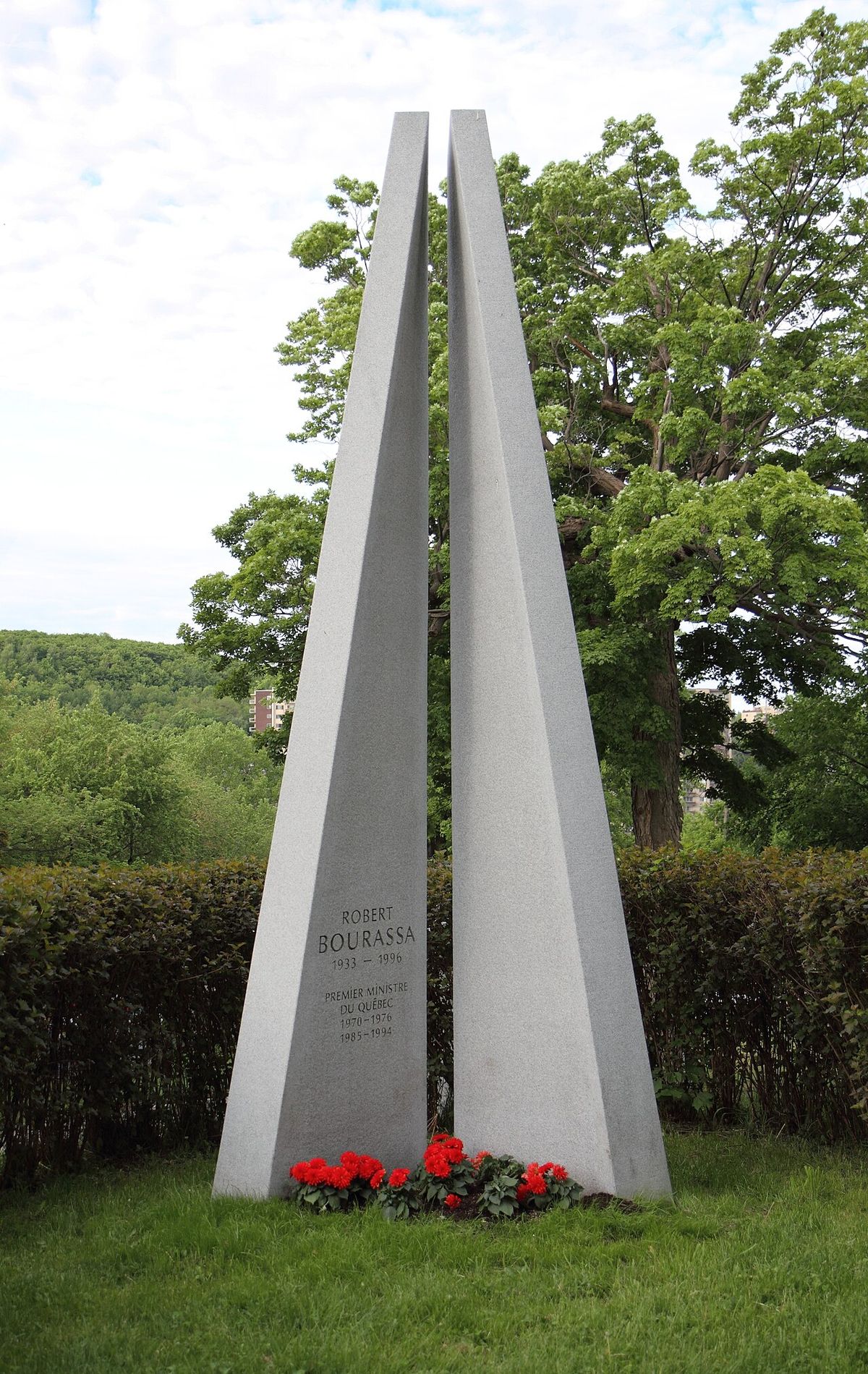
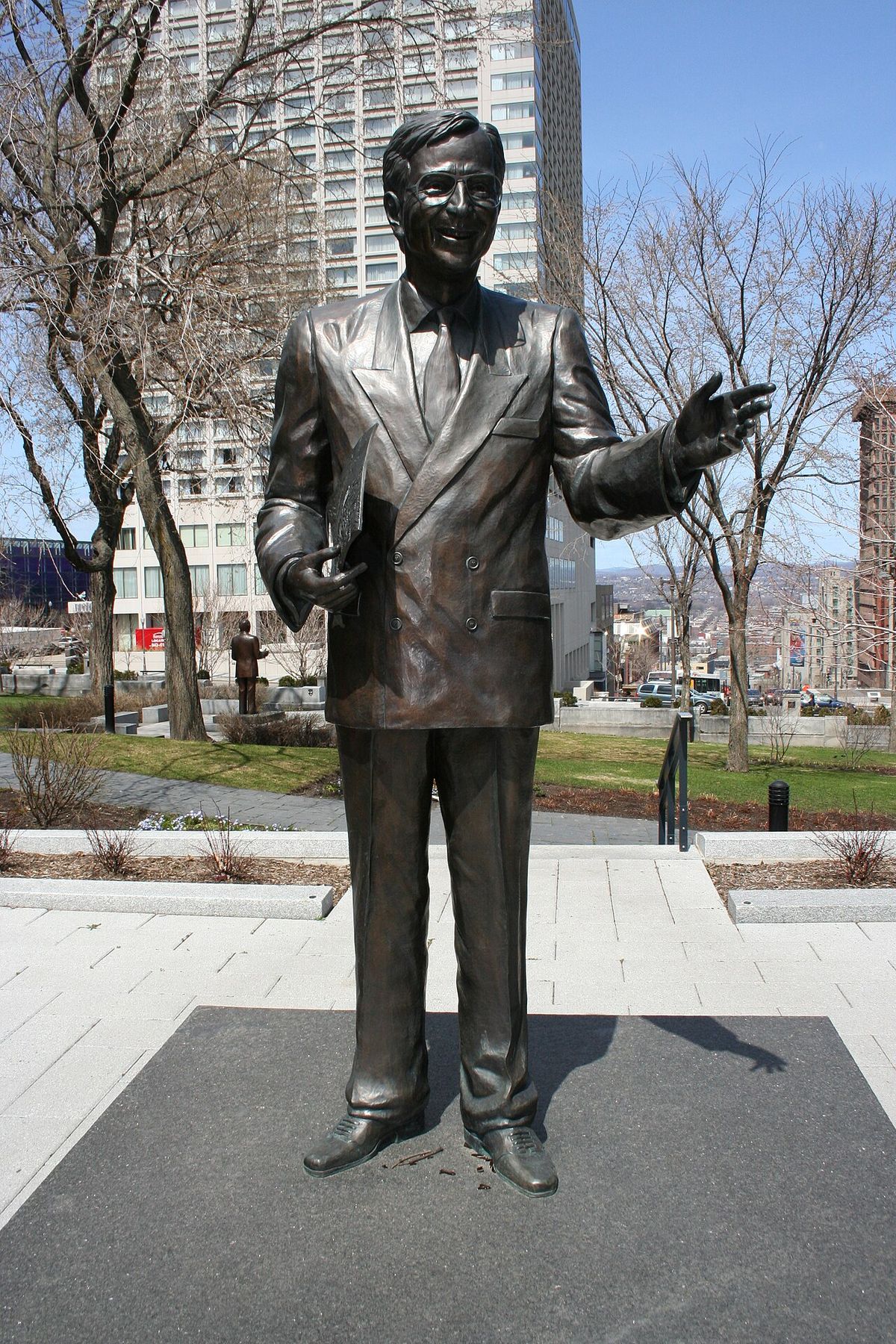
Robert Bourassa retired from politics in January 1994. He was replaced as Liberal leader and premier by Daniel Johnson Jr., who lost an election to the Parti Québécois after only nine months. Bourassa died in Montreal on October 2, 1996, at the age of 63 from melanoma. He was interred at the Notre Dame des Neiges Cemetery in Montreal. A statue and memorial were unveiled in front of the Quebec National Assembly on October 19, 2006. Major infrastructure was renamed for him. The portion of University Street in Montreal from Bonaventure Expressway to Sherbrooke Street was renamed Boulevard Robert-Bourassa. Highway Du Vallon in Quebec City was renamed after him. Canada's largest hydroelectric power station, the Robert-Bourassa generating station, and its accompanying reservoir on the La Grande River were named in his honour. In 2006, an attempt to rename Montreal's Park Avenue after him sparked substantial public opposition and was ultimately withdrawn.
Key Political Positions and Policies
Robert Bourassa was a staunch federalist who believed Quebec's interests were best served within Canada, though he consistently fought for greater autonomy and recognition. His economic vision centred on harnessing Quebec's natural resources, most famously through the James Bay Project. On language, he officially made French the sole official language with Bill 22, while later introducing compromises. In constitutional matters, he pursued a strategy of negotiation to secure Quebec's distinct status through the Meech Lake and Charlottetown Accords. His approach to crises was characterized by a willingness to use exceptional state powers, including the War Measures Act and military requisition. He is known for the quotation: No matter what anyone says and no matter what anyone does, Quebec is, today and forever, a distinct society, free and capable of assuming its destiny and development.
Electoral Record
| Election | Riding | Result | Party Outcome |
|---|---|---|---|
| 1966 | Mercier | Elected | Liberal Official Opposition |
| 1970 | Mercier | Elected | Liberal Majority Government |
| 1976 | Mercier | Defeated by Gérald Godin (PQ) | Liberal Loss (PQ Majority) |
| 1985 (By-election) | Bertrand | Elected | Liberal Majority Government |
| 1985 (General) | Bertrand | Defeated by Jean-Guy Parent (PQ) | Liberal Majority Government |
| 1986 (By-election) | Saint-Laurent | Elected | Liberal Majority Government |
Questions about Robert Bourassa
What was Bourassa's role in the October Crisis?
During the October Crisis of 1970, Premier Bourassa requested that Prime Minister Pierre Trudeau invoke the War Measures Act after the kidnapping of British diplomat James Cross and Labour Minister Pierre Laporte by the FLQ. He also requisitioned military assistance under the National Defence Act, deploying troops to guard vital points in Montreal and assist police. The crisis ended with Laporte's murder by his captors. Paul Rose and some of his accomplices were found guilty of the murder later that year.
What is the James Bay Project and how was Bourassa involved?
The James Bay Project is a massive hydroelectric power development in northern Quebec. Robert Bourassa initiated the project in 1971, viewing it as the engine for Quebec's economic modernization. The development led to the James Bay and Northern Quebec Agreement in 1975 with the Cree and Inuit. The project's largest power station and reservoir are named the Robert-Bourassa generating station and Robert-Bourassa Reservoir in his honour.
What were the Meech Lake and Charlottetown Accords?
The Meech Lake Accord (1987) and Charlottetown Accord (1992) were attempts at constitutional reform to secure Quebec's acceptance of the 1982 Constitution Act by recognizing Quebec as a distinct society. Bourassa worked closely with Prime Minister Brian Mulroney on both deals. The Meech Lake Accord failed in 1990 when Manitoba and Newfoundland did not ratify it. The Charlottetown Accord was defeated in a nationwide referendum in 1992.
What is named after Robert Bourassa in Quebec?
Significant landmarks named after him include the Robert-Bourassa generating station and reservoir in James Bay, which is Canada's largest hydroelectric power station. In Montreal, the portion of Rue University from Bonaventure Expressway to Sherbrooke Street was renamed Boulevard Robert-Bourassa. The City of Quebec renamed Highway Du Vallon, a major road in Quebec City, after Bourassa in late 2006. A statue and a memorial of Bourassa was also unveiled in front of the National Assembly in Quebec City on October 19, 2006.
How long was Robert Bourassa premier of Quebec?
Robert Bourassa served as premier for a total of just under 15 years. His first term was from 1970 to 1976, and his second term was from 1985 to 1994. He became premier after leading the Liberal Party to victory in the 1970 election, which made him the youngest premier in Quebec history at that time. Bourassa was a member of the Liberal Party of Quebec throughout his political career.
Why did Bourassa use the notwithstanding clause in 1988?
Bourassa invoked the notwithstanding clause in 1988 to override a Supreme Court of Canada ruling that declared parts of Quebec's Charter of the French Language unconstitutional. This action was taken to protect the status of French on commercial signs as established by the language charter. The decision caused several of his anglophone ministers to resign from his cabinet. In 1993, he later introduced modifications to the language charter that reduced the controversy.
Sources and further reading
- Robert Bourassa (Wikipedia)
- How Quebec and Alberta Could Rain on Carney's ... (policymagazine.ca)
- Compare the promises of Quebec's major parties in ... (newsinteractives.cbc.ca)
Checked by the Nosy Mag desk. Last updated 2026-10-26.