Lucien Bouchard
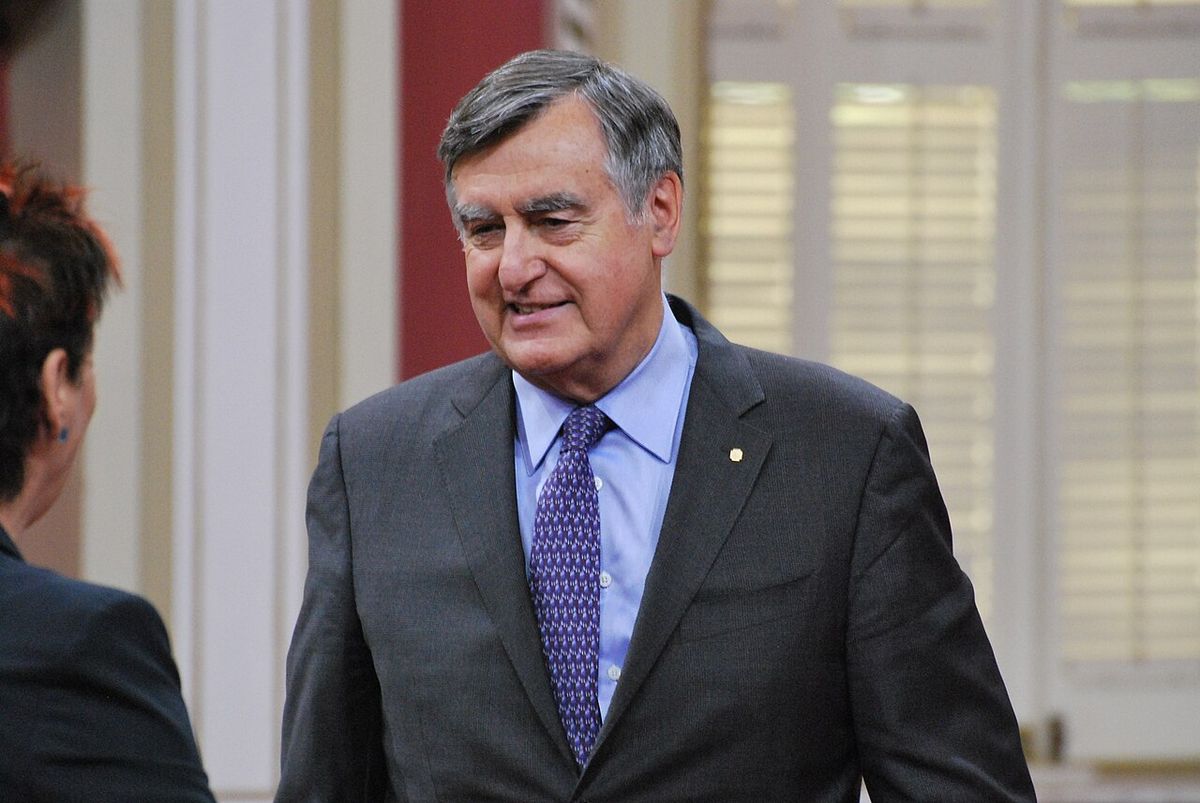
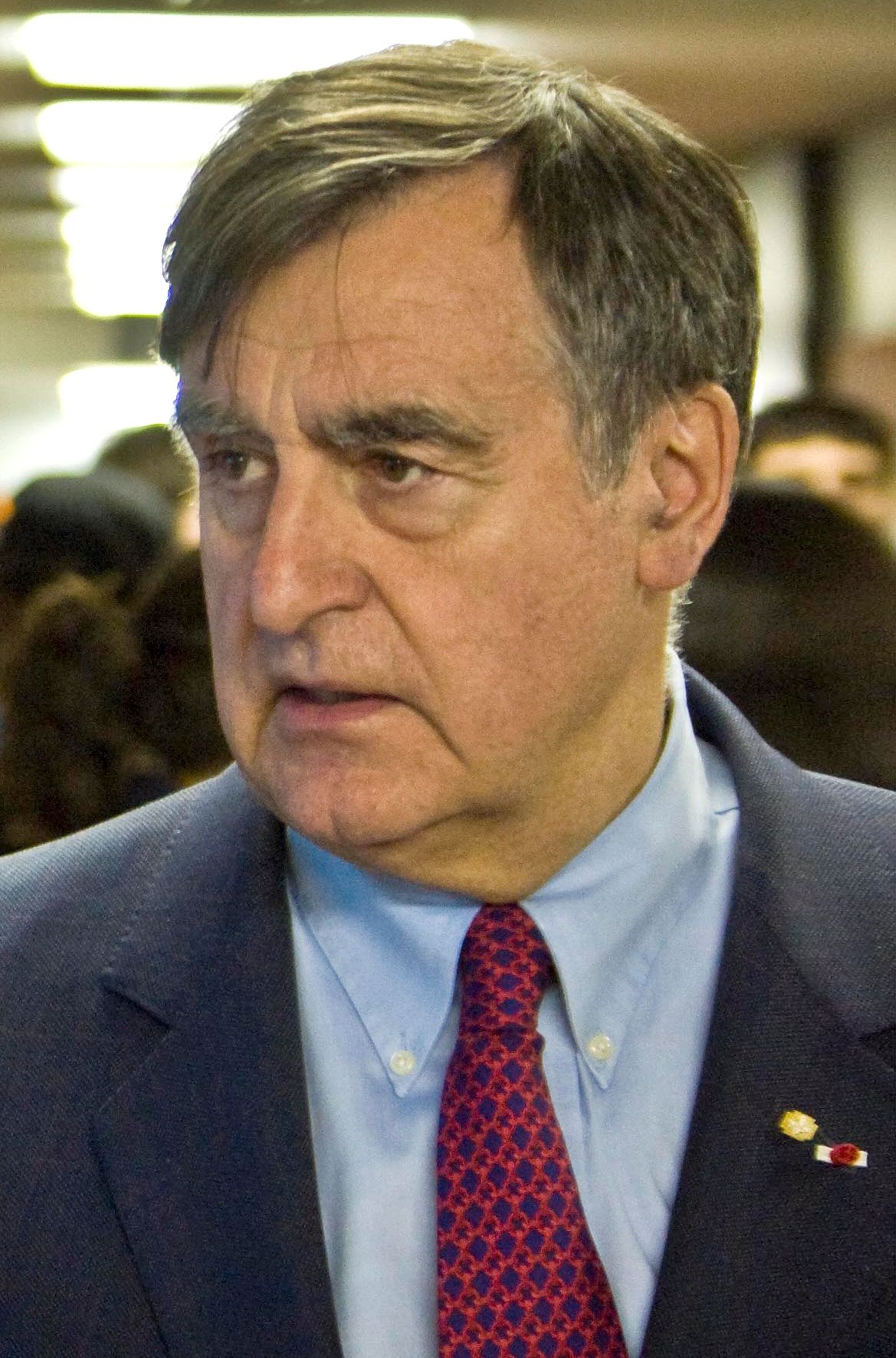
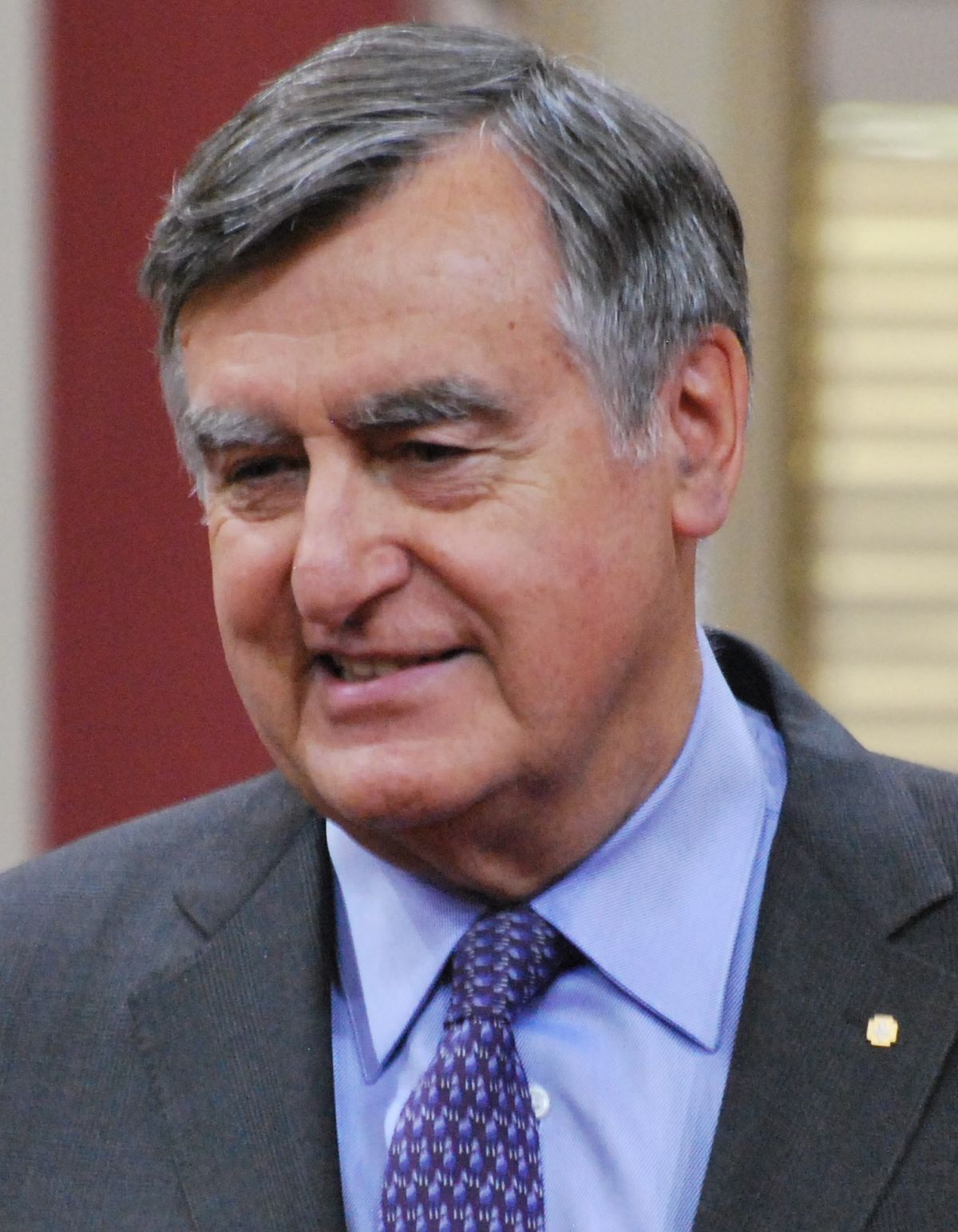
Lucien Bouchard is a Canadian lawyer, diplomat and retired politician who served as the 27th premier of Quebec from 1996 to 2001. A central figure in the Quebec sovereignty movement, he founded the Bloc Québécois and served as the Leader of the Official Opposition in the House of Commons from 1993 to 1996. He was a principal leader of the 'Yes' side in the 1995 Quebec referendum on sovereignty. His premiership was marked by significant fiscal consolidation and the expansion of Quebec's social programs, including universal childcare and pharmacare.
Early Life and Legal Career
Lucien Bouchard was born in Saint-Cœur-de-Marie, Quebec, the son of Alice Simard and Philippe Bouchard. His brother is the historian Gérard Bouchard. He graduated from Jonquière Classical College before obtaining a bachelor's degree in social science and a law degree from Université Laval in Quebec City. After being called to the Bar of Quebec, he established his legal practice in Chicoutimi, where he worked until 1985. His early career was defined by significant public service roles within Quebec's labour relations sector, beginning with his appointment as president of the arbitration committee for the education sector, a position he held from 1970 to 1976. In a 2000 interview, Bouchard reflected on his time as chief prosecutor for the Cliche Commission from 1974 to 1975, naming union boss André Desjardins as one of the toughest witnesses he ever cross-examined. In 1975, he co-chaired the Martin-Bouchard commission, a study commission on the public and parapublic sectors. From then, he acted as a coordinator or member of many special teams on behalf of Quebec's government in the trade union negotiations for the public sector, establishing a reputation as a formidable legal mind and mediator trusted with complex disputes.
Path to Federal Politics and Diplomatic Service
Bouchard's relationship with party politics was complex, as he affiliated with parties of differing ideologies over his career, culminating in founding his own. He was a Quebec nationalist throughout his political life and was deeply affected by the 1970 October Crisis and Prime Minister Pierre Trudeau's imposition of the War Measures Act. He worked with the 'Yes' side during the 1980 Quebec referendum on sovereignty. His entry into federal politics was facilitated by his close friendship with Brian Mulroney, whom he knew from their law school days at Université Laval. After Mulroney became prime minister in 1984, he asked Bouchard to serve as Canada's ambassador to France, a post Bouchard held from 1985 to 1988. This diplomatic role gave him international experience and deepened his connections within the French political establishment.
Cabinet Minister and the Meech Lake Accord
In 1988, Bouchard returned to Canada to serve as Mulroney's Quebec lieutenant, winning election as a Progressive Conservative MP for a Saguenay riding. He was immediately named to the federal cabinet, first as Secretary of State and later as Minister of the Environment. A strong Quebec nationalist, Bouchard initially believed Mulroney's Meech Lake Accord was sufficient to placate nationalist sentiments and keep Quebec within Confederation. However, after a commission headed by Jean Charest recommended changes to the accord, Bouchard opposed them, arguing they diluted its original spirit and objectives. Mulroney rejected his reasoning, creating the first major rift between the two friends. The situation escalated when Bouchard sent a message of support to a Parti Québécois meeting in his riding, praising former PQ premier René Lévesque. When Mulroney learned of this, he called Bouchard into his office. Mulroney claims to have fired him, while Bouchard long insisted he resigned. Years later, it was revealed Bouchard had cut a deal with PQ leader Jacques Parizeau while still in cabinet, agreeing to declare support for sovereignty if Meech failed. Mulroney only learned of this deal when Parizeau revealed it in the early 2000s. In hindsight, Mulroney told CTV he regretted not firing Bouchard earlier over the issue of Quebec's language sign laws. The two did not speak for years but reconciled shortly before Mulroney's death in February 2024.
Founding the Bloc Québécois and Official Opposition
After leaving the Progressive Conservatives, Bouchard sat as an independent MP for a few months before forming the sovereigntist Bloc Québécois in the wake of the Meech Lake Accord's failure. The new party was founded with five former Tory MPs and two former Liberals. The Parti Québécois campaigned for the Bloc in the 1993 federal election as part of the 'Three Periods' strategy to prepare Quebec for sovereignty. The strategy proved successful in Quebec, with the Bloc winning 54 of the province's 75 seats. Despite running candidates only in Quebec, this result made the Bloc the second-largest party in the House of Commons, and Bouchard became the first separatist Leader of the Official Opposition in Canadian history. Soon after the election, Bouchard discovered most of his large caucus could not speak English well enough for parliamentary debate. More or less out of necessity, he announced that Bloc MPs would speak only French on the Commons floor, a policy that remains in place today. Question Period during the 35th Parliament was dominated by issues of Canadian unity, though Prime Minister Jean Chrétien often treated Reform Party leader Preston Manning as his main adversary on non-Quebec matters. For instance, in 1995, when Bouchard met visiting US President Bill Clinton by virtue of being Opposition Leader, Manning was also granted a meeting.
The 1995 Sovereignty Referendum Campaign
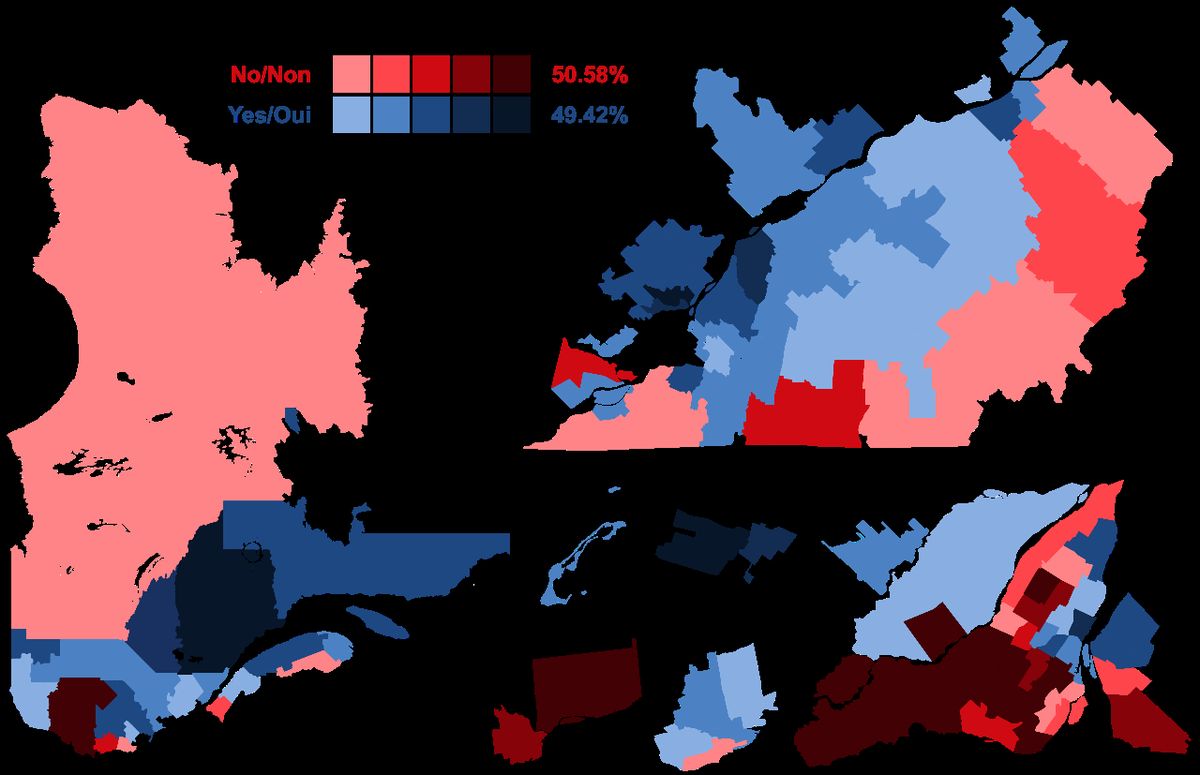
Bouchard was a principal architect and campaigner for the 1995 referendum on Quebec sovereignty. He signed a tripartite agreement with Parti Québécois leader Jacques Parizeau and Action démocratique leader Mario Dumont to map the path to the vote. Bouchard was instrumental in convincing Parizeau to include a plan for an economic and political partnership with Canada in the referendum question. As public support for the 'Yes' side plateaued under Parizeau's leadership, Bouchard was given the official leadership of the campaign in its final weeks. The referendum was defeated by an extremely narrow margin, with 50.58 percent voting 'No' and 49.42 percent voting 'Yes'. The campaign was marked by significant controversy. On October 14, 1995, Bouchard stated, 'We're one of the white races that has the fewest children,' a comment that drew considerable ire and was criticized by former Quebec culture minister Liza Frulla. During his televised address on October 25, which followed a national address by Prime Minister Chrétien, Bouchard brandished a 1981 newspaper photo of Pierre Trudeau and Chrétien laughing, claiming they were laughing at Quebec. In his autobiography, Chrétien described the stunt as 'absolutely the worst kind of demagoguery' and 'the crudest stunt I had ever seen in Canadian politics.' Bouchard later revealed in a 2014 documentary that he believed the referendum might have passed had it been a two-step process, with a first vote to authorize negotiations and a second to approve the result, an approach Parizeau had rejected.
Premier of Quebec: Policy and Governance
After the referendum defeat, Jacques Parizeau resigned and Bouchard was acclaimed leader of the Parti Québécois in January 1996, becoming premier shortly thereafter. He stated that no new referendum would be held without 'winning conditions,' focusing his government on economic recovery. A primary objective was eliminating the provincial deficit, which Bouchard achieved through spending controls, including controversial cuts to health care. Long-term Keynesian policies from the 'Quebec model' had left a substantial deficit, and Bouchard's 'zero deficit' goal was considered part of the necessary groundwork for any future sovereignty push. Despite this fiscal austerity, his government significantly expanded Quebec's social safety net. In the 1998 provincial election, Bouchard faced Jean Charest, his former federal cabinet colleague who had become leader of the Quebec Liberal Party. Although the Liberals won a narrow plurality of the popular vote, the PQ's efficient distribution of support allowed it to retain a majority of seats, suffering a net loss of only one. Bouchard thus became the only Parti Québécois leader to never lose an election. His government also competently managed the response to the devastating 1998 ice storm crisis. As premier, Bouchard refused to grant provincial funding for a new stadium for the Montreal Expos, stating he could not justify funding a sports facility while the province was closing hospitals. He retired from electoral politics in 2001, stating his relative failure to revive the sovereigntist flame was a cause, while others speculated the Michaud Affair, involving allegedly anti-Semitic comments by a PQ candidate, was also a factor.
Key social policy achievements under Premier Bouchard include the implementation of a universal childcare system and pharmacare. His government also created Emploi Québec. As Premier, Bouchard presided over a significant expansion of the province's social safety net alongside balanced budgets. These policies are considered a lasting part of his political record.
- The creation of a universal, low-cost public daycare system, a landmark program in North America.
- The implementation of a universal pharmacare program, providing drug coverage for all Quebecers.
- The establishment of Emploi Québec, a centralized employment services agency.
- Presiding over balanced provincial budgets after inheriting a significant deficit.
- Overseeing the controversial amalgamation of Quebec's larger cities, a process completed by his successor Bernard Landry.
Post-Premiership Career and Corporate Boards
After leaving office in 2001, Bouchard returned to practising law, becoming a partner at the national firm Davies Ward Phillips & Vineberg, where he specializes in commercial and corporate law, negotiation and mediation. He is highly sought after as a negotiator and mediator for complex commercial and occasional labour disputes. Bouchard serves on the boards of several major private companies and cultural institutions. His corporate board memberships have included TC Transcontinental, Saputo Inc., Groupe BMTC, and until August 2021, TFI International. In the cultural sector, he has been a board member of the Montreal Symphony Orchestra. He served as president of the Quebec Oil and Gas Association from 2011 to 2013. In April 2004, he helped launch the Centre for International Studies of the Université de Montréal (CÉRIUM), where he remains a board member. In recent years, he has acted as a negotiator for Quebec's specialist physicians in their talks with the provincial government on salaries and working conditions, a role that placed him back in the public eye during media interviews in 2026.
Later Political Commentary and the Sovereignty Debate
For years after retiring, Bouchard avoided public political commentary, but he re-emerged as a vocal critic of the sovereigntist movement's direction. In October 2005, he co-authored the manifesto 'Pour un Québec lucide' with eleven other prominent Quebecers, warning of demographic, economic and cultural challenges from an aging population and public debt. The document argued for difficult reforms and sparked significant debate, receiving mixed reactions within the Parti Québécois but praise in outlets like The Globe and Mail. In a 2010 panel event for Le Devoir's centennial, he argued sovereignty was no longer a realistic goal, accusing the PQ of having no solutions for Quebec's basic needs and of pandering to xenophobic elements on immigration. In response, PQ leader Pauline Marois and others accused him of becoming a 'belle mère' or armchair quarterback to the movement. In a 2014 interview with journalist Chantal Hébert, he revealed he had no plans for a referendum when becoming premier and stated the Bloc Québécois was only ever intended as a temporary vehicle to set the stage for the 1995 vote. He believed its prolonged existence weakened Quebec's influence in Ottawa by limiting the pool of federal cabinet ministers from the province. His recent political interventions have focused on advising against a rushed return to the referendum question. In 2026, he publicly urged Parti Québécois leader Paul St-Pierre Plamondon to reconsider his promise to hold a sovereignty referendum in a first mandate if elected in the October 2026 election. Bouchard suggested making a referendum the central campaign issue would be a 'gift' to the federalist Quebec Liberal Party and that historically, PQ governments were rarely re-elected with such a promise.
Personal Life, Health and Family
Lucien Bouchard has been married three times. He married his first wife, Jocelyne Côte, on October 15, 1966. Following their divorce, he married Audrey Best in 1992. Best was the daughter of a U.S. Navy officer and a French mother, was born on the Côte d'Azur and raised in California. She worked as a flight attendant when she met Bouchard, later becoming a lawyer with the Heenan-Blaikie firm in Montreal. She died from breast cancer on January 25, 2011, at age 50. The couple had been separated for several years prior to her death. In May 2013, Bouchard married his third wife, Solange Dugas. He has two sons, Alexandre and Simon, from his marriage to Audrey Best. They hold dual Canadian and American citizenship through their mother. A defining personal challenge occurred in December 1994 when Bouchard, while serving as Opposition Leader, contracted necrotizing fasciitis, which resulted in the amputation of his left leg after a life-saving emergency surgery. He reconciled with his longtime friend and political adversary Brian Mulroney shortly before Mulroney's death in February 2024, ending a period of estrangement that had lasted for years.
Honours, Awards and Academic Recognition
Lucien Bouchard has received numerous national and international honours in recognition of his public service. He was appointed to the Queen's Privy Council for Canada on March 31, 1988, upon joining the federal cabinet, entitling him to the style 'The Honourable.' His contributions have been recognized with several honorary doctorates in law from universities in Canada and France. The Government of France appointed him a Commander of the Legion of Honour in 2002. In Quebec, he was appointed to the rank of Grand Officer of the National Order of Quebec in 2008. He is also a recipient of the Queen Elizabeth II Golden Jubilee Medal (2002) and the Queen Elizabeth II Diamond Jubilee Medal (2012). These honours reflect his status as a respected, if controversial, elder statesman in Quebec and Canadian public life.
- Member of the Queen's Privy Council for Canada (March 31, 1988).
- Honorary Doctorate in Law (Doctorate Honoris Causa), Lumière University Lyon 2 (April 7, 2000).
- Commander of the Legion of Honour, France (2002).
- Honorary Doctorate in Law, Faculty of Law, Université de Montréal (October 5, 2006).
- Honorary Doctorate, Université du Québec à Chicoutimi (April 27, 2007).
- Grand Officer of the National Order of Quebec (2008).
Electoral Record and Political Legacy
Lucien Bouchard's electoral record is unique in the history of the Parti Québécois. He led the party into one general election and resigned while still premier. The 1998 Quebec election resulted in a victory for the PQ in terms of seats, despite the Liberal Party winning a slight plurality of the popular vote. This made Bouchard the only non-interim PQ leader to serve as premier for his entire tenure without facing defeat at the polls. His legacy encompasses both significant social policy expansions and contentious fiscal decisions, as well as his foundational role in creating a sovereigntist party in the federal Parliament. He is remembered for his sometimes short temper and demanding standards, but also for his eloquence and charm, and was appreciated as a formidable opponent by political adversaries. Bouchard has stated definitively that he will not return to politics.
Questions about Lucien Bouchard
What is Lucien Bouchard best known for?
Lucien Bouchard is best known as the 27th premier of Quebec from 1996 to 2001. He is also known for founding and leading the Bloc Québécois and serving as the Leader of the Opposition in the House of Commons of Canada from 1993 to 1996. He was a central figure for the 'Yes' side in the 1995 Quebec referendum on sovereignty. His premiership is noted for balancing the provincial budget and implementing major social programs like a universal childcare system and pharmacare.
Why did Lucien Bouchard leave federal politics?
Bouchard left federal politics to become premier of Quebec. After the narrow defeat of the 1995 sovereignty referendum, Parti Québécois leader Jacques Parizeau resigned. Bouchard was acclaimed as the new PQ leader in January 1996 and was subsequently appointed premier. He left his role as Leader of the Opposition and Member of Parliament to lead the provincial government, focusing on economic recovery and deferring plans for another referendum, which he later stated was his intention all along.
What was Bouchard's role in the 1995 referendum?
In the 1995 referendum, Lucien Bouchard was a principal architect and campaign leader for the sovereigntist 'Yes' side. He signed the tripartite agreement with Jacques Parizeau and Mario Dumont that set the referendum plan. Bouchard convinced Parizeau to include a proposal for an economic and political partnership with Canada in the question. When the 'Yes' campaign stalled, Bouchard was given its official leadership in the final weeks. The referendum was ultimately defeated by a margin of just over one percentage point, a result Bouchard later suggested might have been different with a two-step referendum process.
What is Lucien Bouchard doing now?
Since retiring from politics in 2001, Lucien Bouchard has returned to practising law as a partner at Davies Ward Phillips & Vineberg, specializing in commercial law and mediation. He serves on corporate and cultural boards, including the Montreal Symphony Orchestra, Saputo Inc., and TC Transcontinental. He remains an occasional commentator on Quebec politics, notably advising the Parti Québécois leader in 2026 to reconsider a pledge to hold a sovereignty referendum. He has also acted as a negotiator for Quebec's specialist physicians in their talks with the provincial government.
How did Lucien Bouchard lose his leg?
Lucien Bouchard lost his left leg in December 1994 due to necrotizing fasciitis, a rare and severe bacterial infection often called flesh-eating disease. He contracted the illness while serving as the Leader of the Opposition in Ottawa. The infection required emergency surgery and amputation to save his life, a traumatic event that occurred just under a year before he would lead the 1995 referendum campaign. He returned to his political duties shortly after recovering from the procedure.
What was the 'Pour un Québec lucide' manifesto?
'Pour un Québec lucide' was a manifesto published on October 19, 2005. It was co-authored by Lucien Bouchard and eleven other Quebecers from different backgrounds. The manifesto warned Quebec's aging population about future demographic, economic and cultural challenges. It argued that his generation had contracted 75 percent of the province's current debt. The document made an impression on the Parti Québécois leadership race of 2005 and was well received in some quarters, such as the editorial page of The Globe and Mail.
Sources and further reading
- Lucien Bouchard (Wikipedia)
- Lucien Bouchard urges Parti Québécois leader to ... (cbc.ca)
- Quebec sovereigntists see fundamental rift with Alberta ... (thestar.com)
- Lucien Bouchard | Honorary doctorates (ulaval.ca)
Checked by the Nosy Mag desk. Last updated 2026-10-24.