John Turner
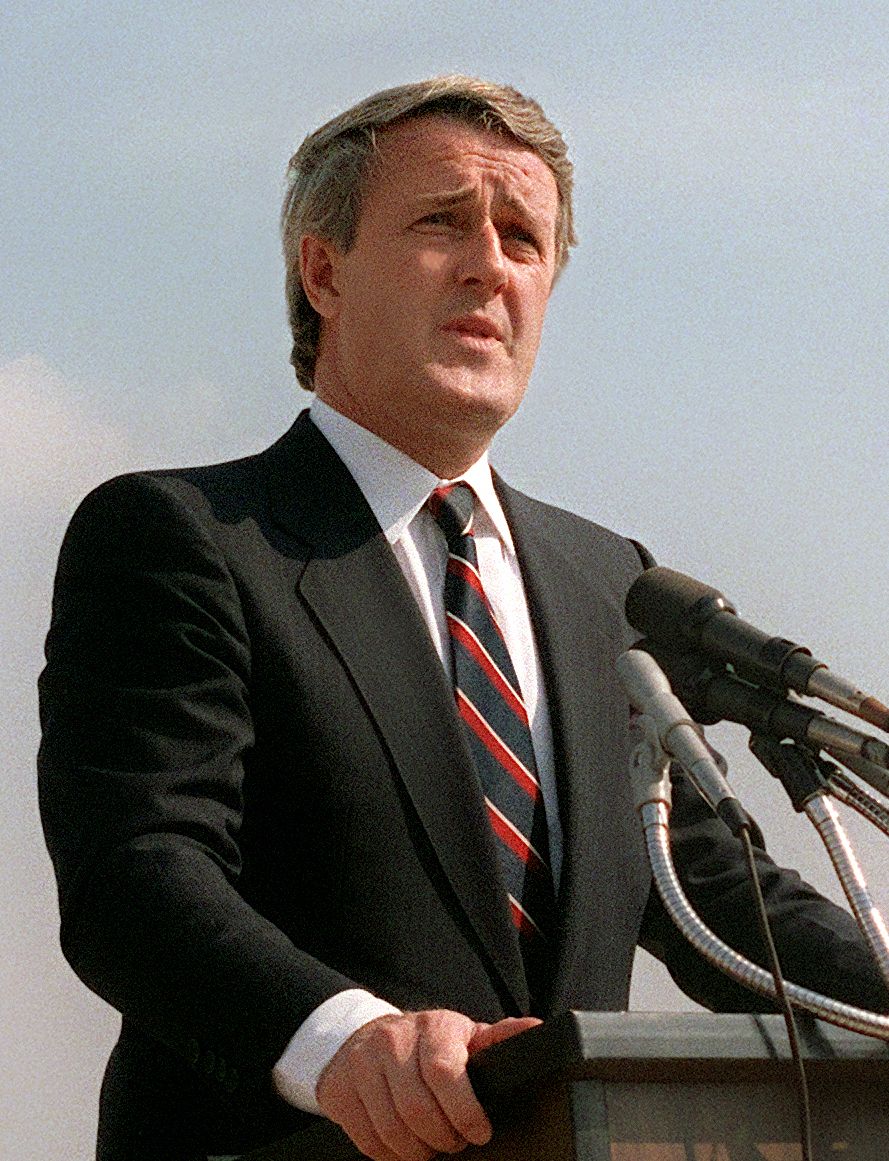
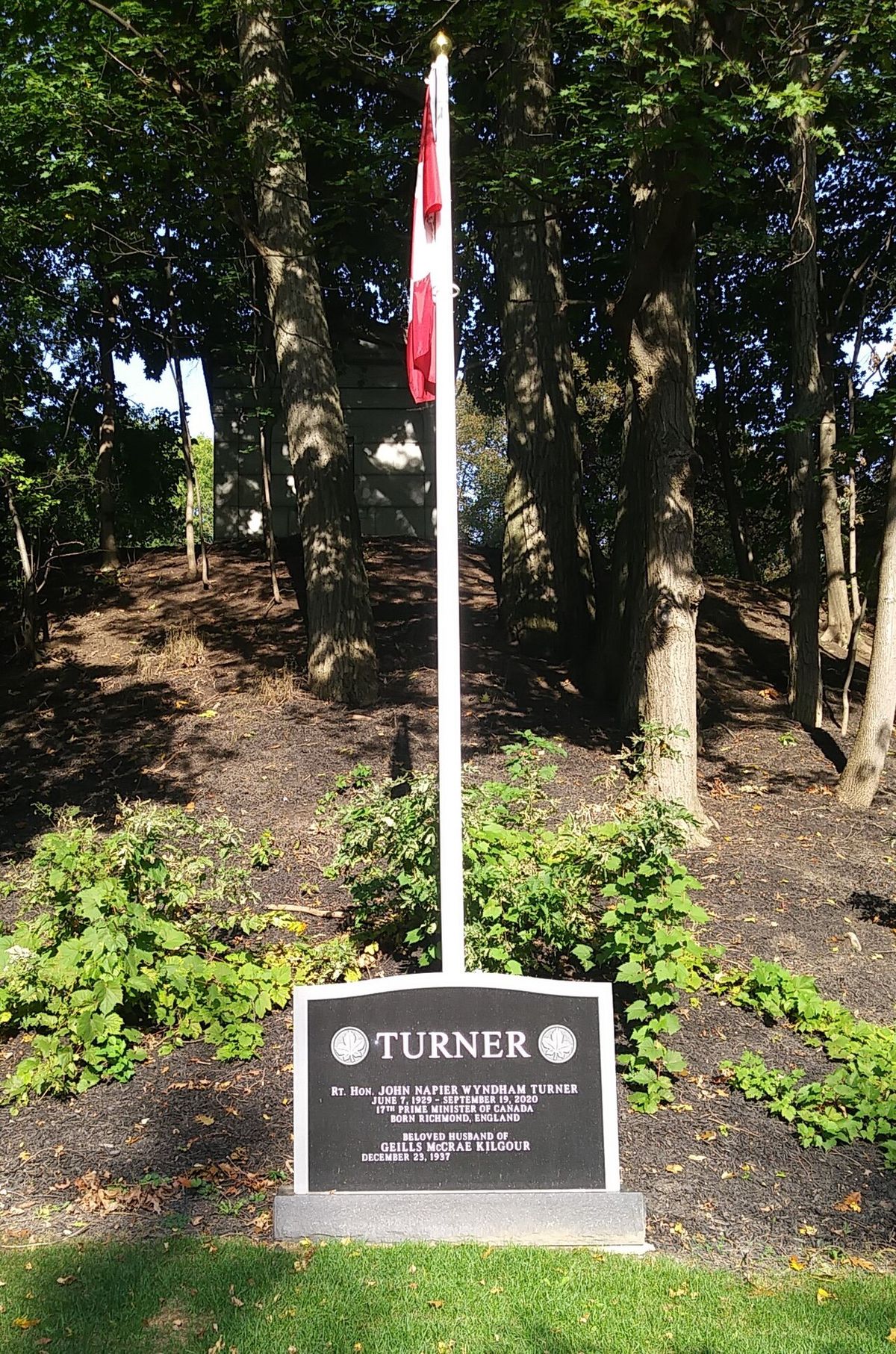
John Napier Wyndham Turner served as the 17th prime minister of Canada, holding office for 79 days in 1984. His political career spanned three decades as a prominent cabinet minister and leader of the Liberal Party of Canada. Turner served as minister of justice and attorney general and minister of finance under Prime Minister Pierre Trudeau. He led the Liberals through a historic electoral defeat in 1984 and a recovery in the 1988 election. He died in 2020 at the age of 91.
Early Life, Family and Education
John Napier Wyndham Turner was born on June 7, 1929, in Richmond, Surrey, England, to Leonard Hugh Turner, an English journalist, and Phyllis Gregory, a Canadian economist. He had a brother, Michael, who died shortly after birth in 1930, and a sister, Brenda, born in 1931. The family moved to Canada following his father's death in 1932, settling in his mother's childhood home in Rossland, British Columbia, before relocating to Ottawa. His mother remarried in 1945 to Frank Mackenzie Ross, who later served as Lieutenant Governor of British Columbia, and the family moved to Vancouver. Turner was educated at Ashbury College and St Patrick's College in Ottawa. He enrolled at the University of British Columbia in 1945 at age 16.
At UBC, Turner was a member of the Beta Theta Pi fraternity and was among Canada's outstanding track sprinters in the late 1940s. He held the Canadian record for the men's 100-yard dash and qualified for the 1948 London Olympics, but a knee injury prevented him from competing. He graduated with a BA (Honours) in 1949. Awarded a Rhodes Scholarship, Turner attended Magdalen College at the University of Oxford, where he earned a BA in jurisprudence in 1951 and a Bachelor of Civil Law (BCL) in 1952. His BA was promoted to an MA per tradition in 1957. He ran on the Oxford track and field team alongside Roger Bannister. His Oxford classmates included future Australian prime ministers Malcolm Fraser and Bob Hawke, and future British Liberal Party leader Jeremy Thorpe. He pursued doctoral studies at the University of Paris from 1952 to 1953 before returning to Canada.
Early Legal Career and Entry into Politics
John Turner practised law with the Montreal firm Stikeman Elliott. He was elected as the Member of Parliament for the Montreal riding of St. Lawrence, St. George in the 1962 federal election. He was re-elected in that riding in the 1963 and 1965 elections, serving until the riding's dissolution in 1968. Following redistribution, he successfully ran in the new riding of Ottawa, Carleton, which he represented from 1968 until his resignation from politics in 1976. In 1965, while vacationing in Barbados, he noticed former prime minister John Diefenbaker struggling in strong surf and, using his skills as a competitive swimmer, jumped in and pulled Diefenbaker to safety.
Cabinet Minister Under Pearson and Trudeau
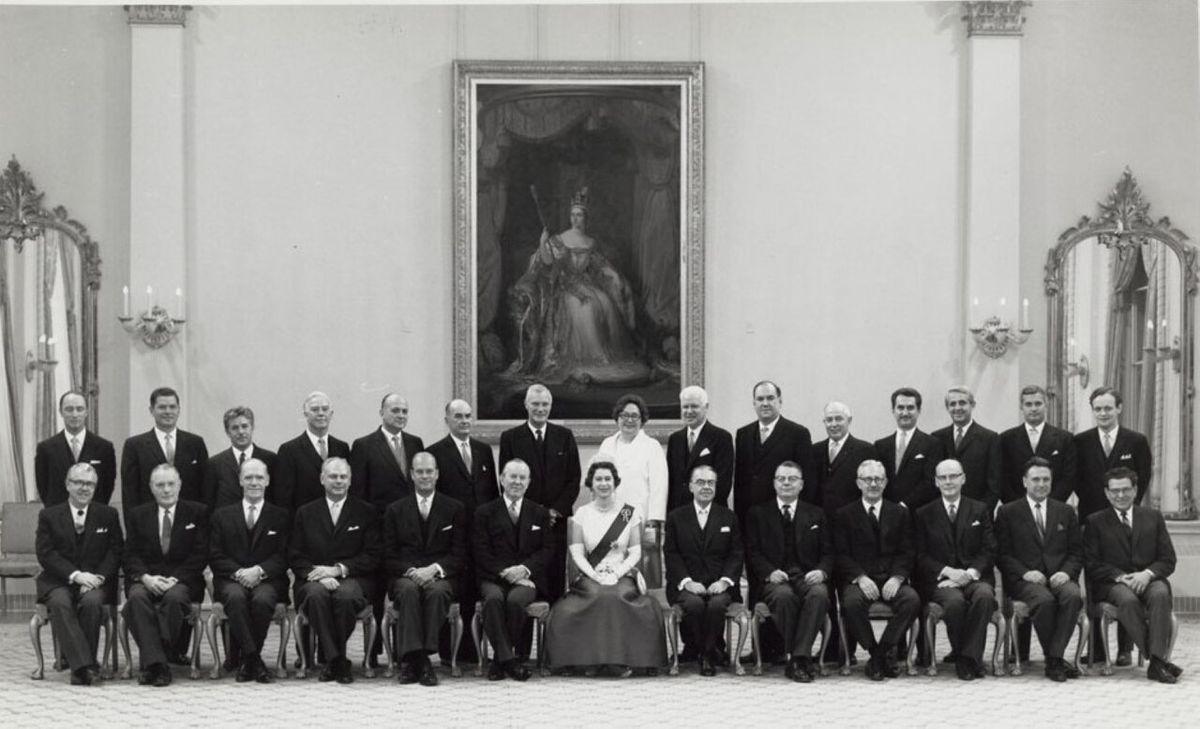
Turner served in the cabinet of Prime Minister Lester Pearson, most notably as minister of consumer and corporate affairs. When Pearson retired, the 38-year-old Turner contested the 1968 Liberal leadership convention. He remained on the ballot until the fourth and final round, finishing third behind Pierre Trudeau and runner-up Robert Winters. In Trudeau's cabinet, Turner served as minister of justice and attorney general from 1968 to 1972. In this role, he strengthened the rights of individual defendants, improved the efficiency of the justice system, and oversaw the creation of the Law Reform Commission. He led the government's position on the Official Languages Act and was involved during the October Crisis of 1970.
Turner was appointed minister of finance in 1972. His tenure coincided with global economic turmoil, including the 1973 oil crisis and stagflation. His more conservative fiscal approach created a policy divide with Prime Minister Trudeau. The Liberals had won the 1974 election campaigning against Progressive Conservative leader Robert Stanfield's proposal for wage and price controls. When Trudeau decided to implement those controls in late 1975, Turner resigned from cabinet. In a 2013 interview, Turner confirmed his resignation was a direct result of refusing to implement the policy after having campaigned against it. Trudeau's memoirs suggested Turner also wanted to leave politics for a better-paying corporate law job in Toronto.
- 1973 Canadian federal budget: Presented amid the oil crisis and economic uncertainty.
- May 1974 Canadian federal budget: Delivered ahead of the election that year.
- November 1974 Canadian federal budget: A post-election fiscal update.
- 1975 Canadian federal budget: His final budget before his resignation.
Bay Street Interlude and Return to Leadership
From 1975 to 1984, Turner worked as a corporate lawyer at the Bay Street firm McMillan Binch. When Pierre Trudeau resigned as Liberal leader in 1979 following an election loss, Turner announced he would not be a candidate to succeed him. Trudeau returned after Joe Clark's government fell and led the Liberals to victory in the 1980 election. Trudeau served until 1984. Turner then re-entered politics and defeated Jean Chrétien on the second ballot of the June 1984 Liberal leadership convention. He was formally appointed prime minister on June 30, 1984. At the time of his swearing-in, he was not an MP or senator, a situation that would not occur again until Mark Carney in 2025. He announced he would run in the next general election in the British Columbia riding of Vancouver Quadra, a seat held by the Progressive Conservatives, as part of a strategy to rebuild the party's presence in Western Canada. In his final days of office, Prime Minister Pierre Trudeau recommended that Governor General Jeanne Sauvé appoint over 200 Liberals to patronage positions. These appointments included senators, judges, and executives on various governmental and crown corporation boards. Turner then made a further 19 appointments himself, as one of Trudeau's conditions for retiring earlier than he had planned.
Prime Ministership and the 1984 Election Campaign
John Turner's tenure as prime minister lasted 79 days, the second-shortest in Canadian history behind Sir Charles Tupper. On July 9, 1984, he asked Governor General Jeanne Sauvé to dissolve Parliament and call an election for early September. The campaign began poorly as Turner appeared rusty. He was caught on television patting the bottoms of Liberal Party President Iona Campagnolo and Vice-President Lise St. Martin-Tremblay, which was widely criticized as sexist. The campaign's defining moment came during the televised leaders' debate. Turner attacked Brian Mulroney over alleged patronage preparations, but Mulroney countered by highlighting the appointments made by Trudeau and Turner. When Turner claimed he 'had no option' but to let them stand, Mulroney delivered his famous retort: 'You had an option, sir, to say 'no', and you chose to say 'yes' to the old attitudes and the old stories of the Liberal Party.'
The Liberals' traditional stronghold of Quebec crumbled. Turner had distanced himself from Trudeau's faction, and Trudeau did not endorse him. Disaffection in Quebec over the 1982 constitutional patriation further hurt the Liberals, while Mulroney promised a new constitutional agreement. In a late campaign move, Turner rehired much of Trudeau's staff, but it had little effect. On September 4, the Liberals were swept from power in a historic landslide. The party was reduced to 40 seats, the fewest in its history until 2011, against 211 for the Progressive Conservatives. In Quebec, the Liberals won only 17 seats. Eleven members of Turner's cabinet were defeated. Turner himself won in Vancouver Quadra, defeating Tory incumbent Bill Clarke by 3,200 votes. He resigned as prime minister on September 17, 1984, having never faced Parliament.
Leader of the Opposition and Party Recovery
Following the defeat, Turner became leader of the Official Opposition, leading a caucus of 40 MPs. He was the only Liberal MP from British Columbia and one of only two from west of Ontario. The New Democratic Party, with 30 seats, was not far behind. The Liberal response was twofold: they used their large Senate majority to stall Mulroney's legislation, and a group of young Liberal MPs known as the 'Rat Pack', including Sheila Copps, Brian Tobin, Don Boudria, and John Nunziata, harassed the government in the Commons. Turner's leadership was under constant internal pressure. In the lead-up to the 1986 Liberal convention, a vote of confidence loomed. Jean Chrétien resigned his seat, and senior party organizer Keith Davey publicly voiced concerns about Turner's leadership. Turner received over 75 percent of the delegate vote at the convention.
Turner led the Liberals into the 1988 election, campaigning vigorously against Mulroney's proposed Canada, United States Free Trade Agreement. The Liberals more than doubled their representation to 83 seats, keeping their role as the Official Opposition. The Progressive Conservatives won a reduced majority with 169 seats. Turner announced he was standing down from the party leadership in May 1989, officially resigning in June 1990. He did not seek re-election as an MP in the 1993 election. In his post-political life, he returned to practising law with Miller Thomson LLP and was a board member for several corporations.
Personal Life, Family and Royal Friendship
Turner married Geills McCrae Kilgour on May 11, 1963. She was a systems engineer with IBM, the great-niece of Canadian Army doctor and poet John McCrae, and the sister of long-time MP David Kilgour. The couple had four children: Elizabeth, Michael, David, and Andrew. The family lived in Ottawa, where the children attended Rockcliffe Park Public School, and all three sons later attended Upper Canada College in Toronto. Turner first received significant press attention in Canada on July 25, 1958, when his mother and stepfather hosted a ball for Princess Margaret in Vancouver. Turner danced with the princess and they spent considerable time talking alone. Reports in 1959 suggested he was a guest at Balmoral Castle. Letters from Princess Margaret discovered in 2015 revealed the relationship was serious, with her writing seven years later, 'John Turner is here & we meet on Thursday. It will seem so funny as we haven't met since I nearly married him.' Turner always refused to discuss the matter publicly. His sister Brenda confirmed a 'very definite attraction' but said Turner was uninterested in royalty and would not have given up his Catholicism. Turner remained a lifelong friend of the princess, attending her 2002 private funeral and serving as Canada's official representative at her memorial service.
Electoral Record and Historical Standing
John Turner contested nine federal elections as a Liberal candidate from 1962 to 1988. His career saw him represent urban ridings in Montreal and Ottawa before his final campaigns in British Columbia. He did not run in the 1993 election, ending his parliamentary career. Historically, Turner holds several distinctions: he was Canada's first prime minister born in the United Kingdom since Mackenzie Bowell in 1896, the second shortest-serving prime minister, and the fifth longest-lived prime minister at the time of his death. He was appointed a Companion of the Order of Canada in 1994. A 1999 survey of historians ranked him 18th out of the first 20 prime ministers.
| Election Year | Constituency | Result |
|---|---|---|
| 1962 | St. Lawrence, St. George | Elected |
| 1963 | St. Lawrence, St. George | Elected |
| 1965 | St. Lawrence, St. George | Elected |
| 1968 | Ottawa, Carleton | Elected |
| 1972 | Ottawa, Carleton | Elected |
| 1974 | Ottawa, Carleton | Elected |
| 1984 | Vancouver Quadra | Elected |
| 1988 | Vancouver Quadra | Elected |
Questions about John Turner
How long was John Turner prime minister?
John Turner served as prime minister for 79 days, from June 30 to September 17, 1984. This makes him the second shortest-serving prime minister in Canadian history, behind only Sir Charles Tupper. He called a general election just nine days after being sworn in, which led to a landslide defeat. He never faced Parliament while in office.
Why did John Turner resign as finance minister in 1975?
John Turner resigned as minister of finance in 1975 due to a policy disagreement with Prime Minister Pierre Trudeau over wage and price controls. The Liberals had campaigned against such controls in the 1974 election. When Trudeau decided to implement them, Turner refused to carry out the policy. He confirmed this was the direct reason in a 2013 interview.
What was John Turner's relationship with Princess Margaret?
John Turner had a serious friendship with Princess Margaret that began in 1958. Letters from the princess revealed in 2015 indicated she nearly married him. Turner always refused to discuss it publicly. His sister confirmed a strong attraction but said Turner would not have given up his Catholicism. They remained friends for life.
What was the 'patronage scandal' in the 1984 election debate?
During the 1984 televised leaders' debate, Progressive Conservative leader Brian Mulroney attacked John Turner over a raft of patronage appointments. These included over 200 appointments made on the advice of outgoing Prime Minister Pierre Trudeau, to which Turner added a further 19 appointments of his own. When Turner defended himself by claiming he had no option but to let the appointments stand, Mulroney delivered his famous retort. He stated, 'You had an option, sir, to say 'no', and you chose to say 'yes' to the old attitudes and the old stories of the Liberal Party.'
Which electoral riding did John Turner represent?
John Turner represented several ridings during his parliamentary career. He was first elected as the Member of Parliament for the Montreal riding of St. Lawrence, St. George in the 1962 federal election and was re-elected there until the riding's dissolution in 1968. From 1968 to 1976, he represented the Ontario riding of Ottawa, Carleton. After returning to politics in 1984, he was elected for the British Columbia riding of Vancouver Quadra, which he represented until his retirement from the House of Commons in 1993.
Sources and further reading
- John Turner (Wikipedia)
- Former Prime Minister John Turner dies at 91 (chch.com)
- John Turner: The clarion call of public service, Policy Options (policyoptions.irpp.org)
Checked by the Nosy Mag desk. Last updated 2026-10-22.