Kim Campbell
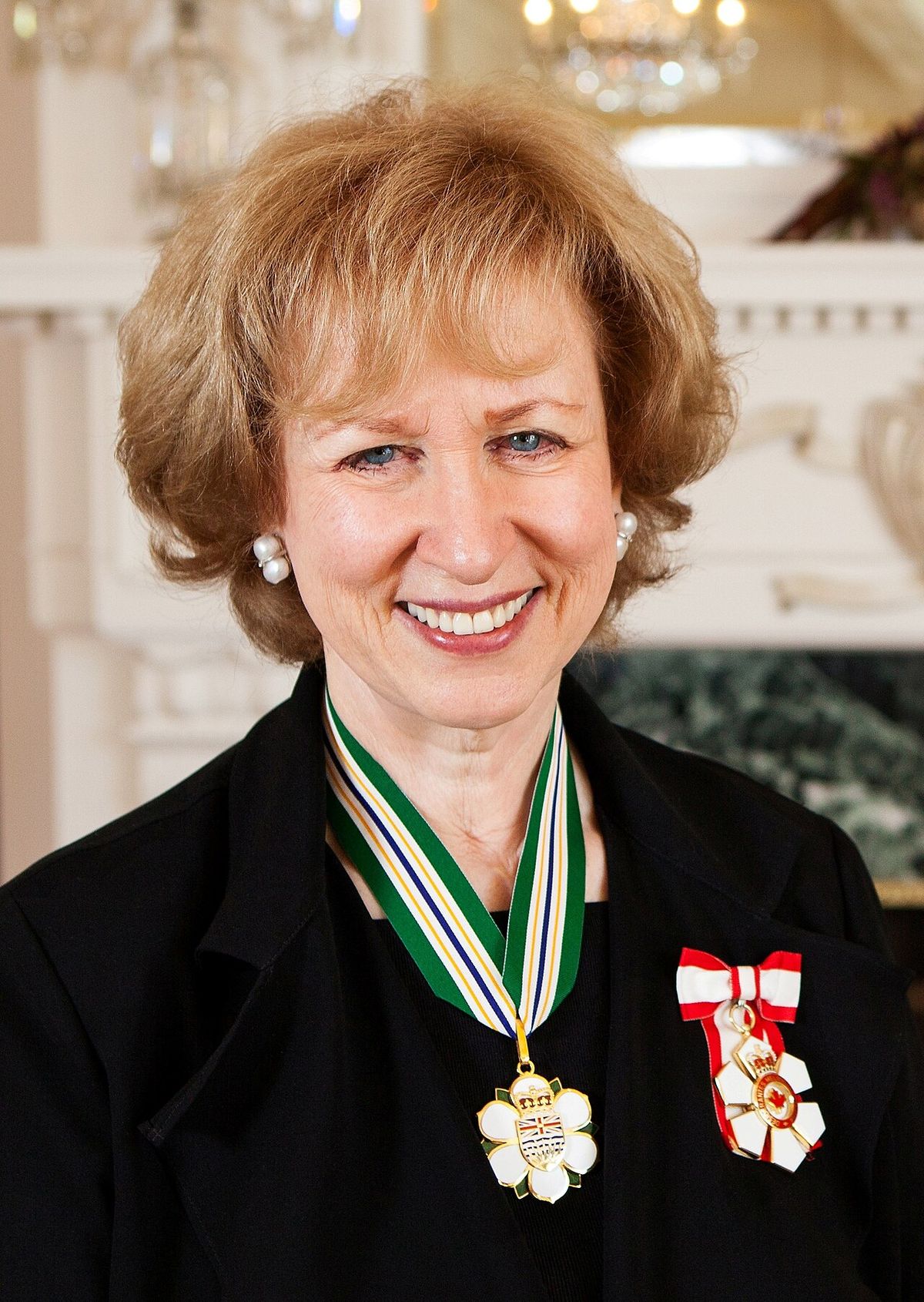
Avril Phaedra Douglas "Kim" Campbell is a Canadian politician, lawyer, and educator who served as the 19th prime minister of Canada in 1993. Her 132-day tenure, from June 25 to November 4 of that year, marks her as the first and only woman to hold the office in Canadian history. Campbell's premiership capped a rapid political ascent that included several other firsts, including being the first woman to serve as minister of justice and attorney general and the first woman to become minister of national defence in a NATO member state. Although her government was defeated in a historic electoral collapse, Campbell remains a significant figure for her barrier-breaking career and her subsequent international work promoting democracy, leadership, and gender equality.
Early Life and Education
Kim Campbell was born on March 10, 1947, in Port Alberni, British Columbia, to Phyllis Margaret Cook and George Thomas Campbell, a lawyer and Second World War veteran with the Seaforth Highlanders of Canada. Her father was born in Montreal to Scottish parents from Glasgow. Her mother left the family when Campbell was twelve, leaving her and her sister Alix to be raised by their father. The family moved to Vancouver during her preteen years, where she attended Prince of Wales Secondary School. As a student, Campbell demonstrated early leadership, becoming the school's first female student president before graduating in 1964. She was one of five co-hosts and reporters on the CBC children's program Junior Television Club, which aired in May and June 1957. As a teenager, she adopted the nickname Kim. Campbell earned an honours bachelor's degree in political science from the University of British Columbia in 1969, where she also served as the first female president of the freshman class. She completed a year of graduate study at UBC to qualify for doctoral-level studies before entering the London School of Economics in 1970 to work towards a doctorate in Soviet government. This pursuit included a three-month tour of the Soviet Union from April to June 1972, following several years of Russian language study. Campbell ultimately left her doctoral studies, returning to Vancouver after marrying Nathan Divinsky in 1972. She later earned a Bachelor of Laws degree from UBC in 1983 and was called to the British Columbia Bar in 1984, practising law in Vancouver until 1986.
Entry into Politics: School Board and Provincial Arena
Campbell's political career began at the municipal level while she was still in law school. She was elected as a trustee on the Vancouver School Board in 1980, serving until 1984 and holding the positions of chair in 1983 and vice-chair in 1984. During this period, she also lectured part-time in political science at the University of British Columbia and Vancouver Community College. Her first foray into electoral politics was unsuccessful, as she and future Vancouver mayor Philip Owen lost badly as Social Credit candidates in the dual-member riding of Vancouver Centre in the 1983 British Columbia provincial election. Each received less than 12,500 votes against the nearly 19,000 votes for each of the NDP incumbents, Gary Lauk and Emery Barnes. Campbell then served as an executive assistant and policy adviser to Premier Bill Bennett from 1985. In the summer of 1986, she made an audacious bid for the leadership of the Social Credit party, delivering a well-received convention speech in Whistler that critiqued 'charisma without substance' and warned that it 'raises expectations that cannot be satisfied.' Veteran journalist Jim Hume called her 'the star of the show' and her speech the 'jewel of the convention.' She placed last in a field of twelve candidates with just 14 votes. Later that year, she successfully ran in the neighbouring riding of Vancouver-Point Grey, topping the poll with close to 20,000 votes in the 1986 provincial election to become a Member of the Legislative Assembly. This result made Vancouver-Point Grey the only dual-member district in British Columbia history to return only women, as Campbell's running mate, Pat McGeer, was defeated by NDP candidate Darlene Marzari. Her time as a backbench MLA was short-lived, as she grew disenchanted with Premier Bill Vander Zalm's leadership, particularly on the issue of abortion, prompting her move to federal politics.
Federal Ascent and Cabinet Roles
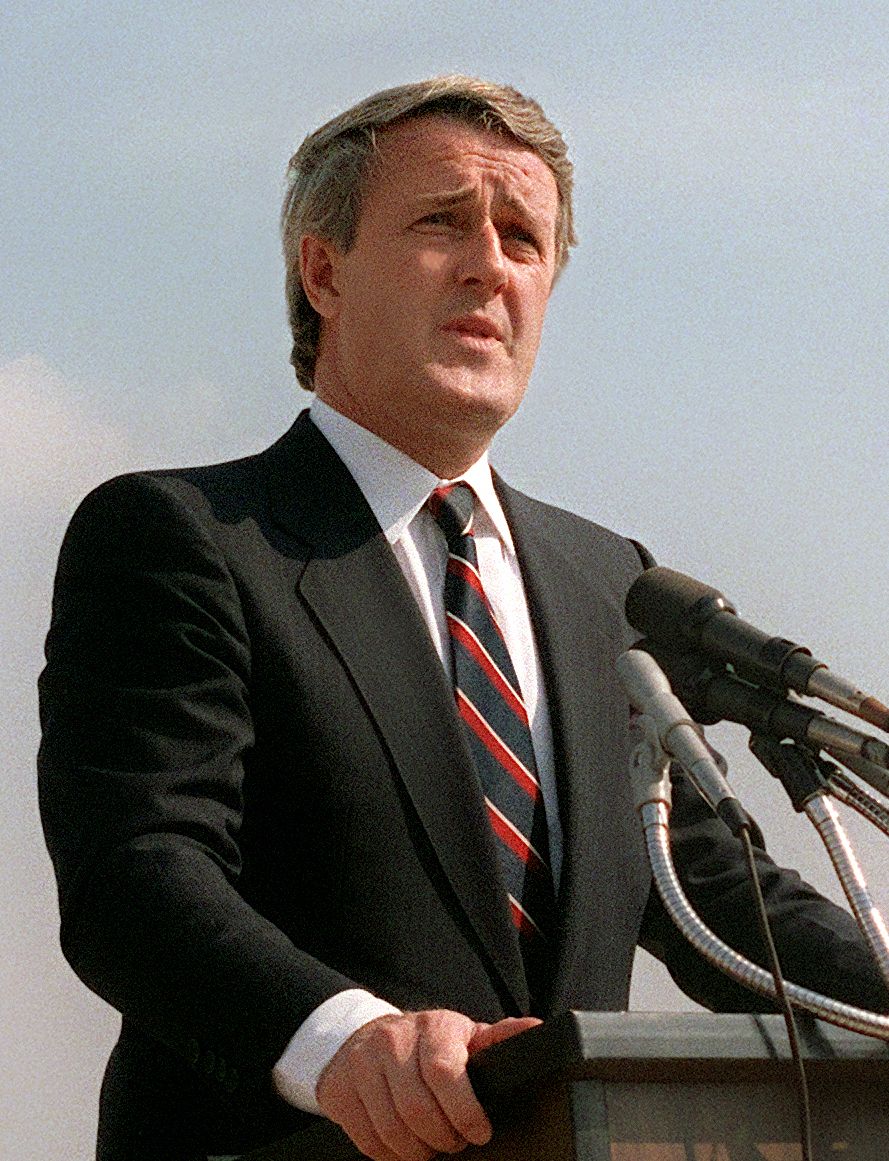
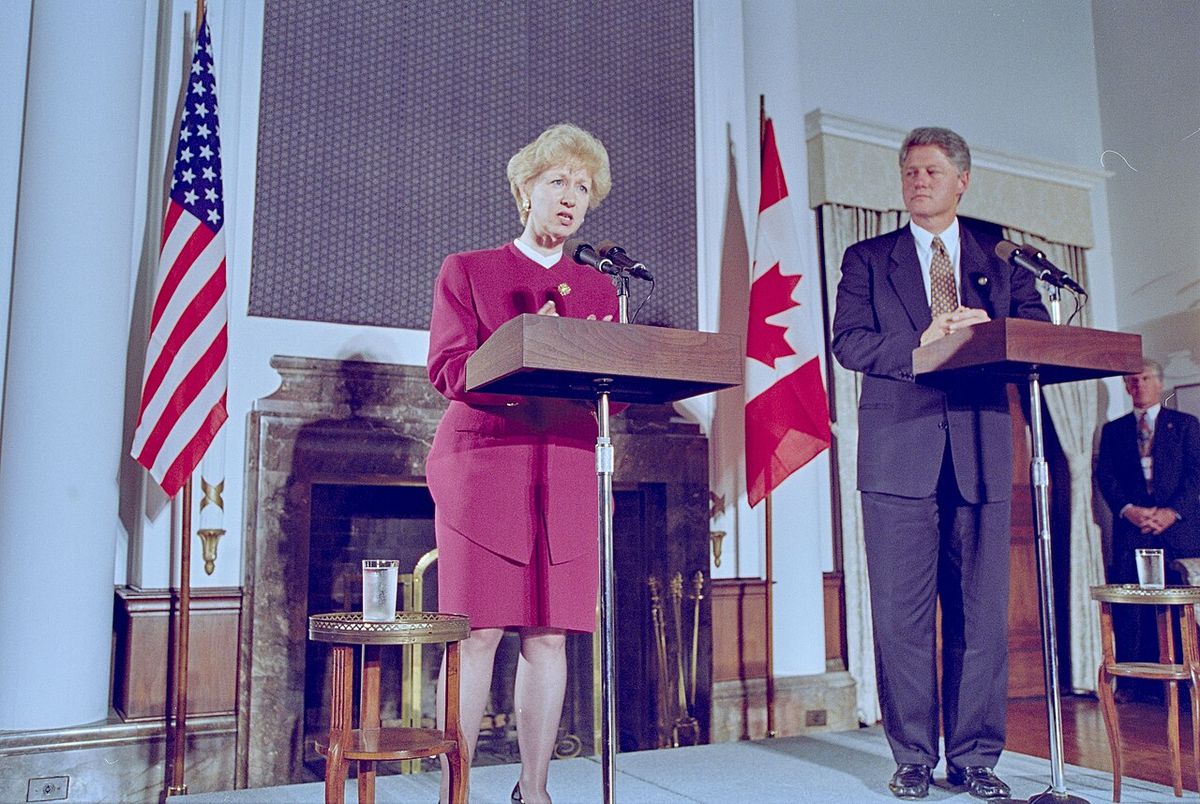
Campbell entered federal politics by winning the Progressive Conservative nomination for Vancouver Centre in 1988 after the incumbent, Pat Carney, declined to run. She was elected to the House of Commons in the 1988 federal election. Prime Minister Brian Mulroney appointed her to cabinet in 1989 as minister of state for Indian affairs and northern development, a junior role supporting the minister of Indian and northern affairs. Her most significant cabinet appointment came in 1990 when she was named minister of justice and attorney general, becoming the first woman to hold that portfolio. In this role, she oversaw major amendments to the Criminal Code concerning firearms control and sexual assault laws. Following the Supreme Court's invalidation of the country's abortion law, Campbell was responsible for introducing Bill C-43 in 1990, which sought to establish new regulations for abortions. The bill passed the House of Commons but was defeated in the Senate by a tie vote, leaving Canada without a federal abortion law, a situation that persists. In January 1993, Campbell was transferred to the demanding posts of minister of national defence and minister of veterans affairs. As defence minister, she was the first woman to hold that role in a NATO country and dealt with contentious issues including the replacement of shipborne helicopters for the navy and search-and-rescue units. The first reports of misconduct by the Canadian Airborne Regiment in what became known as the Somalia Affair also emerged while she was minister, later becoming the subject of a major public inquiry.
- Introduced Bill C-43 on abortion in 1990 after the Supreme Court struck down the existing law in 1988.
- Oversaw amendments to the Criminal Code on gun control and sexual assault provisions between 1990 and 1993.
- Managed the defence portfolio during the emergence of the Somalia Affair scandal in early 1993.
- Denied a new trial for David Milgaard in mid-January 1991, citing insufficient evidence.
- Handled the controversial procurement process to replace the military's search-and-rescue and shipborne helicopters.
- Served as the first woman to hold the justice and defence portfolios in Canadian history.
Upon assuming the justice portfolio, Campbell was handed the petition for a new trial in the case of David Milgaard. In her autobiography, she wrote that she came under considerable pressure from the public and was bombarded with questions from the media and opposition MPs. She stated that Prime Minister Brian Mulroney's expression of concern to Milgaard's mother blindsided her. Campbell defended Mulroney, saying he was much too good a lawyer to intervene improperly. She noted that the media's acceptance of the view that Mulroney had intervened made it difficult to convince others her officials were motivated solely by a desire to make the right decision. In mid-January 1991, she informed Milgaard's legal team that evidence was insufficient to grant the petition.
Prime Ministership and the 1993 Election
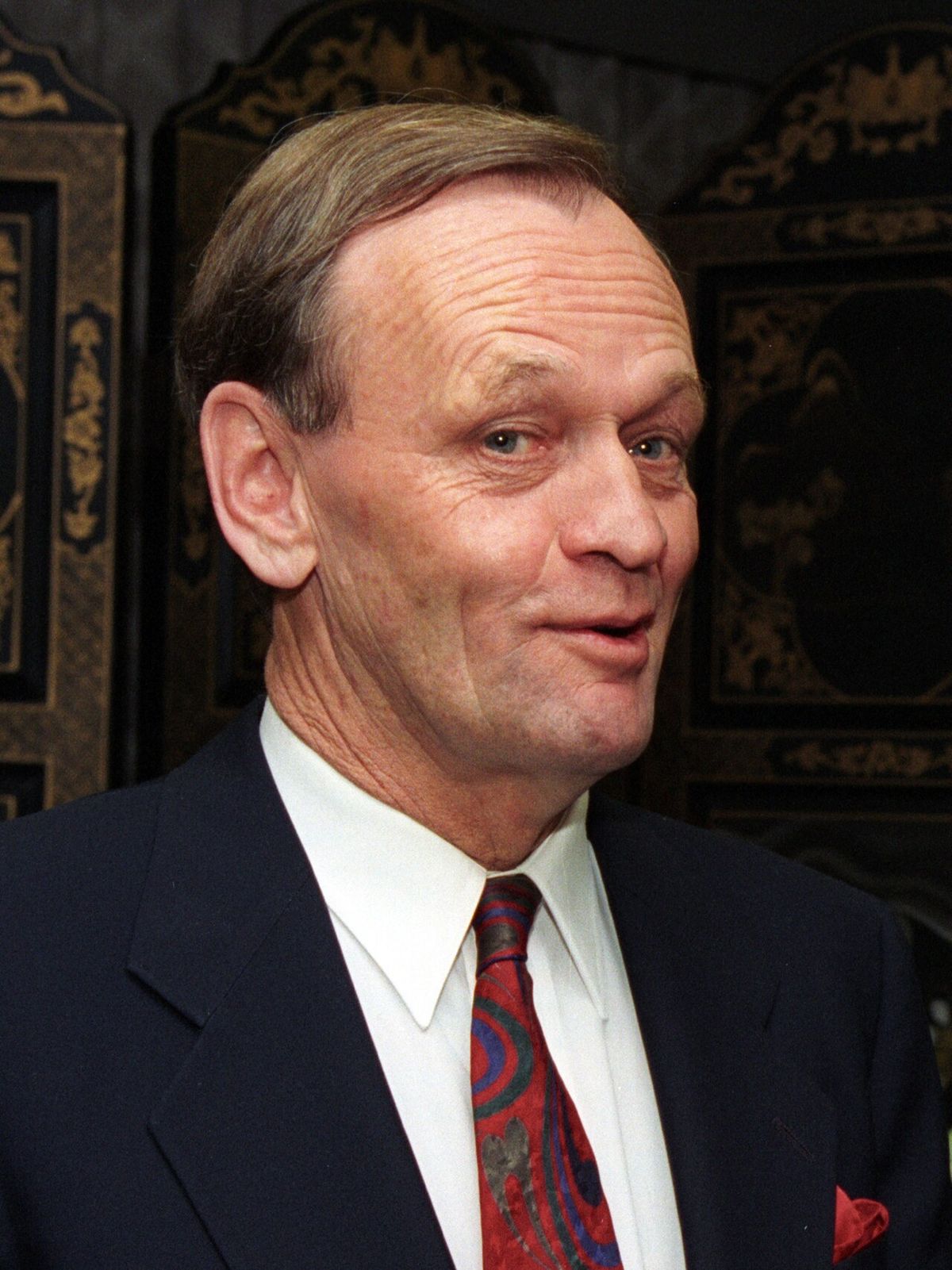
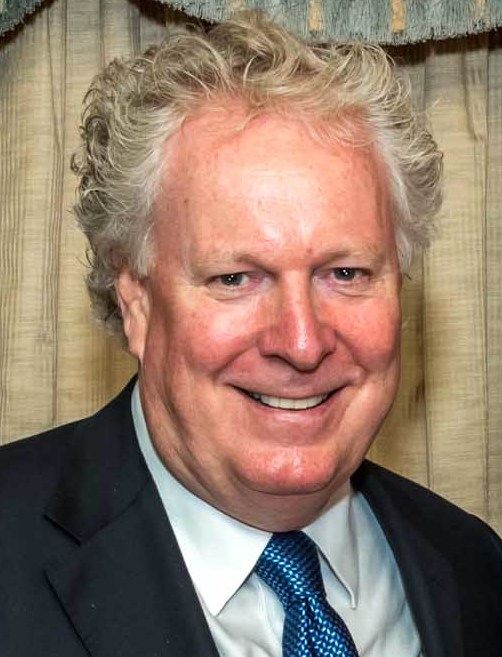
With Prime Minister Brian Mulroney's popularity at a historic low, he announced his retirement in February 1993 to take effect after a successor was chosen. Campbell entered the Progressive Conservative leadership race, having served in four cabinet portfolios, and garnered support from more than half the PC caucus. She defeated Jean Charest at the party's convention in June 1993, and Governor General Ray Hnatyshyn appointed her prime minister on June 25. As a concession, she appointed Charest as deputy prime minister and minister of industry, science, and technology. Campbell reorganized the cabinet, reducing it from 35 to 23 ministers and creating new consolidated ministries for Health, Canadian Heritage, and Public Security. During the summer, she campaigned extensively, touring the nation and attending barbecues, and by August, a Gallup Canada poll showed her with a 51 percent approval rating, making her the most popular prime minister in 30 years and far surpassing Liberal leader Jean Chrétien. Notably, Campbell was the first prime minister not to reside at 24 Sussex Drive since it became the official residence in 1951, as the Mulroneys were completing renovations on their new Montreal home. She instead lived at Harrington Lake, the prime minister's country retreat north of Ottawa.
Campbell waited until September 8, 1993, just weeks before Parliament was due to expire, to ask the Governor General to dissolve Parliament, setting the election for October 25, the latest date possible under the Charter. The campaign began with PC optimism that they could remain in power or form a strong opposition, but it quickly unravelled. Campbell's frank style, initially an asset, backfired when remarks at Rideau Hall that the deficit or unemployment was unlikely to be much reduced before the 'end of the century' were portrayed as pessimistic. She further stated that an election's 47 days was not enough time to discuss a complete overhaul of complex social policies, a comment reduced to her saying an election was no time to discuss important issues. A major controversy erupted when the PC campaign aired a series of attack ads, the second of which appeared to mock Liberal leader Jean Chrétien's facial paralysis caused by Bell's palsy. The ad generated a severe media backlash, with some PC candidates demanding it be pulled. Campbell disavowed direct responsibility and claimed to have ordered it off the air over her staff's objections. As the campaign progressed, PC support collapsed, bleeding to the Liberals in Ontario and Atlantic Canada, to the Reform Party in the West, and to the Bloc Québécois in Quebec.
On election night, October 25, the PCs were swept from power in a Liberal landslide. Campbell lost her own seat in Vancouver Centre to Liberal rookie Hedy Fry, remarking, 'Gee, I'm glad I didn't sell my car.' It was only the third time a sitting prime minister lost their riding during an election loss. The PC caucus was reduced to two seats. All sitting PC MPs except Jean Charest were defeated, with Charest joined by newly elected Elsie Wayne from New Brunswick. The PCs still won over two million votes, finishing third in the popular vote just two percentage points behind Reform, but the first-past-the-post system decimated their parliamentary representation. It was the worst defeat ever suffered by a Canadian governing party at the federal level. Campbell's premiership lasted 132 days, and like Charles Tupper and John Turner, she never faced Parliament, as her term was filled by the summer recess and the election campaign. On December 13, 1993, she resigned as party leader. Some analysts, like professor Joanna Everitt, have pointed to gender bias in media coverage as a contributing factor, where Campbell's actions were often interpreted as having a motive unlike those of male rivals.
Post-Political Career and International Leadership
After leaving politics, Campbell began a distinguished international career focused on leadership, democracy, and gender equality. In 1994, she was a fellow at Harvard University's Institute of Politics, followed by a fellowship at the Joan Shorenstein Center for the Study of Press and Politics from 1994 to 1995. From 1996 to 2000, she served as Canadian consul general in Los Angeles, representing Canadian interests in the southwestern United States. She returned to Harvard in 2001 as one of the inaugural fellows at the Centre for Public Leadership at the Kennedy School of Government, later joining the faculty for three years where she taught courses on democratic transition and consolidation as well as gender and power. Campbell has been a prominent figure in global networks of former leaders. She is a founding member of the Club of Madrid, an independent organization of former heads of state and government, and served as its secretary general from 2004 to 2006, after earlier roles as acting president in 2002 and vice-president from 2003 to 2004. She was chair of the Council of Women World Leaders, a network of women presidents and prime ministers, from 1999 to 2003 and served as president of the International Women's Forum from 2003 to 2005, being inducted into its Hall of Fame in 2008. She chaired the steering committee of the World Movement for Democracy from 2008 to 2015 and served on the board of the International Crisis Group. She remains an honorary fellow and regular guest speaker at Harvard's Centre for Public Leadership.
Later Work in Canada: Advocacy and Education
Campbell has remained active in Canadian public life, primarily through education and advocacy. A key achievement was her role as the Founding Principal of the Peter Lougheed Leadership College at the University of Alberta, appointed in April 2014. The University of Alberta awarded her an honorary degree in 2010 for her contributions to public service. She is a sought-after public speaker, addressing topics such as international politics, climate change, gender equality, and leadership. Campbell serves on the advisory board for the Climate Action Reserve. She also served as the chairperson for the Canadian Supreme Court advisory board, the Independent Advisory Board for Supreme Court of Canada Judicial Appointments, a role she accepted in August 2016. Campbell continues to write and reflect on her political experiences, authoring the autobiography Time and Chance in 1996. She maintains that while proud to be Canada's first female prime minister, she would be prouder still to be the tenth, emphasizing the need for normalized female leadership. In 2019, she stated she could not survive in the Conservative Party, calling it 'too intolerant' and 'too right-wing.' In March 2024, she said she could not support Conservative leader Pierre Poilievre, believing him to be a 'liar and a hate-monger.'
Personal Life and Recognition
Campbell's personal life has included several marriages that intersected with her public career. Her first marriage was to University of British Columbia professor Nathan Divinsky in 1972, ending in divorce in 1983, making her the second divorced prime minister after Pierre Trudeau. She married lawyer Howard Eddy in 1986, but that marriage ended shortly before she became prime minister. During her term as prime minister, she briefly dated Gregory Lekhtman, the inventor of Exerlopers, but kept the relationship private and did not involve him in the election campaign. Campbell is currently married to Hershey Felder, an actor, playwright, composer, and concert pianist. As of 2022, she lived outside Florence, Italy. Throughout her career, Campbell has been recognized with numerous honours reflecting her service and trailblazing status. She retains the style 'The Right Honourable' by virtue of having been prime minister and is a Queen's Counsel (QC). Her other honours include Companion of the Order of Canada (CC) and the Order of British Columbia (OBC). She was also the first baby boomer to hold the office of prime minister and the only prime minister born in British Columbia. In 2004, she was included in the list of 50 most important political leaders in history in the Almanac of World History compiled by the National Geographic Society.
Questions about Kim Campbell
How long was Kim Campbell prime minister?
Kim Campbell served as prime minister for 132 days, from June 25, 1993, to November 4, 1993. This is the third-shortest tenure in Canadian history. Her term was occupied by the summer parliamentary recess and the subsequent federal election campaign, meaning she never faced Parliament as prime minister. The election on October 25 resulted in a catastrophic defeat for her Progressive Conservative Party, which was reduced to only two seats in the House of Commons.
What is Kim Campbell doing now?
Kim Campbell remains active in international leadership and educational initiatives. She is the Founding Principal Emerita of the Peter Lougheed Leadership College at the University of Alberta, a role she began in 2014, and a frequent public speaker. She serves on the advisory board for the Climate Action Reserve and holds leadership roles in global organizations like the Club of Madrid. As of 2022, she lived outside Florence, Italy, with her husband, Hershey Felder.
What cabinet positions did Kim Campbell hold?
Kim Campbell held several significant cabinet portfolios under Prime Minister Brian Mulroney. She served as minister of state for Indian affairs and northern development from 1989 to 1990. From 1990 to 1993, she was minister of justice and attorney general, the first woman in that role. In January 1993, she was appointed minister of national defence and minister of veterans affairs, making her the first female defence minister of a NATO country. These appointments preceded her brief term as prime minister from June to November 1993.
Where was Kim Campbell born and educated?
Kim Campbell was born on March 10, 1947, in Port Alberni, British Columbia. She moved to Vancouver for secondary school, graduating from Prince of Wales Secondary School in 1964 where she was the first female student president. She earned an honours Bachelor of Arts in political science from the University of British Columbia in 1969, where she was also the first female freshman class president. Campbell completed graduate study at the London School of Economics and later returned to UBC to earn a Bachelor of Laws degree in 1983, leading to her call to the British Columbia Bar in 1984.
What are some of Kim Campbell's firsts in Canadian politics?
Kim Campbell achieved several historic firsts in Canadian politics. Most notably, she was the first and only woman to serve as prime minister of Canada. She was also the first woman to hold the positions of minister of justice and attorney general of Canada. As minister of national defence in 1993, she became the first woman to serve as defence minister in any NATO member country. She was also the first baby boomer prime minister and the first prime minister born in British Columbia.
What was the result of the 1993 election for Kim Campbell?
The 1993 federal election was a historic defeat for Kim Campbell and the Progressive Conservatives. On election night, October 25, the PCs were swept from power in a Liberal landslide, losing all but two of their seats from a previous majority. Campbell herself lost her own seat in Vancouver Centre to rookie Liberal Hedy Fry. The PCs still finished with over two million votes, taking third place in the popular vote, but due to the first past the post system, this support was not concentrated enough to translate into more seats. This result was the worst defeat ever suffered by a Canadian governing party at the federal level.
Sources and further reading
- Kim Campbell (Wikipedia)
- Kim Campbell (leg.bc.ca)
- Biography: Rt. Hon. Kim Campbell (ualberta.ca)
- Leadership Speaker Kim Campbell | 19th Prime Minister of ... (nsb.com)
Checked by the Nosy Mag desk. Last updated 2026-10-20.