Canada-United States Free Trade Agreement
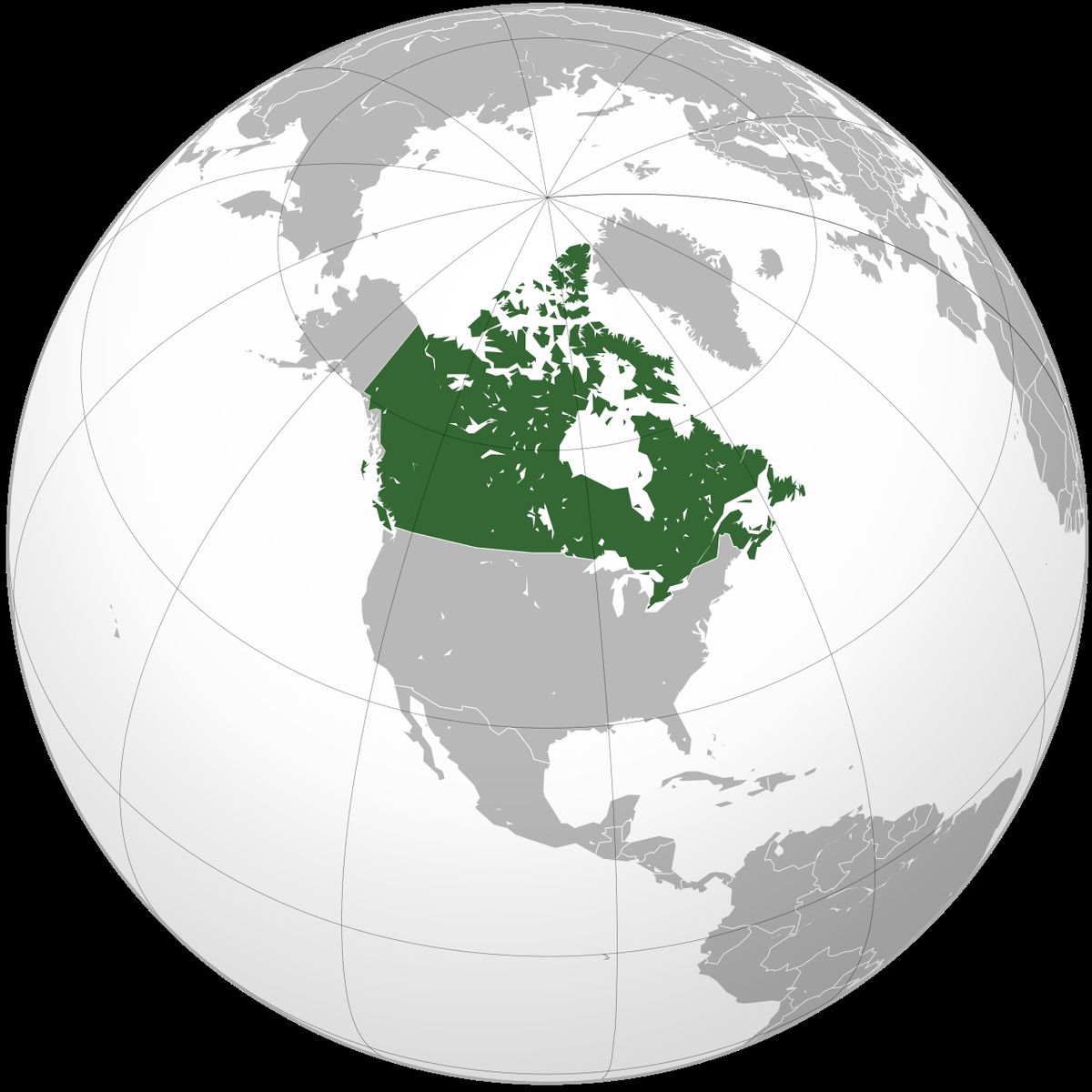
The Canada-United States Free Trade Agreement (CUSFTA) was a bilateral trade pact that reshaped economic relations between the two nations. Negotiated in the 1980s and implemented in 1989, it eliminated most tariffs and reduced non-tariff barriers over a ten-year period. The agreement was a contentious political issue in Canada, sparking a national debate over sovereignty and economic integration. Although superseded by the North American Free Trade Agreement (NAFTA) in 1994, CUSFTA established the framework for North American trade liberalization.
Historical Context and Precursors
The idea of free trade between Canada and the United States has deep historical roots. The Reciprocity Treaty of 1855 established free trade between the United States and the British North American colonies, but the U.S. Congress cancelled it in 1866. Canada's first prime minister, John A. Macdonald, failed to reinstate reciprocity, leading to the protectionist National Policy. The issue resurfaced in the 1911 federal election, where the Liberal Party's proposal for free trade in natural products was defeated after a Conservative campaign employing anti-American rhetoric. From 1935 to 1980, the two nations entered several bilateral trade agreements that reduced tariffs. The most significant was the Automotive Products Trade Agreement, known as the Auto Pact, which integrated the continental auto industry. By the early 1980s, academic studies examined the potential effects of a comprehensive bilateral agreement. Economists like Ronald Wonnacott, Paul Wonnacott, Richard G. Harris, and David Cox produced research suggesting that removing trade barriers would allow Canadian industry to achieve greater economies of scale. Other economists on the free-trade side included John Whalley of the University of Western Ontario and Richard Lipsey of the C. D. Howe Institute. Opponents included Mel Watkins of the University of Toronto and David Crane of the Toronto Star. These ideas gained political traction through government reports, most notably the 1985 report of the Royal Commission on the Economic Union, chaired by former Liberal finance minister Donald Stovel Macdonald, which recommended pursuing a free trade agreement with the United States.
Negotiation Process and Key Provisions
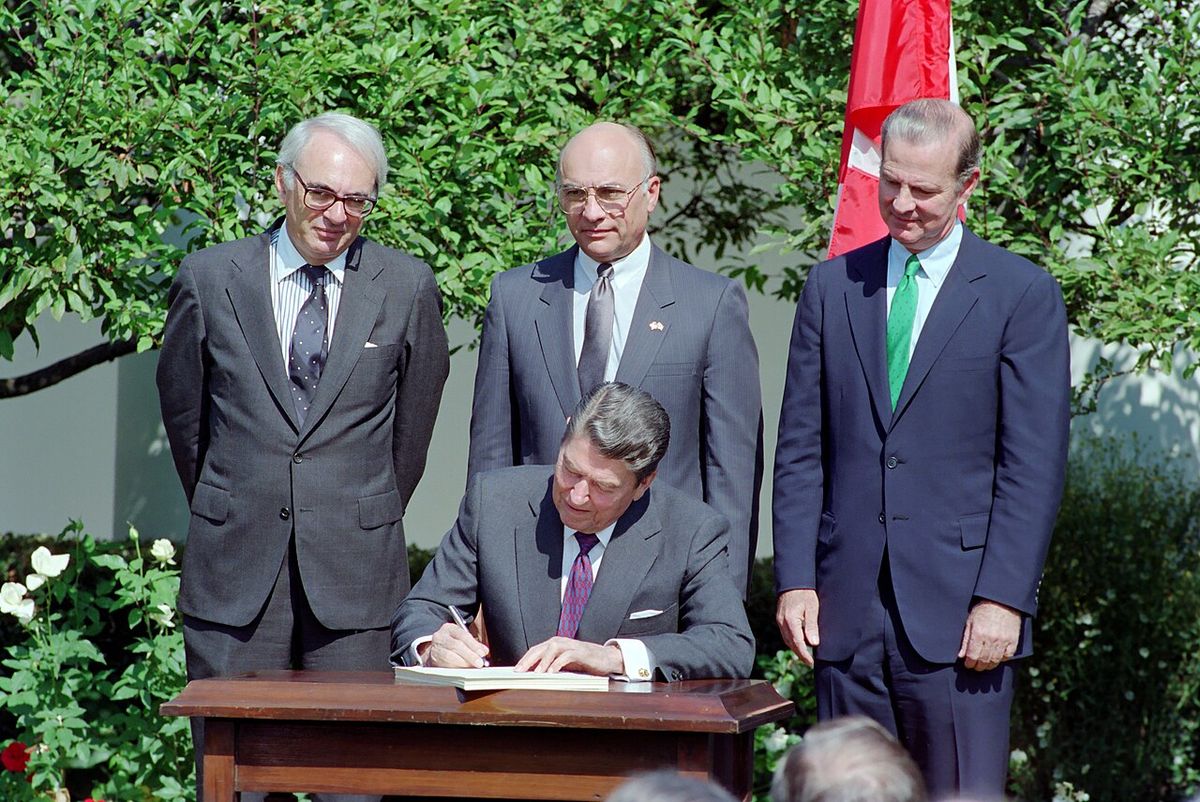
Formal negotiations began in May 1986 after President Ronald Reagan received fast-track authority from the U.S. Congress. The Canadian negotiating team was led by Simon Reisman, a former deputy minister of finance, while the American side was led by Peter O. Murphy, a former deputy U.S. trade representative. Although average tariffs were already below one percent by the 1980s, the agreement aimed at more than tariff elimination. Canada's primary goal was securing guaranteed access to the American market. The United States sought greater access to Canadian energy resources and cultural industries. The final agreement, reached by negotiators on October 4, 1987, and signed by Prime Minister Brian Mulroney and President Reagan on January 2, 1988, contained several provisions. It established a ten-year schedule for the elimination of nearly all tariffs on goods originating in either country. It included comprehensive rules for trade in services and liberalized conditions for cross-border investment. Crucially for Canada, the agreement included a binding dispute settlement mechanism to resolve anti-dumping and countervailing duty cases. Canada retained the right to protect its cultural industries, as well as sectors like health care and education, and kept freshwater resources outside the agreement's scope. Canada did not succeed in winning free competition for American government procurement contracts. The agreement also established procedures for the joint administration of the treaty and laid a foundation for further bilateral and multilateral cooperation.
The Fierce Canadian Debate and 1988 Election
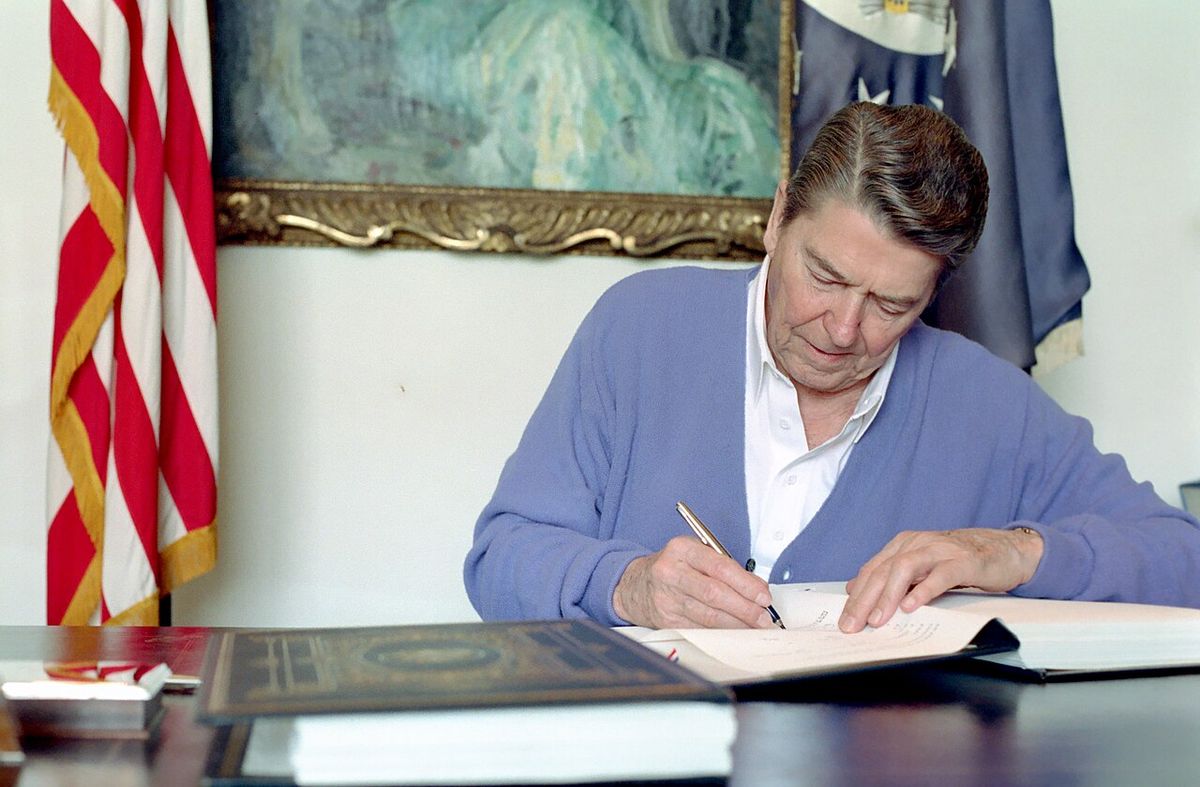
The ratification process in Canada ignited a divisive political battle. The opposition Liberal Party, under leader John Turner, and the New Democratic Party, led by Ed Broadbent, opposed the deal. They argued it would undermine Canadian sovereignty, lead to the erosion of social programs, and force harmonization with U.S. policies. Concerns were also raised about the future of the Auto Pact and other protected sectors. Prime Minister Mulroney's Progressive Conservative government faced delays in the Liberal-controlled Senate, prompting him to call the 1988 federal election, known as the Free Trade Election. The campaign featured intense advertising from both supporters and opponents, a first in Canadian politics. One anti-agreement advertisement depicted negotiators erasing the Canada-U.S. border. Although opinion polls showed slightly more Canadians opposed to than in favour of the deal, Mulroney secured a second majority government. This victory was partly due to the anti-free trade vote being split between the Liberals and NDP, and support in Quebec from figures like future premier Jacques Parizeau and Bernard Landry. The agreement was passed into Canadian law following the election. In the United States, the process faced minimal opposition. Polls showed up to 40 percent of Americans were unaware the agreement had been signed. The U.S. implementation act was given to Congress for fast-track approval by President Reagan on July 26, 1988. The United States-Canada Free-Trade Agreement Implementation Act of 1988 passed the House of Representatives by a vote of 366-40 on August 9, 1988 and the Senate by a vote of 83-9 on September 19, 1988. President Reagan signed the Act on September 28, 1988, and it became Public Law No. 100 to 449.
Economic Effects and Adjustments
The implementation of CUSFTA on January 1, 1989, accelerated the growing trade relationship between the two countries. A key impact was the rise in exports as a share of Canada's economy. While exports historically accounted for about 25 percent of Canada's gross domestic product, they rose to roughly 40 percent after 1990 and approached 50 percent after 2000. The effects on specific industries and workers were complex and influenced by currency fluctuations. In the early 1990s, a high Canadian dollar made manufactured exports more expensive for Americans, contributing to job losses in Ontario's manufacturing sector during a recession. Conversely, a lower Canadian dollar in the mid-to-late 1990s boosted exports of primary products like lumber and oil and made Canada an attractive location for U.S. film production, a trend known as runaway production. A 2016 study estimated that CUSFTA increased yearly profits in Canadian manufacturing by 1.2 percent. A 2024 analysis found that Canadian workers adjusted relatively smoothly to the liberalization, with those in import-competing sectors experiencing short-run challenges but often moving to sectors that benefited from better U.S. market access. The agreement did not resolve all trade disputes, with long-standing issues like softwood lumber remaining contentious. Cross-border shopping became more pronounced, as Canadians took advantage of tariff-free goods and favourable exchange rates in American border towns, providing a mini-boom for those communities. The removal of protective tariffs meant that market forces, such as currency values, have a greater effect on the economies of both countries than they would have with tariffs.
Evolution into NAFTA and USMCA
CUSFTA's lifespan as a standalone agreement was short. In 1994, it was expanded to include Mexico, becoming the North American Free Trade Agreement. NAFTA incorporated CUSFTA's text and added new chapters, creating a trilateral trade bloc. When the Liberal Party under Jean Chrétien took power in 1993, they renegotiated side agreements on labour and environmental standards to address criticisms of NAFTA. An agreement was struck with the Democrats under President Bill Clinton that created separate side deals on these concerns. Decades later, NAFTA itself was renegotiated, resulting in the Canada-United States-Mexico Agreement, which entered into force on July 1, 2020. USMCA updated rules for the digital economy, intellectual property, and automotive rules of origin. The trade relationship established by CUSFTA remains immense, with total U.S. goods and services trade with its USMCA partners estimated at $1.8 trillion in 2022. The framework for dispute resolution and integrated markets that CUSFTA pioneered continues to define North American economic relations. The agreement is no longer at the forefront of Canadian politics, having been superseded by these broader agreements.
Key Figures in the Agreement
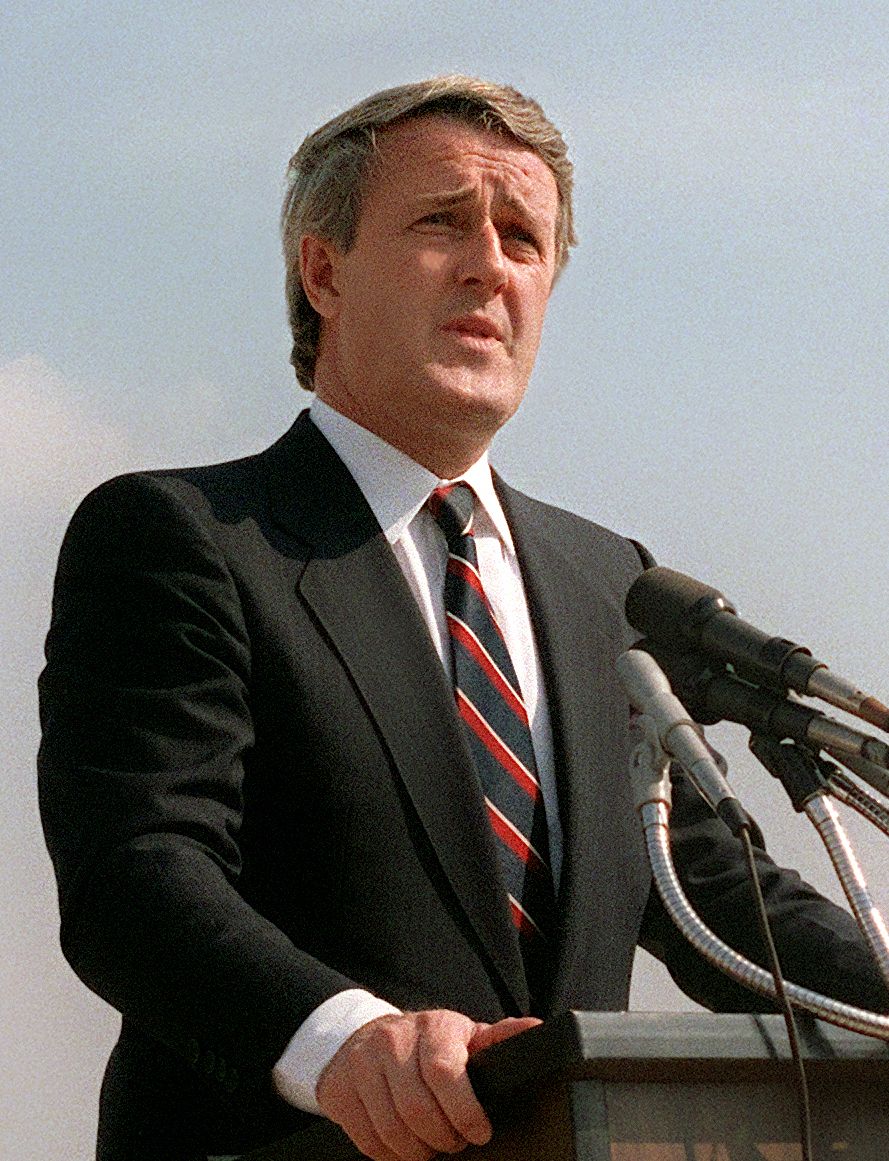
The creation and implementation of the Canada-United States Free Trade Agreement involved political leaders, negotiators, and influential voices. Negotiators for Canada and the United States reached the agreement on October 4, 1987, and it was signed by the leaders of both countries on January 2, 1988. The Canadian negotiation team was led by former deputy Minister of Finance Simon Reisman, while the American side was led by former deputy United States trade representative Peter O. Murphy. In Canada, the agreement was championed by Progressive Conservative Prime Minister Brian Mulroney and was endorsed by the findings of the 1985 Macdonald Commission, which was chaired by former Liberal politician Donald Stovel Macdonald.
- Brian Mulroney: Progressive Conservative Prime Minister of Canada who championed the agreement and called the 1988 election to secure its passage.
- Ronald Reagan: President of the United States who supported the initiative and signed the U.S. implementation act on September 28, 1988.
- Simon Reisman: Veteran Canadian trade official and former deputy minister of finance who served as Canada's chief negotiator.
- Peter O. Murphy: Former deputy U.S. trade representative who led the American negotiating team.
- John Turner: Leader of the Liberal Party of Canada who opposed the deal, famously pledging to tear it up if elected.
- Ed Broadbent: Leader of the New Democratic Party, which opposed the agreement.
- Donald Stovel Macdonald: Former Liberal finance minister who chaired the 1985 royal commission that recommended pursuing free trade.
- Derek Burney: Chief of Staff to Prime Minister Mulroney who played a major role in the final stages of negotiation.
- Jacques Parizeau: Future Quebec premier who backed the agreement, contributing to PC support in Quebec.
- Bernard Landry: Another future Quebec premier who supported the agreement.
- Mel Watkins: University of Toronto economist who opposed the agreement, fearing capital flight and job insecurity.
- David Crane: Toronto Star columnist who was a leading opponent of the agreement.
Major Trade Disputes and Recent Tensions
While the foundational principles of CUSFTA endure, the Canada-U.S. trade relationship continues to experience periods of tension. The agreement has failed to liberalize trade in some areas, most notably the ongoing dispute over softwood lumber. Issues such as mineral and fresh water trade also remain disputed. As of August 2026, U.S.-Canada trade talks failed as trade tensions mounted. In September 2026, the U.S. imposed a ban on the importation of nearly US$1 billion of select Canadian products, and Canada imposed retaliatory tariffs on C$27.6 billion worth of U.S. goods. These developments demonstrate that the managed trade relationship requires constant diplomatic engagement. The dispute settlement mechanisms created by CUSFTA remain important tools for conflict resolution. The long-standing softwood lumber dispute involves U.S. claims that Canadian lumber is subsidized through provincial stumpage fees, leading to periodic tariffs and countermeasures. Other persistent issues include cross-border shopping impacts and differences in agricultural supply management systems. The trade relationship is also affected by broader geopolitical and economic shifts, requiring ongoing negotiation under the successor agreements, USMCA and its dispute settlement chapters.
- July 20, 2026: U.S. President Donald Trump signs proclamations imposing 50% tariffs on a broad range of Canadian products, effective August 22, 2026.
- September 8, 2026: Canada imposes retaliatory tariffs on approximately C$27.6 billion worth of U.S. goods, including steel, dairy, and agricultural equipment.
- September 29, 2026: The United States imposes a ban on the importation of nearly US$1 billion of select Canadian products, including alcoholic beverages and motorcycles.
- Ongoing: The long-standing softwood lumber dispute, which CUSFTA and its successors failed to resolve.
- July 24, 2026: The U.S. applies tariffs related to forced labour import prohibitions, with a 10% rate for countries like Canada that have committed to such prohibitions.
- June 8, 2026: The U.S. adjusts tariffs on aluminum, steel, and copper, setting a 25% tariff on non-U.S. content for CUSMA-compliant products from Canada.
Core Objectives of the Agreement
As stated in its text, the Canada-United States Free Trade Agreement was designed with several specific purposes. The main purposes were to eliminate barriers to trade in goods and services between Canada and the United States. Another purpose was to facilitate conditions of fair competition within the free-trade area established by the Agreement. The agreement also aimed to significantly liberalize conditions for investment within that free-trade area. It sought to establish effective procedures for the joint administration of the Agreement and the resolution of disputes. Finally, it aimed to lay the foundation for further bilateral and multilateral cooperation to expand and enhance the benefits of the Agreement. These goals reflected a comprehensive approach to economic integration, aiming to reduce not just tariffs but also non-tariff barriers and to provide a stable, rules-based system for managing the continent's commerce. The agreement phased out a wide range of trade restrictions in stages over a ten-year period. It resulted in a substantial increase in cross-border trade as an improvement to the last replaced trade deal. The agreement created substantially liberalized trade, removing most remaining tariffs, although tariffs were only a minor part of the FTA as average tariffs were well below 1% by the 1980s. Canada desired unhindered access to the American economy, while Americans wished to have access to Canada's energy and cultural industries.
- Eliminate barriers to trade in goods and services between Canada and the United States.
- Facilitate conditions of fair competition within the free-trade area established by the Agreement.
- Significantly liberalize conditions for investment within that free-trade area.
- Establish effective procedures for the joint administration of the Agreement.
- Create a mechanism for the resolution of disputes.
- Lay the foundation for further bilateral and multilateral cooperation to expand and enhance the benefits of the Agreement.
Questions about Canada-United States Free Trade Agreement
What was the main purpose of the Canada-U.S. Free Trade Agreement?
The agreement had several core objectives. Its primary purposes were to eliminate barriers to trade in goods and services between the two countries and to facilitate conditions of fair competition within the newly created free trade area. It also aimed to significantly liberalize the conditions for cross-border investment and to establish effective procedures for the joint administration of the agreement. A key goal was the creation of a binding dispute resolution mechanism to handle trade disagreements. These purposes are explicitly listed in the agreement's text.
When did the Canada-U.S. Free Trade Agreement start and end?
The agreement was signed by the leaders of both countries on January 2, 1988, following a negotiators' agreement on October 4, 1987. It officially entered into force and began phasing out tariffs on January 1, 1989. The agreement was superseded and effectively replaced on January 1, 1994, when the North American Free Trade Agreement, which included Mexico, came into effect. Therefore, CUSFTA was the governing bilateral framework for a period of five years, from 1989 to 1994.
How did the Free Trade Agreement affect Canadian jobs and the economy?
The economic impacts were mixed and varied over time and by sector. Overall, trade between the two countries increased at an accelerated rate, and exports grew to become a much larger share of Canada's gross domestic product. A 2016 study estimated it increased yearly manufacturing profits by 1.2 percent. However, the removal of tariffs made industries more sensitive to currency values. In the early 1990s, a high Canadian dollar and a recession contributed to manufacturing job losses in Central Canada, which many attributed to the agreement. Later in the decade, a lower dollar boosted resource exports and film production. Research from 2024 suggests workers generally adjusted by moving to expanding export-oriented sectors. The exact ramifications are hard to measure due to other economic factors.
Why was the Free Trade Agreement so controversial in Canada?
The agreement sparked a fierce national debate centred on fears about the loss of Canadian sovereignty and political independence. Opponents, including the Liberal and New Democratic parties, argued that deeper economic integration would make Canada resemble a 51st state of the U.S. and lead to the erosion of distinct social programs and cultural policies. There were also specific concerns about the future of protected sectors like the Auto Pact. The controversy culminated in the 1988 federal election, which was largely fought over this single issue, with intense and negative advertising campaigns from both supporters and opponents. The debate was less prominent in the United States.
What replaced the Canada-U.S. Free Trade Agreement?
The Canada-U.S. Free Trade Agreement was replaced by the North American Free Trade Agreement, which came into force on January 1, 1994. NAFTA incorporated the existing CUSFTA and expanded it to include Mexico, creating a trilateral trade bloc. NAFTA itself was later renegotiated and replaced by the Canada-United States-Mexico Agreement, which entered into force on July 1, 2020. USMCA updated rules for the modern economy but maintained the core framework of free trade and dispute settlement established by its predecessor. The Liberals under Jean Chrétien renegotiated side agreements on labour and environment for NAFTA.
Are there still trade disputes between Canada and the U.S. today?
Yes, trade disputes persist despite the comprehensive agreements in place. Long-standing issues like softwood lumber have never been fully resolved under any of the successive trade pacts. The dispute involves U.S. claims that Canadian lumber is subsidized through provincial stumpage fees. More recently, in 2026, significant new tensions arose with the U.S. imposition of tariffs on a range of Canadian goods, prompting Canadian retaliatory tariffs. The U.S. responded with an import ban on Canadian products. These events demonstrate that the trade relationship requires constant management and that the dispute settlement mechanisms created by the original agreement remain vital.
Sources and further reading
- Canada-United States Free Trade Agreement (Wikipedia)
- U.S., Canada Tariffs: Timeline of Key Dates and Documents (blakes.com)
- Canada-U.S. Free Trade Agreement (international.gc.ca)
- U.S.-Canada Relations (cfr.org)
Checked by the Nosy Mag desk. Last updated 2026-10-27.