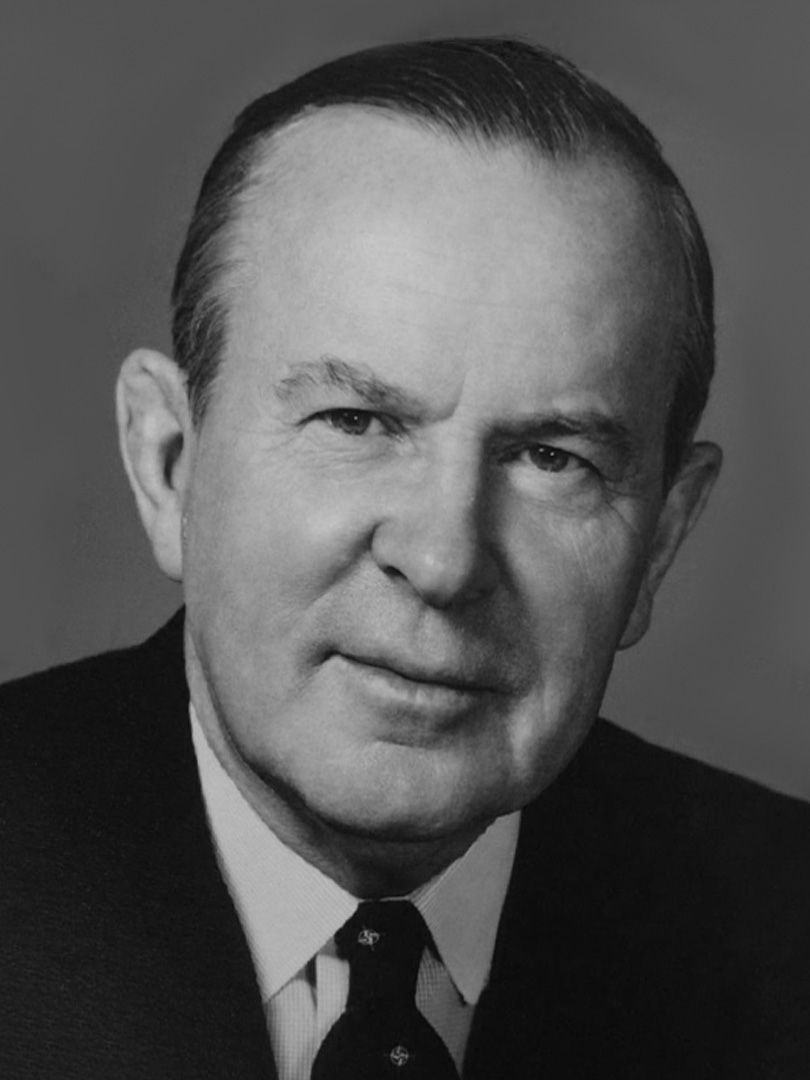
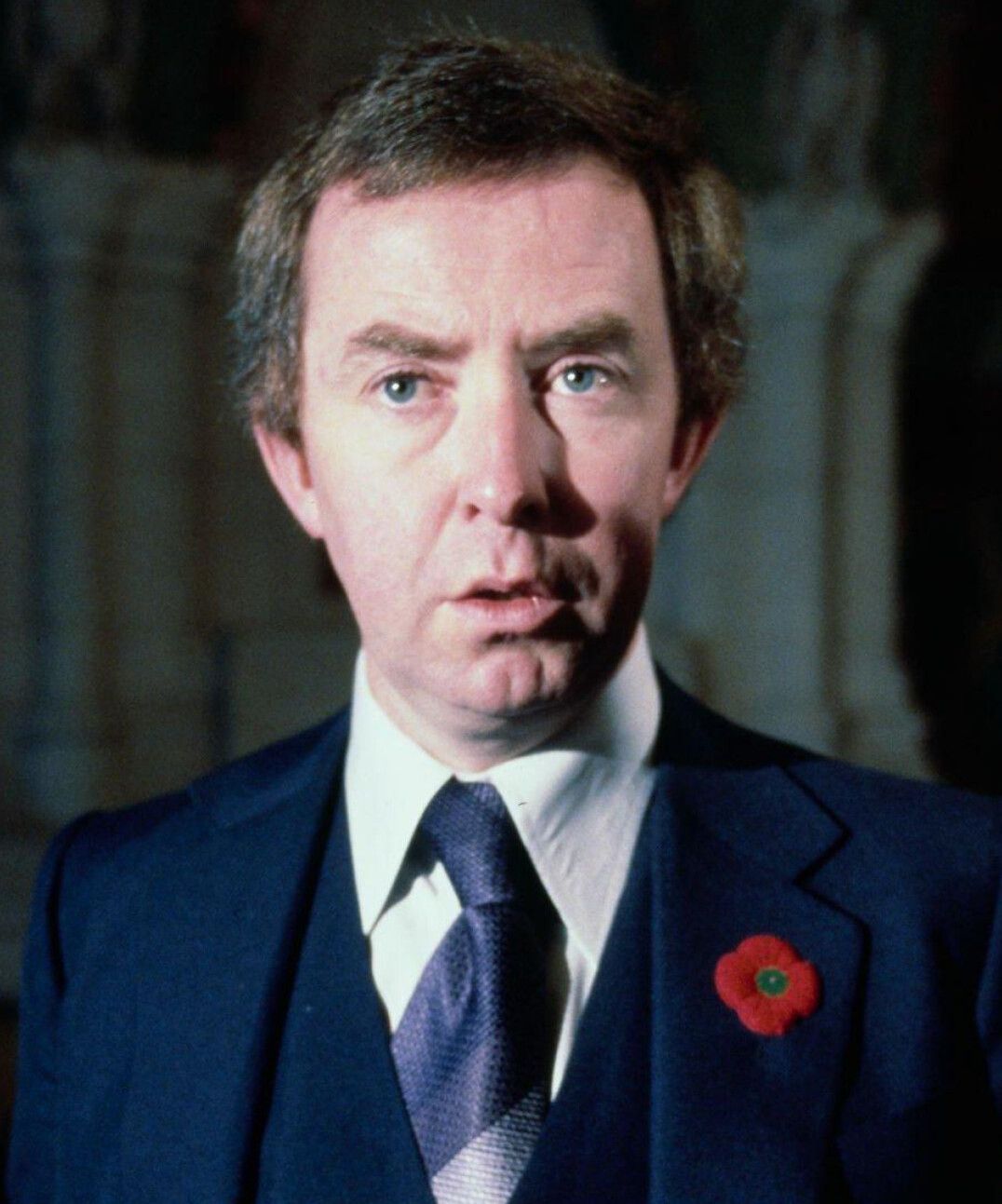
John Diefenbaker
John George Diefenbaker was the 13th prime minister of Canada, serving from 1957 to 1963. A charismatic prairie populist and noted criminal defence lawyer, he led the Progressive Conservative Party to break a 22-year Liberal dynasty, becoming the only Progressive Conservative leader to lead the party to an election victory between 1935 and 1979. His government championed a vision of "One Canada," passing the Canadian Bill of Rights, extending the federal vote to Indigenous peoples, and appointing the nation's first female cabinet minister and first Indigenous senator. Diefenbaker's tenure was also marked by the controversial cancellation of the Avro Arrow jet program and internal divisions over nuclear weapons policy, which contributed to his government's downfall after six years in power.
Early Life and Education
John George Diefenbaker was born on September 18, 1895, in the small town of Neustadt, Ontario, to William Thomas Diefenbaker and Mary Florence Bannerman. His father was a teacher of German descent, while his mother was of Scottish background, and the family practised the Baptist faith. In 1903, the family migrated west to the Fort Carlton region of the North-West Territories, which would become Saskatchewan the following year. William Diefenbaker claimed a homestead near Borden in 1906 before moving the family to Saskatoon in 1910 to secure better educational opportunities for John and his brother Elmer. Diefenbaker displayed an early interest in politics, famously telling his mother at age eight or nine that he would one day become prime minister, an ambition she initially dismissed as impossible for a prairie boy.
After graduating from high school in Saskatoon in 1912, Diefenbaker entered the University of Saskatchewan. He earned his Bachelor of Arts degree in 1915 and a Master of Arts the following year. With the First World War underway, he was commissioned as a lieutenant in the 196th (Western Universities) Battalion of the Canadian Expeditionary Force in May 1916. He was sent to Britain for training later that year. Diefenbaker related in his memoirs that he was eventually sent home as an invalid after an injury, though his army medical records show no contemporary account of the incident. After leaving the military in 1917, he returned to Saskatchewan, completed his law degree in 1919, and was called to the bar on June 30, 1919, becoming the first student to secure three degrees from the University of Saskatchewan.
Legal Career and Early Political Defeats
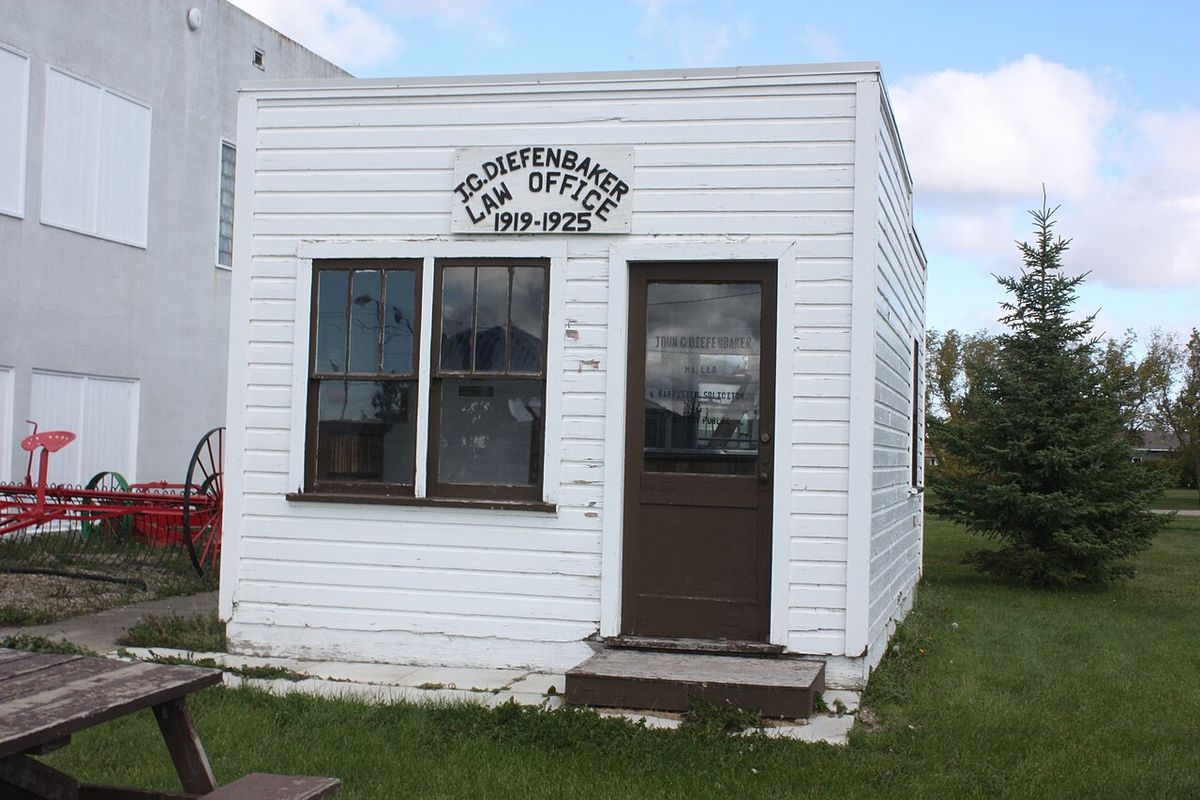
Diefenbaker opened his first law practice in the village of Wakaw, Saskatchewan, on July 1, 1919, despite initial resistance from locals loyal to the town's sole existing barrister. He quickly established a successful criminal defence practice, trying 62 jury trials in his first year and winning approximately half of his cases. His technique often involved calling no defence witnesses to secure the last word for himself. In late 1920, he was elected to the Wakaw village council for a three-year term. After four years, he dominated the local legal practice so thoroughly that his competitor left town, prompting Diefenbaker to move his practice to the larger centre of Prince Albert on May 1, 1924.
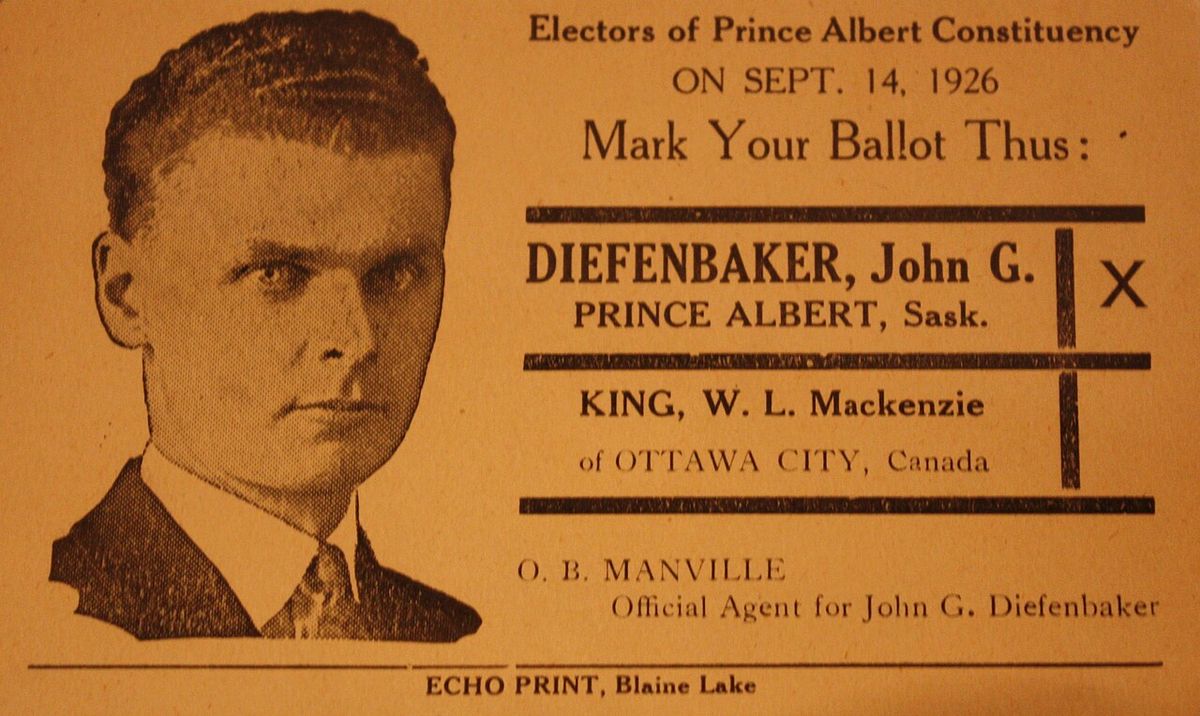
Diefenbaker's political ambitions emerged alongside his legal career, though his early forays were marked by repeated defeat. He was attracted to the Conservative Party due to its stance against free trade with the United States, contrary to his Liberal father's views. His electoral record as a candidate during this period is a sign of his perseverance. He finished third in the federal riding of Prince Albert in 1925, losing his deposit, and was defeated by Prime Minister William Lyon Mackenzie King in a rare direct contest there in 1926. He lost a bid for the Saskatchewan Legislative Assembly in 1929 and the race for Mayor of Prince Albert by 48 votes in 1933. Despite these losses, he was appointed a King's Counsel in 1929 and married Saskatoon teacher Edna Brower three weeks after his provincial defeat that same year.
John Diefenbaker served as Crown prosecutor for Prince Albert in 1934. He became the acting president of the Saskatchewan Conservative Party in 1935. At a leadership convention in October 1936, ten other candidates withdrew from the race. Diefenbaker consequently won the position of provincial party leader by default. He led the Saskatchewan Conservatives into the 1938 provincial election. In that election, Diefenbaker was personally defeated in the Arm River riding by a margin of 190 votes. The party was shut out of the provincial legislature for the second consecutive time, securing only 12 percent of the popular vote.
Path to Parliament and Party Leadership
After declining to run in the 1930 federal election for health reasons, Diefenbaker finally secured the Conservative nomination for the federal riding of Lake Centre in 1940 through what his biographer described as an "elaborate and prearranged charade" where he initially withdrew his name. In the general election called for March 25, 1940, Diefenbaker campaigned aggressively with 63 rallies, appealing across party lines. He defeated the Liberal incumbent, John Frederick Johnston, by 280 votes. This victory came on an otherwise disastrous day for the Conservatives, who won only 39 of 245 seats, their lowest total since Confederation.
Diefenbaker joined a shrunken and demoralized Conservative caucus in Ottawa. He made his maiden speech in the House of Commons on June 13, 1940, supporting the Defence of Canada Regulations while defending the loyalty of most Canadians of German descent. He proved to be a persistent critic of the Liberal government, so much so that Prime Minister Mackenzie King once angrily asked him, "What business do you have to be here? You strike me to the heart every time you speak." Diefenbaker stood for the party leadership in 1942, finishing a distant third. He finally won the leadership on his third attempt at a convention in December 1956, becoming the leader of the Official Opposition.
Prime Minister: The Diefenbaker Government
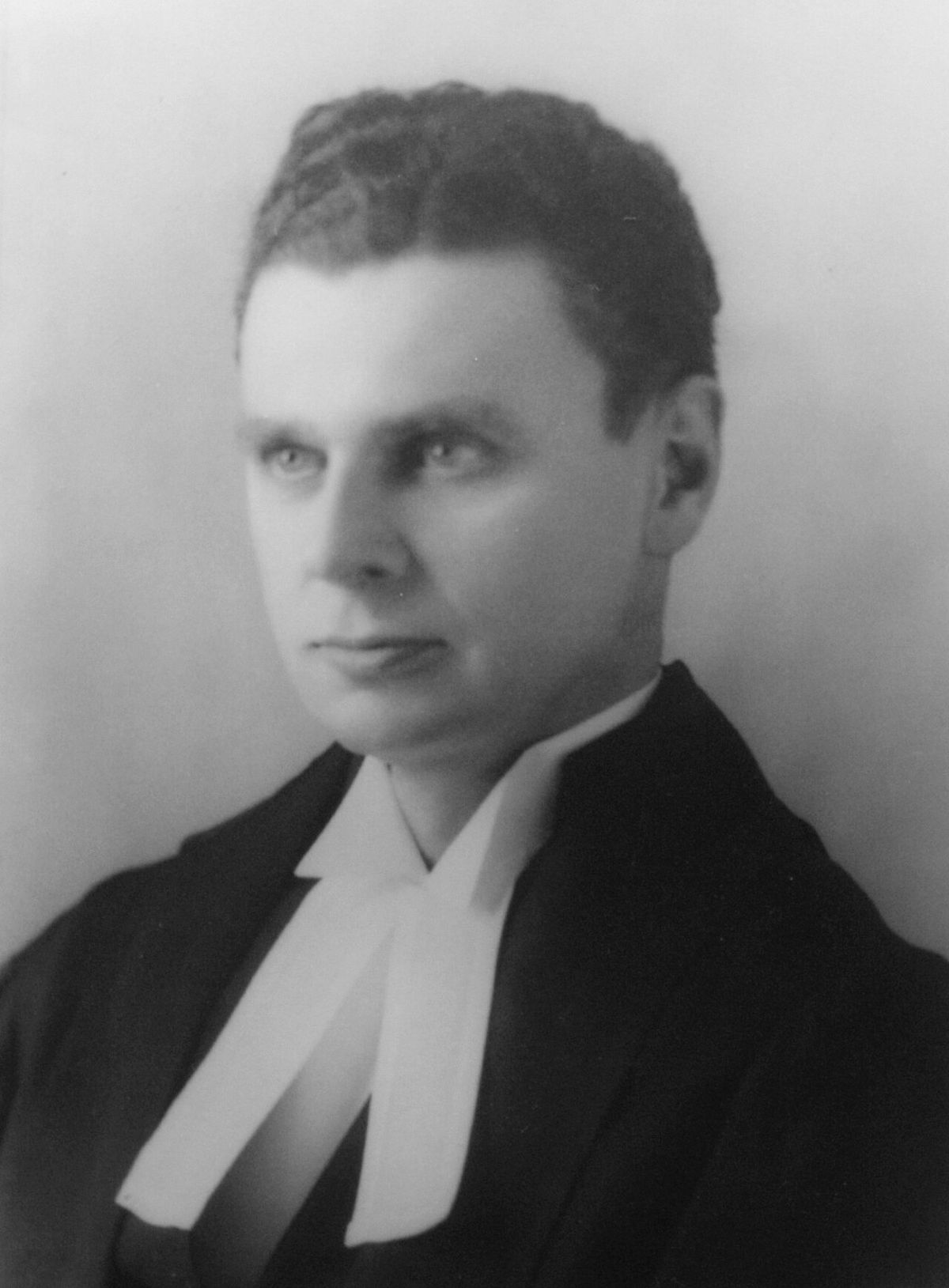
In the 1957 federal election, Diefenbaker led the Progressive Conservatives to their first electoral victory in 27 years, defeating Louis St. Laurent's Liberals and forming a minority government. He was sworn in as prime minister on June 21, 1957. His government pursued a populist vision he called "One Canada," emphasizing national unity and the rights of the individual. His administration was notable for several historic firsts and key policy initiatives.
Diefenbaker's government made significant strides in human rights and representation. In 1958, he appointed Ellen Fairclough as Secretary of State, making her the first woman to serve in a Canadian federal cabinet. That same year, he appointed James Gladstone, a member of the Blood Tribe, as the first Indigenous person to the Senate. In 1960, he achieved a lifelong goal with the passage of the Canadian Bill of Rights, a federal statute that enumerated fundamental freedoms and rights. That same year, his government granted the right to vote in federal elections to First Nations and Inuit peoples. In 1962, racial discrimination was eliminated from Canada's immigration policy. His government welcomed the first Chinese-Canadian and Ukrainian-Canadian Members of Parliament.
In foreign and defence policy, Diefenbaker's record was more contentious. In 1959, his government controversially cancelled the advanced Avro Arrow jet interceptor program, resulting in the immediate dismissal of 14,000 employees. His stance against apartheid helped secure the passage of a critical anti-apartheid declaration at the 1961 Commonwealth Prime Ministers' Conference, leading to South Africa's departure from the Commonwealth. His relationship with U.S. President John F. Kennedy was famously strained, and his indecision over whether to accept nuclear-armed Bomarc missiles from the United States for continental defence created a deep rift within his cabinet and party.
Electoral Record and Defeat
Diefenbaker's electoral success was dramatic but short-lived. After forming a minority government in 1957, he called a snap election in 1958 and led the Progressive Conservatives to a historic landslide victory, winning 208 seats. After the massive 1958 victory, his government began to unravel due to economic troubles and the nuclear weapons controversy. In the 1962 election, the PCs were reduced to a minority government. The minority government fell in February 1963 after a revolt within cabinet over the Bomarc issue. In the ensuing April 1963 election, Lester B. Pearson's Liberals won a minority with 129 seats, and Diefenbaker moved to the opposition benches. He remained party leader but faced growing internal dissent. After a second electoral loss, opponents forced a leadership convention in 1967. Diefenbaker stood for re-election at the last moment but attracted minimal support and withdrew. He was succeeded by Robert Stanfield.
Later Years and Death
Despite losing the party leadership, Diefenbaker remained a Member of Parliament, representing the riding of Prince Albert. He continued to serve as a backbencher under Stanfield and later under Joe Clark. In the May 1979 federal election, he won his seat for the 13th time, having never lost an election after his initial 1940 victory. This election made Joe Clark the first Progressive Conservative prime minister since Diefenbaker himself. Diefenbaker's health had been declining, and he died of a heart attack in his study at his Ottawa home on August 16, 1979, just three months after Clark took office. He was given a state funeral, and his body lay in state in the Hall of Honour in Parliament's Centre Block before being interred in Saskatoon, near the University of Saskatchewan campus.
Personal Life and Character
John Diefenbaker was married twice. His first marriage was to Edna Brower, a Saskatoon teacher, in 1929. She died of leukemia in 1951. In 1953, he married Olive Palmer, formerly Olive Freeman, whom he had courted in his Wakaw days. There were no children from either marriage. Diefenbaker was known for his theatrical oratory, his jutting jaw, and his deep, resonant voice, which earned him the nickname "Dief the Chief." He saw himself as the voice of the "average Canadian" and maintained a deep, lifelong connection to Saskatchewan and the prairie populist tradition. His personal papers and effects form the core collection of the Diefenbaker Canada Centre at the University of Saskatchewan.
Historical Legacy and Cultural Presence
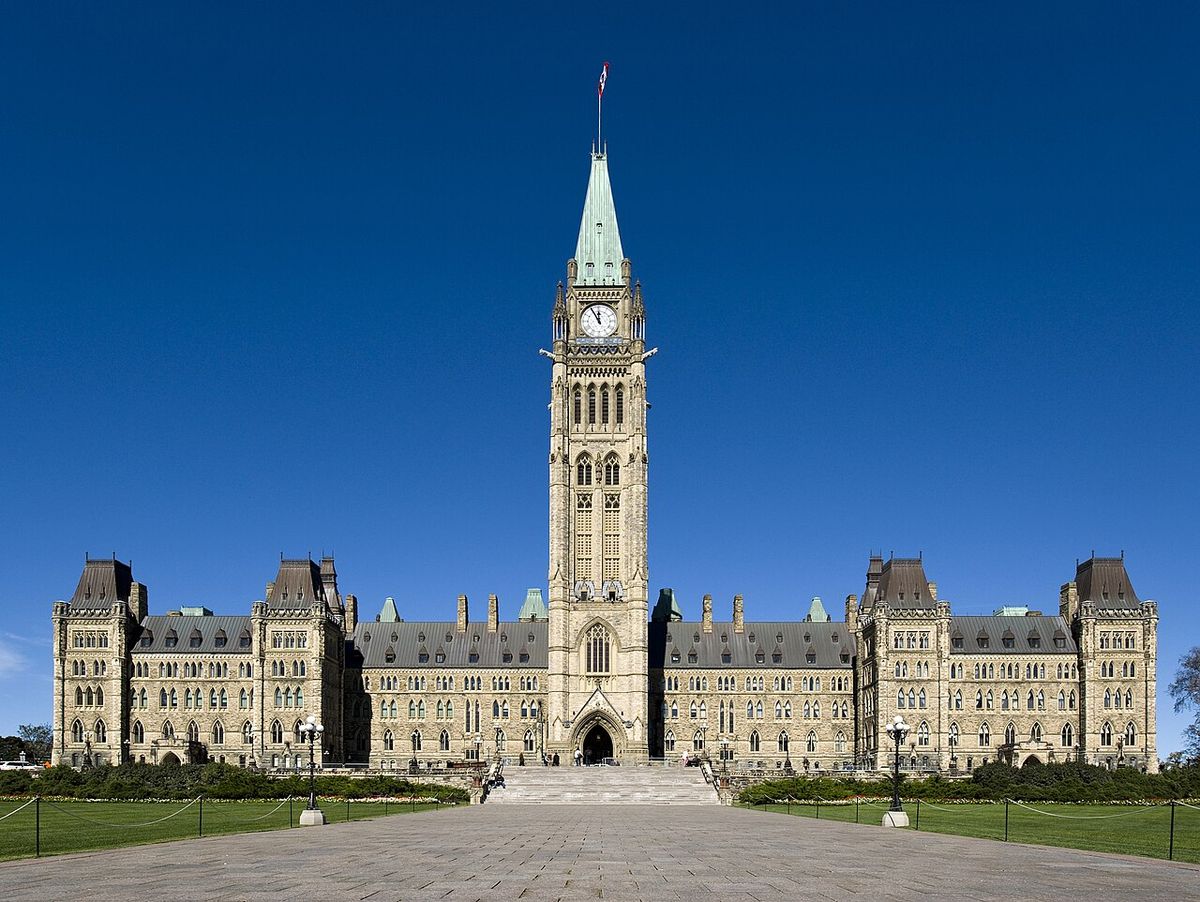
Historians and political scientists rank John Diefenbaker as an average prime minister in overall assessments. His legacy is a complex mix of visionary triumphs and managerial failures. He is celebrated for advancing human rights and a more inclusive concept of Canadian citizenship through the Bill of Rights and extending the franchise. His dream of "One Canada" that found strength in diversity remains a powerful part of his political record. Conversely, he is criticized for the economic mismanagement of his later years, the abrupt cancellation of the Avro Arrow, and the internal party strife that characterized his leadership. Diefenbaker's life and the dramatic crisis of his premiership continue to resonate in Canadian culture. The Diefenbunker, the Central Emergency Government Headquarters built in Carp, Ontario, during his tenure, is now a Cold War museum. A theatrical production titled Dief the Chief: October ’62, which relives the Cuban Missile Crisis through his eyes, has been performed at the museum. His vision of a united Canada is frequently invoked in contemporary political discourse.
Questions about John Diefenbaker
What was John Diefenbaker's 'One Canada' vision?
John Diefenbaker's 'One Canada' vision emphasized a united country where all citizens were equal, regardless of their racial origin. He stated that from his earliest days he knew the meaning of discrimination and was a sworn enemy of it. His government passed the Canadian Bill of Rights in 1960 to help assure equality. That same year, his government also granted the federal vote to First Nations and Inuit peoples as part of this vision.
What was the Bomarc missile controversy?
The Bomarc missile controversy was a major defence and political crisis for Diefenbaker's government. Canada had agreed to acquire Bomarc surface-to-air missiles from the United States in 1958. The crisis arose when it became clear the missiles required nuclear warheads to be effective. Diefenbaker was deeply hesitant about accepting nuclear weapons on Canadian soil, leading to years of indecision. This hesitation split his cabinet, contributed to the government's defeat in a confidence vote in February 1963, and severely strained relations with the Kennedy administration.
What were Diefenbaker's key achievements for human rights?
Diefenbaker's government achieved several landmark advancements for human rights in Canada. The most significant was the Canadian Bill of Rights, passed in 1960, which was the first federal law to explicitly protect fundamental freedoms and legal rights. In 1960, his government also granted the right to vote in federal elections to Status Indians and Inuit. In 1962, his government eliminated racial discrimination from Canada's immigration regulations.
Why did Diefenbaker cancel the Avro Arrow?
John Diefenbaker's government cancelled the Avro Arrow project in February 1959. The decision was part of a broader shift in defence strategy. The supersonic jet interceptor had suffered from cost overruns, and the Royal Canadian Air Force had reduced its projected need from 20 to only nine squadrons. The US government was unwilling to commit to purchasing the aircraft. The cancellation resulted in the immediate dismissal of 14,000 employees at Avro Canada.
Where and when was John Diefenbaker born?
John Diefenbaker was born on September 18, 1895, in the small town of Neustadt in Southwestern Ontario. His father, William Thomas Diefenbaker, was the son of German immigrants from Adersbach in Baden, and his mother, Mary Florence Diefenbaker, was of Scottish descent. The family was Baptist, and they moved to several locations in Ontario during John's early years. In 1903, the family migrated west to the portion of the North-West Territories that would soon become the province of Saskatchewan.
What was John Diefenbaker's early career before politics?
Before entering politics, John Diefenbaker was a noted criminal defence lawyer. After serving in World War I and receiving a law degree in 1919, he opened a practice in Wakaw, Saskatchewan. In his first year, he tried 62 jury trials, winning approximately half of his cases. He later moved his practice to Prince Albert in 1924. Diefenbaker also served on the Wakaw village council from late 1920 for a three-year term and was appointed a King's Counsel in 1929.
Sources and further reading
- John Diefenbaker (Wikipedia)
- The Life and Political Career of John G. Diefenbaker (diefenbaker.usask.ca)
- John Diefenbaker (thecanadianencyclopedia.ca)
Checked by the Nosy Mag desk. Last updated 2026-10-22.