Poker
Poker is a family of comparing card games in which players wager over which hand is best according to that specific game's rules. It is played worldwide under various rules and structures. In Canada, poker is a popular casino and online activity for adults, with major venues like the Casino de Montréal and Playground Poker Club hosting regular tournaments and cash games. Its prominence has grown significantly since the early 21st century, fueled by televised events, online platforms, and multimillion-dollar tournaments like the World Series of Poker.
History and Evolution
The origin of poker is debated, with many game scholars pointing to the French game Poque and the Persian game As-Nas as possible early inspirations. Poker was popularized in the American South in the early 19th century, as gambling riverboats on the Mississippi River and around New Orleans during the 1830s helped spread the game. An early description from 1829 by English actor Joe Cowell notes the game was played with a 20-card deck ranking from Ace high to Ten low. The game evolved from these straight poker variants, where a complete hand was dealt, to more complex forms. Seven-card stud appeared in the mid-19th century and was spread by the US military, becoming a casino staple after World War II and growing in popularity with the advent of the World Series of Poker in the 1970s. The late 20th and early 21st centuries saw the rise of community card games like Texas hold 'em. The televising of poker, particularly the World Series of Poker, was a major catalyst for a global poker boom between 2003 and 2006.
Fundamental Gameplay and Rules
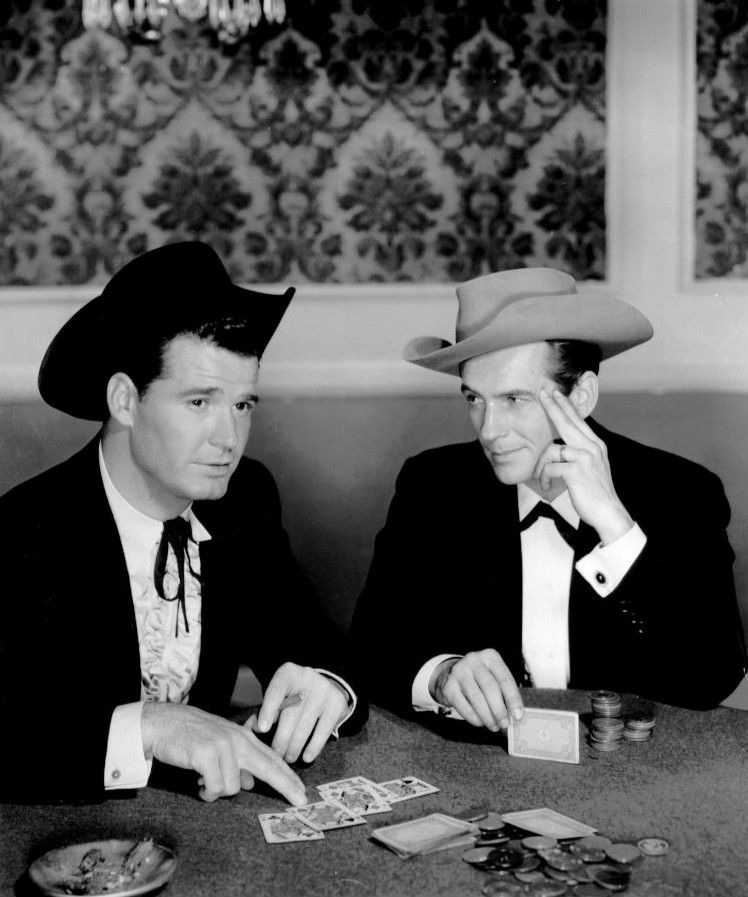
Poker gameplay follows a consistent pattern across most variants, centered on betting rounds and hand formation. A dealer button rotates clockwise to indicate the nominal dealer and determine betting order. The game begins with forced bets, typically blinds or antes. The dealer shuffles the cards, the player to their right cuts, and the dealer deals the appropriate number of cards to the players one at a time, beginning with the player to their left. Cards are dealt either face-up or face-down depending on the variant. This is followed by the first of potentially several betting rounds where players act in turn, choosing to call the current bet, raise, or fold. Between rounds, players' hands develop, often by being dealt additional cards. If all but one player folds during a betting round, that remaining player wins the pot immediately without showing their cards. If more than one player remains after the final betting round, a showdown occurs. The player with the best five-card hand, according to the standard poker hand rankings, wins the entire pot. In games where players have more than five cards, only the best five-card combination is used.
Poker Hand Rankings
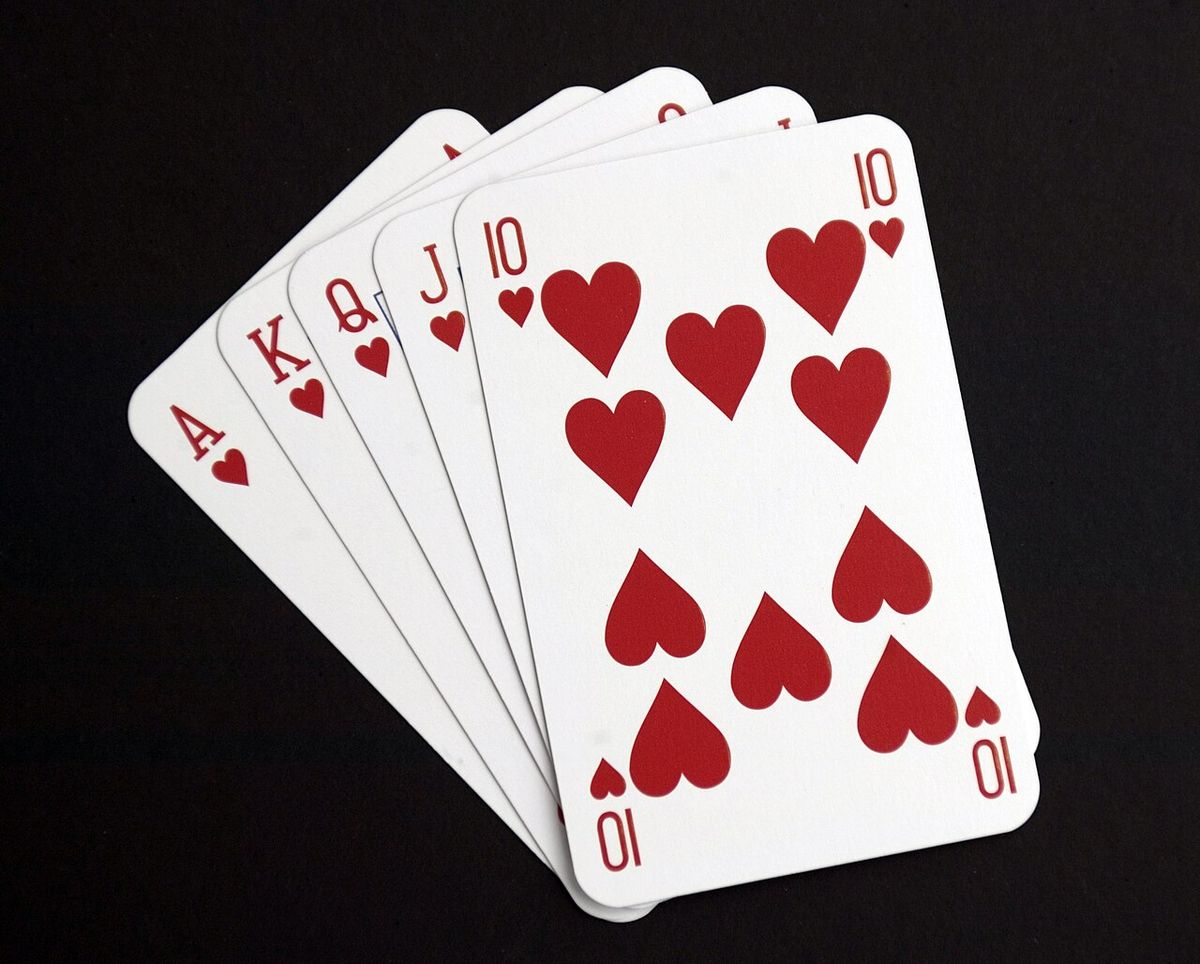
The ranking of poker hands is universal across most variants, determining the winner at showdown. Hands are always composed of five cards. There are 10 different kinds of poker hands. The combinations are listed here from strongest to weakest. A Royal Flush is an Ace, King, Queen, Jack, and Ten, all of the same suit. A Straight Flush consists of five consecutive cards of the same suit. Four of a Kind is four cards of the same rank. A Full House is three cards of one rank and two cards of another rank. A Flush is any five cards of the same suit, not in sequence. A Straight is five consecutive cards of mixed suits. Three of a Kind is three cards of the same rank. Two Pair is two cards of one rank and two cards of another rank. One Pair is two cards of the same rank. High Card is a hand with none of the above combinations. When players have the same type of hand, tie-breakers are used. For flushes and high-card hands, the player with the highest card wins. For straights, the highest top card wins. For full houses, the higher three-of-a-kind determines the winner. For two pair, the higher pair is compared first, then the lower pair, and finally the kicker. If two hands are identical, the pot is split.
- Royal Flush: A-K-Q-J-10, same suit.
- Straight Flush: Five consecutive cards, same suit.
- Four of a Kind: Four cards of the same rank.
- Full House: Three of a kind plus a pair.
- Flush: Any five cards of the same suit.
- Straight: Five consecutive cards of any suit.
- Three of a Kind: Three cards of the same rank.
- Two Pair: Two different pairs.
- One Pair: Two cards of the same rank.
- High Card: None of the above, highest card plays.
Major Variants and Betting Structures
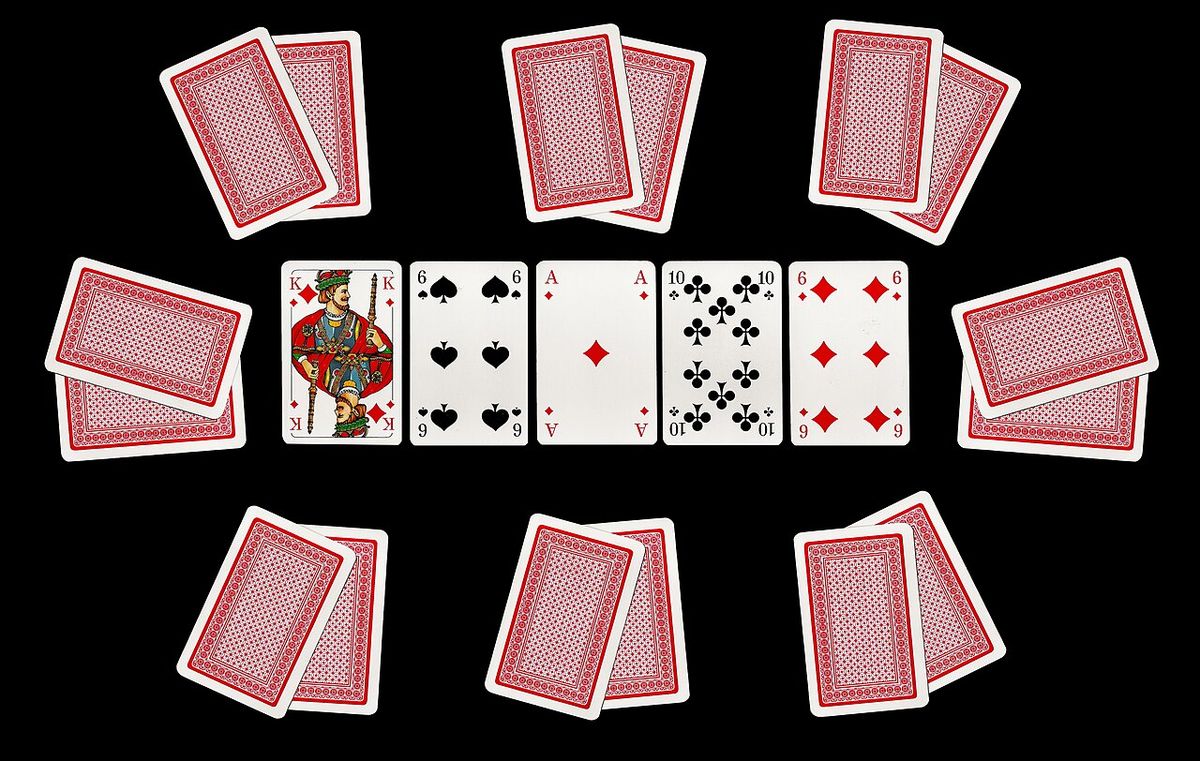
Poker variants are largely grouped by how cards are dealt and betting occurs. The four main families are straight, stud, draw, and community card poker. Straight poker involves dealing a complete hand to each player followed by a single betting round. Stud poker features cards dealt in a combination of face-down and face-up rounds, or streets, with a betting round after each. Seven-card stud is the most popular variant in this category. In draw poker, players are dealt a complete hand face-down, bet, then have the option to discard and replace cards before a final betting round. Community card poker is a variation of stud where players receive incomplete face-down hands and share face-up community cards. Texas hold 'em and Omaha are the dominant games in this family. Betting structures define how much players can wager during a hand. The three most common structures are fixed-limit, pot-limit, and no-limit. In fixed-limit poker, bets and raises must be in standardized increments. In pot-limit poker, a player may bet or raise any amount up to the size of the pot. In no-limit poker, a player may wager their entire stack at any time. All structures allow a player to go all-in if they cannot match a full bet.
- Straight Poker: Complete hand dealt, one betting round (e.g., Primero).
- Stud Poker: Cards dealt face-up/down in streets (e.g., Seven-card stud).
- Draw Poker: Complete hand dealt, draw replacement cards (e.g., Five-card draw).
- Community Card Poker: Shared face-up cards (e.g., Texas hold 'em, Omaha).
- Fixed-Limit: Bets/raises in set increments.
- Pot-Limit: Bets/raises up to pot size.
- No-Limit: Any wager up to full stack allowed.
Poker in the Canadian Context
Poker is a widely played casino game in Canada, available to adults aged 19 and older (18 in Alberta, Manitoba, and Quebec). Major Canadian casinos feature dedicated poker rooms with regular cash games and tournaments. The Casino de Montréal, operated by Loto-Québec, has a poker room and runs daily promotions. It also participates in a network-wide Bad Beat Jackpot. The Playground Poker Club in Kahnawake, Quebec, is a premier destination, frequently hosting major tournament series like the World Series of Poker Circuit. In Alberta, venues like Pure Casino Yellowhead in Edmonton offer Texas Hold'em and Omaha games. Online poker is also legal and regulated in many provinces. The game's appeal in Canada is enhanced by its skill-based nature, as players compete against each other rather than against a built-in house edge, though casinos collect revenue through rake or time fees.
| Venue/Event | Location | Key Details |
|---|---|---|
| Casino de Montréal Poker Room | Montréal, QC | Part of Loto-Québec network, offers Bad Beat Jackpot. |
| WSOP Circuit at Playground | Kahnawake, QC | Hosts WSOP-C events. |
| Pure Casino Yellowhead Poker Room | Edmonton, AB | Offers limit and no-limit Texas Hold'em and Omaha cash games. |
| Loto-Québec Bad Beat Jackpot | Network (QC) | Progressive jackpot across multiple casinos. |
Modern Landscape: High Stakes and Technology
The poker landscape continues to evolve with high-profile live streams and advances in artificial intelligence. Livestreamed high-stakes cash games have become major spectator events. In 2026, the Hustler Casino Live Million Dollar Game is scheduled to be held at the World Series of Poker in Las Vegas. The 2026 WSOP itself, held at Horseshoe and Paris Las Vegas, will feature many gold bracelet events. On the technological front, creating AI capable of beating humans at poker was long considered a difficult challenge due to the game's imperfect information. Researchers, including a group from the University of Alberta, made a significant breakthrough. In a January 2015 article published in Science, they announced their Cepheus poker bot had essentially weakly solved heads-up limit Texas Hold'em. Its strategy is so close to optimal that it cannot be beaten with statistical significance within a human lifetime. Modern poker solvers use techniques like counterfactual regret minimization to approximate Game Theory Optimal strategies, though the full game tree of No-Limit Hold'em remains unsolvable.
- June 5: Hustler Casino Live stream at WSOP.
- June 6: Hustler Casino Live stream at WSOP.
- June 12: The Million Dollar Game.
- June 13: Hustler Casino Live stream at WSOP.
- June 19: Hustler Casino Live stream at WSOP.
- June 20: Hustler Casino Live stream at WSOP.
Strategic Considerations and House Edge
Poker strategy revolves around mathematical expectation, psychology, and game theory. Unlike house-banked casino games, players compete against each other, meaning a skilled player can achieve a positive return over time after accounting for the casino's rake or time charge. Key strategic concepts include position, hand ranges, pot odds, and bluffing. Mastery of basic strategy, table selection, and bankroll discipline are crucial for long-term success. It is important to distinguish poker from house-banked games that use poker hand rankings, such as Three Card Poker or pai gow poker. For players seeking the best odds in house-banked card games, blackjack with favourable rules and video poker played with optimal strategy on full-pay machines can offer low house edges. Poker, however, remains unique for its blend of skill-based competition and social dynamics.
Questions about Poker
What are the official poker hand rankings?
There are 10 different kinds of poker hands. The official poker hand rankings, from strongest to weakest, are: Royal Flush, Straight Flush, Four of a Kind, Full House, Flush, Straight, Three of a Kind, Two Pair, One Pair, and High Card. A Royal Flush is an Ace, King, Queen, Jack, and Ten of the same suit. These rankings are used in almost all poker variants to determine the winner at showdown.
How do you play Texas Hold'em poker?
In Texas Hold'em, each player is dealt two private hole cards. Then, five community cards are dealt face-up in three stages: the flop of three cards, the turn of one card, and the river of one card. Players use the best five-card hand from any combination of their two hole cards and the five community cards. Betting occurs before the flop and after each subsequent card is dealt. The game uses a dealer button and forced blinds.
Where can I play poker in Canada?
Poker is available at licensed casinos across Canada for adults aged 19+ (18+ in Alberta, Manitoba, and Quebec). Major venues include the Casino de Montréal, the Playground Poker Club in Kahnawake hosting WSOP Circuit events, and Pure Casino Yellowhead in Edmonton. These locations offer cash games and tournaments. Regulated online poker sites are also accessible in many provinces.
What is the World Series of Poker (WSOP)?
The World Series of Poker is the most prestigious annual poker tournament series in the world. Held in Las Vegas, it awards gold bracelets across dozens of events in various poker variants. The 2026 WSOP is scheduled to be held at Horseshoe and Paris Las Vegas. The WSOP also sanctions Circuit events at venues worldwide, including the Playground Poker Club in Quebec.
What is a Bad Beat Jackpot in poker?
A Bad Beat Jackpot is a progressive prize often offered in casino poker rooms. It is awarded when a very strong hand loses to an even stronger hand at showdown. In the Loto-Québec network, the jackpot is triggered when a player loses with four-of-a-kind Tens or better. The losing player receives a large share of the jackpot, the winning player gets a share, and other players at the table receive smaller amounts.
Can computers beat humans at poker?
Yes, artificial intelligence can beat top human poker players. A landmark achievement came in 2015 when researchers from the University of Alberta developed the Cepheus bot, which essentially weakly solved heads-up limit Texas Hold'em. Its strategy is so close to optimal that it cannot be beaten with statistical significance within a human lifetime. Modern AI uses techniques like counterfactual regret minimization.
Sources and further reading
- Poker (Wikipedia)
- 24/7 Poker Calendar (purecasinoedmonton.com)
- Poker Texas Hold'em | Casino de Montréal | Loto-Québec (casinos.lotoquebec.com)
- Casino Card Games (2026): Best and Worst Odds Ranked (pokercoaching.com)
- Hustler Casino Live is Moving the Million Dollar Game to the 2026 WSOP (pokernews.com)
- Poker Hand Rankings In Order, Downloadable Cheatsheet (poker.org)
- Poker Hands Ranked and Charts (pokerstars.com)
Checked by the Nosy Mag desk. Last updated 2026-11-08.