Bloc Québécois
The Bloc Québécois (BQ) is a federal political party in Canada, founded in 1991, that campaigns exclusively within Quebec. Its core mission is to promote Quebec sovereignty and the political secession of the province from Canada, while advocating for social democratic policies. The party has played a significant role in Canadian federal politics, particularly as a voice for Quebec nationalism. Under leaders such as Lucien Bouchard, Gilles Duceppe, and Yves-François Blanchet, the Bloc has experienced dramatic electoral surges and declines, shaping debates on national unity and provincial autonomy.
Formation and Early Success
The Bloc Québécois was formed in 1991 as an informal coalition of Progressive Conservative and Liberal Members of Parliament from Quebec who defected around the time of the collapse of the Meech Lake Accord. The coalition was led by Lucien Bouchard, who had been the federal Minister of Environment in Brian Mulroney's Progressive Conservative government. Bouchard was joined by five fellow Tories, including Nic Leblanc, Louis Plamondon, Benoît Tremblay, Gilbert Chartrand, and François Gérin, and two Liberals, Gilles Rocheleau and Jean Lapierre. The first Bloquiste elected was Gilles Duceppe, who won a by-election in the Montreal riding of Laurier, Sainte-Marie on 13 August 1990 as an independent, as the party was not yet formally registered. The party was conceived as a temporary vehicle to promote sovereignty at the federal level, with the intention of disbanding following a successful referendum on Quebec independence.
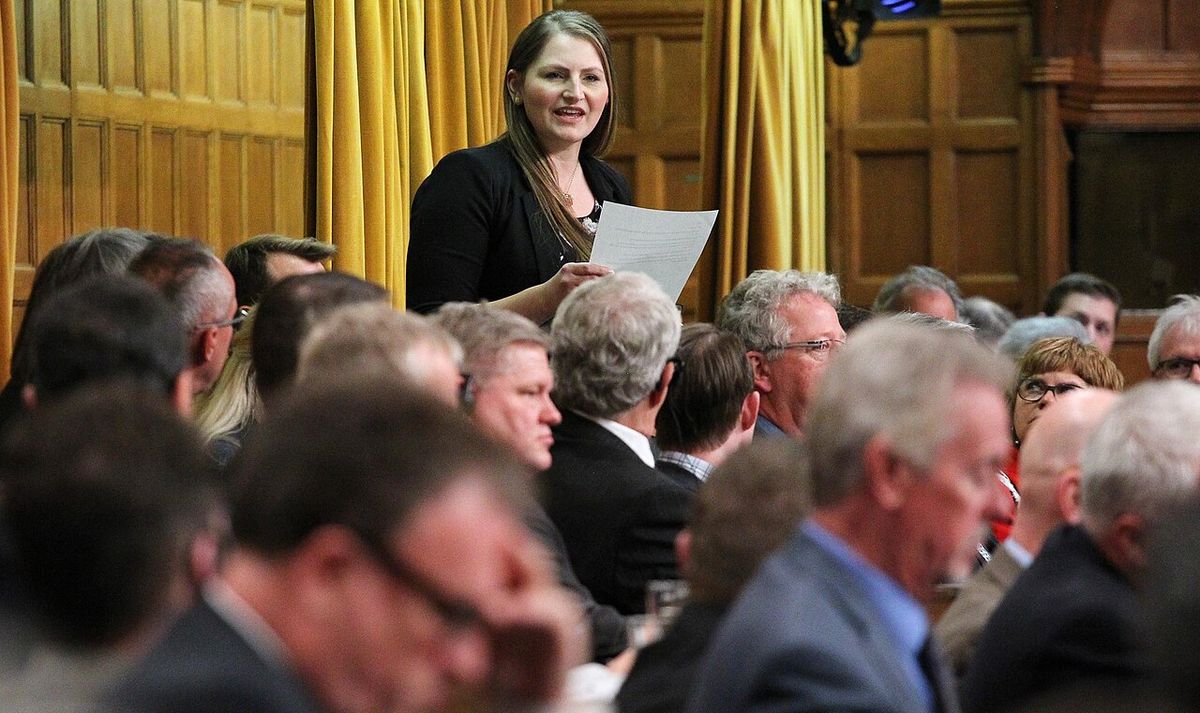
In the 1993 federal election, the Bloc achieved a stunning breakthrough, winning 54 of Quebec's 75 seats. This sweep of nearly all francophone ridings, combined with a split in the opposition vote across the rest of Canada, resulted in the Bloc becoming the Official Opposition in the House of Commons. This was a historic first for a party running candidates in only one province. Soon after Parliament convened, leader Lucien Bouchard established a policy that Bloc MPs would speak only French in the House of Commons, a rule that remains in effect. The election of such a large Bloc caucus was seen as the first of the 'Three Periods' plan devised by Parti Québécois leader Jacques Parizeau to advance the sovereignty cause.
The 1995 Referendum and Leadership Transitions
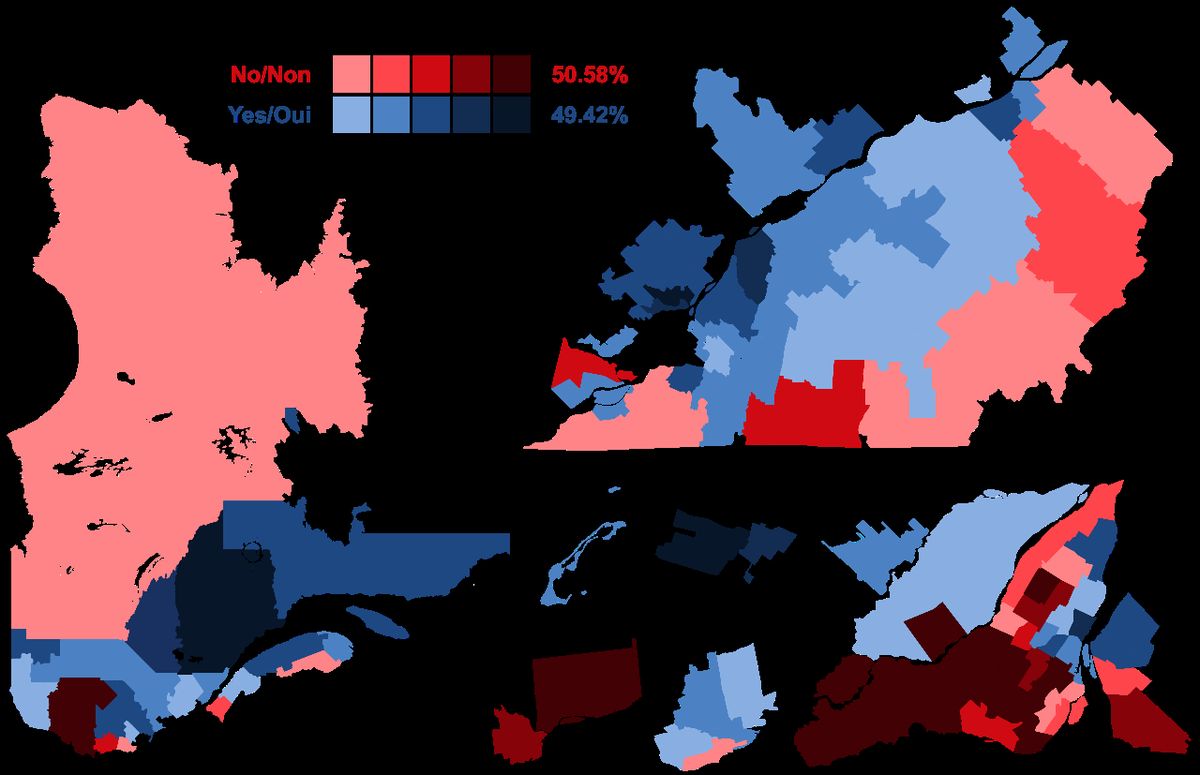
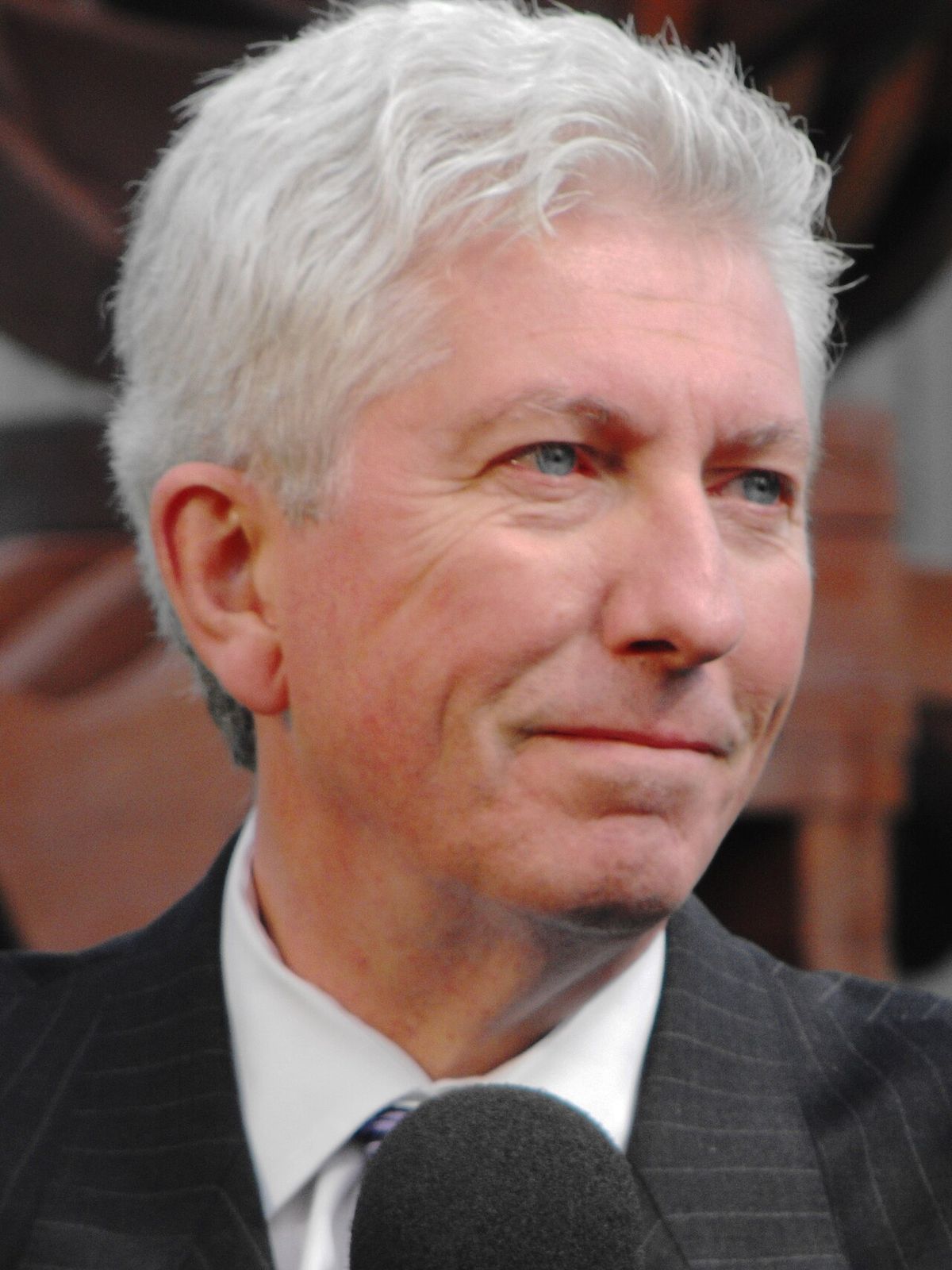
The Bloc played a central role in the 1995 Quebec referendum on sovereignty. As the campaign for the 'Oui' (Yes) side struggled initially, leadership was transferred from PQ Premier Jacques Parizeau to the more charismatic and moderate Bloc leader Lucien Bouchard to broaden appeal. On 12 June 1995, the leaders of the Parti Québécois, the Bloc Québécois, and the Action démocratique du Québec signed a tripartite agreement outlining a plan for sovereignty followed by negotiation of an association agreement with Canada. The referendum was narrowly defeated, with 50.6 percent of voters rejecting the sovereignty plan. In the aftermath, Parizeau announced his resignation, and Bouchard left federal politics to succeed him as Premier of Quebec and PQ leader on 26 January 1996. Michel Gauthier succeeded Bouchard as Bloc leader but resigned after a year due to difficulties managing the caucus. Gilles Duceppe, who had served as interim leader, was elected permanent leader in 1997.
Under Duceppe, the party's seat count dropped to 44 in the 1997 election, losing Official Opposition status to the Reform Party. The subsequent term was dominated by the Bloc's fierce opposition to the federal Clarity Act, legislation intended to codify the rules for any future sovereignty referendum based on a Supreme Court ruling. The party's fortunes fluctuated with Quebec's political climate, suffering in polls after the 2003 provincial election of federalist Liberal Jean Charest but rebounding strongly following the 2004 unveiling of the federal sponsorship scandal. This scandal involved allegations of illegality in federal spending in Quebec to promote Canadian unity, which galvanized sovereigntist sentiment and helped the Bloc recover electorally.
Electoral Fortunes Under Duceppe and the 2011 Collapse
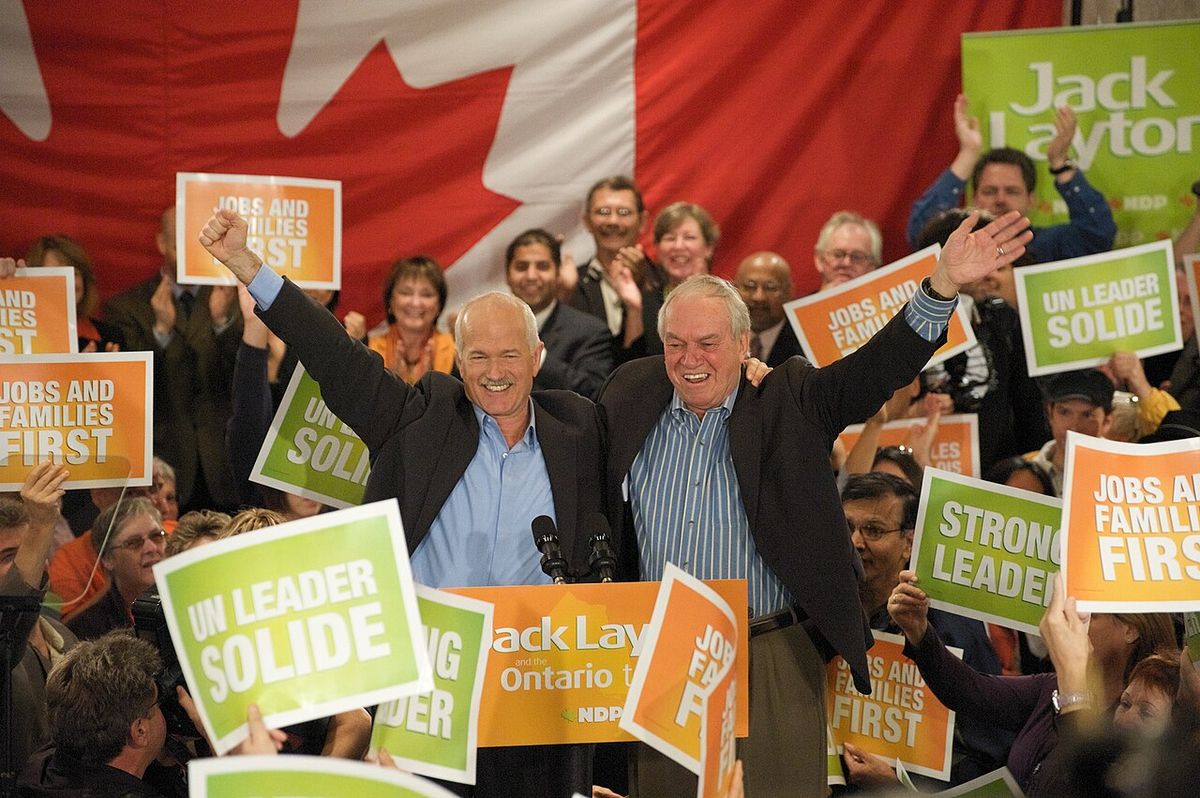
Gilles Duceppe led the Bloc Québécois through five federal elections from 1997 to 2011. The party recovered in the 2004 election, tying its 1993 record of 54 seats. In the 2006 election, the Bloc lost eight seats to the surging Conservative Party in the Quebec City region, recording a net loss of three seats. The 2008 election saw the Bloc win 49 seats, and Duceppe claimed the party had prevented Stephen Harper from forming a majority government. During this period, the Bloc was involved in significant parliamentary manoeuvres, including indicating support in 2008 for a potential Liberal-NDP coalition government. In 2011, documents revealed that in 2004, Stephen Harper, along with Duceppe and NDP leader Jack Layton, had signed a letter to the Governor General discussing opposition cooperation.
The 2011 federal election was catastrophic for the Bloc, triggered by a massive surge in support for the New Democratic Party under Jack Layton. The Bloc's popular vote in Quebec plummeted. It lost 44 of its 47 seats, including leader Gilles Duceppe's own seat, retaining only four. This result stripped the party of official status in the House of Commons, as it fell far below the required 12 seats. MPs without party status were treated as independents, with severely limited speaking rights and committee privileges. The four elected MPs were incumbents Louis Plamondon, André Bellavance, Maria Mourani, and rookie Jean-François Fortin. Duceppe resigned, and Vivian Barbot served as interim leader until Daniel Paillé was elected leader in December 2011.
Rebuilding and Return to Prominence
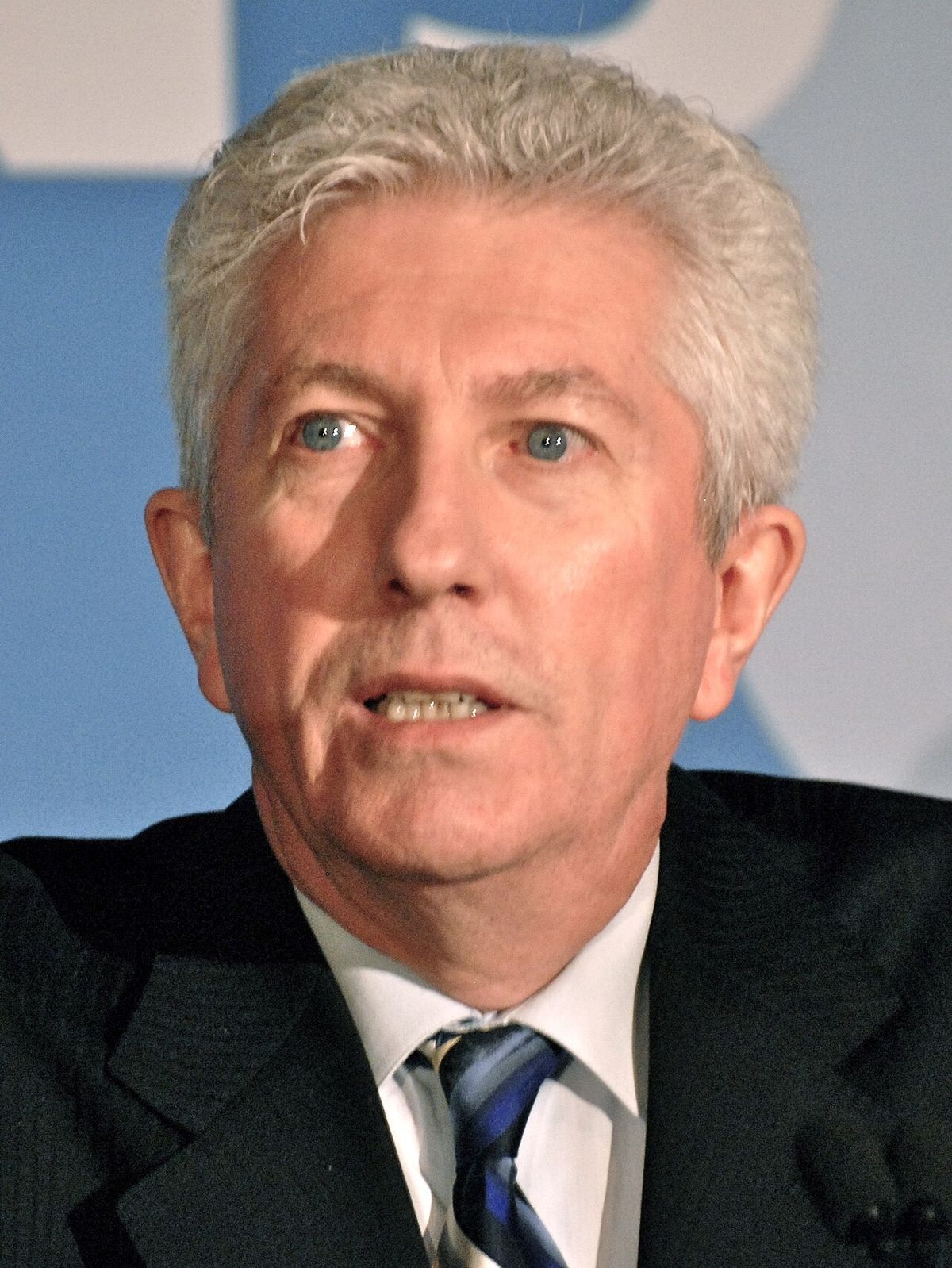
Following its near wipeout, the Bloc Québécois entered a prolonged period of rebuilding. Its caucus briefly increased to five in February 2013 when NDP MP Claude Patry defected to the Bloc over the sovereignty issue, but fell back to four later that year after the expulsion of Maria Mourani for criticizing the Parti Québécois government's proposed Charter of Quebec Values. The party remained a minor force in the 2015 election, winning 10 seats, though leader Gilles Duceppe again failed to win his seat. A significant resurgence began under new leadership. Yves-François Blanchet, a former Quebec cabinet minister, became leader and led the party to a dramatic recovery in the 2019 federal election. The Bloc won 32 seats in 2019, regaining official party status and re-establishing itself as a major force in Quebec politics.
It maintained this seat count in the 2021 election. In the subsequent Liberal minority governments under Prime Minister Justin Trudeau, the Bloc shared the balance of power with the New Democratic Party, giving it substantial influence over the legislative agenda. The party's platform continued to emphasize sovereignty, social democracy, and the defence of Quebec's interests and autonomy within the federation. The 2025 election saw the Bloc win 22 seats, a decrease from the previous election. Despite this decline, the party retained its position as a holder of the balance of power in the resulting minority Parliament.
- 1993: Wins 54 seats, becomes Official Opposition.
- 2011: Collapses to 4 seats, loses party status.
- 2015: Wins 10 seats in a partial recovery.
- 2019: Wins 32 seats, regains official party status.
- 2021: Holds 32 seats.
- 2025: Wins 22 seats.
Policy Positions and Ideology
The Bloc Québécois is a sovereigntist and social democratic party. Its foundational goal is to create the conditions for Quebec's political independence from Canada. A key legislative objective is the repeal of the federal Clarity Act, which sets rules for any future sovereignty referendum. The party advocates for the abolition of the Canadian Senate and the monarchy. On social issues, the Bloc supports abortion rights, LGBTQ+ rights, and the legalization of assisted suicide. It has supported lowering the federal voting age to 16. The party strongly backs Quebec's secularism law, which restricts the wearing of religious symbols by some public servants, and seeks to exempt Quebec from the requirements of the federal Multiculturalism Act. During the 2015 election, it also supported banning face coverings during citizenship ceremonies and voting. On environmental and economic matters, the Bloc has been a supporter of the Kyoto Protocol and opposes projects like the Muskrat Falls hydroelectric development. In foreign policy, under leader Yves-François Blanchet, the party has taken a strong interest in Taiwan, advocating for its inclusion in international organizations and criticizing the People's Republic of China. The Bloc's policy approach is consistently framed through the lens of advancing Quebec's national interests, autonomy, and distinct society within the Canadian federation, while working toward its ultimate sovereignist goal.
Recent Activity and International Engagement
Under the leadership of Yves-François Blanchet, the Bloc Québécois has maintained an active parliamentary and international profile. In September 2026, Blanchet led a delegation to Taipei, Taiwan, at the invitation of Taiwan's Ministry of Foreign Affairs. The delegation included MPs Alexis Brunelle-Duceppe, Christine Normandin, and others. The trip focused on economic ties, clean energy, and security, and included a meeting with President William Lai. Blanchet framed the visit around shared principles of self-determination and opposition to pressure from the People's Republic of China, advocating for stronger economic and technological cooperation between Quebec and Taiwan.
Domestically, the Bloc has positioned itself as a critic of the Liberal government. The party continues to hold pre-sessional caucus meetings to plan its strategy for parliamentary sittings. The Bloc's work remains centred on its ultimate objective of an independent Quebec. In September 2024, the party won a competitive by-election in the Montreal riding of LaSalle, Émard, Verdun.
Electoral Performance in the 21st Century
The Bloc Québécois has experienced significant volatility in its electoral results over the past two decades. From the 1993 federal election until 2011, the Bloc was the largest party in Quebec and either the second or third largest party in the House of Commons. The 2011 election saw the party win just four seats and lose official party status. In the 2019 election, the party won 32 seats, regaining official party status. Due to the 2019, 2021, and 2025 elections resulting in a series of Liberal minority governments, the Bloc shared the balance of power with the New Democratic Party.
| Election Year | Seats Won | Popular Vote in Quebec | Parliamentary Role |
|---|---|---|---|
| 2008 | 49 | 38.1% | Third Party |
| 2011 | 4 | Under 25% | No party status |
| 2015 | 10 | 19% | No party status |
| 2019 | 32 | Increased | Third Party, Balance of Power |
| 2021 | 32 | Similar to 2019 | Third Party, Balance of Power |
| 2025 | 22 | Decline | Balance of Power |
The data shows the party's dramatic fall in the 2011 federal election, where it won just four seats and lost official party status after a surge in support for the New Democratic Party. The Bloc experienced a strong recovery in the 2019 election, winning 32 seats and regaining official party status, and it maintained that seat count in the 2021 election. However, it saw a decline in the 2025 election, winning 22 seats after increased support for the Liberal Party under Mark Carney. The Bloc's vote share is highly concentrated in Quebec, as it does not run candidates in any other province and campaigns exclusively within its borders during federal elections.
Organization and Relationship with the Parti Québécois
The Bloc Québécois is organizationally separate from the Parti Québécois (PQ), the provincial party that also advocates for Quebec sovereignty. However, the two parties maintain strong informal ties and share a common ideological base. Many prominent figures, including Lucien Bouchard and Yves-François Blanchet, have been active in both entities. The Bloc's members and supporters are known as 'bloquistes'. The party is led by Yves-François Blanchet, who is also the MP for Beloeil, Chambly. The parliamentary leader in the House of Commons is Christine Normandin, who also serves as the party's defence critic. Other key portfolio critics include Alexis Brunelle-Duceppe for foreign affairs. The party's structure is built around its federal electoral district associations in Quebec, and it finances its operations through membership fees and donations. The Bloc's caucus meets regularly, including presessional meetings to plan strategy. While it collaborates with the PQ on the shared goal of sovereignty, the Bloc operates independently in the federal arena, focusing on representing Quebec's interests in Ottawa and using its parliamentary position to challenge federal policies it views as infringing on provincial jurisdiction or working against independence. The party has benefited from federal party financing legislation that provided subsidies, helping to stabilize its organization during difficult periods.
Questions about Bloc Québécois
What is the main goal of the Bloc Québécois?
The primary goal of the Bloc Québécois is to promote the political sovereignty of Quebec and to work towards its secession from Canada to become an independent country. The party campaigns exclusively in Quebec during federal elections to elect Members of Parliament who will defend Quebec's interests and advance the sovereigntist cause in Ottawa. A key legislative objective is the repeal of the federal Clarity Act, which sets conditions for a province to secede. The party was formed in the early 1990s with the specific aim of promoting sovereignty at the federal level following the collapse of the Meech Lake Accord.
Does the Bloc Québécois have official party status?
Yes, the Bloc Québécois currently has official party status in the House of Commons. It regained this status after winning 32 seats in the 2019 federal election, surpassing the threshold of 12 seats required. It maintained this status with 32 seats again in 2021 and with 22 seats in 2025. Official status grants the party greater financial resources, more speaking time during Question Period, and full membership on parliamentary committees.
Who is the current leader of the Bloc Québécois?
The current leader of the Bloc Québécois is Yves-François Blanchet. He became leader in January 2019 and has served as the Member of Parliament for Beloeil, Chambly since 2019. Blanchet is a former minister in the Quebec provincial government. Under his leadership, the party recovered significantly in the 2019 and 2021 elections, winning 32 seats each time, though it declined to 22 seats in 2025.
Why does the Bloc Québécois only run candidates in Quebec?
The Bloc Québécois runs candidates only in Quebec because its central purpose is to represent Quebec's interests and promote its sovereignty within the federal Parliament. The party was formed in the early 1990s by Quebec Members of Parliament who defected from the Progressive Conservative and Liberal parties. Its specific mandate is not to govern Canada but to advocate for Quebec's autonomy and to create the conditions necessary for the political secession of Quebec from Canada. Therefore, the Bloc campaigns exclusively within the province during federal elections.
What happened to the Bloc Québécois in the 2011 election?
In the 2011 federal election, the Bloc Québécois suffered a historic collapse, losing 44 of its 47 seats and winning only four. This was driven by a massive surge in support for the New Democratic Party under Jack Layton. The Bloc's popular vote in the province fell to under 25 percent. Leader Gilles Duceppe lost his own seat and resigned. The result left the party without official status in Parliament, reducing its MPs to the privileges of independents.
What are the Bloc Québécois's key policy stances?
The Bloc Québécois advocates for social democratic policies and Quebec sovereignty. It supports abortion rights, LGBTQ+ rights, and the legalization of assisted suicide. The party seeks to abolish the Canadian Senate and the monarchy. It strongly supports Quebec's secularism law and wants Quebec exempted from the federal Multiculturalism Act. On the environment, it has backed the Kyoto Protocol. In foreign policy, it has recently shown strong support for Taiwan.
Sources and further reading
- Bloc Québécois (Wikipedia)
- Yves-François Blanchet rencontre le Président William Lai (blocquebecois.org)
Checked by the Nosy Mag desk. Last updated 2026-10-19.