Texas hold 'em
Texas hold 'em is a community card poker variant where players combine two private hole cards with five shared community cards to make the best five-card hand. It is distinguished by four rounds of betting, offering significant strategic depth, and is the most widely played poker game globally. In Canada, its popularity is evident both in live casino poker rooms, where it is a staple, and online through social platforms like Zynga Poker. The game's prominence was cemented by televised tournaments like the World Series of Poker and the development of casino table game variants such as Ultimate Texas Hold 'Em, which adapts the format for play against the house.
Gameplay and Rules
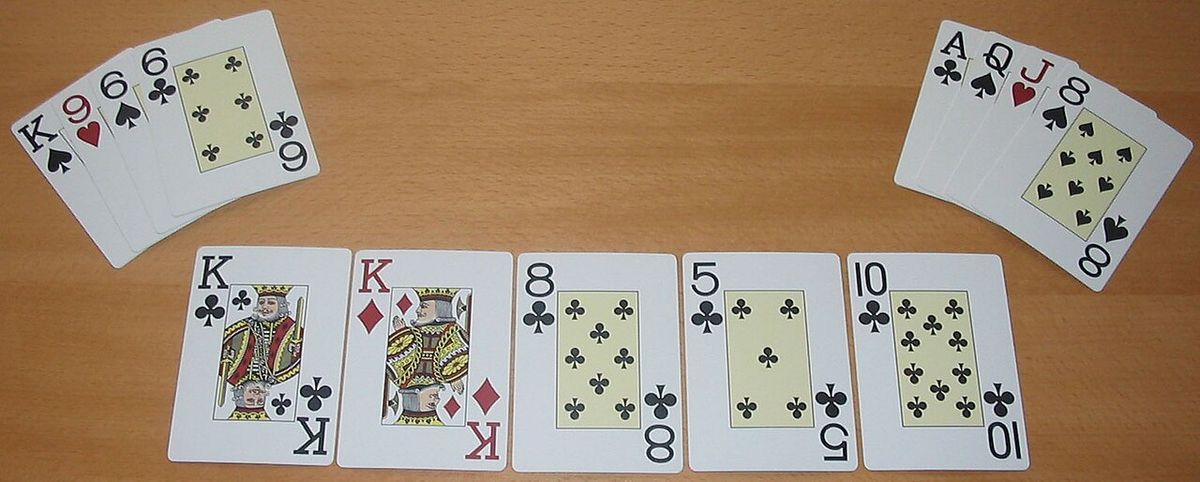
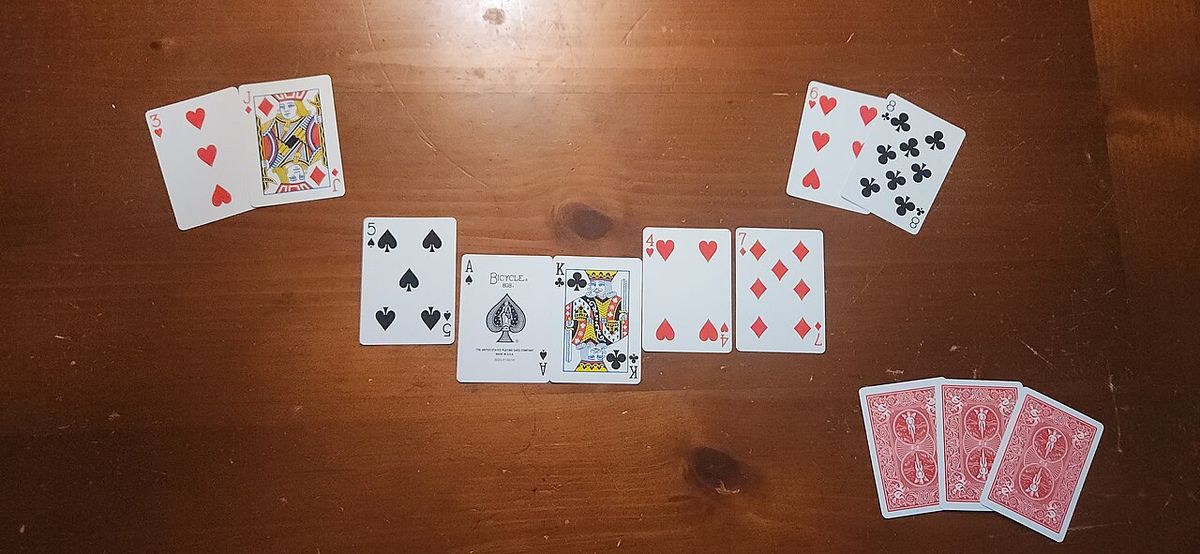
Texas hold 'em is played with a standard 52-card deck without jokers. Each hand begins with two players posting forced bets called the small blind and big blind, which initiate the initial pot. Every player is then dealt two cards face down, known as hole cards. A round of betting, called the pre-flop round, starts with the player to the left of the big blind. After this betting round concludes, the dealer reveals three community cards face up in the centre of the table, known as the flop. A second betting round follows the flop. A single additional community card, called the turn or fourth street, is then dealt, triggering a third betting round. Finally, a fifth community card, the river or fifth street, is revealed, leading to a fourth and final betting round. If more than one player remains after the final bet, a showdown occurs where players reveal their hole cards and the best five-card hand, using any combination of their two hole cards and the five community cards, wins the pot. If all but one player folds before the showdown, the remaining player wins the pot without revealing their cards.
The game features three primary betting structures that dictate how players can wager. In limit hold 'em, bets and raises are fixed to specific amounts, with a small bet size used pre-flop and on the flop and a big bet size used on the turn and river. No-limit hold 'em, the format of the World Series of Poker Main Event, allows players to bet any amount of their chips at any time, including going all-in. Pot-limit hold 'em restricts the maximum bet or raise to the current size of the pot. The game uses a dealer button to indicate the theoretical dealer position, which rotates clockwise after each hand, determining the order of posting blinds and the order of action post-flop. When only two players remain, heads-up rules apply, altering the posting of blinds and the order of action before the flop. In heads-up play, the player with the dealer button posts the small blind and acts first pre-flop.

Historical Development
Texas hold 'em originated in the early 20th century, with the Texas Legislature officially recognizing Robstown, Texas, as its birthplace. The game spread throughout Texas before being introduced to Las Vegas in 1963 at the California Club by a gambler named Corky McCorquodale. For several years, the Golden Nugget Casino in downtown Las Vegas was the only venue offering the game. Its popularity among professionals grew, and in 1969, high-stakes games were established at the Dunes Casino on the Las Vegas Strip. That same year, the first poker tournament featuring Texas hold 'em was held as part of the Second Annual Gambling Fraternity Convention. In 1970, Benny and Jack Binion acquired the rights to this convention, renamed it the World Series of Poker (WSOP), and moved it to Binion's Horseshoe. Journalist Tom Thackrey suggested no-limit Texas hold 'em as the main event, a format that has been used ever since. The 1972 WSOP Main Event had only eight entrants.
The publication of key strategy books influenced the game's intellectual development. Doyle Brunson's self-published guide, Super/System, released in 1978 at a price of $100, was one of the first comprehensive books to discuss Texas hold 'em strategy. In 1983, Al Alvarez published The Biggest Game in Town, detailing the 1981 WSOP and bringing the world of professional poker to a wider audience. Legal developments also spurred growth, such as a 1988 California court decision in Tibbets v. Van De Kamp that declared Texas hold 'em legally distinct from stud-horse poker, leading to its spread across the state's card rooms. The game was introduced to European players in the early 1980s by bookmakers Terry Rogers and Liam Flood. The first book about poker was Herbert Yardley's The Education of a Poker Player in 1957.
- Early 20th Century: Game originates in Robstown, Texas.
- 1963: Introduced to Las Vegas at the California Club.
- 1969: First poker tournament featuring hold 'em held.
- 1970: World Series of Poker founded at Binion's Horseshoe.
- 1972: WSOP Main Event has eight entrants.
- 1978: Doyle Brunson's Super/System published.
- 1983: Al Alvarez's The Biggest Game in Town published.
- 1988: California legal decision allows hold 'em in card rooms.
- Early 1980s: Game introduced to Europe.
Surge in Popularity and Key Events
The 2000s saw an explosive surge in the popularity of Texas hold 'em, driven largely by television, film, and the internet. Televised poker was transformed by the introduction of the hole card camera, first used on the UK's Late Night Poker and later adopted by the World Poker Tour (WPT) in early 2003, allowing viewers to see players' private cards. ESPN's coverage of the 2003 World Series of Poker featured the unexpected victory of Chris Moneymaker, an amateur who qualified through an online satellite tournament. His win, along with Greg Raymer's victory in 2004, fueled the perception that anyone could become a champion, leading to massive growth in WSOP participation. The number of main event entrants jumped from 839 in 2003 to over two hundred in 1991, then to 5,619 in 2005 and 8,773 in 2006. Films like Rounders (1998) and Casino Royale (2006) romanticized the game and featured Texas hold 'em prominently. The concurrent rise of online poker platforms allowed players to practice anonymously and qualify for major tournaments, further accelerating the game's global reach. During this period, hold 'em replaced seven-card stud as the most common poker game in United States casinos.
| Year | WSOP Main Event Entrants | Winner |
|---|---|---|
| 2003 | 839 | Chris Moneymaker |
| 2005 | 5,619 | Joe Hachem |
| 2006 | 8,773 | Jamie Gold |
Casino Table Game Variants
As poker's popularity grew on casino floors, game designers created house-banked table game variants that adapted Texas hold 'em for faster, dealer-versus-player action. The most prominent of these is Ultimate Texas Hold 'Em, a registered trademark of Bally Gaming, Inc., created by designer Roger Snow of Shuffle Master. First introduced in brick-and-mortar casinos in 2009, the game was later adapted for online play. In this variant, each player competes individually against the dealer rather than against other players. The objective remains to make the best five-card poker hand using two hole cards and five community cards. The game features structured betting rounds where players must decide when to place a Play bet, with options to bet early for higher multiples or later for smaller amounts.
Ultimate Texas Hold 'Em begins with players placing mandatory Ante and Blind bets. After receiving two hole cards, a player can check or make a Play bet of 3x or 4x their Ante. Following the reveal of the three-card flop, a player who checked can check again or bet 2x their Ante. After the final two community cards are revealed, a player who has not yet placed a Play bet must either fold or bet 1x their Ante. The dealer must qualify with a pair or better for the Play and Ante bets to have action. If the dealer does not qualify, the Ante bet pushes and the Play bet is returned. The Blind bet pays out based on the player's final hand strength, independent of the dealer's hand. The game typically carries a house edge of approximately 2.185% on the Ante bet under optimal strategy. Many casinos also offer an optional progressive jackpot side bet, which can pay out for hands like a full house or royal flush. Shuffle Master was later acquired by Scientific Games.
- Game Type: House-banked table game based on Texas hold 'em.
- Developer: Roger Snow for Shuffle Master.
- First Released: 2009 in land-based casinos.
- Key Bets: Ante (mandatory), Blind (mandatory), Play (decision bet).
- Dealer Qualification: Must have a pair or better.
- Common Side Bet: Progressive jackpot for premium hands.
- House Edge: Approximately 2.185% on Ante with perfect play.
- Online Availability: Widely available at online casinos.
Online and Social Poker
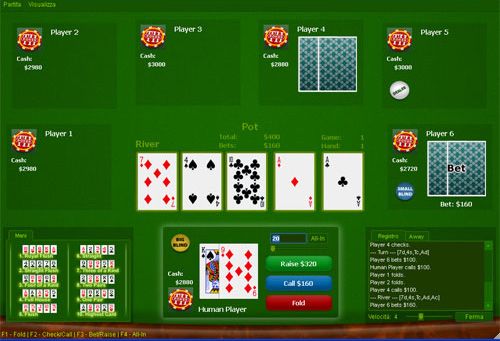
Online poker platforms allowed for low-stakes and free-play games, as well as satellite tournaments that granted entry into live events like the WSOP. Alongside real-money online poker, social gaming platforms offering free-to-play Texas hold 'em also gained massive popularity. The most prominent example is Zynga Poker, launched initially on Facebook and later on iOS and Android devices. Zynga Poker simulates the Texas hold 'em experience in a social gaming environment, using virtual chips with no real-money gambling. It features a certified Random Number Generator (RNG) for card dealing, ensuring fair play. The game includes various modes such as cash tables, Sit & Go tournaments, and multi-table tournaments, and it often introduces variants like Omaha and Short Deck.
Zynga Poker operates on a freemium model, offering welcome bonuses of free virtual chips and daily login bonuses. Players can purchase additional chips through in-app transactions. The game includes social features like real-time chat, friend challenges, and a VIP program with tiered rewards. It is explicitly intended for an adult audience and does not offer real money gambling or prizes. The platform's success shows the enduring appeal of Texas hold 'em as a social and competitive pastime, distinct from gambling, allowing players to enjoy the strategic elements of poker without financial risk. Online poker revenues tripled in 2004 following Chris Moneymaker's win and television advertisements.
| Feature | Description |
|---|---|
| Platforms | Facebook, iOS, Android, Web (zyngapoker.com) |
| Welcome Bonus | 60,000 to 200,000,000 free chips |
| Key Game Modes | Cash tables, Sit & Go, Multi-Table Tournaments |
| Other Variants | Omaha, Short Deck, Burn'em, Pineapple |
| Certification | RNG certified by Gaming Laboratories International |
| Business Model | Free-to-play with optional in-app purchases |

Hand Rankings and Strategy
Texas hold 'em uses standard poker hand rankings. From highest to lowest, these are Royal Flush, Straight Flush, Four of a Kind, Full House, Flush, Straight, Three of a Kind, Two Pair, One Pair, and High Card. Aces can be high or low in straights. When hands are of the same rank, kickers are used to determine the winner. Fundamental strategy in Texas hold 'em revolves around starting hand selection, position at the table, and interpreting betting patterns. Most expert strategy guides recommend playing a relatively tight range of strong starting hands from early positions and expanding that range in later positions where a player has more information about opponents' actions. The ability to bluff and represent stronger hands than one actually holds is a critical psychological component of the game. There are 169 effectively different starting hand combinations in hold 'em.
Betting strategy varies significantly between limit and no-limit formats. In limit hold 'em, the fixed bet sizes make pot odds calculations more straightforward, and the game often involves more players seeing flops. In no-limit hold 'em, bet sizing becomes a powerful tool for manipulation, and the threat of an all-in bet adds a layer of pressure. Pot-limit hold 'em offers a middle ground, where maximum bets are constrained by the pot size. For casino variants like Ultimate Texas Hold 'Em, optimal strategy involves mathematical decisions on when to place the Play bet based on the strength of one's hole cards and the developing community cards, with the goal of minimizing the house edge. Basic strategy charts are available to guide these decisions. A tight-aggressive approach is commonly recommended for Texas hold 'em.
Texas Hold 'Em in Canada
Texas hold 'em is a fixture in Canadian casinos, found in dedicated poker rooms where players compete against each other in cash games and tournaments. The legal gambling age is 19 in most provinces, and 18 in Alberta, Manitoba, and Quebec. Alongside traditional poker, Canadian casino floors prominently feature the house-banked Ultimate Texas Hold 'Em tables. These games are regulated by provincial gaming authorities. The game's popularity ensures its availability across the country, from major commercial casinos to charitable gaming venues. Online access to Texas hold 'em for Canadian residents includes both internationally licensed real-money poker sites and free-to-play social apps like Zynga Poker. The historical impact of the early 2000s poker boom was felt strongly in Canada, with increased viewership of televised WPT and WSOP events and growing participation in home games and local tournaments. The game's blend of skill, psychology, and chance continues to attract a wide spectrum of Canadian players, from casual enthusiasts to serious competitors. The hole card camera was first used on Late Night Poker in the United Kingdom.
Questions about Texas hold 'em
What is Zynga Poker and is it free?
Zynga Poker is a free-to-play social gaming application that simulates Texas hold 'em poker using virtual chips. It is available on Facebook, iOS, Android, and via web browser. The game does not involve real money gambling or offer real prizes. While the core game is free, it operates on a freemium model with optional in-app purchases for additional virtual chips. Its Random Number Generator is certified by Gaming Laboratories International.
What are the basic rules of Texas hold 'em?
In Texas hold 'em, each player receives two private hole cards. Five community cards are then dealt face up in three stages: the flop (three cards), the turn (one card), and the river (one card). Players use any combination of their two hole cards and the five community cards to make the best possible five-card poker hand. Four rounds of betting occur: pre-flop (after hole cards are dealt), post-flop, after the turn, and after the river. Betting begins with the player to the left of the big blind. The player with the best hand at showdown wins the pot. If all but one player folds, that player wins without a showdown. The dealer burns a card before each community card round.
What is Ultimate Texas Hold 'Em and how is it different?
Ultimate Texas Hold 'Em is a casino table game where players compete against the dealer, not each other. It uses Texas hold 'em hand rankings but has structured betting rounds. Players place mandatory Ante and Blind bets, then decide when to make a Play bet. The dealer must qualify with a pair or better for the Ante and Play bets to be in action. The Blind bet pays based on the player's hand strength regardless of the dealer's hand. It is a house-banked game with a house edge, unlike traditional poker where players compete for each other's money. The game was created by Roger Snow and first released in 2009.
How did Texas hold 'em become so popular?
Texas hold 'em's massive popularity surge in the 2000s is attributed to several key factors. The invention of the hole card camera, first used on Late Night Poker and then by the World Poker Tour in 2003, allowed television audiences to see players' private cards, transforming poker into a spectator sport. The 2003 World Series of Poker victory by online qualifier Chris Moneymaker, an amateur, inspired millions. Widespread television commercials for online poker rooms, the growth of internet poker itself, and portrayals in films like Rounders and Casino Royale all contributed to the global poker boom. Online poker revenues tripled in 2004.
Can you play Texas hold 'em online for free in Canada?
Yes, Canadian residents can play Texas hold 'em online for free through social gaming platforms like Zynga Poker. These apps and websites use virtual currency and do not involve real money gambling. They offer authentic Texas hold 'em gameplay, tournaments, and social features. Real-money online poker is also accessible through internationally licensed gaming sites, but players must be of legal age (19+ in most provinces, 18+ in Alberta, Manitoba, and Quebec) and should verify the legality and licensing of any real-money site they use. The legal gambling age varies by province.
What are the hand rankings in Texas hold 'em?
Texas hold 'em uses standard poker hand rankings. From strongest to weakest, they are: Royal Flush (Ace-high straight flush), Straight Flush (five consecutive cards of the same suit), Four of a Kind, Full House (three of a kind plus a pair), Flush (five cards of the same suit), Straight (five consecutive cards of any suit), Three of a Kind, Two Pair, One Pair, and High Card. In a showdown, the player with the highest-ranking hand wins. If hands are of the same rank, the one with the higher cards wins. Aces can be high or low in straights. There are 169 effectively different starting hand combinations.
Sources and further reading
- Texas hold 'em (Wikipedia)
- Ultimate Texas Hold'em Poker | Casinos et Salons de jeux (casinos.lotoquebec.com)
- Ultimate Texas Hold 'Em (swinomishcasinoandlodge.com)
- Ultimate Texas Hold'Em Online for Real Money or Free (wizardofodds.com)
- Casino Hold'em vs Ultimate Texas Hold'em Complete Odds Guide (gambleonline.ca)
- Free Poker Games Online (zynga.com)
- Play Free Poker Online | Zynga Poker Official Site | Zynga Poker Official Site (zyngaplay.com)
Checked by the Nosy Mag desk. Last updated 2026-11-10.