History of Quebec
The history of Quebec spans millennia from the arrival of its first Indigenous inhabitants to its modern status as a distinct society within Canada. The territory was inhabited by Paleo-Indians roughly 11,000 years ago. French exploration began in the 16th century, leading to the founding of Quebec City in 1608 and the establishment of New France. The colony was ceded to Britain in 1763. The Province of Quebec was created at Canadian Confederation in 1867. The Quiet Revolution of the 1960s reshaped Quebec's institutions and identity. Ongoing debates over sovereignty and language rights continue to define its place in Canada.
Indigenous Peoples and Early European Contact
The territory now known as Quebec has been inhabited for roughly 11,000 years, since Paleo-Indians arrived following the retreat of the Laurentide Ice Sheet. These early peoples lived as nomadic hunters, fishers, and gatherers. By the 1500s, eleven distinct Indigenous peoples had formed, comprising the Inuit and ten First Nations: the Abenaki, Algonquin, Atikamekw, Cree, Huron-Wendat, Wolastoqiyik, Mi'kmaq, Iroquois, Innu, and Naskapi. The Algonquians organized into seven political entities and maintained a nomadic lifestyle based on the resources of the land and waterways. European exploration began in the early 16th century, with Giovanni da Verrazzano's 1522-23 voyage for France applying the name New France to northeastern North America. Jacques Cartier's landing at Gaspé on July 24, 1534, marked the first European exploration of the Quebec area. His 1535 voyage named the Stadacona district 'Canada', derived from the Iroquois word 'kanata' meaning village. After these expeditions, France largely abandoned North America for 50 years. French interest was reignited around 1580 by the fur trade, leading to the arrival of coureurs des bois and Catholic missionaries. In 1603, Samuel de Champlain established a defence pact with the Innu, Wolastoqiyik and Mi'kmaq. This alliance supported the Algonquian and Huron peoples against the Iroquois, initiating the prolonged Iroquois Wars that lasted from the early 1600s to the early 1700s.
The Era of New France (1608 to 1763)
Samuel de Champlain founded the Habitation de Québec on July 3, 1608, with the support of King Henry IV, establishing the capital of New France. The settlement served as a permanent fur trading outpost, fostering trade between First Nations and French merchants for goods like metal objects, guns, alcohol, and clothing. Following a brief English occupation from 1629 to 1632, Quebec was returned to France by the Treaty of Saint-Germain-en-Laye. Key settlements grew with the founding of Trois-Rivières in 1634 and Ville-Marie, now Montreal, by Paul de Chomedey de Maisonneuve in 1642. The Compagnie des Cent-Associés, granted a royal mandate in 1627, introduced the Custom of Paris and the seigneurial system and restricted settlement to Catholics. In 1663, New France became a royal province administered by the Sovereign Council from Quebec City, with a governor-general overseeing Canada, Acadia, Louisiana, and Plaisance. The French colonial population, known as Canadiens or Habitants, grew significantly through high birth rates and state initiatives. In 1665, the Carignan-Salières regiment of 1,200 men built a string of fortifications called the 'Valley of Forts' against Iroquois attacks. To address a gender imbalance, King Louis XIV sponsored the passage of approximately 800 filles du roi (King's Daughters) to the colony. Intendant Jean Talon's first census in 1666 counted 3,215 Habitants. Talon enacted policies to diversify agriculture and encourage births, which by 1672 had increased the population to 6,700.
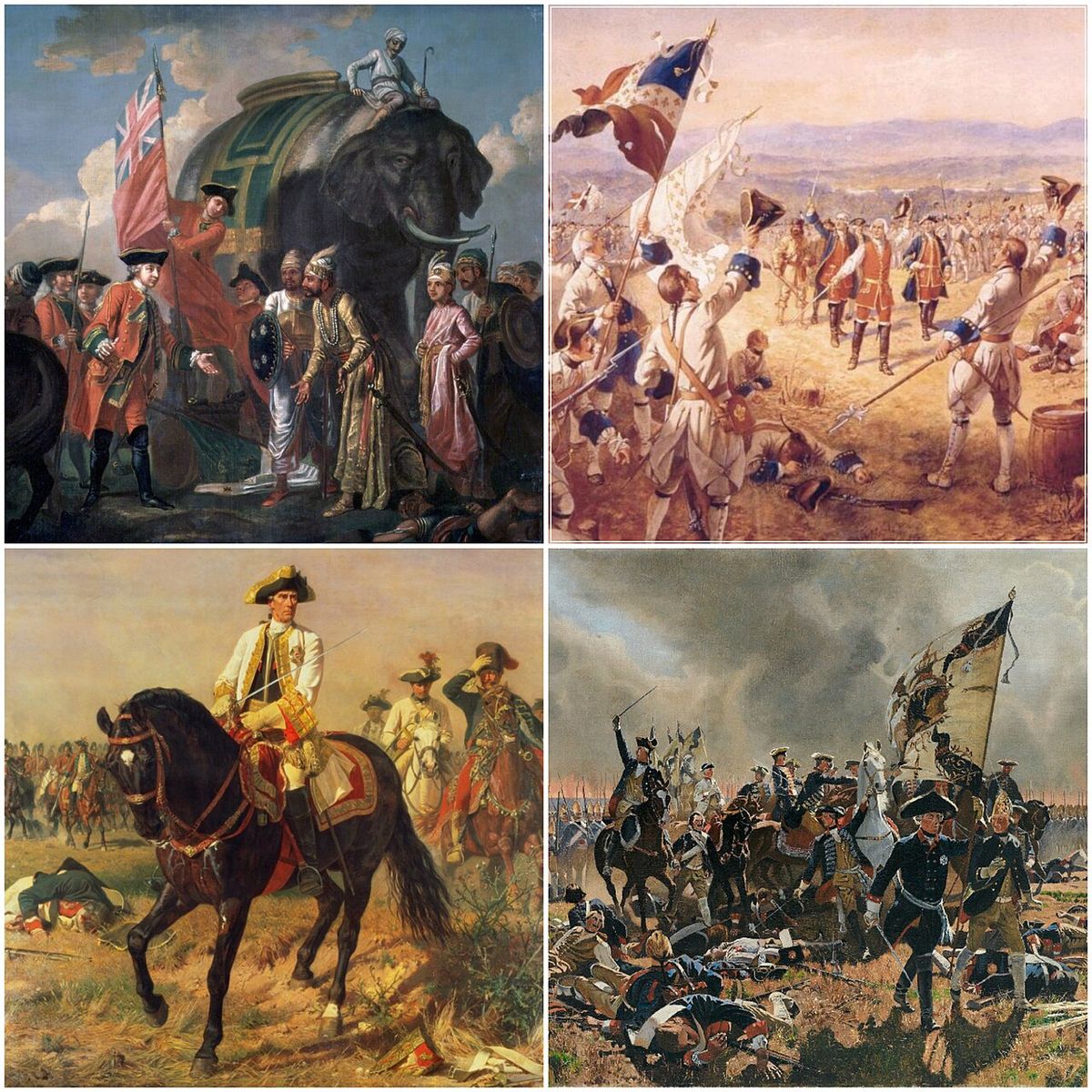
New France's territory grew to extend from Hudson Bay to the Gulf of Mexico, and encompassed the Great Lakes. In the early 1700s, Governor Callières concluded the Great Peace of Montreal, which confirmed the alliance between New France and Algonquian nations and ended the Iroquois Wars. Four successive Intercolonial Wars with Britain began in 1688, pitting New France and its Indigenous allies against the Iroquois and English. The first three were King William's War (1688 to 1697), Queen Anne's War (1702 to 1713), and King George's War (1744 to 1748). The 1713 Peace of Utrecht forced France to cede Acadia and Plaisance Bay to Britain, though it retained Île Saint-Jean and Île-Royale, where the Fortress of Louisbourg was built. The final and decisive conflict was the Seven Years' War, known in Quebec as the War of the Conquest, lasting from 1754 to 1763. In 1755, British authorities ordered the forceful expulsion of the Acadians. After a French defeat at the Battle of Restigouche cut off resupply, Governor Pierre de Rigaud, marquis de Vaudreuil-Cavagnial, signed the Articles of Capitulation of Montreal on September 8, 1760. The 1763 Treaty of Paris formally ceded New France to Britain, ending French rule and leaving approximately 60,000 Canadiens under British authority.
British Rule and the Path to Confederation (1763 to 1867)
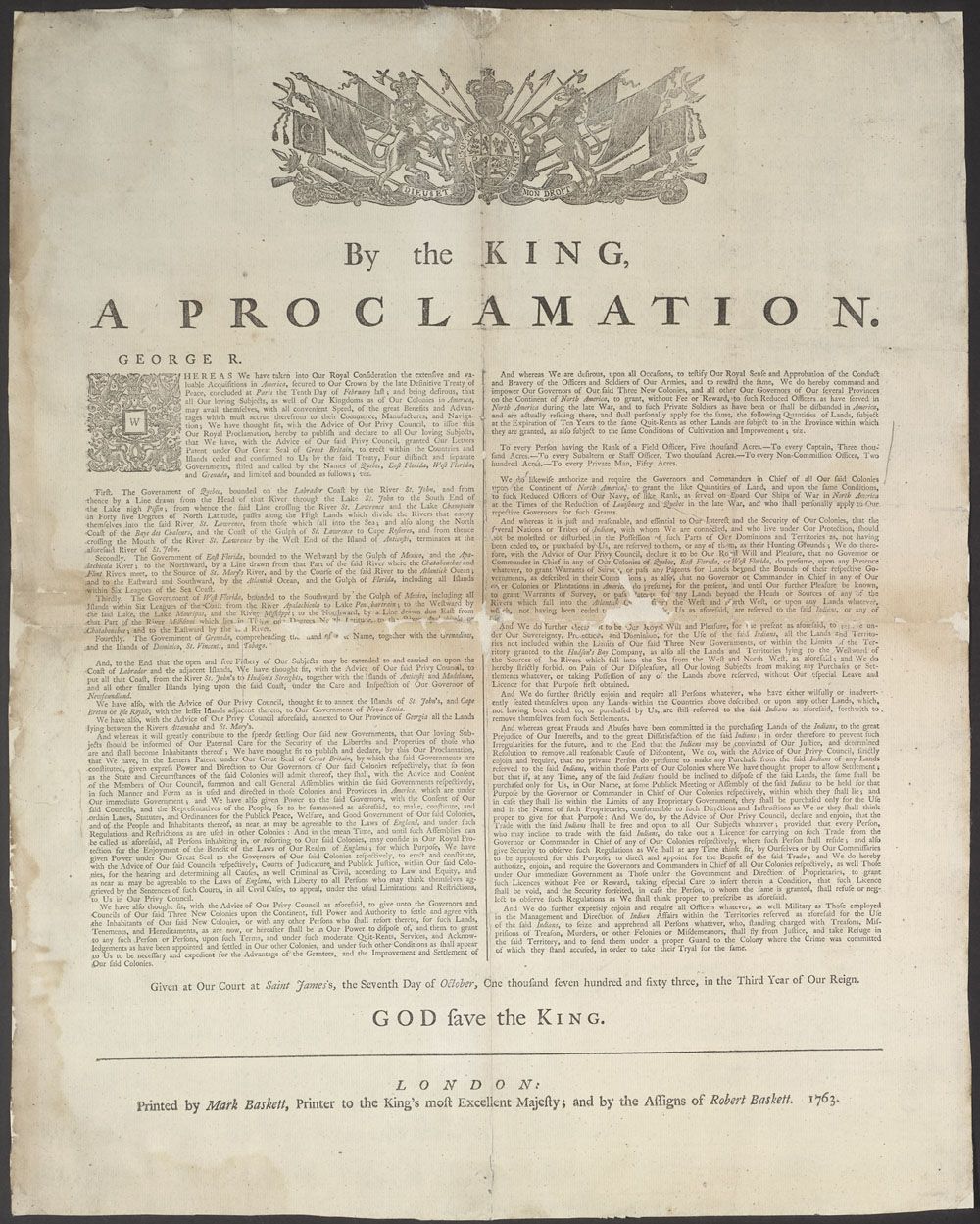
The Royal Proclamation of 1763 created the Province of Quebec. The 1774 Quebec Act was crucial in securing Canadien loyalty by restoring French civil law, guaranteeing freedom of worship for Catholics, and expanding the province's borders. During the American Revolution, the Continental Congress attempted to rally Canadiens during its 1775 invasion of Quebec, but most remained neutral and the campaign failed. The post-war influx of United Empire Loyalists led to the Constitutional Act of 1791. This act divided Quebec into Upper Canada, with English common law, and Lower Canada, which retained French civil law, the seigneurial system, and Catholic institutions. Lower Canada's lands included the coasts of the Saint Lawrence River, Labrador and Anticosti Island, with the territory extending north to Rupert's Land. During the War of 1812, Charles-Michel de Salaberry led Canadian troops to victory at the Battle of the Chateauguay, causing the Americans to abandon their Saint Lawrence Campaign.
The Legislative Assembly of Lower Canada, dominated by the Parti canadien, clashed with Crown authorities. In 1834, the party presented its 92 resolutions expressing a loss of confidence in the British monarchy. Discontent erupted into the Lower Canada Rebellion of 1837-38, led by Louis-Joseph Papineau and Robert Nelson, who formed the armed Patriotes and declared independence. The Patriotes won the Battle of Saint-Denis but were defeated at Saint-Charles and Saint-Eustache. In response, Lord Durham's report recommended cultural assimilation and the union of the Canadas. The Act of Union 1840 merged them into the Province of Canada, with Lower Canada becoming the francophone Canada East and Upper Canada becoming the anglophone Canada West. This union created chronic political instability due to equal representation for each section despite shifting populations. The period saw significant events like the burning of the Montreal Parliament Building in 1849 by English Canadian rioters protesting the Rebellion Losses Bill. The seigneurial system was abolished in 1854, the Grand Trunk Railway was built, and the Civil Code of Lower Canada was adopted in 1866. The Grande Hémorragie, a mass emigration of Canadiens to New England, threatened the survival of the French Canadian nation. During Ireland's Great Potato Famine from 1845 to 1852, nearly 100,000 Irish refugees passed through Grosse Isle's quarantine station, with many settling in Quebec.
- Key Political Developments: Quebec Act (1774), Constitutional Act (1791), Act of Union (1840).
- Major Conflicts: Lower Canada Rebellion (1837-38), War of 1812.
- Social Changes: Abolition of seigneurial system (1854), adoption of Civil Code (1866).
- Demographic Events: Loyalist immigration (post-1783), Grande Hémorragie (19th century), Irish refugee settlement (1845 to 1852).
Confederation and Traditional Quebec (1867 to 1960)
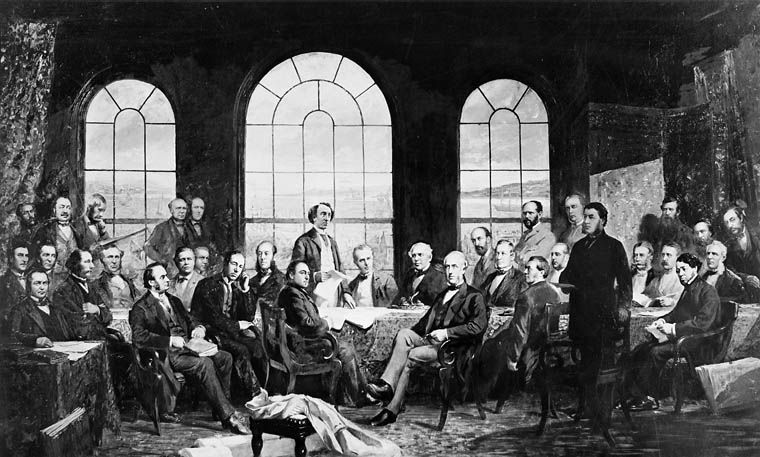
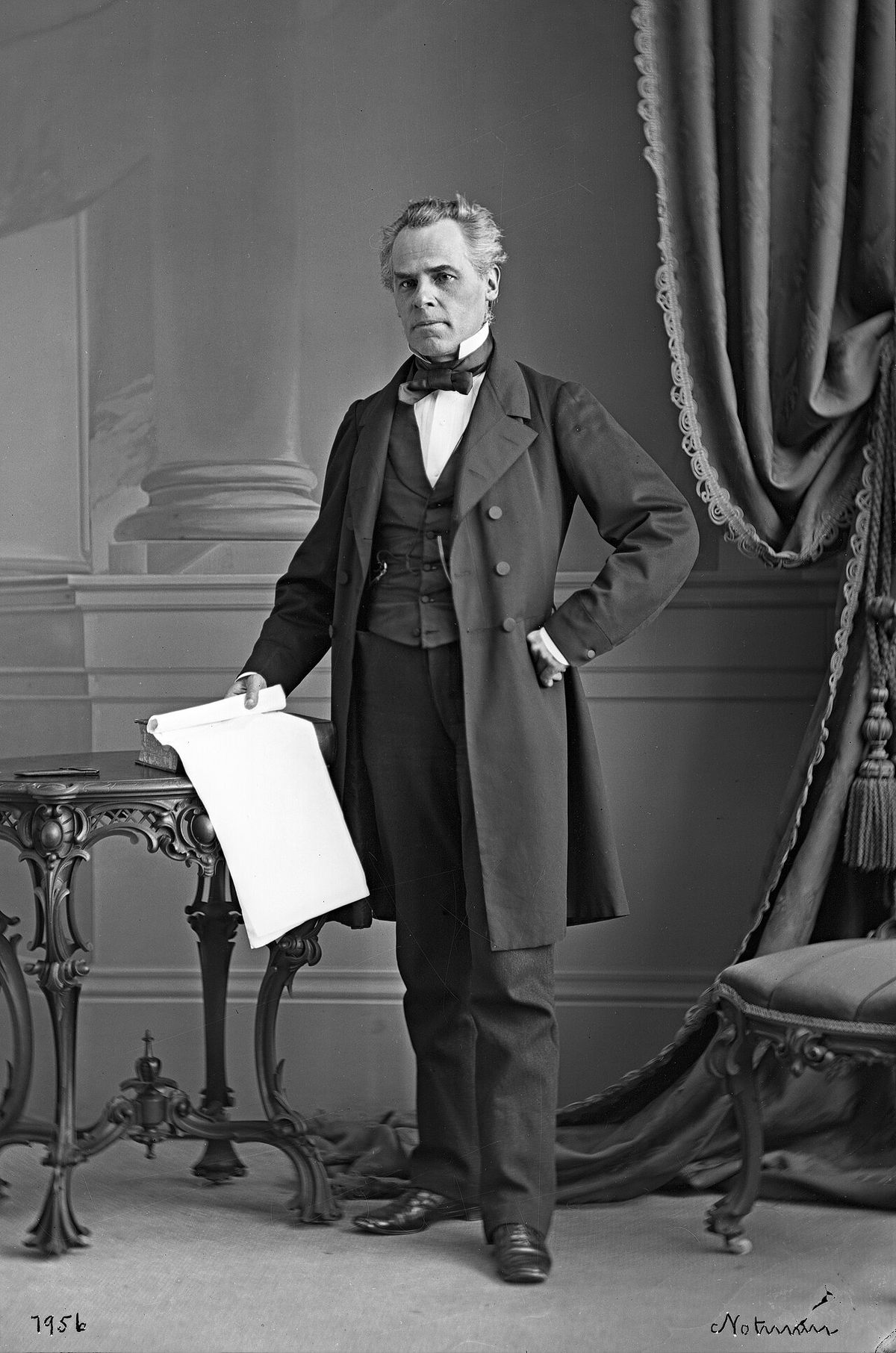
Negotiations for Canadian Confederation began at the Charlottetown Conference in 1864 and continued at the Quebec Conference, which produced the Quebec Resolutions. George-Étienne Cartier, a former Patriote and co-premier of the Province of Canada, was a leading figure who successfully argued for the establishment of the province of Quebec to preserve the French Canadian nation's historic heartland. Following the London Conference of 1866, Confederation was achieved on July 1, 1867, with Quebec as one of the four original provinces. Its first premier was Pierre-Joseph-Olivier Chauveau. Montreal became Canada's largest city for the next century. The Catholic Church remained a central institution for French speakers, overseeing education and social services. The province's present northern limits were established in 1912 with the addition of the District of Ungava. The first statute requiring the use of French in public life was the Lavergne Law of 1910. The 20th century was marked by national divisions, notably the Conscription Crises. Voluntary enlistment among French Quebecers in the First World War was low, and the imposition of conscription in 1917 produced the Conscription Crisis of 1917 and riots in Quebec City. A second conscription crisis followed in 1944 during the Second World War. Throughout this period, Quebec society was largely defined by traditional social structures and clerico-nationalist values, setting the stage for the deep changes of the 1960s.
The Quiet Revolution and Modern Politics
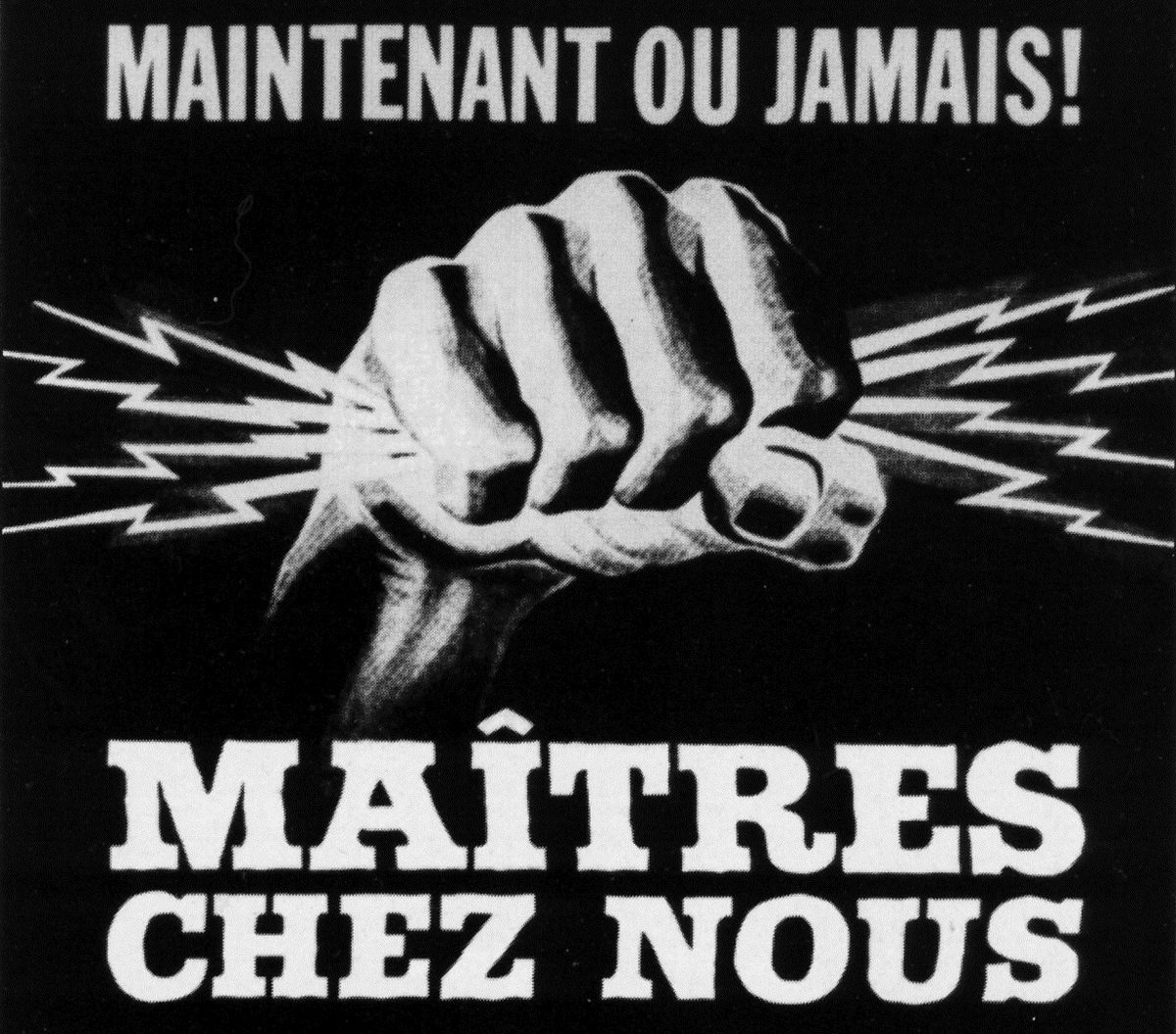
The period known as the Quiet Revolution began in the 1960s under the Liberal government of Jean Lesage. This era saw a rapid expansion of the provincial welfare state and the secularization of public institutions, dramatically reducing the Catholic Church's role in schools and social services. A central achievement was the nationalization of private electricity companies to form the provincial crown corporation Hydro-Québec. These changes fostered a new, assertive Québécois identity and made Quebec nationalism a central force in politics. The Parti Québécois, formed in 1968, took office in 1976 under René Lévesque. The party's sovereignty agenda resulted in two referendums on Quebec's political future in 1980 and 1995, both of which failed to win a majority. These debates shaped federal-provincial relations, leading to constitutional negotiations like the Meech Lake Accord of 1987 and the Charlottetown Accord of 1992, which did not succeed. In 2006, the House of Commons passed a motion recognizing the Québécois as a nation within a united Canada. In the 2018 provincial election, the Coalition Avenir Québec (CAQ) won power. In 2026, following the resignation of Premier François Legault, the Parti Québécois under Paul St-Pierre Plamondon formed a minority government after the 2026 Quebec general election.
Commemoration and Living History Events
Quebec's rich history is actively commemorated through public events and historical sites, particularly in Quebec City. The Plains of Abraham, a National Historic Site managed by the National Battlefields Commission since 1908, is a focal point for reenactments. In September 2025, the Commission will host 'Battlefields, Québec City under Siege', a free reenactment event on September 6 and 7. It will involve over 200 participants from Quebec, Ontario, the Maritimes, and the United States recreating military and civilian life from the 17th and 18th centuries. The event will cover three major attacks on the city: by William Phips in 1690, the siege of 1759 to 1760, and the American invasion of 1775 to 1776. This event accompanies a temporary museum exhibition, 'Québec 1775: Blizzards and Battle', which runs at the Plains of Abraham Museum until January 2026. Another major celebration is the Fêtes de la Nouvelle-France (New France Festival) in Quebec City, a free event scheduled for August 6 to 9, 2026. This festival immerses visitors in the 17th and 18th centuries with costumed interpreters, traditional music, period cuisine, and workshops in the historic district of Old Quebec, a UNESCO World Heritage Site. Activities are centred around the Jardins de l’Hôtel-de-Ville and Montmorency Park. These events serve as public outreach tools, making historical narratives accessible and engaging for thousands of visitors.
| Event | Dates | Location | Focus |
|---|---|---|---|
| New France Festival 2026 | August 6-9, 2026 | Old Quebec (Jardins de l’Hôtel-de-Ville) | Daily life and culture of New France |
| Exhibition: Québec 1775: Blizzards and Battle | Until January 2026 | Plains of Abraham Museum | American invasion of 1775 to 1776 |
Key Historical Figures and Their Roles
Numerous individuals have shaped Quebec's history through exploration, political leadership, and cultural influence. Samuel de Champlain is revered as the founder of Quebec City and the father of New France, establishing a defence pact with Innu, Wolastoqiyik and Mi'kmaq peoples in 1603. Jacques Cartier was the first European to map the Quebec area and gave the name 'Canada' to the region. Louis-Joseph Papineau led the political reform movement as head of the Parti canadien and was a principal leader of the Lower Canada Rebellion. George-Étienne Cartier, a former Patriote, became a leading Father of Confederation and a key architect of Quebec's entry into Canada as a province. In the 20th century, Premier Jean Lesage was the central figure of the Quiet Revolution, overseeing the expansion of the state and the creation of Hydro-Québec. René Lévesque, as founder of the Parti Québécois and premier, championed the sovereignty movement and implemented the Charter of the French Language. Other notable figures include Intendant Jean Talon, who organized the colony's first census and promoted population growth, and General Louis-Joseph de Montcalm, who commanded French forces during the Seven Years' War. Charles-Michel de Salaberry is remembered as a military hero of the War of 1812 for his victory at the Battle of the Chateauguay. In 2026, Paul St-Pierre Plamondon became premier of Quebec leading a Parti Québécois minority government.
Cultural and Social Institutions
Throughout its history, specific institutions have shaped Quebec's social and cultural landscape. The Roman Catholic Church was the predominant institution for French Canadians from the early days of New France until the 1960s, controlling education, healthcare, and social welfare. This influence began with the arrival of Jesuit and other missionary groups following the founding of Quebec City. The seigneurial system, a form of land distribution and management introduced in 1627, structured rural society in New France and Lower Canada until its abolition in 1854. The Custom of Paris served as the civil law code during the French regime and was reinstated for private law under the British via the Quebec Act of 1774, forming the basis for the later Civil Code of Lower Canada adopted in 1866. The development of a distinct press was also significant. Cultural traditions like the Saint-Jean-Baptiste celebrations, first recorded in New France in 1636, endured and evolved into the official Fête nationale du Québec. The policy of the 'revenge of the cradle', encouraged by the Church in the late 19th and early 20th centuries, was a direct social response to the demographic threat of the Grande Hémorragie, promoting large families to ensure the survival of the French Canadian nation. In 1900, Alphonse Desjardins founded the first caisse populaire, a credit union that became a key financial institution.
Questions about History of Quebec
When was Quebec founded?
Quebec City, the capital of the province, was founded on July 3, 1608, by the French explorer Samuel de Champlain. He established the Habitation de Québec as a permanent fur trading post, which became the capital of New France. The province of Quebec itself was created on July 1, 1867, as one of the four original provinces of Canadian Confederation.
What was the Quiet Revolution?
The Quiet Revolution was a period of rapid social, political, and economic change in Quebec during the 1960s, primarily under the Liberal government of Premier Jean Lesage. It involved the secularization of the state, reducing the Catholic Church's role in education and social services. Key reforms included the massive expansion of the public sector and the nationalization of electricity companies to form Hydro-Québec. This era fostered a new, modern Québécois identity and assertive nationalism.
What was the Lower Canada Rebellion?
The Lower Canada Rebellion was an armed uprising in 1837-38 against the British colonial government. It was led by Louis-Joseph Papineau and Robert Nelson of the Patriotes, who sought political reform and responsible government. The rebellion was sparked by the rejection of the Parti canadien's 92 resolutions. Although the Patriotes won an early victory at Saint-Denis, they were decisively defeated at Saint-Charles and Saint-Eustache. The rebellion's failure led to Lord Durham's report and the union of the Canadas in 1840.
What is the New France Festival?
The Fêtes de la Nouvelle-France (New France Festival) is an annual free historical festival held in Old Quebec City. It immerses visitors in the 17th and 18th centuries with costumed interpreters, traditional music, period cuisine, and historical workshops. The 2026 edition is scheduled for August 6 to 9, with activities centred around the City Hall and Montmorency Park National Historic Site.
What was the Grande Hémorragie?
The Grande Hémorragie refers to the mass emigration of French Canadians from Quebec to New England throughout the 19th and early 20th centuries. This exodus was driven by a lack of available farmland in Quebec and employment opportunities in New England's factories. The phenomenon threatened the demographic survival of the French Canadian nation in North America and prompted the Church's 'revenge of the cradle' policy.
How many sovereignty referendums has Quebec held?
Quebec has held two sovereignty referendums. The first referendum was held in 1980 and the second was held in 1995. Both referendums failed to win a majority for sovereignty. The 1995 referendum resulted in a very close outcome, with 50.6% voting no and 49.4% voting yes.
Sources and further reading
- History of Quebec (Wikipedia)
- Time Travel to New France: Experience This Unique Event in ... (quebec-cite.com)
- Quebec (thecanadianencyclopedia.ca)
- Québec City under Siege: a free event accessible to the ... (plainsofabraham.ca)
- This tour is offered on a gratuity basis! (quebec1608.com)
Checked by the Nosy Mag desk. Last updated 2026-10-23.