Wolastoqiyik
The Wolastoqiyik, also known as the Maliseet or Malecite, are an Algonquian-speaking First Nation of the Wabanaki Confederacy whose traditional territory centres on the Wolastoq, or Saint John River, watershed. Their homeland spans the current borders of New Brunswick and Quebec in Canada and parts of Maine in the United States, a vast area of forest, river, and coastal regions they have inhabited since time immemorial. Historically known for their semi-nomadic lifestyle, sophisticated social structures, and adaptation to their environment, the Wolastoqiyik have endured centuries of colonization, disease, and displacement. Today, they are a people actively working to preserve their language and culture, assert their rights, and build sustainable futures across their communities in New Brunswick, Quebec, and Maine.
Name and Identity
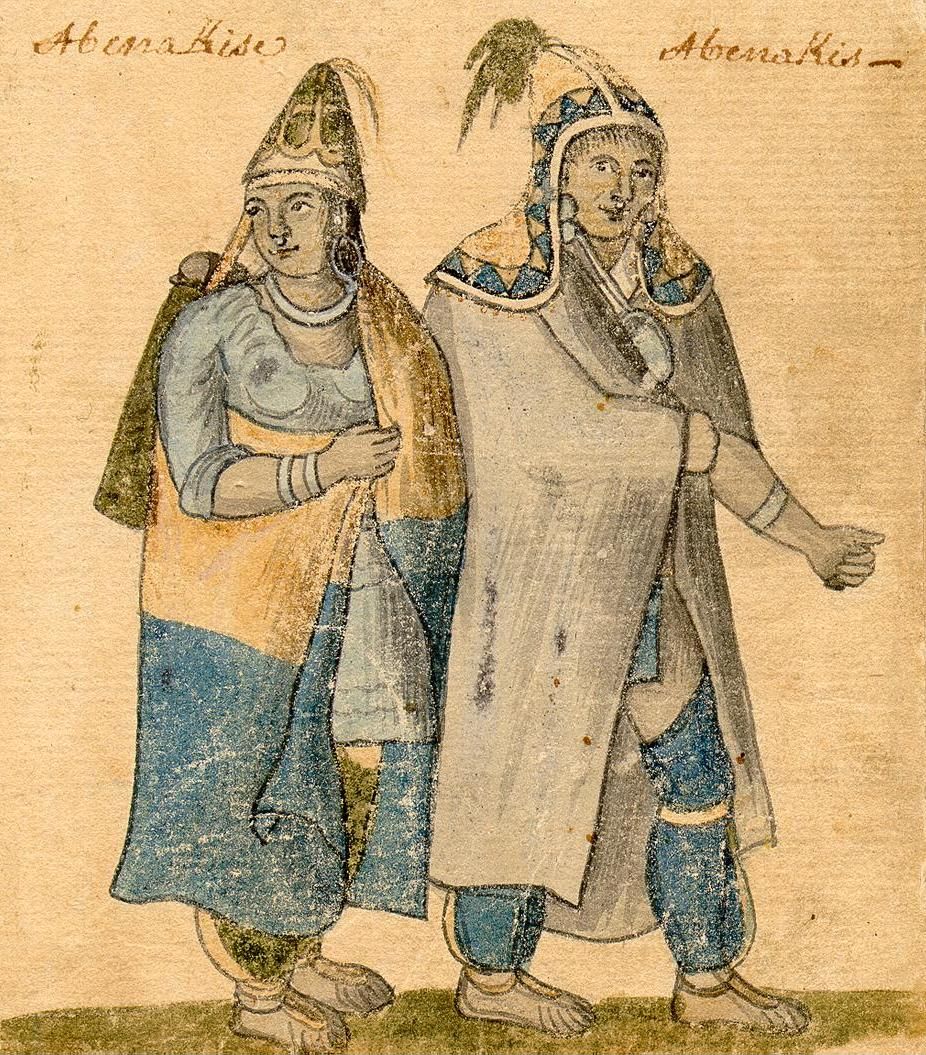
The people's own name for themselves is Wəlastəkwewiyik or Wolastoqiyik, which translates to "People of the Bright River" or "People of the Beautiful and Generous River." This name is derived from Wəlastəkw, their word for the Saint John River, which means "bright river" or "shining river." Their identity is intrinsically linked to this river system. The exonyms Maliseet and Malecite originated from the Mi'kmaq language, as Mi'kmaq people referred to their neighbours using a term Europeans later transliterated. This Mi'kmaq term is believed to have described the cadence or sound of the Wolastoqey language, though its precise meaning is not definitively known. Today, the people increasingly use their own name, Wolastoqiyik or Wolastoqey, to affirm their sovereignty and connection to their river homeland. The Wolastoqey language, Wolastoqey latuwewakon, is part of the Eastern Algonquian language family and is very closely related to Passamaquoddy, considered by linguists to be slightly different dialects of the same language.
Traditional Territory and Communities
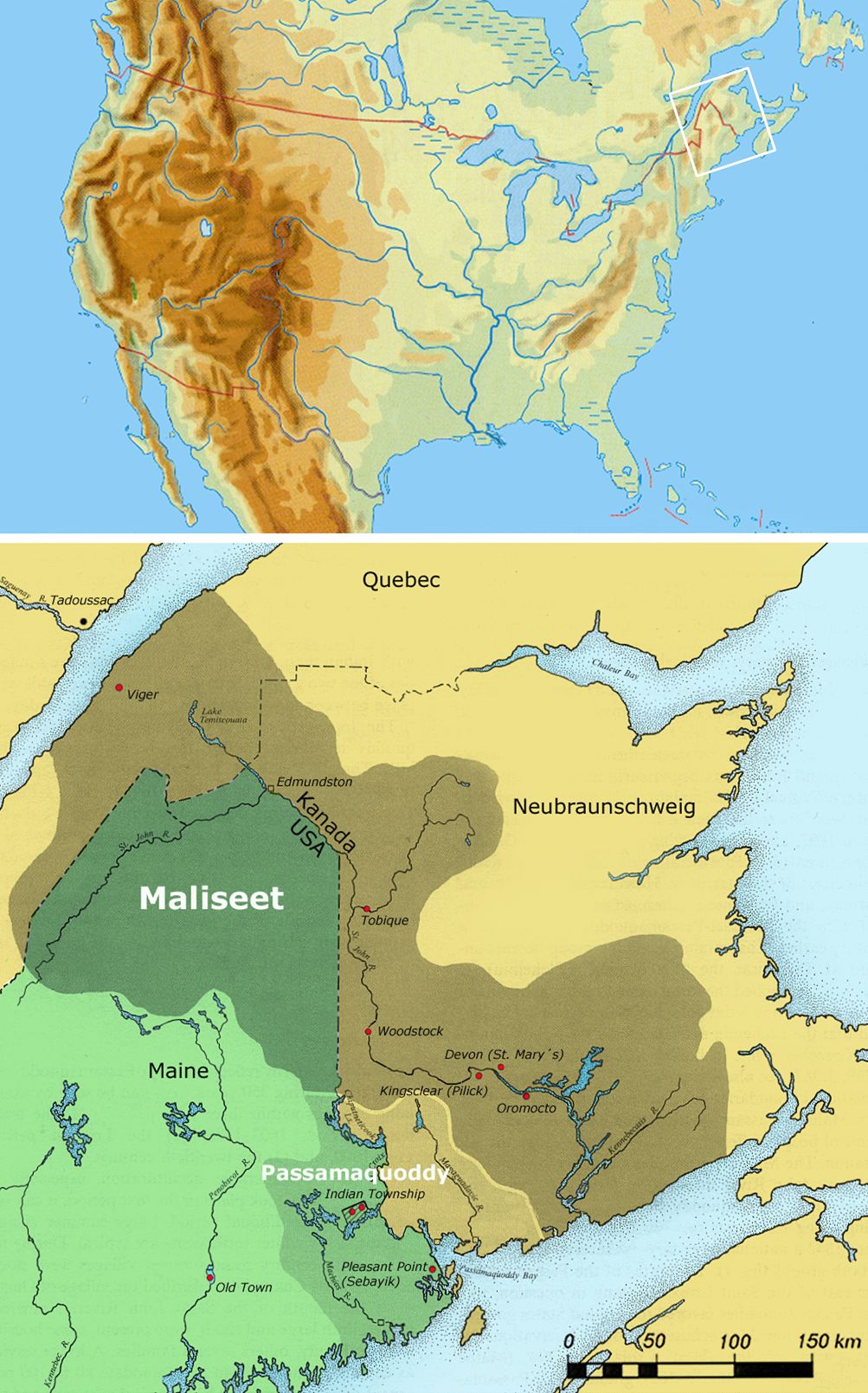
The traditional territory of the Wolastoqiyik is expansive, encompassing lands, marine areas, and fresh waters from the Bay of Fundy in the south to the St. Lawrence River in the north. This territory, estimated at over 8 million hectares, straddles contemporary political boundaries, covering parts of New Brunswick, Quebec, and northeastern Maine. Their way of life was traditionally semi-nomadic, closely tied to the seasonal cycles of hunting, fishing, trapping, and, in some areas, horticulture. The Wolastoqiyik are organized into distinct First Nations or communities within this territory. In New Brunswick, there are six Wolastoqey communities, which are Kingsclear First Nation (Bilijk), Madawaska Maliseet First Nation (Matowesekok), Oromocto (Welamoktuk), St. Mary's First Nation (Sitansisk), Tobique First Nation (Neqotkuk), and Woodstock First Nation (Wetstak). In 2017, these communities formed the Wolastoqey Nation in New Brunswick to provide coordinated technical support and advice on matters related to Aboriginal and Treaty rights. In Quebec, the Wolastoqiyik Wahsipekuk First Nation is the only Wolastoqey community in the province, with its administrative centre in Cacouna and a reserve at Kataskomiq. In Maine, the Houlton Band of Maliseet Indians is a federally recognized tribe.
Historical Overview
At the time of European contact in the early 17th century, the Wolastoqiyik lived in villages and practiced horticulture, growing corn, beans, squash, and tobacco alongside hunting, fishing, and gathering. Early European accounts describe a large village at the mouth of the Saint John River, with a major settlement later located upriver at Meductic. The arrival of European fishermen and fur traders in the late 1500s initiated a period of deep change. The Wolastoqiyik engaged in the fur trade and some established relationships with French Jesuit missionaries. This contact also brought devastating epidemics of European diseases to which they had no immunity, causing catastrophic population loss. Throughout the 17th and 18th centuries, the Wolastoqiyik were drawn into colonial conflicts between France and Britain, often allying with the French. The lucrative fur trade declined by the early 18th century, and the subsequent encroachment of European settlers on their prime riverfront lands severely curtailed their traditional seasonal economy and way of life.
By the 19th century, many Wolastoqiyik faced widespread hunger and displacement, leading colonial governments to establish the first Indian reserves in New Brunswick and Quebec. While some continued traditional crafts like birchbark canoe building and basket making for a new potato farming market, others entered wage economies in mills, construction, and other sectors. The 20th century brought continued struggles with poverty and the pressures of assimilation, but also saw the evolution of sophisticated community governance and increased participation in education, professions, and advocacy. Key historical developments for the Wolastoqiyik Wahsipekuk in Quebec include the creation of the Viger reserve in 1827, its controversial surrender and sale in 1869, and the eventual purchase of a small lot in Cacouna in 1891. The nation was officially recognized by the National Assembly of Quebec as the province's 11th Indigenous nation in 1989.
Culture and Language
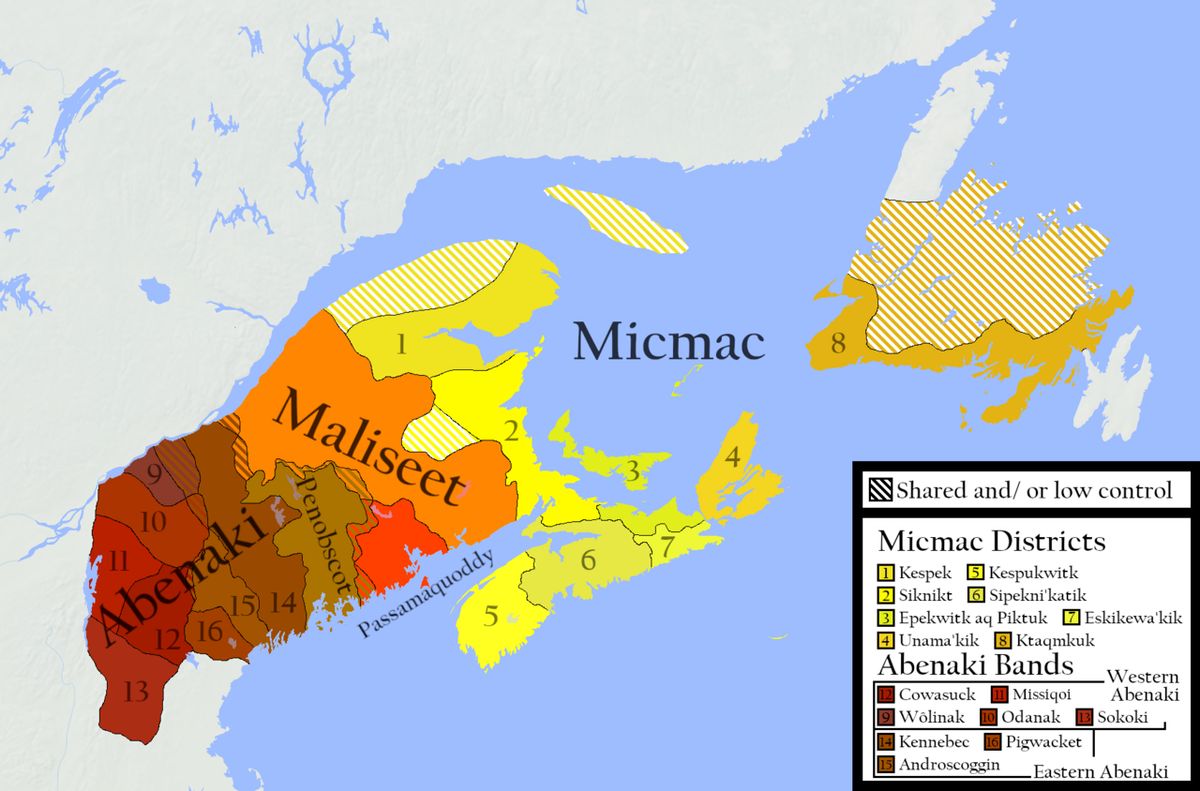
Wolastoqey culture is closely related to that of their Wabanaki Confederacy allies, particularly the Passamaquoddy, Mi'kmaq, Penobscot, and Abenaki. Traditionally, they were distinguished from some neighbours by practising a partial agrarian economy. Their material culture included refined technologies perfectly adapted to their environment, such as lightweight birchbark canoes, toggle harpoons, snowshoes, and toboggans. Ethnobotanical knowledge was extensive, with plants like the balsam fir used for medicine, bedding, thread, and canoe sealant. Music and song have always been central, with traditional songs collected by early ethnographers. In a powerful modern revival, Wolastoqew musician Jeremy Dutcher listened to century-old wax cylinder recordings held at the Canadian Museum of History and revitalized these songs for his 2018 album Wolastoqiyik Lintuwakonawa, which won the Polaris Music Prize. The Wolastoqey language is critically endangered, with only about 650 fluent speakers remaining, most of whom are older adults.
An active program of language scholarship and revitalization takes place at the Mi'kmaq-Wolastoqey Centre at the University of New Brunswick, often in collaboration with fluent elders like Passamaquoddy speaker David Francis Sr. The language is a carrier of worldview, traditions, and values, honouring the land and providing access to a precious heritage. Communities are engaged in numerous initiatives to preserve and promote Wolastoqey latuwewakon, including immersion programs and educational resources. For the dispersed Wolastoqiyik Wahsipekuk community in Quebec, gatherings like pow-wows and community food-sharing programs are vital for maintaining cultural bonds and a sense of shared identity across distances. Cooking traditional foods from the forest, hunting, and fishing also serves as an essential way to reconnect with the roots of Wolastoqey culture.
Contemporary Population and Communities
The contemporary Wolastoqiyik population is distributed across Canada and the United States. In New Brunswick, there are approximately 7,700 Status Wolastoqiyik across the six First Nations. The Wolastoqiyik Wahsipekuk First Nation in Quebec reports a population of 1,200 people, though they are scattered throughout the province rather than living in a single community. The Houlton Band of Maliseet Indians in Maine has about 1,700 members. Each community governs its own affairs while maintaining connections to the broader Wolastoqey Nation. The Wolastoqey Nation in New Brunswick, formed in 2017, acts as a collective technical body supporting the New Brunswick communities in upholding their constitutionally protected Aboriginal and Treaty rights. In Maine, the Houlton Band holds a unique historical status as the first foreign treaty ally of the United States, dating to 1776, and since 2013 has held a nonvoting seat in the Maine Legislature.
- Kingsclear First Nation (Bilijk Wəlastəkwewiyik), New Brunswick
- Madawaska Maliseet First Nation (Matowesekok Wəlastəkwewiyik), New Brunswick
- Oromocto (Welamoktuk), New Brunswick
- St. Mary's First Nation (Sitansisk Wolastoqiyik), New Brunswick
- Tobique First Nation (Wolastoqiyik Neqotkuk), New Brunswick
- Woodstock First Nation (Wetstak), New Brunswick
- Wolastoqiyik Wahsipekuk First Nation, Quebec (admin. centre in Cacouna)
- Houlton Band of Maliseet Indians (Metaksonekiyak Wolastoqewiyik), Maine, USA
Economic activities vary by community and include forestry, fishing, retail, and the development of regional partnerships. Some Wolastoqiyik have worked in pulp mills, construction, nursing, teaching, and business. The Kataskomiq reserve in Quebec is owned by the Wolastoqiyik. The Brothers 18 is a reserve made up of two islands in the Kennebecasis River in New Brunswick. These reserves are available for hunting and fishing. Centuries of intermarriage between the Wolastoqiyik and European colonists have resulted in a diversity of surnames within Wolastoqey families, including Denis, Sabattis, Gabriel, Saulis, Atwin, Launière, Athanase, Nicholas, Brière, Bear, Ginnish, Jenniss, Solis, Vaillancourt, Wallace, Paul, Polchies, Tomah, Sappier, Perley, Aubin, Francis, Sacobie, Nash, Meuse, DeVoe, DesVaux, DeVou, DeVost, DeVot, and DeVeau.
Notable Wolastoqiyik
Throughout history and into the present, numerous Wolastoqiyik individuals have made significant contributions in leadership, advocacy, arts, and public service. Their lives and work reflect the resilience and ongoing vitality of the Wolastoqey Nation. Gabriel Acquin was a key figure in the 19th century who helped found the reserve that later became part of St. Mary's First Nation in Fredericton in 1867. Peter Lewis Paul, an oral historian from Woodstock First Nation, worked extensively with academics to preserve Wolastoqey knowledge and received the Order of Canada and an honorary doctorate. Sandra Lovelace Nicholas is a Wolastoqew activist and Senator who challenged the discriminatory marriage provisions of the Indian Act, contributing to legislative change in 1985. Graydon Nicholas served as the Lieutenant Governor of New Brunswick from 2009 to 2014, acting as the Queen's representative in the province. Jeremy Dutcher is a classically trained operatic tenor and composer who won the 2018 Polaris Music Prize for his album Wolastoqiyik Lintuwakonawa, which revitalized traditional Wolastoqey songs from archival recordings.
- Sarah Anala: A social worker recognized with the Order of Canada and the Queen Elizabeth II Diamond Jubilee Medal for her service.
- Henry John Bear: A treaty rights educator, lawyer, and the first person elected to represent the Houlton Band of Maliseet Indians in their nonvoting seat in the Maine Legislature, starting in 2013.
- Noel Bear: Active during the Aroostook War of 1838-39.
- Noël Bernard: A Wolastoqew leader active from 1781 to 1801.
- David Slagger: Represented the Wolastoqey people in the Maine House of Representatives.
- Shayne Michael: A poet.
Current Initiatives and Recognition
The Wolastoqiyik are actively engaged in cultural revitalization, rights assertion, and community development. Language revitalization remains a paramount concern, with university programs, community classes, and digital resources working to create new speakers. Culturally significant practices, such as the Wahsipekuk seminar, an immersion program aboard a training ship for Wolastoqiyik Wahsipekuk youth, help pass on knowledge and heritage. The Wolastoqey Nation in New Brunswick provides a unified voice on technical issues related to land, resources, and the duty to consult. National Indigenous Peoples Day, celebrated annually on June 21, is an important occasion to honour Wolastoqey and other Indigenous cultures. The Wolastoqiyik continue to address modern challenges while protecting their language, upholding their sovereignty, and ensuring their traditions and values are carried forward by future generations. Their fundamental value of sharing remains alive today through community practices like distributing moose and fish to members across Quebec.
Questions about Wolastoqiyik
What does the name Wolastoqiyik mean?
Wolastoqiyik, also spelled Wəlastəkwewiyik, is the people's own name for themselves in their language. It means "People of the Bright River" or "People of the Beautiful and Generous River. The name comes from Wəlastəkw, their word for the Saint John River. The terms Maliseet or Malecite are exonyms that originated from the Mi'kmaq language and were adopted by European settlers, but the people increasingly prefer and use their own name, Wolastoqiyik.
Where is the traditional territory of the Wolastoqiyik?
The traditional Wolastoqey territory is centred on the Wolastoq (Saint John River) watershed and its tributaries. It spans a vast area from the Bay of Fundy in the south to the St. Lawrence River in the north. This homeland crosses modern political borders, encompassing parts of the Canadian provinces of New Brunswick and Quebec, as well as northeastern Maine in the United States. Their territory is estimated to have covered over 8 million hectares of forest, river, and coastal areas.
How many Wolastoqiyik are there today and where do they live?
The Wolastoqiyik population is distributed across several communities. In New Brunswick, there are approximately 7,700 Status Wolastoqiyik across six First Nations: Kingsclear, Madawaska Maliseet, Oromocto, St. Mary's, Tobique, and Woodstock. In Quebec, the Wolastoqiyik Wahsipekuk First Nation reports 1,200 members, though they are scattered across the province. In Maine, the Houlton Band of Maliseet Indians has about 1,700 members.
Is the Wolastoqey language still spoken?
Yes, but it is critically endangered. It is estimated that only about 650 fluent speakers of Wolastoqey remain, most of whom are older adults. The language is very closely related to Passamaquoddy, with linguists considering them slightly different dialects of the same language. Active revitalization efforts are underway through programs at the Mi'kmaq-Wolastoqey Centre at the University of New Brunswick, community initiatives, and collaborations with elder speakers to teach new generations and preserve this vital part of Wolastoqey heritage.
Who is Jeremy Dutcher and why is he significant?
Jeremy Dutcher is a Wolastoqew musician, composer, and classically trained operatic tenor. He undertook a project to listen to archival wax cylinder recordings of traditional Wolastoqey songs made by anthropologist William H. Mechling, which were held at the Canadian Museum of History. Dutcher revitalized these songs, weaving them with classical and contemporary composition for his debut album, Wolastoqiyik Lintuwakonawa, released in 2018. The album won the 2018 Polaris Music Prize, bringing national attention to Wolastoqey language and culture through a powerful act of artistic reclamation.
What is the Wolastoqey Nation in New Brunswick?
The Wolastoqey Nation in New Brunswick is a collective organization formed in 2017 by the six Wolastoqey First Nations in the province. Its role is to provide coordinated technical support and advice to the member communities on matters related to their constitutionally protected Aboriginal and Treaty rights. The organization helps ensure the communities can be properly consulted by governments and industry in a way that upholds their rights. the Wolastoqey Nation in New Brunswick is not itself the rights holder. The rights are held by the individual First Nations.
Sources and further reading
- Wolastoqiyik (Wikipedia)
- Wolastoqiyik (Malecite) (quebec.ca)
- Our History, Wolastoqey Nation in New Brunswick (wnnb.wolastoqey.ca)
- Wolastoqiyik | KWE! Meet with the Indigenous Peoples (kwefest.com)
Checked by the Nosy Mag desk. Last updated 2026-10-27.