French Canadians
French Canadians are an ethnic group descended from French colonists first arriving in France's colony of Canada in 1608. The vast majority of French Canadians live in the province of Quebec. Their history is foundational to Canada, shaping the cultural, linguistic, and political character of the nation. The community's identity has evolved from the early colonial designation of Canadiens to encompass a range of modern self-identifications, including Québécois, Acadian, and various Franco-provincial identities. Their legacy includes the establishment of the French language as one of Canada's two official languages and a significant influence on North American history through exploration, settlement, and ongoing cultural contributions.
Historical origins and settlement
The first permanent European settlements in Canada were established at Port Royal in 1605 and Quebec City in 1608 as fur trading posts by explorers like Samuel de Champlain. The inhabitants of the New French colony of Canada called themselves Canadiens and came mostly from northwestern France, including Normandy, Perche, Beauce, Brittany, Maine, Anjou, Touraine, Poitou, Aunis, Angoumois, Saintonge, and Gascony. Their colonies of New France stretched across what today are the Maritime provinces, southern Quebec and Ontario, as well as the entire Mississippi River Valley. Over approximately 150 years of French colonization, between 1608 and 1760, an estimated 8,500 pioneers married and left at least one descendant. This group expanded across the continent, with Canadiens born in French Canada founding settlements in areas that would become Detroit, St. Louis, and the Canadian Prairies. The British conquest of New France in 1760 ended immigration from France, but the existing French Canadian population continued to grow due to high birth rates. The community's early roles diversified into fur traders known as coureurs des bois and voyageurs, and farmers known as habitants, forming the bedrock of Francophone society in North America.
Political evolution within Canada
The political status of French Canadians changed dramatically after the British conquest. The 1774 Quebec Act restored French civil law and allowed religious freedom for Catholics, which was crucial for the community's survival. In 1791, the Constitutional Act created Lower Canada, introducing an elected Legislative Assembly, though with no real power. Frustration with this lack of authority contributed to the Lower Canada Rebellions of 1837 to 1838. Subsequently, the Act of Union in 1840 united Upper and Lower Canada, a move partly designed to limit French-Canadian political power and transfer Upper Canadian debt to Lower Canada. After many decades of British immigration, the Canadiens became a minority in the Province of Canada in the 1850s. Despite this, French Canadian politicians were essential in securing responsible government and in undertaking Canadian Confederation in 1867. Subsequent discontent grew due to events like the execution of Louis Riel, the elimination of official bilingualism in Manitoba, and the Conscription Crises of 1917 and 1944.
Demographic shifts and diaspora
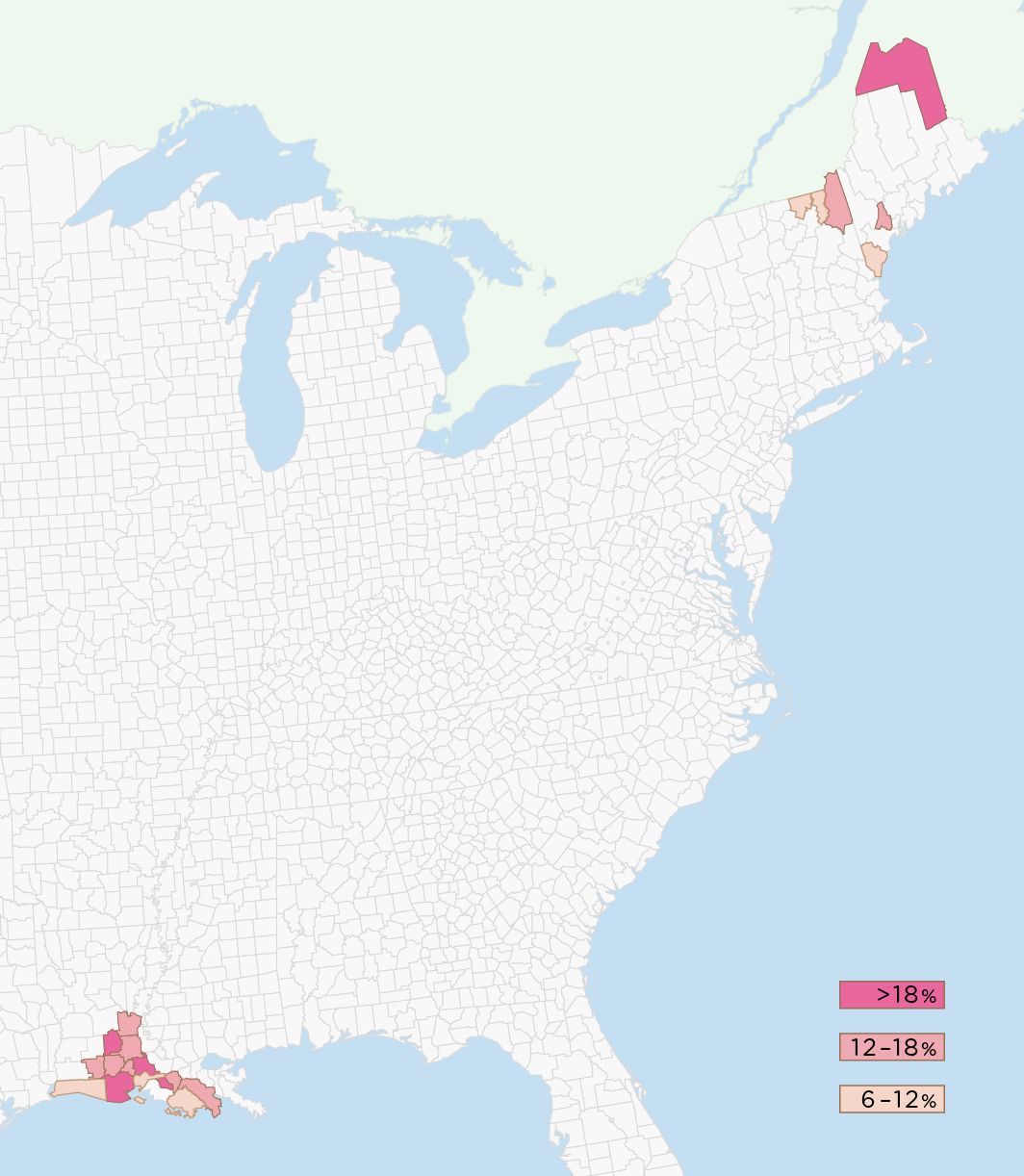
A significant demographic event was the Grande Hémorragie, a period from the 1840s to the 1930s when approximately 900,000 French Canadians emigrated, primarily to New England. Economic pressures and a search for industrial work drove this migration, with about half eventually returning to Canada. Those who remained and their descendants formed distinct Franco-American communities in cities like Lowell, Manchester, and Woonsocket. Within Canada, substantial interprovincial migration occurred during the same period, with many French Canadians moving to Eastern and Northern Ontario, forming the core of today's Franco-Ontarian community. Others settled the Canadian Prairies, founding towns such as Saint Boniface, Manitoba. Genetic studies confirm that French Canadians, particularly in Quebec, constitute a classic founder population. The genetic contribution of the original 17th and 18th century French settlers remains predominant, explaining about 90 percent of regional gene pools in Quebec. Acadian ancestry accounts for about 4 percent, and British ancestry about 2 percent, with smaller contributions from Indigenous and other groups. It is estimated that roughly 70 to 75 percent of Quebec's population descend from the French pioneers of the 17th and 18th century.
Language and regional varieties
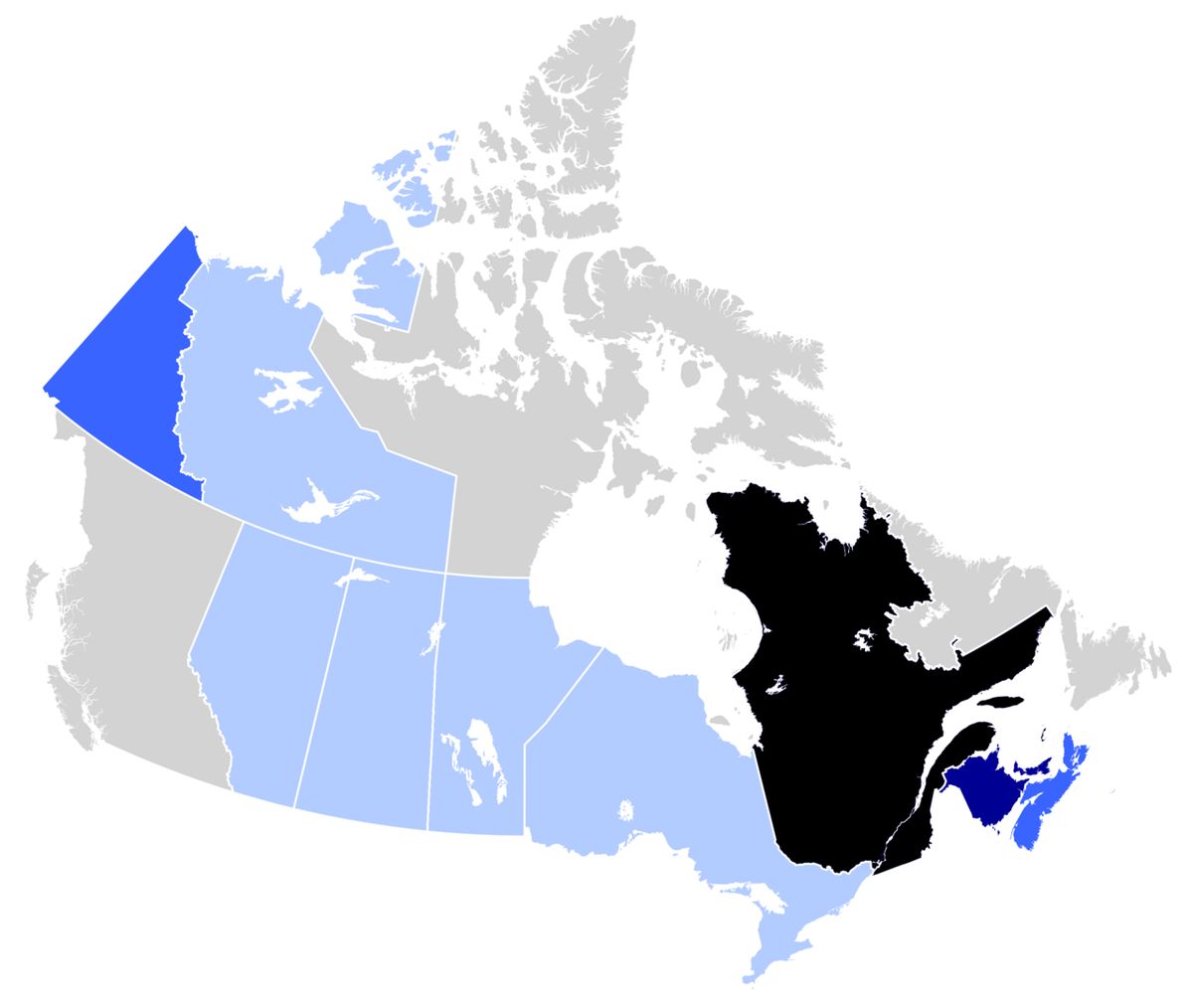
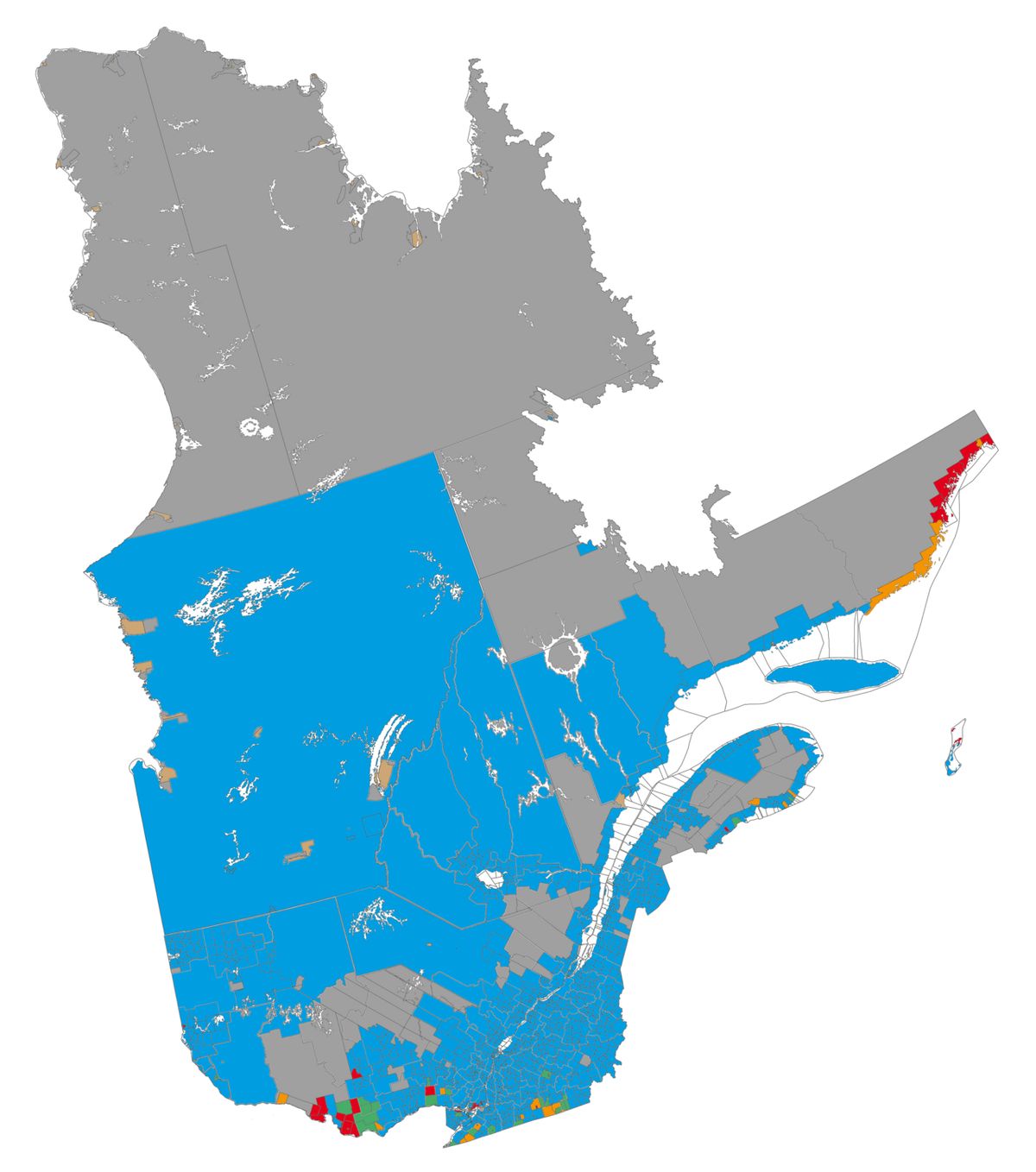
French is the mother tongue of the vast majority of French Canadians and has been one of Canada's two official languages since the Official Languages Act of 1969. It is the sole official language of Quebec and a co-official language in New Brunswick, Yukon, the Northwest Territories, and Nunavut. Ontario has no official languages defined in law but provides French language services under the French Language Services Act. The French spoken across Canada is not monolithic but comprises several distinct regional varieties rooted in history. Quebec French is the most widely spoken variety and is the origin of French spoken in Ontario, Western Canada, and New England due to the Quebec diaspora. Acadian French, with its own unique accents and vocabulary, is spoken in the Maritime provinces. Other varieties include Métis French and Newfoundland French. Canada is estimated to have between 32 and 36 regional French accents, with 17 found in Quebec alone and seven in New Brunswick. Sociolects like Québécois Standard and the more informal Joual also exist. The constitutional protections of 1982 further enshrined minority language rights for Francophones outside Quebec. While about seven million native French speakers live in Quebec, another million are distributed throughout the rest of Canada. Not all individuals of French Canadian ancestry speak French today, but the linguistic heritage remains a central pillar of collective identity.
Religion and cultural identity
Roman Catholicism was the central and defining institution of French Canadian society for centuries, as the kingdom of France forbade non-Catholic settlement in New France from 1629 onward. The Church parish was the focal point of civic life, and religious orders operated the network of schools, hospitals, and orphanages. This religious identity was inseparable from national identity until the Quiet Revolution of the 1960s, which triggered a drastic decline in religious practice and the secularization of the state in Quebec. However, recent reports indicate a shifting trend, as in 2025 the Catholic Church in Quebec reported a rise in adult baptisms and an increased number of baptisms of people over the age of 7. The church described the increase among adults and adolescents as a surprising phenomenon gaining momentum, particularly among young people and adults from immigrant backgrounds. By Holy Saturday in 2026, it was reported that young people were joining the Catholic Church, influenced in part by priests and young influencers on social media platforms like TikTok and Instagram, with another cited reason being a growing interest among youth in understanding Quebec's religious heritage as part of their personal identity.
Modern identities and self-designation
The terms used by French Canadians to describe themselves have evolved significantly, reflecting political and social changes. Historically, the term Canadien referred exclusively to French speakers, but following Confederation in 1867, Canadian came to denote all citizens. The Quiet Revolution marked a major shift, as many in Quebec began identifying as Québécois to express a distinct cultural and national identity. In the 2021 census, French-speaking Canadians reported their ethnicity most often as Canadian, French, Québécois, French Canadian, and Acadian. Those with deep roots, whose families have been in Canada for four or more generations, show a strong sense of belonging to their ethno-cultural group, with 70 percent of fourth generation Canadiens and 61 percent of fourth generation Québécois reporting a strong sense of belonging. This contrasts with English-speaking Canadians of British or Canadian ancestry, whose identification with their ethnicity tends to be weaker over generations. Across Canada, Francophones now use a spectrum of identities tied to language and province. Common self-identifications include Québécois primarily in Quebec, Acadien in the Maritime provinces, Franco-Ontarien in Ontario, Franco-Manitobain in Manitoba, Fransaskois in Saskatchewan, and Franco-Canadien as a broader term. The term Québécois carries an ambiguous meaning, as it is used by the Government of Quebec to refer to all residents of the province, regardless of origin.
Geographic distribution in North America
People who claim some French-Canadian ancestry or heritage number some 7 million in Canada. The overwhelming majority, about 85 percent, live in Quebec, where they constitute the majority of the population in all regions except the far north (Nord-du-Québec). Most cities and villages in this province were built and settled by the French or French Canadians. Significant populations also exist elsewhere in Canada due to historic interprovincial migration, with large francophone communities found in Ottawa, Cornwall, Sudbury, and Windsor in Ontario. French Canadian pioneers also settled the Canadian Prairies, with historic communities in Saint Boniface, Manitoba and Alberta's Peace Country. In the United States, 2.4 million people report French-Canadian ancestry, treated as a separate ethnic group from French ancestry. The largest concentration is in New England as a result of the Grande Hémorragie, and major centres include Lewiston, Maine, Manchester, New Hampshire, and Woonsocket, Rhode Island. There are also historic French Canadian communities in the Midwest, such as in Detroit, Michigan, and St. Louis, Missouri.
| Region | Population (Approx.) | Notes |
|---|---|---|
| Quebec, Canada | ~7 million (total ancestry) | Constitutes majority of provincial population |
| Rest of Canada | ~1 million French speakers | Franco-Ontarian, Acadian, and other communities |
| United States (French Canadian ancestry) | 2.4 million | Separate category in U.S. Census |
| New England, U.S. | Largest U.S. concentration | Result of 19th/20th century migration |
In the United States, many cities were founded as colonial outposts of New France by French or French-Canadian explorers. These settlements include Mobile in Alabama, New Orleans and Baton Rouge in Louisiana, and Detroit in Michigan. Other significant cities established during this period include St. Louis in Missouri, Green Bay in Wisconsin, and Prairie du Chien, also in Wisconsin. These foundational efforts were part of the broader French colonial expansion across North America from the 17th to the 18th centuries.
Cultural preservation and contemporary events
French Canadian culture is actively celebrated and preserved through numerous festivals and public events across Canada. The Fêtes de la Nouvelle-France (New France Festival) in Quebec City, scheduled for August 6 to 9, 2026, is a prime example, as this free, immersive event recreates the 17th and 18th centuries in Old Quebec with costumed interpreters, historical workshops, traditional music, and period cuisine. Similarly, the Vive Les Voyageurs Festival at Fort Langley in British Columbia, celebrating its 15th annual event in 2026, highlights French Canadian voyageur culture with food like poutine and maple taffy. The Month of La Francophonie every March is a nationwide celebration of Francophone diversity. Institutions like the Canadian Museum of History also host events, such as the Choeurs en rafale choral marathon on September 26, 2026, part of the Journées de la culture. Canada Day itself, on July 1, 2026, marks the anniversary of Confederation, an event in which French Canadian politicians played an essential role.
Questions about French Canadians
What is the difference between French Canadian and Québécois?
French Canadian (Canadien français) is a broad ethnic and cultural term referring to descendants of French settlers in Canada, including those outside Quebec. Québécois is a term that gained prominence during the Quiet Revolution of the 1960s and is used primarily by Francophones within Quebec to express a distinct cultural and national identity. While many Québécois are of French Canadian ancestry, the term is also used by the Government of Quebec to refer to all residents of the province. For some, identifying as Québécois rather than French Canadian reflects a political shift towards a Quebec-centred identity.
How many French Canadians are there in the United States?
According to U.S. Census data, approximately 2.4 million people report French Canadian ancestry, treating it as a separate category from French ancestry. The vast majority are concentrated in the New England region, a result of the Grande Hémorragie migration between the 1840s and 1930s. Major communities exist in cities like Lewiston, Maine, Manchester, New Hampshire, and Woonsocket, Rhode Island. Smaller historic communities are also found in the Midwest, including Michigan, Illinois, and Wisconsin. The descendants of these migrants often identify as Franco-Americans.
Is French an official language in all of Canada?
French is one of Canada's two official languages at the federal level, as established by the Official Languages Act of 1969 and affirmed in the Constitution Act, 1982. However, its official status at the provincial level varies. Quebec's sole official language is French. New Brunswick is officially bilingual. Ontario has no official languages defined in law but provides French language services in designated regions. All three territories, Yukon, Northwest Territories, and Nunavut, list French as an official language alongside English and Indigenous languages, though services are normally available only in the capital cities.
What was the Grande Hémorragie?
The Grande Hémorragie, meaning 'great hemorrhage,' refers to a period of mass emigration from Quebec to the United States, primarily to New England, between approximately 1840 and 1930. Driven by economic hardship, a shortage of farmland, and the attraction of jobs in New England's booming textile and industrial mills, an estimated 900,000 French Canadians left during this time. About half eventually returned to Canada. This migration established lasting Franco-American communities and significantly impacted the demographic character of both Quebec and the northeastern United States.
What are the main varieties of French spoken in Canada?
The main varieties of French in Canada are Quebec French, Acadian French, Métis French, and Newfoundland French. Quebec French is the most widespread and has influenced the French spoken in Ontario and Western Canada. Acadian French, spoken in the Maritime provinces, has distinct accents and vocabulary. Canada is estimated to have between 32 and 36 regional French accents, with 17 found within Quebec alone and seven in New Brunswick. These varieties differ in pronunciation, vocabulary, and sometimes syntax from European French.
What role did Catholicism play in French Canadian history?
Catholicism was the central institution of French Canadian society for over three centuries, as French law prohibited non-Catholic settlement in New France from 1629 onward. The Church parish was the hub of community life, and religious orders controlled education, healthcare, and social services. Religious and national identity were deeply intertwined until the Quiet Revolution of the 1960s triggered rapid secularization. Recent reports from 2025 and 2026 indicate a rising interest in Catholicism among some young adults and immigrants in Quebec, attributed partly to social media influence and a desire to connect with cultural heritage.
Sources and further reading
- French Canadians (Wikipedia)
- Time Travel to New France: Experience This Unique Event in ... (quebec-cite.com)
- French In Canada Exhibit / Canadian Language Museum (beinspired.libcal.com)
Checked by the Nosy Mag desk. Last updated 2026-10-31.