New France
New France was the vast territory in mainland North America colonized by France from the early 16th to the mid-18th century. Its history, spanning from Jacques Cartier's 1534 exploration to its cession in 1763, forms a foundational chapter in the story of Canada. The colony, which at its peak stretched from Newfoundland to the Prairies and from Hudson Bay to the Gulf of Mexico, established French cultural, linguistic, and legal traditions, particularly in Quebec. Today, its story is celebrated and examined through events like Quebec City's annual New France Festival and ongoing historical scholarship that re-evaluates its complex borders and societies.
Territorial Scope and Administration
New France was not a monolithic colony but a viceroyalty composed of five distinct administrative regions by 1712. The most developed was Canada, centred along the Saint Lawrence River and divided into the districts of Quebec, Trois-Rivières, and Montreal. To the northeast was Acadia, encompassing parts of present-day Nova Scotia, New Brunswick, and Maine. The vast, cold expanse of Hudson Bay was another territory, contested for its rich fur trade. France also held claims to Terre-Neuve on the island of Newfoundland and the massive territory of Louisiana, which stretched from the Great Lakes to the Gulf of Mexico. This geographical expanse meant French influence, carried via the Saint Lawrence and Mississippi rivers, touched much of the North American interior. The administration of these colonies was often loose and adapted to the realities of distance, trade, and alliance with Indigenous nations.
The borders of New France were fluid and contested, shaped more by trade networks, diplomatic relationships, and Indigenous territories than by fixed European-style boundaries. This complexity is a focus of modern historical scholarship, which seeks to move beyond traditional maps. A 2026 lecture in Montreal, for instance, revisits the historiographical debate on how to conceive and map New France, exploring the population movements and alliances that defined its real extent. The colony's territory was dramatically reduced by the 1713 Treaty of Utrecht, which forced France to cede mainland Acadia, Hudson Bay, and Newfoundland to Great Britain. In response, France established the fortified colony of Île Royale on Cape Breton Island, building the impressive Fortress of Louisbourg.
Early Exploration and Foundation
French interest in North America began with the search for a western route to Asia. The first attempt at a settlement, Fort Charlesbourg-Royal near present-day Quebec City in 1541, lasted only two years. For much of the 16th century, the region was used primarily by seasonal fishing fleets and fur traders who forged early alliances with Indigenous peoples. The turning point came in the early 1600s with the establishment of permanent settlements. In 1604, Pierre Dugua, Sieur de Mons, founded a settlement at Île-Saint-Croix, which was moved the following year to Port-Royal in Acadia, making it the first successful French settlement in North America.
The founding of Quebec City in 1608 by Samuel de Champlain marked the true beginning of a lasting French colonial presence in the interior. Champlain's alliance with the Algonquin, Montagnais, and Huron peoples against the Iroquois was a decisive political and military act that shaped decades of conflict and trade. To strengthen French understanding and influence, young men known as coureurs des bois lived among Indigenous communities, extending French reach to the Great Lakes. Despite these efforts, growth was painfully slow. Cardinal Richelieu attempted to bolster the colony in 1627 by founding the Company of One Hundred Associates and making New France exclusively Catholic, which discouraged Protestant immigration. Quebec even fell briefly to English privateers from 1629 to 1632 before being returned by treaty.
Colonial Society and Population Growth
For decades, New France remained sparsely populated and vulnerable. In 1660, a militia led by Adam Dollard des Ormeaux famously turned back an Iroquois invasion at the cost of their lives. Recognizing the colony's precarious state, King Louis XIV took direct control in 1663, making New France a royal province. He sent the Carignan-Salières Regiment for defence and appointed Jean Talon as the first Intendant, responsible for civil administration. Talon conducted the first North American census in 1666, which revealed a population of only 3,215, with a significant imbalance between men and women. To address this and stimulate growth, the Crown sponsored approximately 800 single women, known as the Filles du Roi (King's Daughters), to immigrate between 1663 and 1673, providing dowries to encourage marriage and family formation.
This strategy, combined with natural increase, proved successful. Colonial women had about 30 percent more children than their counterparts in France, aided by an abundant supply of food and resources. By the last French census in 1754, the population of Canada alone was 55,000, with another 10,000 Acadians and about 4,000 settlers in Louisiana. Acadian growth was almost entirely from natural increase, their population reaching about 13,000 by the 1750s. In Louisiana, the colonial population was smaller and, by the end of French rule, included a significant number of enslaved Africans, who represented about 65 percent of the non-Indigenous population. The seigneurial system, a semi-feudal land distribution method introduced along the Saint Lawrence, organized rural life but was less dominant than the fur trade economy.
Economy and Daily Life
The economic engine of New France was the fur trade, particularly in beaver pelts, which dictated exploration, alliances, and settlement patterns. While the colonial government under Intendants like Jean Talon attempted to diversify the economy with farming, fishing, and shipbuilding, these industries never surpassed the fur trade in importance. The seigneurial system, with its long, narrow riverfront farms, structured agricultural life in the St. Lawrence Valley. Settlers, or habitants, farmed their lands and owed certain obligations to their seigneurs. Daily life for most colonists was centred on family, farm, and faith, with the Catholic Church playing a central role in community and education.
Women in New France had significant responsibilities beyond household duties. Some participated directly in the fur trade, while all were crucial to the colony's demographic survival. The diet, as noted by historian Yves Landry, was exceptional for the time, featuring plentiful meat, fish, and clean water. This contributed to the high birth rate and population growth. Life in the more remote settlements of Acadia, Louisiana, and the Pays d'en Haut (Upper Country) around the Great Lakes was often harder and more isolated, focused on trading posts and military forts. Interactions with Indigenous nations were constant, ranging from trade and military alliance to intermarriage and conflict, creating a complex colonial society distinct from its European roots.
The End of New France
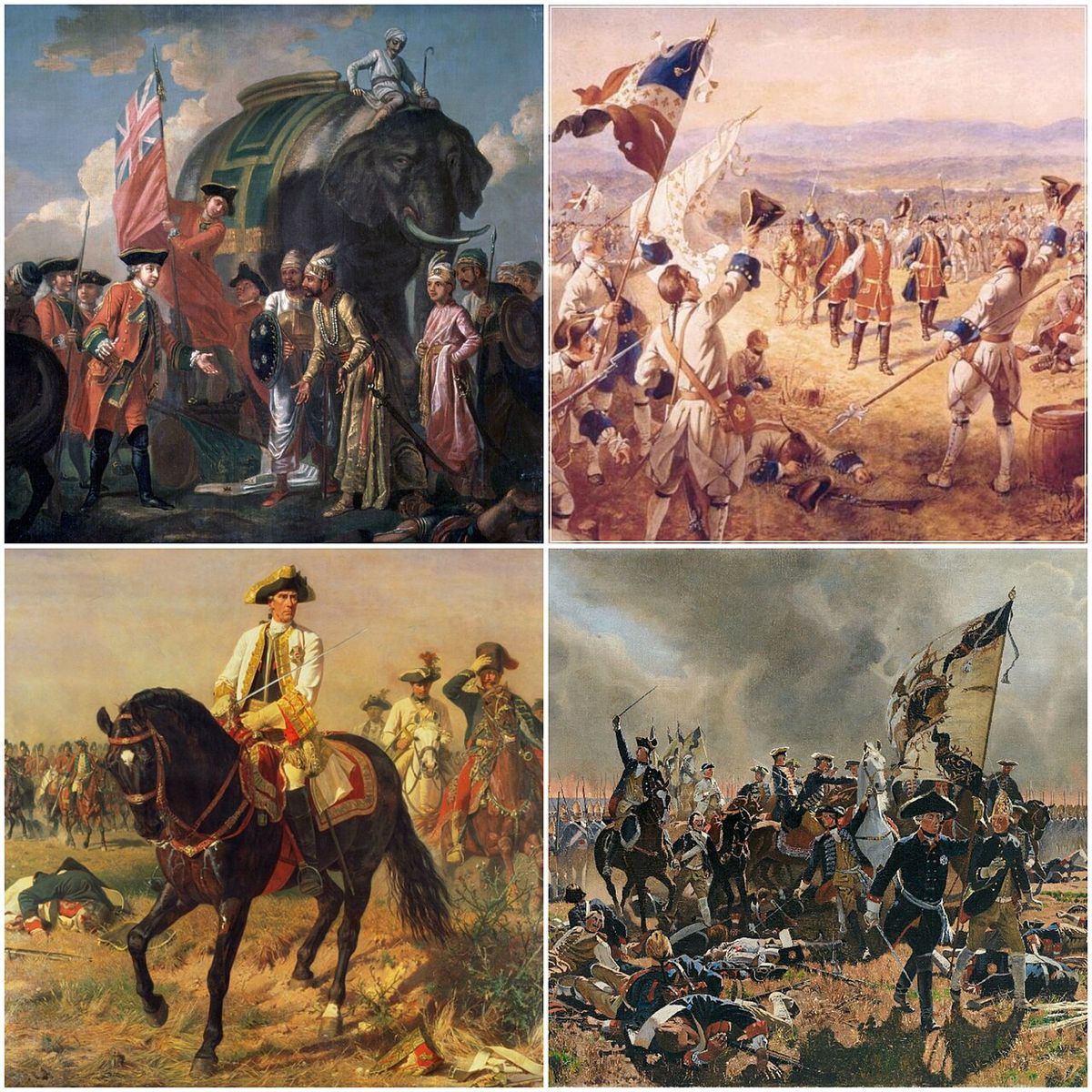
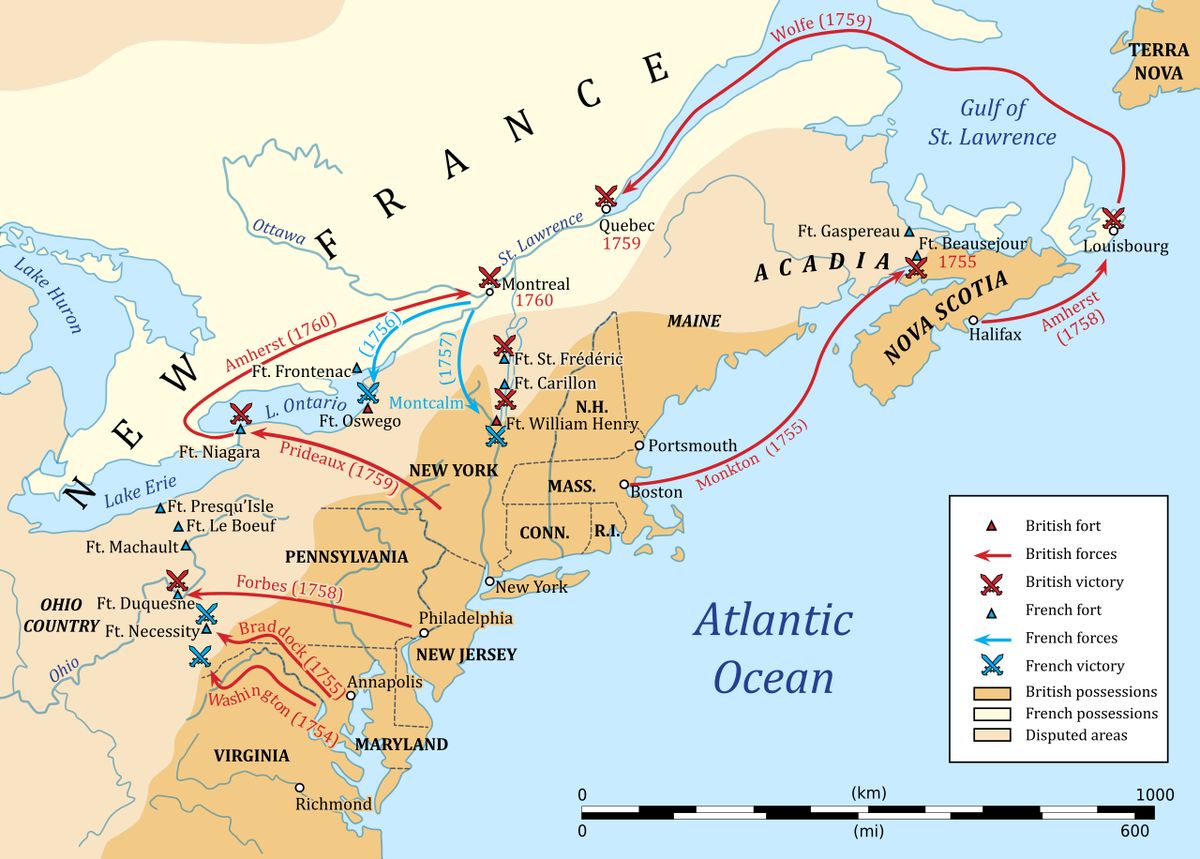
The expansion of British colonies and the ongoing rivalry between France and Britain led to a series of conflicts that ultimately ended French rule in mainland North America. The French and Indian War, the North American theatre of the global Seven Years' War, began in 1754. During this war, the British forcibly deported thousands of Acadians from their homes between 1755 and 1764, an event known as the Great Upheaval. The Treaty of Paris in 1763 formally ended the war and the era of New France. France ceded the remainder of its North American possessions. Britain acquired Canada, Acadia, and French Louisiana east of the Mississippi River. Spain received the territory of Louisiana west of the Mississippi, which it later returned to France in 1800 before Napoleon sold it to the United States in the 1803 Louisiana Purchase. France retained only tiny Saint Pierre and Miquelon off the coast of Newfoundland, which remain a French overseas collectivity today. The treaty marked the permanent end of French colonial ambitions on the North American mainland, absorbing its territories into British North America and the nascent United States.
Modern Commemoration and Historical Study
The influence of New France is deeply woven into the fabric of modern Canada. The most obvious inheritance is the French language and civil law tradition that define Quebec. Acadian communities, rebuilt after the deportation, thrive in Canada's Maritime provinces, notably New Brunswick and Nova Scotia. Place names of French origin dot the map across the continent. The historical period continues to be a subject of public interest and academic study. Scholars like Allan Greer and Catherine Desbarats continue to re-examine the colony's history, its borders, and its interactions with Indigenous peoples, offering new perspectives on this foundational era.
This history is actively celebrated through public festivals, most prominently the Fêtes de la Nouvelle-France (New France Festival) in Quebec City. Founded in 1997, the festival transforms Old Quebec into a living historical village each August. For its 29th edition in 2026, scheduled from August 6 to 9, the festival is moving its central site to Upper Town around City Hall and the Jardins de l'Hôtel-de-Ville, and incorporating Parc Montmorency. The 2026 festival will feature a new Place des Ancêtres dedicated to First Nations traditions, costumed interpreters, historical talks, and performances. Events like this, along with lectures from historical societies, ensure the complex story of New France remains a part of Canada's cultural memory and identity.
Questions about New France
When was New France established and when did it end?
New France began with the exploration of the Gulf of Saint Lawrence by Jacques Cartier in 1534. It ended with the cession of New France to Great Britain and Spain under the Treaty of Paris in 1763. The first permanent French settlement in New France was at Port Royal, Acadia, in 1605. The city of Quebec was founded as a permanent settlement in 1608.
What areas did New France include?
At its peak in 1712, New France consisted of five colonies. These were Canada, centred on the St. Lawrence Valley, Acadia in the northeast, Hudson Bay, Terre-Neuve (Newfoundland), and the vast territory of Louisiana. It stretched from Newfoundland to the Canadian Prairies and from Hudson Bay to the Gulf of Mexico. Modern historians note its borders were fluid, shaped by trade networks and Indigenous territories rather than fixed lines.
What happened to the Acadians of New France?
The Acadians, French settlers in the Maritimes, were forcibly deported by the British between 1755 and 1764 during the Great Upheaval. This occurred because they refused to swear an unconditional oath of allegiance to Britain during the war. Their descendants are dispersed across Canada's Maritime provinces, in Maine and Louisiana in the United States, and some returned to France. They form a significant French-speaking community, particularly in New Brunswick.
How is New France celebrated in Canada today?
The primary celebration is the New France Festival (Fêtes de la Nouvelle-France) held annually in Quebec City. The 2026 edition runs from August 6 to 9 in Upper Town, featuring historical re-enactments, costumed interpreters, traditional music, and period cuisine. The festival moves to a new site around City Hall and Parc Montmorency for 2026, with a new area dedicated to First Nations traditions. Historical societies also host lectures to discuss new scholarly perspectives on the era.
What was the population of New France?
The population grew slowly but steadily. The first census in 1666 recorded 3,215 people. By the last French census in 1754, the total colonial population was approximately 69,000. This included about 55,000 Canadiens in the St. Lawrence valley, 10,000 Acadians, and around 4,000 settlers in upper and lower Louisiana. Growth was largely due to a high birth rate and sponsored immigration like the Filles du Roi, not mass immigration.
What is the historical significance of the 2026 New France Festival?
The 2026 New France Festival is the 29th edition of the event. It will relocate from Lower Town to a compact pedestrian area in Upper Town Quebec City around City Hall and Château Frontenac. A major new feature is the official incorporation of Parc Montmorency, a National Historic Site, which will host the Place des Ancêtres dedicated to First Nations performances and traditions. The festival runs from August 6 to 9 and offers free entry to its main sites to provide an immersive experience into French colonial life.
Sources: Wikipedia and current public reporting, checked by the Nosy Mag desk. Last updated 2026-10-18.