Province of Canada
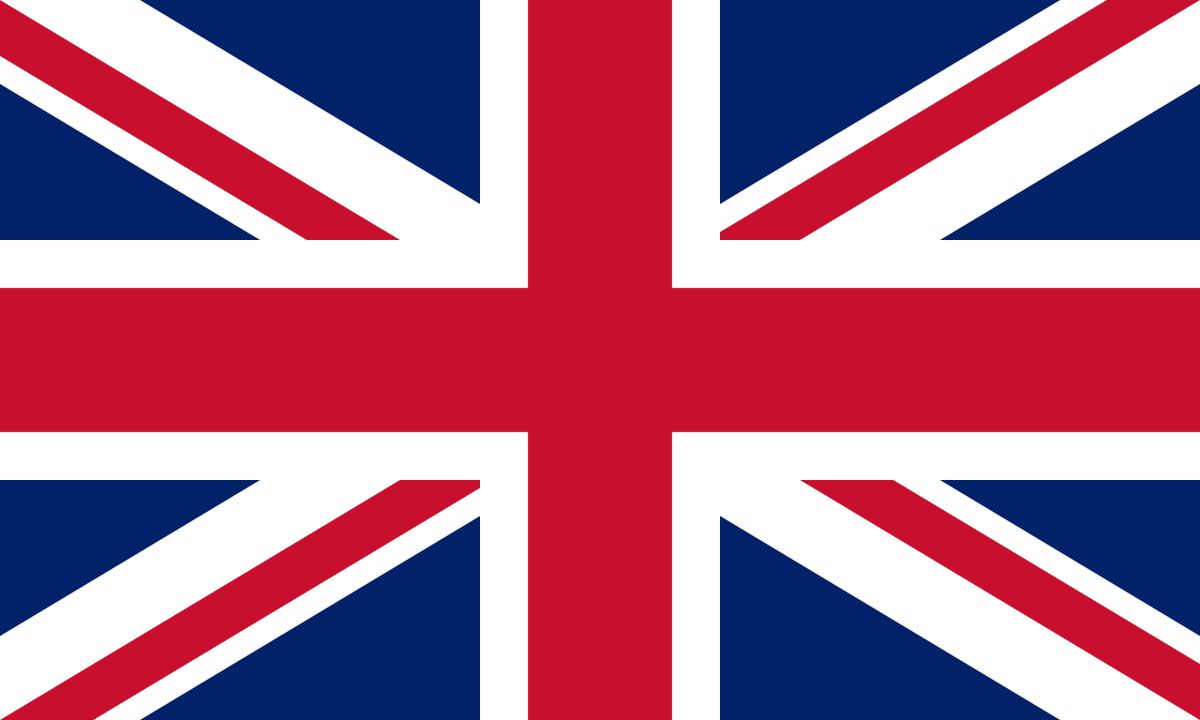
The Province of Canada was a British colony in North America that existed from 1841 to 1867, formed by the union of Upper Canada and Lower Canada. Its creation, mandated by the British Parliament's Act of Union 1840, was a direct response to the political instability and financial crises exposed by the Rebellions of 1837 to 1838. The colony was a crucial political laboratory where the principles of responsible government were tested and ultimately established. It ceased to exist at Confederation on 1 July 1867, when it was divided into the provinces of Ontario and Quebec, forming the core of the new Dominion of Canada.
Formation and the Act of Union
The Province of Canada was created by the Act of Union 1840, passed by the British Parliament on 23 July 1840 and proclaimed on 10 February 1841. This act merged the separate colonies of Upper Canada and Lower Canada into a single political entity, abolishing their individual parliaments and replacing them with a single legislature with two houses. The union was driven by two primary British objectives following the Rebellions of 1837 to 1838, as outlined in Lord Durham's report. First, Upper Canada was nearly bankrupt because it lacked stable tax revenues and required the greater resources of the more populous Lower Canada to fund internal transportation improvements. Second, the British government sought to dilute the political power of the French Canadian majority in Lower Canada by granting each former province an equal number of seats in the new legislature, despite Lower Canada's larger population. Although the Earl of Durham's seminal report had recommended both union and responsible government, only the union was implemented initially, with full responsible government delayed until 1849.
Political Structure and Governance
The Province of Canada operated under a parliamentary system with a bicameral legislature modelled on the British system. The upper house was the Legislative Council, originally composed of 24 appointed members. In 1856, this was changed to an elective system with 24 members elected from divisions in each of Canada East and Canada West. The lower house was the elected Legislative Assembly, where Canada West with 450,000 inhabitants and Canada East with 650,000 inhabitants each held 42 seats, creating an immediate representational imbalance. For the first seven years, the colony was governed by an appointed governor general accountable only to London, not the local assembly, supported by an Executive Council and a Legislative Council. A significant administrative innovation was the introduction of district councils for municipal government, spearheaded by Lord Sydenham through the District Councils Act, though these were initially tightly controlled by the central government with appointed wardens. The Baldwin Act of 1849 later reformed municipal structures deeply, delegating real authority to local governments to raise taxes and enact by-laws and establishing a lasting hierarchy of cities, towns, villages, and townships. Each administration was jointly led by two premiers, one from Canada East and one from Canada West, with one holding the title of Premier and the other of Deputy, reflecting the colony's inescapable dual nature.
Governors General and the Struggle for Responsible Government
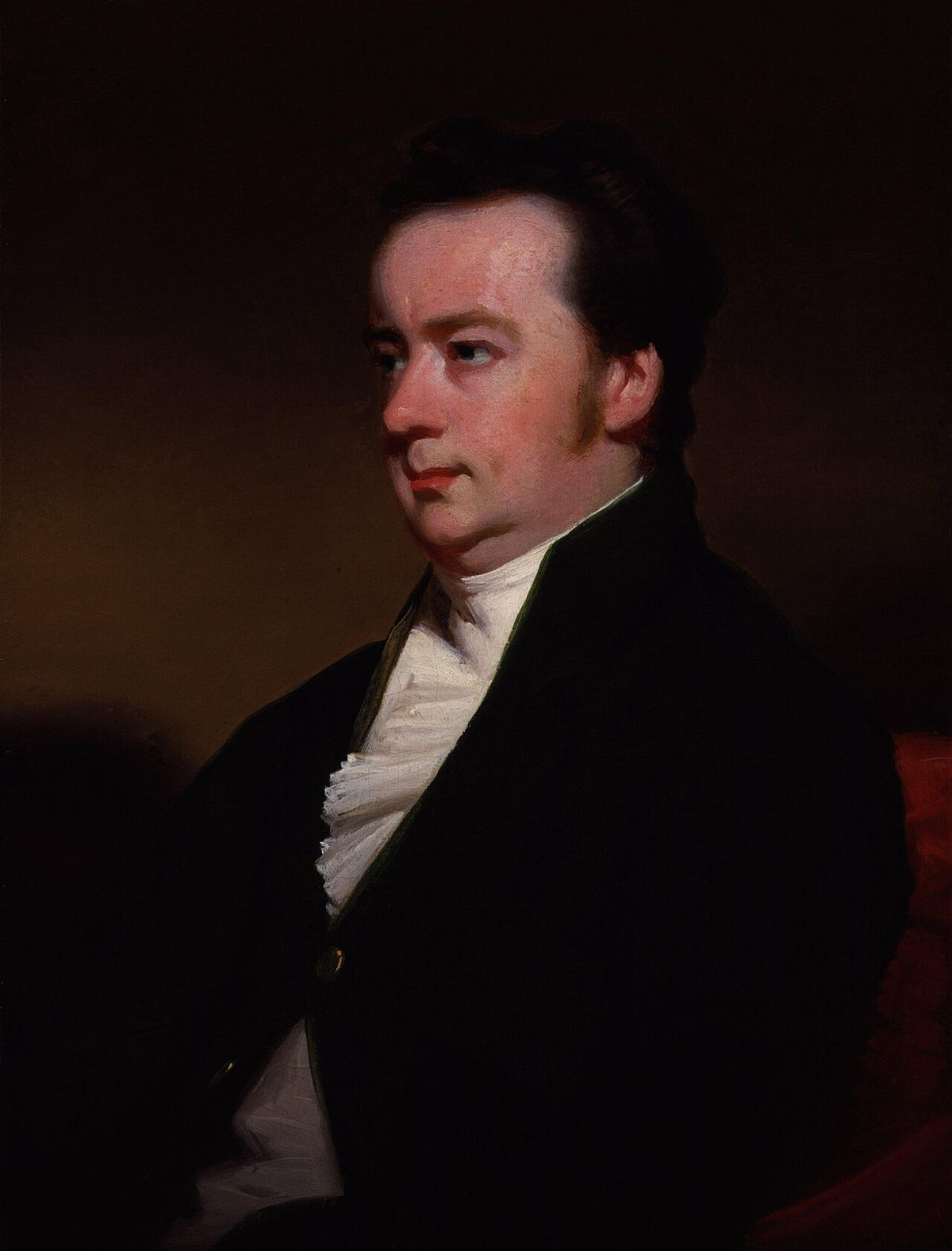
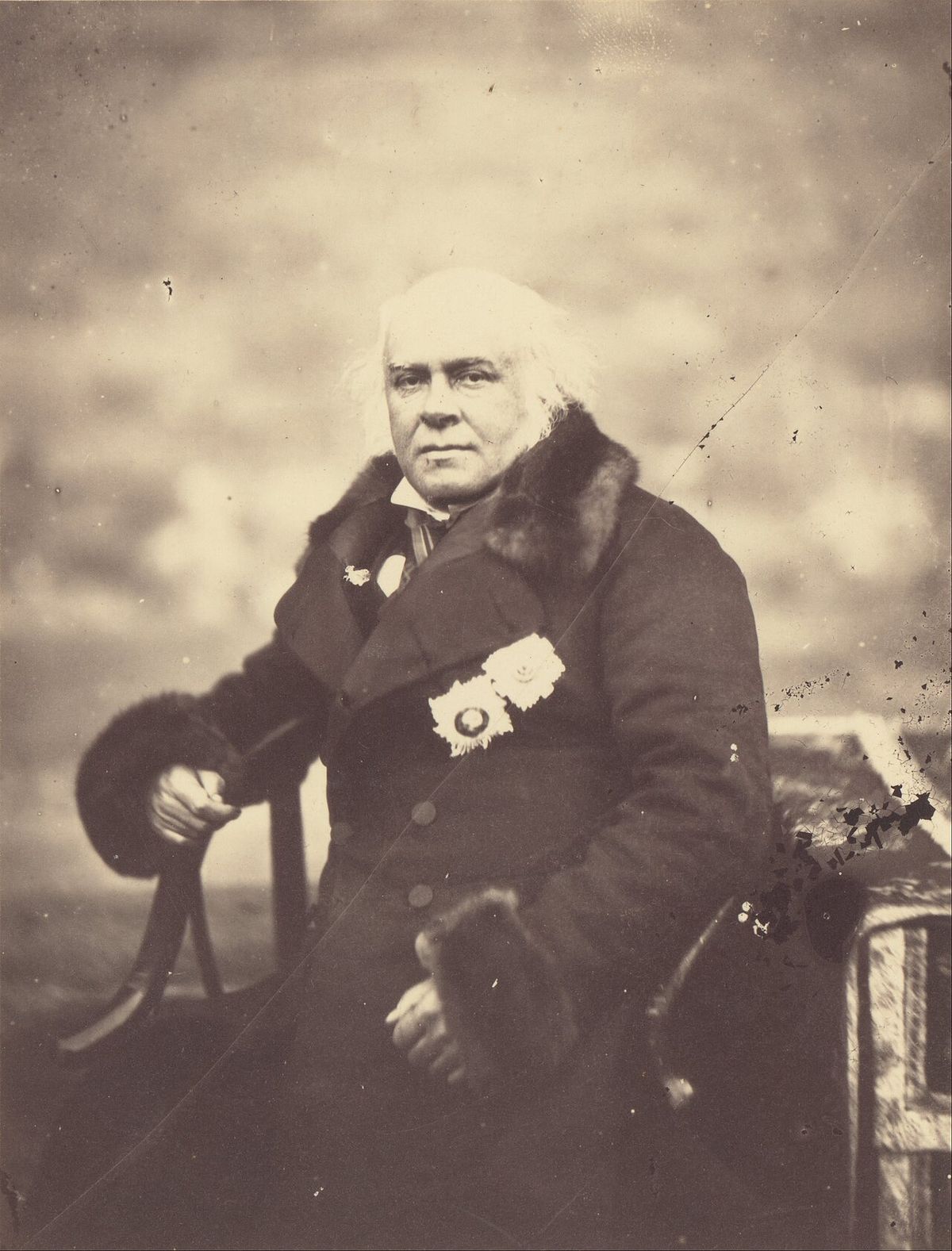
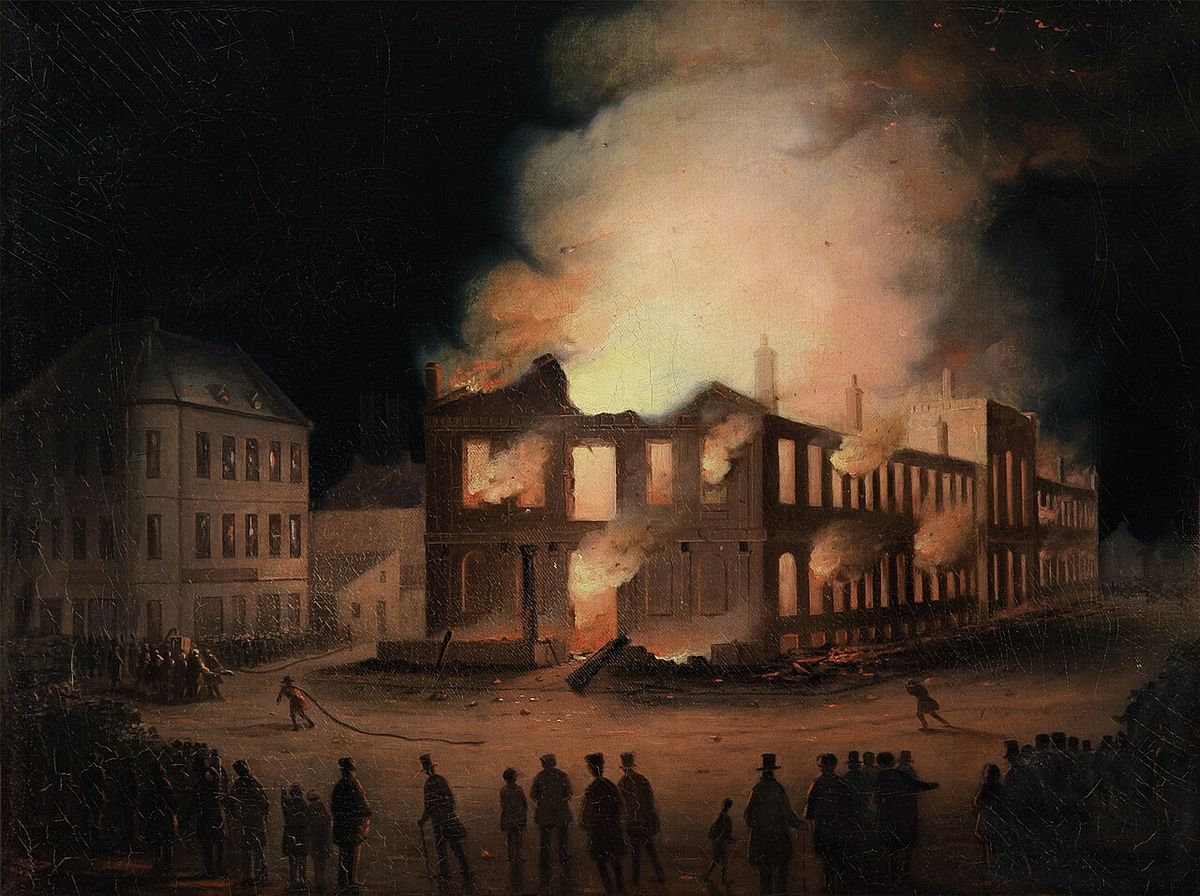
The journey to responsible government, where the executive is accountable to the elected legislature, defined the Province of Canada's early political history and was shaped by a series of governors general. The first governor, Charles Poulett Thomson, Lord Sydenham, was a Whig expert in finance tasked with implementing the union. He actively worked to build a middle party loyal to him and used electoral violence through the Orange Order to minimize French Canadian influence. His successor, Charles Bagot, arrived in 1841 with instructions to resist responsible government but found Sydenham's coalition polarized and was forced to include Louis-Hippolyte LaFontaine and Robert Baldwin in his executive, effectively making them the first real premiers. Bagot's death brought Charles Metcalfe, whose instructions were to check the radical reform government. Metcalfe's reversion to autocratic rule and his unilateral patronage appointments prompted Baldwin and LaFontaine to resign in November 1843, starting a year-long constitutional crisis where Metcalfe prorogued the legislature. The military governor Charles Cathcart, appointed during the Oregon boundary dispute, refused involvement in day-to-day government, indirectly highlighting the need for political reform. The decisive shift came with James Bruce, the 8th Earl of Elgin, in 1847. Following a Reform election victory in January 1848, Elgin invited LaFontaine to form a government based on party support, making the premier the head of government. The principle was cemented in 1849 when Elgin granted royal assent to the controversial Rebellion Losses Bill, sparking riots in Montreal where an English-speaking Orange Order mob assaulted Elgin and burned the parliament buildings.
The Peripatetic Capital and the Selection of Ottawa
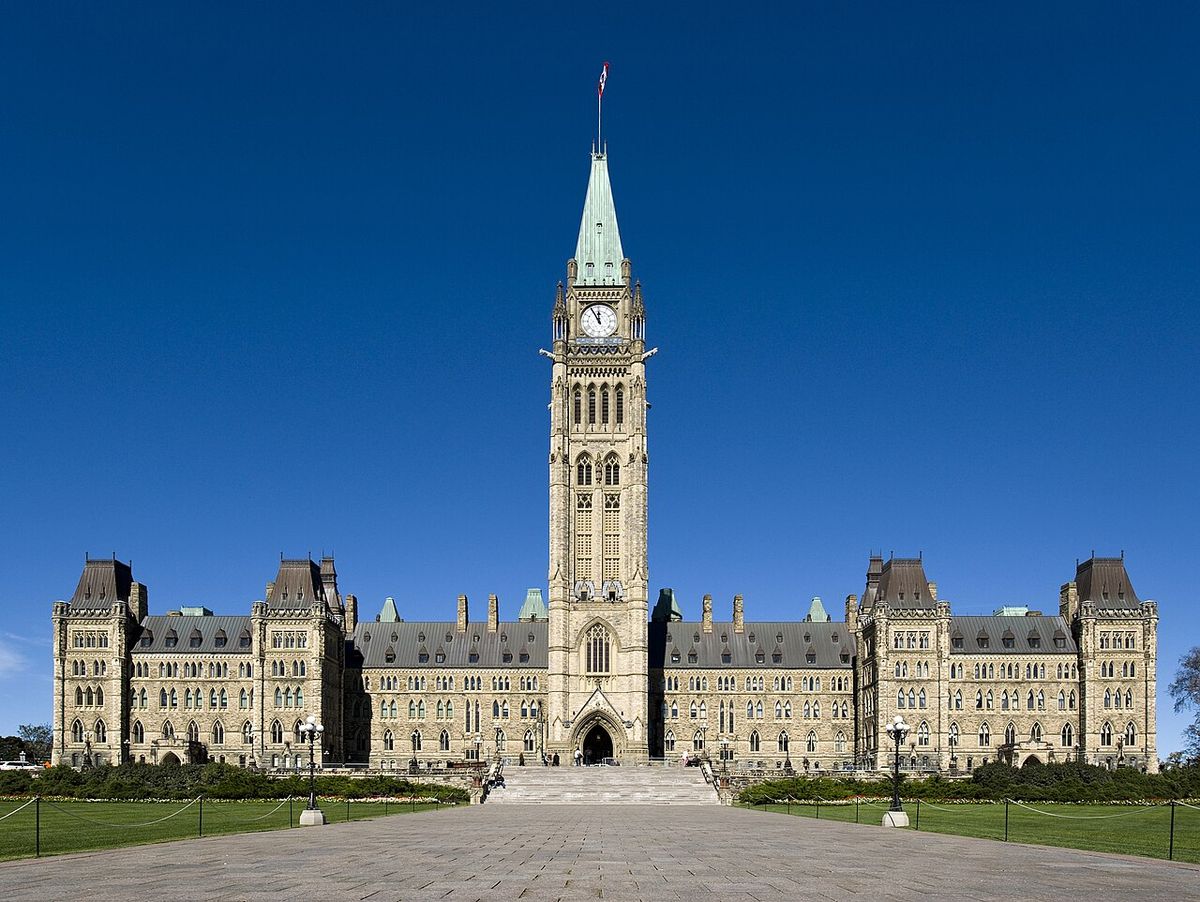
The seat of government moved six times in 26 years due to persistent sectional rivalry between Canada East and Canada West, as elected representatives could not agree on a permanent location. The first capital was determined by Governor General Lord Sydenham, who chose Kingston, where it remained from 1841 to 1843. It then moved to Montreal from 1844 until the 1849 riots destroyed its parliament buildings. The capital shifted to Toronto from 1849 to 1851, then to Quebec City from 1851 to 1855. It returned to Toronto from 1855 to 1859 before moving back to Quebec City from 1859 to 1865. In 1857, the legislature asked Queen Victoria to choose a permanent capital, and she selected Ottawa, a decision announced in February 1858. The recommendation was not immediately accepted, leading to a political crisis known as the Double Shuffle which caused the fall and return of the Macdonald-Cartier government in August 1858. The choice was finally ratified by a close vote in the Legislative Assembly the following year. The government subsequently initiated construction of the Parliament Buildings on Parliament Hill, with the first stage completed in 1865, hosting the final session of the province's parliament in 1866 before becoming the home of the Parliament of Canada after Confederation.
Political Parties, Evolution and Deadlock
The political scene evolved from loose reform associations into defined parties representing linguistic and ideological divides, which directly contributed to legislative paralysis. The Clear Grits in Canada West, inheritors of William Lyon Mackenzie's radicalism, advocated for universal male suffrage, representation by population, and abolition of the Clergy Reserves. In Canada East, the Parti rouge emerged around 1848 as a radical, anti-clerical faction inspired by Louis-Joseph Papineau, and in 1858 they allied with the Clear Grits to form the shortest-lived government in Canadian history, falling in less than a day. The moderate Parti bleu formed in Canada East in 1854 around the principles of Louis-Hippolyte LaFontaine. The Liberal-Conservative Party, a coalition of moderate Reformers and Conservatives from Canada West with bleus from Canada East led by Allan MacNab and A.-N. Morin, was formed in 1854 and later evolved under John A. Macdonald and George-Étienne Cartier. A critical structural flaw was the requirement for a double majority to pass legislation, a majority from both Canada East and Canada West in the assembly. With each section holding 42 seats, this often led to legislative deadlock, as Canada East, with a larger French-speaking population, resisted Canada West's demands for representation by population. This persistent stalemate became a primary driver for the discussions that led to Confederation. Major political factions and their key characteristics included:
- Parti rouge (c. 1848): Radical, sometimes republican, reformers in Canada East who advocated separation of church and state and doubted the reality of responsible government under the Union.
- Parti bleu (1854): The moderate, governing reform party in Canada East that emerged from LaFontaine's views.
- Liberal-Conservative Party (1854): The governing coalition committed to secularizing Clergy Reserves and abolishing seigneurial tenure, which evolved into the Conservative Party.
The Path to Confederation and the Great Coalition
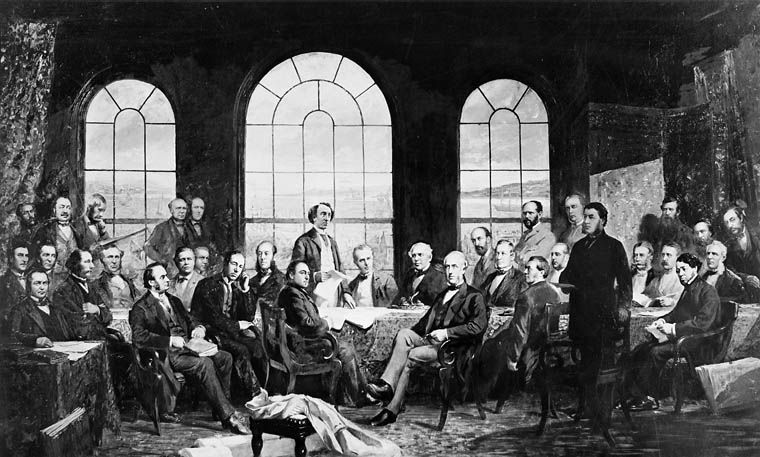
The political deadlock between Canada East and Canada West, exacerbated by the double-majority rule, made the provincial government increasingly unworkable and created the conditions for a broader union. By 1864, the impasse led to the formation of the Great Coalition under Governor General Charles Monck, uniting Macdonald's Conservatives, Cartier's Bleus, and George Brown's Clear Grits with the sole purpose of pursuing a federal union. This coalition ended the instability and paved the way for three constitutional conferences that were the direct mechanism for creating Canada. The Charlottetown Conference in September 1864 began the discussions with the Maritime colonies, followed by the Quebec Conference in October 1864 which produced the 72 Resolutions, the detailed blueprint for union. The final London Conference in 1866 to 1867 drafted the British North America Act, the legislation that would enact Confederation. The Province of Canada's legislature passed a motion approving the union in 1865. The colony was dissolved at midnight on 30 June 1867, and on 1 July 1867 its territory was reconstituted as the provinces of Ontario (formerly Canada West) and Quebec (formerly Canada East), which joined with New Brunswick and Nova Scotia to form the Dominion of Canada. The Parliament Buildings in Ottawa, constructed for the Province of Canada, were then used by the new federal Parliament.
Demographics, Representation and Social Tensions
The Province of Canada was divided into two geographic and demographic sections, Canada East and Canada West, with distinct populations and persistent social tensions. Canada East, the former Lower Canada, was predominantly French-speaking with a population of approximately 650,000 at the time of union, while Canada West, the former Upper Canada, was predominantly English-speaking with a population of about 450,000. Despite this significant population disparity of 200,000 people, the Act of Union mandated equal representation in the Legislative Assembly, with each section allocated 42 seats, an arrangement designed to limit the political influence of the French Canadian majority. The imbalance fuelled constant tension, with Canada West advocating for representation by population to gain more seats, while Canada East defended the equal representation principle to protect its cultural and political interests. This fundamental disagreement over democratic representation was a central conflict throughout the province's existence and a key factor in the move toward a federal system at Confederation. The tensions manifested violently, as seen in the Orange Order's electoral violence against reformers and in the 1849 Montreal riots where an English-speaking mob burned the parliament to protest the Rebellion Losses Bill, which compensated French Canadians for losses in the 1837 rebellions.
Administrative Evolution and Lasting Legacy
Beyond high politics, the Province of Canada established enduring administrative frameworks that shaped the future Canadian state. The district council system, though initially a tool for central control under Sydenham, laid the groundwork for modern municipal government in Ontario, with the Baldwin Act of 1849 creating a truly democratic model that lasted 150 years. The unification created a common market between east and west, facilitating trade and major infrastructure projects like the Grand Trunk Railway. The colony also served as an essential training ground for the Fathers of Confederation, including John A. Macdonald, George-Étienne Cartier, and George Brown, who honed their political skills and coalition-building in its fractious legislature. Its final capital, Ottawa, was confirmed as the national capital through Queen Victoria's selection and the construction of the Parliament Buildings. The province's direct experience with dual premierships, sectional deadlock, and the double-majority rule directly informed the federal structure adopted in 1867, which granted specific powers to the new provinces of Ontario and Quebec to manage their distinct affairs. The Province of Canada's 26-year history was thus a necessary transitional phase, resolving the failures of the previous system and creating the political conditions and leadership for a broader Canadian union, with its territory and institutions forming the core of the new dominion. Key administrative and political legacies include:
- The achievement of responsible government (1849), setting a precedent for self-government within the British Empire.
- The Baldwin Municipal Act (1849), which established the framework for local government in Ontario.
- The elective Legislative Council (from 1856), an experiment in an elected upper house.
- The political partnership model of dual leadership from Canada East and Canada West.
- The Parliament Buildings in Ottawa, constructed as its permanent capital.
- The political leaders and constitutional debates that directly led to the 1867 Confederation agreement.
Constitutional Framework and Legislative Process
The constitutional framework of the Province of Canada was defined by the Act of Union 1840 and evolved through precedent and political conflict. The Governor General remained the formal head of the civil administration, appointed by the British government and originally responsible to it alone. He was aided by two key bodies: the Executive Council, which functioned as an advisory cabinet for administration, and the Legislative Council, which reviewed legislation from the elected Assembly. Lord Sydenham systematically organized the civil service into departments whose heads sat on the Executive Council, and he demanded that every department head seek election to the Legislative Assembly, blending administration with politics. The Legislative Assembly was the centre of political power, but its effectiveness was hamstrung by the equal representation rule and the double-majority convention. The process for replacing the appointed Legislative Council with an elected one began in 1856, with members elected from 24 divisions in each section and twelve members elected every two years until 1862, while previously appointed members retained their seats.
Legislative Initiatives
The Province of Canada passed several significant laws. The Baldwin Act of 1849, also known as the Municipal Corporations Act, replaced the district council system in Canada West with county-level government and granted more autonomy to local municipalities. The Rebellion Losses Bill of 1849 compensated landowners for losses during the 1837 rebellions. The Canadian American Reciprocity Treaty of 1854 was a trade treaty with the United States covering raw materials, in effect from 1854 to 1865. French was reinstated as an official language of the legislature and courts in 1848. The Civil Code of Lower Canada was codified in 1866, and the seigneurial system in Canada East was abolished. In 1849, King's College was renamed the University of Toronto and its ties with the Church of England were severed. The Grand Trunk Railway was incorporated by the legislature in the 1850s. In 1857, the legislature introduced the Gradual Civilization Act, which aimed to make Indigenous persons British subjects in exchange for land.
Questions about Province of Canada
What were Canada East and Canada West?
Canada East and Canada West were the two sections of the Province of Canada. Canada East was the former colony of Lower Canada, predominantly French-speaking, and became Quebec after Confederation. Canada West was the former colony of Upper Canada, predominantly English-speaking, and became Ontario after Confederation. Each had 42 seats in the Legislative Assembly, leading to frequent political deadlock.
What was the Province of Canada?
The Province of Canada was a British colony in British North America from 1841 to 1867. It was formed by merging the colonies of Upper Canada and Lower Canada under the Act of Union 1840. The province was divided into two parts, Canada East and Canada West. Its parliamentary system featured a single legislature with a Legislative Council and a Legislative Assembly. The Province of Canada ceased to exist at Canadian Confederation on 1 July 1867, when it was divided into the provinces of Ontario and Quebec.
Why was the Province of Canada formed in 1841?
The Province of Canada was formed following the Rebellions of 1837 to 1838, reflecting recommendations from the Earl of Durham's report. Unification was driven by two main factors. First, Upper Canada was near bankruptcy and needed the resources of the more populous Lower Canada to fund internal improvements. Second, unification was an attempt to swamp the French vote by giving each former province the same number of parliamentary seats, despite Lower Canada's larger population.
When did the Province of Canada get responsible government?
Responsible government was achieved in 1849 under the second LaFontaine-Baldwin ministry. In 1848, the Reform Party won a decisive election and Governor General Lord Elgin invited LaFontaine to form the new government. This marked the first time a governor general requested cabinet formation based on party support. The test of this system came in 1849 when Elgin granted royal assent to the Rebellion Losses Bill on the advice of his ministers.
Why did the capital move so many times?
The seat of government changed six times because elected representatives could not agree on a permanent location. It moved between Kingston, Montreal, Toronto, and Quebec City due to regional disagreements. In 1857, Queen Victoria was asked to select a permanent capital and chose Ottawa. This recommendation was announced in February 1858 but was not immediately accepted, leading to political turmoil. The choice was later implemented by a close vote in the Legislative Assembly.
How did the Province of Canada lead to Confederation?
The Province of Canada led to Confederation through political deadlock and the formation of the Great Coalition. A legislative deadlock existed because laws required a double majority from both Canada East and Canada West sections of the assembly. To end this deadlock, the Great Coalition of all major political parties was formed in 1864 under Governor General Monck. This coalition pursued a federal union, leading to the Charlottetown, Quebec, and London conferences that resulted in Canadian Confederation in 1867.
Sources and further reading
- Province of Canada (Wikipedia)
- Significant Events in Canadian History (thecanadianencyclopedia.ca)
- Important Events in Canadian History that Shaped the Nation (superprof.ca)
Checked by the Nosy Mag desk. Last updated 2026-10-21.