Canadian Confederation
Canadian Confederation was the process by which three British North American provinces, the Province of Canada, Nova Scotia, and New Brunswick, were united into one federation, called the Dominion of Canada, on July 1, 1867. The union was enacted through the British North America Act, 1867, which created the new country's constitutional foundation. This event, celebrated annually as Canada Day, established the initial four provinces of Ontario, Quebec, Nova Scotia, and New Brunswick, setting the stage for the nation's subsequent territorial expansion. Confederation remains a foundational moment in Canadian history, representing a decisive step toward self-governance and shaping the country's federal structure, though its legacy and the place it afforded Indigenous peoples continue to be subjects of debate and reinterpretation.
Terminology and Meaning
While Canada is a federation, the term Confederation holds specific historical meaning in the Canadian context. It refers to the political process that united the colonies in 1867 and the subsequent incorporation of other colonies and territories into the Canadian union. The word is used to describe the event itself, as in the Fathers of Confederation, and to divide Canadian history into pre-Confederation and post-Confederation periods. Provinces that became part of Canada after 1867 are said to have joined Confederation. The term's use originated in the Province of Canada in the 1850s during discussions about federating all British North American colonies. To contemporaries, the prefix 'con-' suggested a strengthening of central authority compared to the American model, reflecting a desire for a more cohesive union.
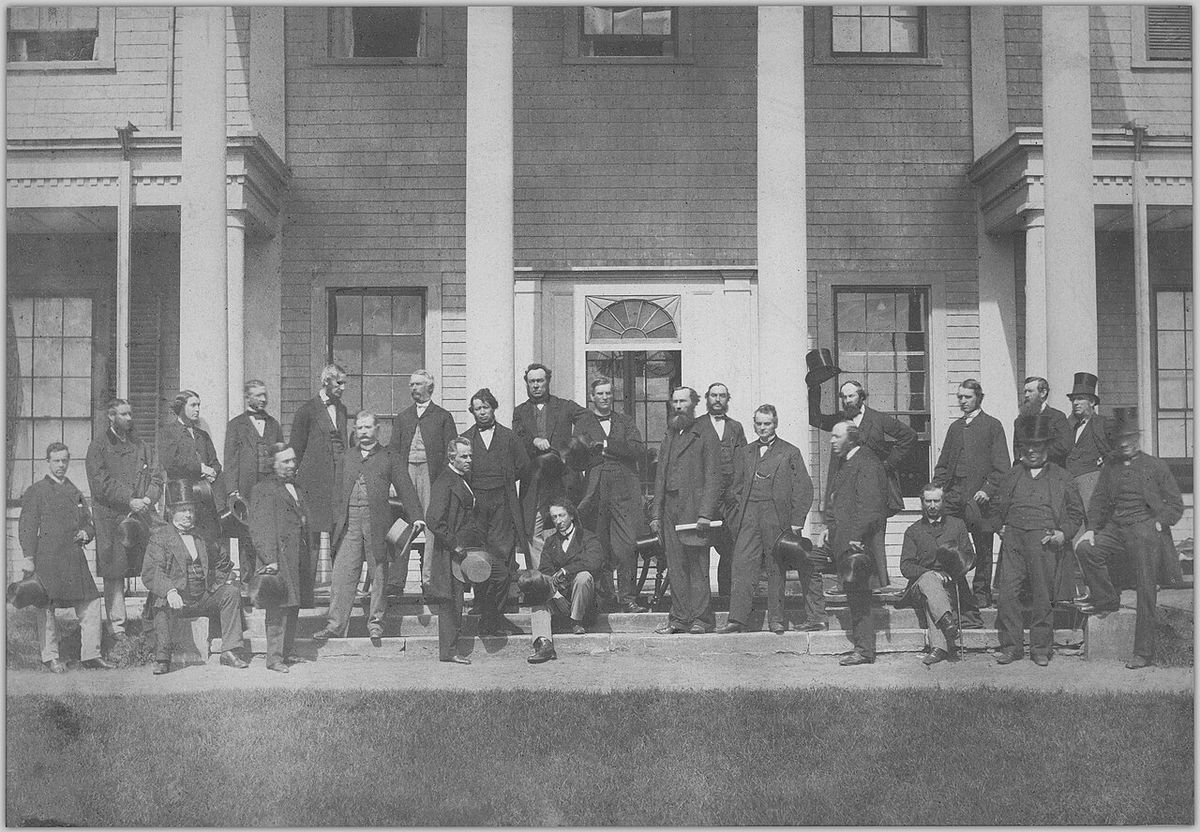
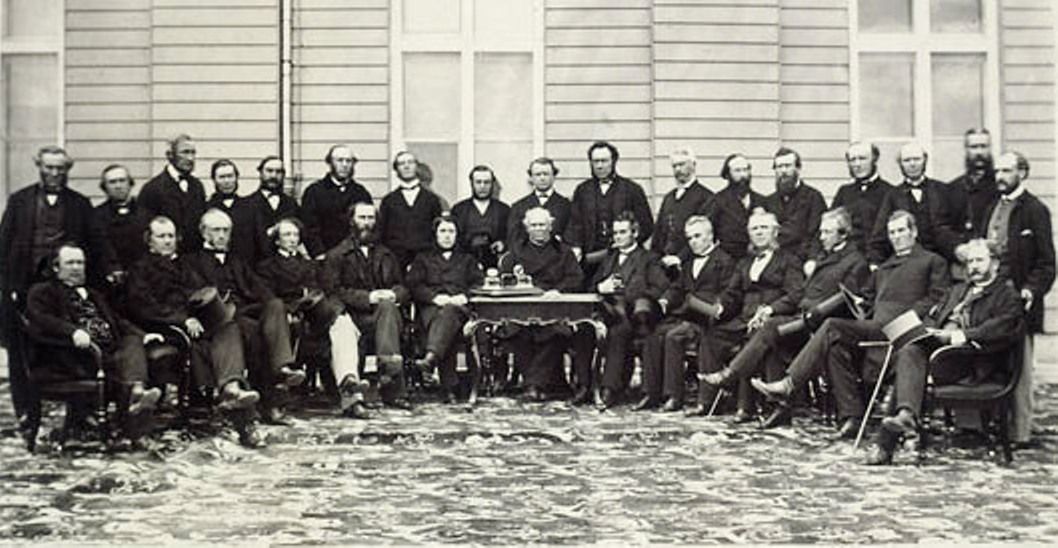
The individuals credited with achieving this union are known as the Fathers of Confederation. This group includes the 36 original delegates who attended the Charlottetown, Quebec, and London conferences between 1864 and 1866. Figures like Hewitt Bernard, the recording secretary at Charlottetown, are sometimes included among them. The title also extends to leaders who brought other provinces into Canada later, such as Amor De Cosmos for British Columbia and Joey Smallwood for Newfoundland. Smallwood notably referred to himself as the Last Father of Confederation for his role in Newfoundland's entry in 1949, highlighting how the process of Confederation was not a single event but an ongoing political project.
Colonial Background and Political Context
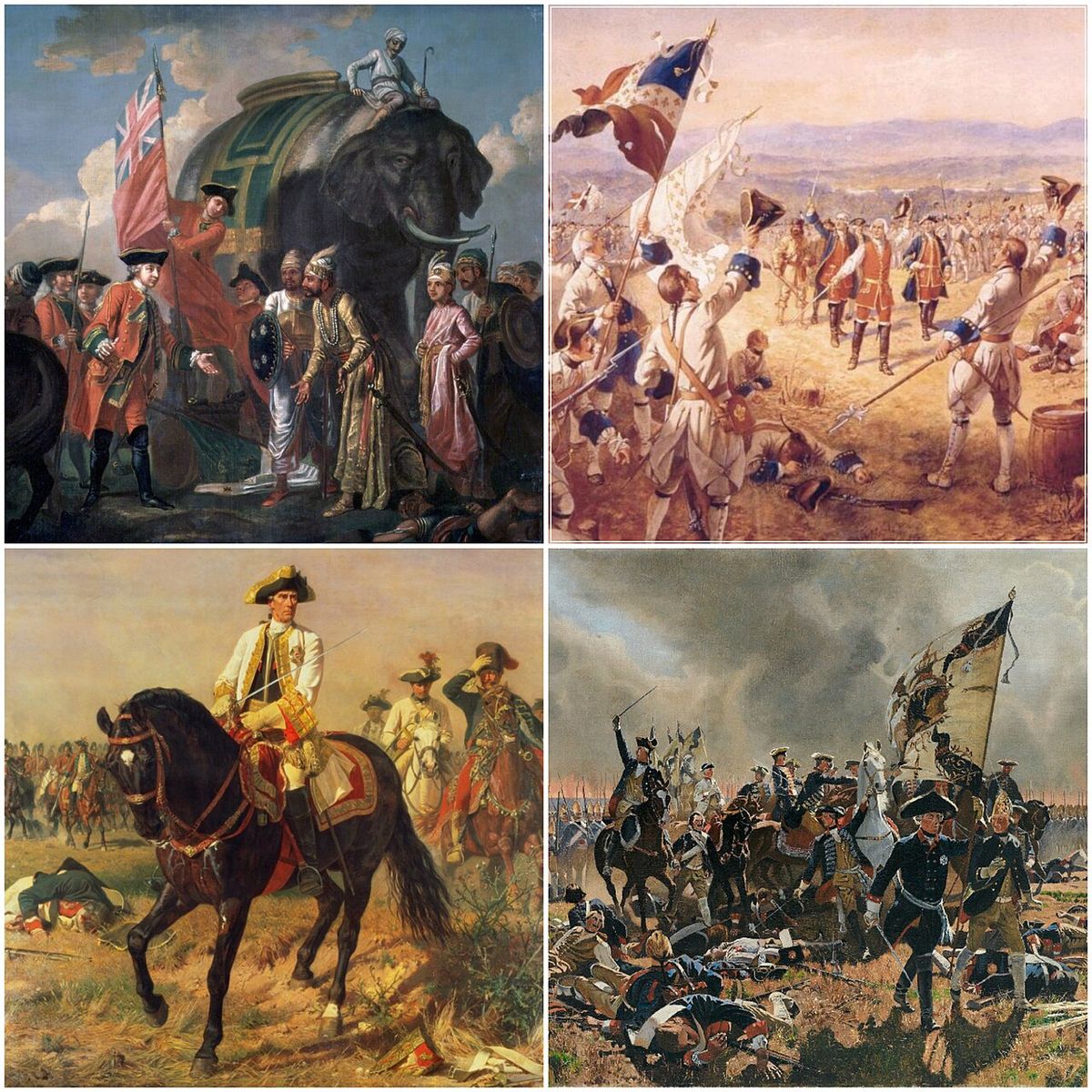
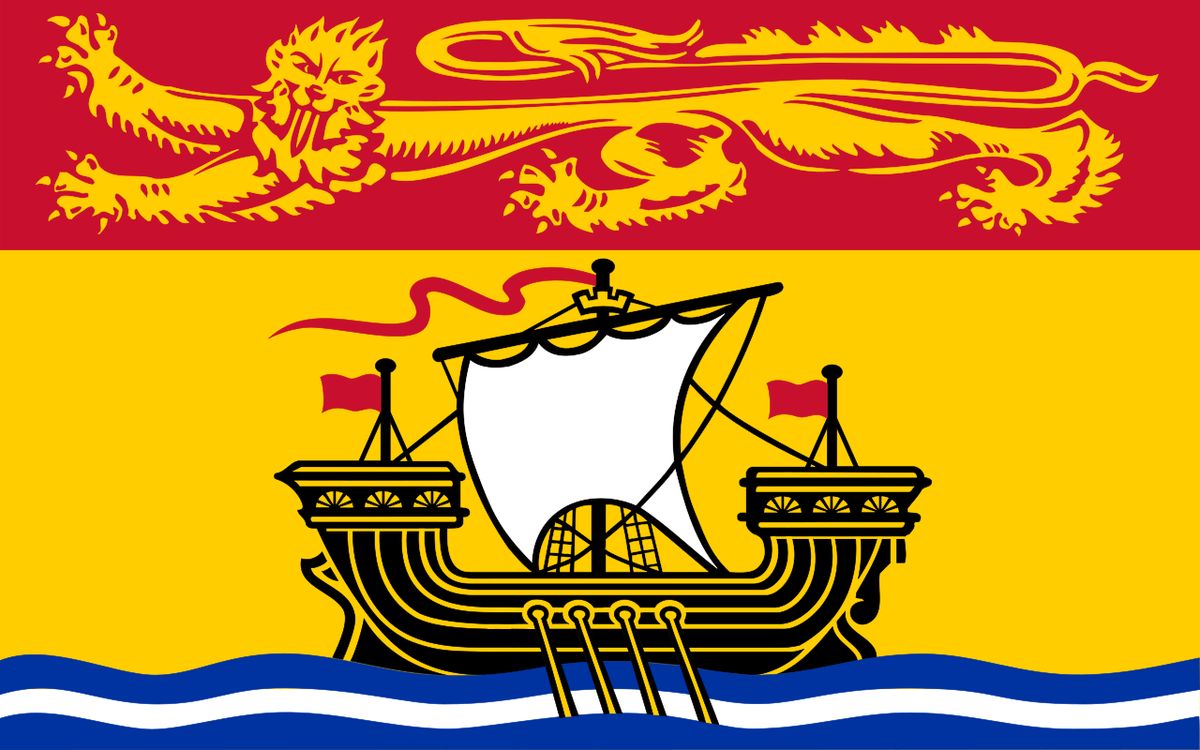
The territories that formed Canada in 1867 were originally part of New France, acquired by Britain through the Treaty of Paris in 1763 following the Seven Years' War. The colonial landscape was reshaped by the influx of United Empire Loyalists after the American Revolution, leading to the creation of New Brunswick from Nova Scotia in 1784 and the division of Quebec into Upper Canada and Lower Canada in 1791. The failed Rebellions of 1837 prompted the Durham Report, which recommended uniting the Canadas and implementing responsible government. This led to the Act of Union 1840, creating the Province of Canada, which was granted responsible government in 1848 alongside Nova Scotia.
By the 1860s, the Province of Canada was mired in political deadlock, requiring a double majority from both Canada East and Canada West to pass legislation. This instability, combined with external pressures, made the existing system unworkable. The loss of preferential trade access after the United States cancelled the Canadian-American Reciprocity Treaty in 1866 heightened economic anxieties. Fears of American expansionism, exemplified by the doctrine of manifest destiny and the Alaska Purchase in 1867, along with the Fenian raids, created a sense of military vulnerability. Within Britain, a desire to reduce colonial defence costs and the financial failure of projects like the Grand Trunk Railway fostered a willingness to support a more independent Canadian union. These converging crises made a bold political solution not just desirable but necessary for the survival and development of the British North American colonies.
The Conferences and Path to Union
The journey to Confederation was formalized through three major conferences. The process began unexpectedly in 1864 when the premiers of New Brunswick, Nova Scotia, and Prince Edward Island were planning a meeting to discuss a Maritime Union. The Province of Canada, led by the Great Coalition of John A. Macdonald, George-Étienne Cartier, and George Brown, asked to join the talks to propose a broader federal union as a solution to its own political paralysis. This request was approved by the Colonial Office in London, setting the stage for the Charlottetown Conference. The Charlottetown Conference commenced on September 1, 1864, and although the Canadian delegation was not initially part of the official Maritime Union agenda, they successfully pivoted the discussions toward a larger British North American federation. Their arguments focused on the economic and defensive benefits of a united country, and encouraged by the positive reception, the delegates agreed to reconvene a month later in Quebec City for a more detailed constitutional negotiation.
The Quebec Conference, held in October 1864, was the substantive drafting meeting where delegates debated and passed 72 resolutions that outlined the proposed federal system. These resolutions detailed the division of powers between the central and provincial governments, the structure of Parliament, and the financial arrangements that would bind the new country together. This document formed the essential blueprint for the British North America Act. The final diplomatic stage occurred at the London Conference in 1866, where delegates from the Province of Canada, New Brunswick, and Nova Scotia met with British officials to refine the Quebec Resolutions into a formal bill for the British Parliament. It was proclaimed to come into effect on July 1, 1867, creating the Dominion of Canada, while Prince Edward Island, which had hosted the first conference, chose not to join until 1873.
Ideological Debates and Scholarly Interpretations
The motivations behind Confederation have been the subject of extensive scholarly debate, moving beyond simple narratives of political pragmatism. Early historians like Peter Waite viewed the event as a non-ideological exercise in brokerage politics, driven by practical problems and competing interest groups, and he derided philosophical references in the debates as 'hot air'. Political scientist Peter J. Smith, in a 1987 work, argued Confederation was propelled by a pro-capitalist Court Party ideology that favoured centralized state power to promote economic development, opposed by an agrarian, anti-statist Country Party tradition represented by the Anti-Confederates. Historian Ian McKay, in a 2000 article, framed Confederation as part of a classical liberal project to establish a 'liberal order' in northern North America, prioritizing individual rights and capitalist expansion, a framework widely adopted by Canadian historians. In contrast, historian Andrew Smith, writing in 2008, emphasized the politics of taxation, arguing Confederation was supported by those favoring a more interventionist state to fund railways and development, overcoming opposition from classical liberals who feared 'Big Government'. Political scientist Janet Ajzenstat, in 2007, connected the union to Lockean individualist ideology, suggesting the Fathers of Confederation were motivated by Enlightenment values and a desire to protect individual rights to life, liberty, and property, with these debts evident in the 1865 legislative debates. These competing interpretations reveal that Confederation was not merely an administrative fix but a complex event embedded in the philosophical contests of its time, involving competing visions of liberty, economic order, and the role of the state.
Immediate Aftermath and Expansion
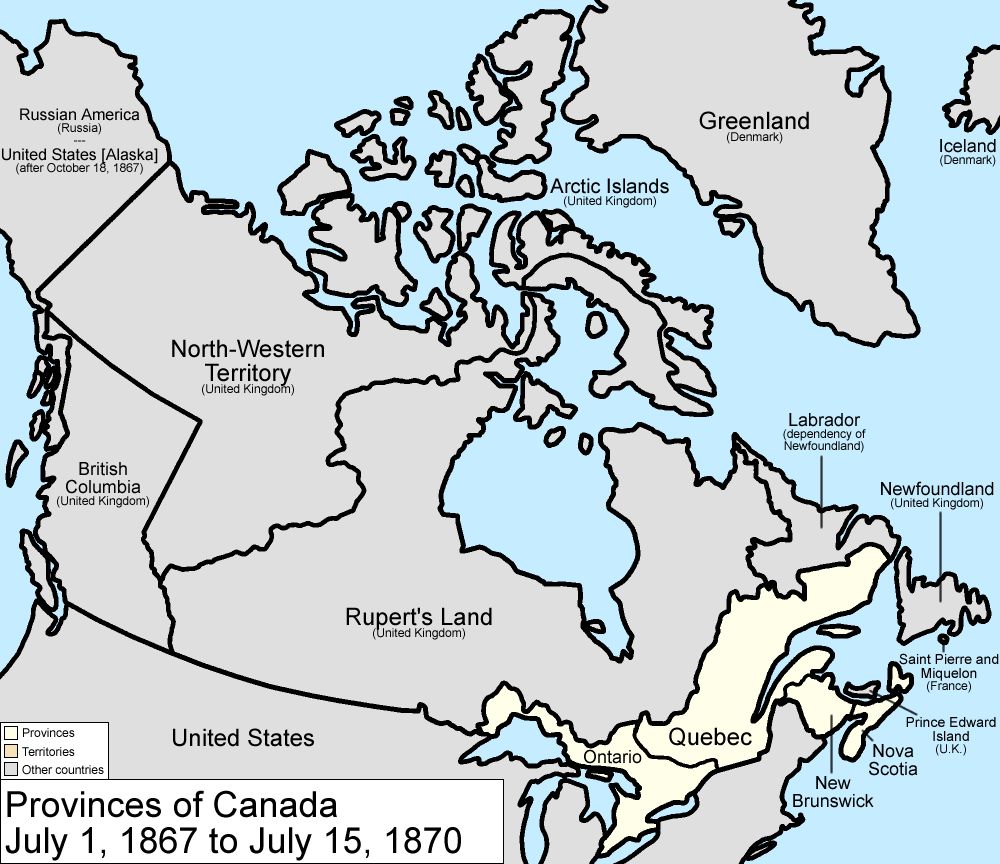
Upon its inception, the Dominion of Canada consisted of four provinces: Ontario and Quebec, which were created from the former Province of Canada, along with Nova Scotia and New Brunswick. The federal government, led by Prime Minister Sir John A. Macdonald, immediately faced the challenge of integrating these regions and pursuing a national policy of westward expansion. One of the key promises of Confederation, the construction of an intercolonial railway, was undertaken to physically and economically link the Maritimes with Central Canada. This project was vital for fulfilling the commitments made to Nova Scotia and New Brunswick during the negotiations, and it represented the kind of large-scale infrastructure the union was designed to finance.
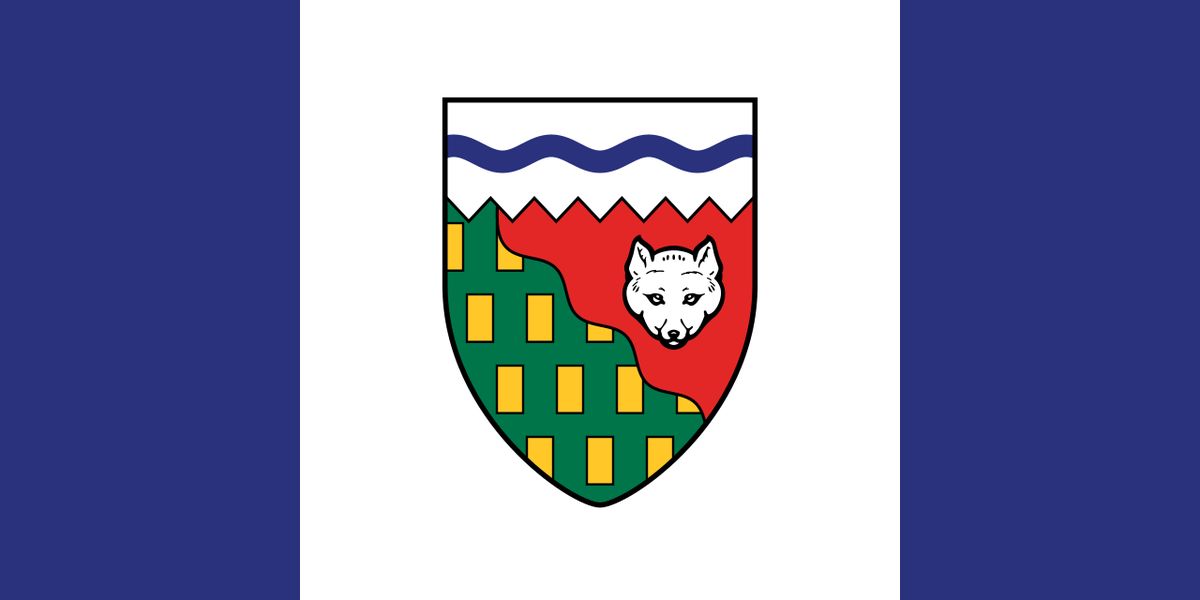
The process of expansion, often called the 'building of a nation,' continued steadily after 1867. The Canadian government purchased Rupert's Land and the North-Western Territory from the Hudson's Bay Company in 1869, creating the vast Northwest Territories. That same year, the province of Manitoba was carved out of this territory. British Columbia joined in 1871, persuaded by the promise of a transcontinental railway, and Prince Edward Island finally entered Confederation in 1873. The Arctic Islands were transferred from British to Canadian control in 1880. The final province to join was Newfoundland, which became part of Canada in 1949 after a closely contested referendum.
- 1869: Rupert's Land and the North-Western Territory purchased from Hudson's Bay Company.
- 1870: Manitoba created. Northwest Territories established.
- 1871: British Columbia joins Confederation.
- 1873: Prince Edward Island joins Confederation.
- 1880: Arctic Islands become part of Canada.
- 1905: Alberta and Saskatchewan established.
- 1949: Newfoundland joins Confederation.
Confederation in Modern Memory and Commemoration
Confederation is commemorated annually on Canada Day, July 1, a national statutory holiday. The day is marked by public events, fireworks, concerts, and citizenship ceremonies for new Canadians. In 2026, Canada Day falls on a Wednesday, marking the 159th anniversary of Confederation. That year's celebrations will have added significance as Canada co-hosts the 2026 FIFA World Cup, integrating the holiday into a wider summer of international events. The holiday's tone often emphasizes unity, community, and reflection on the country's history, distinguishing it from the revolutionary independence day celebrations of other nations. The legacy of Confederation is actively curated and debated in public institutions, with the Parliament buildings in Ottawa dedicated to the Fathers of Confederation during the 50th-anniversary celebrations in 1917.
Academic study of Confederation continues through university courses that examine Canada's political, social, and economic development since 1867. Major scholarly gatherings, like the Canadian Historical Association's Annual Meeting scheduled for Charlottetown in June 2026, continue to revisit and reinterpret the founding period. This ongoing engagement ensures Confederation is not seen as a static historical moment. It remains a living part of Canada's constitutional and national dialogue, continually reshaped by new scholarship and public reflection on its impact and significance.
Historical Context and Indigenous Societies
Long before European contact and Confederation, the land that became Canada was home to diverse and sophisticated Indigenous societies with their own systems of governance and trade. Estimates suggest an Indigenous population ranging from 200,000 to 500,000 people prior to contact, speaking between 300 and 450 distinct languages. These societies were deeply connected to their environments, from the sedentary, fishing-based communities of the Pacific coast to the nomadic bison hunters of the Plains and the Arctic-adapted Inuit hunters. Political organizations like the Haudenosaunee (Iroquois) Confederacy, active for centuries, are considered early examples of participatory democracy, governed by consensus among male representatives from across the territory.
The fur trade became a vast commercial enterprise from the early 17th to mid-19th centuries, reliant on Indigenous knowledge and technology. However, first contact also introduced devastating epidemics of diseases such as smallpox and measles, to which Indigenous peoples had no immunity. Historians estimate that up to 93 percent of the Indigenous population died from these outbreaks, resulting in catastrophic loss of life and cultural knowledge. This context is crucial for understanding that Confederation in 1867 was not a founding on empty land but an event that occurred within a long history of Indigenous presence and deep disruption caused by colonization, a history that the new Dominion would continue to shape through its policies.
Questions about Canadian Confederation
What was Canadian Confederation?
Canadian Confederation was the process by which three British North American provinces, the Province of Canada, Nova Scotia, and New Brunswick, were united into one federation, called the Dominion of Canada, on July 1, 1867. This was accomplished through the British North America Act, 1867, which served as Canada's original constitution. The union created four provinces: Ontario and Quebec (split from the Province of Canada), Nova Scotia, and New Brunswick. It established the framework for Canada's federal system of government and initiated a process of national expansion that eventually included ten provinces and three territories.
Why did Confederation happen in 1867?
Confederation resulted from a combination of internal political crises and external pressures. Internally, the Province of Canada was stuck in legislative deadlock, requiring a double majority from both its English and French sections. Externally, the cancellation of the Canadian-American Reciprocity Treaty in 1866 threatened economic stability, while fears of American expansionism, known as manifest destiny, and incidents like the Fenian raids raised security concerns. Britain's desire to reduce the cost of defending its colonies also encouraged a move toward a more self-sufficient union. Leaders believed a larger federal state could break the political impasse, build an intercolonial railway, and create a stronger economic and military entity.
Who were the Fathers of Confederation?
The Fathers of Confederation are the delegates who attended the conferences that led to union. The 36 original Fathers attended the Charlottetown Conference (1864), the Quebec Conference (1864), or the London Conference (1866). Key figures included John A. Macdonald, George-Étienne Cartier, and George Brown from the Province of Canada, and Charles Tupper from Nova Scotia. The term also extends to leaders who later brought other provinces into Canada, such as Amor De Cosmos for British Columbia and Joey Smallwood for Newfoundland. Hewitt Bernard, the recording secretary at Charlottetown, is sometimes included among the original Fathers.
How is Confederation celebrated today?
Confederation is celebrated annually on Canada Day, July 1, a national statutory holiday. Celebrations typically include fireworks, parades, outdoor concerts, community festivals, and the wearing of red and white. A central tradition is the holding of citizenship ceremonies, where new Canadians take the oath of citizenship. In 2026, Canada Day falls on a Wednesday, marking the 159th anniversary. That year's events will be part of a wider summer calendar that includes Canada's role as a co-host of the 2026 FIFA World Cup, adding to the celebratory atmosphere across the country.
What is the difference between Confederation and Canada Day?
Confederation is the specific historical event that occurred on July 1, 1867, when the British North America Act came into effect, creating the Dominion of Canada. Canada Day is the annual national holiday that commemorates that event. While Canada Day is often called the country's birthday, it specifically marks the anniversary of Confederation. The holiday has evolved to celebrate contemporary Canadian identity, community, and citizenship, whereas Confederation refers to the political and constitutional process of union itself. The two are intrinsically linked, with the holiday serving as the modern remembrance of the founding act.
Which provinces joined Canada first and which joined last?
The first provinces to join Confederation were Ontario, Quebec, Nova Scotia, and New Brunswick, which united into the Dominion of Canada on July 1, 1867. Ontario and Quebec were created from the split of the former Province of Canada. The last province to join was Newfoundland and Labrador, which entered Confederation in 1949. Prince Edward Island, which hosted the initial Charlottetown Conference, did not join until 1873. Over the years, Canada expanded through territorial changes to include ten provinces and three territories.
Sources and further reading
- Canadian Confederation (Wikipedia)
- Significant Events in Canadian History (thecanadianencyclopedia.ca)
- Important Events in Canadian History that Shaped the Nation (superprof.ca)
- What Is Canada Day? History, Meaning and Traditions for ... (exoticca.com)
- Canada Day 2026: Events, History & Ways to Celebrate (remitly.com)
Checked by the Nosy Mag desk. Last updated 2026-10-19.