Federalism in Canada
Federalism is the foundational principle of governance in Canada, dividing powers and responsibilities between the national Government of Canada and ten provincial governments. This system, established by the Constitution Act, 1867, was designed to accommodate the colonial-era diversity of the Maritimes and the Province of Canada, particularly the distinction between French-speaking Lower Canada and English-speaking Upper Canada and the Maritimes. The division of legislative authority is exhaustive, assigning all legal matters to either the federal Parliament or provincial Legislatures, with the Canadian Crown serving as the unifying sovereign across all jurisdictions. The ongoing interpretation and evolution of this federal structure, through court rulings, political negotiation, and social change, continues to shape Canadian politics and intergovernmental relations.
Constitutional Foundations and Division of Powers
The architecture of Canadian federalism is defined by the division of legislative powers between the federal and provincial orders of government as set out in the Constitution Act, 1867. Section 91 of the act enumerates the major powers of the federal Parliament, grounded in the authority to legislate for the peace, order, and good government of Canada. This includes sovereign powers over national defence, foreign policy, trade and commerce, the postal service, criminal law, and all forms of taxation. Section 92 outlines the exclusive powers of the provincial legislatures, which include direct taxation for provincial purposes, the management and sale of public lands belonging to the province, and all matters of a merely local or private nature. A critical provincial power is jurisdiction over property and civil rights, which forms the basis for much provincial law, particularly in Quebec with its civil code.
The constitution also provides for shared or concurrent jurisdictions. Agriculture and immigration are shared fields, though federal law is paramount in cases of conflict. Old-age pensions are also shared, but in this area provincial law prevails over federal legislation. Section 92A, added in 1982, explicitly grants provinces jurisdiction over the exploration, development, and export to other provinces of non-renewable natural resources, forestry resources, and electrical energy. The federal parliament retains authority under the Constitution Act, 1871 to govern any territories not forming part of any province. The Statute of Westminster 1931 gave parliament the ability to pass extraterritorial laws. The division is designed to be exhaustive, meaning every possible subject of legislation is assigned to one level of government or the other, though overlapping aspects and modern complexities have required continual judicial interpretation.
Historical Development from Confederation to 1982
The foundations of Canadian federalism were a compromise forged at the Quebec Conference of 1864, responding to the political instability of the united Province of Canada and the distinct identities of its French and English populations. While Canada's first prime minister, John A. Macdonald, favoured a more centralized unitary system, the Quebec Resolutions established a federal framework. The subsequent British North America Act, 1867, however, was drafted in more centralist terms, leading to decades of conflict between Macdonald and Ontario Premier Oliver Mowat. Through political battles and appeals to the Judicial Committee of the Privy Council, then the highest court, Mowat successfully entrenched a vision of the provinces as coordinate sovereign entities within the federation, not mere subordinates to Ottawa. This view was summarized by Edward Blake in 1888, describing the Dominion as a multiple and each province as a unit of that multiple.
The Great Depression and Second World War further centralized authority, with the federal government assuming control over unemployment insurance, labour relations, and provincial taxing powers through wartime tax rental agreements. Canada emerged from the war with better cooperation between the federal and provincial governments, leading to the development of the welfare state and national social programs like universal health care. The period from 1970 to 1984 under Prime Minister Pierre Trudeau was marked by conflictual federalism, with tensions rising over issues like the National Energy Program, which sparked deep resentment in Western Canada. The patriation of the constitution was a monumental struggle, culminating in the Constitution Act, 1982, which was passed by the British parliament as the Canada Act 1982 after a Supreme Court ruling in the Patriation Reference stated that while a convention of substantial provincial consent existed, it was not legally enforceable.
- 1864: Quebec Conference lays the foundational compromise for federalism.
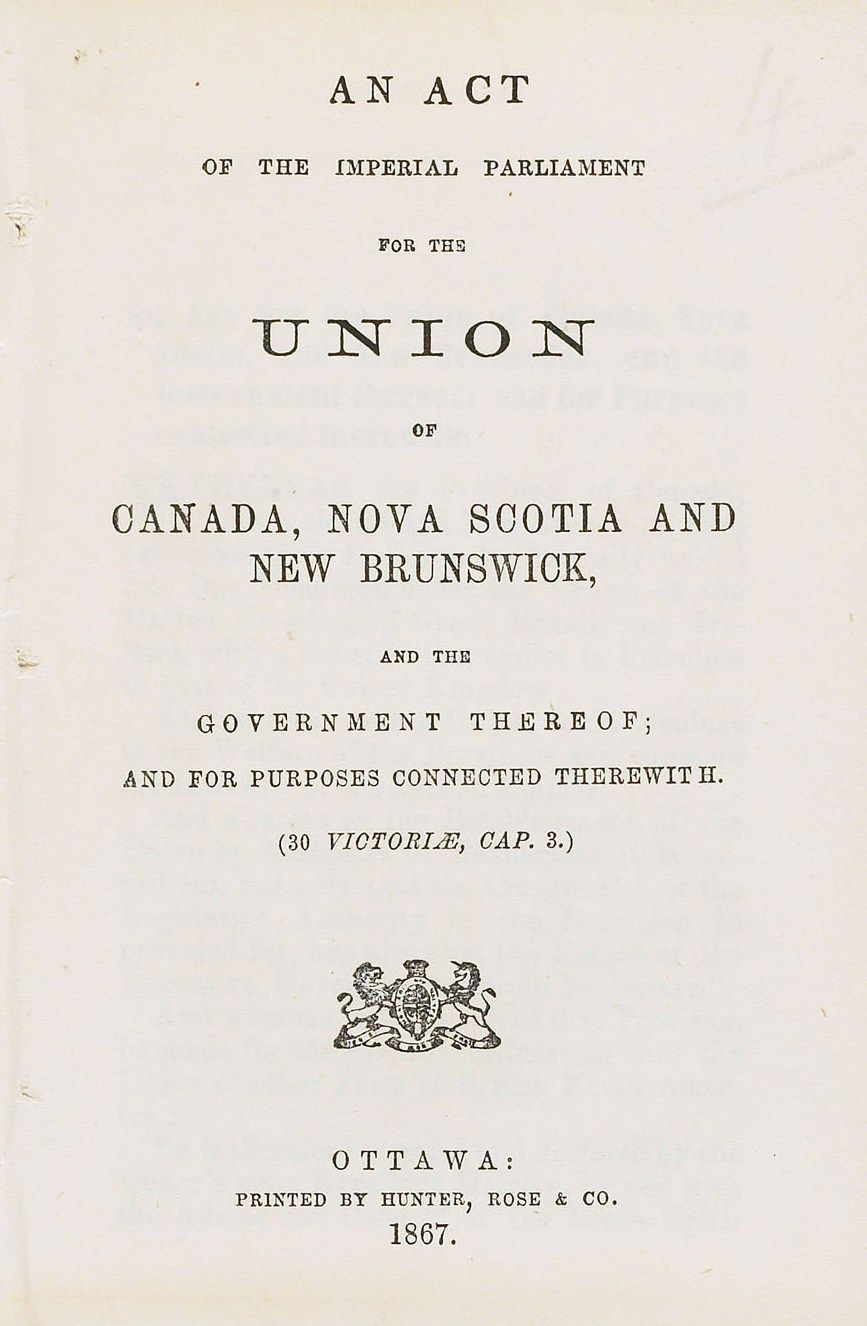
- 1867: British North America Act establishes the federal system.
- 1872 to 1896: Oliver Mowat's victories entrench provincial sovereignty.
- 1949: Abolition of appeals to the Privy Council makes Supreme Court of Canada final arbiter.
- 1961: Last instance of a lieutenant governor reserving a provincial bill (Saskatchewan).
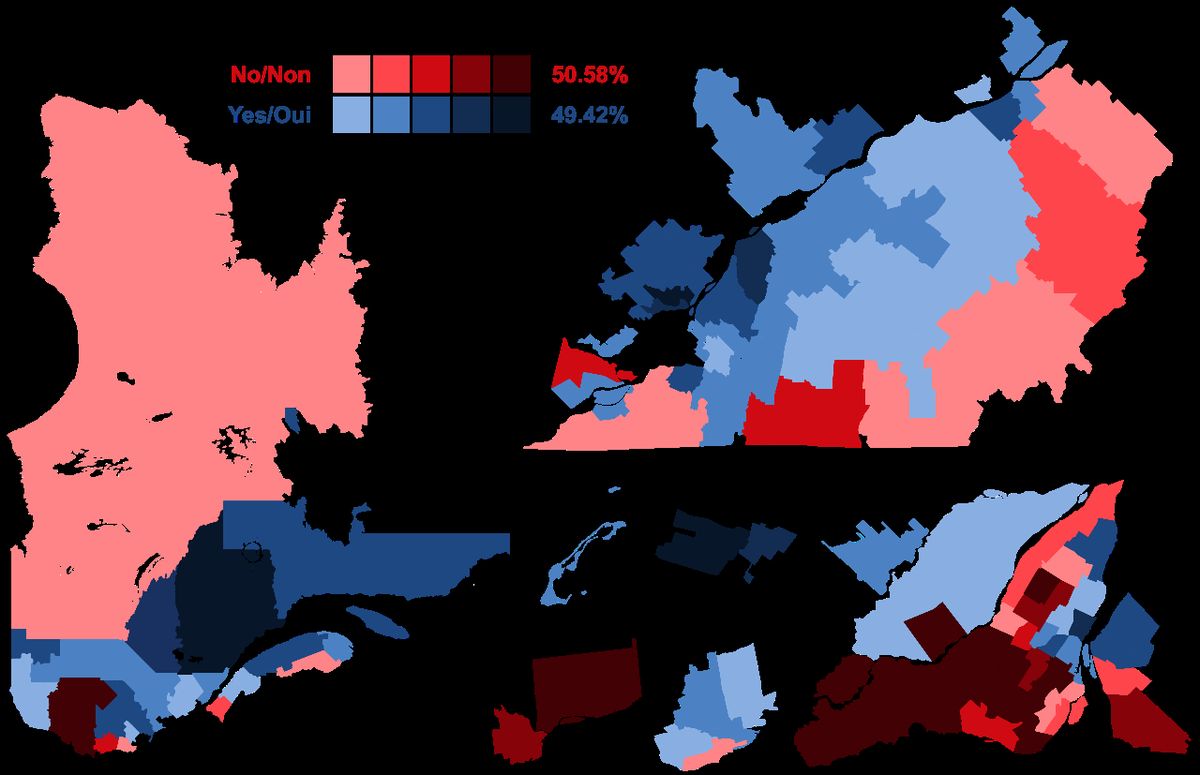
- 1980: Quebec referendum on sovereignty is defeated.
- 1982: Constitution Act patriated, adding Charter of Rights and Freedoms and Section 92A.
The Role of the Crown and Courts
The Canadian Crown is the bedrock of the federal system, constituting the head of state for both the federal and each provincial jurisdiction. Sovereignty is not held by the federal government alone but is divided across the eleven legal jurisdictions, linking them into a federal state. This means there are effectively eleven crowns, one federal and ten provincial, all held by the same monarch but exercised independently by their respective viceroys and ministers. The fathers of Confederation viewed this constitutional monarchy as a bulwark against the fracturing of the federation.
The judiciary, particularly the Supreme Court of Canada since 1949, plays a critical role in interpreting the division of powers and managing federalism disputes. To rationalize jurisdictional authority, the courts have developed several key constitutional doctrines. The pith and substance doctrine is used to determine the true character of a law to see under which head of power it falls. The double aspect doctrine recognizes that some matters can be regulated by both levels of government from different perspectives. Paramountcy dictates that valid federal law prevails over conflicting provincial law in areas of concurrent jurisdiction. Inter-jurisdictional immunity holds that core competencies of one level of government are immune from regulation by the other. The living tree doctrine permits a progressive interpretation of the constitution to adapt to new realities. These tools allow the courts to manage the inevitable overlaps and tensions in a dynamic federation.
Fiscal Federalism and Spending Power
Fiscal federalism, concerning the financial relationships and transfers between governments, is a perennial source of tension in Canada. A fundamental imbalance exists because the federal government has greater revenue-raising capacity, particularly through broad-based taxes, while provinces bear the primary constitutional responsibility and cost for major spending areas like health care, education, and social services. This led to the creation of federal fiscal transfers, beginning with the Dominion Subsidies and evolving into modern programs like equalization, which aims to ensure provinces can provide reasonably comparable public services at reasonably comparable levels of taxation. The federal government's spending power, its ability to spend money in areas of provincial jurisdiction, often by attaching conditions to transfers, is a powerful tool to influence national policy but is frequently contested by provinces as an intrusion into their constitutional domain.
Analysts note that fiscal federalism is in perpetual conflict between a federal government that uses its spending power to assert authority and provinces that resist those intrusions. Historical study suggests that while federal intrusions may have been necessary during national crises like the world wars or the Great Depression, Canada usually operates more smoothly when governments respect their constitutional jurisdictions. Federal initiatives in provincial areas, such as the creation of national social programs, have often required complex cost-sharing agreements and have at times fueled regional discontent, as seen with the National Energy Program. The Social Union Framework Agreement of 1999, agreed to by the federal government and all provinces except Quebec, represented an attempt to establish common standards and principles for social programmes while acknowledging provincial jurisdiction. Former Prime Minister Paul Martin described arrangements that accommodate different provincial approaches, like Quebec operating its own pension plan, as asymmetrical federalism.
Contemporary Dynamics and Challenges
Canadian federalism continues to evolve, facing new pressures and adapting to changing political and social realities. The 1995 Quebec referendum on sovereignty, which was narrowly defeated, led to a period of federal restraint in using the spending power in areas of provincial jurisdiction under Prime Minister Jean Chrétien. Interprovincial cooperation has been institutionalized through the Council of the Federation, established by the premiers in 2003, while the frequency of First Ministers' Conferences declined significantly during Prime Minister Stephen Harper's tenure after 2006. The Supreme Court continues to shape the framework, upholding concepts like cooperative federalism, where jurisdictions interact favourably, and flexible federalism, which allows for overlapping roles, as noted in the Reference re Securities Act.
A significant contemporary discussion revolves around the place of Indigenous peoples within the federal structure. As constitutional lawyer Howard Anglin noted in a 2026 lecture, the constitution is a practice embedded in social rules, not just a codified document. The original constitutional bargain in 1867 excluded Indigenous nations, and a key part of modern reconciliation involves determining how to include Indigenous governments in intergovernmental decision-making. The management of Crown land and natural resources, a core provincial power, is subject to the rights and title of First Nations, which the Supreme Court has stated burdens provincial authority with Crown obligations toward Aboriginal peoples. The models of co-management of lands and resources in the three territories, Yukon, Northwest Territories, and Nunavut, demonstrate evolving approaches to shared governance with Indigenous communities, ranging from advisory roles to legally enforceable regulatory functions.

Comparative and Global Context
Federalism is not unique to Canada. Nearly 40 percent of the world's population lives within 28 federal states. Canada's system shares a Westminster parliamentary heritage with other federations like Australia, both of which were established by British legislation uniting colonies. This contrasts with the United States, a federation born from rebellion that adopted a separation of powers system. Comparative analysis shows that while the division of powers is a common federal feature, the specific allocations and the balance between central and regional authority vary widely. The global evolution of federalism and its variants impacts Canada's position on the world stage and offers potential lessons for domestic reform. Observers note that the various ways federalism functions globally allow Canada to learn and draw inspiration from other federations, such as Switzerland, particularly regarding intergovernmental relations and models of shared governance.
The ongoing study of federalism highlights its nature as a living system rather than a fixed design. Its mutability in Canada has been achieved through judicial interpretation of Sections 91 and 92, financial pragmatism, national standard-setting via the spending power, and shifting political values. As the country faces new paradoxical moments, besieged by real and perceived threats, the federal structure remains a central forum for managing diversity, regional interest, and national unity. The system's capacity to adapt through political negotiation, social change, and legal interpretation, while grappling with foundational issues like Indigenous inclusion and fiscal balance, will continue to define Canadian governance in the years ahead.
Questions about Federalism in Canada
What are the main responsibilities of the federal government in Canada?
The federal government's main responsibilities are derived from Section 91 of the Constitution Act, 1867. They include the powers based on the concepts of peace, order, and good government. The act puts remedial legislation on education rights under the purview of the federal legislature. It also gives parliament authority over uniform laws relating to property and civil rights in all provinces other than Quebec. The federal parliament governs any territories not forming part of any province and has the ability to pass extraterritorial laws.
What are the main responsibilities of provincial governments?
Provincial governments are responsible for areas outlined in Section 92 of the Constitution Act, 1867. These include health care, education (elementary, secondary, and post-secondary), the administration of justice and civil courts, natural resources within the province, property and civil rights, and municipal institutions. Provinces can raise revenue through direct taxation within the province and license fees. They also have jurisdiction over local matters and generally deliver most direct services to citizens.
What is the Canadian Crown's role in federalism?
The Canadian Crown is the unifying head of state across all jurisdictions, meaning it is present at both the federal and provincial levels. Sovereignty is divided, creating a federal Crown for the national government and a provincial Crown for each of the ten provinces. This means there are eleven crowns in one, all held by the same monarch but administered separately. The Crown's representatives, the governor general federally and lieutenant governors provincially, formally enact laws and carry out executive functions, embodying the constitutional monarchy that binds the federation together.
What is the federal spending power and why is it controversial?
The federal spending power is the federal government's ability to spend money in areas of provincial jurisdiction, typically by offering conditional grants to provinces. It is controversial because it allows the federal government to set national standards and influence policy in fields like health care and education, which are constitutionally provincial responsibilities. Provinces often view this as an intrusion on their autonomy, arguing it can lead to underfunded programs and political tension. However, it has been instrumental in creating nationwide social programs such as universal health care.
How does Canadian federalism accommodate Quebec's distinctiveness?
Canadian federalism has accommodated Quebec's distinct society through both formal and informal asymmetrical arrangements. Quebec operates its own pension plan (the Quebec Pension Plan) instead of the Canada Pension Plan. It has frequently opted out of federal-provincial cost-sharing programs with financial compensation to run its own initiatives. The province's civil law system, based on the Civil Code of Quebec, is protected under its jurisdiction over property and civil rights. Political concepts like asymmetrical federalism acknowledge that uniform application of federal policies is not always practical or desirable given Quebec's unique linguistic, cultural, and legal identity.
How has the Supreme Court of Canada shaped federalism?
The Supreme Court of Canada has shaped federalism by serving as the final court of appeal since 1949 and by developing key constitutional doctrines. It interprets the division of powers set out in the Constitution Act, 1867, using principles like pith and substance to analyze laws, double aspect to allow concurrent regulation, and paramountcy to resolve conflicts between federal and provincial laws. More recently, in Reference re Securities Act, the court upheld the concepts of flexible and cooperative federalism, adjusting the balance of power. The court also employs the living tree doctrine, allowing for a flexible and evolving interpretation of the constitution to meet contemporary needs.
Sources and further reading
- Federalism in Canada (Wikipedia)
- Federalism (iog.ca)
- Contemporary Issues in Canadian Federalism Series ... (catalogue.csps-efpc.gc.ca)
- Canada's federation operates more smoothly when ... (fraserinstitute.org)
- Federalism and the Social Constitution (cardus.ca)
Checked by the Nosy Mag desk. Last updated 2026-11-04.