Paul Martin
Paul Edgar Philippe Martin, known as Paul Martin Jr., is a Canadian lawyer and retired politician who served as the 21st prime minister of Canada from 2003 to 2006. His tenure followed a decade as minister of finance, where he is credited with eliminating Canada's chronic fiscal deficit and restoring the nation's economic credibility. As prime minister, Martin led a minority Liberal government that legalized same-sex marriage, advanced a national child care framework, and negotiated the Kelowna Accord for Indigenous peoples. His time in office was cut short by the fallout from the sponsorship scandal, leading to the election of a Conservative government under Stephen Harper in 2006.
Early Life, Education and Business Career
Paul Martin was born at Hôtel-Dieu of St. Joseph Hospital in Windsor, Ontario, in 1938, the son of longtime Liberal cabinet minister and senator Paul Martin Sr. and Eleanor 'Nell' Alice Adams. He contracted polio in 1946 at the age of eight, an experience that shaped his perspective, as his father had also contracted the disease in 1907. Martin briefly attended the University of Ottawa before transferring to St. Michael's College at the University of Toronto, where he earned a Bachelor of Arts in history and philosophy in 1961. He was a member of the University of Toronto Young Liberals during his studies. He then graduated from the University of Toronto Faculty of Law in 1964 and was called to the Ontario bar in 1966. On September 11, 1965, he married Sheila Ann Cowan, with whom he has three sons. Martin's early professional career was in the corporate world. In 1969, Power Corporation took a controlling share in Canada Steamship Lines (CSL). On December 2, 1970, the 32-year-old Martin, then an executive assistant to Power Corporation CEO Maurice Strong, was appointed to the CSL board of directors. By November 22, 1973, he was appointed president and chief executive officer of the CSL Group. His tenure faced challenges, including losses from cost overruns in shipbuilding in 1972 and an eight-week strike on the Great Lakes in 1974. In 1976, CSL reverted to an operating division of Power Corporation.
Entry into Parliament and Leadership Rivalry
Paul Martin entered federal politics in 1988, winning election as the Liberal Member of Parliament for the Montreal riding of LaSalle, Émard. He was re-elected without much difficulty in every subsequent election until his retirement in 2008. Following the Liberal Party's defeat under John Turner in 1984, falling to just 40 seats, Martin was approached by a group of young Liberals as a potential future leader. He contested the 1990 Liberal Party of Canada leadership election, engaging in a bitter campaign against the eventual winner, Jean Chrétien. A key moment occurred during an all-candidates debate in Montreal on the Meech Lake Accord, where Martin's tactics forced Chrétien to declare his opposition, leading to Chrétien being jeered by young delegates who chanted 'vendu' and 'Judas'. This contest created a lasting animosity between the two men. After the convention, Martin co-authored the party's detailed 1993 election platform, Creating Opportunity, colloquially known as the Red Book. The Liberals won a landslide majority government that year, and Prime Minister Chrétien appointed Martin as his minister of finance.
Tenure as Minister of Finance
As minister of finance from 1993 to 2002, Paul Martin confronted a severe fiscal crisis. Canada had one of the largest budgetary deficits among G7 nations, and its credit rating had been downgraded by Standard & Poor's in 1992 and Moody's in 1994. Martin's debut budgets imposed deep spending cuts, scaling down government to 1951 levels, which a CIBC-Wood Gundy study suggested decreased economic growth by 3.5 percentage points in 1994-96. These austerity measures initially slowed economic growth but were coupled with low interest rates set by the Bank of Canada, which eventually spurred private sector growth and increased government revenues. By 1998, Martin presented a balanced budget, the first of five consecutive surpluses. He lowered the federal debt-to-GDP ratio from a peak of 70 percent to about 50 percent by the mid-1990s, and by 2002, Moody's and Standard and Poor's had restored Canada's top AAA rating for both domestic and foreign currency debt. Martin also coordinated a major reform of the Canada Pension Plan in the mid-1990s, initiating a public consultation process in February 1996 that led to structural reforms approved by Parliament. In 1999, he was a co-founder and served as the inaugural chair for three years of the G20 Finance Ministers and Central Bank Governors. In December 2001, the World Economic Forum named him to its 'dream cabinet' alongside figures like United States Secretary of State Colin Powell and United Nations Secretary-General Kofi Annan. His tenure was not without criticism, as the spending cuts were seen by some, like CAW economist Jim Stanford, as having endangered provincial social programs.
Rivalry with Chrétien and Path to Leadership
The long-simmering rivalry between Paul Martin and Jean Chrétien defined internal Liberal Party politics throughout the 1990s. It was reported that Chrétien privately often condemned Martin in bitter terms and had never forgiven him for the 1990 leadership contest. After the Liberals were reelected with a regained majority in 2000, Martin had gained control of much of the party machinery. The conflict reached its peak in June 2002 when Martin left the Cabinet, being replaced by John Manley as finance minister. Being out of Cabinet freed Martin from donor disclosure rules and he soon declared his intention to run for the Liberal leadership. Over the summer of 2002, he toured the country campaigning while his organizers prepared to challenge Chrétien in a leadership review vote scheduled for January 2003. In the fall, after less than half of the Liberal caucus agreed to sign a commitment supporting him, Chrétien announced he would step down in spring 2004, leading the party to schedule a leadership convention for November 2003. Martin's campaign was dominant from the outset, with potential rivals like Brian Tobin and Allan Rock declining to run. John Manley's attacks on Martin's refusal to disclose campaign contributors did little to dent his commanding lead, and Manley eventually conceded. At the convention in Toronto, Martin easily defeated his sole remaining opponent, former deputy prime minister Sheila Copps, securing 93 percent of party delegates and 3,242 of 3,455 votes. He was sworn in as Canada's 21st prime minister by Governor General Adrienne Clarkson on December 12, 2003. In a symbolic gesture, he held the flag that had flown on Parliament Hill on the day of his father's death. Martin's new cabinet represented a significant break from tradition, as he retained only half of Chrétien's ministers and declined to appoint his leadership opponents Manley and Copps.
Prime Minister of Canada: Policies and Scandal
Paul Martin's time as prime minister was dominated by the fallout from the sponsorship scandal and the challenges of leading a minority government. Just months after taking office, Auditor General Sheila Fraser's February 9, 2004, report revealed that sponsorship contracts in Quebec had resulted in little to no work, with roughly $100 million of $250 million missing, much of it going to agencies with Liberal ties. The scandal hurt Martin's popularity, especially in Quebec. Martin acknowledged political direction but denied personal involvement, calling the Gomery Commission, headed by Justice John Gomery, to investigate. He then called a federal election for June 28, 2004. The Liberals were hampered by new campaign finance rules banning corporate donations, which Chrétien had passed in 2003, and by an unpopular provincial budget in Ontario. His government achieved several significant policy milestones. In 2005, it passed the Civil Marriage Act, legalizing same-sex marriage across Canada. That same year, Martin signed agreements with provinces to establish the first national early learning and child care program. His government also negotiated the Kelowna Accord in November 2005, a historic consensus following an 18-month consultation process to eliminate funding gaps in health, education, housing, and clean water for Indigenous peoples. The Gomery Commission's interim report in late 2005, which criticized the Chrétien government's role, led the opposition parties to pass a motion of no confidence contending the government was corrupt on November 28, 2005.
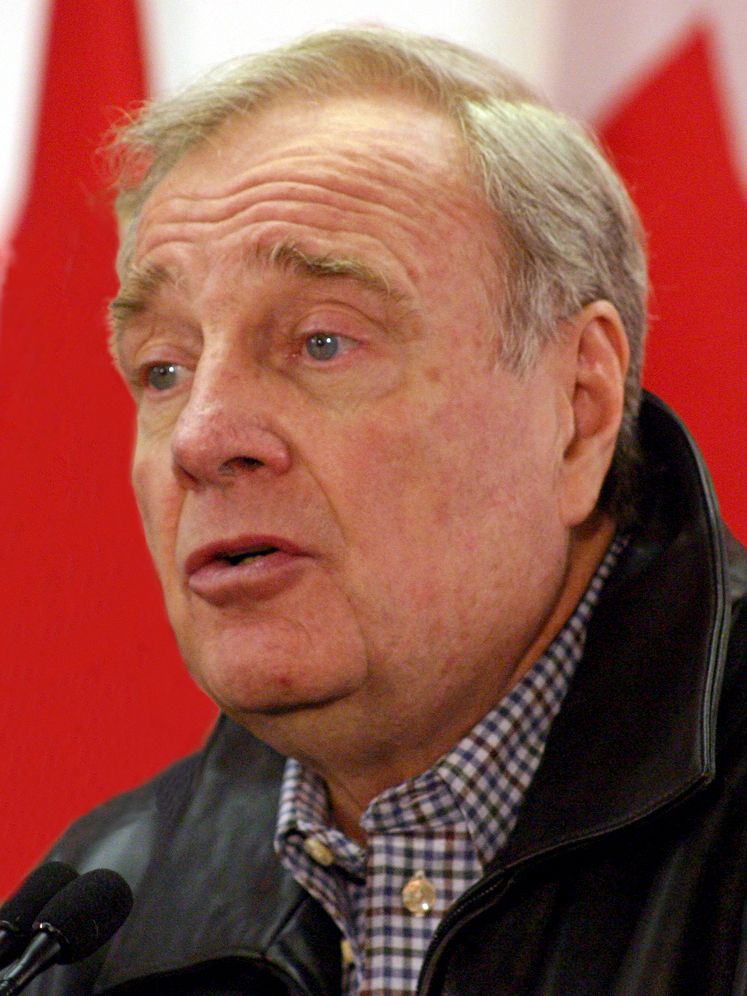
Post-Political Life and International Work
After leaving politics, Paul Martin remained active in public policy, philanthropy, and global diplomacy. In 2008, he and his family founded the Martin Family Initiative (MFI), a charitable organization dedicated to improving education, health, and well-being for Indigenous children and youth in Canada. He has served as an advisor to international bodies like the African Development Bank and the Advisory Council of the Coalition for Dialogue on Africa. He was a founding co-chair of the Congo Basin Forest Fund and a Commissioner for the Global Ocean Commission. Martin has also continued to comment on economic matters, including Canada-United States trade relations. In 2012, he was appointed a Companion of the Order of Canada, the honour's highest level. Evaluations of his prime ministership are often mixed, focusing on the short duration of his term and the sponsorship scandal. However, his legacy as finance minister is generally viewed more favourably, credited with restoring Canada's fiscal health. His work with the G20 and ongoing advocacy for Indigenous issues through the MFI continue to define his post-political contributions. He lives in Knowlton, Quebec.
Key Dates and Honours
Paul Martin's career spans business, politics, and philanthropy. He served as the 21st prime minister of Canada and leader of the Liberal Party of Canada from 2003 to 2006. Before politics, he was president and chief executive officer of Canada Steamship Lines. After politics, he has contributed on the international arena through initiatives such as Incentives for Global Health and the Health Impact Fund.
- August 28, 1938: Born in Windsor, Ontario.
- September 11, 1965: Marries Sheila Ann Cowan.
- December 2, 1970: Appointed to the board of directors of Canada Steamship Lines.
- November 22, 1973: Appointed President and CEO of the CSL Group.
- November 21, 1988: First elected as MP for LaSalle, Émard.
- June 1990: Loses Liberal leadership election to Jean Chrétien.
- November 4, 1993: Appointed Minister of Finance.
- 1998: Presents first balanced budget after years of deficits.
- 1999: Co-founds and becomes inaugural chair of the G20 Finance Ministers.
- December 2001: Named to World Economic Forum's 'dream cabinet'.
- June 2, 2002: Leaves position as Minister of Finance.
- November 14, 2003: Wins Liberal leadership convention.
- December 12, 2003: Sworn in as the 21st Prime Minister of Canada.
- June 28, 2004: Leads Liberals to minority government in federal election.
- July 20, 2005: Civil Marriage Act receives royal assent.
- November 2005: Signs the Kelowna Accord.
- November 28, 2005: Government defeated on motion of no confidence.
- January 23, 2006: Liberals defeated in federal election.
- February 6, 2006: Ceases to be prime minister.
- 2008: Founds the Martin Family Initiative. Retires as MP.
- 2012: Appointed a Companion of the Order of Canada.
Electoral Record as Prime Minister and Political Context
Paul Martin led the Liberal Party in the 2004 federal election, in which the party retained power as a minority government. His government was defeated in the 2006 federal election by the newly unified Conservative Party led by Stephen Harper. The 2006 election was triggered after opposition parties passed a motion of no confidence on November 28, 2005, following the Gomery Commission's report on the sponsorship scandal. This defeat ended over 12 years of Liberal rule. The 2004 election was called early in Martin's mandate and was heavily influenced by the emerging sponsorship scandal and the new campaign finance laws that banned corporate donations. In the 2006 election, the Conservatives won a plurality of seats, finishing 31 seats short of a majority. The Liberals held their base of support in Ontario, with 54 seats of the 103 in the province. The Liberals lost a number of seats in Quebec, winning only 13 of the 75 seats in the province, down from 21 in 2004, while the Conservatives won 10 seats there. The Liberals did not improve their standings in the Western provinces, winning only 14 of the 92 seats, the same number as in 2004. This led to Stephen Harper becoming prime minister and ending Martin's political career at the federal level.
Family and Personal Distinctions
The Martin family has a unique place in Canadian political history. Paul Martin Jr. is the son of Paul Martin Sr., a Franco-Ontarian of Irish and French descent who served 33 years as an MP and was a cabinet minister under four prime ministers: W. L. Mackenzie King, Louis St. Laurent, Lester B. Pearson, and Pierre Trudeau. Martin's mother, Eleanor 'Nell' Alice Adams, was of Scottish and Irish descent. He had one sister, Mary-Anne Bellamy, who died on July 20, 2011. Both Martin and his father earned the honorific prefix 'The Right Honourable'. A key difference between them was ideological. Paul Sr. was one of the most left-wing members of the Liberal Party, while Paul Jr. is considered on its right-wing, particularly on fiscal matters. Both father and son contested the Liberal leadership on multiple occasions from 1948 to 1990, with only the son succeeding. Martin's election as leader and ascension to prime minister was widely described as fulfilling a long-held family dream. His own family includes his wife, Sheila, their three sons Paul, Jamie, and David.
Questions about Paul Martin
What is Paul Martin best known for?
Paul Martin is best known for his two major roles in Canadian public life. As minister of finance from 1993 to 2002, he is credited with eliminating Canada's chronic budget deficit, recording five consecutive surpluses, and restoring the country's AAA credit rating. As the 21st prime minister from 2003 to 2006, his government legalized same-sex marriage, negotiated the Kelowna Accord for Indigenous peoples, and established a national child care framework. His tenure was overshadowed by the sponsorship scandal.
How long was Paul Martin prime minister?
Paul Martin served as prime minister of Canada for just over two years. He was sworn in on December 12, 2003, following his victory in the Liberal leadership race. He led a minority government after the June 2004 election. His term ended on February 6, 2006, after his party was defeated by Stephen Harper's Conservatives in the January 2006 federal election.
What was the sponsorship scandal?
The sponsorship scandal was a major political controversy that severely damaged the Liberal Party during Paul Martin's premiership. An audit in February 2004 revealed that roughly $100 million of the $250 million program was funnelled to advertising agencies with Liberal ties for little or no work. Martin, who was finance minister but not prime minister when the program was run, called the Gomery Commission to investigate. The scandal was a central issue in the 2004 and 2006 elections.
What did Paul Martin do after politics?
After leaving politics in 2008, Paul Martin focused on philanthropy and global advocacy. In 2008, he founded the Martin Family Initiative, which works to improve education and well-being for Indigenous children in Canada. He has served as an advisor to international organizations like the African Development Bank and was involved in environmental initiatives such as the Congo Basin Forest Fund and the Global Ocean Commission. He was appointed a Companion of the Order of Canada in 2012.
Was Paul Martin related to another Canadian politician?
Yes, Paul Martin Jr. is the son of Paul Martin Sr., a prominent Liberal politician who served as a cabinet minister for decades under four prime ministers: Mackenzie King, Louis St. Laurent, Lester B. Pearson, and Pierre Trudeau. The elder Martin also served as a senator. Both father and son contested the Liberal leadership multiple times, with Paul Jr. finally achieving the position and becoming prime minister. They are one of the few father-son pairs to both serve as federal cabinet ministers.
What was the Kelowna Accord?
The Kelowna Accord was a November 2005 agreement negotiated by Prime Minister Paul Martin's government with Canada's provinces, territories, and Indigenous leaders. It aimed to eliminate funding gaps in health, education, housing, and clean water for Indigenous peoples over a ten-year period, committing $5 billion. The accord was hailed as a historic consensus. However, the succeeding Conservative government under Stephen Harper did not implement the agreement as a signed treaty.
Sources and further reading
- Paul Martin (Wikipedia)
- Paul Martin: Elections are sending the trade dispute to ... (620ckrm.com)
- The Right Hon. Paul Martin, PC, OC, Doctor of Civil Laws (convocation.acadiau.ca)
- The Right Honourable Paul Martin, B.A., LL.B. - Senate (carleton.ca)
Checked by the Nosy Mag desk. Last updated 2026-10-20.