Stephen Harper
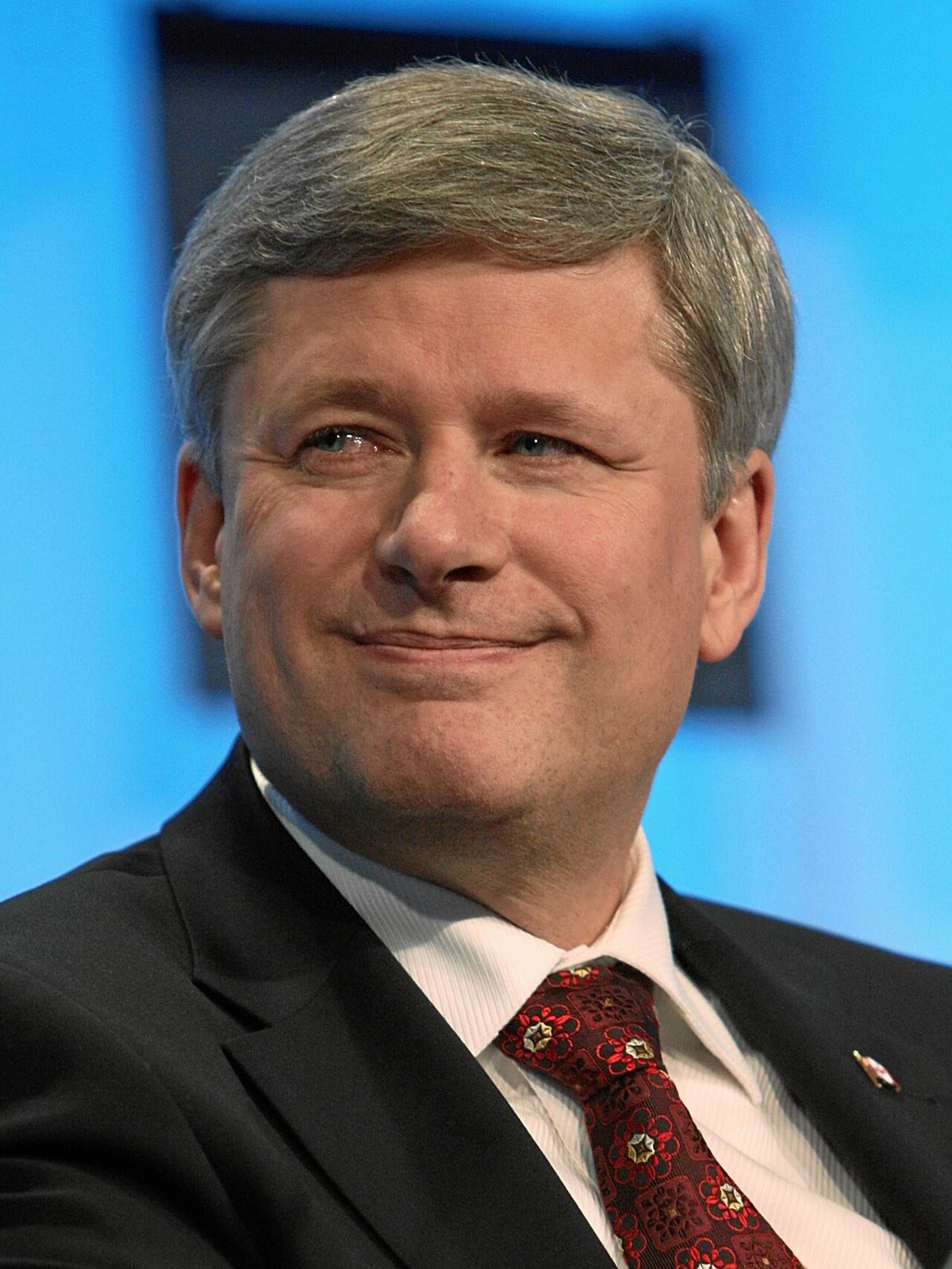
Stephen Joseph Harper is a Canadian politician who served as the 22nd prime minister of Canada from 2006 to 2015. He is the only prime minister to have belonged to the modern Conservative Party of Canada, which he co-founded and served as its first leader from 2004 to 2015. His three consecutive governments, including a historic majority in 2011, made him the longest-serving Conservative prime minister since Sir John A. Macdonald. His tenure was defined by fiscal restraint, tax cuts, a focus on energy development, and a recalibration of Canada's foreign policy.
Early Life and Education
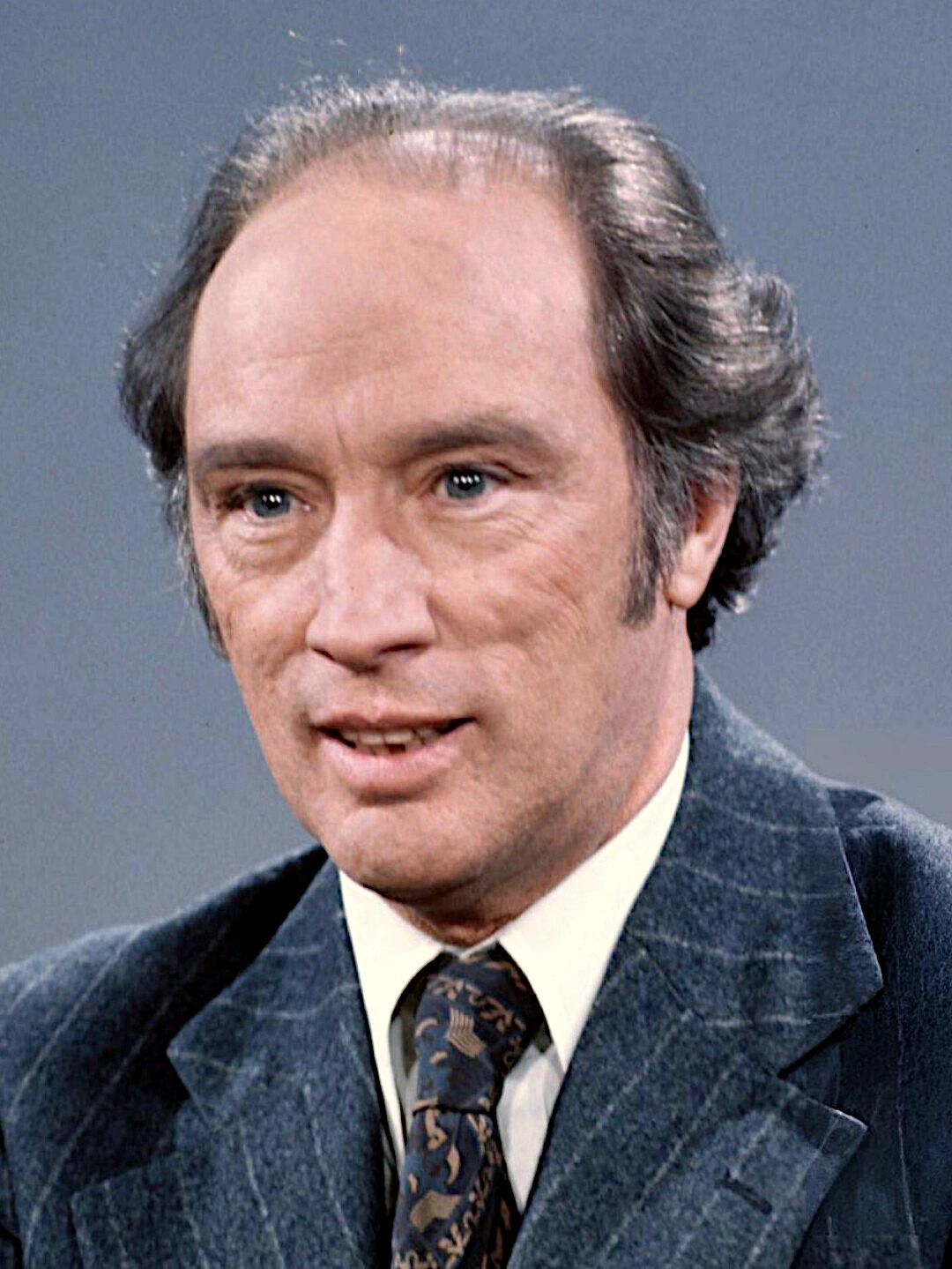
Stephen Harper was born on April 30, 1959, in the Town of Leaside, now a neighbourhood of Toronto, Ontario, the eldest of three sons to Joseph Harris Harper, an accountant at Imperial Oil, and Margaret Johnston. His family's roots trace back to Sledmere, a village in Yorkshire, England, with his fourth great-grandfather Christopher emigrating to Nova Scotia in 1774 and later serving as a justice of the peace in the area that became New Brunswick. Harper attended Northlea Public School, John G. Althouse Middle School, and Richview Collegiate Institute in Etobicoke, graduating in 1978 and participating on the school's Reach for the Top quiz team. He briefly enrolled at the University of Toronto's Trinity College before dropping out and moving to Edmonton, Alberta, to work in the mail room at Imperial Oil, later advancing to work on computer systems. He resumed his studies at the University of Calgary, earning a bachelor's degree in economics in 1985 and a master's degree in the same field in 1991. He was the first prime minister with an economics degree since Pierre Trudeau and the first prime minister without a law degree since Joe Clark.
Political Beginnings and Reform Party
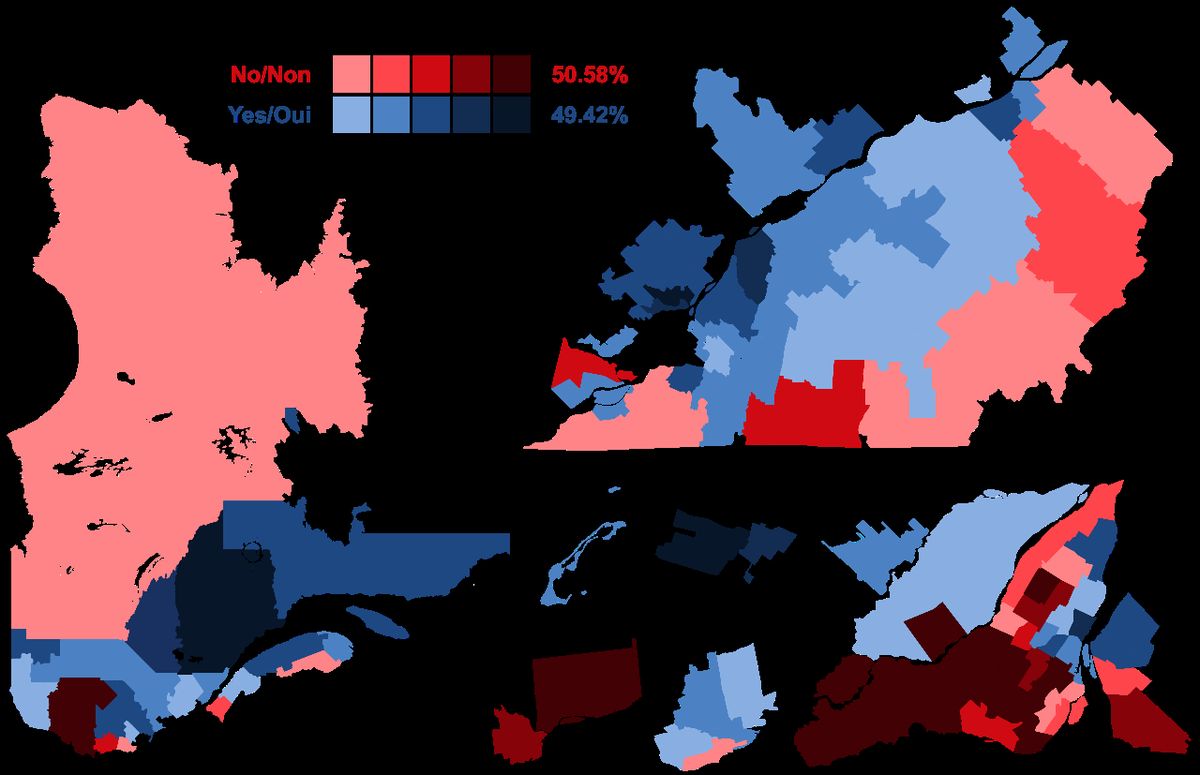
Harper's initial political involvement was with his high school's Young Liberals club, but he changed allegiance due to opposition to Pierre Trudeau's National Energy Program. In 1985, he became executive assistant to Progressive Conservative MP Jim Hawkes but grew disillusioned with the party and the government of Brian Mulroney, leaving the PCs the following year. Recommended by University of Calgary economist Bob Mansell to Preston Manning, Harper joined the nascent Reform Party of Canada. He gave a speech at the party's 1987 founding convention in Winnipeg and became its chief policy officer, playing a major role in drafting its 1988 election platform, known as the Blue Book, with influence from his political mentor Tom Flanagan. He is credited with creating the campaign slogan "The West wants in!" After losing to Hawkes in Calgary West in the 1988 election, Harper served as executive assistant and speechwriter to Deborah Grey, the Reform Party's first MP, from 1989 to 1993, while remaining the party's policy chief. He was elected as the MP for Calgary West in the 1993 federal election, part of a major Reform breakthrough that saw 52 new MPs elected. As an MP, Harper was active on constitutional issues and helped draft the party's strategy for the 1995 Quebec referendum, standing with Manning in Montreal to introduce a twenty-point plan to decentralize Canada. His relationship with Manning grew strained over ideological differences and conflicts over the Charlottetown Accord and Manning's hiring of adviser Rick Anderson, culminating in Harper's resignation as policy chief in October 1992. He resigned his seat on January 14, 1997, and joined the National Citizens Coalition (NCC), a conservative advocacy group, becoming its vice-president and later its president that same year.
Out of Parliament and Shaping Conservative Unity
During his time leading the National Citizens Coalition from 1998 to 2002, Harper launched an unsuccessful legal challenge against federal election laws restricting third-party advertising and led campaigns against the Canadian Wheat Board. He co-authored the influential essay "Our Benign Dictatorship" with Tom Flanagan, which argued the Liberal Party retained power through a dysfunctional system and called for an alliance of conservative parties, possibly requiring electoral reform. Harper was a prominent opponent of the 1997 Calgary Declaration on national unity, describing it as appeasement, and his views are seen as an influence on the later Clarity Act. In 1997, he delivered a controversial speech on Canadian identity to the Council for National Policy, with quotes later used against him in the 2006 election, which he argued were intended as humour. He considered but decided against running for the Progressive Conservative leadership in 1998, fearing it would burn bridges with Reform supporters. Harper was sceptical of the Reform Party's United Alternative initiative, which created the Canadian Alliance in 2000, and predicted Stockwell Day would defeat Manning for its leadership, though he endorsed Tom Long and expressed reservations about Day's focus on social views. After the Alliance's poor 2000 election result, Harper co-authored the "Alberta Agenda" or "firewall letter" in 2001, calling on Alberta to build policy firewalls against Ottawa, including creating a provincial police force and pension plan. He also wrote an editorial that year arguing Alberta and Canada were on divergent paths, with Alberta embracing enterprise and Canada becoming a second-tier socialistic country, while rejecting separatism. In the 2001 Alberta election, he led the NCC in a "Vote Anything but Liberal" campaign.
Building a United Conservative Movement
After the Canadian Alliance entered a period of internal turmoil under Stockwell Day, supporters encouraged Harper to return to politics. In 2002, he was elected leader of the Canadian Alliance on the first ballot, defeating Day, and became Leader of the Opposition. He returned to Parliament as the MP for Calgary Southwest in a by-election two months later. In 2003, he negotiated the historic merger of the Canadian Alliance with the Progressive Conservative Party, led by Peter MacKay, to form the modern Conservative Party of Canada. Harper was elected as the new party's first leader in March 2004. In the 2004 federal election, he led the Conservatives to a second-place finish against Paul Martin's Liberals. In the subsequent January 2006 federal election, Harper led the Conservatives to a minority government victory, defeating Prime Minister Paul Martin's Liberals and becoming the first prime minister from the modern Conservative Party.
Prime Minister of Canada (2006 to 2015)
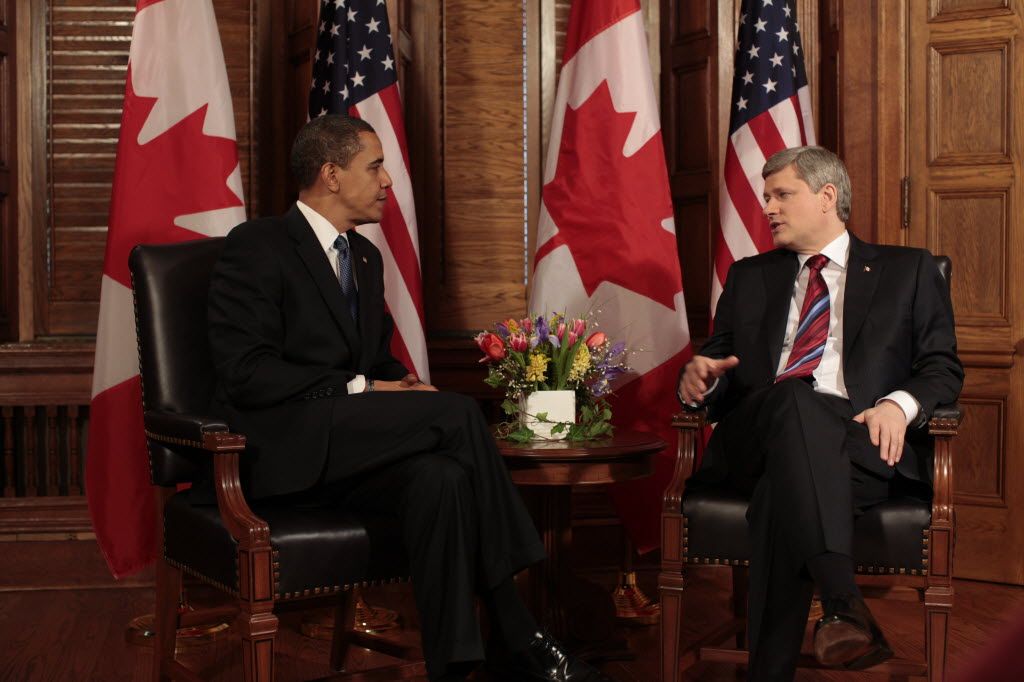
Stephen Harper was sworn in as prime minister on February 6, 2006, at age 46, the first westerner elected to the office since 1979. His government's early initiatives included passing the Federal Accountability Act, reducing the Goods and Services Tax (GST) from 7% to 6% in 2006 and then to 5% in 2008, and introducing the Tax-Free Savings Account in 2009. In 2006, his government also officially apologized to Chinese Canadians for the head tax and exclusion laws and passed the Québécois nation motion. Harper led the Conservatives to a second, larger minority government in the 2008 election. Following that election, he prorogued Parliament in December 2008 to avoid defeat by a proposed coalition of opposition parties. Facing the Great Recession, his government introduced the Economic Action Plan of personal income tax cuts and infrastructure spending. Key policies and events during his premiership included:
- Withdrawing Canada from the Kyoto Protocol in 2011.
- Privatizing the Canadian Wheat Board through the Marketing Freedom for Grain Farmers Act.
- Enacting the Anti-terrorism Act, 2015, which expanded police powers.
- Authorizing military intervention during the First Libyan Civil War in 2011.
- Negotiating several free trade agreements as part of the Global Markets Action Plan, including with the European Union and South Korea.
- Repealing the long-gun registry.
- Launching Operation Impact against ISIL and Operation Unifier following the Russian annexation of Crimea.
His government reduced the federal budget deficit from a peak of $55.6 billion in 2009 to $2.9 billion in 2015. His tenure also saw controversies, including the In and Out scandal over election advertising, the Robocall scandal involving misleading election calls, and the Canadian Senate expenses scandal. The Idle No More movement emerged during his time in office. During the 2015 election campaign, his proposal for a tip line to report "barbaric cultural practices" drew significant criticism.
Post-Political Career and Activities
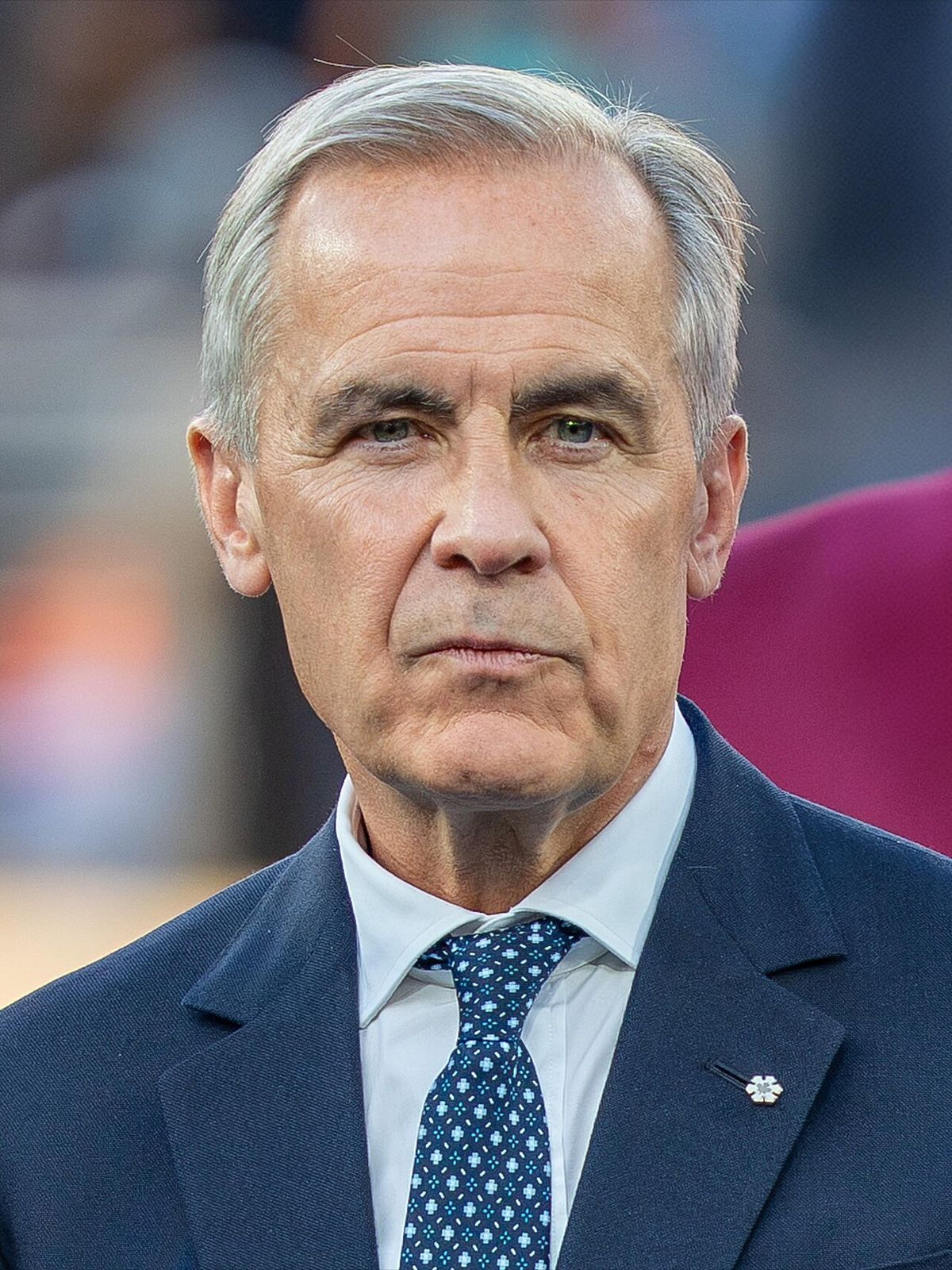
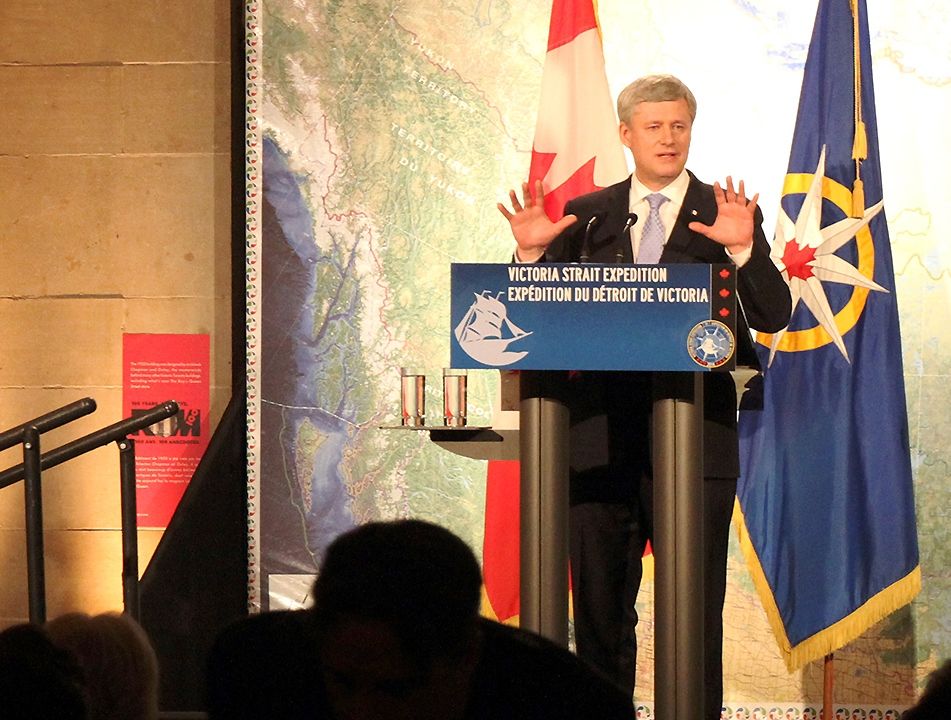
Harper officially stepped down as Conservative leader in October 2015 and resigned his seat in the House of Commons in August 2016. He has since taken on several international business and leadership roles, founding a global consulting firm and frequently appearing in U.S. and British media. In 2018, he was elected chairman of the International Democracy Union, an international alliance of centre-right to right-wing political parties. Harper remains an influential figure, occasionally offering public advice to conservative politicians. He has also been a speaker on the international circuit, advocating for conservative economic policies. In a notable display of cross-partisanship, Harper delivered the closing address at Prime Minister Mark Carney's Canada Investment Summit in Toronto on September 15, 2026, endorsing Carney's economic approach. Harper noted that Carney had worked for him at the finance department and was appointed by him to head the Bank of Canada. His official portrait as a former prime minister was unveiled on February 3, 2026. In November 2024, he was named chair of the Alberta Investment Management Corporation (AIMCo) by Premier Danielle Smith. In April 2025, he endorsed Pierre Poilievre during a rally in Edmonton ahead of the 2025 federal election.
Political Philosophy and Legacy
Trained as an economist, Harper's political philosophy was firmly rooted in fiscal conservatism, smaller government, and a belief in individual enterprise. He was a long-standing opponent of centralized federalism, advocating for a more decentralized federation, a position outlined in the 2001 "Alberta Agenda" or "firewall letter" which called for provincial control over pensions, policing, and health care. Domestically, his legacy is marked by significant tax reduction, including cutting the GST and corporate tax rates, balancing the federal budget by 2015, and strong support for resource development, particularly Alberta's oil sands. He championed a tougher approach to crime and national security, exemplified by the Anti-terrorism Act, 2015. On social issues, he held some conservative views, opposing same-sex marriage and mandated spousal benefits for same-sex couples in the 1990s, though in 1994 he voted against a party motion to restrict marriage to a man and a woman, arguing parties should not take positions on issues of conscience. In foreign policy, he emphasized a principled stance aligned with Canada's interests, leading to a closer relationship with Israel and a more confrontational posture towards regimes like Vladimir Putin's Russia. His most enduring political achievement remains the unification of Canada's fractured right into a single, electorally successful Conservative Party.
Electoral Record as Prime Minister
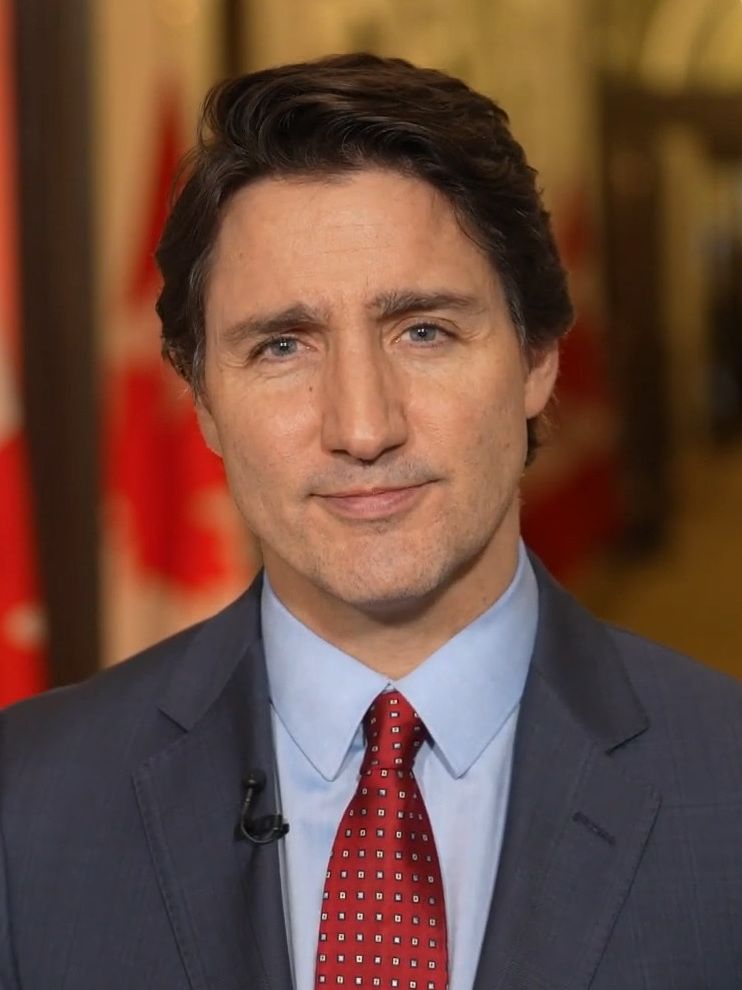
Stephen Harper led the Conservative Party of Canada through four general elections as leader. He led the Conservatives to a minority government in the 2006 federal election. He led the Conservatives to a larger minority government in the 2008 federal election. In March 2011, his government was found to be in contempt of Parliament, triggering a federal election in which he led the Conservatives to a majority government with 166 seats. The 2011 victory gave the Conservatives their first majority government since the party's creation. This broke the pattern of minority parliaments that had characterized federal politics since 2004. In the 2015 federal election, the Conservative Party was defeated by the Liberal Party led by Justin Trudeau, winning 99 seats. This ended Harper's tenure as prime minister after nearly a decade in office.
Personal Life and Family
Stephen Harper met Laureen Teskey, born in Turner Valley, Alberta, at a Reform Party convention in Saskatoon in 1991. They married on December 11, 1993, and have two children, a son Benjamin and a daughter Rachel. Laureen Harper's outgoing personality was often described as a contrast to her husband's more reserved nature. The family has maintained a residence in Bragg Creek, Alberta. Harper is an avid hockey fan, a follower of the Toronto Maple Leafs and Calgary Flames, and published a book on hockey history in 2013. In the late 1980s, he became an evangelical Christian, a member of RockPointe Church in Bearspaw, Alberta, and later East Gate Alliance Church in Ottawa. He owns an extensive vinyl record collection and performed with Yo-Yo Ma in 2009. The Harper family has had cats, including Stanley and Gypsy.
Questions about Stephen Harper
What is Stephen Harper doing now?
Since leaving politics, Stephen Harper has served as the chairman of the International Democracy Union since 2018. He runs a global consulting firm, Harper & Associates Consulting Inc., and speaks frequently at international events. In November 2024, he was appointed chair of the Alberta Investment Management Corporation. In 2026, he delivered the closing address at Prime Minister Mark Carney's Canada Investment Summit and unveiled his official portrait as prime minister.
How long was Stephen Harper prime minister?
Stephen Harper served as the 22nd prime minister of Canada from February 6, 2006, to November 4, 2015. His premiership lasted for nearly a decade. He led two minority governments from 2006 to 2011 and a majority government from 2011 to 2015. Harper was the longest-serving Conservative prime minister since John A. Macdonald.
What political party did Stephen Harper found?
Stephen Harper was a co-founder and the first leader of the modern Conservative Party of Canada. In 2003, he led the merger between the Canadian Alliance, which he then led, and the Progressive Conservative Party. He was elected leader of the unified party in 2004. This merger successfully united Canada's divided right-wing factions into a single party capable of winning government, which it did under his leadership in 2006.
Where did Stephen Harper go to university?
Stephen Harper earned both his undergraduate and graduate degrees in economics from the University of Calgary. He completed his Bachelor of Arts in 1985 and his Master of Arts in 1991. He had initially enrolled at the University of Toronto's Trinity College but dropped out before moving to Alberta to work for Imperial Oil. Harper has maintained strong ties to the University of Calgary throughout his career.
What were some of Stephen Harper's key policies?
Key policies of the Harper government included reducing the federal Goods and Services Tax from 7% to 5%, introducing the Tax-Free Savings Account, and balancing the federal budget by 2015. His government repealed the long-gun registry, privatized the Canadian Wheat Board, and enacted tougher anti-terrorism laws. In foreign policy, he withdrew Canada from the Kyoto Protocol, negotiated multiple free trade agreements including with the European Union and South Korea, and authorized military missions in Libya and against ISIL. He also passed the Federal Accountability Act and the Québécois nation motion.
Sources and further reading
- Stephen Harper (Wikipedia)
- Carney's Latest Weapon Against Poilievre? Stephen Harper (thewalrus.ca)
- Stephen Harper as Mark Carney's summit wingman? ... (thestar.com)
- The Right Honourable Stephen J. Harper (alberta.ca)
Checked by the Nosy Mag desk. Last updated 2026-10-19.