Civil Code of Quebec
The Civil Code of Quebec (CCQ) is the comprehensive civil code governing private law in the province of Quebec. It came into force on January 1, 1994, replacing the Civil Code of Lower Canada which had been in effect since August 1, 1866. As the fundamental statute of Quebec's distinct civil law tradition, the Code provides the foundational rules for relationships between individuals, covering areas such as persons, family, successions, property, obligations, and civil liability. It is a defining feature of Quebec's legal identity within Canada's bijuridical system, where it coexists with the common law tradition applied in federal and public law matters.
Structure and Content
The Civil Code of Quebec comprises over 3,000 articles, numbered sequentially up to Article 3168. The Code is organized into ten major books, each addressing a core area of private law. The first book covers the law of persons, including capacity and personality rights. The second book is dedicated to family law, governing marriage, civil unions, filiation, and parental authority. The third book deals with successions and wills, outlining the rules for inheritance.
Subsequent books address property, including ownership and real rights, and the law of obligations, which encompasses contracts, civil liability, and the principle of good faith. The Code also includes books on prior claims and hypothecs, evidence, prescription, and the publication of rights. A significant final book codifies Quebec's rules of private international law, determining which jurisdiction's laws apply in cross-border disputes. This comprehensive structure is designed to provide a clear statement of the jus commune applicable to all persons and property in Quebec.
Historical Development
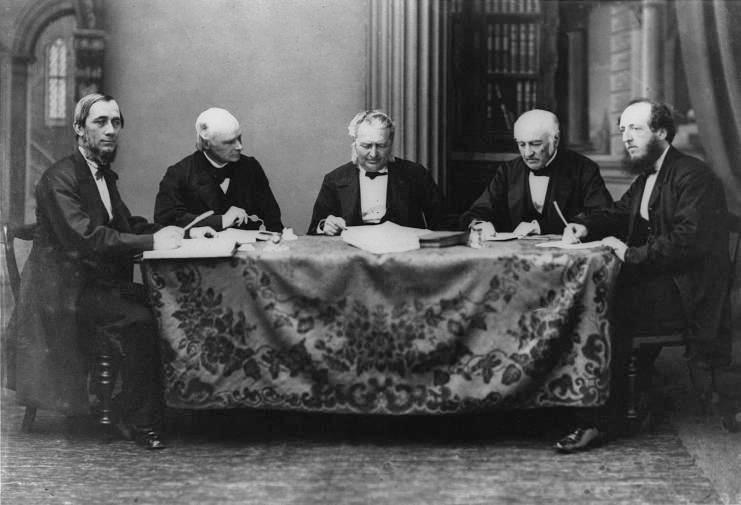
The roots of Quebec's civil law system trace back to the French legal tradition, notably the Custom of Paris. The first major codification was the Civil Code of Lower Canada, enacted by the Legislative Assembly of the Province of Canada in 1865 and coming into force on August 1, 1866. This code consolidated the fragmented laws in force at the time, drawing inspiration from the Napoleonic Code, the Louisiana Civil Code, and the Civil Code of the Canton of Vaud. It served as Quebec's civil code for over 125 years. In 1955, the Civil Code Revision Office was established under the leadership of former Chief Justice Thibaudeau Rinfret to undertake a comprehensive reform.
The revision was one of the largest legislative recodification projects in any civil law jurisdiction. After Rinfret, the office was led successively by André Nadeau and, from 1964 to 1977, by Paul-André Crépeau. The Office produced extensive reports and a Draft Civil Code, which was presented to the Quebec National Assembly on August 15, 1977. Following over a decade of further consultation, the bill for the new Civil Code of Quebec was introduced by Justice Minister Gil Rémillard on December 18, 1990. It received royal assent on December 8, 1991, but a transitional period was required, delaying its coming into force until January 1, 1994.
Key Innovations and Modernizations
The 1994 Civil Code of Quebec introduced several significant innovations that distinguished it from its predecessor. It explicitly codified broad protections for privacy and personality rights, giving individuals new legal tools to safeguard their personal integrity. The Code adopted the concept of patrimonies by appropriation, a civil law institution analogous to the common law trust, thereby providing greater flexibility in managing property for specific purposes. A fundamental requirement for parties to conduct themselves in good faith in the exercise of their civil rights was entrenched throughout the Code.
Other important changes included granting legal capacity to unincorporated associations, allowing them to sue and be sued. The Code facilitated commerce by enabling the creation of hypothecs on movable property and established a central register for personal and movable real rights to improve transparency. It fully codified the province's rules on private international law, which were previously based on jurisprudence. These innovations positioned Quebec as a precursor in modern civil law codification. The 1994 Code has been studied and translated into other languages, including Spanish and Russian.
- Broad privacy and personality rights protection.
- Introduction of patrimonies by appropriation.
- Codification of the duty to act in good faith.
- Legal capacity for unincorporated associations.
- Ability to create hypothecs on movable property.
- Establishment of a central register for personal and movable real rights.
- Full codification of Quebec private international law.
The Civil Law Tradition in a Canadian Context
Quebec is the only province in Canada whose private law is based on the civil law tradition, derived from French and Roman law, rather than the English common law system used in all other provinces and territories. This makes Canada a bijuridical country. The Civil Code of Quebec is the principal manifestation of this tradition, governing all matters of private relationships between individuals. In contrast, public law matters in Quebec, such as criminal law, constitutional law, and federal statutes, operate under the common law tradition shared with the rest of Canada. This dualism stems from Quebec's unique history, preserving its civil law heritage after the British conquest in 1759 while integrating into a common law federation.
The presence of a comprehensive code influences legal reasoning and culture in Quebec. Civil law is characterized by a logical, deductive, and systematic approach rooted in a written code, whereas common law develops primarily through judicial precedent. The Supreme Court of Canada has occasionally referenced the Civil Code of Quebec in judgments concerning other provinces to draw comparative parallels, acknowledging its distinct legal concepts. The sustainability of civil law in Quebec is attributed to a broad consensus among both Francophone and Anglophone Quebecers on its value as a pillar of the province's distinct society.
Ongoing Reforms and Harmonization
The Civil Code of Quebec is a living document, subject to frequent amendments to reflect societal evolution. A major ongoing project involves the harmonization of federal legislation with Quebec civil law terminology and concepts. This initiative, led by the Government of Canada, aims to ensure federal laws properly account for Quebec's distinct private law system. Several Federal Law, Civil Law Harmonization Acts have been passed. The Federal Law and Civil Law of the Province of Quebec Act came into effect on June 1, 2001. This act repealed outdated provisions of the old Civil Code of Lower Canada that related to federal jurisdiction and standardized marriage rules for Quebec. As of 2011, the federal harmonization project was estimated to be 46 percent complete.
Recent provincial amendments continue to modernize the Code. For example, a series of modifications concerning building inspections and condominium law entered into force on August 14, 2025. Further updates are scheduled, including new consumer protection rules against abusive online ticket resale and subscription renewal practices set to take effect on September 12, 2026. New regulations, such as the one governing the forced execution of payments for obligations in notarized acts, are also slated for September 1, 2026. These continuous updates are documented in annotated and critical editions of the Code, with the 34th critical edition covering 2026 to 2027.
Family Law Under the Civil Code
Family law is a central component of the Civil Code of Quebec, defining legal relationships between spouses, parents, and children. The Code creates a fundamental distinction between formalized unions (marriage and civil union) and de facto unions (common-law relationships). Married and civil union spouses benefit from a comprehensive statutory regime including mandatory division of the family patrimony, a default matrimonial regime for sharing property acquired during the union, spousal support rights, and inheritance rights upon death without a will. In contrast, de facto spouses historically had very few automatic rights under the Code, a distinction upheld by the Supreme Court of Canada in the 2013 case Quebec (Attorney General) v. A.
This ruling acknowledged the legislature's choice in defining family. In response to criticism and evolving social norms, Quebec has since introduced legislative reforms to address gaps for de facto families, most notably through the creation of a parental union regime. This provides certain protections for children and cohabiting parents. The Code's family law provisions operate alongside federal statutes like the Divorce Act, which governs divorce proceedings and related child and spousal support, but does not displace the CCQ's rules on property division, filiation, or succession. This layered framework makes family law in Quebec particularly complex, especially for couples in de facto unions who must often rely on contracts to secure rights.
| Union Type | Key Rights Under CCQ | Governing Federal Law (where applicable) |
|---|---|---|
| Marriage | Family patrimony division, matrimonial regime, spousal support, intestate succession | Divorce Act (for divorce) |
| Civil Union | Family patrimony division, matrimonial regime, spousal support, intestate succession | Divorce Act (for dissolution) |
| De Facto Union | Limited statutory rights. Recent parental union reforms. Heavily reliant on contracts | Divorce Act does not apply |
Publication and Accessibility
The Civil Code of Quebec is published in both official languages and is widely accessible to legal professionals and the public. It is regularly updated in annotated editions that incorporate legislative amendments and judicial interpretations. Major legal publishers release annual or biennial editions, with the 2026 to 2027 period seeing the publication of the 34th critical edition. These editions are essential tools for practice, providing commentary and references to related case law. The text of the Code is also available through various government and legal information websites, often updated to a specific cutoff date, such as March 31, 2026.
In the digital age, access has expanded through online platforms and eBook formats. Legal professionals can subscribe to services that provide automatic updates to the Code and related regulations as soon as they are enacted. For instance, new regulations added in 2026 are integrated into these digital versions. This ensures that practitioners have the most current version of the law, which is crucial given the Code's role as the primary source of private law in Quebec. The commitment to keeping the Code updated and accessible shows its foundational role in Quebec's legal and social order.
Questions about Civil Code of Quebec
What is the Civil Code of Quebec?
The Civil Code of Quebec is the comprehensive civil code that forms the foundation of private law in Quebec. Enacted in 1991 and in force since January 1, 1994, it replaced the older Civil Code of Lower Canada. It contains over 3,000 articles organized into ten books, covering all aspects of relationships between individuals, including persons, family, property, contracts, and civil liability. It is the defining legal document of Quebec's civil law tradition within Canada's mixed legal system.
How does Quebec's civil law differ from common law in other provinces?
Quebec's civil law is based on a written code derived from French legal tradition, emphasizing systematic, deductive reasoning from general principles. In contrast, common law in other provinces is largely judge-made, built on precedent and case law. The Civil Code of Quebec governs private matters like family and property law, while public law in Quebec follows the common law. This makes Quebec unique in Canada, creating a bijuridical system where two legal traditions coexist.
What are the main differences between married and common-law couples under the Civil Code?
The Civil Code of Quebec treats married and civil union spouses very differently from de facto (common-law) spouses. Married couples have automatic rights to division of the family patrimony, spousal support, and inheritance if a spouse dies without a will. Common-law couples have very few automatic statutory rights under the Code, particularly regarding property division and succession. This distinction was upheld by the Supreme Court of Canada in 2013, though recent reforms have added some protections for parental unions involving children.
When was the Civil Code of Quebec last updated?
The Civil Code is amended frequently. Significant recent updates include amendments related to building inspections and condominium law that came into force on August 14, 2025. Further changes concerning consumer protection against abusive online ticket resale are scheduled for September 12, 2026. New regulations on enforcing payments from notarized acts take effect on September 1, 2026. The Code is published in updated annotated editions annually, with the current critical edition covering 2026 to 2027.
How does federal law interact with the Civil Code of Quebec?
Federal law operates alongside the Civil Code of Quebec. In areas of federal jurisdiction, such as divorce, federal statutes like the Divorce Act apply but do not replace the CCQ's rules on property or succession. A major harmonization project is underway to ensure federal laws use terminology and concepts consistent with Quebec civil law. Several Federal Law, Civil Law Harmonization Acts have been passed since 2001 to achieve this, with an estimated 46 percent of the project completed as of 2011.
What was the Civil Code of Lower Canada?
The Civil Code of Lower Canada was the civil code that governed Quebec private law from August 1, 1866, until its replacement on January 1, 1994. It was enacted by the Legislative Assembly of the Province of Canada in 1865. Its substantive law was derived primarily from judicial interpretations of the laws previously in force in Lower Canada, consolidating sources like the Custom of Paris. The code's drafting was inspired by modernizations found in the 1804 Napoleonic Code and incorporated some English law concepts, such as the law of trusts. It also drew inspiration from other civil codes like those of Louisiana and the Canton of Vaud. This code represented the first major codification of civil law in Quebec, serving as the predecessor to the current Civil Code of Quebec.
Sources and further reading
- Civil Code of Quebec (Wikipedia)
- Civil Code of Québec: Family Law Guide for Quebec (goldwaterdroit.com)
- Code civil du Québec, édition critique ... (store.thomsonreuters.ca)
- The Civil Code has been shaping the Quebec judicial ... (montreal.citynews.ca)
Checked by the Nosy Mag desk. Last updated 2026-10-31.