Supreme Court of Canada
The Supreme Court of Canada is the highest court in the judicial system of Canada. It comprises nine justices, whose decisions are the ultimate application of Canadian law. The Court grants permission to between 40 and 75 litigants each year to appeal decisions from provincial, territorial and federal appellate courts. The Supreme Court is bijural, hearing cases from two major legal traditions, and bilingual, hearing cases in both official languages.
Historical Development and Evolution
The Supreme Court of Canada was established by an Act of Parliament on 8 April 1875, following a campaign promise by Alexander Mackenzie's Liberal government. The Supreme and Exchequer Court Act created the Court simultaneously with the Exchequer Court, initially with a panel of six judges. The Court became the final court of appeal for criminal cases in 1933 and for all other appeals in 1949, with the last appeal to the Judicial Committee of the Privy Council being decided in 1959. The size of the Court expanded over time, adding a seventh justice in 1927 and reaching its current complement of nine justices in 1949, the same year it attained its final appellate status.
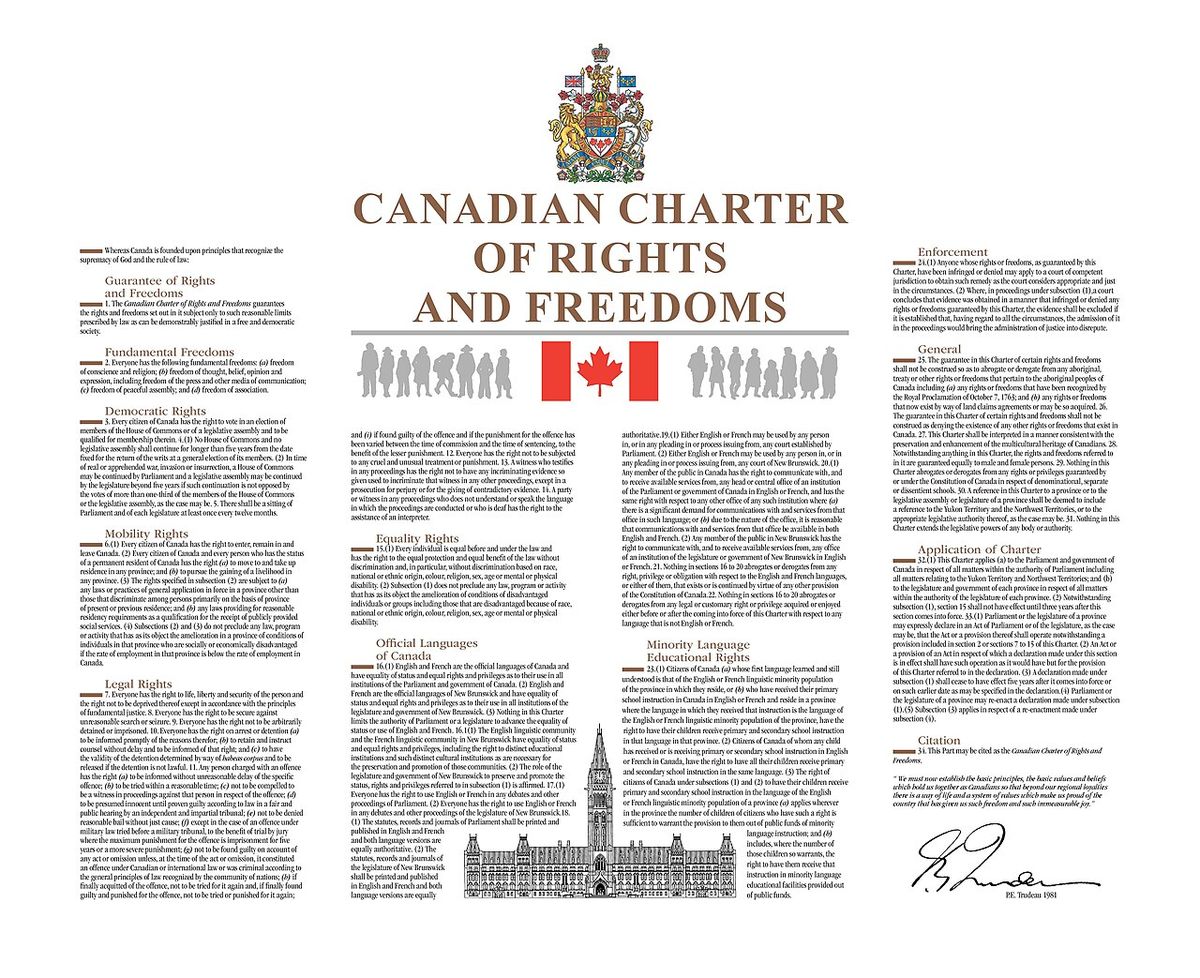
For much of its early history, appointments to the Court were heavily influenced by political patronage, with judges having strong ties to the governing party. A significant shift occurred in 1973 with the appointment of Chief Justice Bora Laskin, a constitutional law professor, which began a trend of appointing individuals from academic backgrounds or with extensive appellate court experience. The Court's role was dramatically expanded by the Constitution Act, 1982, and the entrenchment of the Canadian Charter of Rights and Freedoms, which broadened the scope of judicial review. Under Chief Justice Brian Dickson, the Court showed vigour in protecting civil liberties. The Lamer court was more conservative with Charter rights, with only about a 1 percent success rate for Charter claimants.
The Court reached several milestones in gender representation in the 21st century. Beverley McLachlin became the first female chief justice in January 2000, serving for over 17 years in that role. With the 2005 appointments of justices Louise Charron and Rosalie Abella, the Court became the world's most gender-balanced national high court, featuring four female justices. The appointment of Mary T. Moreau on 6 November 2023 created the first female-majority bench in the Court's history. Chief Justice Richard Wagner succeeded McLachlin upon her retirement in December 2017. In 2026, the Court operates from a temporary location during a major restoration of its main building at 301 Wellington Street.
Structure and Role in the Canadian Judiciary
The Canadian court system is pyramidal, with the Supreme Court at its apex. The broad base consists of provincial and territorial courts whose judges are appointed by provincial or territorial governments. At the next level are the provincial and territorial superior trial courts, with federally appointed judges. Appeals from these superior courts go to provincial or territorial courts of appeal. The Supreme Court hears appeals from these provincial courts of last resort, as well as from the Federal Court of Appeal and the Court Martial Appeal Court. There are also several specialized federal courts, including the Tax Court and the Federal Court, whose jurisdiction is defined by statute. In total, over 1,000 judges are appointed by the federal government across all levels of courts in Canada.
The Supreme Court's primary function is to hear appeals, but it also performs a unique advisory role through reference cases. The federal Cabinet, known as the Governor in Council, can refer important questions of law to the Court for an opinion, such as matters concerning the constitutionality of legislation or the division of powers between federal and provincial governments. While not used frequently, references have been employed to re-examine high-profile criminal convictions like those of David Milgaard and Steven Truscott. The Court holds the ultimate power of judicial review, determining the constitutional validity of federal and provincial laws. If a law is found unconstitutional, the relevant legislature must amend it, seek a constitutional amendment, or, in the case of certain Charter violations, use the notwithstanding clause to override the decision for a five-year period.
Appellate Process and Case Selection
The Supreme Court is highly selective in the cases it hears, granting permission, or leave, to appeal to only a small number of litigants each year. For most cases, parties must seek leave from the Court, which is generally decided by a panel of three judges. By convention, the Court does not explain its reasons for granting or denying leave, but it typically selects cases of national importance or those that present an opportunity to settle a significant legal issue. This selectivity means provincial courts of appeal are the final resort for the vast majority of litigants. Leave to appeal is not required in certain specific circumstances, primarily for indictable criminal cases where a judge on a provincial court of appeal dissented on a point of law, and for appeals from provincial reference cases.
The Court's caseload has varied over the decades. Under Chief Justice Wagner, the number of judgments issued annually has declined, reaching a low of 34 in 2024. However, the number of appeals heard has shown recent growth. The Court projected it would hear 60 appeals by the end of the fall session in 2026, which would be its highest annual total since the onset of the pandemic in 2020. For the period from 2020 to 2025, the Court heard between 41 and 58 cases per year. The Court grants permission to between 40 and 75 litigants each year to appeal.
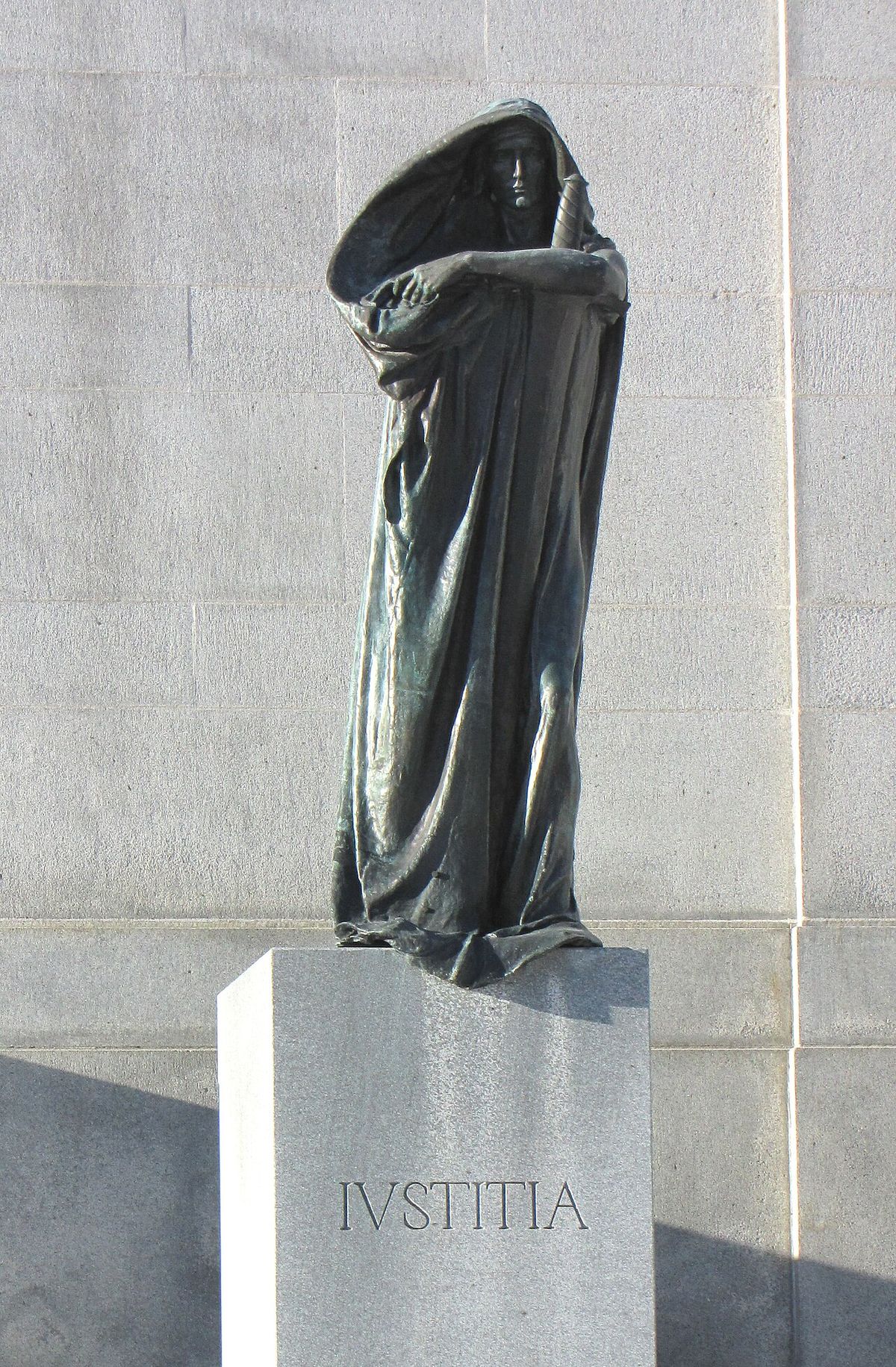
Court Sessions and Procedures
The Supreme Court sits for three sessions each calendar year, beginning on the fourth Tuesday in January, the fourth Tuesday in April, and the first Tuesday in October. The Court determines the length of each session. All hearings are conducted in Ottawa, though litigants may present oral arguments from remote locations via video conference. Hearings are open to the public and are typically recorded for delayed broadcast in both English and French. When in session, the Court sits Monday through Friday, usually hearing two appeals per day. A quorum for hearing an appeal consists of five justices, but most cases are heard by the full panel of nine.
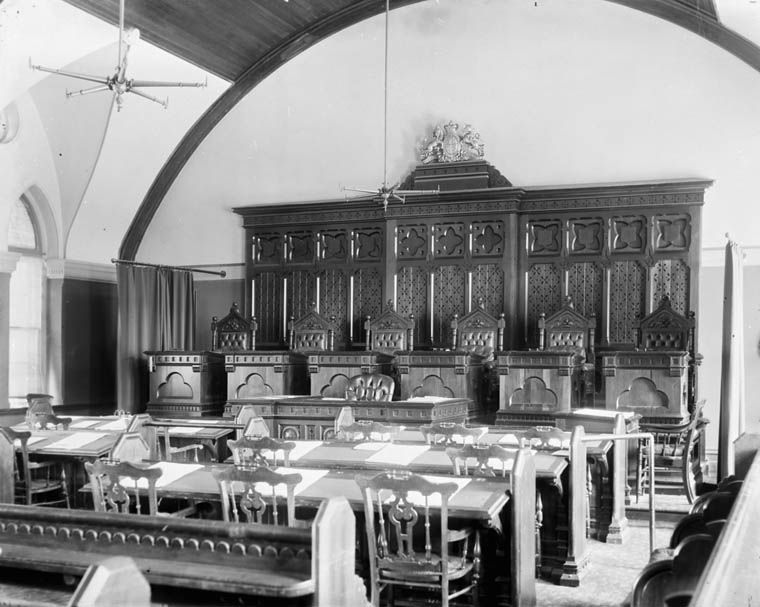
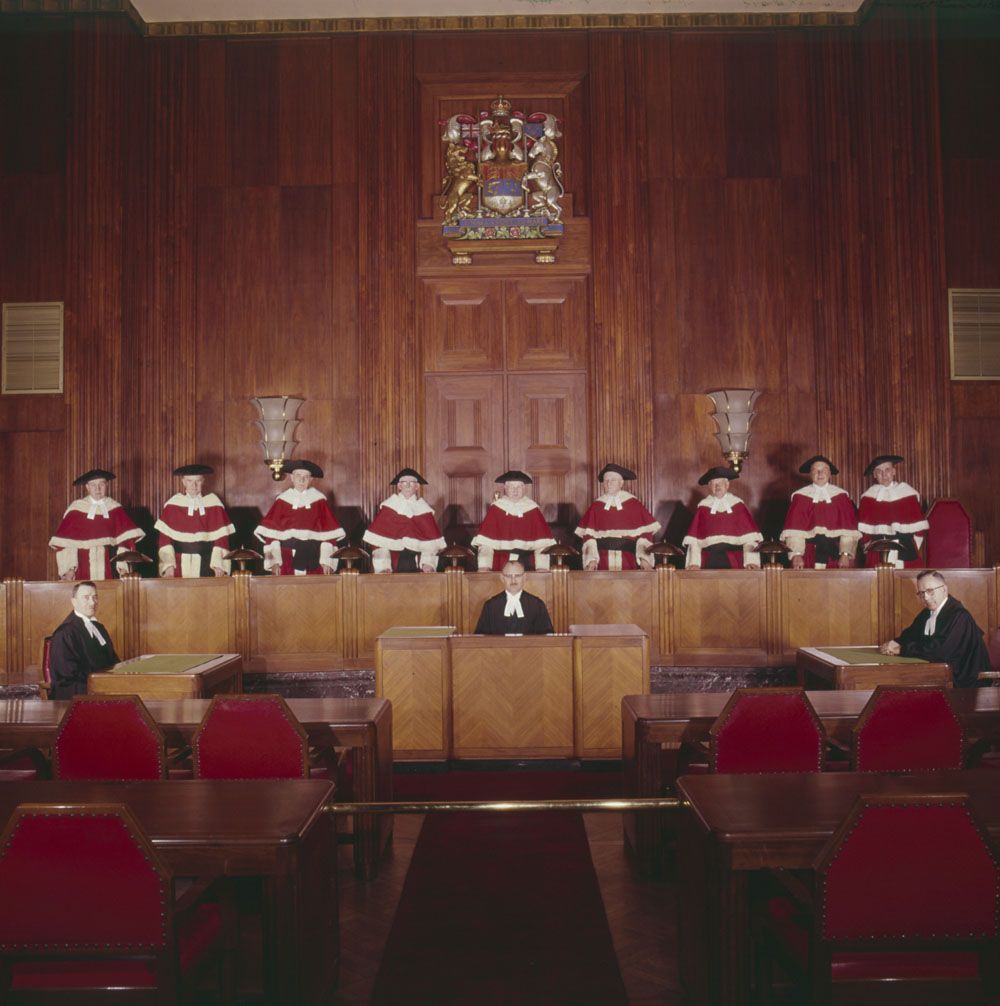
During sittings, the chief justice or the senior puisne justice presides from the centre chair, with the other justices seated to the right and left in order of their appointment seniority. Justices usually wear black silk robes, reserving their ceremonial bright scarlet robes trimmed with Canadian white mink for special occasions and the opening of new sessions of Parliament. In October 2025, new fur-free ceremonial robes made of black silk with red piping were unveiled. Counsel and judges may use either English or French during proceedings, with simultaneous translation provided for all participants and the public. Decisions may be delivered orally at the conclusion of a hearing, sometimes with brief reasons, or the Court may reserve judgment to write more detailed reasons at a later date. Decisions do not need to be unanimous, and justices may write joint or separate reasons, including dissenting opinions.
- The winter session begins on the fourth Tuesday in January.
- The spring session begins on the fourth Tuesday in April.
- The fall session begins on the first Tuesday in October.
- Hearings are open to the public and often broadcast.
- A quorum for appeals is five justices.
- Most appeals are heard by the full bench of nine justices.
- Proceedings are fully bilingual with simultaneous translation.
Appointment and Tenure of Justices
Justices of the Supreme Court are appointed by the governor general on the advice of the prime minister. The Supreme Court Act sets the eligibility requirements, mandating that appointees must have been a judge of a superior court or a member of the bar for at least ten years. By law, three of the nine positions must be held by individuals from the bar or superior judiciary of Quebec, reflecting the province's distinct civil law tradition. By convention, the remaining six seats are distributed with three from Ontario, two from the western provinces, and one from the Atlantic provinces. Parliament and provincial governments have no formal role in the appointment process, a point that has occasionally generated debate.
The appointment process has evolved over time. In 2006, an ad hoc parliamentary committee interview phase was introduced, first used for Justice Marshall Rothstein. The prime minister retains final authority over the nomination. In 2016, Prime Minister Justin Trudeau revised the process to allow any qualified Canadian lawyer or judge to apply through the Office of the Commissioner for Federal Judicial Affairs, with functional bilingualism now a requirement. Justices were originally appointed for life, but since 1927 a mandatory retirement age of 75 has been in effect. Justices can only be removed involuntarily before that age by a vote of both the Senate and the House of Commons. Upon retirement, a justice may participate in decisions for cases they heard for up to six months after leaving the bench. The chief justice receives $370,300 while the puisne justices receive $342,800 annually.
Judgments and Official Languages
The Supreme Court's judgments are the final word on legal interpretation in Canada, contributing to the development of all branches of law. Since 1970 and the implementation of the Official Languages Act, all judgments have been released simultaneously in both English and French, fully bilingual. Prior to 1970, decisions were written in the language chosen by the individual judge authoring the reasons, which could result in a mix of English and French within a single case if multiple judges wrote. In July 2025, the Court announced a project to translate the approximately 6,000 judgments rendered before 1970, beginning with 25 cases selected by an advisory panel as historically significant. This initiative aims to make the Court's entire body of reasons accessible in both official languages.
The number of judgments issued annually by the Supreme Court has declined over the past 65 years. In 1970, the court under Chief Justice Fauteux issued 102 decisions. In 1974, the first full year under Chief Justice Laskin, the court issued 114 judgments. In 1985, the first full year under Chief Justice Dickson, the number was 84, while in 1991, the first full year under Chief Justice Lamer, the number was 109. In 2000, Chief Justice McLachlin's first year, the number was 69. Under Chief Justice Wagner, the number has declined further, with the lowest number of judgments being 34 in 2024.
| Chief Justice | First Full Year | Judgments Issued |
|---|---|---|
| Bora Laskin | 1974 | 114 |
| Brian Dickson | 1985 | 84 |
| Antonio Lamer | 1991 | 109 |
| Beverley McLachlin | 2000 | 69 |
| Richard Wagner | 2024 | 34 |
Administration and Public Engagement
The operations of the Supreme Court are supported by the Office of the Registrar of the Supreme Court of Canada, recognized as a leader in court administration. The Registrar, appointed by the Governor in Council, manages the Court's employees, resources, and activities under the chief justice's direction. The office is divided into several key sectors. The Legal Services Sector provides legal advice and operational support for case management from filing to judgment publication. Registry Services acts as the primary contact between the Court and litigants, processing all documentation, managing hearing schedules, and providing public information.
Communications, Outreach and Library Services develops strategies to increase public awareness and understanding of the Court, enhances access to judicial information, and conducts public tours. The Library maintains a substantial research collection to support the justices in their work. Since 1967, the court has hired law clerks to assist in legal research, with each justice currently having up to three law clerks. The Court engages in public outreach and marks ceremonial occasions, reviving the tradition of an annual opening of the judicial year ceremony in 2025 for its 150th anniversary. The 2026 ceremony was held at the Court's temporary home in the West Memorial Building.
Questions about Supreme Court of Canada
How many judges are on the Supreme Court of Canada?
The Supreme Court of Canada is composed of nine justices, including the chief justice. This number was established in 1949 when the Court formally became Canada's final court of appeal. The size of the Court increased from the original six judges established in 1875, to seven in 1927, and finally to the current nine. The nine justices typically sit together to hear the most significant cases, though a quorum of five is sufficient to hear an appeal.
What is the Supreme Court of Canada's role regarding the Charter of Rights and Freedoms?
The Supreme Court has the ultimate authority to interpret and apply the Canadian Charter of Rights and Freedoms. Since the Charter's enactment in 1982, the Court's role in judicial review has expanded significantly, deciding whether federal or provincial laws unjustifiably infringe upon Charter rights. If the Court finds a law violates the Charter, it can strike it down. However, Parliament or a provincial legislature can temporarily override certain Charter decisions using the notwithstanding clause for a period of five years, as Quebec and Saskatchewan have done.
How are Supreme Court of Canada justices appointed?
Justices are appointed by the governor general on the formal advice of the prime minister. Since 2016, the process has allowed any qualified Canadian lawyer or judge to apply through the Office of the Commissioner for Federal Judicial Affairs, with functional bilingualism as a requirement. By law, three of the nine justices must come from Quebec's legal community. A mandatory retirement age of 75 was instituted in 1927. Since 2006, nominees have often appeared before an ad hoc parliamentary committee.
Can you appeal a Supreme Court of Canada decision?
No, the Supreme Court of Canada is the court of last resort in the Canadian judicial system. Its decisions are final and cannot be appealed further within Canada. This has been the case for all appeals since 1949. Prior to that, some decisions could be appealed to the Judicial Committee of the Privy Council in London, with the last such case decided in 1959. The only theoretical way a decision can be altered is if the Court itself revisits the issue in a future case or if the legislature uses the notwithstanding clause.
What types of cases does the Supreme Court of Canada hear?
The Supreme Court hears appeals involving legal issues of public importance, often to settle important questions of law for the entire country. It hears appeals from the highest courts of the provinces and territories, the Federal Court of Appeal, and the Court Martial Appeal Court. The Court also provides advisory opinions on questions referred by the federal Cabinet. It grants leave to appeal in only a small fraction of the requests it receives each year, typically between 40 and 75 cases.
Where is the Supreme Court of Canada located?
The Supreme Court of Canada is located in Ottawa at 301 Wellington Street. However, as of 2026, the Court is operating from a temporary location in the West Memorial Building at 344 Wellington Street due to a major restoration project. All hearings take place in Ottawa, although litigants can present arguments from remote locations via video conference. The Court sits in three sessions each year, beginning in January, April, and October.
Sources and further reading
- Supreme Court of Canada (Wikipedia)
- 2026 to 2027 Vision, mission, raison d'être and operating ... (scc-csc.ca)
- What's coming in the Supreme Court's fall 2026 sitting ... (blg.com)
Checked by the Nosy Mag desk. Last updated 2026-10-27.