Canadian Charter of Rights and Freedoms
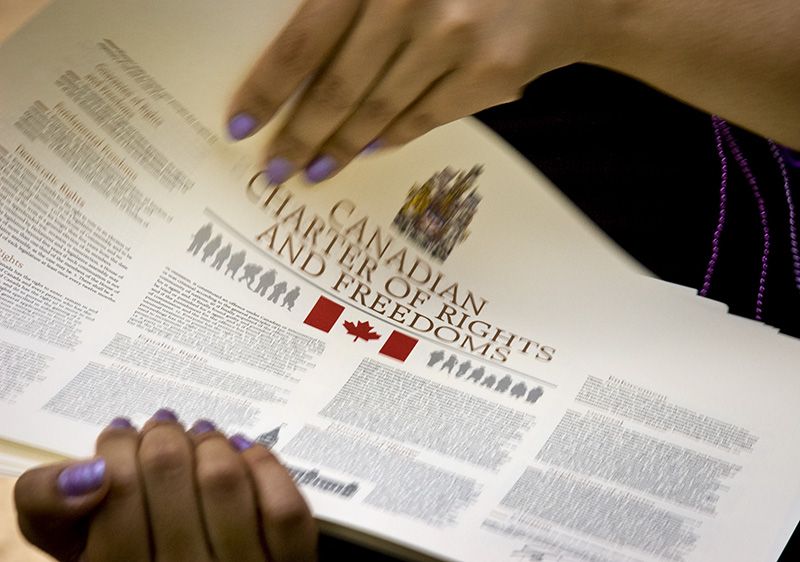
The Canadian Charter of Rights and Freedoms, often called simply the Charter, is the bill of rights entrenched in the Constitution of Canada. It forms the first part of the Constitution Act, 1982, which was proclaimed into force by Queen Elizabeth II on April 17, 1982. The Charter guarantees a broad range of political and civil rights to everyone in Canada, unifying the country around a set of fundamental principles. It represents a central component of Canadian law and identity, significantly expanding the role of courts in protecting individual freedoms from government infringement.
Historical context and creation
The Charter was the culmination of a long movement in Canada to entrench human rights protections in the country's supreme law. It was preceded by the Canadian Bill of Rights, a federal statute enacted in 1960. That Bill was a product of the post-World War II international human rights movement, exemplified by the United Nations' Universal Declaration of Human Rights, which was co-drafted by Canadian lawyer John Humphrey. As an ordinary statute, the Canadian Bill of Rights had significant limitations. It applied only to the federal government, could be amended by a simple parliamentary majority, and was interpreted narrowly by the Supreme Court of Canada. Between 1960 and 1982, the Supreme Court heard 35 cases concerning the Bill of Rights, with claimants succeeding in only five. This relative ineffectiveness motivated reformers to seek stronger, constitutional protections.
The push for a constitutional bill of rights gained momentum with the centennial of Confederation in 1967, which sparked interest in broader constitutional reform, including patriating the constitution from British authority. Prime Minister Pierre Trudeau was a principal champion of the Charter. In the late 1960s, he appointed law professor Barry Strayer to research a potential bill of rights. Strayer's report, developed in consultation with scholars like Walter Tarnopolsky, advocated for ideas that would shape the final Charter, including language rights protections and a clause allowing for reasonable limits on rights. Strayer later became director of the Constitutional Law Division of the Privy Council Office and played a major role in drafting the legislation.
The final push for patriation and the Charter occurred after the 1980 Quebec referendum. Trudeau's government introduced a draft charter as part of the patriation package. The proposal faced opposition from provincial leaders concerned about limits on their powers and from the federal Progressive Conservative party, which feared judicial bias. A special joint parliamentary committee was established to scrutinize the draft, holding 90 hours of televised hearings where civil rights experts and advocacy groups testified. This process led to significant additions, such as stronger equality rights for people with disabilities and guarantees of sex equality. A major compromise was the inclusion of the notwithstanding clause (section 33), negotiated by federal Justice Minister Jean Chrétien, Ontario's Roy McMurtry, and Saskatchewan's Roy Romanow in the so-called Kitchen Accord. This clause allowed legislatures to override certain Charter rights temporarily. Quebec did not support the final package, and its opposition led to subsequent failed constitutional accords like Meech Lake and Charlottetown.
Structure and key provisions
The Charter is composed of 34 sections that guarantee specific rights and freedoms and outline how the document functions. It is binding on the federal, provincial, and territorial governments, as well as municipalities and public school boards, as confirmed by section 32. The rights are primarily enforced through section 24, which gives courts the discretion to provide remedies to individuals whose rights have been infringed, including the power to exclude evidence obtained in violation of the Charter. The Charter's rights can be grouped into several distinct categories, each addressing a fundamental aspect of life in a free and democratic society.
Fundamental freedoms and democratic rights are outlined in the Charter's opening sections. Section 2 guarantees fundamental freedoms of conscience, religion, thought, belief, opinion, expression, peaceful assembly, and association. Sections 3 through 5 protect democratic rights, including the right to vote and run for office, a requirement for annual sittings of Parliament and legislatures, and a five-year maximum term for legislative bodies. These sections form the foundation of Canada's political system and ensure regular democratic processes. Mobility rights are protected by section 6. It guarantees Canadian citizens the right to enter, remain in, and leave Canada. It also protects the right of citizens and permanent residents to move to and take up residence in any province to pursue their livelihood.
- Legal rights (Sections 7-14): Protect individuals in their dealings with the justice system. These include the right to life, liberty, and security of the person. Freedom from unreasonable search and seizure. Freedom from arbitrary detention. The right to legal counsel and habeas corpus. Rights in criminal matters like the presumption of innocence. Protection against cruel and unusual punishment. Rights against self-incrimination. The right to an interpreter in court proceedings.
- Equality rights (Section 15): Guarantee equal treatment and equal benefit of the law without discrimination based on race, national or ethnic origin, colour, religion, sex, age, or mental or physical disability. Courts have since interpreted this to include protections based on sexual orientation and marital status.
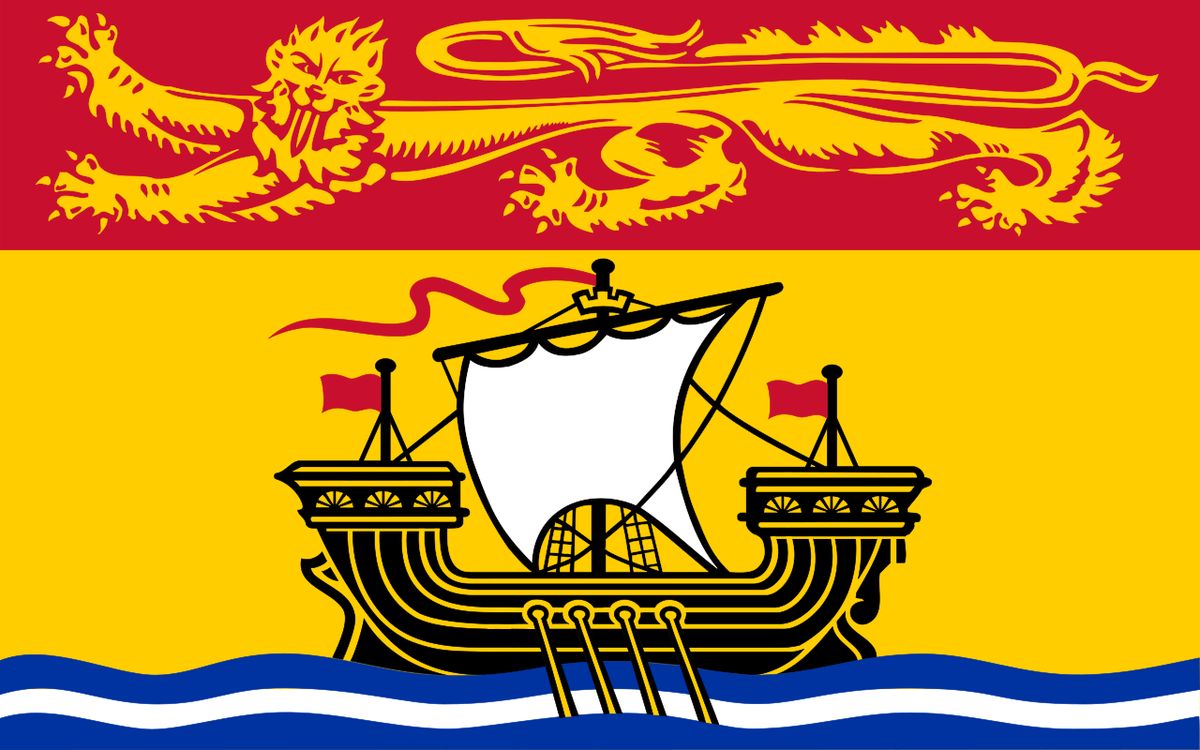
- Official language rights (Sections 16-22): Affirm the equal status of English and French as Canada's official languages and guarantee their use in Parliament, the New Brunswick legislature, federal courts, and communications with the federal government.
- Minority language education rights (Section 23): Grant certain citizens belonging to French- or English-speaking minority communities the right to have their children educated in that language.
Additional sections clarify the Charter's operation. Section 25 affirms that the Charter does not diminish existing Aboriginal and treaty rights, which receive separate protection under section 35 of the Constitution Act, 1982. Section 26 clarifies that other rights and freedoms in Canada are not invalidated by the Charter. Section 27 requires the Charter to be interpreted in a multicultural context, and section 28 guarantees all rights equally to men and women. Section 29 confirms the rights of separate schools are preserved, and section 30 clarifies the Charter's applicability in the territories.
Limitations and the notwithstanding clause
The Charter is not an absolute guarantee. Its rights are subject to two major legal mechanisms that allow for limitations. The first is the limitations clause in section 1, which states that the Charter guarantees rights and freedoms subject only to such reasonable limits prescribed by law as can be demonstrably justified in a free and democratic society. This test requires the government to prove its objective in limiting the right is pressing and substantial, and that the means chosen are proportional and minimally impair the right. This analysis has been used to uphold laws against hate speech and obscenity, balancing individual rights with broader societal interests.
The second and more controversial mechanism is the notwithstanding clause in section 33. This clause allows Parliament or a provincial legislature to expressly declare that a law shall operate notwithstanding specific provisions in the Charter, namely the fundamental freedoms (section 2), legal rights (sections 7-14), and equality rights (section 15). Such a declaration is valid for five years and can be re-enacted. The federal government has never invoked the notwithstanding clause. However, provincial governments have used it on several occasions. Quebec invoked it routinely in the 1980s to protest the Charter's imposition. Saskatchewan used it to end a strike. Alberta used it to protect an exclusively heterosexual definition of marriage. In 2021, the Ontario government under Premier Doug Ford invoked it to pass the Protecting Elections and Defending Democracy Act. The territory of Yukon also passed legislation invoking the clause in 2006, though it was never proclaimed in force.
Impact on Canadian law and society
The Charter's entrenchment in the Constitution fundamentally altered Canada's legal landscape by shifting significant power to the judiciary. It moved the country away from a tradition of parliamentary supremacy, inherited from the United Kingdom, toward a system of constitutional supremacy where courts can review and invalidate laws. This has greatly expanded the scope of judicial review. Canadian courts have used the Charter to strike down unconstitutional federal and provincial statutes on issues ranging from abortion access and assisted dying to mandatory minimum sentences and voting rights for prisoners. The Charter also granted courts new, creative remedial powers under section 24, including the ability to exclude evidence obtained in violation of Charter rights, which was a significant expansion of judicial authority not present in the original draft.
The Charter has had a significant social impact, serving as a tool for advancing equality and inclusion. While section 15 equality rights did not come into force until 1985, they have been instrumental in challenging discriminatory laws. The courts have interpreted section 15 to protect groups not explicitly listed, such as people discriminated against based on sexual orientation, leading to landmark decisions on same-sex marriage and spousal benefits. The Charter's affirmation of multiculturalism (section 27) and gender equality (section 28) has also shaped national identity. Despite its broad support, the Charter remains controversial for some who critique the increased power it gives to unelected judges. Nevertheless, it is widely regarded as a powerful symbol of Canadian values and nationhood, celebrated annually on its April 17 anniversary.
Relationship with other human rights laws
The Charter operates within a broader framework of human rights protections in Canada. It is distinct from, and complementary to, federal and provincial human rights legislation. The Charter is a constitutional document that applies primarily to government actions and laws. It does not generally apply to disputes between private individuals or businesses. For protection against discrimination in the private sector, Canadians rely on statutes like the Canadian Human Rights Act of 1977 and similar provincial and territorial laws. These laws protect people from discrimination in areas such as employment, housing, and services based on enumerated grounds like race, sex, and disability.
The Canadian Human Rights Act applies to federally regulated employers and service providers, including banks, airlines, and the federal government itself. Provincial laws cover most other workplaces and services. All these laws share a common foundation in the principles of the Universal Declaration of Human Rights. The Charter sits at the top of this system as the supreme law of Canada. Section 52 of the Constitution Act, 1982, states that any law inconsistent with the Constitution is of no force or effect, giving the Charter ultimate authority. This hierarchy means that while a human rights commission addresses discrimination by a private landlord, a Charter challenge would address a discriminatory housing law passed by a provincial government, illustrating the different but connected roles of these legal instruments.
Notable amendments and attempted changes
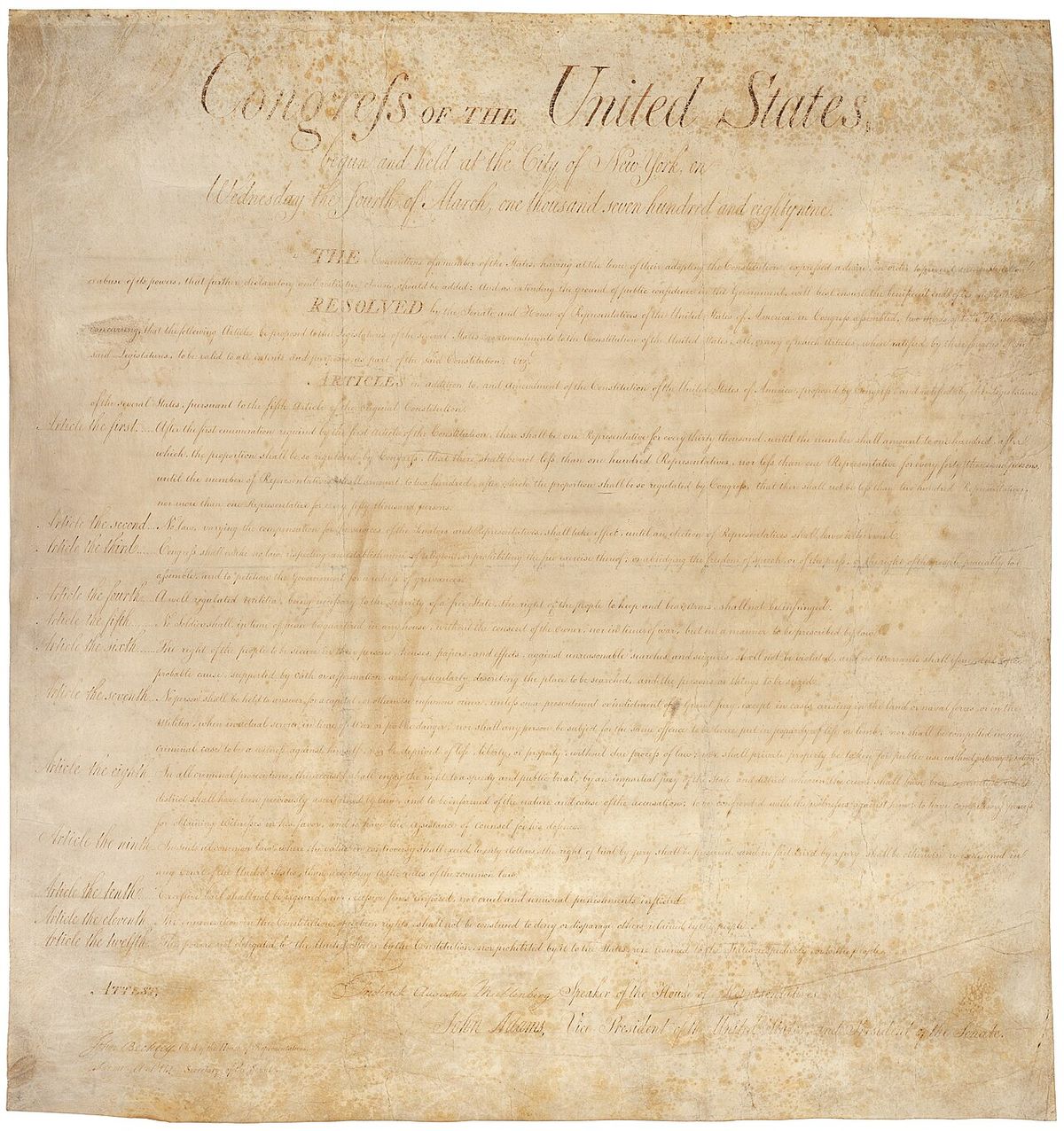
The Charter has been amended a small number of times since 1982. In 1983, section 25 was amended to provide more explicit recognition of Aboriginal rights and freedoms related to land claims. A decade later, in 1993, section 16.1 was added, affirming the equality of the English and French linguistic communities in New Brunswick regarding educational and cultural institutions. These changes reflect the evolving understanding of minority rights within the Canadian federation and demonstrate the formal process required for constitutional change. They show how the Charter can be updated to address specific national priorities.
There have also been significant, unsuccessful attempts to amend the Charter, primarily through comprehensive constitutional packages designed to secure Quebec's approval of the 1982 constitution. The Meech Lake Accord (1987) failed partly due to concerns it would weaken the Charter. The Charlottetown Accord (1992) also included proposals regarding the Charter, such as a social charter and a guarantee of a Canada-wide economic union. Both accords failed, leaving the Charter largely unchanged in its core structure since its inception. The failure of these accords shows the enduring political difficulty of achieving consensus on constitutional change in Canada.
Application and enforcement in the courts
The Charter's effectiveness relies on its enforcement by the judiciary. Section 24(1) allows anyone whose Charter rights have been infringed to apply to a court to obtain an appropriate and just remedy. This has led to a wide array of court-ordered remedies, including declarations that a law is invalid, stays of proceedings, and awards of damages. Section 24(2) gives courts the specific power to exclude evidence from a trial if its admission would bring the administration of justice into disrepute, a key protection against rights violations by police during investigations. This provision has had a major impact on criminal law and procedure, influencing how police conduct searches and interrogations.
When considering a Charter challenge, courts follow a structured analysis. They first determine whether a Charter right has been infringed. If so, they then consider whether the infringement is justified under section 1 as a reasonable limit. If not justified, the court will grant a remedy. The Supreme Court of Canada has developed a vast body of Charter jurisprudence that guides lower courts. Key principles of interpretation include a broad and purposive approach, meaning rights are interpreted in a large and liberal manner to achieve their underlying purpose. The court also considers the Charter's context, including Canada's multicultural heritage (section 27) and the equality of men and women (section 28). This interpretive approach has allowed the scope of Charter protections to expand over time to meet new social realities and legal challenges. Courts also sometimes consider international legal precedents from countries with similar rights protections.
Questions about Canadian Charter of Rights and Freedoms
What is the Canadian Charter of Rights and Freedoms?
The Canadian Charter of Rights and Freedoms is the bill of rights that forms the first part of the Constitution Act, 1982. It is the supreme law of Canada and guarantees fundamental political and civil rights to everyone in the country. The Charter was proclaimed into force on April 17, 1982, by Queen Elizabeth II. It applies to all levels of government and is enforced by the courts, which can strike down laws that violate its protections.
How is the Charter different from the Canadian Bill of Rights?
The Canadian Bill of Rights was a federal statute passed in 1960, while the Charter is part of the Constitution. The Bill of Rights only applied to the federal government and could be changed by a simple majority vote in Parliament. The courts were also reluctant to use it to invalidate laws. The Charter, being constitutional, applies to all governments and can only be amended through a complex constitutional process. It gives courts much stronger powers to enforce rights and has been used to strike down many laws.
What is the notwithstanding clause?
The notwithstanding clause is section 33 of the Charter. It allows Parliament or a provincial legislature to pass a law that operates despite certain Charter rights, specifically the fundamental freedoms (section 2), legal rights (sections 7-14), and equality rights (section 15). A government must expressly declare it is using the clause, and the declaration expires after five years but can be renewed. The federal government has never used it, but provinces like Quebec, Saskatchewan, Alberta, and Ontario have invoked it on specific issues.
Does the Charter protect me from discrimination by my employer or landlord?
Generally, no. The Charter primarily protects individuals from actions by governments and their agents, not from private individuals or businesses. For protection against discrimination in employment, housing, or services provided by private entities, you would rely on federal, provincial, or territorial human rights laws, such as the Canadian Human Rights Act. These statutes are designed to handle disputes in the private sector based on specific grounds like race, sex, or disability.
What are equality rights under the Charter?
Equality rights are guaranteed by section 15 of the Charter. It guarantees every individual equal protection and equal benefit of the law without discrimination based on race, national or ethnic origin, colour, religion, sex, age, or mental or physical disability. The Supreme Court has also extended these protections to grounds like sexual orientation. These rights came into effect in 1985, three years after the rest of the Charter.
How can a law that violates the Charter still be valid?
A law that violates a Charter right may still be valid under section 1, the limitations clause. This clause allows governments to justify certain infringements if they can prove the limit is reasonable and demonstrably justified in a free and democratic society. The Supreme Court applies the Oakes test to make this determination, which requires the government's objective to be pressing and substantial. Alternatively, governments can use the notwithstanding clause found in section 33 to override certain rights temporarily. This clause authorizes overrides of rights in sections 2 and 7 through 15 for renewable periods of up to five years.
Sources and further reading
- Canadian Charter of Rights and Freedoms (Wikipedia)
- The Canadian Charter of Rights and Freedoms (justice.gc.ca)
- About human rights | Canadian Human ... (chrc-ccdp.gc.ca)
- The Canadian Charter of Rights and Freedoms | CMHR (humanrights.ca)
Checked by the Nosy Mag desk. Last updated 2026-10-22.