Northwest Territories
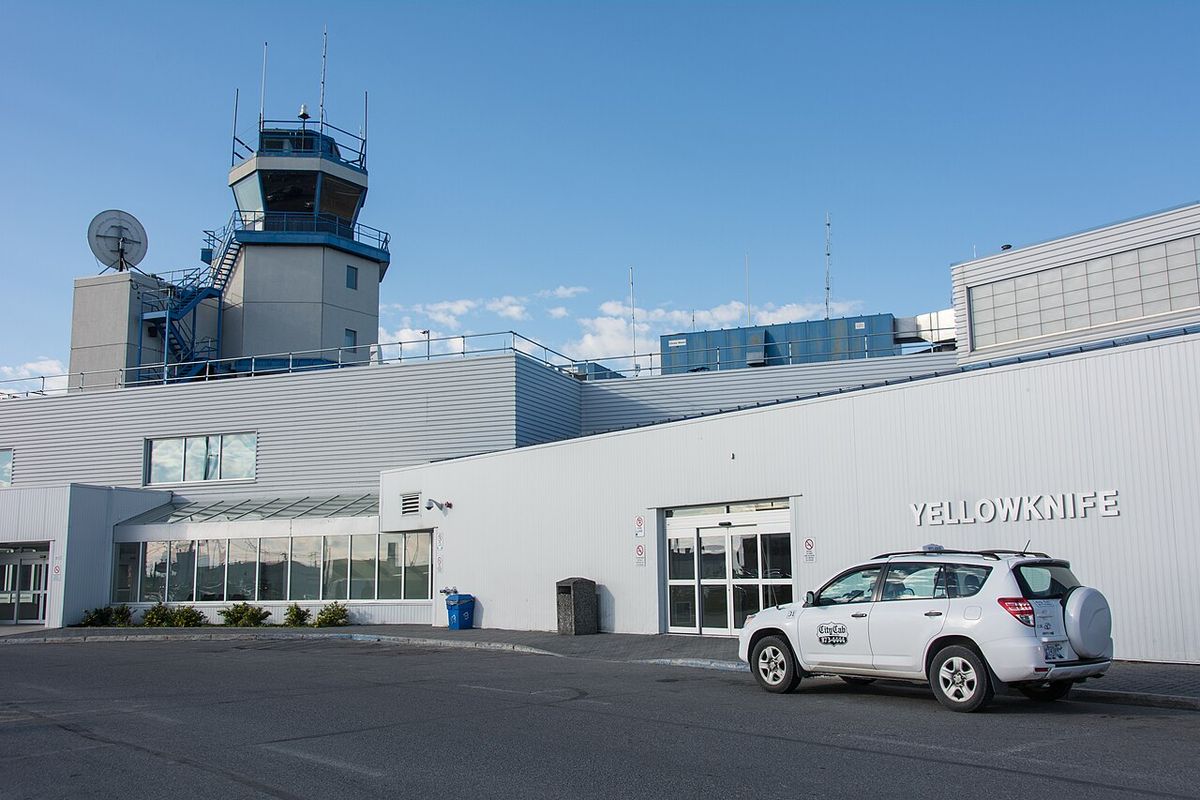
The Northwest Territories is a territory of Canada. It has a land area of approximately 1,127,711.92 square kilometres and an estimated 2026 population of 45,904, making it the second-largest and second-most populous of Canada's three northern territories. Under its modern borders, established on April 1, 1999, the territory consists of a large part of Denendeh, the traditional land of the Dene, and most of the Inuvialuit Settlement Region, the traditional land of the Western Canadian Inuit. Its capital and only city is Yellowknife, which became the territorial capital in 1967 following the Carrothers Commission and had a population of 20,340 in the 2021 census.
Geography and Climate
The Northwest Territories occupies a massive swath of northern Canada, with a land area of 1,183,085 square kilometres, roughly equal to France, Portugal, and Spain combined. It shares borders with two other territories, Yukon to the west and Nunavut to the east, and four provinces: British Columbia to the southwest, Alberta and Saskatchewan to the south, and Manitoba at a southeastern quadripoint. The territory's geography is defined by monumental natural features, including Great Bear Lake, the largest lake entirely within Canada, and Great Slave Lake, which at 614 metres deep is the deepest body of water in North America. Other significant landmarks are the Mackenzie River, the canyons of the Nahanni National Park Reserve, a UNESCO World Heritage Site, and Arctic islands such as Banks Island, Borden Island, Prince Patrick Island, and parts of Victoria Island and Melville Island. The highest point is Mount Nirvana near the Yukon border, with an elevation of 2,773 metres.
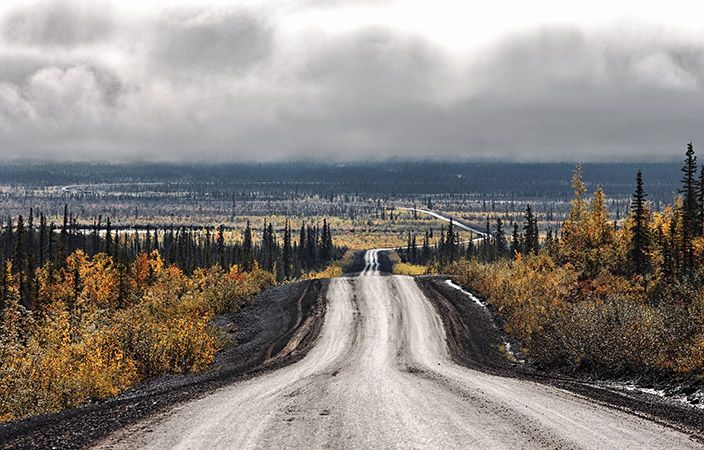
The climate varies dramatically from south to north due to the territory's immense size, with the southern mainland experiencing a subarctic climate and the northern islands and coast having a polar climate. Summers in the north are short and cool, with daytime highs typically between 14 and 17 degrees Celsius, whereas winters are long and severe, with highs often between -20 and -25 degrees Celsius and lows plunging to -30 or -35 degrees. Extreme temperatures are recorded across the territory, with southern summer highs occasionally reaching 36 degrees Celsius and northern winter lows sometimes hitting -50 degrees Celsius. The territory has a relatively dry climate, influenced by western mountains, with thunderstorms being rare in the north and tornadoes being extremely uncommon, though an EF-1 tornado did strike Fort Smith on June 2, 2019. Approximately half of the territory is above the tree line, resulting in sparse tree coverage in eastern and northern regions.
History and Indigenous Heritage
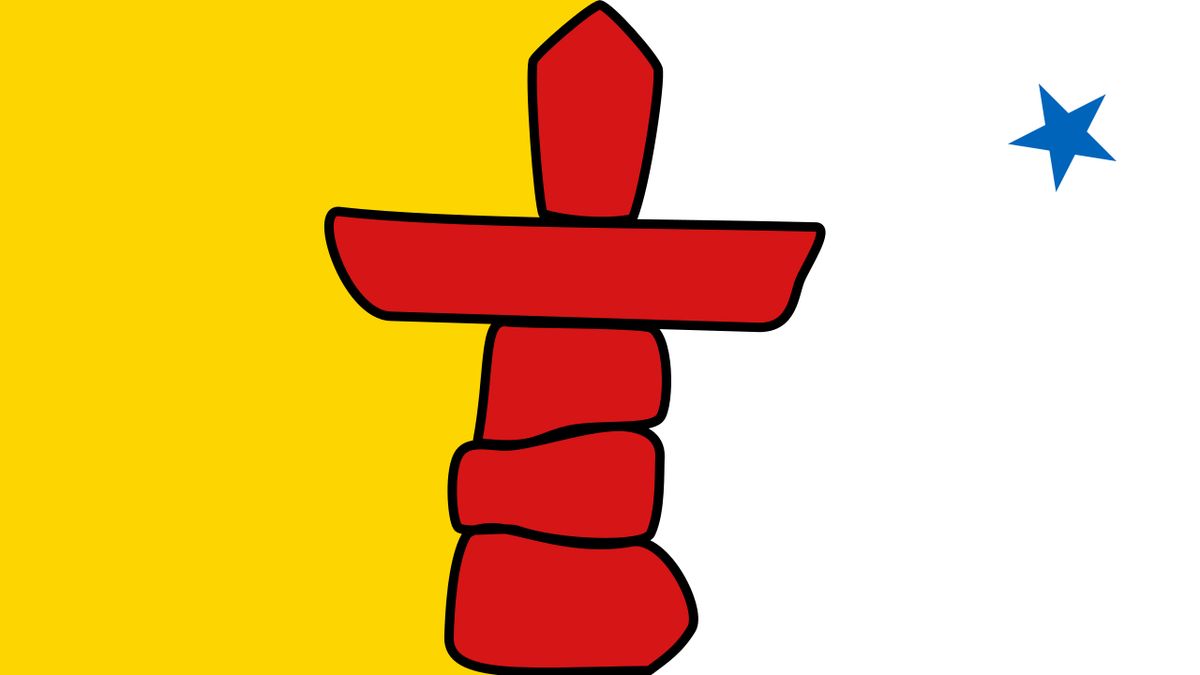
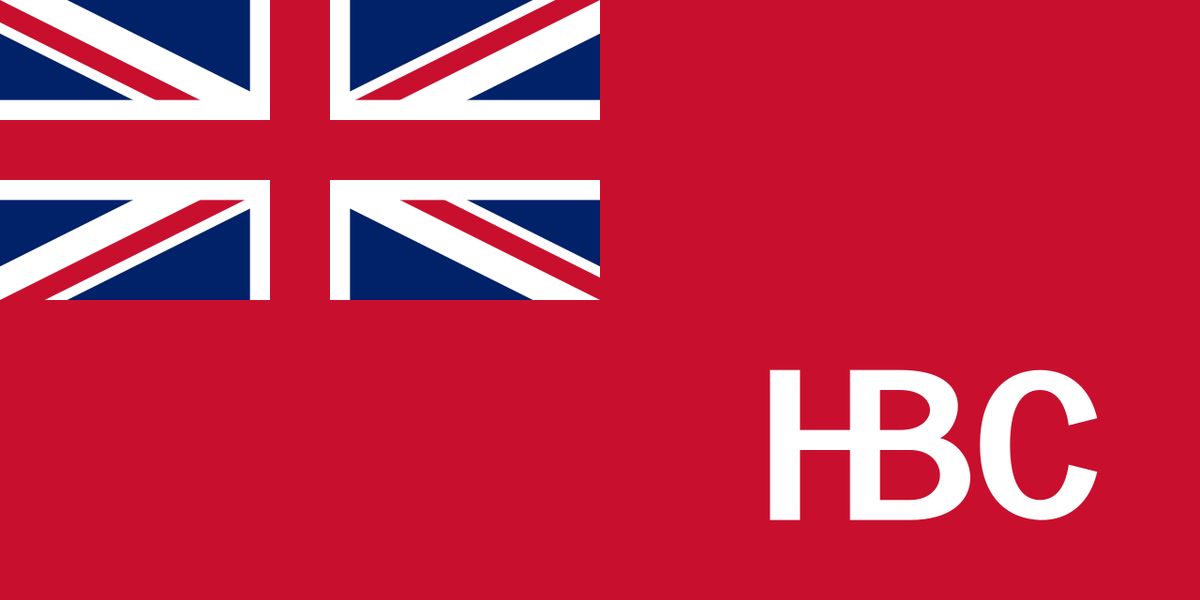
The land now known as the Northwest Territories is the traditional homeland of multiple Indigenous nations, whose territories overlap its modern borders. The most prominent is Denendeh, the vast country of the Dene peoples, which stretches across much of the territory and into Alaska and the prairie provinces. The northern coast is the home of the Inuvialuit, whose territory is the Inuvialuit Settlement Region, part of the greater Inuit Nunangat. Cree and Métis peoples also have historical ties to lands within the territory. European contact began with the fur trade, and the region fell under the commercial monopoly of the Hudson's Bay Company after its 1670 charter. The territory as a political entity originated on July 15, 1870, when the newly formed Dominion of Canada acquired Rupert's Land and the North-Western Territory from Britain, creating the enormous North-West Territories.
This original territory once comprised most of modern Canada's landmass, and its borders were subsequently reduced through a series of divisions to create or enlarge other jurisdictions. The British Arctic Territories were added in 1880, and the Yukon Territory was split off in 1898. The provinces of Alberta and Saskatchewan were created from the territory in 1905, and the territory's name was officially shortened to Northwest Territories in 1906. Manitoba, Ontario, and Quebec acquired their final northern expansions from the territory in 1912, and in 1925, the territory's boundaries were extended to the North Pole. The most recent division happened on April 1, 1999, when the eastern portion was separated to form the new territory of Nunavut, establishing the Northwest Territories' current borders. A dark chapter in this history began in 1867 with the opening of the first Canadian residential school in Fort Resolution, leading to the territory having the highest percentage of students in residential schools compared to any other area in Canada.
Demographics and Languages
The Northwest Territories is one of only two Canadian jurisdictions where Indigenous peoples form a majority of the population, accounting for 50.4 percent as of the 2021 census. The territory has experienced recent population challenges, with a net migration loss of 1,194 people during the 2024/2025 fiscal year, resulting from 680 inbound migrants and 1,874 outbound migrants. The 2016 census recorded a population of 41,786. Religious affiliation has shifted significantly, with 55.2 percent of the population identifying as Christian in 2021, down from 67.6 percent in 2001, while those reporting no religious affiliation more than doubled to 39.8 percent in the same period. The territory's linguistic landscape is exceptionally diverse, governed by an Official Languages Act that recognizes eleven official languages: Chipewyan, Cree, English, French, Gwichʼin, Inuinnaqtun, Inuktitut, Inuvialuktun, North Slavey, South Slavey, and Tłı̨chǫ. Residents have the right to use any of these languages in territorial courts and legislative proceedings, though laws are legally binding only in their French and English versions. In practical terms, while English-language services are universally available, access to services in other official languages is provided where significant demand exists.
As of 2014, there are 33 official communities in the Northwest Territories. These communities range in size from Yellowknife, the capital city, with a population of 19,569, to the hamlet of Kakisa with 36 people. Yellowknife has the largest number of Aboriginal peoples, with 4,520 people. Behchokǫ̀, with a population of 1,874, is the largest First Nations community, and Inuvik, with 3,243 people, is the largest Inuvialuit community. The territory contains one Indian reserve, the Hay River Reserve, located on the south shore of the Hay River.
Economy and Industry
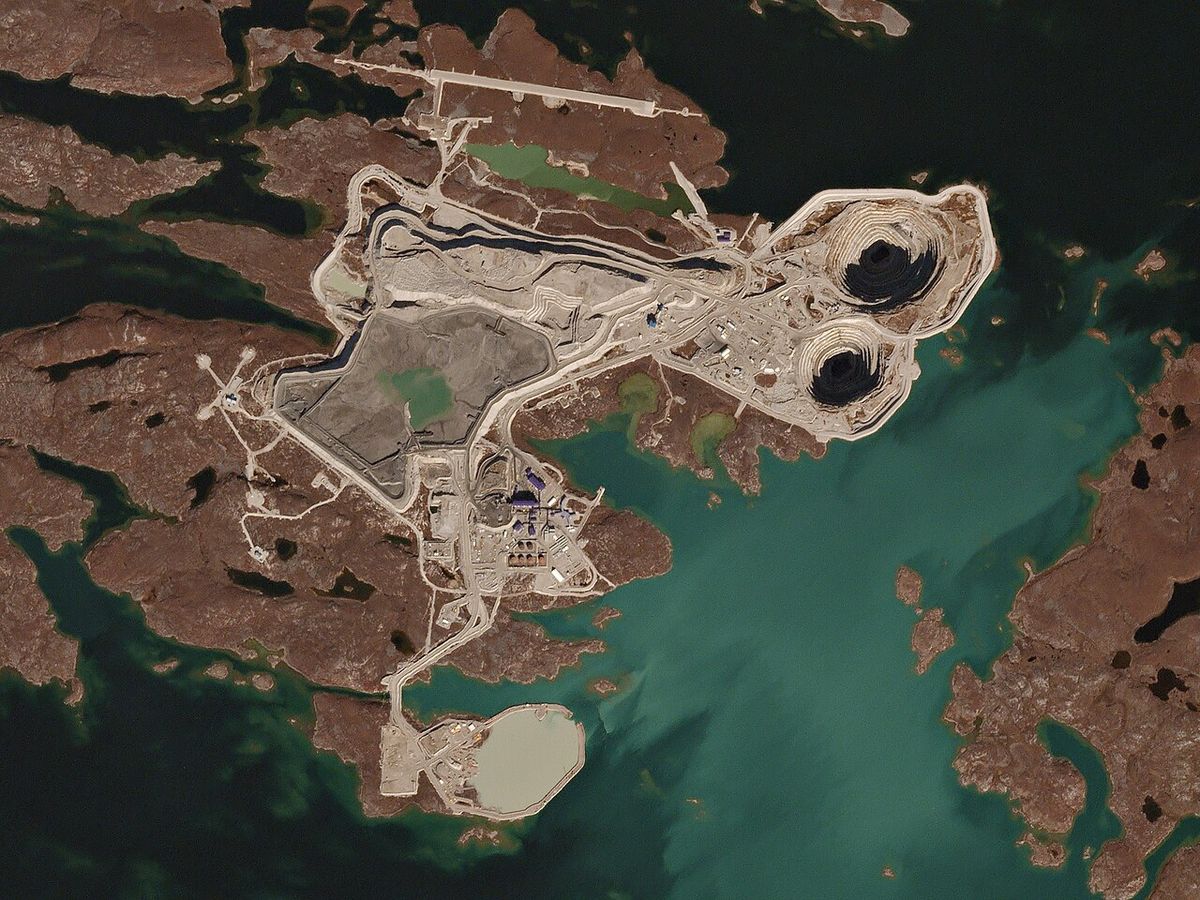
The Northwest Territories possesses a high-value, resource-based economy. Its gross domestic product was $4.856 billion in 2017, and it has the second-highest per capita GDP in Canada at $113,198 in 2024, trailing only Nunavut. The mining sector is the primary driver of this economic strength, with the territory being a globally significant producer of diamonds. Major global resource companies operate there, including Rio Tinto at the Diavik Diamond Mine and BHP at the EKATI mine. In 2010, the territory accounted for 28.5 percent of Rio Tinto's total diamond production, yielding 3.9 million carats, and 100 percent of BHP's production at 3.05 million carats. The territory's geological resources also include gold, natural gas, and petroleum, with BP being the only oil company currently producing oil there. Historically, the Eldorado Mine produced uranium for the Manhattan Project, along with radium, silver, and copper.
Tourism forms another vital economic pillar, attracting visitors primarily for wilderness experiences and the aurora borealis. The winter months see international travellers flock to Yellowknife to view the northern lights, and the territory contains significant protected areas managed by Parks Canada which contribute to its tourism appeal. These include Aulavik and Tuktut Nogait National Parks in the north, portions of Wood Buffalo National Park, and three national park reserves: Nááts'ihch'oh, Nahanni National Park Reserve, and Thaidene Nëné National Park Reserve. The natural beauty and ecological significance of these sites draw adventurers and nature enthusiasts from around the world, supporting local businesses and services across the territory.
Statutory Holidays in the Northwest Territories
The Northwest Territories observes eleven statutory holidays annually, providing residents with paid days off to celebrate national, cultural, and territorial occasions. These holidays are established under the NWT Employment Standards Act and are a key part of employment standards and community life. For the year 2026, the complete list of statutory holidays includes New Year's Day on January 1, Good Friday on April 3, Victoria Day on May 18, National Indigenous Peoples Day on June 21, Canada Day on July 1, the first Monday in August, Labour Day on the first Monday in September, the National Day for Truth and Reconciliation on September 30, Thanksgiving Day on the second Monday in October, Remembrance Day on November 11, and Christmas Day on December 25. Easter Monday and Boxing Day are not statutory holidays under the Act, though employers may choose to recognize them voluntarily.
To be eligible for statutory holiday pay, an employee must have been employed by the same employer for at least 30 days in the 12 months preceding the holiday. They must also have worked their scheduled shift before and after the holiday, unless absence was authorized by the employer or due to a valid reason like illness, for which proof such as a doctor's note may be required. Eligible employees who do not work on the holiday are entitled to a paid day off equal to their average day's pay, calculated based on recent earnings. If an employee is required to work on the statutory holiday, the employer must either provide a substitute paid day off at a later date or pay the employee premium wages of 1.5 times their regular rate for all hours worked on the holiday, in addition to their average day's pay for the holiday itself.
- New Year's Day: Thursday, January 1, 2026
- Good Friday: Friday, April 3, 2026
- Victoria Day: Monday, May 18, 2026
- National Indigenous Peoples Day: Sunday, June 21, 2026
- Canada Day: Wednesday, July 1, 2026
- Civic Holiday: Monday, August 3, 2026
- Labour Day: Monday, September 7, 2026
- National Day for Truth and Reconciliation: Wednesday, September 30, 2026
- Thanksgiving Day: Monday, October 12, 2026
- Remembrance Day: Wednesday, November 11, 2026
- Christmas Day: Friday, December 25, 2026
Government and Political Status
As a territory, the Northwest Territories has a different constitutional status and fewer inherent rights than Canadian provinces. Its government is headed by a Commissioner, who serves as the chief executive, and a Premier who leads the elected Legislative Assembly. The territory has been gradually acquiring more powers from the federal government through a process known as devolution, a key political issue since the territory began electing members in 1881. Former Premier Stephen Kakfwi notably advocated for greater territorial rights, including a larger share of resource revenues. The modern Legislative Assembly traces its origins to the North-West Territories Council created in 1875, which became fully elected by 1888 and was led by Premier Frederick Haultain. Haultain had recommended the region that became Alberta and Saskatchewan remain a single province named Buffalo, but the federal government under Sir Wilfrid Laurier created two separate provinces in 1905.
The territory's political evolution is marked by its shrinking borders and the ongoing discussion about its name. Since the Yukon split in 1898 and Nunavut in 1999, the name Northwest Territories is geographically less accurate. There have been public proposals to change the name to an Indigenous term such as Denendeh, a suggestion championed by former Premier Kakfwi. In a lighter vein, the proposal to rename the territory Bob originated as a prank but gained notable popularity in public opinion polls for a time. The territory's extensive land borders make it the jurisdiction with the most interprovincial and interterritorial boundaries in Canada, touching Yukon, Nunavut, British Columbia, Alberta, and Saskatchewan, and meeting Manitoba at a quadripoint.
Key Economic and Demographic Indicators
The Northwest Territories' economy and population present a distinct profile within Canada, characterized by high economic output per person coupled with demographic challenges. The territory's reliance on non-renewable resource extraction, particularly diamonds, drives its substantial GDP but also creates economic volatility. Meanwhile, population stability is affected by migration patterns, with more people leaving than arriving in recent years. The following table illustrates key comparative figures related to the territory's economy and population trends over recent periods, highlighting its unique position in the Canadian federation.
| Indicator | Value | Year/Period |
|---|---|---|
| Gross Domestic Product (GDP) | $4.856 billion | 2017 |
| GDP per capita | $113,198 | 2024 |
| Estimated Population | 45,904 | 2026 |
| Net Migration | -1,194 | 2024/2025 Fiscal Year |
| Indigenous Population Share | 50.4% | 2021 Census |
| Population with No Religious Affiliation | 39.8% | 2021 Census |
The territory's government operates through a consensus system instead of party politics. All Members of the Legislative Assembly are elected as independents. After each general election, the new assembly elects the premier and the speaker by secret ballot. Seven MLAs are also chosen as cabinet ministers, with the remainder forming the opposition. The current premier is R.J. Simpson, selected by MLAs on December 7, 2023, following the general election on November 14, 2023. The Commissioner of the Northwest Territories is Gerald Kisoun.
Questions about Northwest Territories
Who is eligible for statutory holiday pay in the NWT?
To be eligible for statutory holiday pay in the Northwest Territories, an employee must have been employed by the same employer for at least 30 days in the 12 months before the holiday. The employee must also have worked their last scheduled shift before the holiday and their first scheduled shift after it, unless their absence was authorized by the employer or due to a valid reason such as illness. Eligible employees who do not work on the holiday receive a paid day off equal to their average day's pay. This average is calculated from the employee's wages in the four weeks before the holiday.
What happens if I work on a statutory holiday in the NWT?
If you work on a statutory holiday in the Northwest Territories, your employer must compensate you in one of two ways. The first option is to provide you with a substitute paid day off at a later date. The second option is to pay you 1.5 times your regular wage for all hours worked on the holiday, in addition to your average day's pay for the holiday itself. This ensures employees receive proper compensation for working on a public holiday. The specific method of compensation may depend on the employer's policy or the employment agreement.
What is the population of the Northwest Territories?
The estimated population of the Northwest Territories for 2026 is 45,904 people. According to the 2021 census, the population of its capital and only city, Yellowknife, was 20,340. The territory has experienced recent population decline due to outmigration, with a net loss of 1,194 people during the 2024/2025 fiscal year. A key demographic feature is that Indigenous peoples constitute a majority of the population, accounting for 50.4 percent of residents as of the 2021 census.
When did the Northwest Territories get its current borders?
The current borders of the Northwest Territories were established on April 1, 1999. This date marks the creation of the new territory of Nunavut from the eastern portion of the then-existing Northwest Territories. The territory's borders have been redrawn several times since it entered Confederation on July 15, 1870. Previous divisions created the Yukon Territory in 1898 and the provinces of Alberta and Saskatchewan in 1905.
What are the statutory holidays in the Northwest Territories for 2026?
The statutory holidays in the Northwest Territories for 2026 are New Year's Day on January 1, Good Friday on April 3, and Victoria Day on May 18. Other holidays include National Indigenous Peoples Day on June 21, Canada Day on July 1, and the first Monday in August. The list continues with Labour Day on September 7, the National Day for Truth and Reconciliation on September 30, and Thanksgiving Day on October 12. It concludes with Remembrance Day on November 11 and Christmas Day on December 25, as officially listed for the territory.
What languages are official in the Northwest Territories?
The Northwest Territories officially recognizes eleven languages under its Official Languages Act. These languages are Chipewyan, Cree, English, French, Gwichʼin, Inuinnaqtun, Inuktitut, Inuvialuktun, North Slavey, South Slavey, and Tłı̨chǫ. This recognition reflects the territory's diverse Indigenous heritage. Residents have the right to use any of these languages in territorial courts and legislative proceedings. However, laws are legally binding only in their French and English versions.
Sources and further reading
- Northwest Territories (Wikipedia)
- Statutory Holidays | My HR (my.hr.gov.nt.ca)
- Statutory Holidays in Northwest Territories: 2026 Guide (ebsource.com)
Checked by the Nosy Mag desk. Last updated 2026-10-25.