National Policy
The National Policy was a Canadian economic program introduced by Prime Minister Sir John A. Macdonald's Conservative Party in 1876. After Macdonald led the Conservatives to victory in the 1878 federal election, his government began implementing the policy in 1879. The policy's three central pillars were high protective tariffs on imported manufactured goods, the construction of major infrastructure like the Canadian Pacific Railway, and the active promotion of immigration to settle Western Canada. It lasted from 1879 until sometime in the early 1950s, deeply shaping Canada's economic structure, political debates, and national identity.
Origins and political context
The National Policy was formally announced by Sir John A. Macdonald and the Conservative Party in 1876. Macdonald, who had been Canada's first prime minister from 1867 until his government's resignation in 1873 over the Pacific Scandal, was in opposition when he developed the policy. He campaigned vigorously on it during the 1878 federal election, contrasting his vision of a protected national economy with the Liberal Party's support for free trade under Prime Minister Alexander Mackenzie. Macdonald's Conservatives won a decisive victory, returning him to power and providing the mandate to implement the policy starting in 1879. The policy was presented as a necessary strategy to unify the new country economically, reduce dependence on the United States, and fulfill promises made to provinces like British Columbia upon their entry into Confederation. The term National Policy originally aimed to create a true country with a national economy, and over time it became associated with the entire Tory platform for developing the economy.

The three pillars of the policy
The National Policy was built upon three interlocking components designed to stimulate growth and bind the country together. The first pillar was the implementation of high protective tariffs on imported manufactured goods, particularly from the United States. These tariffs, introduced in the 1879 budget, were intended to shield fledgling Canadian industries from American competition, allowing them to grow and create a more diversified industrial base centred in Ontario and Quebec. The second pillar involved massive infrastructure investment, most notably the completion of the Canadian Pacific Railway, which was a direct commitment to British Columbia. The third pillar focused on settling the Canadian West through aggressive immigration promotion and land policy, aiming to populate the Prairies with farmers to create a domestic market for eastern manufactured goods and a source of agricultural exports. Macdonald combined these three elements as a strategy for the post-Confederation economy, enabling and supporting population growth and railway building.
The policy's components were deliberately synergistic. High tariffs protected eastern industries, generating government revenue. This revenue helped fund the construction of the Canadian Pacific Railway. The railway then enabled the settlement of the West with immigrants, who would consume goods from the protected eastern industries and ship agricultural products eastward via the railway. A growing population and strong internal trade would, in theory, create a self-sustaining national economy less vulnerable to American influence. Macdonald hoped that by creating a strong manufacturing base in Canada, the nation would become more secure and less reliant on the United States. He was also closely linked to the Montreal and Toronto business interests that would benefit from such a policy. These business interests played an important role in keeping the Conservative Party in office until 1896. The policy quickly became one of the most central aspects of Canadian politics.
- High protective tariffs shielded Canadian industries from foreign competition, particularly American.
- The Canadian Pacific Railway provided a transcontinental transportation link, fulfilling a promise to British Columbia.
- Immigration policies aimed to settle the Canadian West with farmers to create a domestic market.
- The synergy aimed to create a self-sufficient east-west national economy less reliant on the United States.
- The policy was central to Conservative Party platforms and kept them in power until 1896.
Implementation and tariff structure
After its launch in 1879, the National Policy's tariff regime became entrenched in Canadian economic life. Tariffs were raised on a majority of manufacturing goods made outside of Canada, making American imported goods more expensive than Canadian-made equivalents. This was a direct response to the failure of Alexander Mackenzie's Liberal government to raise tariffs in 1876. The policy was also a reaction to American protectionism, as the United States had higher tariffs, which prevented Canadian firms from competing there. Canadian producers were particularly hurt by American producers dumping surplus goods in Canada, a practice the tariffs aimed to stop. The protective policy showed positive responses in the economy with new industries flourishing in the 1880s. In 1897, under Liberal Prime Minister Wilfrid Laurier, the policy was adapted to include Imperial Preference. This system offered preferential tariff rates for imports from Britain, initially reduced by one-eighth, rising to one-quarter in 1898 and one-third in 1900. Canadian imperial preference proved very effective. Economists Keay and Varian have estimated that, within just a few years, Canadian imperial preference had the effect of doubling the value of imports from Britain, relative to the value of imports from Britain in the absence of the policy. Laurier found imperial preference a convenient vehicle for reducing tariffs, as it appealed to the Empire-mindedness of Conservatives.
Regional reception and political impact
The National Policy generated starkly different reactions across the country, creating a political divide that endured for decades. In central Canada, particularly Ontario and Quebec, the policy was widely supported by industrialists, workers, and politicians who benefited from the protected manufacturing sector. This support was a key factor in the Conservative Party's dominance in the region until 1896. Conversely, in Western Canada, the policy was extremely unpopular. Prairie farmers resented the high tariffs on manufactured goods they needed, such as farm machinery, which increased their costs. They believed the policy favoured eastern interests at their expense, as they sold their wheat on the competitive international market but bought supplies in a protected domestic one. This western discontent fuelled the rise of protest movements, most notably the Progressive Party of Canada in the 1920s. In its platform, the 'New National Policy', it advocated for free trade directly opposing Macdonald's original vision. When the Liberals under Laurier campaigned on a promise to keep the National Policy in place in 1896, they recognized it was too popular in Ontario and Quebec to end. However, when the Liberals campaigned more explicitly on free trade in the 1911 election, they lost, demonstrating the enduring political power of protectionist sentiment in central Canada.
Economic assessment and mixed legacy
Historians and economists have long debated the overall impact and success of the National Policy, leading to a mixed assessment. In general, economists argue that it increased prices and lowered Canada's efficiency and ability to compete in the world. By not becoming merged into the larger, more efficient American economy, Canada built too many monopolistic firms and too many small inefficient factories with high prices for consumers. This protectionist system may have slowed long-term economic growth by insulating industry from competitive pressures. From a historical and political perspective, however, the policy is often viewed more favourably as a necessary expense to create a unified nation independent of the United States. Proponents argue it was an essential tool to foster a unified national economy, develop critical infrastructure like the railways, and secure Canadian sovereignty. There was a boon to citizens as there was no income tax during much of this period, making the higher price of manufactured goods easier to bear. The policy's legacy is that it deliberately shaped Canada's economic geography and industrial structure for generations, establishing a pattern of east-west trade and central Canadian industrial dominance that persisted. After Wilfrid Laurier led the Liberal Party to power in the 1896 election, the Liberals adapted to this governing system and to the principles of the National Policy, and tariffs stayed at high rates. It was only under the Liberal governments of William Lyon Mackenzie King and Louis St. Laurent beginning in the 1920s that protectionist tariff rates began to be systematically cut, marking the start of the policy's decline.

Dismantling and successor frameworks
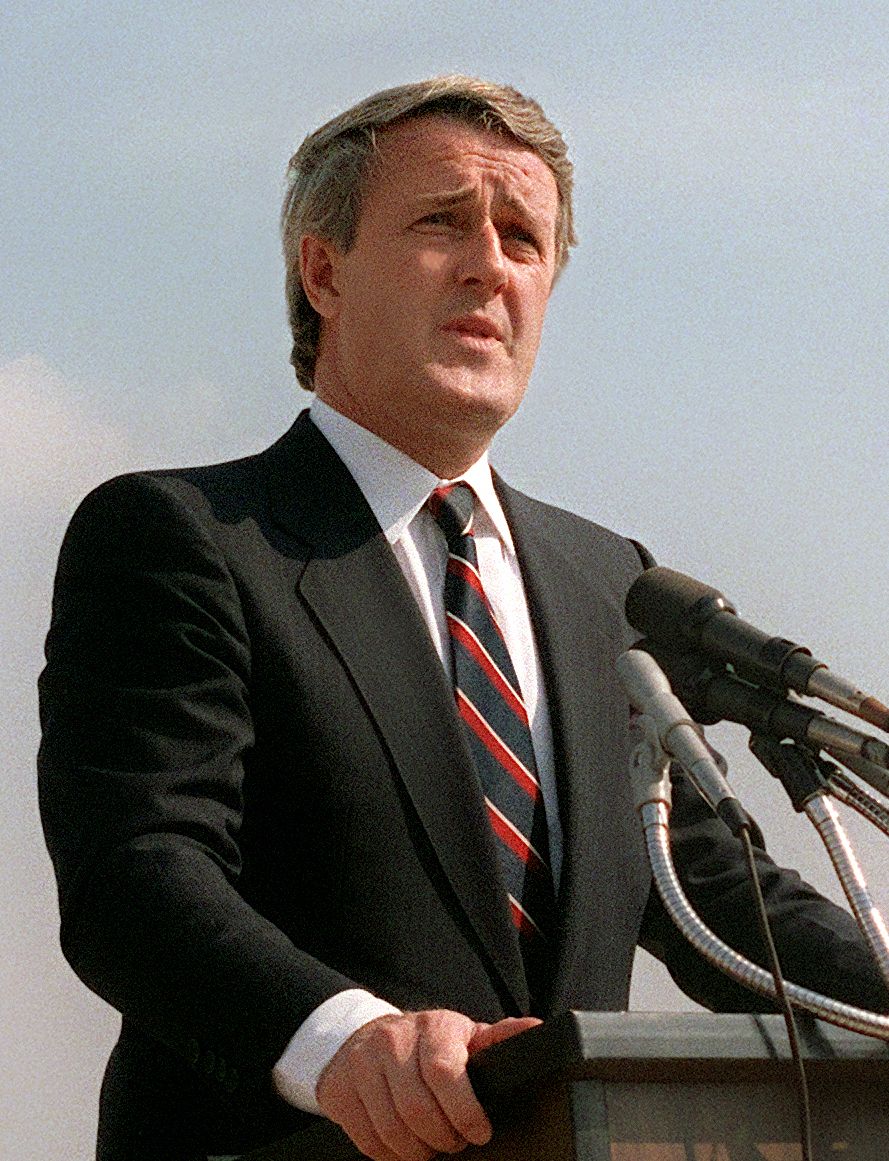
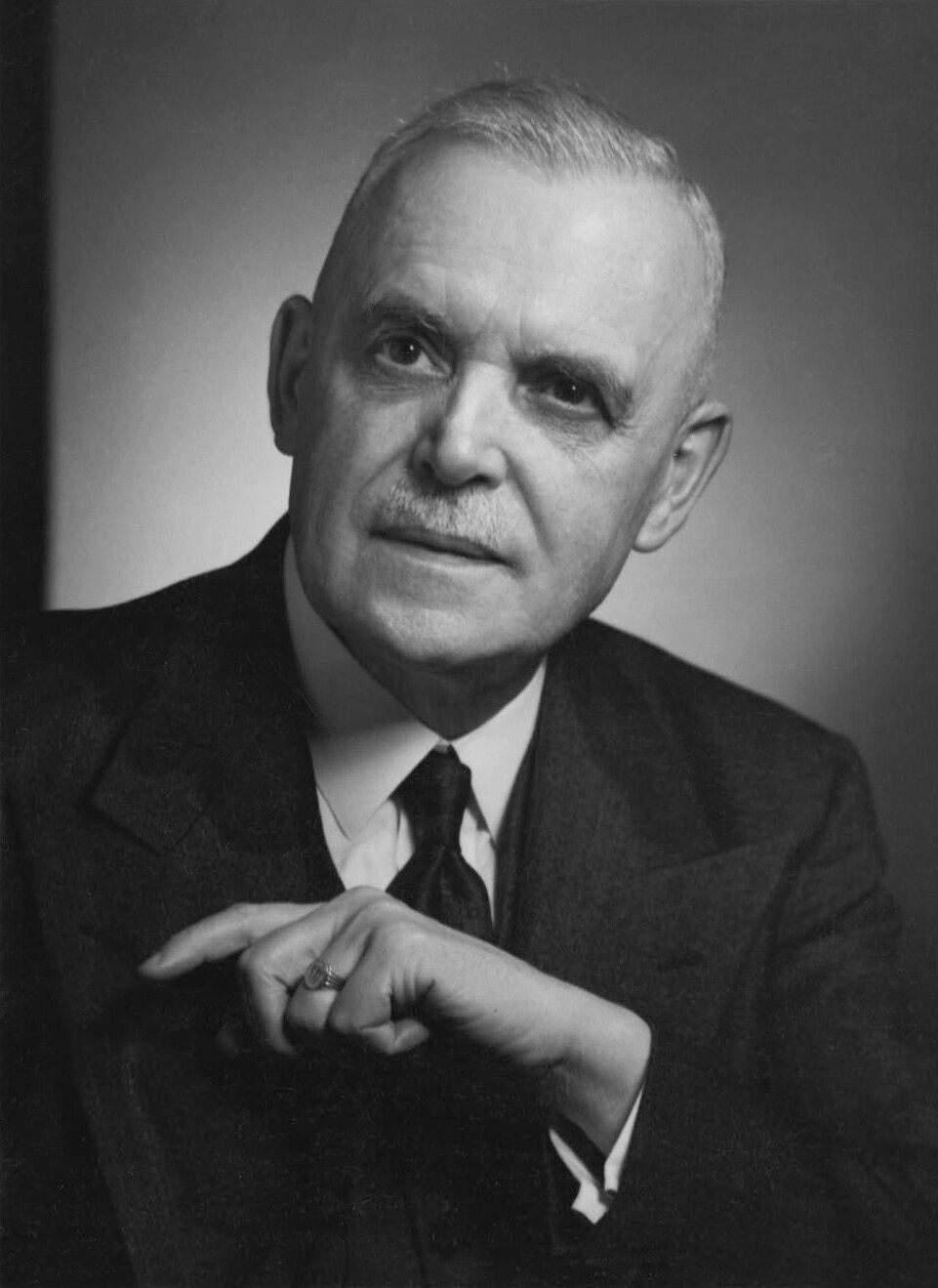
The National Policy was slowly dismantled during many years of Liberal rule under William Lyon Mackenzie King and Louis St. Laurent beginning in the 1920s. This dismantling occurred as the United States was lowering its tariffs, changing the international context. Economic integration surged during World War II, creating new pressures and opportunities for continental trade. A major step was the 1965 Canada-United States Automotive Products Agreement (Auto Pact), which made the automobile industry in the two nations fully integrated. However, complete free trade was not achieved until 1988 with the Canada-United States Free Trade Agreement brought in by Brian Mulroney's Progressive Conservative government, which was the final symbolic end of the protectionist philosophy. Scholars like Lorraine Eden and Maureen Appel Molot have argued that Canada has moved through distinct national policy phases since 1867. They identify the 'National Policy' of defensive expansionism from 1867 to 1940, which relied on the tariff, railway construction, and land settlement. This was followed by a period of compensatory liberalism from 1941 to 1981, which combined a commitment to the GATT system, Keynesian macroeconomic policies, and the construction of a domestic social welfare net. The current phase, beginning in 1982, is termed market liberalism, relying on Canada-US free trade and NAFTA, market-based policies, and fiscal restraint. They argue for a potential fourth policy called 'strategic integration,' consisting of free trade, building a national telecommunications infrastructure, and human capital development.
The National Policy in modern context
While the original National Policy's protectionist tools have been abandoned, the concept of a coordinated federal strategy for national economic development remains deeply relevant. Modern governments continue to launch comprehensive agendas focused on nation-building through infrastructure, skills training, and strategic investment, reflecting the enduring desire to shape the country's economic destiny. For example, the 2026 federal Spring Economic Update, titled 'Canada Strong for All,' was delivered on the anniversary of the federal election and advanced a nation-building agenda with new spending focused on four main pillars. These pillars were a new sovereign wealth fund, labour and skills training, housing affordability, and community safety, echoing the broad, multi-faceted approach of the original policy. Its centrepiece was the proposed 'Canada Strong Fund,' a $25 billion sovereign wealth fund designed to provide Canadians a vehicle to invest in Canadian projects and companies, managed by a new Crown corporation. This directly echoes the National Policy's goal of fostering domestic economic capacity and keeping investment within the country. In support of a major projects agenda, the update also advanced $6 billion to recruit, train, and hire 80,000 to 100,000 new Red Seal skilled trades workers by 2030-31 through a 'Team Canada Strong' plan. Contemporary national commitments on cross-cutting issues demonstrate how the federal government continues to use coordinated policy frameworks to address national challenges. For instance, the RCMP updated its National Policy on Hate Crime in January 2026 to include references to antisemitism as part of wider National Commitments to guide collective action, showing the evolution of the 'national policy' concept from pure economics to broader social and safety objectives.
Comparative policies and lasting influence
The National Policy was not a unique historical phenomenon, and it can be compared to similar nation-building economic strategies in other countries. It bears direct comparison to the American System, an economic plan advanced in the United States in the early 19th century that also emphasized protective tariffs, internal improvements like roads and canals, and a national bank. The Australian settlement, a similar set of policies including protectionism, industrial arbitration, and white immigration restriction, played a comparable role in shaping that country's development. The lasting influence of the National Policy is evident in several enduring features of Canadian life. It entrenched a political economy where federal policy is often scrutinized through a regional lens, particularly regarding who benefits and who bears costs. The east-west transportation corridors it championed, primarily the railways, established the basic skeleton of Canada's internal trade network. Finally, it established a precedent for active federal government intervention in the economy for nation-building purposes, a precedent that later governments have followed, whether through the welfare state, infrastructure funds, or modern innovation strategies. This ensures the spirit of a coordinated national project continues, as seen in policies like the 1965 Auto Pact and the 1988 Free Trade Agreement which succeeded it.
Questions about National Policy
What were the main goals of the National Policy?
The National Policy had three primary interconnected goals. First, it aimed to protect and develop Canadian manufacturing industries by imposing high tariffs on imported goods, mainly from the United States. Second, it sought to physically unite the country through massive infrastructure projects, most importantly the completion of the Canadian Pacific Railway. Third, it promoted the settlement of Western Canada through immigration to create a domestic market for eastern goods and an agricultural export sector, thereby building a self-sufficient national economy and reducing reliance on the United States.
Who created the National Policy and when was it implemented?
The National Policy was created by Sir John A. Macdonald and his Conservative Party. It was first announced as a platform in 1876 while the Conservatives were in opposition. After Macdonald led the party to victory in the 1878 federal election, defeating Alexander Mackenzie's free-trade Liberals, his government began implementing the policy in 1879. The core protective tariffs were introduced in the budget of that year, marking the official start of the National Policy era.
Why was the National Policy unpopular in Western Canada?
The National Policy was deeply unpopular in Western Canada because it was seen as benefiting eastern industrial interests at the expense of western farmers. Prairie farmers had to pay high prices for protected manufactured goods like farm machinery and household items, which increased their cost of living and production. At the same time, they sold their wheat on the competitive international market, not within a protected system. This imbalance created lasting resentment and a sense that federal policy favoured central Canada, fueling western political protest movements like the Progressive Party for decades.
How did the Liberal Party under Wilfrid Laurier view the National Policy?
The Liberal Party under Wilfrid Laurier pragmatically accepted the National Policy. While many Liberals traditionally supported free trade, the policy was too popular in Ontario and Quebec to end. During the 1896 election, Laurier and the Liberals campaigned on a promise to keep the National Policy in place. Once in power, the Liberals adapted to this governing system and its principles. Tariffs stayed at high rates under Laurier's government, which expanded the policy by incorporating Imperial Preference in 1897, providing preferential tariff rates for imports from Britain.
When and why was the National Policy ended?
The National Policy was slowly dismantled over many years, beginning under Liberal Prime Ministers William Lyon Mackenzie King and Louis St. Laurent in the 1920s. Tariff rates were cut as the United States lowered its tariffs and economic integration between the two countries surged, particularly during World War II. A key step was the 1965 Canada-United States Automotive Products Agreement (Auto Pact). The protectionist philosophy was effectively concluded with the Canada-United States Free Trade Agreement, which was implemented in 1988 under Prime Minister Brian Mulroney's Progressive Conservative government.
What is the historical significance of the National Policy for Canada?
The National Policy is historically significant for deliberately shaping Canada's economic geography and industrial structure for generations. Historians often view it positively as a necessary expense to build a nation independent of the United States. However, economists argue it increased prices and lowered Canada's economic efficiency by fostering monopolistic firms. The policy was extremely popular in central Canada but deeply unpopular in the west, fueling regional tensions that contributed to the rise of the Progressive Party in the 1920s and established enduring patterns of federal economic intervention.
Sources: Wikipedia and current public reporting, checked by the Nosy Mag desk. Last updated 2026-10-26.