Pierre Poilievre
Pierre Marcel Poilievre is a Canadian politician who has served as the leader of the Conservative Party and leader of the Official Opposition since September 2022. He was first elected as a member of Parliament in the 2004 federal election, initially representing the Ontario riding of Nepean, Carleton. After losing his seat in Carleton in the April 2025 general election, he won a by-election on August 18, 2025, to represent the Alberta riding of Battle River, Crowfoot. As Opposition Leader, Poilievre has focused his political agenda primarily on economic issues, including the cost of living, reducing personal income taxes, and repealing the federal carbon tax.
Early Life and Entry into Politics
Pierre Marcel Poilievre was born on June 3, 1979, in Calgary, Alberta, to 16-year-old high school student Jacqueline Farrell. He was adopted shortly after birth by schoolteachers Marlene and Donald Poilievre. Raised in suburban Calgary with his adopted younger biological half-brother, Patrick, he was brought up in the Catholic faith and participated in typical childhood activities like playing ice hockey and camping. His political awakening began early, as he attended an Alberta Tory riding-association meeting at age 14 after an injury ended his wrestling involvement. This experience sparked a deep interest in politics, leading him to read influential works like Milton Friedman's Capitalism and Freedom and become active in the Reform Party and the Progressive Conservative Association of Alberta. By age 16, he was selling party memberships for Jason Kenney and canvassing for political campaigns, and he served as a delegate to the Reform Party's 1996 national convention in Vancouver at age 17.
Poilievre attended Henry Wise Wood High School, graduating in 1997, and later enrolled at the University of Calgary to study international relations. While a student, he worked various jobs, including corporate collections for Telus and a brief stint as a journalist for the conservative weekly Alberta Report. His university years were marked by political activism, including staging a protest against a student union that tried to block Reform Party campaigning on campus. In 1999, as a second-year student, he won $10,000 and a four-month internship at Magna International as a finalist in its essay contest with a submission titled 'Building Canada Through Freedom' which argued for a two-term limit for MPs. He served as president of the University of Calgary's Young Conservatives Club, where he clashed with future political rival Patrick Brown over the leadership of Progressive Conservative leader Joe Clark.
Early Career and Work for the Canadian Alliance
In 2000, before completing his degree, Poilievre moved into professional political work by helping to organize the 'Organization to Draft Stockwell Day', a website campaign to recruit Alberta Treasurer Stockwell Day as leader of the Canadian Alliance. He worked as a campaign organizer, making fundraising and canvassing calls with a group dubbed the 'Fight Club'. After Day became Leader of the Official Opposition, Poilievre left Calgary and university to work as an advisor to Day in Ottawa, though he later completed his degree through online coursework with Athabasca University, graduating with a Bachelor of Arts in international relations from the University of Calgary in 2008. In 2002, following Prime Minister Jean Chrétien's retirement announcement, Poilievre co-wrote an op-ed with Ezra Levant advocating for the merger of the Canadian Alliance and Progressive Conservative parties. He also served as campaign communication director for Levant's brief candidacy in the 2002 Calgary Southwest by-election before Levant withdrew to allow Stephen Harper to run.
In 2003, Poilievre co-founded the political communications and research firm 3D Contact Inc. with business partner Jonathan Denis, who later became an Alberta Cabinet minister. This venture provided services in polling, research, and political communications for conservative clients. Later that year, with the successful merger of the Canadian Alliance and Progressive Conservatives into the new Conservative Party of Canada, Poilievre prepared to run for federal office. He secured the Conservative nomination in the Ontario riding of Nepean, Carleton, setting the stage for his entry into Parliament in the 2004 federal election at the age of 24.
Parliamentary Career from Backbencher to Minister
Pierre Poilievre was first elected as the member of Parliament for Nepean, Carleton in the 2004 federal election, defeating Liberal incumbent and cabinet minister David Pratt. At age 25, he and Andrew Scheer were the youngest members of the new Conservative caucus, which formed the Official Opposition to a Liberal minority government. As a backbencher, Poilievre was active in proposing legislation and advocating for local issues. He introduced several private member's bills during this period, each reflecting his early political interests in accountability and local governance.
- Bill C-414, introduced on June 20, 2005, aimed to prevent the federal government from charging rent to non-profit hospitals.
- Bill C-383, introduced on May 11, 2005, proposed a mechanism to recall Members of Parliament through a petition.
- Bill C-456, introduced on November 24, 2005, sought to insert parental responsibility into the Criminal Code for negligence contributing to a child's offence.
Following the Conservative victory in the 2006 election, Prime Minister Stephen Harper appointed Poilievre as Parliamentary Secretary to the President of the Treasury Board, John Baird, where he helped oversee the Federal Accountability Act. Poilievre was re-elected with over 50 percent of the vote in his riding in the 2006, 2008, and 2011 elections. After the 2008 election, Harper appointed him parliamentary secretary to the prime minister, and he was later assigned to roles including the Special Panel on Employment Insurance and the Information, Privacy and Ethics Committee. During this period, he became known as the Conservative Party's 'attack dog' for his aggressive partisan tactics. In a 2013 cabinet shuffle, Harper promoted Poilievre to the role of Minister of State for Democratic Reform in July 2013. In this challenging portfolio, he introduced the Fair Elections Act (Bill C-23) in 2014, which expanded acceptable voter ID but eliminated the vouching system, drawing criticism from election experts. He also introduced the Citizen Voting Act (Bill C-50) in response to a court ruling on expatriate voting rights. In a subsequent shuffle in February 2015, Poilievre was promoted to Minister of Employment and Social Development, replacing Jason Kenney, while retaining his democratic reform responsibilities and taking on the role of minister responsible for the National Capital Commission.
Conservative Party Leadership and the 2025 Election
After the Conservative Party's defeat in the 2015 election, Poilievre served in opposition roles, most notably as the party's shadow minister for finance from 2017 to 2022. He launched a campaign for the Conservative Party leadership in 2022, positioning himself as a populist champion of economic issues and 'common sense' policies. Poilievre won the leadership election decisively on the first ballot on September 10, 2022, securing 68.15% of points. As leader of the Official Opposition, his platform focused heavily on affordability, pledging to reduce the budget deficit, cut personal income taxes, defund the CBC, and repeal federal carbon pricing and other 'anti-energy' laws. He led the Conservative Party into the 2025 federal election.
The 2025 election campaign was marked by significant volatility following the resignation of Liberal Prime Minister Justin Trudeau and controversial rhetoric from US President Donald Trump about Canada. The Conservative Party increased its seat count from 120 to 144 and achieved its largest popular vote share since the party's 2003 founding, but fell short of forming government. The Liberal Party, under new leader Mark Carney, was re-elected with a minority government. Poilievre lost his own seat in Carleton to Liberal candidate Bruce Fanjoy, receiving 39,585 votes (46%) to Fanjoy's 43,900 votes (51%). Following this defeat, he contested a by-election in the safe Conservative riding of Battle River, Crowfoot in Alberta, triggered by the resignation of MP Damien Kurek. Poilievre won the by-election on August 18, 2025, with almost 81 percent of the vote, returning to the House of Commons as MP for that riding and continuing as Opposition Leader.
Policy Positions and Political Identity
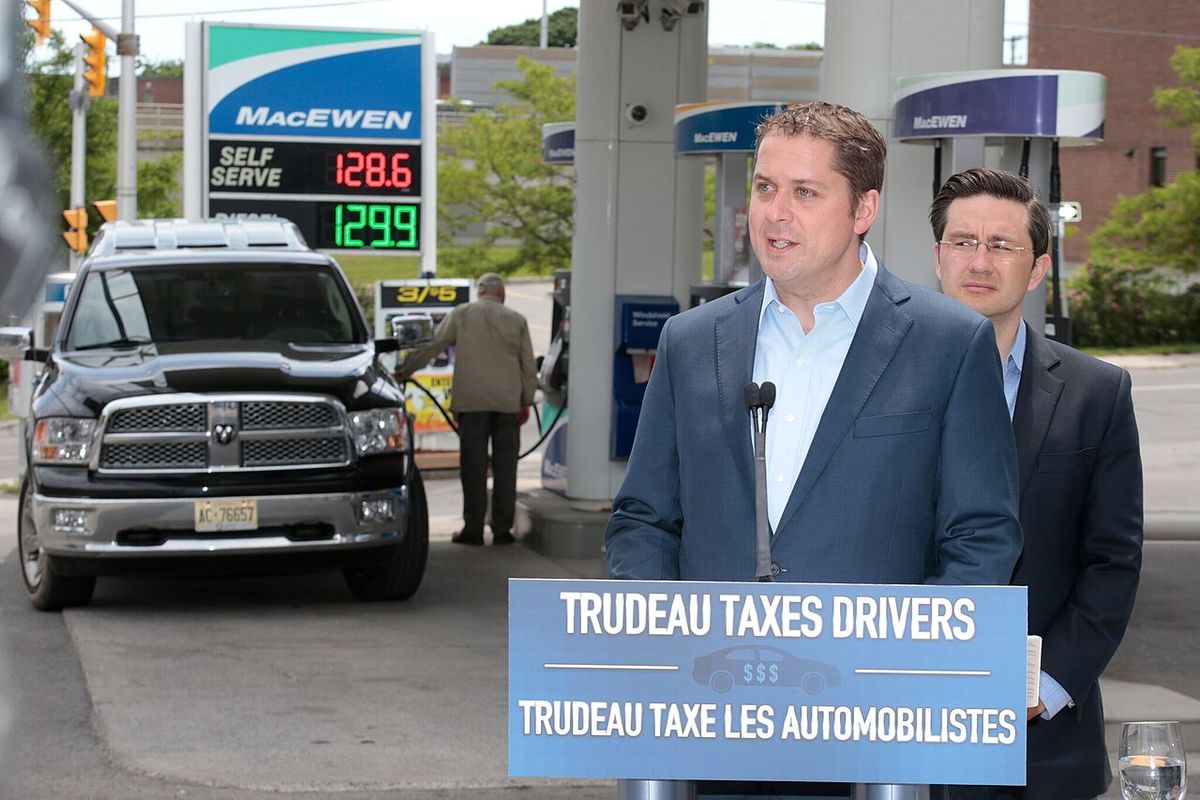
Pierre Poilievre's political identity is firmly rooted in economic conservatism and populist rhetoric. He is considered a part of the Blue Tory faction within the Conservative Party, emphasizing fiscal restraint, smaller government, and individual freedom. His policy agenda as Opposition Leader has consistently centred on the cost of living, which he frames as the central crisis facing Canadians. Key policy proposals include eliminating the federal carbon tax on consumers and industry, reducing personal income taxes, and cutting government spending to balance the budget. He has been a vocal critic of the Bank of Canada's monetary policy and has pledged to defund the Canadian Broadcasting Corporation (CBC), arguing for a more market-driven media scene.
Poilievre's approach often involves direct, plain-language communication aimed at 'common people', which has been described as populist. He frequently uses the phrase 'common sense' to frame his policies and criticizes what he calls 'gatekeepers' in government and institutions. On democratic reform, a portfolio he once held, he has advocated for measures to increase accountability, though his Fair Elections Act was controversial. His stance on labour issues has historically aligned with right-to-work principles, as seen in his support for ending mandatory union dues. Poilievre's political philosophy was significantly shaped in his youth by reading Milton Friedman, and he has long identified with libertarian-minded principles within the Conservative caucus. He supports abortion rights and same-sex marriage, though he previously opposed the latter.

Post-2025 Leadership and Current Role
Following the 2025 election, Pierre Poilievre has continued as leader of the Conservative Party and the Official Opposition. In January 2026, he received 87.4% support in a party leadership review, breaking the party's record for the most popular leader. As leader of the Opposition, Poilievre has primarily focused on economic issues, especially the cost of living in Canada. He has proposed legislation such as the Canadian Sovereignty Act, the Stand on Guard Act, and the Jail Not Bail Act.
- In June 2026, he shuffled the Conservative shadow cabinet, appointing Ontario MP Michael Chong as the party's new finance critic.
- He delivered remarks at the Canada Strong and Free Network Conference in Calgary in October 2026.
- He held a news conference in Calgary on October 20, 2026, to react to the results of an Alberta referendum, speaking in support of the 'remain in Canada' option.
- He discussed a Conservative Party motion on affordability in a public address on October 8, 2026.
His leadership is defined by the challenge of maintaining party unity after falling short of victory in 2025. Several MPs have defected to the Liberal caucus, including Chris d'Entremont, Michael Ma, Matt Jeneroux, and Marilyn Gladu. Poilievre's political strategy involves consolidating the Conservative base while attempting to reach new voters, often through a focus on economic anxiety. As the MP for Battle River, Crowfoot, he represents a solidly Conservative Alberta riding, allowing him a secure parliamentary base from which to lead the opposition.
Personal Life and Public Persona
Pierre Poilievre is married to Anaida Poilievre, a political staffer and consultant whom he met in Ottawa. The couple has two children. His personal story of adoption has been part of his public narrative. He was adopted as an infant by schoolteachers and later, in his early twenties, met his biological mother and maternal grandfather for the first time. His adoptive father, Donald Poilievre, is Fransaskois, a French-Canadian from Saskatchewan, and came out as gay after separating from Poilievre's mother when Pierre was in his mid-teens. Poilievre was raised Catholic and has referenced his faith at times, though he generally keeps his private family life out of the political spotlight.
Throughout his career, Poilievre has cultivated a public persona as a sharp, combative, and media-savvy politician. Early in his tenure, he was given the nickname 'Skippy' by political observers. He is known for his disciplined messaging, often repeating key phrases about 'common sense' and 'the cost of living crisis' in interviews and House of Commons debates. His communication style is direct and frequently employs social media platforms to bypass traditional media and speak directly to supporters. While his aggressive partisan style has earned him both loyal followers and critics, it has undeniably made him one of the most recognizable figures in modern Canadian politics.
Questions about Pierre Poilievre
How did Pierre Poilievre become leader of the Conservative Party?
Pierre Poilievre became leader of the Conservative Party by winning the party's 2022 leadership election on September 10, 2022. He secured a decisive first-ballot victory with 68.15 percent of points and 70.7 percent of the vote share, which was the first first-ballot victory since the party's 2004 leadership election. His campaign had endorsements from more than half of the party's caucus and from former Prime Minister Stephen Harper. Poilievre's campaign focused on themes of freedom and reducing the cost of living, and it sold 311,958 party memberships during the race.
Why did Pierre Poilievre lose his seat in the 2025 election?
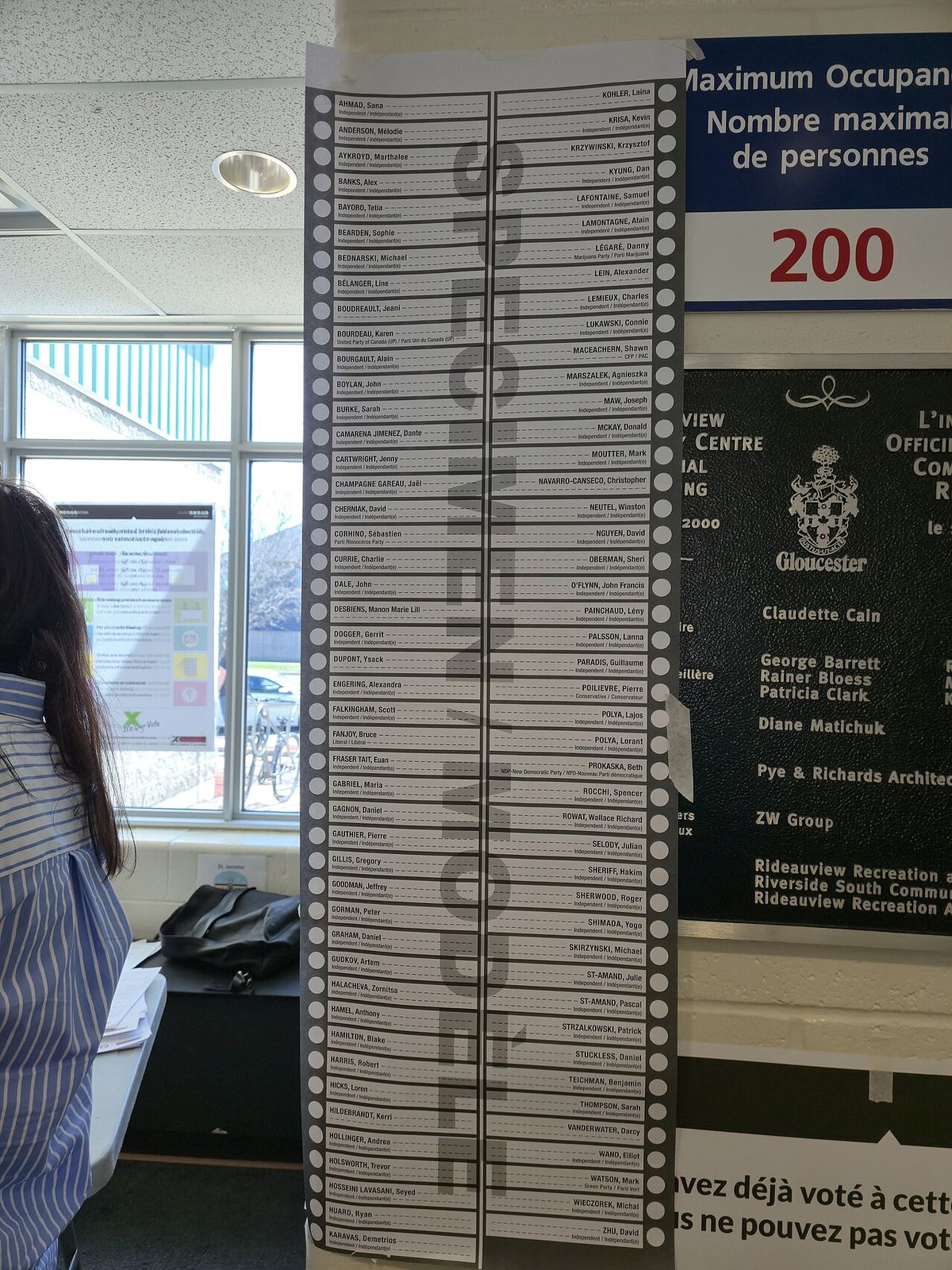
Pierre Poilievre lost his seat in the riding of Carleton in the 2025 federal election to Liberal candidate Bruce Fanjoy. Fanjoy received 43,900 votes, which was 51 percent of the vote, while Poilievre received 39,585 votes, or 46 percent. This local defeat happened even as the Conservative Party increased its national seat total from 120 to 144 seats. The race in Carleton featured a record-equaling 91 candidates, partly due to efforts by the Longest Ballot Committee which promoted independent election reforms.
What are Pierre Poilievre's main policy proposals?
Pierre Poilievre's main policy proposals focus on economic issues. He advocates for eliminating the federal carbon tax, cutting personal income taxes, and implementing a pay-as-you-go law to balance the budget. He pledges to defund the CBC, repeal the Oil Tanker Moratorium Act and Impact Assessment Act, and increase housing construction by tying federal infrastructure funds to building targets. He also supports using the notwithstanding clause to allow consecutive parole ineligibility periods for multiple murders.
What ministerial roles did Pierre Poilievre hold under Stephen Harper?
Under Prime Minister Stephen Harper, Pierre Poilievre held several parliamentary secretary and ministerial roles. From 2006 to 2013, he served as Parliamentary Secretary to the President of the Treasury Board and later as Parliamentary Secretary to the Prime Minister. In July 2013, Harper appointed him Minister of State for Democratic Reform, a position he held until 2015. In February 2015, Poilievre was promoted to Minister of Employment and Social Development, while concurrently retaining his responsibilities for democratic reform and taking on the role of minister responsible for the National Capital Commission.
What is Pierre Poilievre's educational background?
Pierre Poilievre graduated with a Bachelor of Arts in international relations from the University of Calgary in 2008. He attended Henry Wise Wood High School in Calgary, graduating in 1997. In 2002, he left university to work as an advisor to Stockwell Day but completed his degree through online coursework with Athabasca University. As a university student, he won Magna International's national essay contest in 1999.
Which riding does Pierre Poilievre currently represent?
Pierre Poilievre currently represents the riding of Battle River, Crowfoot in Alberta. He won this seat in a by-election on August 18, 2025, securing almost 81 percent of the vote. He sought election there after losing his previous seat in the Ontario riding of Carleton during the general election in April 2025. The by-election was necessary following the resignation of the sitting Conservative MP for Battle River, Crowfoot, Damien Kurek.
Sources and further reading
- Pierre Poilievre (Wikipedia)
- What Pierre Poilievre Is (Probably) Really… (nationalnewswatch.com)
Checked by the Nosy Mag desk. Last updated 2026-10-19.