Chinese Canadians
Chinese Canadians are Canadians of full or partial Chinese ancestry, forming one of the country's largest and most historically significant ethnic communities. Their history in Canada dates back to 1788, with major waves of immigration linked to the Fraser River Gold Rush and the construction of the Canadian Pacific Railway. For decades, Chinese Canadians faced systemic discrimination, including a prohibitive head tax and the Chinese Immigration Act of 1923. Their contributions during the Second World War proved a decisive turning point, leading to greater rights and recognition, and today they represent an integral part of Canada's multicultural fabric, with a population of 1.7 million as of 2021.
Early Settlement and the Railway Era
The first documented Chinese presence in what is now Canada occurred in 1788, when British fur trader John Meares hired about 70 Chinese carpenters from Macau to build a ship at Nootka Sound on Vancouver Island. The major influx of Chinese immigrants began in 1858 with the Fraser River Gold Rush, drawing prospectors from California and establishing Barkerville as the first Chinese community in Canada. The defining chapter of early Chinese Canadian history was their instrumental role in building the Canadian Pacific Railway, a project essential for British Columbia's entry into Confederation. When British Columbia joined Confederation in 1871, a condition was the construction of a transcontinental railway, and Prime Minister Sir John A. Macdonald insisted on employing Chinese immigrants for the most treacherous sections to cut costs. Approximately 15,000 Chinese labourers worked on the British Columbia section, with more than 600 dying due to dangerous conditions, avalanches, and disease, and they were paid significantly less than their non-Chinese counterparts while working long hours. Most of these early immigrants were young men from Guangdong Province, who referred to Canada as Gum San, or 'Golden Mountain', a metaphor for their hopes of wealth to support families left behind in China.
Following the railway's completion in 1885, the Canadian government moved swiftly to restrict further Chinese immigration through the Chinese Immigration Act of 1885, which imposed a $50 head tax. This tax was raised to $500 in 1903, which drastically reduced immigration. Community life for these early settlers was organized around kinship clans and voluntary associations, which provided social support and a forum for politics, with Benevolent Associations effectively governing the various Chinatowns that formed in cities like Vancouver. These neighbourhoods, such as Vancouver's Dupont Street (now East Pender), were often established in less desirable urban areas, taking over from the city's early red-light district from the 1890s onwards. Many Chinese men in Canada, unable to marry white women, married First Nations women as Indigenous peoples were more willing to accept them.
Systemic Exclusion and Community Resistance
The early 20th century was marked by escalating legal and social discrimination against Chinese Canadians, beginning with a Royal Commission on Chinese and Japanese Immigration in 1902 that concluded Asians were 'unfit for full citizenship' and 'dangerous to the state'. This prejudice erupted into violence during the Vancouver anti-Asian pogrom of September 7-9, 1907, where the Asiatic Exclusion League rioted for two days under the slogan 'White Canada Forever', attacking and vandalizing Chinese, Japanese, Korean, and Indian homes and businesses. The political culmination of this exclusionary sentiment was the Chinese Immigration Act of 1923, commonly known as the Chinese Exclusion Act, which came into force on Dominion Day (July 1) and effectively banned new Chinese immigration with only narrow exemptions. In protest, Chinese Canadians began boycotting Dominion Day celebrations, renaming it 'Humiliation Day' for the next quarter century, and the Act had devastating consequences by preventing men already in Canada from bringing over their wives and children. By 1931, the gender imbalance in the community was extreme, with 1,240 men for every 100 women, and during the Great Depression, Chinese Canadians in Alberta received relief payments less than half of those given to other Canadians while employment opportunities were severely limited by laws.
When Japan invaded China in July 1937, a 'United Front' atmosphere prevailed in Chinese Canadian communities as leaders put aside differences to support the homeland. The community organized fund-raising events from 1937 onward, and by 1945 had contributed $5 million Canadian dollars to China. A boycott of Japanese goods was organized, with demonstrations using slogans like 'Don't Kill Babies' to reference Japanese army atrocities. In 1922, the feminist Emily Murphy published her book The Black Candle blaming Chinese immigrants for drug addiction among white Canadians. Ernest Chewant Mark, who arrived in 1908, emerged as a leading critic of the 1923 Exclusion Act and worked with Senator William Proudfoot to pressure the government for its repeal. The filmmaker Melinda Friedman noted that Chinese Canadian veterans described the Ku Klux Klan living in Vancouver and targeting the Chinese community as late as 1940.
The Second World War as a Turning Point
The Second World War fundamentally altered the place of Chinese Canadians in national life, as from the outset in 1939, the community demonstrated loyalty by fundraising for the Canadian war effort and purchasing some $10 million in Victory Bonds by 1945. After Canada declared war on Japan in December 1941, China became a wartime ally, improving public perception, and Chinese Canadians embraced the 'Double Victory' campaign, seeking victory over fascism abroad and racism at home. Approximately 600 Chinese Canadians enlisted to serve overseas, and Prime Minister William Lyon Mackenzie King was initially reluctant, knowing veterans would demand voting rights, but pressure from the British Special Operations Executive, which needed Asian Canadians for covert operations, forced his hand. Chinese Canadians served with distinction in all branches of the military and in dangerous special operations, with the Royal Canadian Air Force being particularly open to them due to heavy losses in the bombing campaign over Germany, and unlike in the First World War, they were given officers' commissions which challenged the existing racial hierarchy.
Key milestones and individuals from this period include William Lore, commissioned as a lieutenant commander in the Royal Canadian Navy in 1943, becoming the first person of Chinese descent commissioned in any Commonwealth navy and the first Allied officer to land in Hong Kong in August 1945 to liberate Canadian prisoners of war. Kam Hem Douglas Sam of the RCAF was shot down over France in 1944, fought with the French Resistance, and was awarded the Croix de Guerre, while Douglas Jung served as an SOE agent in Japanese-occupied Malaya and later became the first Chinese-Canadian Member of Parliament. About 150 Chinese Canadians served with the covert SOE Force 136 behind Japanese lines in Burma, undertaking extremely hazardous missions for which they carried cyanide pills. Historian Brereton Greenhous noted their service was a major factor in influencing the government to grant Chinese Canadians full citizenship rights several years later. Veteran Frank Wong recalled that military service was the first time they were treated as equals, and Catherine Clement, curator of the Chinese Canadian Military Museum, called it a 'double victory' for winning the war and propelling civil rights.
Post-War Recognition and Demographic Growth
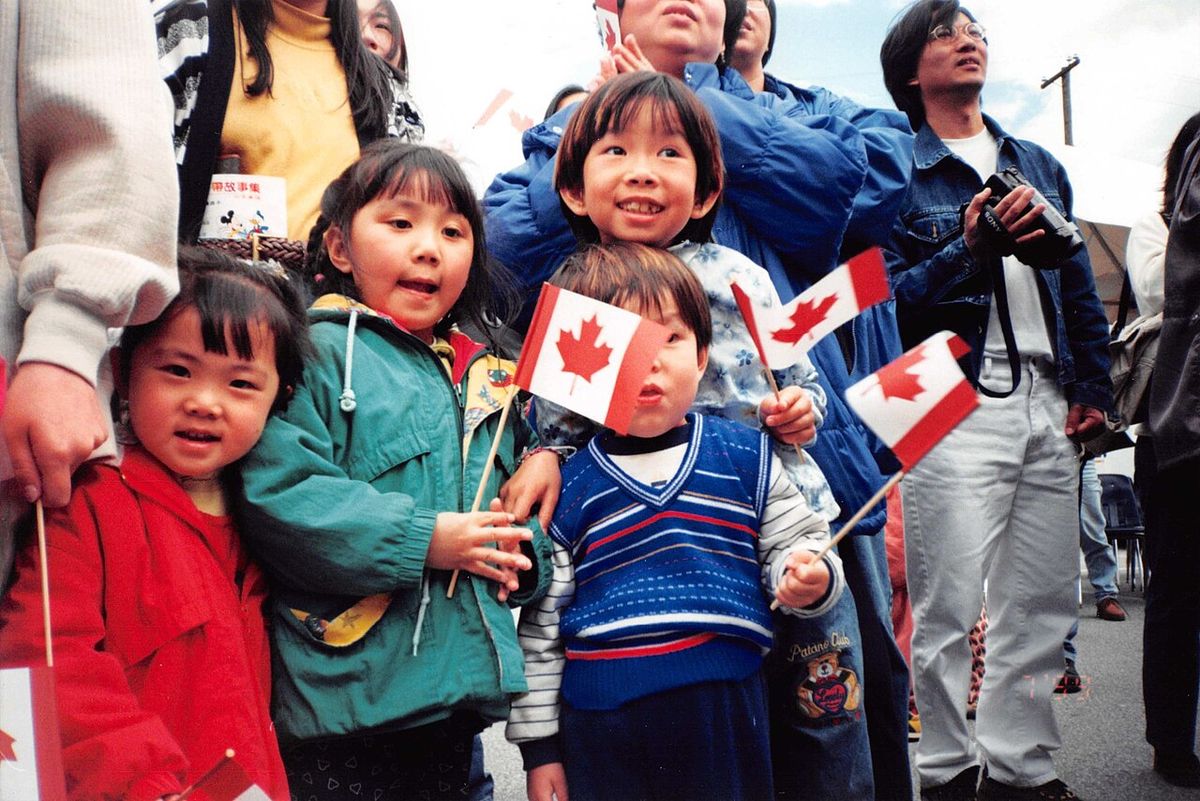
In 1947, the Chinese Exclusion Act was finally repealed, and Chinese Canadians were granted the right to vote in federal elections, marking the beginning of a new era of immigration. The post-war period saw gradual improvements in social acceptance and legal equality, and the community's demographic profile transformed significantly according to the 2021 census, which recorded the Chinese Canadian population at 1.7 million, representing 4.7% of the total population. This makes them the second-largest racialized group in Canada after South Asians, and the population more than doubled between 1996 and 2021, with about half born in China and about half born elsewhere including Canada. The census also revealed a highly educated and established community, with 61.8% of Chinese Canadians aged 25 to 54 holding a bachelor's degree or higher, and 84.5% living in households that owned their home, indicating strong economic integration and stability.
Most Canadians of Chinese descent are concentrated within the provinces of Ontario and British Columbia. The five metropolitan areas with the largest Chinese Canadian populations are the Greater Toronto Area, Metro Vancouver, Greater Montreal, the Calgary Region and the Edmonton Metropolitan Region. In the 1957 election, Douglas Jung became the first Chinese Canadian elected to the House of Commons. On June 22, 2006, Prime Minister Stephen Harper delivered a formal apology in the House of Commons for the head tax and Exclusion Act, offering compensation of approximately $20,000 to survivors or their spouses.
Cultural Institutions and Contemporary Celebrations
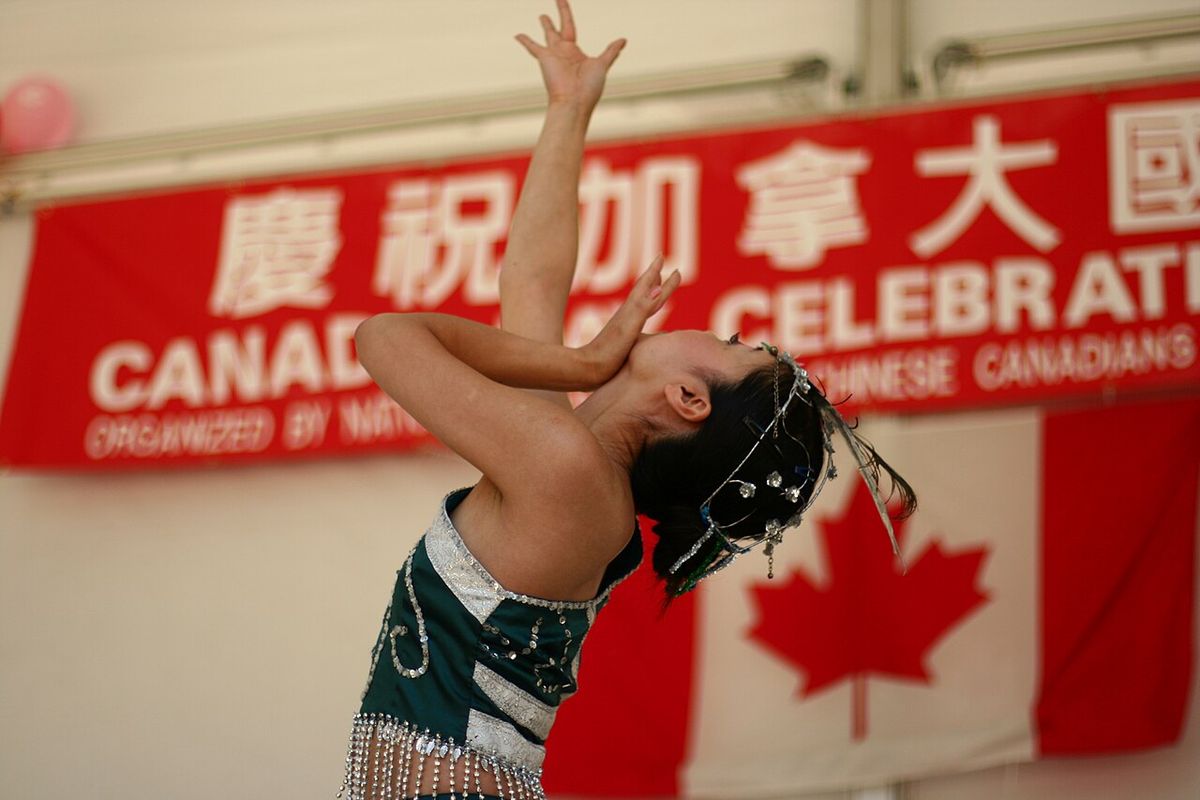
Chinese Canadian culture is celebrated and preserved through numerous institutions and annual events. The Chinese Canadian Museum, located in Vancouver's historic Wing Sang Building, opened on July 1, 2023, with exhibitions like 'The Paper Trail to the 1923 Chinese Exclusion Act'. In 2025, it launched 'A Soldier for All Seasons' with the Chinese Canadian Military Museum Society. The Chinese Canadian Military Museum Society, founded in 1998, preserves artifacts related to Chinese Canadian military service. The Chinese Cultural Centre of Greater Toronto, founded in 1988, and the Chinese Cultural Centre of Greater Vancouver, founded in 1973, serve as hubs for cultural preservation and community engagement.
A major focal point of community life is the Lunar New Year, a celebration based on the lunisolar calendar. Culinary traditions are shared through workshops on preparing symbolic dishes like Prosperity Salad (Yu Sheng). Asian Heritage Month in May provides a platform for national recognition. Community centres across Metro Vancouver host annual heritage events that celebrate Lunar New Year and the Mid-Autumn Festival, connecting youth and seniors through shared cultural practices.
Historical Timeline of Key Events
The history of Chinese Canadians spans over two centuries, marked by periods of contribution, severe discrimination, and hard-won progress. The first recorded Chinese presence was in 1788, and major immigration waves occurred from 1858 to 1923 and again from 1947 onward. Key discriminatory policies included the 1885 head tax and the 1923 Chinese Immigration Act, which banned most Chinese immigration. The community's perseverance through these challenges and their vital contributions, such as building the Canadian Pacific Railway, have significantly shaped their experience in Canada.
- 1788: First recorded Chinese settlers, about 70 artisans, arrive at Nootka Sound, Vancouver Island, with Captain John Meares.
- 1858: Chinese immigrants begin arriving in British Columbia from San Francisco during the Fraser River Gold Rush.
- 1885: Completion of the Canadian Pacific Railway, built with crucial labour from approximately 15,000 Chinese workers. The federal Chinese Immigration Act imposes a $50 head tax.
- 1903: The head tax is increased to $500 per person.
- 1907: Anti-Asian pogrom in Vancouver results in extensive property damage to Chinese and Japanese Canadian businesses.
- 1923: The Chinese Immigration Act (Exclusion Act) comes into force on July 1, banning almost all Chinese immigration.
- 1947: The Exclusion Act is repealed, and Chinese Canadians win the right to vote in federal elections.
- 1957: Douglas Jung is elected as the first Chinese Canadian Member of Parliament.
- 2006: The Government of Canada issues a formal apology and offers symbolic redress for the head tax and Exclusion Act.
- 2021: Census records the Chinese Canadian population at 1.7 million.
Socioeconomic Profile and Geographic Distribution
The 2021 census provides a detailed snapshot of the Chinese Canadian community's socioeconomic status and where they live. Over six in ten (61.8%) Chinese Canadians between the ages of 25 and 54 have attained a bachelor's degree or higher, a rate significantly above the national average. More than eight in ten (84.5%) live in a household that owns its home, indicating strong economic integration and stability. The community is not evenly distributed across the country, with the vast majority living in Canada's two most populous provinces, Ontario and British Columbia. This concentration is a historical legacy of settlement patterns that began on the West Coast during the gold rush and railway eras and expanded with post-war immigration to major urban centres where economic opportunities were greatest.
Chinese populations in Canada numbered 1.7 million people in 2021 and made up 4.7% of the total population of Canada. They were the second-largest racialized group in Canada after the South Asian populations. The size of the Chinese populations more than doubled from 1996 to 2021. In 2021, about half of Chinese populations in Canada were born in China and about half were born in other places. The highest concentration of Chinese Canadians is in Vancouver and Richmond, British Columbia, where they constitute the largest ethnic group by country, and one in five residents are Chinese.
Questions about Chinese Canadians
When did the first Chinese immigrants arrive in Canada?
The first record of Chinese in Canada dates back to 1788. British fur trader John Meares hired about 70 Chinese carpenters from Macau to build a ship, the North West America, at Nootka Sound on Vancouver Island. The major periods of Chinese immigration then took place from 1858 to 1923, and again indefinitely from 1947 following changes in immigration policy. This early arrival marked the beginning of over two centuries of Chinese Canadian history.
What was the Chinese head tax and the Exclusion Act?
The Chinese Immigration Act of 1885 imposed a $50 head tax on each Chinese person entering Canada. In 1903, this was increased to $500. In 1923, the Chinese Immigration Act, known as the Exclusion Act, banned almost all Chinese immigration. The Chinese were the only ethnic group required to pay such a tax.
How did the Second World War change the status of Chinese Canadians?
The Second World War was a turning point. Chinese Canadians demonstrated loyalty by purchasing about $10 million in Victory Bonds and approximately 600 enlisted. After Canada declared war on Japan in December 1941, China became an ally, improving public perception. Their service pressured the government to repeal the Exclusion Act in 1947 and grant Chinese Canadians the right to vote.
How many Chinese Canadians are there today?
According to the 2021 census, there are 1.7 million Chinese Canadians, representing 4.7% of Canada's total population. They are the second-largest racialized group after South Asians. About half were born in China and half elsewhere, including Canada. Most live in Ontario and British Columbia.
How did Chinese Canadians contribute to building Canada?
Chinese Canadians made foundational contributions by building critical national infrastructure. Approximately 15,000 Chinese labourers worked on the British Columbia section of the Canadian Pacific Railway, a project essential for the province joining Confederation. Prime Minister Sir John A. Macdonald insisted on employing Chinese immigrants to reduce costs. These workers accepted low pay and dangerous conditions, with more than 600 dying during construction.
What is Chinese Canadian Heritage Month?
Chinese Canadian Heritage Month is a proposed nationwide observance to honour the history and contributions of Chinese Canadians. Advocacy for it includes requests like a 2026 motion by Toronto City Council asking the federal government to proclaim February as Chinese Canadian Heritage Month. This proposed timing often coincides with Lunar New Year celebrations, linking heritage with cultural festivities. The observance aims to recognize the community's long and significant role in Canadian society.
Sources and further reading
- Chinese Canadians (Wikipedia)
- Year of the Horse at the Museum (chinesecanadianmuseum.ca)
- Asia-Canada (thecanadianencyclopedia.ca)
- Milestones in Chinese Canadian History (smus.ca)
Checked by the Nosy Mag desk. Last updated 2026-10-30.