Danielle Smith
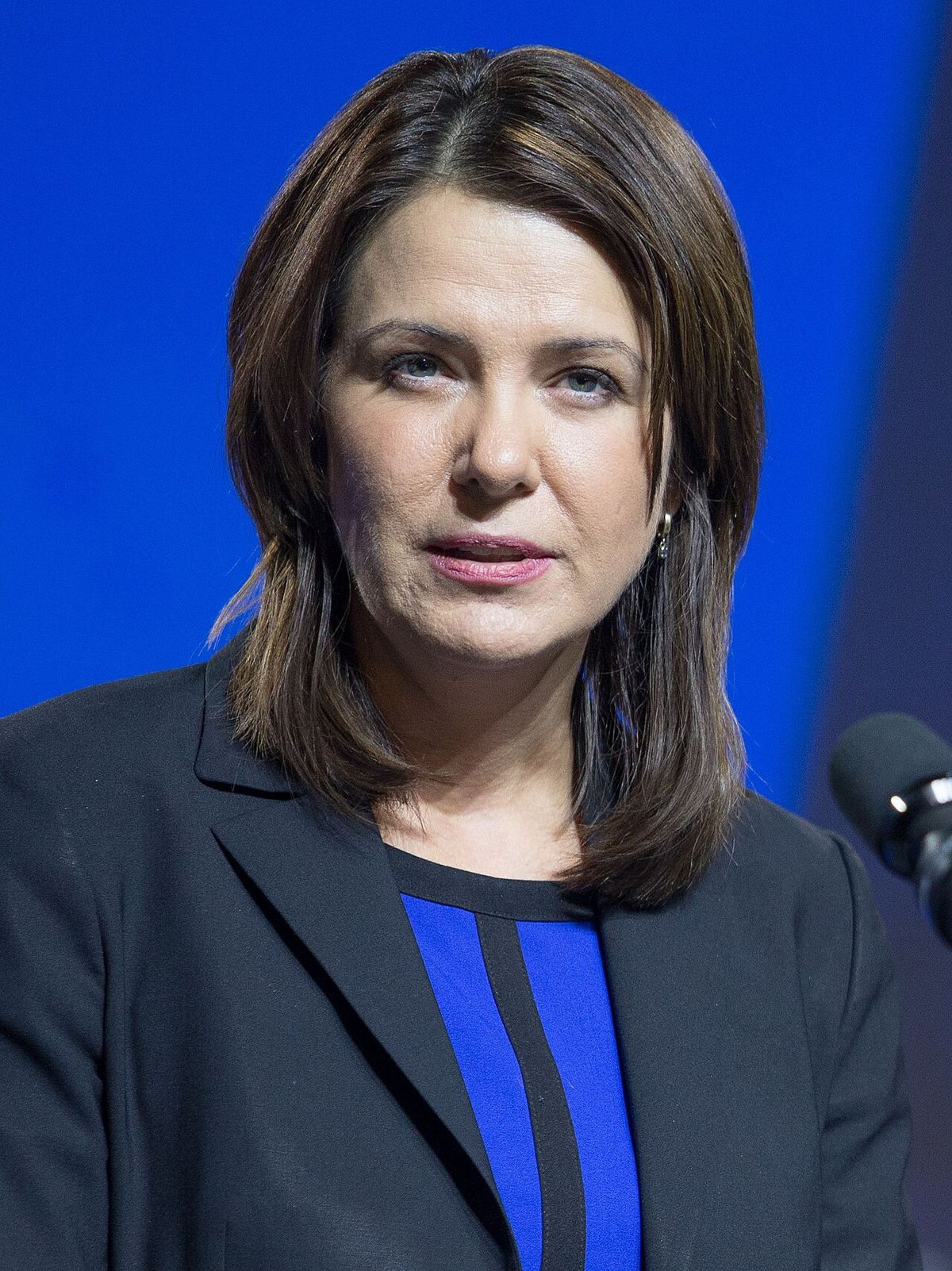
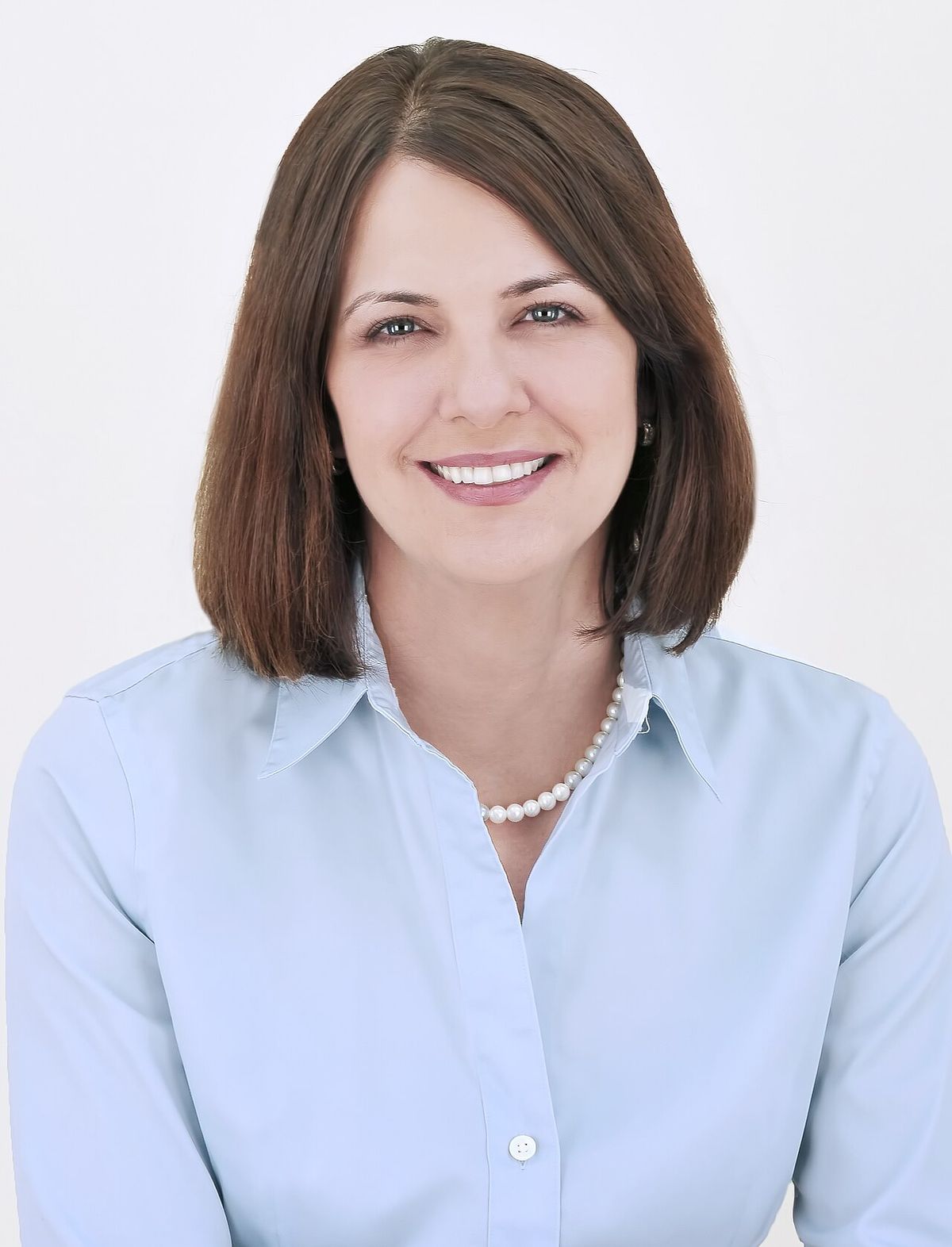
Danielle Smith is the 19th Premier of Alberta and leader of the United Conservative Party (UCP), a position she has held since October 2022. A former journalist, lobbyist, and political commentator, Smith first entered provincial politics as leader of the Wildrose Alliance, which she led to Official Opposition status in 2012. Her premiership has been defined by a forceful agenda of provincial autonomy, including the passage of the Alberta Sovereignty Within a United Canada Act and a high-profile 2026 referendum on Alberta's place in Canada. Smith's political career, marked by a dramatic floor-crossing in 2014 and a successful return to power in 2022, positions her as one of the most consequential and controversial conservative figures in contemporary Canadian politics.
Early life, education and formative influences
Marlaina Danielle Smith was born on April 1, 1971, in Calgary, the second of five children to Sharon Hawkins and Doug Smith, an oilfield consultant and later a Wildrose Party board member. Her family lived in subsidized housing during her childhood, and Smith worked various service jobs as a student, including at McDonald's, a bingo parlour and local restaurants. She has described her parents as reliably conservative, an outlook that was reinforced during her youth. In grade eight, a conversation with her father after she praised a teacher's positive remarks about communism led to more rigorous political discussions at the family dinner table.
Smith was also a member of the Girl Guides of Canada, an affiliation later featured in a 2013 museum exhibit about prominent former Guides in Red Deer. She pursued post-secondary education at the University of Calgary, where she earned two Bachelor of Arts degrees, first in English in 1993 and then in economics in 1995. The university was a hub of political activism during her studies, and her classmates included future notable figures such as media personality Ezra Levant, former Conservative MP Rob Anders, and former Calgary mayor Naheed Nenshi. Her political education was further shaped by professors including former Alberta premier Peter Lougheed, who taught one of her classes, and conservative thinker Tom Flanagan from the political science department.
Flanagan later recommended her for a public policy internship at the Fraser Institute in 1996, where she coauthored a report on environmental indicators that expressed skepticism toward mainstream climate concerns. During her internship, Smith coauthored a report titled 'Environmental Indicators for Canada and the United States' with Boris DeWiel, Steven F. Hayward, and Laura Jones. The report argued that contrary to public opinion, objectives for protecting human health and the environment were being met and that pollution and waste were being controlled. This early work aligned with the think tank's focus on free-market solutions and set a tone for her later policy perspectives.
After graduating, Smith briefly lived in Vancouver, working as a waitress and as a movie extra, before returning to Calgary to begin her career in journalism and local politics. She also met her first husband, Sean McKinsley, during political campaigning. Smith was active in the campus Progressive Conservatives and was eventually elected president of the club. Her paternal great-grandfather, Philipus Kolodnicki, a Ruthenian from Austria, changed his surname to Smith after arriving in Canada in the early 20th century.
Journalism, advocacy and entry into politics
Smith's first foray into elected office came in 1998 when she ran for and won a position as a trustee for the Calgary Board of Education. Her tenure was short and tumultuous. The entire board was dismissed by the provincial Minister of Learning, Lyle Oberg, after just 11 months following complaints of dysfunction. Smith later reflected that she had been too strident during this period and said the experience taught her to be more tolerant of opposing views.
Following the dismissal, she shifted her focus to advocacy work, representing ranchers, farmers and rural landowners with organizations like the Alberta Property Rights Initiative and the Canadian Property Rights Research Institute, where she also coauthored a paper on endangered species. Smith then began a career in journalism, joining the editorial board of the Calgary Herald as a columnist. During a writers' strike at the paper in 1999 to 2000, she crossed the picket line to continue writing as a strikebreaker. Her columns covered a wide range of topics from municipal affairs to health policy, and she expressed controversial opinions, including a 2003 column supporting the legalization of sex work and the creation of a red-light district in Calgary.
That same year, she wrote an article arguing that the anti-smoking lobby did more harm than good and suggesting smoking could reduce the risk of some diseases. Her media career expanded to broadcasting when she succeeded Charles Adler as host of the national current affairs program 'Global Sunday' on Global Television, and she also hosted talk radio programs focused on health policy and property rights. She met her second husband, David Moretta, an executive producer with Global Television and later Sun Media, during this time. In 2004, Smith was named one of Calgary's 'Top 40 Under 40'.
- Co-hosted the Calgary Congress, a national assembly on federal reform, in September 2006.
- Hired as Alberta provincial director for the Canadian Federation of Independent Business in 2006, coauthoring a paper called 'Achieving Eco-prosperity'.
Her work in media and advocacy established her public profile and set the stage for her entry into partisan politics. During the 2006 PC leadership election, she supported Ted Morton. After Morton lost to Ed Stelmach, Smith became disillusioned with what she called Stelmach's free-spending ways, citing the 2008 provincial budget as the point where she determined the government had lost its way. She quit the PC party in 2009 and joined the Wildrose Alliance.
Wildrose Party leadership and the 2012 election
Disillusioned with the spending policies of Progressive Conservative Premier Ed Stelmach, Smith left the PC party in 2009 and joined the Wildrose Alliance, a fledgling centre-right party. The Tories sent MLA Rob Anderson to dissuade her, but Smith refused, stating the government was 'beyond redemption'. Later that year, she was recruited to run for the party's leadership. On October 17, 2009, she was elected leader, and under her guidance, party support grew significantly.
She convinced three sitting PC MLAs, Rob Anderson, Heather Forsyth and later Guy Boutilier, to cross the floor and join the Wildrose caucus. By the time of the 2012 provincial election, the Wildrose Party under Smith was seen in polls as a serious threat to end the PCs' four-decade hold on power. The 2012 election was a defining moment in Smith's early career. The Wildrose Party won 17 seats and 34.3 percent of the popular vote, becoming the Official Opposition and unseating the Alberta Liberals from that role.
Smith was personally elected as the MLA for Highwood, a riding just south of Calgary, defeating John Barlow. However, the party fell short of victory, failing to win a single seat in Edmonton and only two in Calgary. Political analysts widely attributed the loss of their early polling lead to Smith's defence of two Wildrose candidates who made controversial remarks. One candidate wrote that gay people would end up in a 'lake of fire', while another claimed his whiteness gave him an electoral advantage.
In the aftermath, at the party's 2012 annual general meeting, Smith advocated for a policy to freeze out future candidates who could not respectfully communicate their views. She urged the party to adopt a forward-looking platform for the next election. Despite the setback, her leadership had successfully established the Wildrose as a major force in Alberta politics and positioned her as the Leader of the Official Opposition, a role she held from 2012 to 2014. In early 2011, she was also featured in an episode of CBC Television's 'Make the Politician Work'.
Floor-crossing, defeat and period out of politics
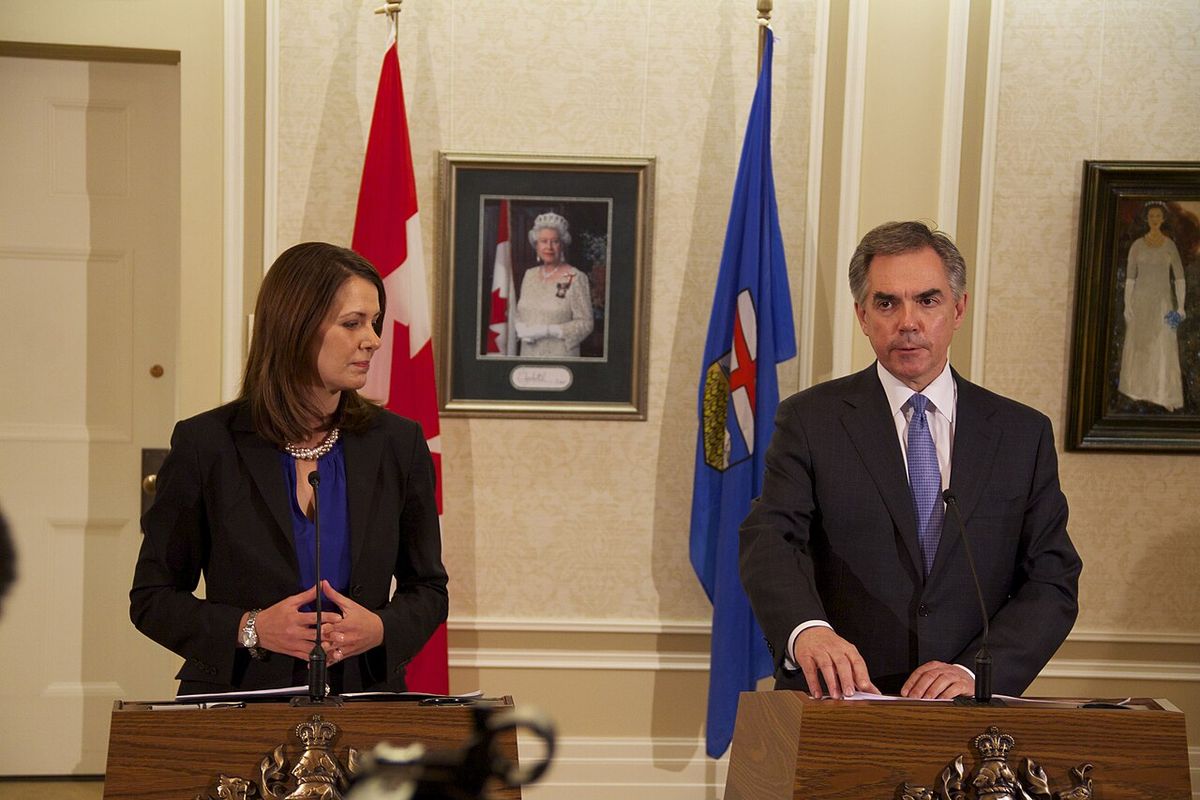
In 2014, following the resignation of PC Premier Alison Redford, former federal cabinet minister Jim Prentice became premier. Smith's position was weakened after the PCs swept four by-elections in October and after an anti-discrimination resolution she supported was voted down at the Wildrose annual general meeting. On December 17, 2014, Smith announced she was crossing the floor to join the governing Progressive Conservatives along with deputy leader Rob Anderson and seven other Wildrose MLAs. She stated that conversations with Prentice revealed significant common ground on fiscal issues and that she wanted him to succeed rather than seek to defeat him.
The move provoked significant anger among her constituents and former party members, particularly as she had criticized two other Wildrose MLAs for defecting to the PCs a month earlier. Smith later apologized on Facebook for not consulting Albertans but stood by her decision to 'unify conservatives'. Her attempt to secure the PC nomination in Highwood for the 2015 election ended in defeat on March 28, 2015, when she lost to Okotoks town councillor Carrie Fischer. The nomination loss was widely attributed to backlash over her floor-crossing.
The PC candidate subsequently lost the general election to the Wildrose candidate Wayne Anderson, ending Smith's tenure as an MLA. Between 2015 and 2022, Smith returned to media and advocacy work. She hosted a talk radio program on CHQR in Calgary until leaving the show on February 19, 2021. In January 2021, she announced she was leaving her talk show and Twitter, citing attacks from Twitter trolls.
- Wrote a March 2018 opinion article supporting the defunding of public schools.
- Served as President of the Alberta Enterprise Group, a business association.
- Registered as a lobbyist for the Alberta Enterprise Group in June 2019, advocating for the RStar program.
- Wrote a July 2021 opinion article supporting Premier Jason Kenney's referendum on equalization payments, held on October 18, 2021.
Return to power: UCP leadership and becoming premier
On May 18, 2022, following the resignation of UCP leader and Premier Jason Kenney, Smith announced her candidacy for the party's leadership. Her central campaign promise was the enactment of an Alberta Sovereignty Act, legislation intended to assert provincial autonomy by allowing the legislature to ignore federal laws deemed to infringe on Alberta's jurisdiction. The proposal was criticized by six of her leadership rivals and by Kenney himself, who called it an attack on the rule of law and a step toward separation. Smith's campaign was the highest-spending in the race, with expenditures of $1,389,829, finishing with a deficit of $26,792.
On October 6, 2022, Smith won the United Conservative Party leadership election on the sixth ballot with 53.77 percent of the vote. She was sworn in as Alberta's 19th premier on October 11, 2022, also taking on the role of Minister of Intergovernmental Relations. As she did not hold a seat in the legislature at the time, she followed historical precedent by governing from outside the assembly until a by-election could be held. Shortly after taking office, she made headlines by stating she would not impose further COVID-19 pandemic measures and by characterizing unvaccinated people as 'the most discriminated against group' she had ever witnessed, comments that drew widespread criticism.
She also withdrew Alberta from the World Economic Forum's Global Coalition for Value in Healthcare on October 24, 2022, saying she would not work with a group that talks about controlling governments. Smith ran in a by-election for the riding of Brooks-Medicine Hat on November 8, 2022. She won the seat with 54.5 percent of the vote, securing her place in the Legislative Assembly and completing her return to elected office after a seven-year absence. She became the fourth person in Alberta history to become premier without holding a seat, following Herbert Greenfield, William Aberhart and Jim Prentice. The incumbent, UCP MLA Michaela Frey, had resigned to allow Smith to run. In late November 2022, Smith withdrew her plan to introduce a bill that would add unvaccinated individuals as a protected class under the Alberta Human Rights Act. She continued to promote an intent for herself and her ministers to contact businesses and organizations that were still enforcing COVID-19 vaccine mandates and ask them to reconsider their policies.
Premiership and key policies
Premier Smith's government has been defined by a concerted push for greater provincial autonomy within Confederation. Her signature legislative achievement is the Alberta Sovereignty Within a United Canada Act, passed in December 2022, which her government describes as a tool to protect the province from federal policies deemed harmful. The act remains a focal point of both support and legal controversy. Her administration has also pursued the creation of a provincial police force and has championed the proposed Alberta Pension Plan, aiming to replace the Canada Pension Plan for Albertans, though that initiative remains under development.
A major feature of Smith's tenure was the 2026 provincial referendum, which featured ten questions on Alberta's relationship with Canada. The most prominent question asked voters whether Alberta should remain a province of Canada or pursue a path toward a binding referendum on separation. Preliminary results showed approximately 75 percent of voters across Alberta chose the 'remain' option. In her riding of Brooks-Medicine Hat, the 'remain' vote was 63 percent.
Smith hailed the result as a 'reset' in relations with Ottawa and stated that the issue of separation was now settled as party policy. Albertans voted to approve eight of the nine other measures proposed. Following the referendum, Smith moved to consolidate party unity. She told UCP members in a video message and subsequent press conference that those who continued to publicly advocate for separation would not be welcome as candidates or local board members ahead of the 2027 provincial election, suggesting they could 'join a different party'. This stance was supported by cabinet ministers and many local constituency boards, though it came amid internal party tension, including a motion for a leadership review from the Highwood riding association. On fiscal matters, her government has overseen consecutive budget surpluses, reporting a $2.2 billion surplus for the 2025-26 fiscal year, its fifth in a row, and a sixth is projected for the following year. In the May 2023 general election, Smith led the UCP to a second consecutive majority government, albeit with a reduced majority, defeating the New Democratic Party led by Rachel Notley.
Personal life and public profile
Danielle Smith is married to David Moretta, a former executive producer with Global Television and Sun Media whom she met during her broadcasting career. She is a stepmother to his son, and the family lives in High River, Alberta, with their dog named Buck. Smith has cited a lifelong interest in finding the right balance between free enterprise, individual freedom and the role of government. In her personal time, she is a fan of the young-adult fantasy novel 'Eragon' by Christopher Paolini and once considered becoming a science fiction and fantasy novelist.
Her public persona has been shaped by her direct communication style, honed over years in talk radio and column writing. She maintains an active profile through official premier's duties, including delivering addresses to the legislature, participating in community events, and issuing public statements on provincial and national matters. Her biography on the Government of Alberta website emphasizes her pride in the province, her academic background in economics and English, and her previous careers in media and business advocacy. Smith's political identity remains closely tied to her advocacy for Alberta's economic and legislative interests within Canada, a focus that has defined both her public policy and her personal political brand.
She also faced questions in 2022 about her claims of mixed-race and Indigenous ancestry on her maternal side, which an investigation could not substantiate. Smith has been described as media-savvy and adept at presenting a professional and polished image. She self-identified as a 'caring conservative' in a 2023 interview. Smith is an admirer of Ayn Rand, John Locke, Margaret Thatcher, Ron DeSantis, and Kristi Noem.
Questions about Danielle Smith
What is the Alberta Sovereignty Act?
The Alberta Sovereignty Within a United Canada Act is a piece of legislation passed by Premier Danielle Smith's government in December 2022. It seeks to protect Alberta from federal policies it deems detrimental to the province. The act allows the Alberta legislature to make determinations on when to ignore federal legislation infringing upon Alberta's jurisdiction. Smith's central policy was to enact this act, which she argued was for more autonomy for Alberta in Confederation.
What was the result of the 2026 Alberta referendum?
The 2026 Alberta referendum featured ten questions on Alberta's relationship with Canada. Preliminary results showed approximately 75 percent of voters across the province chose the option for Alberta 'remaining a province of Canada'. In Premier Smith's own riding of Brooks-Medicine Hat, about 63 percent voted to remain. Following the results, Smith addressed the province, calling the outcome a 'reset' in Alberta's relationship with the federal government and stating that the question of separation was now settled policy for her United Conservative Party. Albertans also approved eight of the nine other proposed measures.
How did Danielle Smith become premier without a seat?
Danielle Smith became premier on October 11, 2022, after winning the leadership of the United Conservative Party while she was not a sitting Member of the Legislative Assembly (MLA). This is a constitutional convention in Westminster systems where a party leader can become premier first and then seek a seat. She was sworn in as the 19th premier and governed from outside the legislature until a by-election was held. On November 8, 2022, she ran in and won the by-election for the riding of Brooks-Medicine Hat with 54.5% of the vote, which was vacated by the previous UCP MLA, Michaela Frey, thereby securing her seat in the assembly.
Why did Danielle Smith cross the floor in 2014?
In December 2014, Danielle Smith, then the leader of the Official Opposition Wildrose Party, crossed the floor to join the governing Progressive Conservative Party along with deputy leader Rob Anderson and seven other Wildrose MLAs. She stated that after conversations with new PC Premier Jim Prentice, she found significant common ground on fiscal issues and believed unifying conservatives was in Alberta's best interest. She said she no longer wanted to oppose Prentice but wanted him to succeed. The move followed the defeat of an anti-discrimination resolution at a Wildrose meeting and came after she had publicly criticized other MLAs for defecting just weeks earlier, causing significant controversy and backlash within her constituency.
What did Danielle Smith do before entering politics?
Before her political career, Danielle Smith worked extensively in journalism and business advocacy. She was a columnist for the Calgary Herald editorial board and hosted the national current affairs program 'Global Sunday' on television, along with talk radio shows. She also served as the Alberta provincial director for the Canadian Federation of Independent Business, advocating for small businesses. Immediately before re-entering politics in 2022, she was the president of the Alberta Enterprise Group, a business association, and worked as a talk radio host for Corus Entertainment in Calgary for six years until February 2021.
What is Premier Smith's stance on Alberta separatism?
Following the 2026 referendum where voters soundly rejected pursuing separation, Premier Smith has taken a firm stance against continued separatist advocacy within her own party. She has stated that the referendum result forms official United Conservative Party policy and that the issue is settled. In October 2026, she told UCP members that those who continue to publicly call for Alberta to leave Canada would not be welcome as candidates or on local party boards ahead of the 2027 election, suggesting they could 'join a different party'. She has positioned herself as advocating for a strong Alberta within a united Canada, focusing on autonomy rather than independence.
Sources and further reading
- Danielle Smith (Wikipedia)
- In her riding, party leaders back Danielle Smith (cbc.ca)
- Premier of Alberta (alberta.ca)
- Danielle Smith, UCP Leader (unitedconservative.ca)
Checked by the Nosy Mag desk. Last updated 2026-10-19.