Clarity Act
The Clarity Act is a Canadian federal law that sets the legal conditions under which the Government of Canada would enter into negotiations following a provincial vote on secession. Passed in 2000, the legislation was a direct response to the 1995 Quebec sovereignty referendum and codifies the 1998 opinion of the Supreme Court of Canada. It grants the House of Commons the authority to judge if a referendum question is clear and if a clear majority has been achieved, establishing a federal framework for any future sovereignty process.
Origins in the 1995 referendum and Dion's letters
The impetus for the Clarity Act was the near victory for sovereignty in the 1995 Quebec referendum, where the No side won by a margin of only 50.58 percent to 49.42 percent. Controversy surrounded the wording of the ballot question, which in English asked if voters agreed Quebec should become sovereign after offering a new partnership to Canada. The question's complexity led to accusations it was designed to obscure the fundamental choice of separation. Trilingual ballots were issued in communities where Indigenous languages were commonly used. In 1996, Prime Minister Jean Chrétien appointed Stéphane Dion as Minister of Intergovernmental Affairs to craft a federal response. Dion launched a public campaign through three open letters to Quebec Premier Lucien Bouchard and Intergovernmental Affairs Minister Jacques Brassard, systematically challenging sovereigntist legal arguments.
Dion's first letter, to Premier Bouchard, contested three key assertions made by the sovereigntist leader. He argued that the vast majority of international law experts believe the right to declare secession unilaterally does not belong to constituent entities of a democratic country like Canada. He challenged the idea that a simple majority of 50 percent plus one was sufficient for a change as momentous as secession, stating such a slim majority could disappear in the face of difficulties. He also rejected the claim that Quebec's territorial borders would be protected under international law following secession, noting that international experience demonstrates the borders of an entity seeking independence can be called into question. In his second letter to Minister Brassard, Dion highlighted the inconsistency in arguing that Canada was divisible but Quebec was not. He showed that a unilateral declaration of independence would face great difficulty gaining international recognition without federal consent. His third letter criticized Bouchard for accepting only parts of the upcoming Supreme Court ruling, stressing that secession required negotiation with the federal government and other provinces, not a unilateral act.
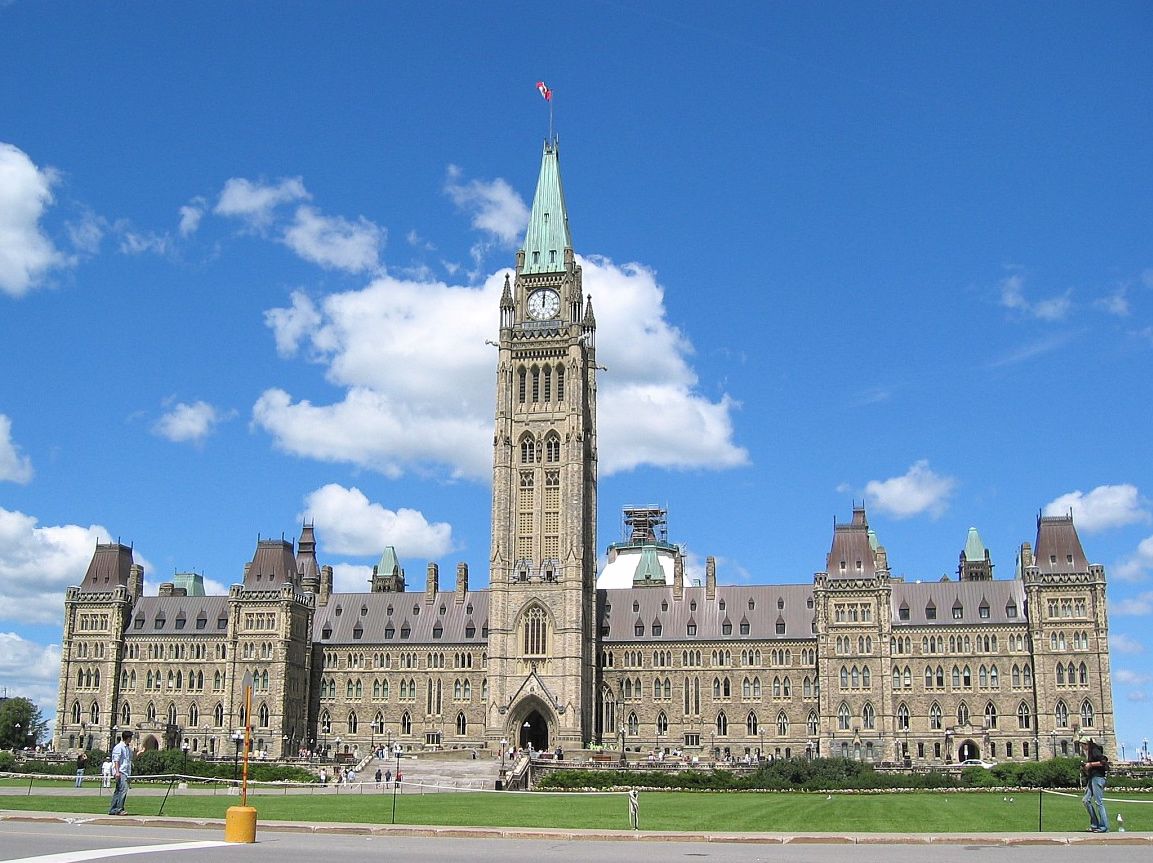
The Supreme Court reference and its ruling
On 30 September 1996, the federal government submitted the Reference re Secession of Quebec to the Supreme Court of Canada. The court's opinion, delivered on 20 August 1998, provided the constitutional bedrock for the Clarity Act. The court unanimously concluded that Quebec cannot secede unilaterally under Canadian or international law. However, the Government of Canada would have to enter into negotiations with the Quebec government if Quebecers expressed a clear will to secede. It confirmed that the Parliament of Canada had the power to determine whether or not a referendum question was clear enough to trigger such negotiations.
The court stated the Constitution of Canada would remain in effect until terms of secession were agreed to by all parties involved, through an amendment to the Constitution, which needs the consent of the federal Parliament and every province. The court explicitly declined to define what constitutes a clear question or a clear majority, stating these were political determinations for elected officials. It also outlined the complex issues any negotiation would need to address, such as economics, debt, minorities, Aboriginals, and boundaries. Both the federal and Quebec governments publicly expressed satisfaction with the ruling, which stated both that Quebec could not legally separate unilaterally from Canada, and that the Government of Canada would have a legal obligation to enter into separation negotiations with Quebec in the event that a clear majority of its populace were to vote in favour of independence.
Legislative development and passage
Following the Supreme Court ruling, the federal government drafted the Clarity Act, introduced as Bill C-20 on 13 December 1999. The House of Commons passed the bill on 15 March 2000 and the Senate gave its final approval on 29 June 2000, the same day it received royal assent. The act's passage was not without significant political drama. In October 1999, Minister Stéphane Dion hosted the First International Conference on Federalism in Mont Tremblant where U.S. President Bill Clinton delivered a speech warning of the complexities of secession. Clinton's speech, which looked directly at Quebec Premier Lucien Bouchard, asked if minority rights as well as majority rights would be respected and how neighbours would cooperate. Clinton argued that federalism allows peoples seeking recognition of their identity a way to do so without isolating themselves in a nation-state.
The political reactions to the Clarity Act were sharply polarized. In the House of Commons, the legislation was supported by the governing Liberals, the New Democratic Party, and the Canadian Alliance. The act was opposed by the Bloc Québécois and the Progressive Conservative Party led by former Prime Minister Joe Clark. Following its adoption, an open letter supporting Quebec's right to self-determination was published and signed by numerous intellectuals from Quebec and other parts of Canada. A private member's bill, the Quebec Contingency Act (Bill C-341), had been introduced in 1996 to establish conditions for a Quebec separation referendum but did not proceed past first reading.
- Quebec Premier Lucien Bouchard denounced the act as an assault against good sense and democracy.
- Reform Party MP Grant Hill called the act too vague in its requirements.
- Alliance Quebec leader William Johnson said it would prevent the promulgation of misinformation by separatists.
- Former Prime Minister Jean Chrétien has often stated that the act was among his proudest achievements in federal politics.
- Former Quebec Premier Jacques Parizeau said in a 2005 CTV News interview that the act meant nothing and would be ignored.
- NDP Leader Jack Layton announced his support for the act during the 2005 federal election campaign, contrasting his 2004 election comments.

Key provisions of the act
The Clarity Act operationalizes the Supreme Court's ruling through several specific provisions. Its core mechanism is to grant the House of Commons decisive authority over two thresholds in any future referendum process. First, the House must assess whether a proposed provincial referendum question is clear before a vote is held. The act specifies that any question not solely about secession is to be considered unclear, directly targeting the combined sovereignty-and-partnership question used in 1995. Second, after a vote, the House must determine if a clear majority has expressed itself in favour of secession, implying that some sort of supermajority is required for success.
The Clarity Act outlines the mandatory framework for any subsequent negotiations following a clear vote for secession. It states that all provinces and the Indigenous peoples were to be part of the negotiations. The act affirms that the secession of a province of Canada would require an amendment to the Constitution of Canada. Any negotiations would need to consider many issues of great complexity and difficulty, and the Constitution would remain in effect until terms were agreed upon through a constitutional amendment.
- The House of Commons has the power to decide if a referendum question is clear before the public vote.
- Any question not solely referring to secession is deemed unclear.
- The House of Commons determines whether a clear majority has been achieved after a referendum.
- All provinces and Indigenous peoples must be part of any secession negotiations.
- Secession requires an amendment to the Constitution of Canada, needing the consent of Parliament and every province.
- The terms of secession must respect principles of democracy, and minority and individual rights as outlined in the Canadian constitution.
Quebec's response: The passage of Bill 99
The Quebec government's response to the federal Clarity Act was swift. Two days after the act had been introduced in the Canadian House of Commons, the Parti Québécois government passed An Act respecting the exercise of the fundamental rights and prerogatives of the Québec people and the Québec State. This provincial act, known as Bill 99, was inspired by the same decision of the Supreme Court of Canada that the Clarity Act was. Bill 99 emphasizes the right to self-determination according to public international law and claims the right to territorial integrity of the province of Quebec. The act also recognizes the rights of Quebec's English-speaking minority and of the aboriginal nations of Quebec.
The most direct challenge to the federal Clarity Act is found in Article 13 of Quebec's Bill 99. Article 13 states that no other parliament or government may reduce the powers, authority, sovereignty or legitimacy of the National Assembly. It also states no other government may impose constraint on the democratic will of the Québec people to determine its own future. This created a formal legal conflict between the federal and provincial laws. Both laws were based on the same Supreme Court of Canada ruling but assert contradictory authorities over the rules for a sovereignty referendum.
The act in political and legal context
The Clarity Act has never been invoked, as no province has held a secession referendum since its enactment. The act gives the House of Commons the power to decide whether a proposed referendum question was considered clear before the public vote. It also gives the House of Commons the power to determine whether a clear majority had expressed itself following any referendum vote. The secession of a province would require an amendment to the Constitution of Canada. The act exists alongside Quebec's Bill 99, creating a potential constitutional impasse.
The Clarity Act was a central element of Prime Minister Jean Chrétien's government's strategy after the 1995 Quebec referendum. Its creation was a defining chapter in the career of Stéphane Dion, who was appointed Minister of Intergovernmental Affairs in 1996. The act applies to all provinces, but was created in response to the Quebec independence movement. The Supreme Court had stated that nobody seriously suggests that our national existence, seamless in so many aspects, could be effortlessly separated along what are now the provincial boundaries of Quebec.
Distinction from other legislation named CLARITY Act
It is important to distinguish the Canadian Clarity Act of 2000 from unrelated American legislation. In the United States, the Digital Asset Market Clarity Act, also known as the CLARITY Act of 2025, is proposed legislation concerning the regulation of cryptocurrency. This U.S. bill passed the House of Representatives on 17 July 2025. It was approved by the Senate Banking Committee on 14 May 2026 in a 15 to 9 vote. As of late 2026, the American CLARITY Act had not yet been enacted into law.
The Canadian Clarity Act is a constitutional statute dealing with national unity and secession. The American CLARITY Act is a financial regulatory framework for digital assets. The American bill attempts to draw a clearer line between digital commodities and securities. The shared name is coincidental. The Canadian Clarity Act remains a unique piece of legislation in global terms.
Questions about Clarity Act
What was the main purpose of the Clarity Act?
The main purpose of the Clarity Act was to establish the conditions under which the Government of Canada would enter into negotiations that might lead to secession following a vote by one of the provinces. It was created in response to the 1995 Quebec referendum and ongoing independence movement in that province. The content of the act was based on the 1998 secession reference to the Supreme Court of Canada. The act gives the House of Commons the power to decide whether a proposed referendum question is clear and to determine if a clear majority has expressed itself.
Did the Clarity Act specify what a clear majority vote would be?
No, the Clarity Act did not specify a numerical threshold for a clear majority, such as 60 percent or two thirds. Following the Supreme Court's lead, it deliberately left this definition to the political judgment of the House of Commons. The act states that the House must assess whether a clear majority has expressed itself, implying that a simple majority of 50 percent plus one may not be sufficient. This intentional vagueness was a strategic choice to allow flexibility in response to future circumstances.
How did the Government of Quebec react to the Clarity Act?
The Parti Québécois government of Quebec reacted with strong opposition, denouncing the act as an undemocratic infringement on Quebec's rights. Just two days after the federal bill was introduced, Quebec's National Assembly passed its own legislation, Bill 99. This mirror law asserts the Quebec people's right to self-determination and the territorial integrity of the province. It directly contradicts the federal act by stating that no other parliament can constrain the democratic will of Quebecers. This created a fundamental legal and political conflict between the two levels of government.
What role did Stéphane Dion play in creating the Clarity Act?
As Minister of Intergovernmental Affairs appointed in 1996, Stéphane Dion was the principal architect of the federal government's legal and political strategy leading to the Clarity Act. He authored three influential open letters challenging sovereigntist arguments on unilateral secession and majority rule. Dion also submitted the three questions to the Supreme Court of Canada that resulted in the 1998 Secession Reference. He then spearheaded the drafting of the Clarity Act to implement the court's ruling and organized the 1999 International Conference on Federalism to bolster international support for the federalist position.
Can a province legally separate from Canada under the Clarity Act?
The Clarity Act does not grant a province the right to separate unilaterally. It establishes that if a clear majority on a clear question votes for secession, the federal government has a constitutional duty to enter into negotiations. However, the act reaffirms that secession would require a formal amendment to the Constitution of Canada, which needs the consent of the federal Parliament and all provinces. The process is therefore one of negotiation, not unilateral declaration. The terms of secession must respect principles of democracy and minority rights.
Is the Clarity Act only about Quebec?
While the Clarity Act was created specifically in response to the Quebec sovereignty movement, it is written to apply to all provinces generically. Its provisions concerning referendum clarity, majority assessment, and negotiation requirements are not named for Quebec. This universal application was a deliberate legal and political choice to frame the law as a matter of national constitutional principle. In practice, however, its genesis and every political discussion surrounding it have been entirely focused on the context of Quebec secession, as no other province has held a serious referendum on leaving Confederation.
Sources and further reading
- Clarity Act (Wikipedia)
- CLARITY Act: Senate Banking Releases New Text, Sets ... (galaxy.com)
- Clarity Act 2026 Update: Crypto Bill Status and AML Impact (amlwatcher.com)
- What the Senate Vote Means for Canadian Crypto Firms (web3canada.ca)
Checked by the Nosy Mag desk. Last updated 2026-10-23.