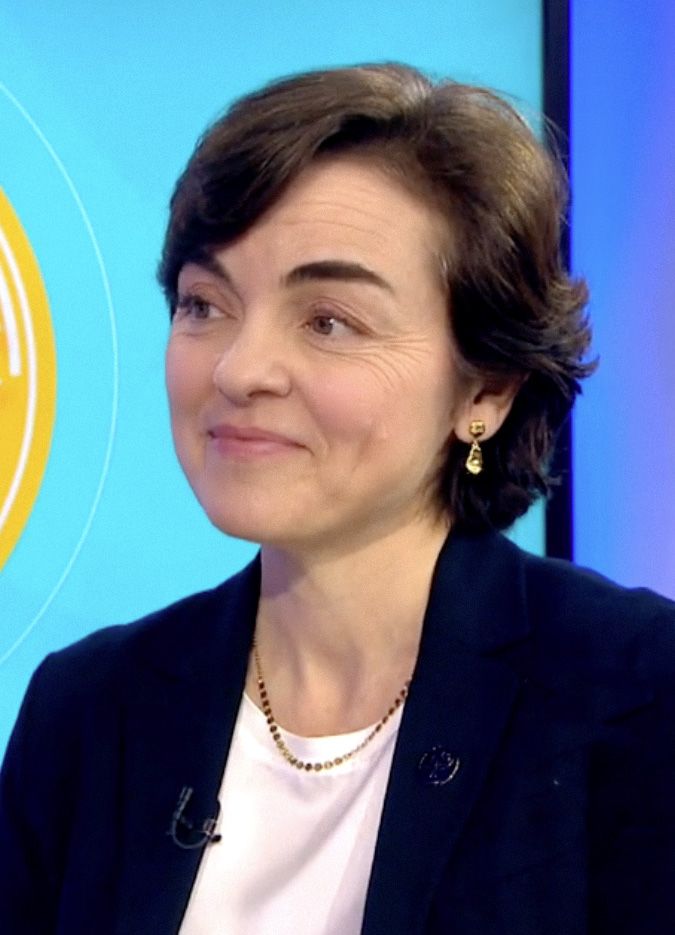
Mark Carney
Mark Joseph Carney is the 24th prime minister of Canada and leader of the Liberal Party of Canada, serving since March 2025. A former central banker who served as Governor of the Bank of Canada and later as Governor of the Bank of England, Carney entered politics directly by winning the Liberal leadership in 2025. As prime minister, he has led a minority and subsequently a majority government, focusing on economic resilience, housing, and managing a period of significant trade tensions and national unity challenges. His tenure is defined by a centrist, technocratic approach to governance and a central role in campaigning against Alberta's 2026 referendum on pursuing independence.
Early Life and Education
Mark Joseph Carney was born on March 16, 1965, in Fort Smith, Northwest Territories, at St. Ann's General Hospital. When he was six years old, his family moved to Edmonton, Alberta, where he was raised in the Laurier Heights neighbourhood. He is the son of Verlie Margaret Carney, a stay at home mother originally from Britannia Beach, British Columbia, and Robert J. Carney, a high school principal and professor at the University of Alberta. His father was the Liberal candidate for Edmonton South in the 1980 federal election, finishing second, and three of his four grandparents were Irish immigrants from County Mayo. Carney graduated as valedictorian from St. Francis Xavier High School in Edmonton in 1983 before moving to the United States for university.
Carney attended Harvard University on a partial scholarship and financial aid, living at Winthrop House and graduating magna cum laude with a bachelor's degree in economics in 1987. While at Harvard, he was a backup goalie for the varsity ice hockey team and was a roommate of future NHL general manager Peter Chiarelli and former ice hockey player Mark Benning. He then travelled to Europe for postgraduate studies at the University of Oxford, where he attended St Peter's College and Nuffield College. He earned a Master of Philosophy in economics in 1993, with a thesis on competitive advantage, and a Doctor of Philosophy in economics in 1995, with a thesis titled 'The dynamic advantage of competition' under advisor Margaret Meyer. At Oxford, he was co captain of the Oxford University Ice Hockey Club alongside David Lametti, whom he would later appoint as Canada's Permanent Representative to the UN. Carney was elected to Harvard University's Board of Overseers in 2021 but resigned in early 2025 upon assuming leadership of the Liberal Party.
Financial Career at Goldman Sachs and Department of Finance
Carney began his professional career with a 13 year stint at the investment bank Goldman Sachs, working from 1988 to 1993 and again from 1995 to 2003. He worked in the firm's Boston, London, New York City, Tokyo, and Toronto offices, holding progressively more senior positions including co head of sovereign risk, executive director for emerging debt capital markets, and managing director for investment banking. His work involved South Africa's post apartheid venture into international bond markets and Goldman's involvement during the 1998 Russian financial crisis. In 2003, he left the private sector to join the Bank of Canada as a deputy governor, marking a shift to public service.
One year later, on November 15, 2004, Carney was recruited to the Department of Finance Canada as the senior associate deputy minister and G7 deputy. He served in this role until October 2007 under two finance ministers: Liberal Ralph Goodale and Conservative Jim Flaherty. During this time, he oversaw the Government of Canada's controversial plan to tax income trusts at source and led the federal government's profitable sale of its 19 per cent stake in Petro Canada. This experience in high level fiscal policy and government operations provided a foundation for his subsequent appointment as the country's top central banker.
Governor of the Bank of Canada and Financial Crisis Leadership
In October 2007, Carney was appointed Governor of the Bank of Canada, formally assuming the role on February 1, 2008, succeeding David Dodge. His appointment, chosen over senior deputy governor Paul Jenkins, made him the youngest central bank governor among the G8 and G20 nations at the time. His tenure began at the onset of the 2008 global financial crisis, and his early and decisive actions are widely credited with helping Canada weather the crisis better than most other advanced economies. A key decision was cutting the overnight interest rate by 50 basis points in March 2008, one month after his appointment, while other central banks like the European Central Bank were still raising rates.
As the crisis deepened and policy rates hit the effective lower bound, the Bank of Canada used unconventional tools, including a 'conditional commitment' in April 2009 to keep interest rates at that low level for at least one year to boost domestic credit conditions and market confidence. Canada's economy outperformed its G7 peers during the crisis, becoming the first to see both its GDP and employment recover to pre crisis levels. Carney's leadership earned him international recognition, including being named to the Time 100 list in 2010, 'Central Bank Governor of the Year' by Euromoney in 2012, and 'Most Trusted Canadian' by Reader's Digest in 2011. During this period, he also served as chairman of the Bank for International Settlements' Committee on the Global Financial System from 2010 to 2012.
Chair of the Financial Stability Board and International Profile
On November 4, 2011, Carney was named chairman of the Financial Stability Board, the Basel based body that coordinates international financial regulatory authorities. He credited his appointment to the strong reputation of Canada's financial system and its role in developing international reforms. The three year term was a part time commitment that allowed him to complete his term at the Bank of Canada. In his first press conference as chairman in January 2012, he laid out his key priorities for the board, which had just published a list of 29 globally systemically important banks. In November 2014, while serving as Governor of the Bank of England, Carney was reappointed to a second term as FSB chairman, which lasted until 2018.
Carney's international engagements during this time extended beyond the FSB. He was a member of the Group of Thirty, an international body of financiers and academics, and served on the Foundation Board of the World Economic Forum. He also attended the annual meetings of the Bilderberg Group in 2011, 2012, and 2019. These roles solidified his reputation as a key figure in global financial governance and policy coordination in the aftermath of the 2008 crisis.
Governor of the Bank of England
On November 26, 2012, Chancellor of the Exchequer George Osborne announced the appointment of Carney as the 120th Governor of the Bank of England. He succeeded Sir Mervyn King on July 1, 2013, becoming the first Commonwealth citizen from outside Britain to hold the role since the bank's founding in 1694. Although the usual term is eight years, Carney initially indicated he would serve only five years, until 2018. His reported pay package was about £624,000 per year, roughly £100,000 more than his predecessor. Before taking the post, he had publicly disagreed with the Bank's Andy Haldane on bank regulation, stating Haldane lacked a 'proper understanding of the facts'.
Carney modernized the bank's communications, making many more media appearances than his predecessors. He implemented a policy called 'forward guidance', stating the Bank would not raise interest rates while unemployment remained above 7 per cent to encourage business lending, though the policy was later criticized as confusing. In 2014, he warned that the UK's heated housing market was the biggest risk to financial stability, noting that limited supply was the core issue and that Canada built twice as many homes with half the population. That same year, he stated that an independent Scotland would likely not be able to use the pound sterling without ceding powers to the UK.
During the 2016 Brexit referendum, Carney warned that leaving the European Union could cause a recession. After the vote to leave, he assured the public the financial system would operate normally and the bank cut interest rates from 0.5 per cent to 0.25 per cent and restarted quantitative easing. At the urging of Prime Minister Theresa May and Chancellor Philip Hammond, he extended his term multiple times to support Brexit negotiations, finally agreeing to an extra seven months in September 2018 and a further two months for an orderly transition to his successor, Andrew Bailey. His final act as governor in March 2020 was to cut interest rates by 0.5 per cent at the start of the COVID 19 pandemic.
Post-Governorship Roles and Climate Finance Advocacy
After leaving the Bank of England, Carney took on several private sector and advisory roles with a focus on climate finance. In October 2020, he became vice chairman at Brookfield Asset Management, leading its environmental, social, and governance and impact fund investment strategy. In February 2021, he retracted an earlier claim that Brookfield's portfolio was carbon neutral after criticism that the claim relied on 'avoided emissions' from renewable investments rather than offsetting emissions from fossil fuel holdings. In 2020, he also launched the Taskforce on Scaling Voluntary Carbon Markets, an initiative to increase carbon offset trading sponsored by the Institute of International Finance with members from major firms like Bank of America, BlackRock, and BP.
Carney served as the United Nations Secretary General's Special Envoy on Climate Action and Finance from 2020. In February 2021, he joined the board of fintech company Stripe and later became an advisor to the climate tech company Watershed from 2022 to January 2025. At the COP26 climate conference in Glasgow in November 2021, he helped launch the Glasgow Financial Alliance for Net Zero, acting as its co chair. Alongside these roles, in 2020 he served as an informal advisor to Prime Minister Justin Trudeau on Canada's COVID 19 economic response, which fuelled speculation about his future political career.
Liberal Leadership and Path to Prime Minister
Following Prime Minister Justin Trudeau's announcement of his resignation in 2025, Carney entered the Liberal Party leadership race. Despite having never held elected office, he won the leadership election in a landslide victory. As the new Liberal leader, he advised the governor general to dissolve Parliament, triggering a federal election. Carney led the Liberals to a minority government victory, overturning previous poor opinion polling to win the party's fourth consecutive mandate since 2015. He was elected as the Member of Parliament for the riding of Nepean in April 2025. Approximately a year later, his government gained a majority through opposition MPs crossing the floor and by election victories, solidifying his position in the House of Commons.
Prime Ministership and Domestic Policy Agenda
As prime minister, Carney has pursued a centrist, technocratic agenda often described as Blue Grit Liberalism, moving the Liberal Party toward the political centre. Key early domestic policies included the removal of the federal consumer carbon tax, a move noted for improving relations with energy producing provinces like Alberta. His government passed the One Canadian Economy Act, or Bill C 5, and established a Major Projects Office, initiatives framed as responses to a trade war with the United States and aimed at strengthening economic resilience. Other signature policies include the launch of the Build Canada Homes agency to address the housing crisis and the introduction of the Canada Groceries and Essentials Benefit to support household costs.
Mark Carney's government has announced a new strategy to transform Canada's auto industry. His government has also introduced concrete measures to support workers and industries across the country. In October 2026, Prime Minister Carney announced new measures to defend and transform Canada's Northern and Arctic region. This strategy aims to strengthen security, create prosperity, and reinforce strategic autonomy. These policies are part of what his government terms a plan to build, protect, and empower Canada amid global uncertainty.
The Alberta Referendum and National Unity Challenge
A defining challenge of Carney's first term has been the Alberta sovereignty referendum in October 2026. The vote asked Albertans whether to instruct the government to begin the legal process toward a future referendum on separation. Carney, who grew up in the province and is a noted Edmonton Oilers fan, undertook a vigorous two day 'Forever Canadian' barnstorming tour, holding rallies in Calgary and Edmonton. He framed the vote as a dangerous gamble at the worst possible time, warning that external threats, including a trade war with the United States and remarks from US President Donald Trump, made national unity essential. He stated that some outside Canada's borders were 'working to break us so they can own us'.
Carney campaigned alongside Alberta Premier Danielle Smith, who opposed independence but called the referendum. Smith praised Carney for improving federal provincial relations compared to his predecessor, noting 'real change in the last 18 months'. Carney acknowledged Alberta's longstanding resentment of federal energy policies, recalling how Ottawa made Albertans feel their resources were not their own. He made a personal appeal, stating 'Alberta is my home. This city, this province, this country have given me everything'. Outside his rally in Edmonton, independence supporters waved flags and held a sign reading 'Say no to Carney's new world order'. Premier Smith cited a poll showing 22 per cent support for separation, a figure she said was too high, while some Albertans angry with the vote called it a 'travesty' driven by a small, vocal minority.
Foreign Policy and Defence Strategy
Prime Minister Carney's foreign policy has emphasized strengthening Canada's strategic autonomy and international partnerships in a period of global uncertainty. His government has overseen a sharp increase in defence spending, a response to a more volatile global environment and direct trade pressure. In a significant diplomatic shift, Canada formally recognized the State of Palestine under his leadership. The government has also worked to improve relations with major economies like China and India while maintaining Canada's continued support for Ukraine in the Russo Ukrainian war. A central theme has been reducing economic dependence on the United States amid a trade war, with Carney publicly stating that the US is trying to 'break' Canada, a message he reiterated during the Alberta referendum campaign. His government's Northern and Arctic strategy is designed to bolster Canadian sovereignty and security as part of a broader approach combining traditional alliance support with efforts to diversify economic partnerships.
Questions about Mark Carney
What did Mark Carney do before becoming prime minister?
Before entering politics, Mark Carney had a distinguished career in finance and central banking. He spent 13 years at Goldman Sachs in various international roles including co head of sovereign risk and managing director. He served as the Governor of the Bank of Canada from 2008 to 2013, steering monetary policy through the global financial crisis. Subsequently, he was the Governor of the Bank of England from 2013 to 2020, the first non British person to hold that role. After his central banking career, he held senior roles at Brookfield Asset Management, served as a UN climate envoy, and was an informal advisor to Prime Minister Justin Trudeau on the COVID 19 economic response.
How did Mark Carney become prime minister without prior political experience?
Mark Carney became prime minister after winning the leadership of the Liberal Party of Canada in 2025, following the resignation of former prime minister Justin Trudeau. Despite having never held elected office, his high profile as a former central bank governor and his economic expertise led to a landslide victory in the party leadership race. He then advised the governor general to dissolve Parliament and led the Liberals to a minority government victory in the subsequent federal election, winning a seat in the riding of Nepean. His government later gained a majority through opposition MPs crossing the floor and by election victories approximately a year later.
What is Mark Carney's stance on Alberta separation?
Prime Minister Mark Carney is a staunch opponent of Alberta separation. In October 2026, he campaigned intensely against a provincial referendum that sought a path toward independence, holding 'Forever Canadian' rallies in Calgary and Edmonton. He argued that separation is a dangerous gamble, particularly during a time of trade tensions with the United States, warning a vote against Canada would lead to years of deep uncertainty. Carney, who grew up in Alberta, leveraged his personal connection to the province, acknowledging past federal policy resentments while urging Albertans to choose unity and not take the outcome for granted.
What are some key policies of Prime Minister Carney's government?
Key policies of the Carney government include the removal of the federal consumer carbon tax, the passage of the One Canadian Economy Act, and the establishment of a Major Projects Office to bolster economic resilience amid a trade war with the US. His administration launched the Build Canada Homes agency to address the housing crisis and created the Canada Groceries and Essentials Benefit. In foreign policy, his government has significantly increased defence spending, formally recognized the State of Palestine, and pursued improved relations with China and India while supporting Ukraine. He has also announced strategies for the auto industry and the Arctic region.
Where did Mark Carney go to university?
Mark Carney completed his undergraduate education at Harvard University, graduating magna cum laude with a bachelor's degree in economics in 1987. He then attended the University of Oxford for his postgraduate studies, where he earned a Master of Philosophy in 1993 and a Doctor of Philosophy in 1995, both in economics. His doctoral thesis was titled 'The dynamic advantage of competition' and his advisor was Margaret Meyer. While at Harvard, he played as a backup goalie for the varsity ice hockey team and lived at Winthrop House. He was later elected to Harvard's Board of Overseers in 2021.
What is Mark Carney's political ideology?
Mark Carney is ideologically characterized as a centrist and a technocrat. His approach to governance is often described as 'Blue Grit' Liberalism, indicating a shift of the Liberal Party toward the political centre with an emphasis on fiscal prudence and economic management. As prime minister, his policies reflect this pragmatic, economically focused worldview, balancing social programs with initiatives designed to strengthen Canada's economic independence and resilience in the face of global challenges and trade tensions. He is seen as a leader who applies his financial and policy expertise directly to government decision making.
Sources: Wikipedia and current public reporting, checked by the Nosy Mag desk. Last updated 2026-10-18.