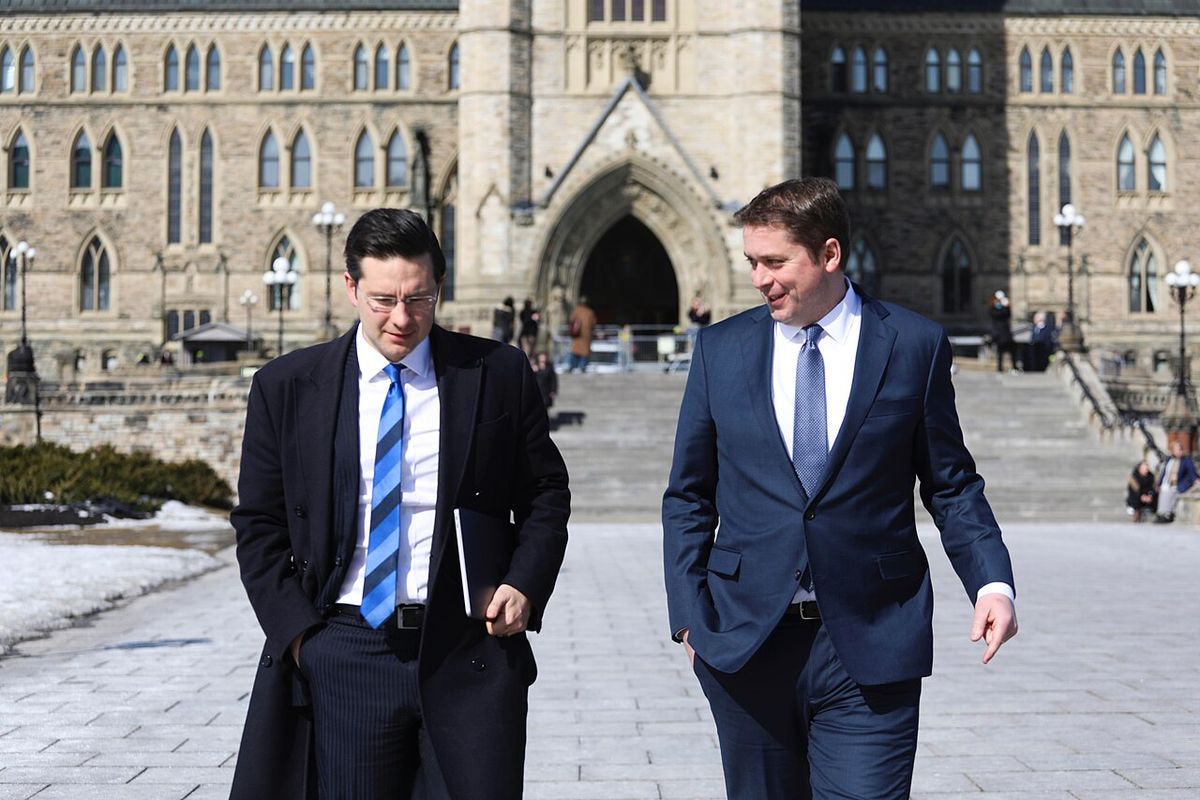
Jean Charest
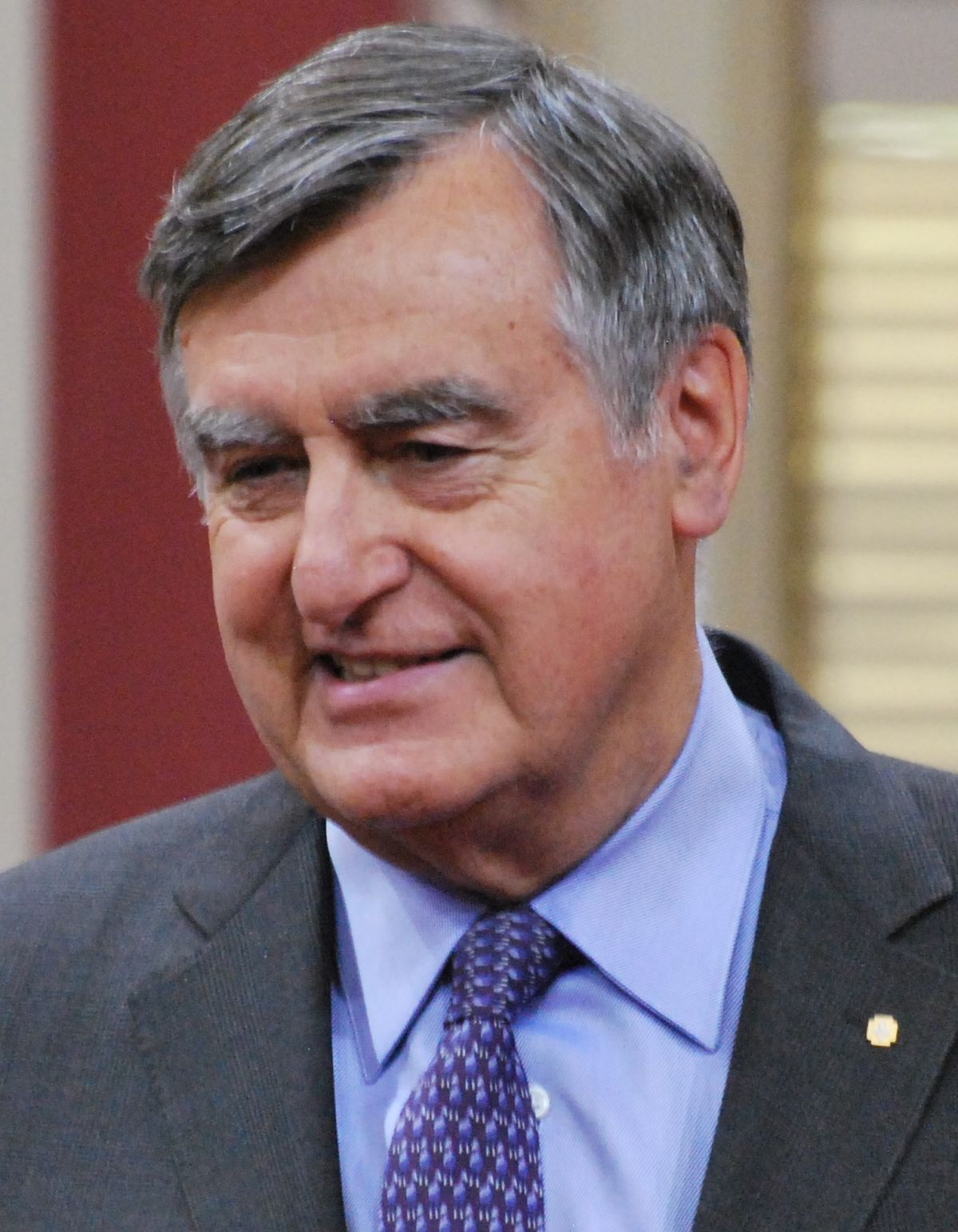
Jean Charest is a Canadian lawyer and former politician who served as the 29th premier of Quebec from 2003 to 2012. His political career spanned three decades at the highest levels of both federal and provincial government, including roles as Deputy Prime Minister of Canada and leader of the federal Progressive Conservative Party. Charest is known for his federalist leadership in Quebec and his advocacy for major economic and trade initiatives. After leaving politics, he returned to legal practice and consultancy. In 2022, he was a candidate in the Conservative Party of Canada leadership election, finishing second. As of 2026, he is a senior advisor at the global advisory firm Teneo based in Montreal.
Early Life and Legal Career
Jean Charest was born on June 24, 1958, in Sherbrooke, Quebec, to Rita Leonard, an Irish Quebecer, and Claude "Red" Charest, a French Canadian. He grew up in Quebec's Eastern Townships and became fully bilingual in French and English. Charest pursued legal studies at the Université de Sherbrooke, obtaining his law degree and being admitted to the Barreau du Québec in 1981. He married Michèle Dionne on June 21, 1980, and the couple have three children, Amélie, Antoine, and Alexandra. Before entering politics, Charest worked as a lawyer. His entry into public life came with the 1984 federal election, where he was elected as the Progressive Conservative Member of Parliament for his hometown riding of Sherbrooke. In the 1980 Quebec referendum on sovereignty, Charest did not vote because he was getting married on the day of the vote.
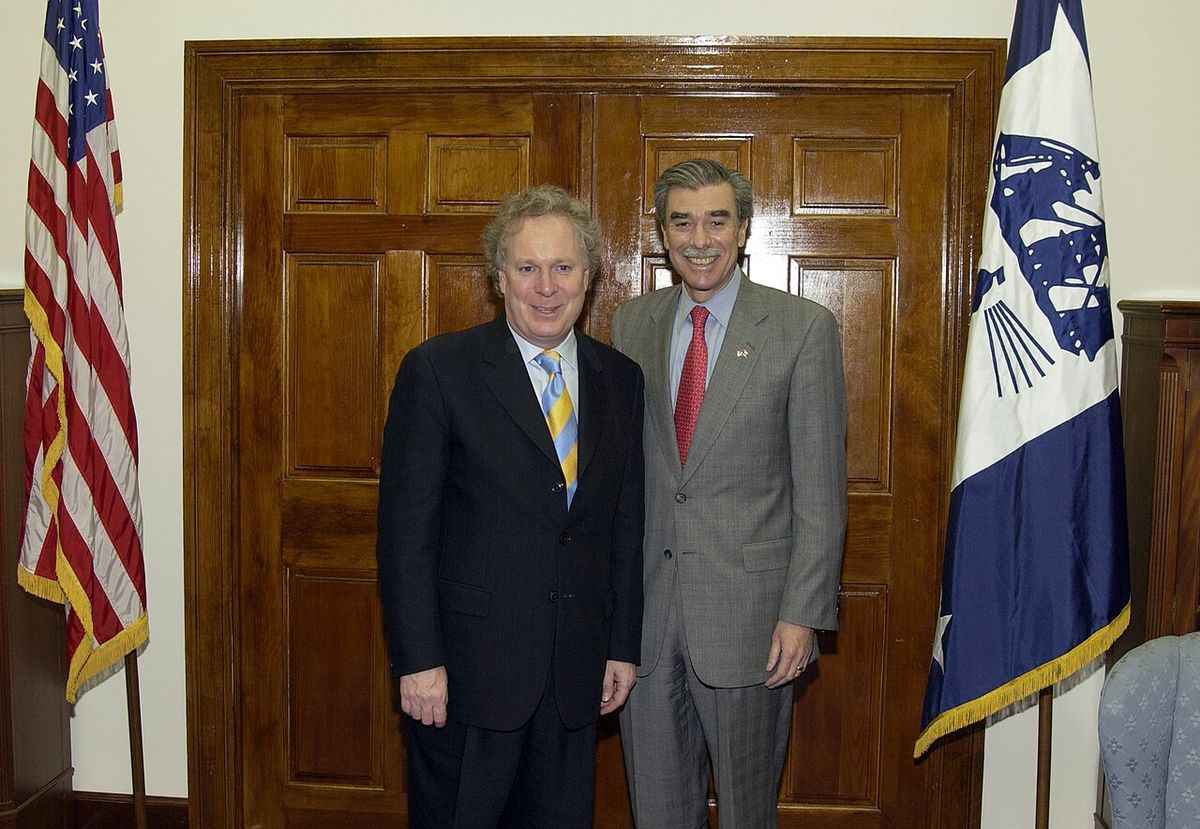
Federal Political Career (1984 to 1998)
Charest's federal career began with his election in the Progressive Conservative landslide of 1984. From 1984 to 1986, he served as the Assistant Deputy Chair of Committees of the Whole in the House of Commons. His rapid ascent continued in 1986 when, at age 28, Prime Minister Brian Mulroney appointed him as minister of state for youth, making him the youngest cabinet minister in Canadian history. He later served as minister of state for fitness and amateur sport but resigned from cabinet in 1990 after improperly speaking to a judge about an active court case involving the Canadian Track and Field Association. Charest was a key player in the debates surrounding the failed Meech Lake Accord in 1990, chairing a committee that proposed a companion accord intended to address concerns from other provinces. This companion accord would have asserted that the distinct society clause was subject to the Charter of Rights and featured greater protections for minority language rights, but it contributed to the resignation of Environment Minister Lucien Bouchard, who later founded the Bloc Québécois.
He returned to cabinet in 1991 as the minister of the environment and minister of consumer and corporate affairs. In this role, he led the Canadian delegation to the landmark 1992 Earth Summit in Rio de Janeiro. Following Mulroney's retirement, Charest contested the 1993 Progressive Conservative leadership, finishing a strong second to Kim Campbell. During that campaign, lobbyist Karlheinz Schreiber alleged he gave $30,000 in cash to Charest's brother to help fund the bid, though Charest stated the amount was $10,000 and such cash donations were permitted under federal rules at the time. He then served as deputy prime minister and minister of industry, science and technology in Campbell's short-lived government. The 1993 federal election was catastrophic for the PCs, reducing the party to just two seats, one of which was Charest's in Sherbrooke where he won 56 percent of the vote. As the senior surviving PC figure, he was appointed interim leader in late 1993 and confirmed as party leader in April 1995, becoming the first person of francophone descent to lead the federal Progressive Conservative Party.
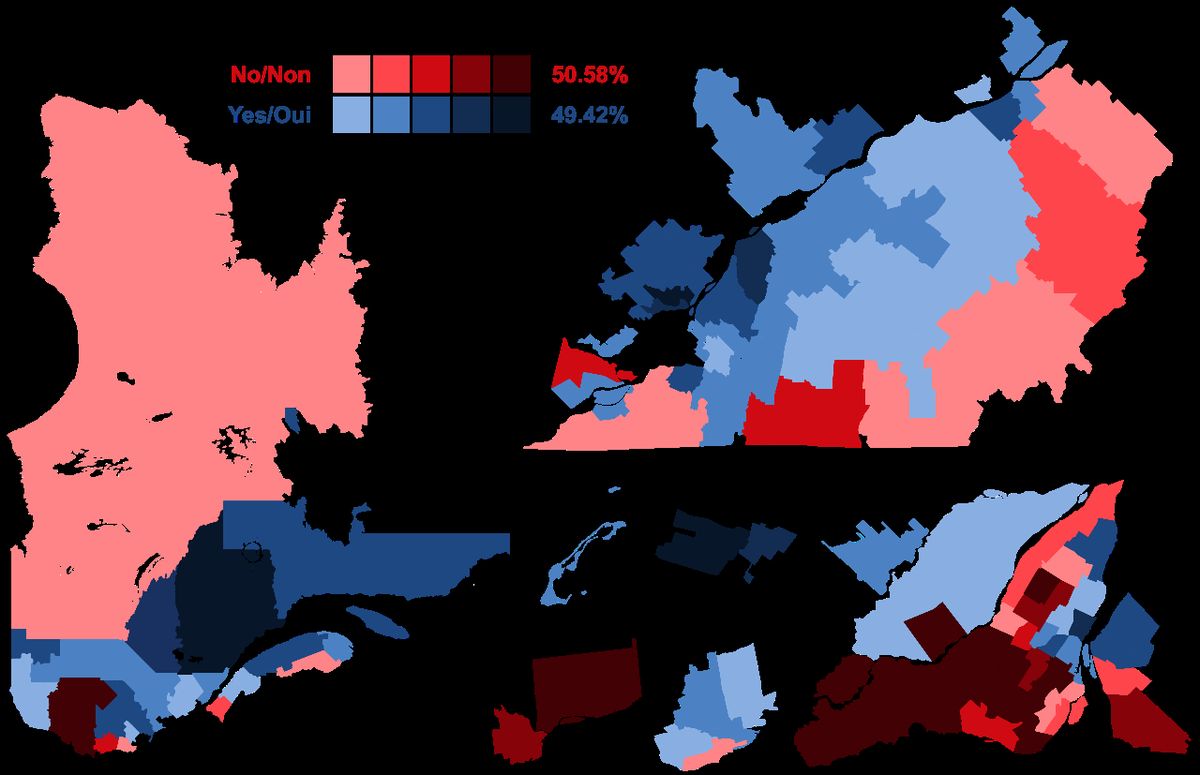
As PC leader, Charest focused on national unity and a moderate platform. During the 1995 Quebec referendum on sovereignty, he served as vice-president of the federalist "No" campaign. He led the party into the 1997 federal election with a platform centred on securing national unity by recognizing Quebec as a distinct society within Canada and proposing a New Covenant for confederation to be negotiated between federal and provincial governments. The party recovered to win 20 seats and 18.8 percent of the popular vote, though the result was considered a disappointment as support was concentrated in Atlantic Canada and Quebec, failing to break through significantly in Ontario or the West. The Tories finished only half a percentage point behind the Reform Party in popular vote, but their support was too dispersed in the West and they were hampered by vote-splitting with Reform in rural central Ontario. In 1994, Charest was part of the World Economic Forum's Global Leaders for Tomorrow program.
- 1986: Appointed Minister of State for Youth, becoming Canada's youngest cabinet minister.
- 1992: Led Canadian delegation to the UN Earth Summit in Rio de Janeiro.
- 1993: Finished second in the PC leadership race to Kim Campbell. Served as Deputy Prime Minister.
- 1995: Confirmed as leader of the Progressive Conservative Party of Canada.
- 1997: Led the PCs to a recovery of 20 seats in the federal election.
Leadership of the Quebec Liberal Party and Premiership
In April 1998, amid considerable pressure from federalist business and political circles, Charest left federal politics to become leader of the Quebec Liberal Party, the province's main federalist political force. In the 1998 provincial election, the Liberals won the popular vote but the Parti Québécois secured more seats, forming another majority government. Charest won his seat in Sherbrooke by a margin of 907 votes. He led the party to victory in the 2003 election, ending nine years of PQ rule and becoming premier with a majority government of 76 seats. Charest won his own riding by 2,597 votes. He was re-elected in 2007, forming a minority government, and again in 2008, securing a historic third consecutive term and a return to majority governance, a feat not achieved in Quebec since the Quiet Revolution. The 2007 minority was the first in Quebec since 1878.
His government's economic policy included tax changes, green initiatives, and large-scale development projects. It implemented three increases to the Quebec sales tax (QST), raising it from 7.5 percent to 8.5 percent in 2011, to 9.5 percent in 2012, and finally to 9.975 percent in 2013. In 2007, Quebec became the first Canadian province to implement a carbon tax, initially set at 0.8 cents per litre of gasoline and 0.9 cents per litre of diesel fuel. A signature initiative was the 2011 launch of Plan Nord, a 25-year economic development strategy to foster over $80 billion in energy, mining, and forestry investments north of the 49th parallel, aiming to create or consolidate 20,000 jobs annually. The plan received support from the mining industry and Cree and Inuit representatives but faced opposition from the Innu and many environmentalists. Charest was also an early proponent of free trade with the European Union, a vision that later materialized in the Comprehensive Economic and Trade Agreement (CETA), and he concluded an innovative labour mobility agreement with France.
Charest's environmental policy sought to distinguish Quebec on the national stage. He vocally opposed the federal government's decision to opt out of the Kyoto Protocol and committed Quebec to meeting its own Kyoto targets. His government set ambitious greenhouse gas reduction targets, updated petroleum royalties, and introduced a 2011 to 2020 Action Plan for Electric Vehicles. The Sustainable Development Act was passed, adding the right to a healthful environment in which biodiversity is preserved to Quebec's Charter of Rights and Freedoms. For this work, Charest was awarded the Fray International Sustainability Award in 2012. Much of his fiscal policy was based on expectations of new revenue from a resolution of the federal-provincial fiscal imbalance, which the federal Harper government addressed in part through increased equalization payments.
Other significant policies and events marked his tenure. He partially fulfilled a 2003 election promise by allowing municipalities forcibly merged by the previous PQ government to hold demerger referendums, though the process was criticized for its restrictive rules. Municipalities needed a petition from 10 percent of the electorate and a voter turnout over 35 percent for a vote to be valid, which invalidated results like in Saint Laurent where 75.2 percent favoured demerger but turnout was only 28.6 percent. The resulting agglomeration council structure was seen as less democratic, concentrating power with mayors. Charest worked to expand Quebec's international presence, securing representation for the province at UNESCO. He stated that Quebec was a nation regardless of what other parts of Canada said. During the 2012 student protests against tuition fee increases, his government faced major demonstrations and passed the controversial Bill 78 to restrict protests, which was later revoked by the succeeding Marois government. The protests escalated in May 2012 when a demonstration at a Liberal party conference in Victoriaville was suppressed by police, and Education Minister Line Beauchamp resigned.
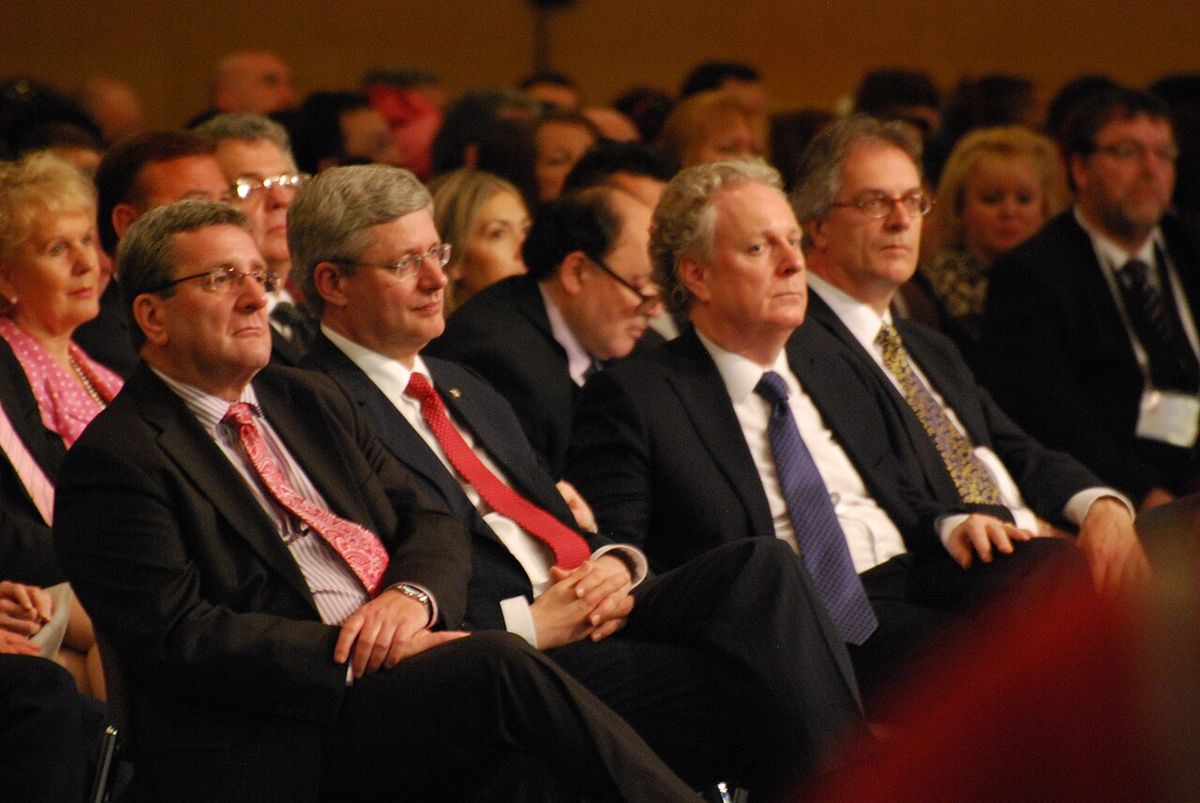
Controversies and the 2012 Election
Charest's third term was clouded by several controversies. Allegations of questionable party financing and scandals in Quebec's construction sector persisted. In 2010, his former justice minister, Marc Bellemare, alleged he had been pressured by Quebec Liberal fundraisers during judicial appointments in 2003, leading to the Bastarache commission where Charest testified in defence of his government. For years, Charest resisted calls for a public inquiry into corruption in the construction industry, despite a 2011 survey showing 77 percent of Quebecers supported one. He finally relented in 2012, establishing the Charbonneau commission in response to rising discontent within his own caucus. Earlier, in 2007, his name arose in a federal ethics committee investigation when lobbyist Karlheinz Schreiber alleged he gave $30,000 in cash to Charest's brother for his 1993 federal leadership bid, though Charest stated the amount was $10,000 and such donations were legal at the time. His tenure also saw the Caisse de dépôt et placement du Québec lose $39.8 billion during the financial crisis.
The combination of the student protests, corruption allegations, and general fatigue after nine years in power contributed to the Liberal defeat in the 2012 provincial election. The sovereigntist Parti Québécois, led by Pauline Marois, won a minority government, ending Charest's premiership. He also lost his own seat in Sherbrooke. The 2012 election result followed a period where his government was deeply unpopular, with approval ratings sometimes falling into the low twenties in voter support prior to the 2007 election, though he recovered somewhat after Parti Québécois leader André Boisclair's performance as Opposition leader was perceived as weak.
Post-Political Career and Return to Law
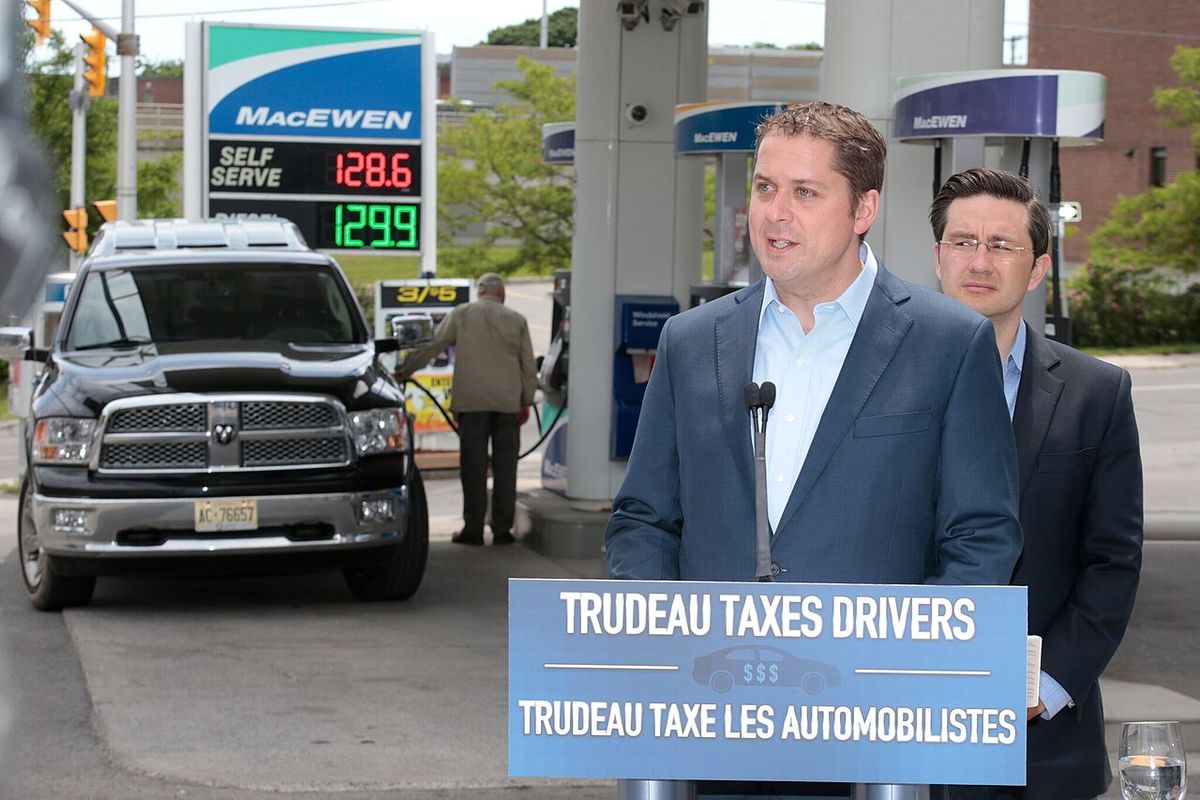
After leaving politics, Charest returned to the legal profession and consultancy. He became a partner at the law firm McCarthy Tétrault LLP and later at Therrien Couture Joli Cœur (TCJ) in Montreal. His consultancy work included advising the Chinese technology conglomerate Huawei on legal matters, including the Meng Wanzhou case and the company's 5G network plans in Canada. In 2022, he re-entered the political arena as a candidate in the Conservative Party of Canada leadership election, finishing a distant second to Pierre Poilievre. After turning 65 in June 2023, Charest reached the mandatory retirement age for equity partners at McCarthy Tétrault. He left that firm in January 2024 and joined the Therrien Couture Joli-Cœur group. As of 2026, he joined the global management consultancy Teneo as a senior advisor in its Montreal office, where he advises CEOs and business leaders on policy, geopolitical, and business issues. He remains a member of the Prime Minister’s Council on Canada-US Relations and the steering committee of the private sector Canada US Trade Council, which collaborates on tariff and CUSMA issues.
His post-political activities also include public speaking on topics like Canada-US relations, global trade, and strategic leadership. He offers insights on strategic negotiation, political leadership, and crisis management drawn from his nearly 30 years in public service. His son, Antoine Dionne Charest, entered politics and was sworn in as the Quebec Liberal representative for the Verdun riding ahead of the 2026 Quebec elections, with the former premier in attendance for the ceremony. Antoine is a candidate for the Liberals in the 2026 Quebec elections, continuing the family's involvement in public life.
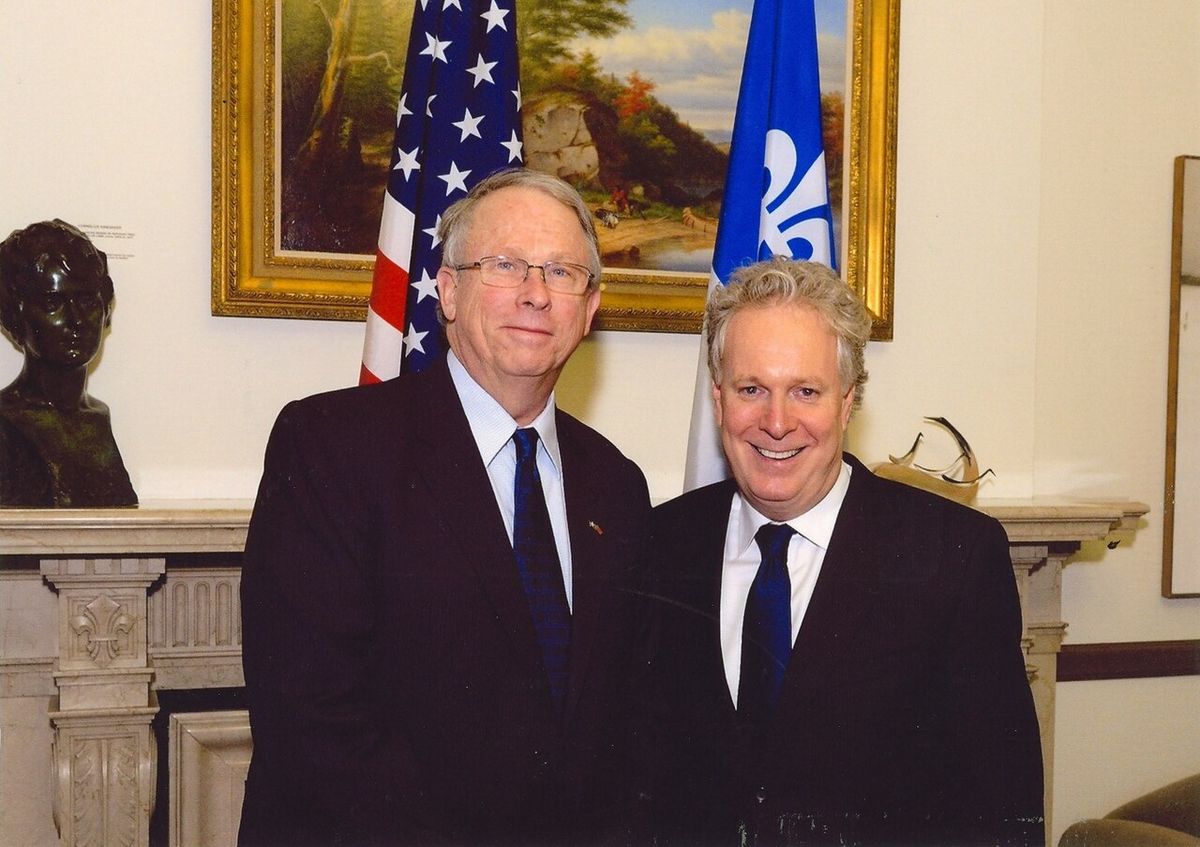
Electoral Record as Premier
Jean Charest led the Quebec Liberal Party through four general elections, securing three consecutive terms in office. The 1998 election saw the Liberals win the popular vote but the Parti Québécois secure more seats, forming a majority government. In the 2003 election, Charest led the party to a majority victory, ending nine years of PQ rule. The 2007 election produced Quebec's first minority government since 1878. In the 2008 snap election, Charest secured a historic third consecutive term and a return to majority governance. The 2012 election resulted in a Parti Québécois minority government and Charest's defeat in his own riding, concluding his nine-year tenure as premier.
Key Political Positions and Roles
Throughout his career, Jean Charest held a wide array of significant political offices at both the federal and provincial levels. His path took him from a backbench MP to the premier's office, with several historic milestones along the way. The following list outlines the major positions he occupied in chronological order, demonstrating a unique career that bridged federal and provincial politics and included leadership of two major political parties. His experience spans the critical national unity debates of the 1990s, federal environmental policy, and the management of Quebec's economy and international relations as premier.
- Member of Parliament for Sherbrooke (1984 to 1998)
- Assistant Deputy Chair of Committees of the Whole, House of Commons (1984 to 1986)
- Minister of State for Youth (1986 to 1988)
- Minister of State for Fitness and Amateur Sport (1988 to 1990)
- Minister of the Environment (1991 to 1993)
- Minister of Consumer and Corporate Affairs (1991 to 1993)
- Deputy Prime Minister of Canada (1993)
- Minister of Industry, Science and Technology (1993)
- Leader of the Progressive Conservative Party of Canada (1993 to 1998)
- Leader of the Quebec Liberal Party (1998 to 2012)
- Member of the National Assembly for Sherbrooke (1998 to 2012)
- Premier of Quebec (2003 to 2012)
- Minister of Intergovernmental Affairs (2003 to 2012)
Policy Initiatives and International Engagement
Beyond the major economic and environmental policies, the Charest government pursued several other defining initiatives. In municipal affairs, the demerger process following the 2003 election promise led to the creation of agglomeration councils that held powers over taxation and local services for merged and demerged cities. The makeup of these councils was based on population, with mayors appointing all representatives, a structure criticized for weakening city councils and the voice of demerged municipalities. On the international stage, Charest was a proactive premier, voicing support for the 1997 Calgary Declaration which recognized Quebec as unique. He successfully advocated for Quebec to have its own representation at UNESCO, the cultural branch of the United Nations, expanding the province's diplomatic footprint.
His government's approach to federal-provincial relations was often framed by the concept of fiscal imbalance, the belief that the federal government collected more revenue than needed relative to provincial responsibilities. Charest's fiscal policies anticipated new revenues from a resolution of this issue, which the federal government under Stephen Harper partially addressed through increased equalization payments, though these fell short of Quebec's overall demands. In trade policy, Charest's early advocacy for a Canada-European Union trade deal helped lay the groundwork for the eventual Comprehensive Economic and Trade Agreement signed in 2016. His labour mobility agreement with France facilitated the movement of professionals between Quebec and France, a unique subnational international agreement.
Questions about Jean Charest
What did Jean Charest do after leaving politics as premier?
After his defeat in 2012, Jean Charest returned to law and consultancy. He became a partner at law firms McCarthy Tétrault and later Therrien Couture Joli Cœur. He worked as a consultant for Huawei and remained active in public policy circles. In 2022, he ran for the federal Conservative Party leadership, finishing second. After turning 65 in 2023, he left McCarthy Tétrault and joined Therrien Couture Joli-Cœur. As of 2026, he is a senior advisor at Teneo in Montreal.
How old was Jean Charest when he became Canada's youngest cabinet minister?
Jean Charest was 28 years old when he was appointed to Prime Minister Brian Mulroney's cabinet in 1986 as the minister of state for youth. This appointment made him the youngest cabinet minister in Canadian history. He had been elected as the Progressive Conservative MP for Sherbrooke in 1984. Charest served in that initial cabinet role until 1988, when he was appointed minister of state for fitness and amateur sport. His early federal cabinet career ended in 1990 when he resigned after improperly speaking to a judge about an active court case.
What was Jean Charest's role in the 1995 Quebec referendum?
During the 1995 referendum on Quebec's sovereignty, Jean Charest was vice-president of the federalist 'No' campaign, known as the Comité national des Québécoises et des Québécois pour le NON. At the time, he was the leader of the federal Progressive Conservative Party, having succeeded Kim Campbell after the party's devastating 1993 election loss. Charest, who was the first francophone leader of the PCs, was a prominent federalist voice during the tense referendum campaign. His role involved advocating for Quebec to remain within Canada, opposing the sovereigntist proposal led by the Parti Québécois government.
What is Plan Nord, and why is it associated with Jean Charest?
Plan Nord was an economic development strategy launched by Premier Jean Charest's government in May 2011. It aimed to develop the natural resources extraction sector in the part of Quebec north of the 49th parallel over 25 years, with projected investments over C$80 billion. The plan was designed to foster energy, mining, and forestry investments and create or consolidate 20,000 jobs annually. It is described as a potential centrepiece of Charest's political legacy. The plan received support from the mining industry and some Indigenous groups like the Crees and Inuit, but faced opposition from the Innus and many environmentalists.
Why did Jean Charest establish the Charbonneau commission?
Jean Charest established the Charbonneau commission in 2012 as a public inquiry into allegations of collusion and corruption in Quebec's construction industry and the financing of political parties. He launched it in response to rising public discontent and pressure within his own Quebec Liberal caucus. For years, Charest had refused calls for such an inquiry despite a 2011 survey indicating 77 percent of Quebecers demanded one. The commission was created amidst a series of controversies marking his third term, including allegations of questionable party financing and scandals in the construction sector. The inquiry was later revoked by the succeeding government of Pauline Marois.
Is Jean Charest's son involved in politics?
Yes, Jean Charest's son Antoine Dionne Charest is involved in politics. He was sworn in as the Quebec Liberal representative for the Verdun riding ahead of the 2026 Quebec elections. His father, the former premier, was present for the ceremony. Jean Charest and his wife Michèle Dionne have three children named Amélie, Antoine, and Alexandra.
Sources and further reading
- Jean Charest (Wikipedia)
- Jean Charest (teneo.com)
- Jean Charest joins Teneo as senior advisor in Montreal (consulting.ca)
- The Honourable Jean Charest, Global Affairs Canada (international.canada.ca)
- The Hon. Jean Charest | Former Premier of Québec (speakers.ca)
Checked by the Nosy Mag desk. Last updated 2026-10-22.