Timeline of Canadian history
The timeline of Canadian history charts the evolution of a nation from its earliest human habitation to its modern status as a constitutional monarchy and federal parliamentary democracy. This chronology encompasses the arrival of Indigenous peoples across the Bering land bridge, the era of European exploration and colonization, the establishment of New France and British North America, the path to Confederation, and the country's growth through the 20th and 21st centuries. Key events include the fur trade, the War of 1812, the rebellions of 1837-38, the completion of the transcontinental railway, and the patriation of the constitution. Understanding this timeline is essential for grasping the complex social, political, and economic forces that have shaped contemporary Canada.
Pre-Contact and Early Exploration
The human history of the land that would become Canada begins with the migration of peoples from Asia across the Bering land bridge, an event that occurred around 10,000 BC during the last Ice Age. These First Peoples developed diverse societies and cultures across the continent, with population estimates prior to European contact ranging from 200,000 to 500,000 people speaking between 300 and 450 distinct languages. Significant political structures emerged, including the Siksika (Blackfoot) confederacy organized around bands with male leaders governing by consensus, and the Mi’kmaq Grand Council made up of male representatives and governed by a grand chief, with the role often handed down from father to son. The Haudenosaunee (Iroquois) Confederacy, formed by five nations, is considered one of the earliest examples of a participatory democracy, while Huron-Wendat civil and war affairs were determined by village councils of all men over 30 reaching decisions by consensus. The first documented European visitors were Norse explorers around 1000 AD, who established a short-lived settlement at L’Anse aux Meadows in Newfoundland. Centuries later, the Age of Exploration brought John Cabot, who landed on the Atlantic coast on 24 June 1497 and claimed the territory for England, with a detailed map listing Terra Nova (Newfoundland) published in Rome on 30 June 1508. French explorer Jacques Cartier entered the Gulf of St. Lawrence in 1534, celebrated the first Roman Catholic mass in Canada on 11 June 1534 at Brest on Labrador's coast, and on his 1535 voyage recorded the Iroquoian word 'kanata,' referring to a village, which later evolved into the country's name.
The French Colonial Era (1608 to 1763)
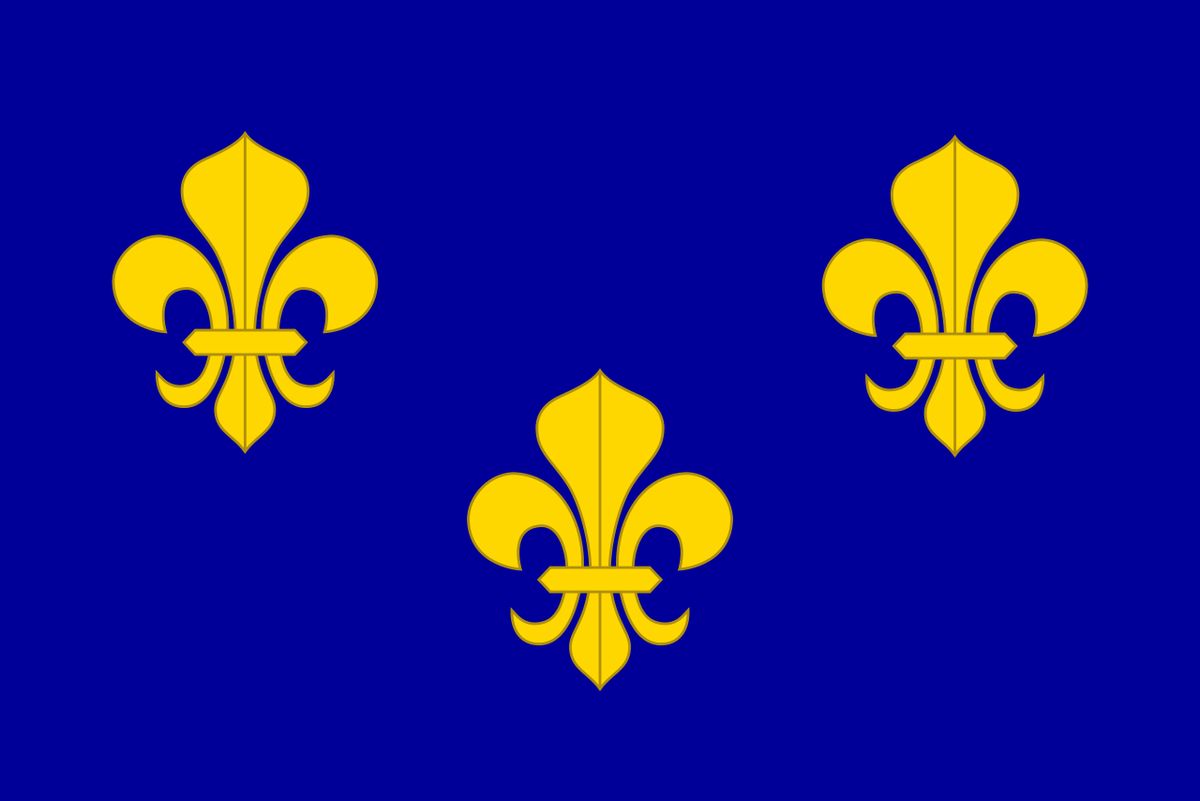
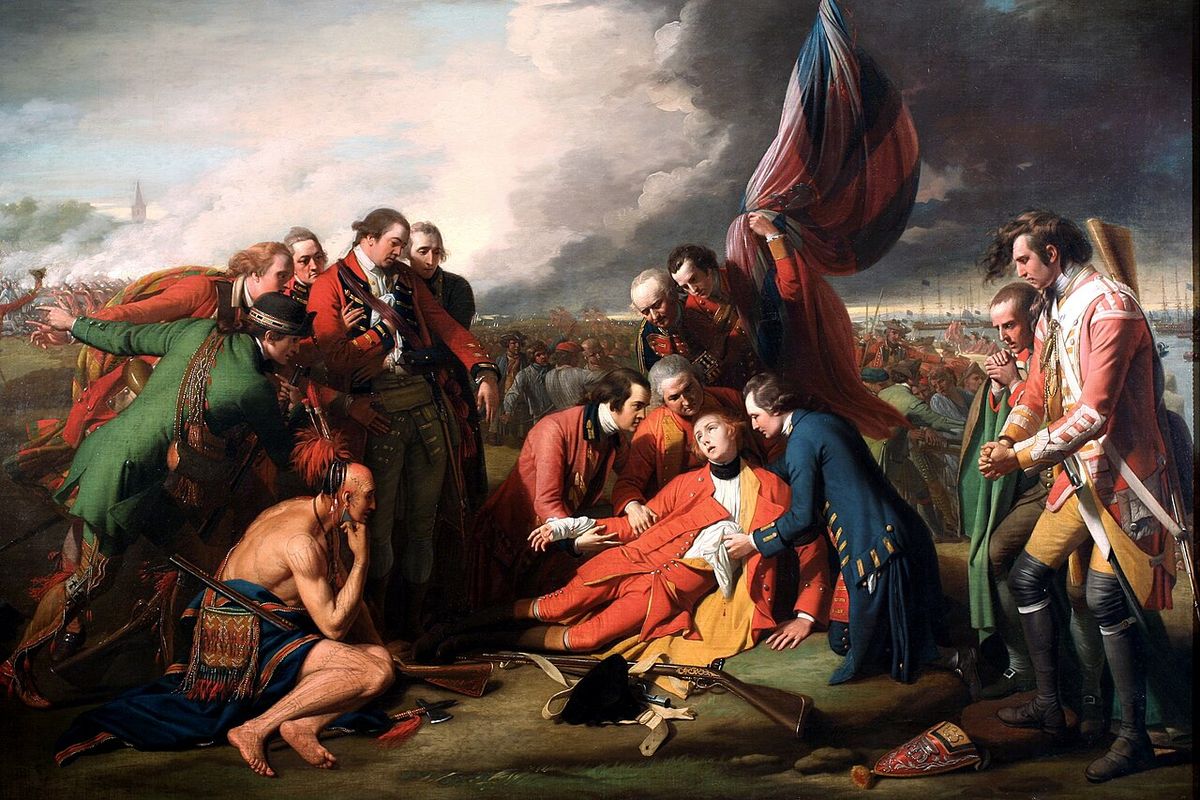
The establishment of a permanent European presence began with Samuel de Champlain founding a fortified trading post at Québec on 3 July 1608, marking the birth of New France. Champlain's alliance with Huron and Algonquin nations against the Haudenosaunee on 30 July 1609 initiated a prolonged period of conflict, exposing the Iroquois to European firearms for the first time. New France was governed as a royal colony of the French crown from 24 February 1663, with limited local representation through elected syndics who acted as liaisons between residents and the colonial council but had no power to affect policy. The French and British empires clashed repeatedly, with conflicts like King William's War declared on 17 May 1689 often involving Indigenous allies on both sides, and a significant peace was achieved on 4 August 1701 when the Iroquois Five Nations signed a treaty with New France at Ville-Marie. The era also saw the expansion of French influence westward, with Pierre Esprit Radisson and Medart Chouart des Groseilliers beginning their first westward journey on 6 August 1654 and Sieur de La Salle launching the Griffon, the first ship to sail the Great Lakes, on 7 August 1679.
British Rule and the Road to Confederation
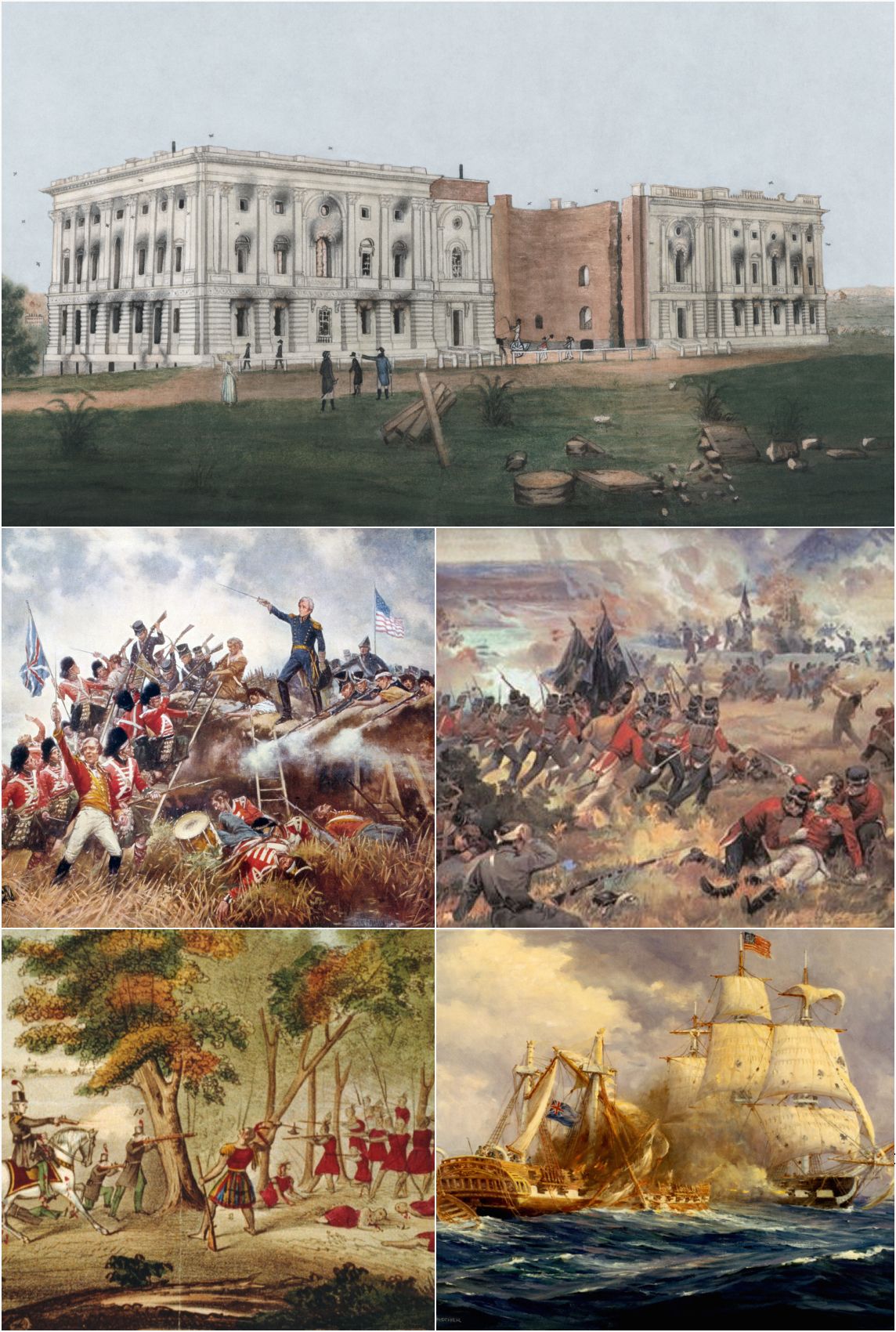
British rule brought significant changes, including the 1774 Quebec Act which recognized French language and Catholic religion in an attempt to secure the loyalty of the French-Canadian population. The American Revolutionary War (1776 to 1783) prompted an influx of Loyalist refugees into Nova Scotia, Quebec, and Ontario, which altered the demographic and political composition of the colonies and increased the English-speaking population. The War of 1812 saw American invasions repelled, including the battle at Queenston Heights on 13 October 1812 where Major-General Isaac Brock was killed leading troops, and in retaliation in 1814, Major-General Robert Ross led an expedition from Nova Scotia that burned down the White House in Washington. Dissatisfaction with colonial oligarchies and social divisions sparked the armed Rebellions of 1837-38 in Upper and Lower Canada, which were ultimately suppressed but led to the Durham Report and calls for responsible government. In the west, the North West Company, founded by Montreal fur traders in 1783, and the Hudson's Bay Company expanded the fur trade network across the continent, with expeditions reaching the Pacific coast. The mid-19th century was a period of rapid change, negotiation, and increased immigration, with thousands of newcomers from England, Scotland and Ireland arriving each year, and this period set the stage for the political conferences that would create a federal union.
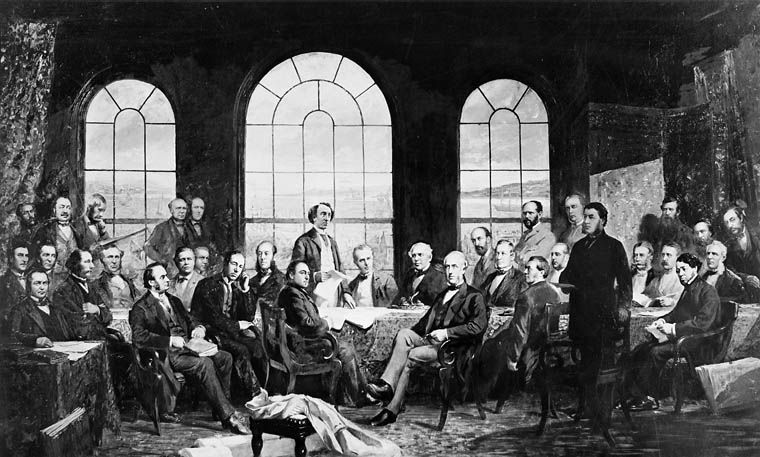
This political momentum was driven by desires for economic development, defence, and railway expansion. It led to the passage of the British North America Act. The act created the Dominion of Canada on 1 July 1867. It united Ontario, Quebec, Nova Scotia, and New Brunswick under a federal system. The British North America Act is the foundational document of Canadian Confederation.
Post-Confederation Expansion and Development
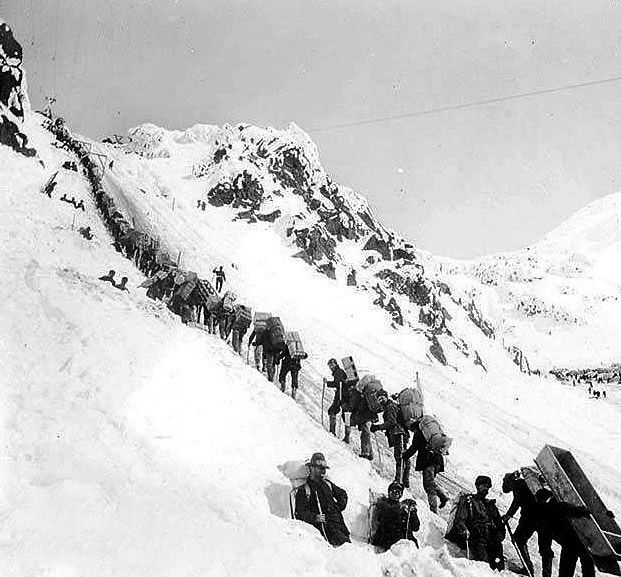
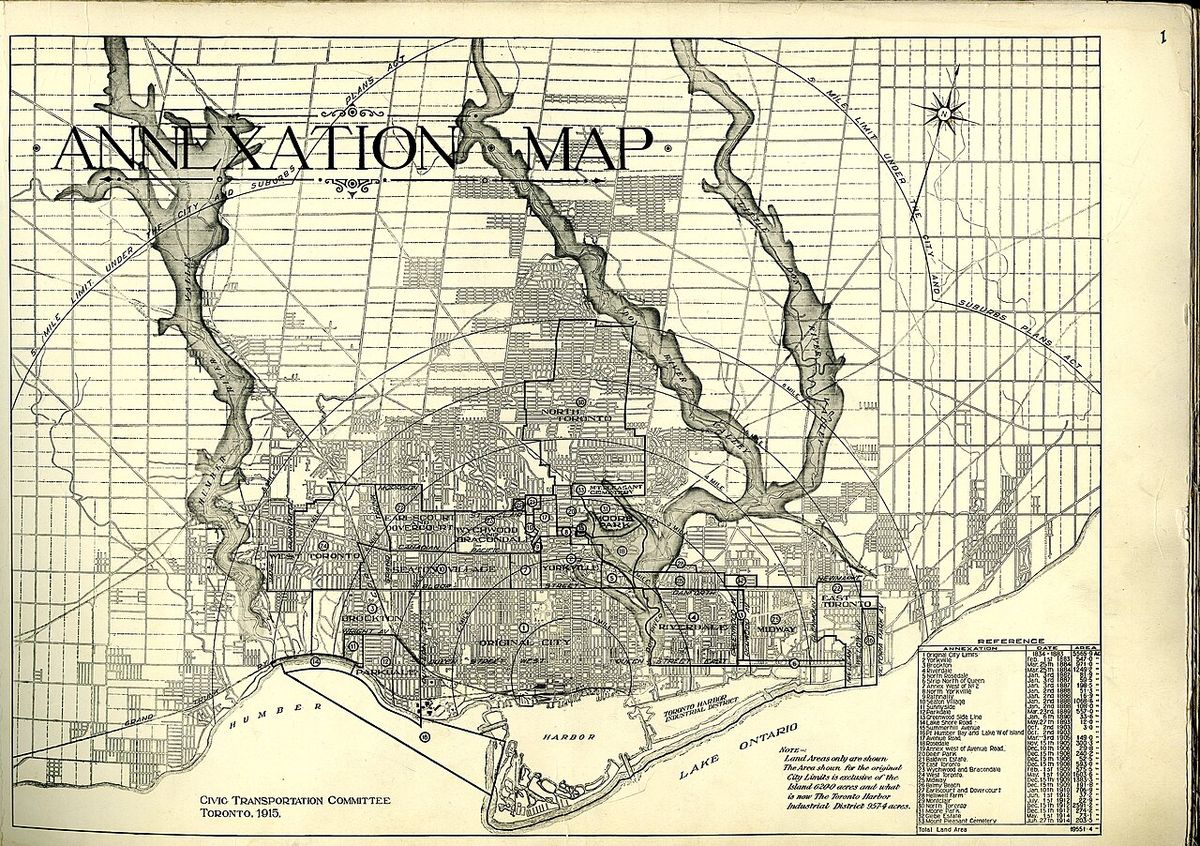
The new Dominion entered a period of dramatic territorial and economic expansion under its first prime minister, John A. Macdonald. The government pursued a National Policy of tariff protection for industry, western settlement facilitated by the Dominion Lands Act, and transcontinental railway construction, most notably the Canadian Pacific Railway completed in 1885. This policy directly influenced the entry of new provinces and territories into Confederation, often through complex negotiations involving land rights, promises of railway connections, and financial terms. The late 19th and early 20th centuries also saw significant social change, including the rise of labour movements, the women's suffrage campaign, and the imposition of restrictive policies like the Chinese Head Tax and the residential school system for Indigenous children. The Yukon Territory was given separate status in 1898 during the Klondike Gold Rush, which saw a massive influx of prospectors along the upper Yukon River, and the 1905 creation of Alberta and Saskatchewan reflected the rapid agricultural settlement of the prairies.
| Province/Territory | Year of Entry | Notes |
|---|---|---|
| Manitoba | 1870 | Created from Rupert's Land after the Red River Resistance led by Louis Riel. |
| Yukon Territory | 1898 | Separated from the Northwest Territories during the Klondike Gold Rush. |
| Alberta & Saskatchewan | 1905 | Created from the Northwest Territories due to population growth from agricultural settlement. |
| Newfoundland | 1949 | Joined as Canada's tenth province after a narrow referendum victory. |
The World Wars and Growing Autonomy
The interwar period included economic boom, bust, and the Great Depression, which caused severe unemployment and led to protest movements like the On-to-Ottawa Trek. A major constitutional milestone was reached with the 1931 Statute of Westminster, which granted Canada and other dominions complete legal autonomy from Britain in foreign and domestic affairs. Canada entered the Second World War in September 1939 independently, though in support of Britain and France, and its forces were active in Europe, the Atlantic, Italy, and Normandy. The country emerged from the war as a significant industrial and military power, and in 1947 the Canadian Citizenship Act declared citizens to be of equal status with those of Great Britain, formally establishing a separate Canadian citizenship. Canada became a founding member of the North Atlantic Treaty Organization (NATO) in 1949, solidifying its role in transatlantic defence, and Canadian forces also participated in the United Nations war effort in Korea beginning in 1950.
Modern Canada: Patriation and Contemporary Events
The post-war era was marked by prosperity, the Quiet Revolution in Quebec which modernized the province and reduced the power of the Catholic Church, and the rise of Quebec separatism with the formation of the Parti Québécois in 1968. The adoption of the distinctive Maple Leaf flag in 1965 was a symbolic break from colonial imagery, replacing the Canadian Red Ensign which had incorporated the British Union Jack. In 1967, Expo 67 in Montreal provided a major impetus to Canadian national identity and technological optimism, though French President Charles de Gaulle's 'Vive le Québec libre' speech from Montreal that same year highlighted deep national divisions. The October Crisis of 1970 involved the kidnapping of British trade commissioner James Cross and the murder of Quebec Labour Minister Pierre Laporte by the radical Front de libération du Québec, leading to the invocation of the War Measures Act.
Key Institutions and Cultural Milestones
- 1931: The Statute of Westminster grants full autonomy, a key step in Canada's constitutional development.
- 1965: The new Maple Leaf flag is raised for the first time, following a great national debate.
- 1967: Expo 67 world's fair opens in Montreal, celebrating Canada's centennial.
Questions about Timeline of Canadian history
When was Canada founded as a country?
Canada was founded as a country on 1 July 1867 with the passage of the British North America Act. This act united the colonies of Ontario, Quebec, Nova Scotia, and New Brunswick into a single Dominion within the British Empire called Canada. This date is celebrated annually as Canada Day. The country achieved full legal autonomy from Britain with the Statute of Westminster in 1931 and finally patriated its constitution in 1982.
Who were the first people to live in Canada?
The first people to live in Canada were Indigenous peoples. Their ancestors migrated from Asia across the Bering land bridge during the last Ice Age. Estimates for the Indigenous population prior to European contact range from 200,000 to 500,000 people. These diverse societies spoke between 300 and 450 languages and formed complex political structures like the Haudenosaunee Confederacy.
What was the first European settlement in Canada?
The first known European settlement in Canada was established by Norse explorers in the 11th century on Newfoundland. Norse explorer Bjarni Herjolfsson was likely the first European to sight mainland North America. The first permanent French settlement was founded by Samuel de Champlain at Québec in 1608. The first English overseas colony was established in Newfoundland in 1583.
What was the War of 1812 and why was it important for Canada?
The War of 1812 was a conflict fought from 1812 to 1814 between the United States and the United Kingdom, with its British North American colonies being a primary battleground. The US launched several invasions of Canadian territory, including an attack on York (present-day Toronto). Key battles, such as Queenston Heights and Lundy's Lane, involved British regulars, Canadian militia, and First Nations allies. The successful defence against American invasion helped foster a distinct sense of Canadian identity and ensured the survival of British North America.
When did Canada get its own flag?
Canada adopted its current national flag, the red and white Maple Leaf, on 15 February 1965 after a lengthy and contentious parliamentary debate. It replaced the Canadian Red Ensign, which featured the Union Jack in the canton. The new flag was a deliberate symbol of Canadian independence and unity, chosen to be distinctly Canadian without colonial references. The single red maple leaf on a white square between two red bars was designed by historian George Stanley.
When did Canada become fully independent from Britain?
Canada achieved full legal independence from Britain through a series of steps. The Statute of Westminster in 1931 granted Canada and other dominions complete autonomy in foreign and domestic affairs. The final step was the patriation of the Canadian constitution in 1982, which transferred the final legal authority to amend the constitution from the British Parliament to Canada. The Constitution Act, 1982, which includes the Canadian Charter of Rights and Freedoms, was proclaimed by Queen Elizabeth II on 17 April 1982.
Sources and further reading
- Timeline of Canadian history (Wikipedia)
- Significant Events in Canadian History (thecanadianencyclopedia.ca)
- Canada profile, Timeline (bbc.com)
- Timeline: Notable dates in Canada's history, National (globalnews.ca)
- Timeline of Important Dates in Canadian History (thecanadaguide.com)
Checked by the Nosy Mag desk. Last updated 2026-10-23.