Haudenosaunee
The Haudenosaunee Confederacy, also known as the Iroquois or Six Nations, is a confederacy of Iroquoian Indigenous peoples in northeast North America. Founded on the Great Law of Peace, it is one of the world's oldest continuously operating participatory democracies, with its political structure influencing early American governance. For centuries, the Confederacy was a central geopolitical power, holding the balance between French and British colonies. Today, the Haudenosaunee maintain sovereign communities in both Canada and the United States, continuing their cultural traditions and asserting their inherent right to self-determination.
Names and Identity
The autonym Haudenosaunee means 'people of the longhouse', in reference to the metaphorical longhouse formed by the five original nations of the League. This longhouse stretched from the Mohawk Nation in the east to the Seneca Nation in the west. The traditional exonym Iroquois, first appeared in 1603 in the writings of the French explorer Samuel de Champlain, and is of obscure and debated origin, presumably from an Algonquian language. The descriptive term 'Five Nations' was used historically, and after 1722, they became known as the 'Six Nations'.
Modern scholars sometimes distinguish between the Haudenosaunee League, the enduring ceremonial and cultural institution, and the historical Haudenosaunee Confederacy, the decentralized political entity that engaged in colonial-era diplomacy. The Haudenosaunee themselves do not make this distinction and use the terms interchangeably, preferring Haudenosaunee Confederacy. An older autonym, Ongweh’onweh, meaning 'original people,' is also used. The land of the Haudenosaunee has been called Iroquoia and Haudenosauneega in English, and Iroquoisie in French.
Founding and the Great Law of Peace
According to oral history, the Haudenosaunee Confederacy was formed by the Great Peacemaker (Dekanawida), Hiawatha, and Jigonhsasee, the Mother of Nations. They brought the Great Law of Peace to five warring Iroquoian nations to end cycles of conflict. The exact date is held to be 'time immemorial,' though archaeological and oral historical evidence suggests a founding between 1142 and 1450 CE. The solar eclipse of August 31, 1142, is cited in some traditions as a marker of the confederacy's establishment.
The founding created a participatory democracy where each of the five original nations, Mohawk, Oneida, Onondaga, Cayuga, and Seneca, maintained internal sovereignty but united under a common constitution. The League is embodied in its Grand Council, an assembly of fifty chiefs, or sachems, each representing a specific clan within a nation. The system blends law, societal values, and a deep connection to the natural world, creating a unique governance model. This model is often described as one of the first and longest-lasting participatory democracies on Earth.
The confederacy is structured like a symbolic longhouse. The Mohawk are the Keepers of the Eastern Door, the Seneca the Keepers of the Western Door, and the Onondaga are the Keepers of the Central Fire, hosting the Grand Council. The Mohawk, Seneca, and Onondaga are considered Elder Brothers, while the Cayuga and Oneida are Younger Brothers. The main meeting place was and still exists today on Onondaga territory, where the Grand Council continues to convene to make decisions for the united nations.
Historical Geopolitical Power
The Haudenosaunee describe this meeting as the origin of the Two Row Wampum Treaty, a mutual agreement of coexistence and non-interference. Acquiring muskets through the fur trade, the Haudenosaunee expanded their influence dramatically during the 17th-century Beaver Wars. They defeated and dispersed neighbouring nations like the Wendat (Huron), Erie, and Susquehannock to control hunting grounds for the lucrative fur trade, and they also fought the French and their allies for decades. At its peak around 1700, Haudenosaunee power extended from present-day New York north into Ontario and Quebec, and south into the Ohio Valley and Allegheny region. For nearly two centuries, they were a central power in North American geopolitics, often holding the balance between French and British colonies. They formalized an alliance with the British known as the Covenant Chain. After the Tuscarora migrated north and were accepted in 1722, the confederacy became known as the Six Nations.
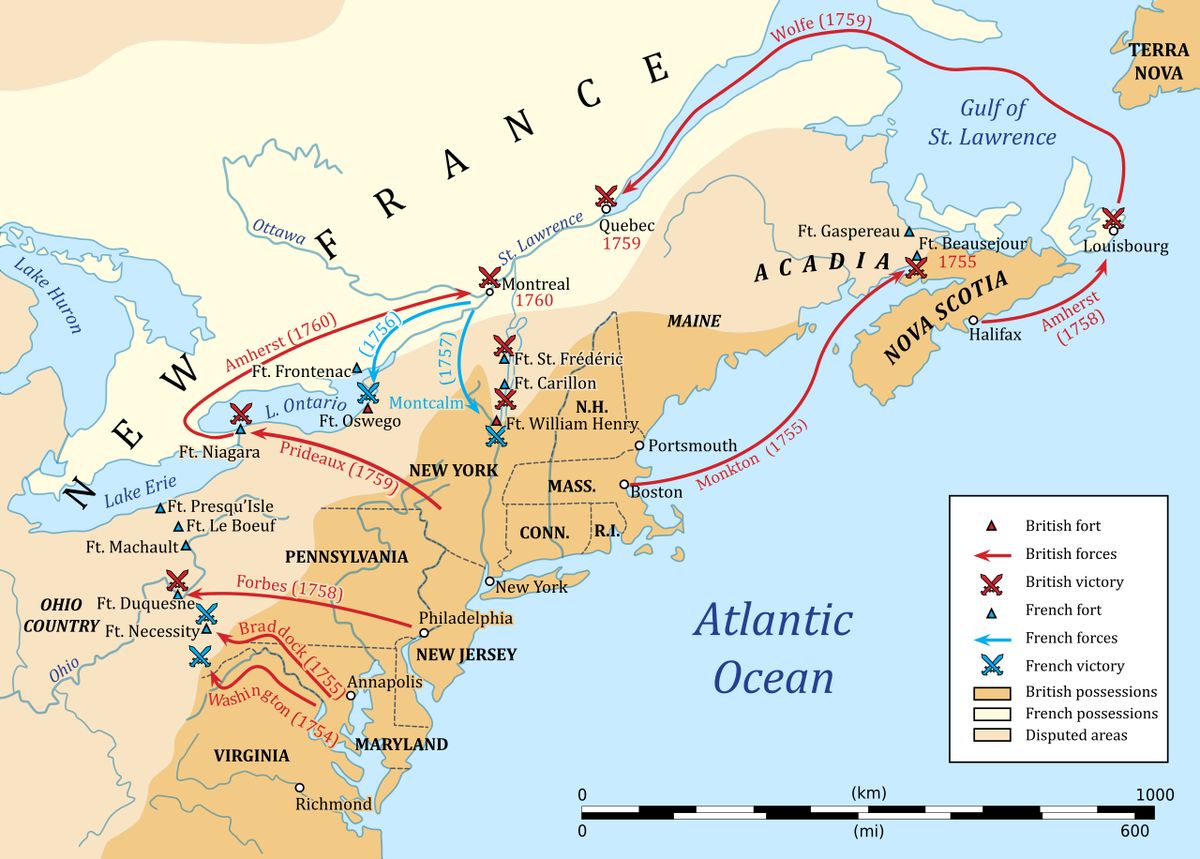
During the French and Indian War, the Haudenosaunee ultimately sided with the British after the fall of Louisbourg and Fort Frontenac. In the war's aftermath, the British issued the Royal Proclamation of 1763, which aimed to protect Indigenous lands from westward colonial expansion by forbidding settlement beyond the Appalachians. This proclamation, largely ignored by American colonists, remains a foundational document for Indigenous land rights in Canada. The Haudenosaunee later agreed to adjust the boundary line in the Treaty of Fort Stanwix in 1768 after facing confrontations with settlers.
The American Revolution and Division
The American Revolution fractured Haudenosaunee unity when the confederacy faced requests for aid from the British Crown. The Oneida and Tuscarora supported the American Patriots, while the Mohawk, Onondaga, Cayuga, and Seneca allied with the British Crown and Loyalists. This split was devastating. Following the British defeat, the 1783 Treaty of Paris ceded Haudenosaunee territory to the United States without their consent. In retaliation for their alliance with the Patriots, the United States launched the destructive Sullivan Expedition, burning Haudenosaunee villages and crops.
In the wake of the revolution, many Haudenosaunee, led by Mohawk leader Joseph Brant, fled to British Canada. The Crown granted them land along the Grand River in present-day Ontario, establishing the Six Nations of the Grand River reserve. Those who remained in New York were confined to shrinking reservations through a series of treaties like Fort Stanwix (1784) and Canandaigua (1794). The loss of land, combined with social pressures, led to widespread demoralization in New York communities as more land was sold to speculators and issues like alcoholism plagued the reservations.
Nonetheless, the Haudenosaunee reestablished the Grand Council of the Confederacy after the American Revolution. They continue to consider themselves sovereign and independent. The Haudenosaunee issue their own passports. Today's Haudenosaunee use the terms Haudenosaunee League and Haudenosaunee Confederacy interchangeably, but prefer the name 'Haudenosaunee Confederacy'.
Haudenosaunee in Canada
During the American Revolution, the Canadian Haudenosaunee declared their neutrality and refused to fight for the Crown, despite offers from Sir Guy Carleton, the governor of Quebec. The Canadian Haudenosaunee communities at Kanesatake and Kahnawake were prosperous settlements in the 19th century. They supported themselves with farming and the sale of sleds, snowshoes, boats, and baskets. In 1886, Haudenosaunee men from Kahnawake proved skilled as steelwork erectors during bridge construction.
Haudenosaunee men from Kahnawake became renowned for their skill in high-steel construction after working on a bridge over the St. Lawrence River in 1886. This led to generations of Haudenosaunee ironworkers building bridges and skyscrapers across North America. In 1884, about 100 Haudenosaunee men from Canada were hired as river pilots and boatmen for a British relief expedition up the Nile River in Sudan. On their return, they stopped in London and were personally thanked by Queen Victoria for their service to the force commanded by Field Marshal Wolseley.
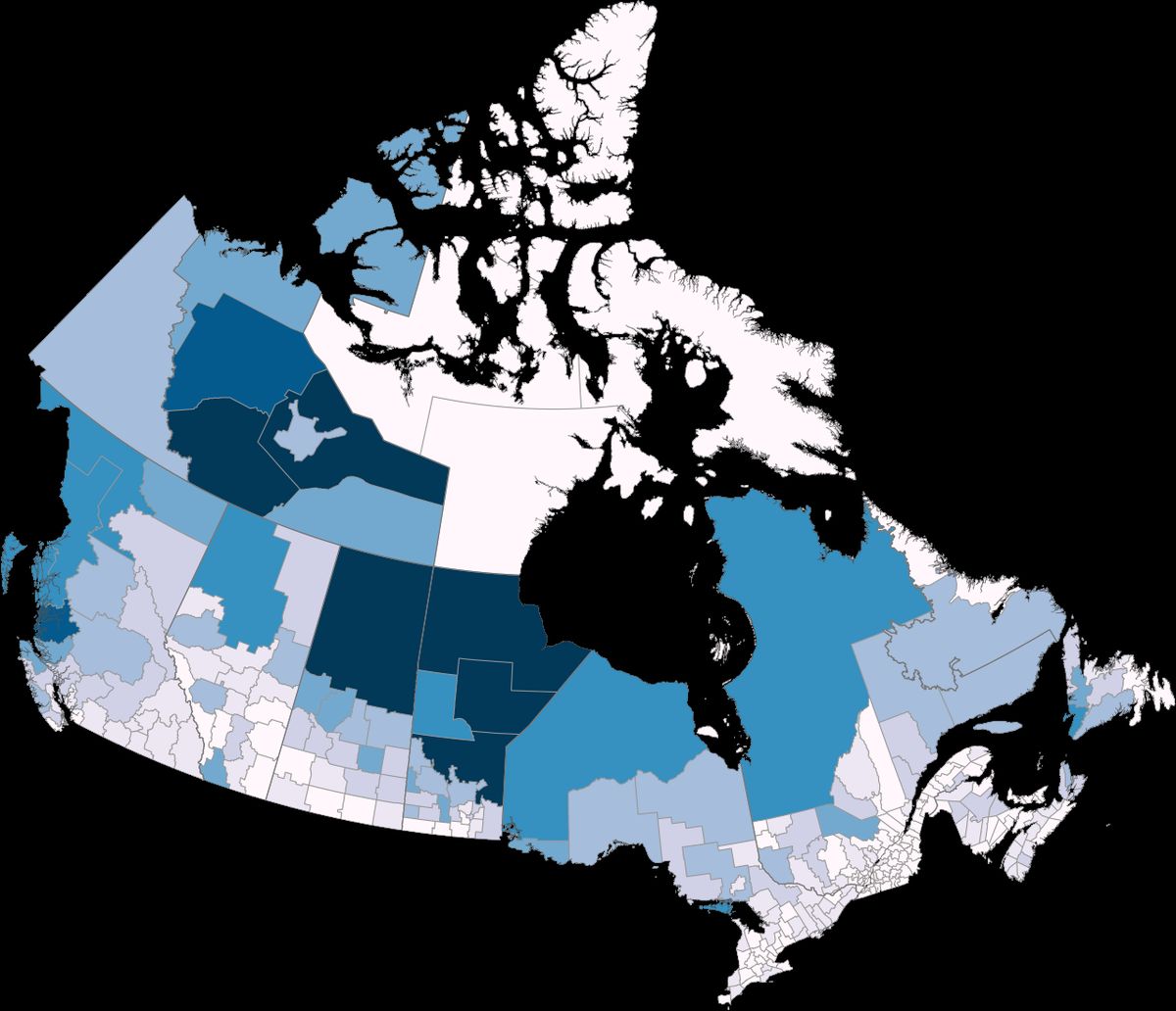
In 2010, more than 45,000 enrolled Six Nations people lived in Canada. They retain sovereignty over seven reserves in Canada, divided between seventeen First Nations. The Six Nations council at Brantford tended to see themselves as a sovereign nation allied to the Crown through the Covenant Chain going back to the 17th century. They saw themselves as allied to the King personally, rather than under the authority of Canada.
20th Century Sovereignty Struggles
During World War I, many Haudenosaunee men enlisted in the Canadian Expeditionary Force, with about half of the 4,000 First Nations soldiers being Haudenosaunee. Their hunting skills made them excellent snipers and scouts, and men from Six Nations were encouraged to join the 114th Haldimand Battalion. The Six Nations council at Brantford viewed this service as support for their ally, King George V, not for Canada, reflecting their view of themselves as a sovereign nation allied through the Covenant Chain. This perspective clashed with Canadian authorities who sought to impose federal laws on reserve communities.
A major sovereignty crisis emerged after the war. In 1920, Canada proposed an act to forcibly enfranchise 'Indians,' which would strip them of treaty rights and tribal land holdings. The Haudenosaunee hired a lawyer and attempted to take their case to the Supreme Court of Canada, which refused it, declaring them British citizens. In response, the Haudenosaunee began issuing their own passports, asserting their statehood. They decided to send a delegation to petition King George V directly, but Canada's External Affairs division blocked the issuance of official passports.
In 1923, Cayuga Chief Deskaheh (Levi General) traveled to Geneva to petition for membership in the League of Nations. Delegates from Estonia, Ireland, Panama, and Persia supported hearing their petition on September 27, 1923, but British and Canadian pressure blocked the effort. Meanwhile, back in Canada, the government moved to replace the traditional Haudenosaunee Confederacy Council with an elective system under the Indian Act, signing an Order in Council in September 1924. This imposition is remembered as a fundamental violation of Haudenosaunee self-government, and only 26 ballots were cast in the subsequent imposed election.
Contemporary Governance and Culture
Today, the Haudenosaunee Confederacy continues to operate its traditional government based on the Great Law of Peace. The Grand Council, with its fifty chiefs selected by clan mothers, still meets on the territory of the Onondaga Nation, the Keepers of the Central Fire. This system exists alongside, and sometimes in tension with, the band council systems imposed by the Canadian Indian Act and tribal governments in the United States. The Haudenosaunee maintain their claim to sovereignty and continue to issue their own passports as they have since the 1920s.
They actively participate in international Indigenous rights forums and emphasize environmental stewardship. Cultural practices such as the condolence ceremony for installing new chiefs, the use of wampum belts as records of agreements, and the annual cycle of ceremonies remain vital. The Dish with One Spoon wampum treaty, an agreement with Anishinaabeg and allied nations to share resources peacefully, is often cited in modern land acknowledgements across what is now southern Ontario. The Haudenosaunee consider law, society and nature to be equal partners in their worldview.
The Haudenosaunee Confederacy, with its constitution known as the Great Law of Peace, was formed prior to European contact. During the American Revolution, Haudenosaunee unity collapsed, with the Oneida and Tuscarora fighting alongside the Patriots and the other nations allying with the British. In the wake of American independence, many Haudenosaunee fled to British Canada, establishing the Six Nations of the Grand River reserve. The Haudenosaunee continue to consider themselves sovereign and independent nations.
Questions about Haudenosaunee
What does Haudenosaunee mean?
Haudenosaunee means 'people of the longhouse' in their own language. This name refers to the metaphorical longhouse formed by the original five nations of the confederacy, symbolizing their unity and shared governance under one roof. The longhouse stretched from the Mohawk Nation in the east to the Seneca Nation in the west. It is the preferred autonym, though they are also widely known as the Iroquois or Six Nations.
Which nations make up the Haudenosaunee Confederacy?
The confederacy originally comprised five Iroquoian nations from east to west: the Mohawk, Oneida, Onondaga, Cayuga, and Seneca. In 1722, the Tuscarora, who migrated north from the Carolinas, were accepted as the sixth nation. Each nation maintains its own council and internal affairs but unites under the Grand Council for matters affecting the entire confederacy. The Onondaga host the Grand Council and are known as the Keepers of the Central Fire.
Did the Haudenosaunee government influence the U.S. Constitution?
The Haudenosaunee Confederacy was formed under a constitution known as the Great Law of Peace. The Haudenosaunee League is the ceremonial and cultural institution embodied in the Grand Council. The Haudenosaunee Confederacy was the decentralized political and diplomatic entity that emerged in response to European colonization. Its system of governance is embodied in its Grand Council, an assembly of fifty chiefs.
Where do the Haudenosaunee live today?
The Haudenosaunee live in sovereign communities in both Canada and the United States. In Canada, there are over 45,000 enrolled Six Nations people living on seven reserves, governed by seventeen First Nations. The largest is Six Nations of the Grand River in Ontario. In the United States, over 81,000 Haudenosaunee live on eleven reservations in New York state and elsewhere. They maintain their distinct national identities within the broader confederacy.
Why did the Haudenosaunee issue their own passports?
The Haudenosaunee began issuing their own passports in the 1920s as a direct assertion of their sovereignty. This action followed a dispute with Canada over conscription, land rights, and forced citizenship, and after the Supreme Court of Canada refused to hear their case. In 1923, Chief Deskaheh used a Haudenosaunee passport to travel to Geneva to petition the League of Nations for recognition. The practice continues today as a symbol of their status as a distinct nation.
Sources: Wikipedia and current public reporting, checked by the Nosy Mag desk. Last updated 2026-10-18.