House of Commons of Canada
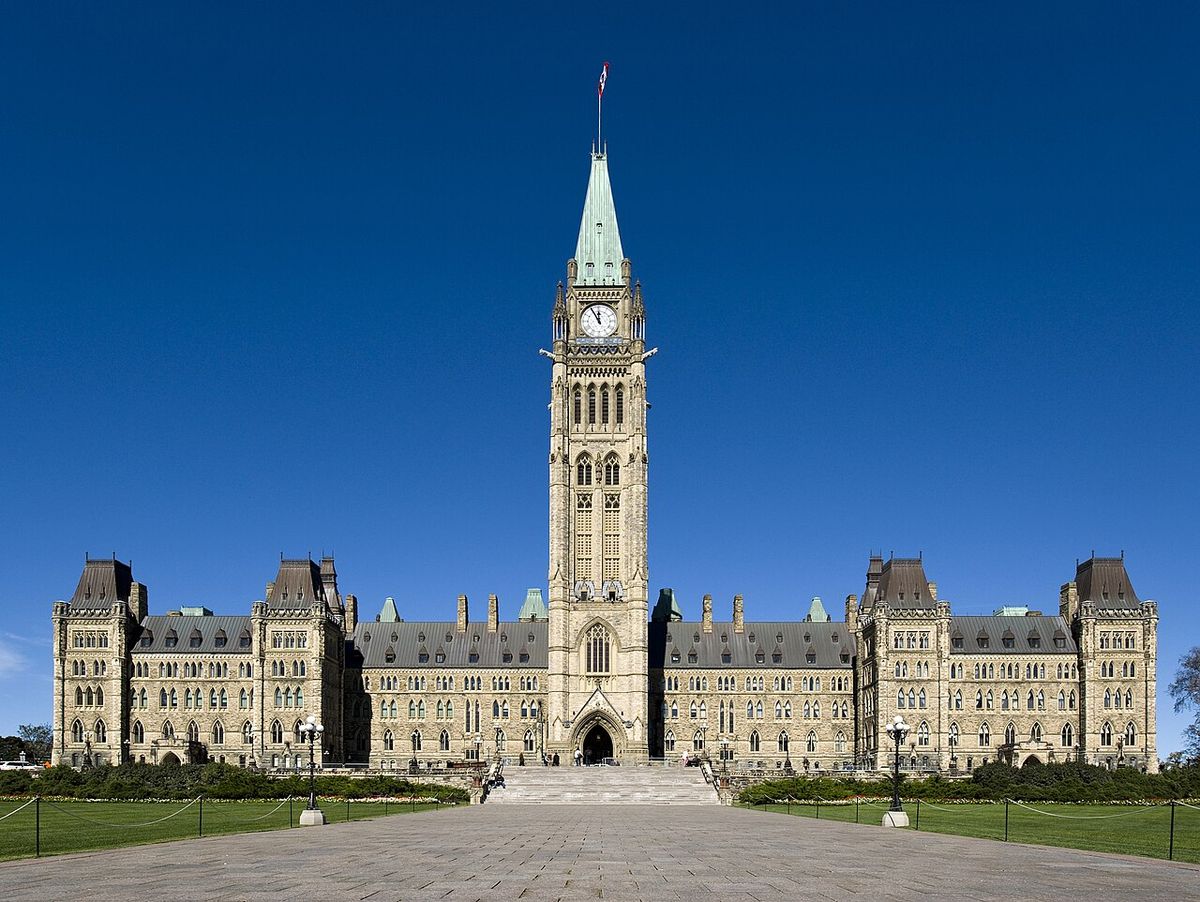
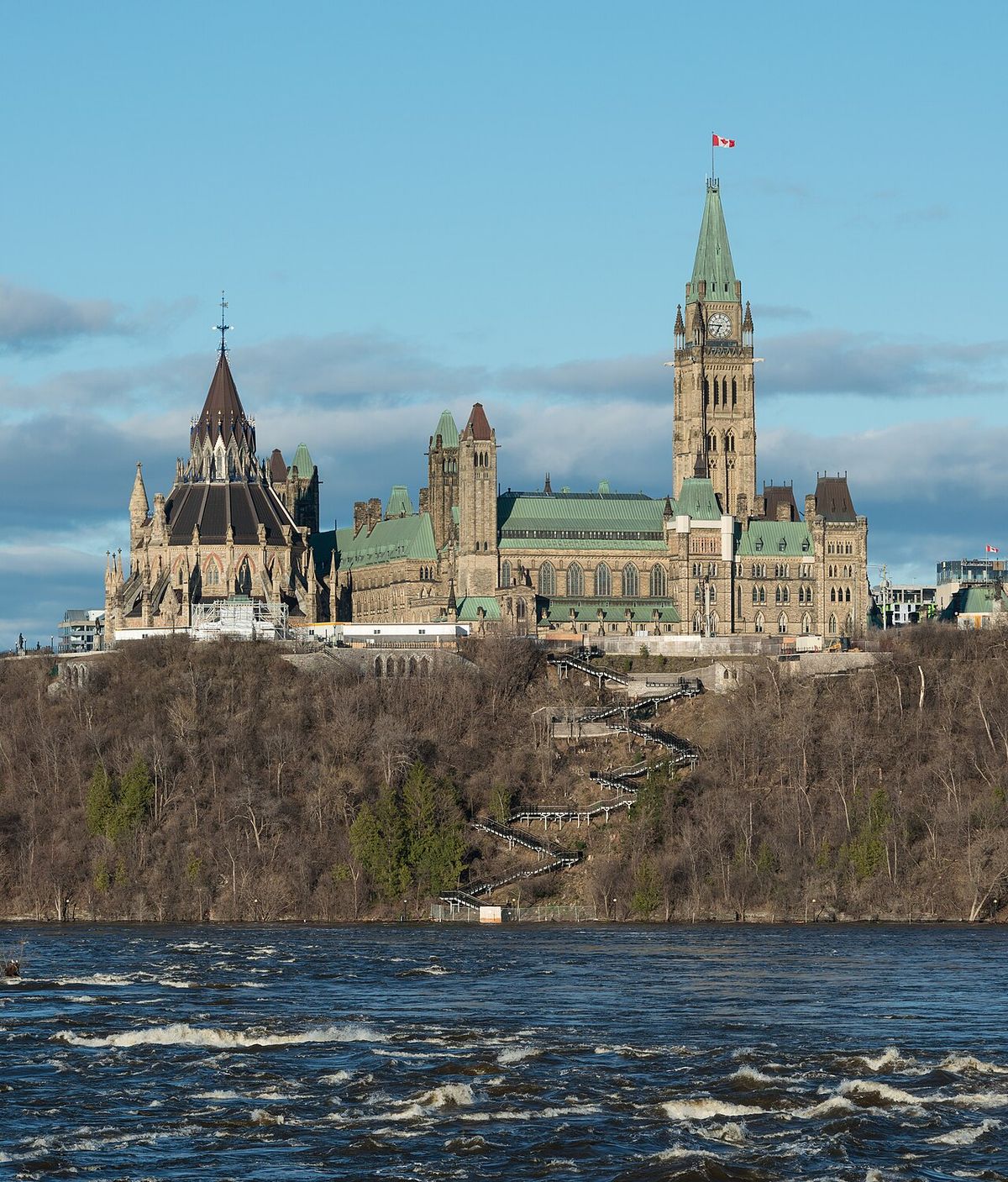
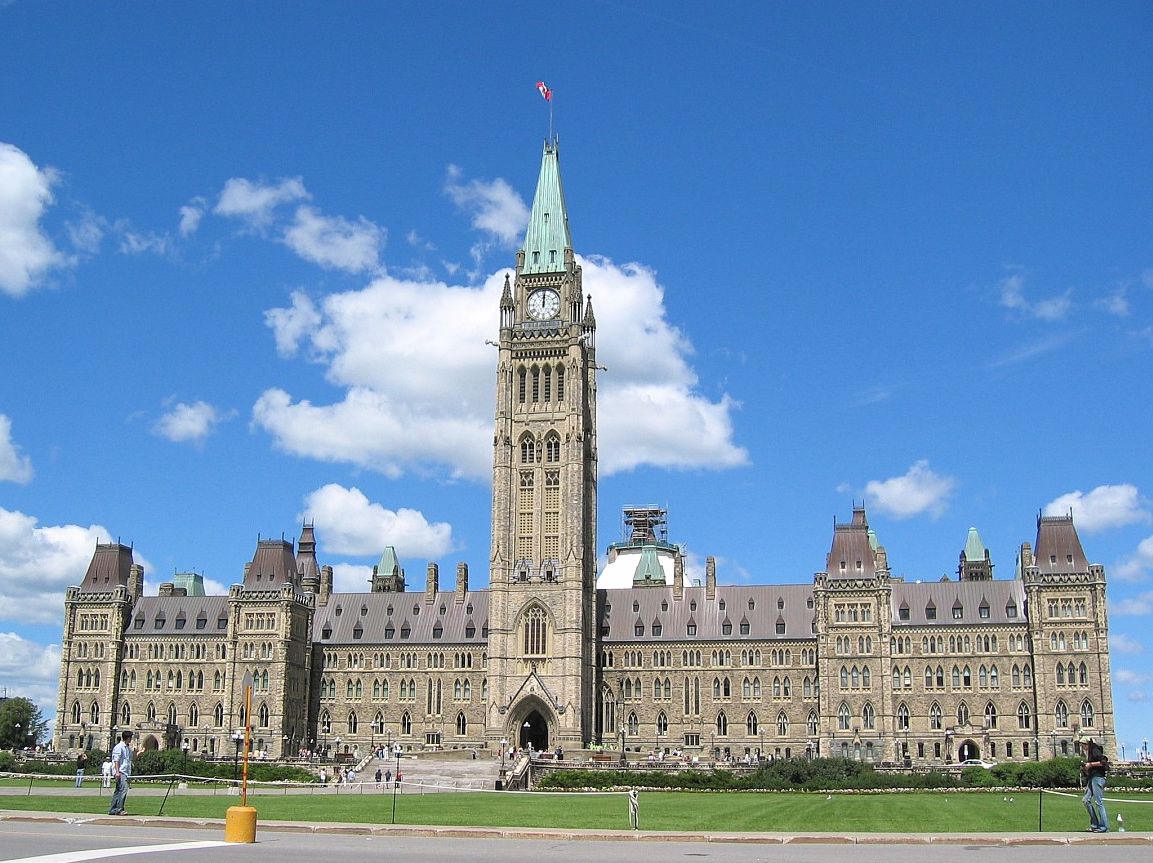
The House of Commons of Canada is the elected lower house of the Parliament of Canada, forming the core of the country's federal legislative branch alongside the appointed Senate and the Crown. Its 343 members, known as Members of Parliament (MPs), are elected by the first-past-the-post system to represent geographic constituencies called ridings. The House holds primary legislative power and is the body to which the prime minister and cabinet are democratically accountable, requiring its confidence to remain in government. As of 2026, the Commons meets in a temporary chamber within Parliament's West Block while the traditional Centre Block undergoes extensive renovations.
Constitutional foundation and history
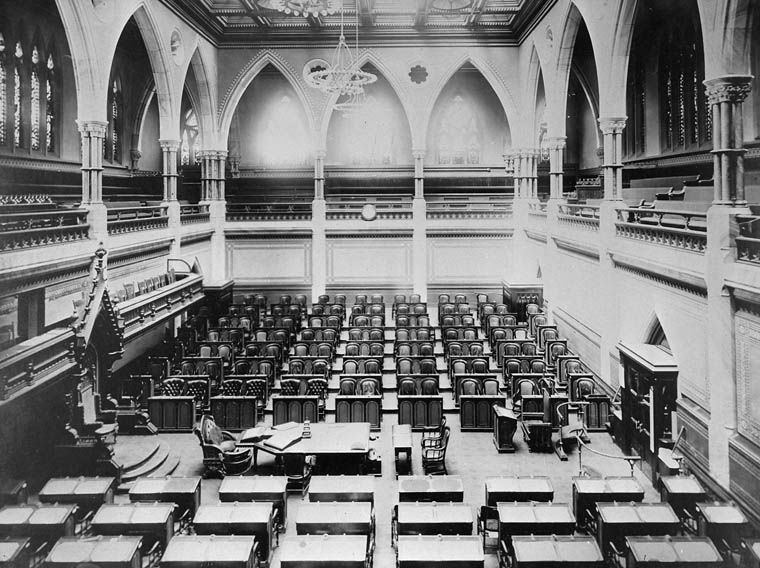
The House of Commons was created in 1867 by the British North America Act, now known as the Constitution Act, 1867, which established the Canadian federation. Modelled on the British House of Commons, it was designed as the elected component of a bicameral Westminster-style parliament. Initially, the Parliament of Canada remained subordinate to the British Parliament, though this colonial relationship evolved over time. The Statute of Westminster in 1931 granted Canada full legislative autonomy in most areas, and the final vestiges of British authority were severed by the Canada Act of 1982. The Commons first met in the chamber of the former Legislative Assembly of Canada until that building was destroyed by fire in 1916. It then convened in the amphitheatre of the Victoria Memorial Museum, now the Canadian Museum of Nature, from 1916 to 1922 before moving to the purpose-built chamber in the Centre Block of Parliament Hill. Starting with the final sitting before the 2019 federal election, the Commons has been meeting in a temporary chamber within the West Block, a relocation necessitated by the major renovations to Centre Block that are projected to last until at least 2032.
Composition and electoral districts
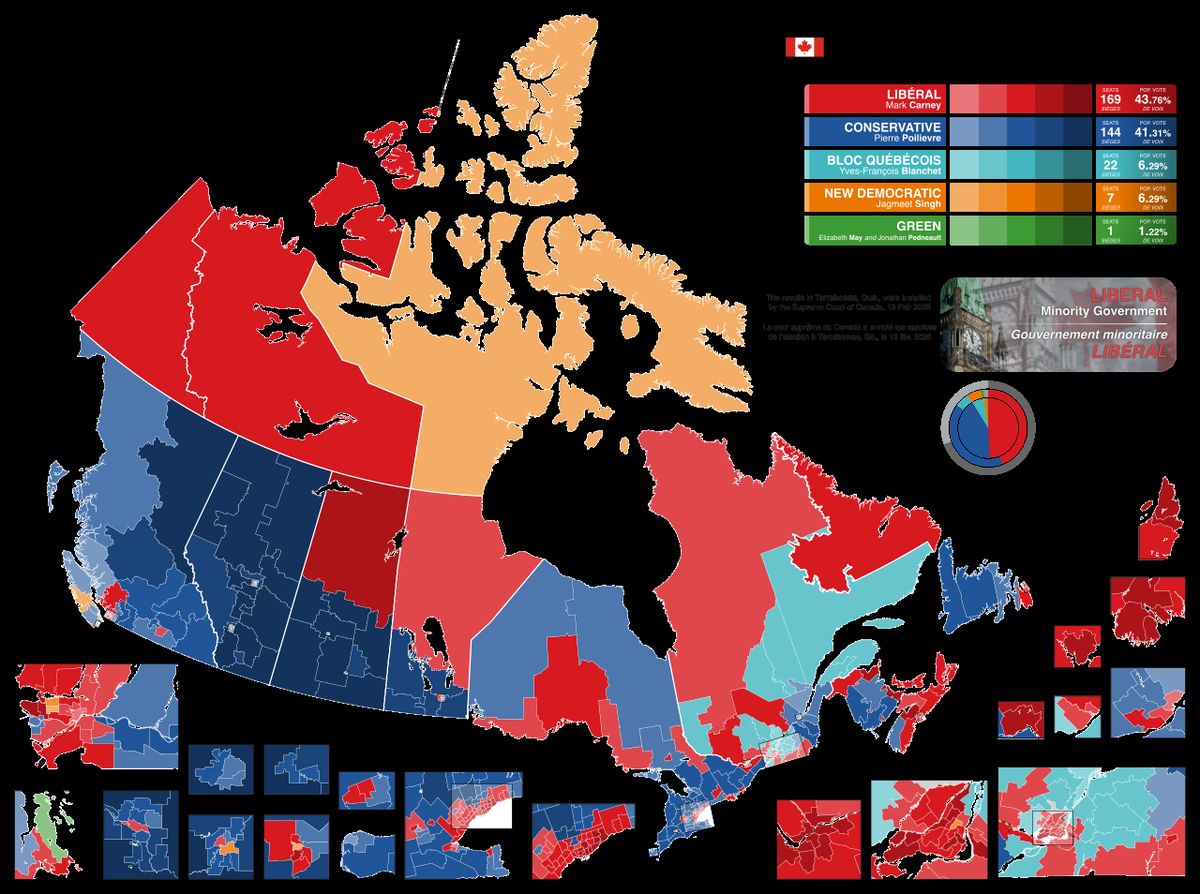
The House of Commons is composed of Members of Parliament, each representing a single electoral district, commonly called a riding. The total number of seats is adjusted after each decennial census through a process called redistribution, with the count rising to 343 seats following the redistribution that took effect for the 2025 federal election. Seats are distributed among the provinces roughly in proportion to population, using a calculation based on an electoral quotient, but the constitution includes several clauses that modify this purely proportional outcome. The senatorial clause guarantees each province has at least as many MPs as it has senators. The grandfather clause, amended in 2022, ensures no province has fewer MPs than it had in the 43rd Parliament. The representation rule, added in 2011, is designed to prevent provinces that have historically been over represented from becoming under represented. These provisions result in the six smallest provinces being over represented relative to their populations, while Ontario, British Columbia, and Alberta are under represented. Quebec's representation is typically close to the national average. Each of Canada's three territories is entitled to one seat regardless of population. Following the provincial apportionment, independent boundary commissions in each province draw the specific riding boundaries.
The constitutional provisions governing seat distribution have ensured a steady increase in the size of the House after every census since 1941. However, the growth in the number of MPs has not kept pace with national population growth, meaning the ratio of residents to each representative has widened consistently over time. The most recent reapportionment in seats resulted in 318 seats being assigned to provinces based on population, 22 more assigned to provinces via special clauses, and 3 seats assigned to the territories, bringing the total to 343. The entire permanent population of each province, including children and non voting adults, is counted for the purposes of this redistribution, giving them equal weight to eligible voters in determining representation.
Membership qualifications and election
Parliament derives its authority to set membership qualifications from the Constitution Act, 1867, with current rules detailed in the Canada Elections Act of 2000. The Act explicitly bars several groups from candidacy, including minors, non citizens, prisoners, and individuals convicted of certain election related crimes who are serving a five or seven year prohibition. Certain public officials are also ineligible, such as members of provincial and territorial legislatures, sheriffs, crown attorneys, most judges, and election officers. The chief electoral officer of Elections Canada cannot be a candidate. A member of the Senate cannot simultaneously serve in the House of Commons, and MPs must resign their seats if appointed to the Senate or to a judicial bench.
General elections are administered by the independent agency Elections Canada. They are called when Parliament is dissolved by the governor general, typically on the advice of the prime minister. Federal election campaigns must be a minimum of 36 days long. Candidates are most commonly nominated by political parties through local association meetings, though independent candidates can run by filing nomination papers with signatures from 50 or 100 constituents, depending on the riding's size. Winning a seat requires only a plurality of votes in the riding under the first past the post system. Once elected, an MP serves until the next dissolution of Parliament, unless they die, resign, are disqualified, or are expelled by the House for serious misconduct, in which case a by election is held to fill the vacancy.
Leadership and officers
The House of Commons elects its presiding officer, the speaker, at the beginning of each new Parliament and whenever a vacancy arises. Since 1986, this election has been conducted by secret ballot among MPs, moving away from a previous practice where the prime minister effectively appointed the speaker subject to a pro forma vote. The speaker is assisted by three deputies: the deputy speaker, who also serves as chair of Committees of the Whole, the deputy chair of Committees of the Whole, and the assistant deputy chair of Committees of the Whole. These four officers share the duties of presiding over debates, with the speaker typically overseeing the daily Question Period and the most significant discussions. Beyond elected members, the House relies on several non partisan officers who are not MPs. The clerk of the House of Commons is the senior administrative official, advising on procedure and managing House administration, supported by a deputy clerk, the law clerk, and other parliamentary counsel. The sergeant at arms is responsible for security and order within the parliamentary precinct and carries the ceremonial mace into the chamber each sitting as a symbol of the Crown's and the Commons' authority. The House is also supported by parliamentary pages, with 40 students selected annually from across Canada for the Page Program.
Members of the House of Commons are entitled to use the post nominal letters MP and rank immediately below senators in the Canadian order of precedence. As of November 2024, the base annual salary for an MP was $203,100, with additional stipends provided for those holding extra offices like the speakership or committee chairs. The term member of Parliament is used almost exclusively for elected members of the Commons, despite the Senate being part of Parliament. The House Administration, led by the clerk, provides comprehensive support to MPs.
Legislative and scrutiny functions
The House of Commons holds pre eminent power within the Canadian legislative process. Although both the Commons and the Senate must pass a bill for it to become law, the elected House is the primary originator of legislation, especially money bills, and the Senate very rarely rejects or substantially amends Commons passed bills. The House's most significant constitutional role is holding the government to account. By convention, the prime minister and cabinet must maintain the confidence of the House to stay in power. This means the government can be defeated on a major vote, such as on the budget or a motion of confidence, which typically triggers an election. The governor general appoints as prime minister the person most likely to command the support of the House, which is ordinarily the leader of the party with the most seats. Daily accountability is exercised during Question Period, when ministers answer queries from MPs, and through the work of various committees that scrutinize government spending and policy.
The House conducts its business according to a detailed set of rules and traditions. Its proceedings are recorded in the official Hansard, and its decisions are recorded in the Journals. The daily agenda is outlined in documents like the Order Paper and Notice Paper. Key procedural tools include motions, debates, and votes. The House can resolve itself into a Committee of the Whole, which includes all MPs but operates under slightly modified rules, often to consider appropriation bills. In this format, one of the deputy speakers presides instead of the speaker, and members may speak more than once on a motion. This process allows for more detailed examination of specific legislation in a slightly less formal setting than the regular chamber.
Committee system
The committee system is a vital component of the House of Commons' work, allowing for detailed study of legislation and government operations. Committees are smaller, focused groups that can examine issues more thoroughly than is possible in the full chamber. The largest committee is the Committee of the Whole, which consists of every MP meeting under modified rules to review specific types of bills, particularly budgetary appropriations. The bulk of detailed work, however, is done by standing committees, each dedicated to a particular area of government policy such as finance, transport, or foreign affairs. Standing committees have several core functions. They scrutinize the spending, administration, and policy of corresponding government departments, often holding public hearings and calling witnesses. They also review and amend legislation referred to them by the House.
- Review and amend bills within their subject area.
- Conduct studies and investigations into government operations.
- Hold public hearings and collect evidence from witnesses.
- Examine departmental spending plans and performance reports.
For specific bills, the House may also create legislative committees on an ad hoc basis. Unlike standing committees, the chair of a legislative committee is appointed by the speaker, usually from among the deputy speakers. The House can also establish special committees to study matters other than bills, and joint committees that include both MPs and senators, though joint committees do not have the power to amend legislation. This multi layered committee structure enables the House to manage a complex legislative agenda and provide ongoing oversight of the executive branch.
Recent developments and current operations
As of 2026, the House of Commons continues to adapt its operations amid the ongoing renewal of the Parliamentary Precinct. The temporary chamber in the West Block remains the meeting place, ensuring legislative business continues uninterrupted while the Centre Block is under restoration. The House Administration supports MPs through this period. In a notable development for Canadian cultural representation, Paul Wong was named the first Parliamentary Visual Artist Laureate, a position created to enrich the visual culture of Parliament. The government has also introduced measures to enhance communications about electoral threats, committing to regular reporting on efforts to safeguard Canada's democratic processes. Daily parliamentary business, including committee hearings and House proceedings, is broadcast and archived by services like CPAC. The official record of House activities, including the Order Paper, Notice Paper, and live vote results, remains accessible online, providing transparency into the work of the 343 members who represent the nation.
Questions about House of Commons of Canada
How many seats are in the House of Commons?
Following the redistribution of seats after the 2021 census, the House of Commons has 343 seats. This number took effect with the 2025 federal election. The total is derived from a base allocation of 318 seats to provinces based on population, plus 22 additional seats added through constitutional clauses like the senatorial and grandfather clauses, and the three seats allocated to the territories. The number is adjusted every ten years following the national census.
How is the Speaker of the House of Commons chosen?
The Speaker of the House of Commons is elected by the Members of Parliament at the beginning of each new Parliament. Since 1986, this election has been conducted by secret ballot among all MPs, ensuring the selection is independent of the prime minister's direct influence. The Speaker is assisted by three deputy speakers who share presiding duties. The Speaker's role is to maintain order and decorum during debates, interpret parliamentary rules, and represent the House in its relations with the Senate and the Crown. The current speaker is Francis Scarpaleggia.
What is the Page Program?
The House of Commons Page Program is a prestigious opportunity for university students to work at the heart of Parliament. Each year, 40 students from across Canada are selected to serve as parliamentary pages for one year. Their duties include carrying messages to MPs in the chamber, distributing documents, and providing general assistance during House sittings. The program is part of the non partisan support staff of the House.
How are electoral district boundaries determined?
Electoral district boundaries, or ridings, are redrawn every ten years following the census through a process called redistribution. After the total number of seats per province is calculated using constitutional formulas, independent boundary commissions are appointed for each province. These non partisan commissions are responsible for drawing the specific riding boundaries within their province, considering factors like community interests, historical patterns, and geographic size. The goal is to create districts with relatively equal population while respecting natural and administrative boundaries.
What is the salary of a Member of Parliament?
As of November 2024, the annual salary of a Member of Parliament is $203,100. Members may receive additional salaries for holding other offices, such as the speakership or a cabinet portfolio. Members of Parliament are entitled to use the post nominal letters MP and rank immediately below senators in the Canadian order of precedence. The salary figure is set by parliamentary authority and reflects the responsibilities of the office.
Where does the House of Commons meet?
The House of Commons traditionally meets in the Centre Block of the Parliament Hill complex in Ottawa. However, as of 2026, the Centre Block is undergoing renovations, so the House meets in a temporary chamber in the West Block. This temporary arrangement began with the final sitting before the 2019 federal election and is expected to last until at least 2032. Historically, the Commons met in the chamber of the former Legislative Assembly of Canada until 1916, then in the Victoria Memorial Museum until 1922, before moving to the Centre Block.
Sources and further reading
- House of Commons of Canada (Wikipedia)
- Welcome to the House of Commons of Canada, House of ... (ourcommons.ca)
Checked by the Nosy Mag desk. Last updated 2026-10-26.