Jacques Parizeau
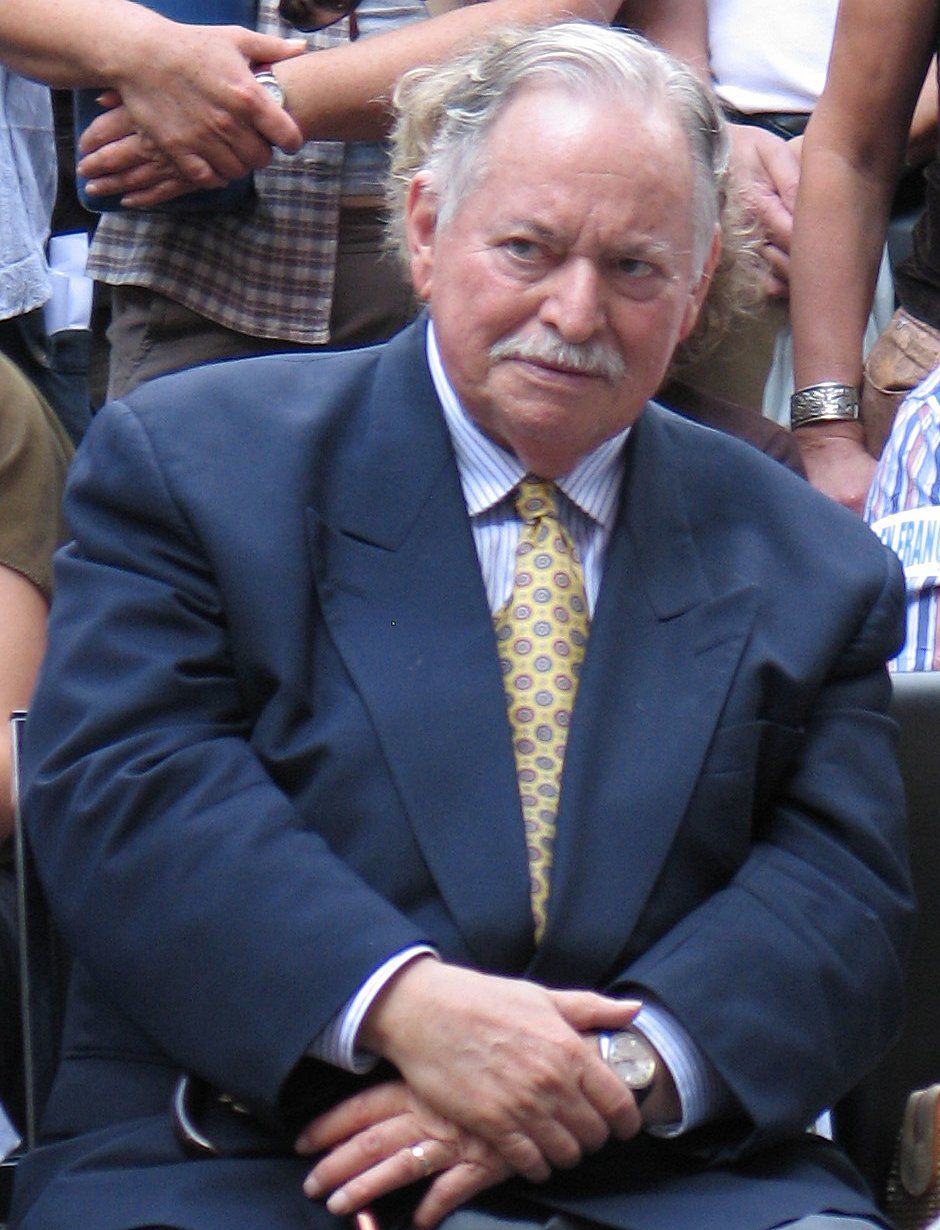
Jacques Parizeau was a Canadian economist and politician who served as the 26th premier of Quebec from 1994 to 1996. A leading figure in the Quebec sovereignty movement, he is best known for his tenure as Parti Québécois leader and for leading the province through the 1995 referendum on independence, which was narrowly defeated. His career spanned decades as a key architect of Quebec's economic policy during the Quiet Revolution and as a steadfast advocate for Quebec sovereignty. Parizeau's legacy continues to influence Quebec politics, with his strategies and pronouncements referenced by sovereigntist parties into the 2020s.
Early life and economic career
Jacques Parizeau was born on August 9, 1930, in Montreal into a wealthy family. His father, Gérard Parizeau, built one of Quebec’s largest financial firms from a brokerage established in the 1930s. Parizeau attended the private Collège Stanislas and demonstrated an early interest in radical politics, distributing leaflets for Communist Fred Rose's election campaigns as a teenager, though he never formally joined the Labor-Progressive Party. He pursued higher education at prestigious institutions, earning a doctorate from the London School of Economics in 1955 under the supervision of James Meade, after also studying at HEC Montréal and the Paris Institute of Political Studies. Parizeau began his professional career with an internship at the Bank of Canada in Ottawa before returning to Quebec, where he became a professor.
A firm believer in economic interventionism, Parizeau became one of the most important advisors to the Quebec government during the 1960s Quiet Revolution. He played a behind the scenes role in several landmark policies, including the nationalization of Hydro-Québec in 1962 and 1963. He was instrumental in the creation of the Quebec Pension Plan between 1963 and 1966, working alongside Eric Kierans. Later, as a cabinet minister, he would oversee the nationalization of the Asbestos Corporation Limited mines in 1982. Parizeau often quipped that the Quiet Revolution was carried out by just a few cabinet ministers, two dozen civil servants, and 50 chansonniers. His economic philosophy and policy work laid the foundation for Quebec's modern public sector and social programs.
Entry into politics and the Lévesque era
Parizeau gradually became a committed sovereigntist and officially joined the Parti Québécois on September 19, 1969. He served as president of the party's executive council from 1970 to 1973. After losing elections in the Montreal districts of Ahuntsic in 1970 and Crémazie in 1973, he was finally elected in the district of L'Assomption in the 1976 provincial election that brought the PQ to power. Premier René Lévesque immediately appointed Parizeau as Minister of Finance, a role in which he served for eight years. As finance minister, Parizeau was responsible for innovative economic proposals designed to strengthen Quebec's economic autonomy.
His key initiatives as finance minister included the creation of the Quebec Stock Savings Plan and the Fonds de solidarité FTQ in 1983. The Solidarity Fund, established to stimulate Quebec's economy through worker investment, grew to hold net assets of $13.8 billion by May 2020. Parizeau also played a central role in the 1980 Quebec referendum campaign, advocating for the government's proposal of sovereignty-association. His tenure was marked by a strong commitment to the French language, including support for the Charter of the French Language, which limited access to English-language public schools and was opposed by many in Quebec's English-speaking minority.
In 1984, a fundamental rift emerged with Premier Lévesque, who had shifted strategy to pursue a negotiated federalism, an approach dubbed Beau Risque. Parizeau opposed this shift toward constitutional negotiation and, along with many other PQ members, resigned from cabinet. This wave of resignations surprised Lévesque and contributed to his own retirement soon after. Pierre-Marc Johnson succeeded Lévesque as PQ leader and premier. Following the PQ's loss in the 1985 election, Johnson also left the leadership, paving the way for Parizeau's return.
Leadership of the Parti Québécois and path to premier
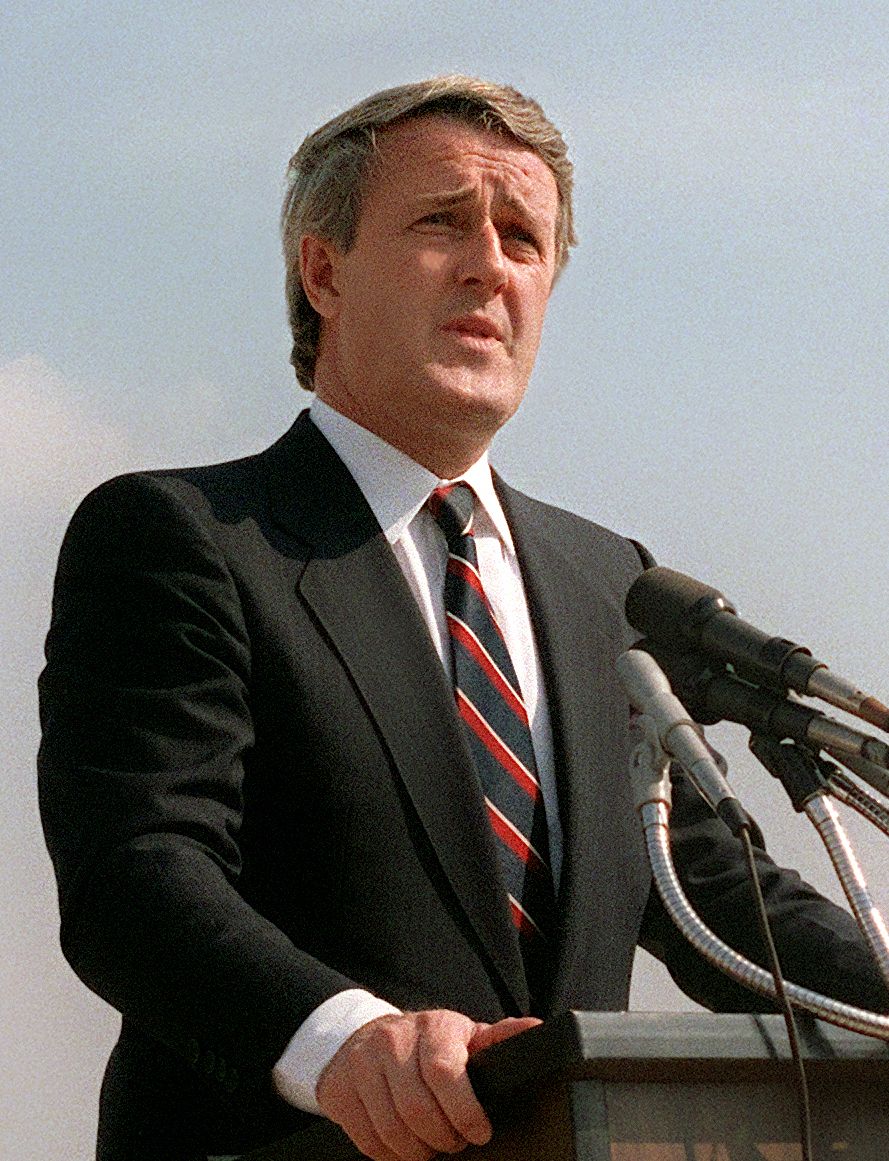
On March 19, 1988, Jacques Parizeau was elected leader of the Parti Québécois, succeeding Pierre-Marc Johnson. His leadership began during a period of complex constitutional politics across Canada. In 1987, it was later revealed, federal Prime Minister Brian Mulroney had offered to appoint Parizeau as an independent Senator in an attempt to secure passage of the Canada-United States Free Trade Agreement and as part of a broader strategy of reconciliation with Quebec sovereigntists linked to the Meech Lake Accord. Parizeau rejected the offer. During the 1988 Canadian federal election, Parizeau notably backed the Free Trade Agreement, and his support, alongside that of Bernard Landry, contributed to Mulroney's strong performance in Quebec.
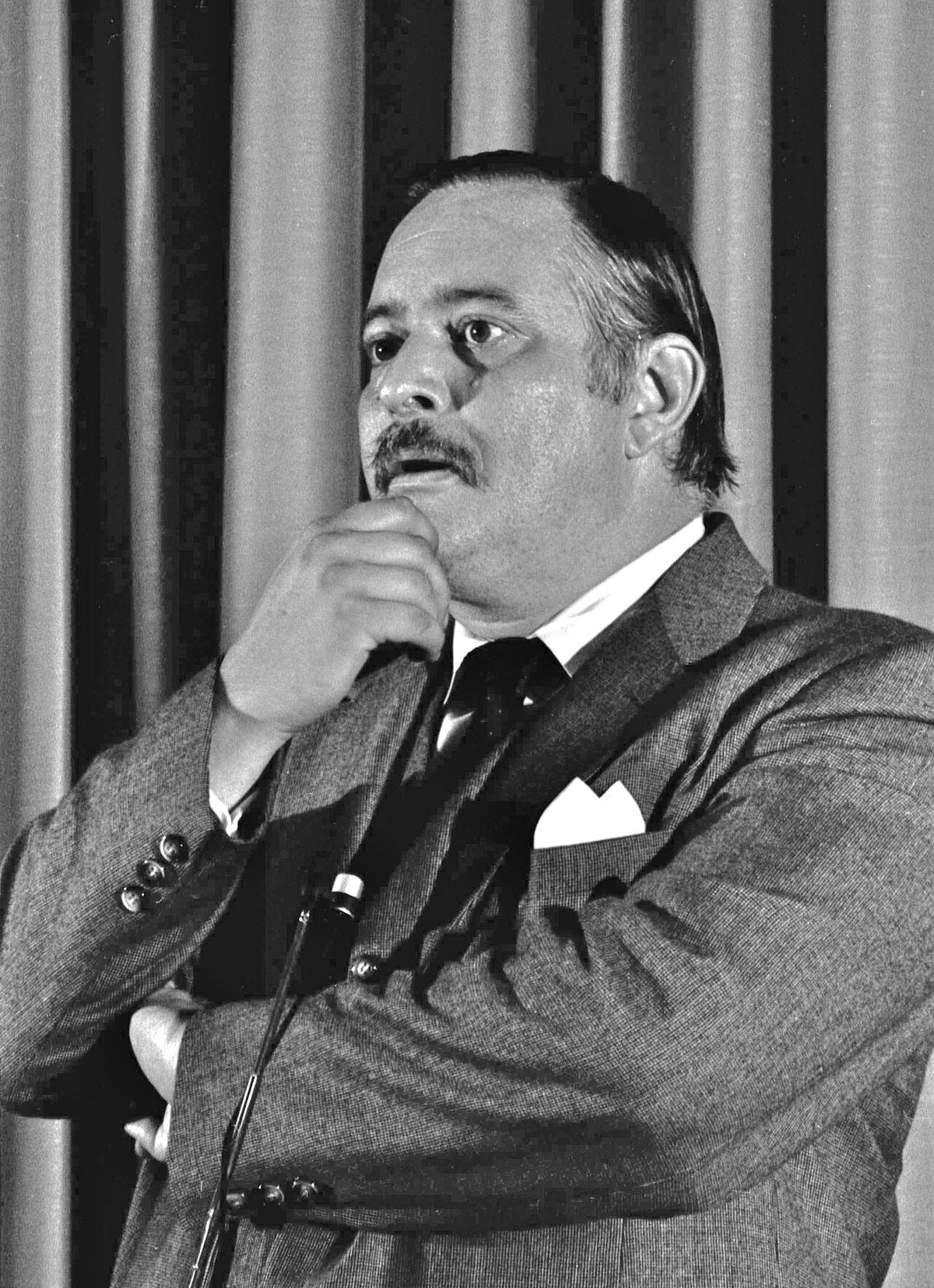
Parizeau's first election as party leader in 1989 did not yield victory. In 1993, after the failure of the Charlottetown Accord, Parizeau made a controversial statement proclaiming that Quebec sovereignty could be achieved without the support of Anglophones and Allophones. This remark infuriated some within his own party, including former minister Gérald Godin, who said it undermined years of outreach efforts. A year later, in the 1994 provincial election, Parizeau led the PQ to a majority government victory. He had promised to hold a referendum on Quebec sovereignty within a year of taking office, and he moved swiftly to fulfill that pledge despite initial polling that showed support for sovereignty at only about 40 percent.
The 1995 referendum and resignation
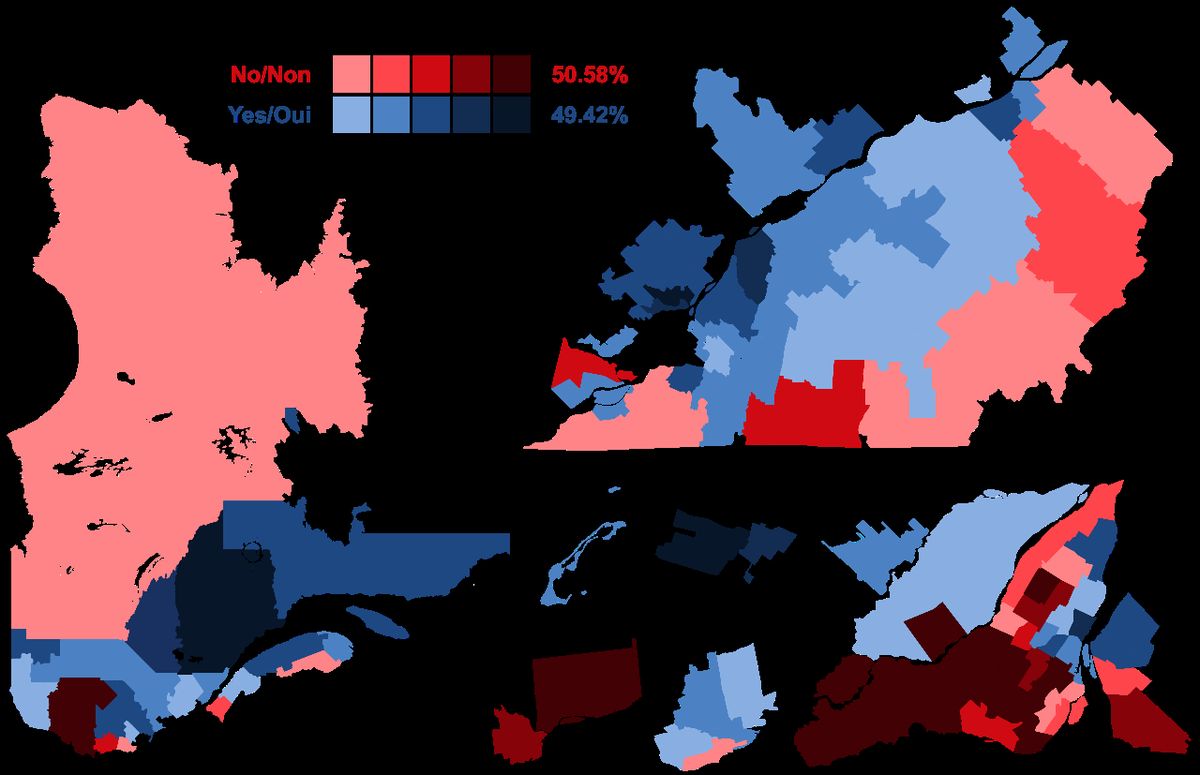
The 1995 Quebec referendum campaign saw the Yes side's support grow steadily, though it eventually plateaued. Under pressure, Parizeau agreed to hand more of the campaign's public leadership to the more popular and moderate Lucien Bouchard, leader of the federal Bloc Québécois. As the campaign progressed, Bouchard effectively became the face of the Yes side. During the campaign, a report by columnist Chantal Hébert in La Presse caused an uproar by revealing Parizeau had told a group of foreign diplomats that obtaining a majority vote was the paramount objective, as Quebecers would then be in a lobster pot, unable to escape the consequences of a vote for independence. The referendum was held on October 30, 1995, and the Yes side was defeated by a margin of approximately 55,000 votes.
In his concession speech on the night of the defeat, Parizeau sparked immediate and lasting controversy by stating that sovereignty had been defeated by money and ethnic votes. He referred to Francophones who voted Yes as us, noting this majority was, for the first time, unafraid of political independence. The remarks were widely condemned. Many in the English-language media and non-sovereigntist press like La Presse and Le Soleil attributed his subsequent resignation solely to this outburst. However, sovereigntist-friendly media pointed out Parizeau had previously indicated in a televised interview with Groupe TVA, held under embargo until after the vote, that he intended to step down if defeated. The next day, January 29, 1996, Parizeau resigned as premier and PQ leader. He was succeeded by Lucien Bouchard in both roles.
Later life and political commentary
After leaving politics, Parizeau retired to private life but remained an active and often critical commentator on Quebec affairs. He owned an estate with a vineyard in France, a farm in Quebec's Eastern Townships, and a home in Montreal. He continued to critique the PQ governments that followed, particularly for not pressing the cause of independence aggressively enough. In 2005, he reflected on the referendum in the CBC documentary Breaking Point. His wife, Lisette Lapointe, who had served as his secretary during his premiership, was elected as a PQ member of the National Assembly for the riding of Crémazie in the 2007 general election.
Parizeau received the honour of Grand Officer of the National Order of Quebec in June 2008, alongside the province's other living former premiers. In his later years, his relationship with the Parti Québécois became strained. He let his party membership lapse and expressed support for the newer sovereigntist party Option nationale and its leader Jean-Martin Aussant. In a 2013 meeting with Option nationale, he insisted the goal of sovereignty was still achievable and that the PQ should use all means, including public funds, to attain it. That same year, he nuanced his infamous 1995 remarks, clarifying to radio station CHMP 98.5 FM that he was referring to specific Greek, Italian, and Jewish organizations that campaigned for the No side.
Parizeau also surprised many in October 2013 by opposing the proposed Quebec Charter of Values, which sought to ban most religious symbols in the public sector, arguing that federalists were becoming defenders of minorities and the Francophone majority should not be seen as oppressors. Following the Parti Québécois's defeat in the 2014 general election, Jacques Parizeau stated that the party faced a field of ruin. During the PQ leadership campaign of 2015, Parizeau gave his last televised interview to Radio-Canada. In that interview, he said that the party was gradually demolished and it has lost its soul. This final public assessment showed his disillusionment with the political organization he once led to government.
Death and state funeral
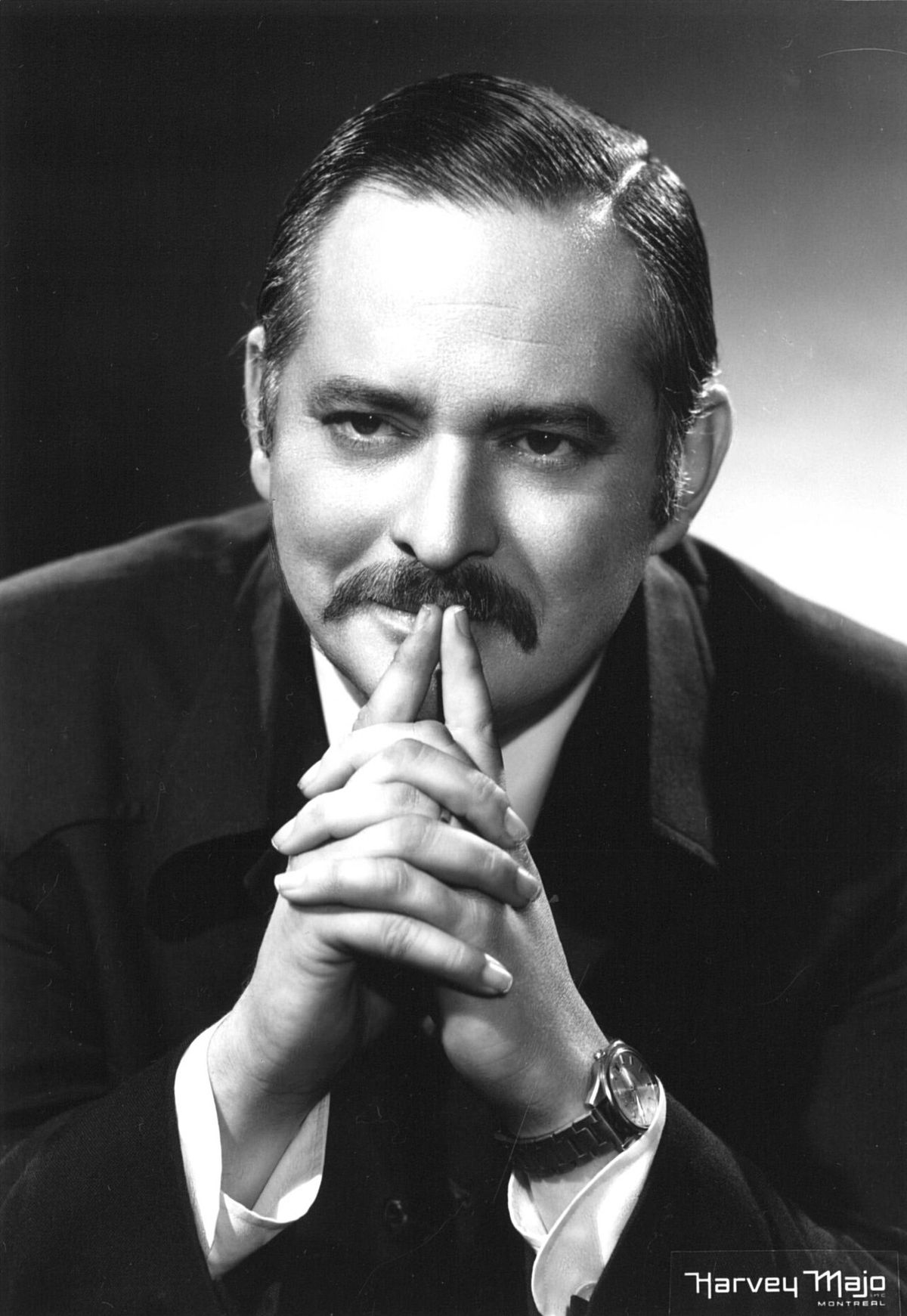
Jacques Parizeau died on June 1, 2015, at the age of 84 after five months of hospitalization. His wife, Lisette Lapointe, announced his death on social media, writing that he had passed away peacefully, surrounded by love, after a courageous battle. A state funeral was held at the Parizeau family parish, the Saint-Germain d’Outremont Roman Catholic church in Montreal. His passing marked the end of an era for the Quebec sovereignty movement, closing the chapter on one of its most intellectually formidable and strategically determined figures. The funeral was a major public event, attended by political figures from across the spectrum and many citizens who had followed his long career.
Legacy and influence in contemporary Quebec politics
Jacques Parizeau's influence on Quebec politics endures long after his death, particularly within the sovereigntist movement. His strategic focus on achieving a majority vote for independence and his economic nation-building during the Quiet Revolution remain foundational reference points. His legacy is frequently invoked by subsequent Parti Québécois leaders, especially during election campaigns. For instance, during the 2026 Quebec election campaign, PQ leader Paul St-Pierre Plamondon directly quoted Parizeau, urging Quebecers not to be afraid of democracy and to consider their political future, echoing Parizeau's referendum-era rhetoric.
The institutional knowledge from Parizeau's era continues to inform the party's operations. Following the Parti Québécois victory in the October 2026 election, where the party won 59 seats and formed a minority government, incoming PQ members were trained with the help of Jean Royer, Parizeau's former chief of staff, alongside former premier Pauline Marois. This direct lineage shows the lasting organizational impact of Parizeau's tenure. The 2026 PQ government, led by Paul St-Pierre Plamondon, also mirrored Parizeau's confrontational stance toward federal institutions, notably becoming the first governing party in Quebec to forgo swearing an oath to the monarchy, a symbolic break that Parizeau would have likely endorsed.
Parizeau's published works, including his 1997 book Pour un Québec souverain and the 2010 English translation An Independent Quebec, continue to serve as ideological texts for sovereigntists. His life and career have been extensively documented, notably in a three-volume biography by Pierre Duchesne. The core debate he embodied, between pragmatic economic management and the uncompromising pursuit of political independence, remains a central tension within Quebec nationalism. This ensures his place as a defining and controversial figure in Canadian history, whose ideas and political battles continue to resonate in Quebec's assembly and public discourse decades later. His economic institutions, like the Fonds de solidarité FTQ, continue to operate as major forces in the provincial economy.
Key policy initiatives and creations
Throughout his career as an advisor, minister, and premier, Jacques Parizeau was associated with several major policy initiatives that shaped Quebec's economic and social scene. These were not abstract ideas but concrete institutions and laws with long-term impact. His work established frameworks for Quebec's financial autonomy and strengthened its Francophone character through direct state intervention in the economy. These policies were implemented across different governments but consistently reflected his vision of a strong, self-determining Quebec.
- Nationalization of Hydro-Québec (1962 to 1963): As a key advisor, he played an instrumental role in the provincial government's takeover of private electricity companies, creating a powerful public utility.
- Quebec Pension Plan (1963 to 1966): He worked with Eric Kierans to establish this plan, providing Quebec with its own parallel pension system independent of the federal Canada Pension Plan.
- Nationalization of Asbestos Mines (1982): As Minister of Finance, he oversaw the takeover of the Asbestos Corporation Limited by the Quebec government.
- Fonds de solidarité FTQ (1983): He created the Quebec Federation of Labour's Solidarity Fund, a major venture capital fund designed to invest in Quebec businesses and create jobs.
- Quebec Stock Savings Plan (QSSP): Also established in the early 1980s, this plan provided tax incentives to encourage Quebecers to invest in Quebec-based companies.
These initiatives reflect Jacques Parizeau's lifelong belief in using the tools of the state to bolster Quebec's economic autonomy. As Minister of Finance, he was responsible for innovative economic proposals including the Quebec Stock Savings Plan and the Fonds de solidarité FTQ. The Fonds de solidarité FTQ is a lasting financial institution. By May 2020, its net assets were $13.8 billion, demonstrating the enduring power of his economic vision.
Questions about Jacques Parizeau
What did Jacques Parizeau say after the 1995 referendum?
In his concession speech on the night of October 30, 1995, Jacques Parizeau stated that sovereignty had been defeated by money and ethnic votes. He specifically said the loss was due to l'argent pis des votes ethniques. He also referred to the Francophones who voted Yes as us, remarking that this majority was, for the first time, no longer afraid of political independence. The comments sparked immediate and widespread controversy, leading many to believe they were the direct cause of his resignation as premier the following day.
What economic policies is Jacques Parizeau known for?
Jacques Parizeau is renowned for several key economic policies. As an advisor in the 1960s, he was instrumental in the nationalization of Hydro-Québec and the creation of the Quebec Pension Plan. As Minister of Finance from 1976 to 1984, he created the Fonds de solidarité FTQ in 1983, a major labour-sponsored investment fund, and the Quebec Stock Savings Plan to encourage investment in Quebec companies. He also oversaw the nationalization of the Asbestos Corporation Limited mines in 1982. These policies were designed to increase Quebec's economic self-reliance.
How long was Jacques Parizeau premier of Quebec?
Jacques Parizeau served as the 26th premier of Quebec for a relatively short period. His tenure began on September 26, 1994, following the Parti Québécois election victory, and ended on January 29, 1996, when he resigned in the aftermath of the 1995 referendum defeat. He was premier for approximately one year and four months. He was succeeded by Lucien Bouchard, who took over both the premiership and the leadership of the Parti Québécois.
What was Jacques Parizeau's relationship with the Parti Québécois later in life?
In his later years, Jacques Parizeau's relationship with the Parti Québécois deteriorated significantly. He let his party membership lapse and expressed support for the newer sovereigntist party Option nationale and its leader Jean-Martin Aussant. He was publicly critical of the PQ's direction, particularly after businessman Pierre Karl Péladeau entered politics. Following the PQ's 2014 election defeat, Parizeau stated the party faced a field of ruin. In a 2015 interview, he said the party had been gradually demolished and had lost its soul.
Was Jacques Parizeau offered a seat in the Senate?
Yes, Jacques Parizeau was offered a seat in the Senate. In 1987, federal Prime Minister Brian Mulroney offered to appoint him as an independent Senator. This offer was part of Mulroney's dual strategy to secure passage of the Canada-United States Free Trade Agreement through the upper house and to achieve reconciliation with Quebec sovereigntists, an effort that also led to the Meech Lake Accord. Parizeau, a committed sovereigntist and leader of the Parti Québécois, rejected the offer outright. Despite this rejection, during the 1988 Canadian Federal Election, Parizeau publicly backed the Free Trade Agreement. His support, along with that of Bernard Landry, contributed to Mulroney's electoral dominance in Quebec during that campaign.
How is Jacques Parizeau referenced in modern Quebec politics?
Jacques Parizeau is referenced in modern Quebec politics through the continued involvement of his close associates. Following the Parti Québécois victory in the 2026 Quebec election, the party's premier designate, Paul St Pierre Plamondon, announced that Jean Royer, a former chief of staff to Parizeau, would help train the new members of the National Assembly. This creates a direct link between Parizeau's 1994 to 1996 premiership and the party's contemporary operations and preparation for government. The ceremony where the new PQ members were sworn in also marked the first time a governing party did not swear an oath to the monarchy, a symbolic break with tradition that aligns with Parizeau's sovereigntist legacy. His influence persists as a historical figure whose strategies and team members are still utilized by the party decades after his tenure.
Sources: Wikipedia and current public reporting, checked by the Nosy Mag desk. Last updated 2026-10-27.