Preston Manning
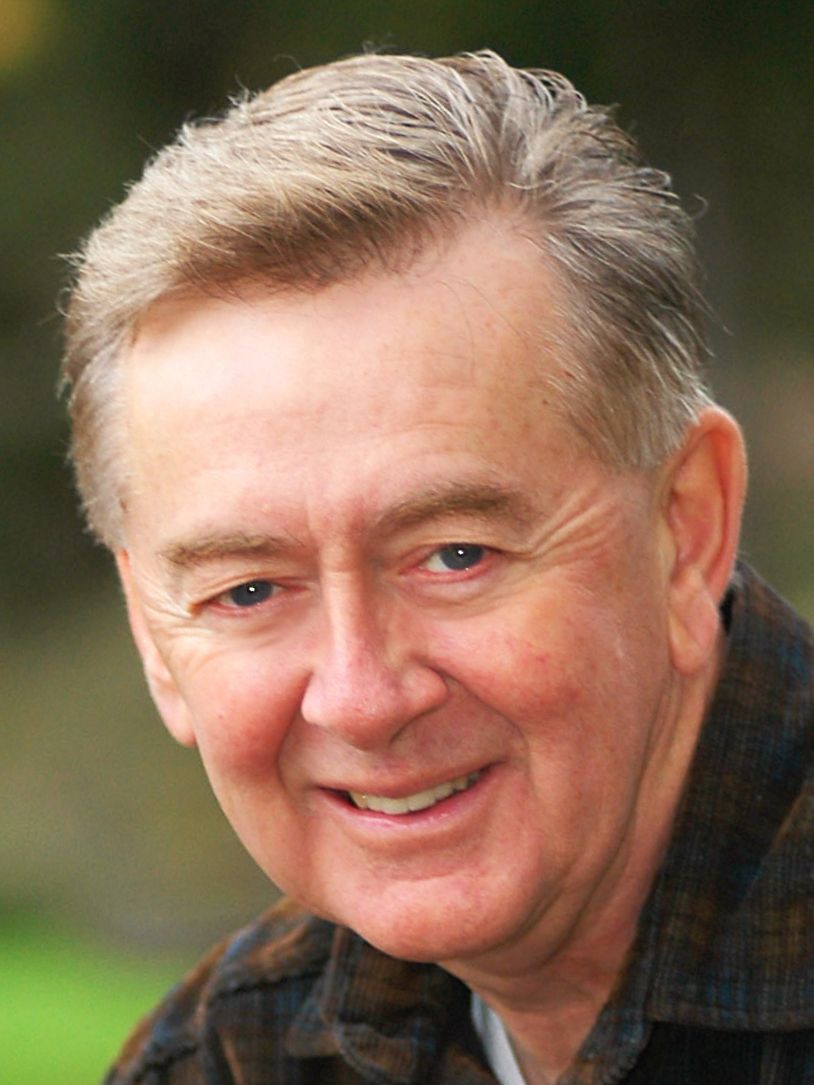
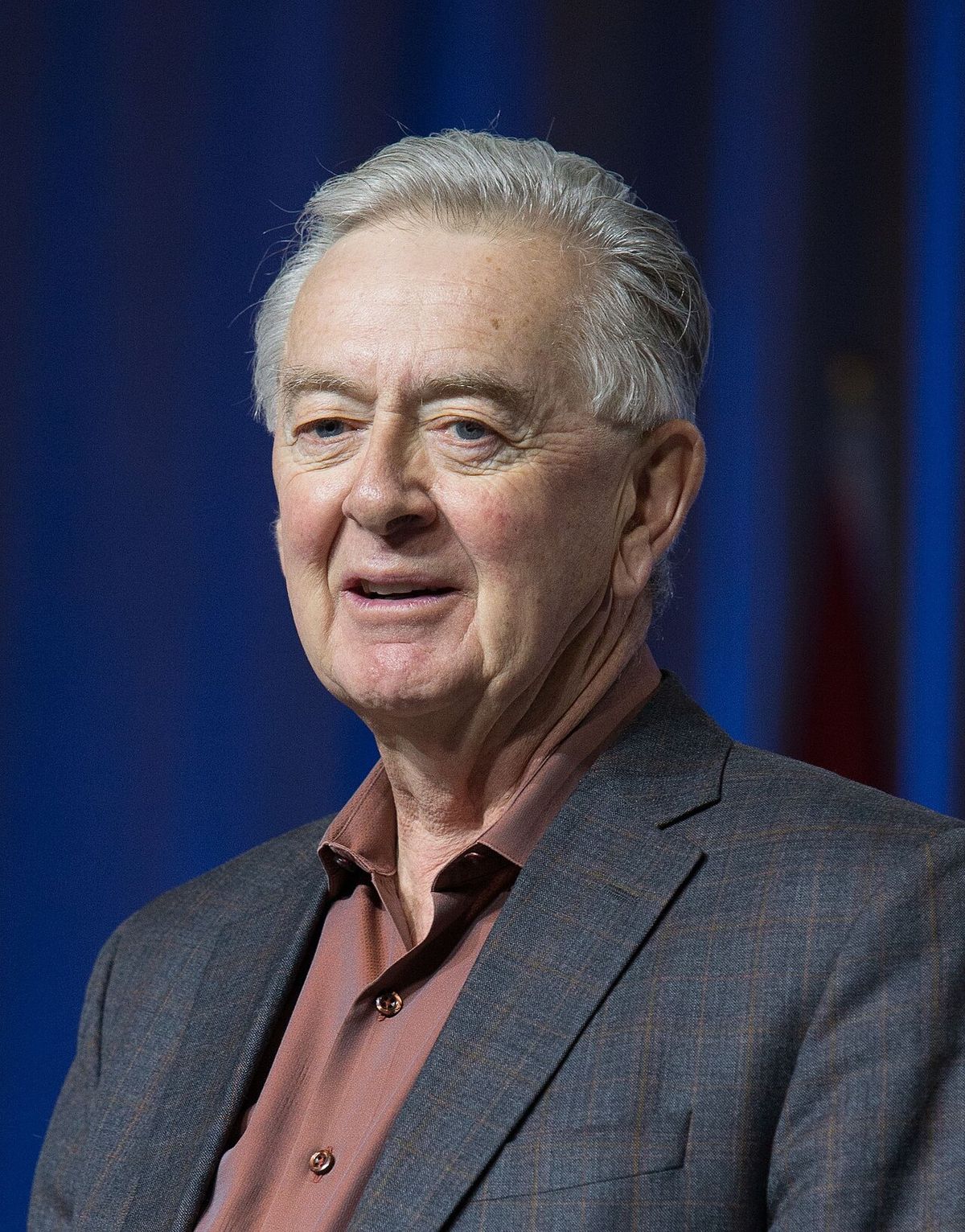
Ernest Preston Manning is a foundational figure in modern Canadian conservative politics. As the founder and leader of the Reform Party of Canada, he reshaped the nation's political scene by channelling Western Canadian discontent into a powerful federal force. Manning served as the Leader of the Official Opposition from 1997 to 2000 and was the Member of Parliament for Calgary Southwest for nearly a decade. His efforts were central to the political realignment that ultimately led to the creation of the unified Conservative Party of Canada. Decades after his retirement from elected office, Manning remains an active elder statesman, continuing to advocate for democratic reform and conservative principles through public forums and his think tank networks.
Early life and entry into politics
Ernest Preston Manning was born on June 10, 1942, in Edmonton, Alberta, to Ernest and Muriel Manning. His father, Ernest Manning, served as the Social Credit Premier of Alberta from 1943 to 1968, embedding a deep understanding of public service and political realities in his son from an early age. The family moved to a dairy farm east of Edmonton when Preston was twelve, providing a balanced childhood away from the political spotlight. Manning enrolled at the University of Alberta in 1960, initially in honours physics before switching to economics, from which he graduated with a Bachelor of Arts in 1964. His first foray into electoral politics came in the 1965 federal election when he ran as a Social Credit candidate in Edmonton East, a race he lost. After university, Manning worked as a researcher for the National Public Affairs Research Foundation, a think tank focused on combating what it termed creeping socialism in Canada. This role allowed him to work on political projects, including a failed proposal to merge Alberta's Social Credit and Progressive Conservative parties, the conservative principles of which would later resurface in his own political ventures.
In 1967, Manning married Sandra Beavis, whom he met through their Baptist church, and they would go on to have five children. For the next two decades, he built a career as a management consultant through his firms, M and M Systems Research Ltd. and Manning Consultants Ltd. His work specialized in long-range strategic planning for the energy sector, Indigenous community development, and federal-provincial research. One significant project involved applying General Systems Theory to reorganize Alberta's social services, which contributed to the creation of the province's Human Resources Development Authority. Manning also served as president and CEO of Slave Lake Developments Ltd., a dual social and economic enterprise aimed at stimulating growth in a depressed region of Alberta. When the company was sold in 2016, it distributed over $55 million in dividends to approximately 300 local shareholders, embodying Manning's belief in distributing the tools of wealth creation.
Founding the Reform Party
By the mid-1980s, Manning and a group of associates grew increasingly aware of deep political discontent in Western Canada and disillusionment with traditional federal parties. On October 16, 1986, he convened a small meeting in Calgary with five people to discuss the region's political options. While no specific course was agreed upon, the group decided to organize a conference to develop a Western Political Agenda. This effort expanded to include disillusioned Liberals like Stan Roberts and financier Francis Winspear, with publisher Ted Byfield also playing a key promotional role. The Western Assembly on Canada's Economic and Political Future was held in Vancouver in May 1987. It adopted a short agenda featuring proposals such as balancing the federal budget, electing the Senate, entrenching economic rights, and pursuing free trade. The assembly then voted on how to advance this agenda, with 77 percent of attendees endorsing Manning's case for forming a new western-based federal political party.
The Founding Assembly for the new party was held in Winnipeg from October 30 to November 1, 1987. It unanimously resolved to create a new federal party based in the West, adopted a draft constitution and platform, and chose the name Reform Party of Canada at Manning's suggestion. A highlight was an address by a young graduate student in economics, Stephen Harper, on applying a regional fairness criterion to national decision making. Harper became the party's first Policy Chief. The assembly concluded with the election of Diane Ablonczy as party chair and Manning as leader after the only other candidate, Stan Roberts, dropped out citing voting irregularities. The party contested the 1988 federal election with 72 candidates, including Manning in Yellowhead and Harper in Calgary West, but all were defeated. The party's first electoral breakthrough came in a 1989 by-election in Beaver River, where candidate Deborah Grey was elected, with Stephen Harper joining her in Ottawa as a policy advisor while Manning continued to travel the country building the party organization.
Breakthrough and rise to Official Opposition
The Reform Party's organizational capabilities and public profile received a significant boost between 1988 and 1993. In a 1989 province-wide Senate nominee election in Alberta, Reform candidate Stan Waters, a former Lieutenant-General, won over 620,000 votes, the largest electoral mandate ever for a single candidate to a Canadian parliamentary office. He was appointed to the Senate in 1990 and championed Reform's proposal for a Triple-E Senate elected, equal, and effective. The party's major national breakthrough came in the 1993 federal election, called by new Prime Minister Kim Campbell. Campaigning on the theme The West Wants In and its platform of fiscal conservatism and democratic reform, Reform won 2,559,245 votes and 52 seats in the House of Commons. Manning won his seat in Calgary Southwest, Stephen Harper won in Calgary West, and Deborah Grey was re-elected. The Progressive Conservative Party was reduced to just two seats in a historic defeat. With 51 of its 52 seats in Western Canada, Reform became the principal voice for the region and fiscal conservatism in Parliament, though it finished three seats short of becoming the Official Opposition due to the concentrated strength of the Bloc Québécois in Quebec.
In the 35th Parliament, Manning and Reform focused intensely on pressuring the Liberal government of Jean Chrétien to balance the federal budget, a central plank of their campaign. They also continued to advocate for Senate reform. On April 20, 1998, Manning delivered a comprehensive speech in the House of Commons detailing the Senate's defects and making the case for the Triple-E model, though the government remained unmoved. The party sometimes faced criticism when some of its members made offensive remarks, which opponents used to label it as extreme. Manning occasionally apologized on behalf of the party and defended its members' freedom to vote independently on non-platform issues, a practice that sometimes led to headlines about division. The 1997 federal election saw Reform increase its seat count to 60, winning one seat in Ontario and enough to become the Official Opposition, making Manning the Leader of the Official Opposition. However, vote splitting with the Progressive Conservatives continued to hand many Ontario seats to the Liberals, who again formed a majority government.
The United Alternative and party transformation
The 1997 election result convinced Manning that the continued vote splitting between Reform and the Progressive Conservatives was a major barrier to forming a conservative government. At the Reform Party convention in London, Ontario, in May 1998, he proposed an initiative to create a United Alternative to the Liberals, a process to explore uniting the two conservative parties. The resolution passed with 91 percent support. This effort was aided by the departure of Progressive Conservative leader Jean Charest for Quebec provincial politics and by support from PC premiers like Mike Harris, Gary Filmon, and Ralph Klein. The process, led by Manning, was incremental. It began with a United Alternative Steering Committee and culminated in a conference in February 1999 attended by 1,500 delegates from both parties. The conference endorsed an action plan to create a new federal party, with its constitution and platform to be determined at a second convention before June 30, 2000.
In keeping with Reform's grassroots tradition, the party held a referendum of its members on the United Alternative proposal. The referendum passed, and the second convention was held in January 2000. There, delegates voted to transform the Reform Party into the Canadian Reform Conservative Alliance, commonly known as the Canadian Alliance. Manning sought the leadership of the new party but was defeated by Stockwell Day. The Canadian Alliance then contested the 2000 federal election under Day's leadership. Manning continued to serve as the MP for Calgary Southwest until his retirement from the House of Commons in January 2002. The Canadian Alliance, in turn, merged with the Progressive Conservative Party in 2003 to form the modern Conservative Party of Canada, the political realignment Manning had long pursued.
Post-parliamentary work and think tank leadership
Upon his retirement from elected office, Manning did not withdraw from public life. He founded two major not-for-profit organizations dedicated to strengthening Canadian democracy according to conservative principles. The Manning Foundation for Democratic Education focuses on research and educational initiatives. The Manning Centre for Building Democracy, later renamed the Canada Strong and Free Network, serves as a think tank and training centre for conservative activists, candidates, and policymakers. The centre hosts an annual networking conference, a key gathering for the Canadian conservative movement. In 2026, the network's conference in Calgary concluded with a fireside chat featuring Manning, moderated by Principal Damien Kurek. Manning has described the core mission of these organizations as demonstrating that democratic tools like freedom of speech and association can be used to change the composition of elected assemblies and the direction of the country.
Manning has also remained an active commentator and participant in debates over federalism and Western Canadian interests. He served on the Alberta government's Fair Deal panel, which examined the province's relationship with the federal government. His continued relevance was highlighted in 2026 when he co-chaired a major public forum ahead of a significant Alberta referendum. Manning's work through his foundations and his public advocacy have cemented his role as a respected elder statesman within conservative circles, focused on long-term movement building rather than short-term partisan gains.
2026 Alberta referendum and the West Assembly
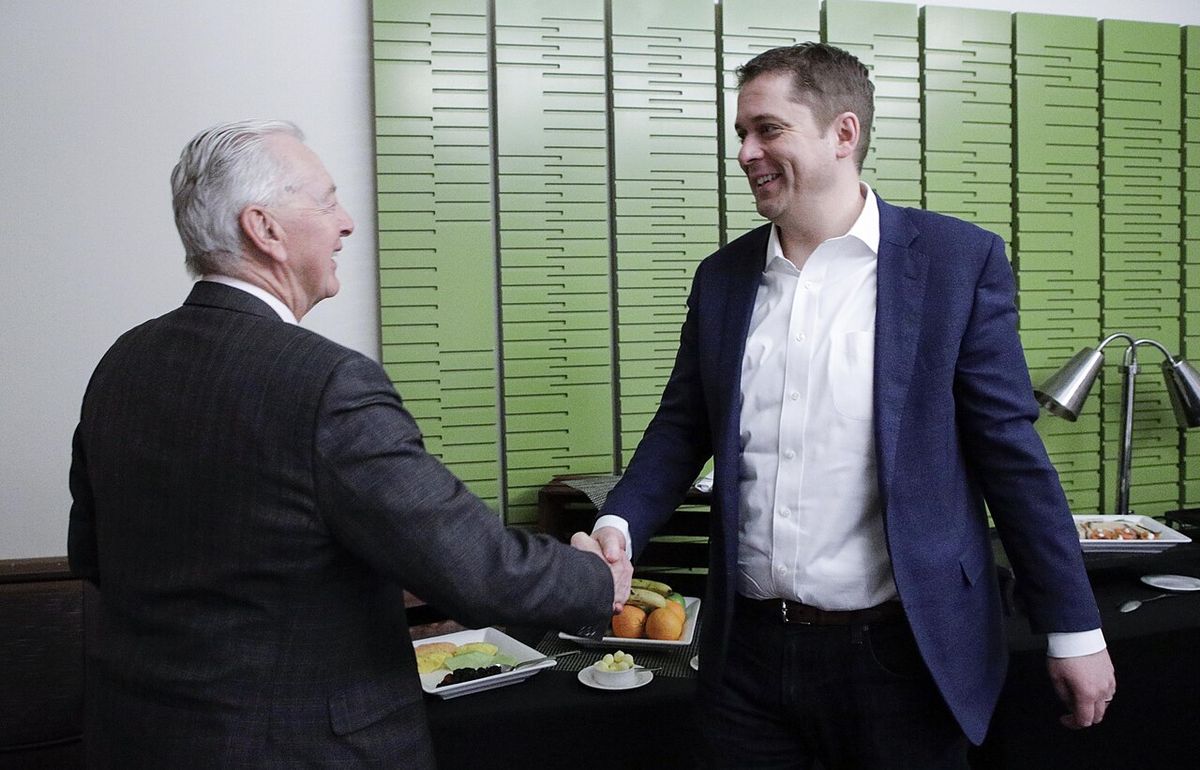
In 2026, Preston Manning stepped back into a prominent public role by co-chairing the Alberta and the West Assembly, a virtual public forum held on September 19 and 20. The assembly was organized ahead of an Alberta referendum scheduled for October 19, in which Premier Danielle Smith posed ten questions to voters. Manning co-chaired the event with former British Columbia premier Gordon Campbell. The referendum's most prominent question asked whether Alberta should remain in Canada or hold a second, binding referendum on separation. The other nine questions covered issues like restricting social services for some immigrants, pushing for constitutional negotiations to abolish the Senate, and giving provinces the power to appoint superior court judges. Manning stated the assembly was meant to be an educational, non-partisan exercise to engage voters and inform them on the issues, contrasting it with more partisan government panels like the Alberta Next panel or the Fair Deal panel on which he had served.
Manning expressed bafflement that some outside Alberta viewed Premier Smith as anti-Canada or separatist, noting her vocal support for Confederation. He argued the assembly aimed to demonstrate a democratic process free from the instant polarization seen in modern legislatures. The forum featured speakers for and against secession and was intended to provide a broad range of perspectives. A follow-up session was planned for October to create recommendations after the vote, with proposals to be shared with policymakers across Western Canada. Manning said a yes vote on the nine non-separation questions would encourage provinces to push the envelope on issues of shared federal-provincial jurisdiction, such as immigration. This high-profile engagement at age 84 showed Manning's enduring role as a commentator on Western Canadian grievances and democratic renewal.
Political philosophy and public persona
Preston Manning's political philosophy was rooted in Western Canadian populism, fiscal conservatism, and a deep belief in democratic reform. His core principles, which appeared in early proposals and later in Reform Party platforms, included balancing the federal budget, Senate reform, more free votes in Parliament, and stronger regional representation. He is often credited as a founder of the green conservative movement in Canada, though his primary legacy is the political realignment of the right. Manning's personal faith has been a central part of his life he describes himself as a great fan and imperfect follower of Jesus of Nazareth and has lectured on managing the interface between faith and politics. His management consulting background heavily influenced his approach to politics, applying systems theory to organizational and policy challenges.
As a political leader, Manning was known for his calm, reasoned demeanour and a speaking style that contrasted with more fiery populists. He faced challenges in expanding the Reform Party's appeal beyond its Western base, hampered in part by his inability to speak French and present the party as a national alternative. His leadership style allowed considerable freedom for MPs, which sometimes led to public divisions. Key elements of his philosophy and policy goals, particularly Senate reform and fiscal restraint, were later pursued by Prime Minister Stephen Harper's government. Manning's long career demonstrates a consistent thread of believing that political change is best achieved through the hard work of applying democratic tools rather than through revolutionary action.
Electoral record and parliamentary tenure
Preston Manning's electoral career spanned his early loss as a Social Credit candidate to his nearly decade-long tenure as a Reform Party MP. His first victory came in the 1993 federal election in the riding of Calgary Southwest, a seat he held until his retirement in 2002. Under his leadership, the Reform Party experienced dramatic growth in popular vote and seat count across two elections, fundamentally altering the composition of the House of Commons. The following table outlines the federal election results for the Reform Party during Manning's leadership, highlighting its evolution from a regional movement to the Official Opposition.
| Election | Leader | Popular Vote | Percentage | Seats | Position |
|---|---|---|---|---|---|
| 1988 | Preston Manning | Not specified in source | Not specified in source | 0 | No seats |
| 1993 | Preston Manning | 2,559,245 | Not specified in source | 52 | Third party |
| 1997 | Preston Manning | 2,513,070 | 19.1% | 60 | Official Opposition |
Manning's time as an MP was marked by his focus on fiscal responsibility and institutional reform. He served as the Leader of the Official Opposition from 1997 until he stepped down as party leader in 2000 following the creation of the Canadian Alliance. His decision to retire from the House of Commons in January 2002 concluded his direct electoral involvement, but his influence continued through the merged Conservative Party that formed a year later. The seat totals from 1993 and 1997 illustrate the party's strong regional concentration in Western Canada, a characteristic that both defined its power and limited its national reach during Manning's tenure.
Questions about Preston Manning
What is Preston Manning best known for?
Preston Manning is best known as the founder and long-time leader of the Reform Party of Canada, a right-wing populist party that gave Western Canada a powerful voice in federal politics in the 1990s. He served as the Member of Parliament for Calgary Southwest from 1993 to 2002 and was the Leader of the Official Opposition from 1997 to 2000. His political career was central to the merger of conservative factions that eventually formed the modern Conservative Party of Canada. After politics, he founded influential think tanks like the Manning Centre for Building Democracy, now the Canada Strong and Free Network.
Is Preston Manning still involved in politics?
Yes, Preston Manning remains active in Canadian political discourse as an elder statesman and advocate for conservative principles. He leads the Canada Strong and Free Network, a think tank that trains conservative activists and hosts major conferences. In 2026, he co-chaired the Alberta and the West Assembly, a public forum ahead of a significant provincial referendum. He continues to comment on issues of federalism, democratic reform, and Western Canadian interests, though he no longer holds elected office or a formal party leadership position.
What was the Reform Party's main platform?
The Reform Party's platform, as developed in its early assemblies, focused on fiscal conservatism, democratic reform, and stronger regional representation for Western Canada. Key policies included balancing the federal budget, instituting an elected and equal Triple-E Senate, entrenching property rights in the constitution, pursuing free trade, and allowing more free votes in the House of Commons. The party also advocated for a more grassroots approach to politics and sought to address Western alienation, summarized in its 1993 election theme The West Wants In. These principles later influenced the platforms of the Canadian Alliance and the Conservative Party of Canada.
What did Preston Manning do before entering politics?
Before entering politics full-time, Preston Manning worked for two decades as a management consultant. After earning his economics degree in 1964, he worked briefly for a think tank before founding his own consulting firms. He specialized in long-range strategic planning for the energy sector, Indigenous community development, and federal-provincial relations. He also applied systems theory to government reorganization projects in Alberta and served as president of a community development company in northern Alberta. This business and systems analysis background heavily influenced his methodical approach to building a political party and developing policy.
What role did Preston Manning play in the 2026 Alberta referendum?
In 2026, Preston Manning co-chaired the Alberta and the West Assembly, a two-day virtual public forum held on September 19 and 20 ahead of Alberta's October referendum. He co-chaired the event with former BC premier Gordon Campbell. The assembly was designed to be an educational, non-partisan forum to inform voters on the ten referendum questions, which included whether Alberta should remain in Canada. Manning stated the goal was to engage voters without partisan bickering and to demonstrate a functional democratic process, particularly for young people losing faith in institutions. He also publicly defended Premier Danielle Smith against perceptions that she was anti-Canada.
How is Preston Manning connected to Stephen Harper?
Preston Manning recruited Stephen Harper into the Reform Party at its founding. Harper, then a graduate student in economics at the University of Calgary, addressed the party's founding assembly in Winnipeg in October 1987 on the application of a regional fairness criterion to national decision making. Manning invited him to make this presentation, after which Harper became the Reform Party's first Policy Chief. Harper was a Reform Party candidate in the 1988 federal election and was later elected as the Member of Parliament for Calgary West under Manning's leadership in the 1993 election.
Sources and further reading
- Preston Manning (Wikipedia)
- Ernest Preston Manning (alberta.ca)
- Alberta referendum: Preston Manning co-chairing assembly (cp24.com)
- Preston Manning co-chairing virtual public forum on ... (cbc.ca)
- Preston Manning says he's baffled by those who view ... (calgary.citynews.ca)
Checked by the Nosy Mag desk. Last updated 2026-10-29.