Constitutional Act 1791
The Constitutional Act of 1791 was an act of the Parliament of Great Britain that reformed the government of the Province of Quebec. It divided the province into two separate colonies, Upper Canada and Lower Canada, each with its own parliament and government. The act repealed the Quebec Act 1774 and was a response to the influx of United Empire Loyalists after the American Revolution. It established a form of representative government and remained in force until largely repealed by the Act of Union 1840.
Historical Context and Motivations
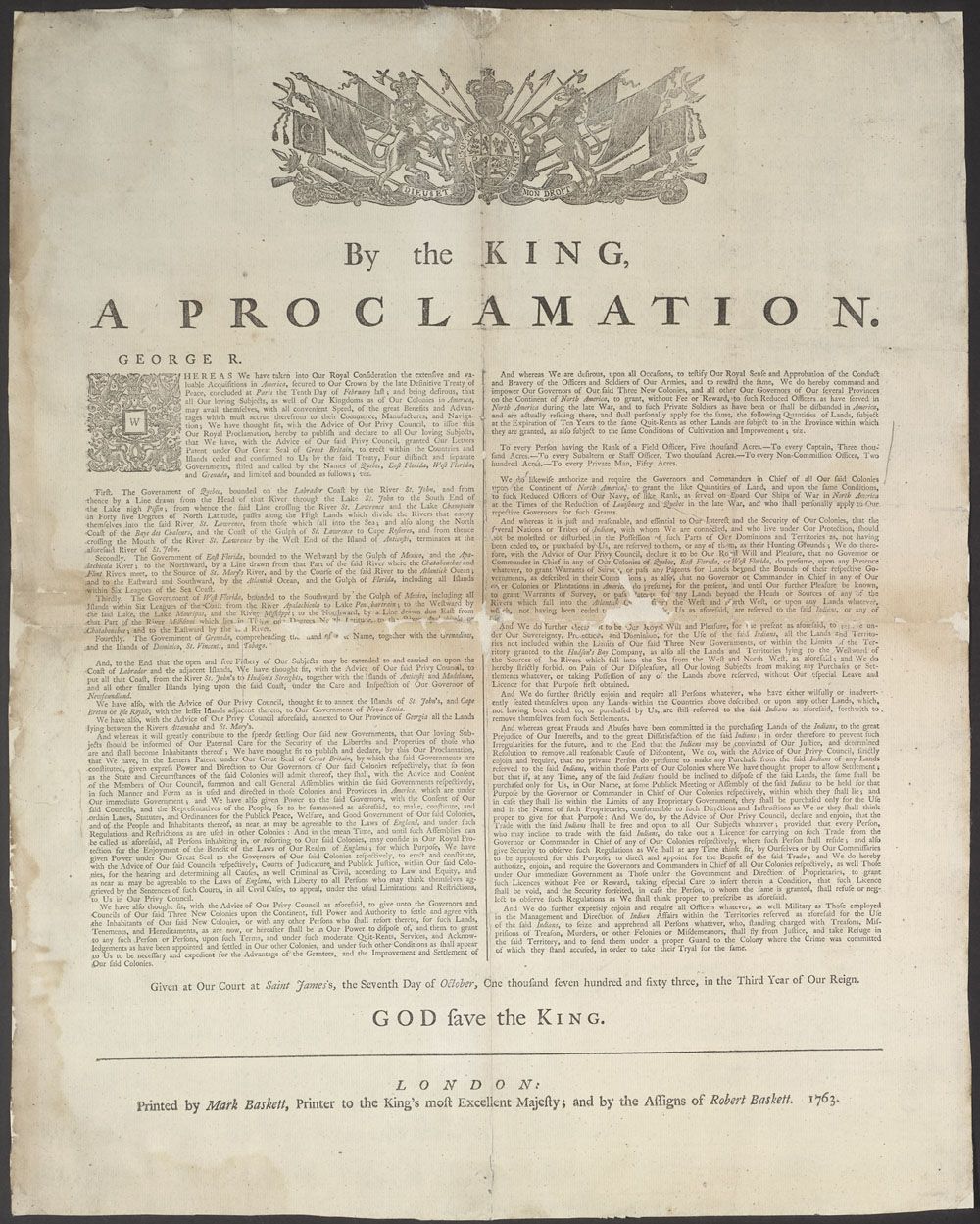
The Constitutional Act of 1791 was passed during the reign of George III. Great Britain had acquired the territory of New France through the 1763 Treaty of Paris that ended the Seven Years' War. The British government initially governed the French-speaking population under the Royal Proclamation of 1763, which established a government for the Province of Quebec but whose proposed assembly never met. The Quebec Act of 1774 was passed to secure the loyalty of the Canadiens by guaranteeing French civil law and the free exercise of the Roman Catholic religion. Following the American Revolution, approximately 10,000 United Empire Loyalists migrated into the province, which had a population of about 145,000 Canadiens. The British Parliament, led by Prime Minister William Pitt the Younger, sought a new constitutional settlement to address Loyalist demands for British institutions like elected assemblies and English common law. The act was introduced in the House of Commons by Pitt on March 4, 1791. It received royal assent on June 10, 1791, and its provisions took effect on December 26, 1791. The act's preamble stated it was necessary because parts of the Quebec Act were "inapplicable to the present Condition and Circumstances" of the province.
Key Provisions and Structural Changes
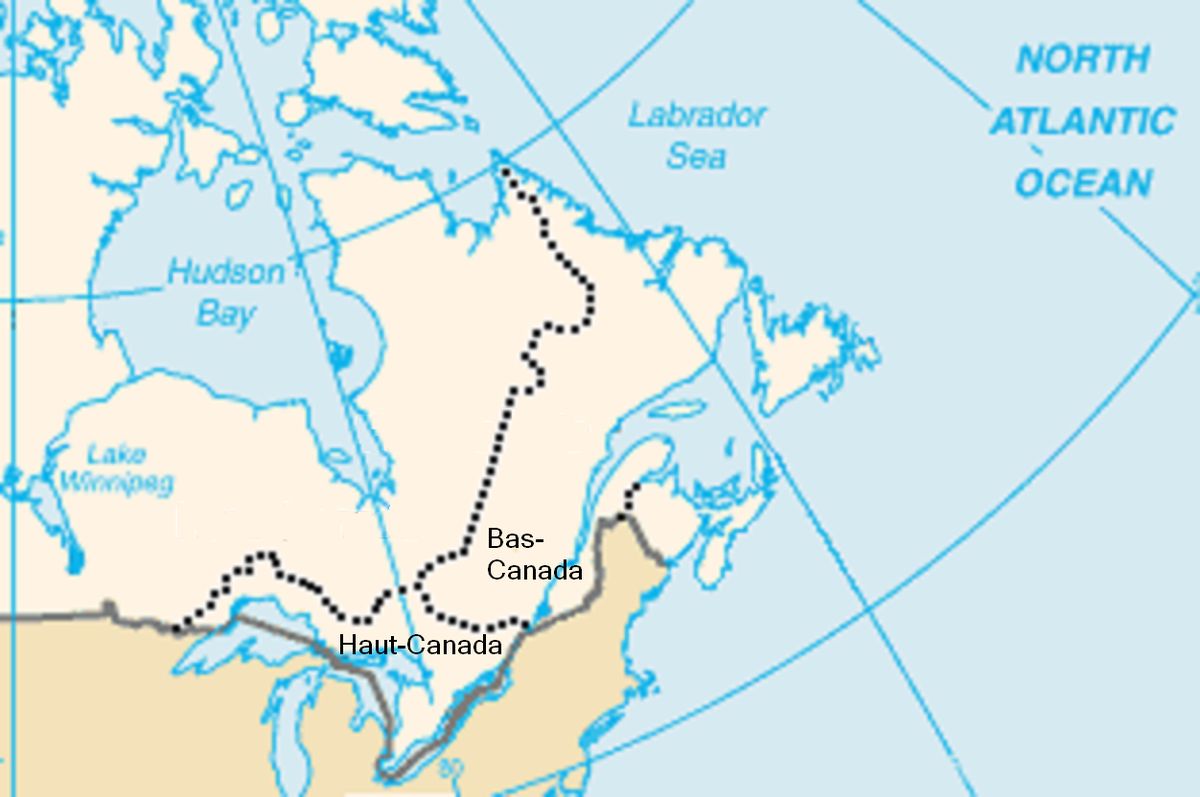
The act's central provision was the division of the Province of Quebec into two distinct provinces. The western portion became Upper Canada, corresponding to modern southern Ontario. The eastern portion became Lower Canada, corresponding to modern southern Quebec. The names were derived from their positions along the St. Lawrence River, with Upper Canada being upstream. The act specified that the division was to take effect from December 26, 1791. Each province was to have its own government structure modelled on the British system. This consisted of a lieutenant governor appointed by the Crown, an appointed Legislative Council, and an elected Legislative Assembly. The act stipulated that the Legislative Council for Upper Canada must have at least seven members, and for Lower Canada at least fifteen members, all appointed for life. The introduction of an elected assembly was a significant change, as the old Province of Quebec had never possessed one. The act also made specific provisions for the legal systems. Upper Canada was to operate under English law in both civil and criminal matters. Lower Canada retained French civil law, including the Custom of Paris and the seigneurial system of land tenure, while English criminal law was instituted. The act continued the privileges accorded to the Roman Catholic Church in Lower Canada from the Quebec Act. A major economic provision was the creation of clergy reserves. The act set aside one-seventh of all public land in both provinces as clergy reserves, to be used for the support of a Protestant clergy. From 1791, the proceeds from these lands were directed exclusively to the Church of England. After 1824, a share was also allocated to the Presbyterian Church of Scotland. The act also authorized the governor of each province to erect townships and make land grants.
Governance and Political Dynamics
The new governmental structure created a complex political environment. While the elected Legislative Assemblies gave a voice to propertied male colonists, real power remained with the appointed officials. The lieutenant governor and the Legislative Councils, whose members were typically drawn from the colonial elite, held significant authority. They could block legislation from the assembly and control patronage. In Upper Canada, this elite became known as the Family Compact, a small network of wealthy families. In Lower Canada, a similar group was called the Château Clique, composed of wealthy English merchants and a few French Canadian seigneurs. The system was designed to maintain British control and the supremacy of the executive. Laws passed by the assemblies required assent from the lieutenant governor and ultimately the Crown in London. This ensured imperial oversight remained paramount. The clergy reserves became a major political flashpoint. They locked up vast tracts of land, hindering contiguous settlement and economic development. The policy fuelled resentment among other religious groups like Methodists and Roman Catholics, as well as reformers and ordinary settlers. The act's attempt to create an established Protestant church through these land grants was deeply unpopular. The concentration of power and patronage within small, appointed cliques meant the promise of representative government was not matched by responsible government. This fundamental disconnect between popular representation and executive power defined the political life of both Canadas from 1791 until the rebellions. The legislative councils also functioned as the highest courts of appeal in each province.
Reactions and Long-Term Consequences
Reaction to the Constitutional Act was mixed. Many French Canadians in Lower Canada welcomed the creation of a province where they formed the majority and their civil law and religion were protected. However, they grew concerned about Loyalist settlement and the powers granted to Protestant institutions. English-speaking settlers, particularly in Upper Canada, often felt the French still retained too much privilege and desired greater self-governance. Both groups generally preferred the new system to the Quebec Act. The act is frequently viewed as a catalyst for the development of French Canadian nationalism. It provided a defined political territory that French Canadians considered their own separate homeland. The disconnect between this ideal and the reality of continued economic and political dominance by a British-oriented elite fuelled intellectual discontent. This discontent manifested in the Lower Canada Rebellion of 1837 to 1838, led by figures such as Louis-Joseph Papineau. Similar grievances in Upper Canada, centred on the undemocratic power of the Family Compact, led to the smaller Upper Canada Rebellion led by William Lyon Mackenzie. Although these rebellions were suppressed, they demonstrated the fundamental flaws in the system. The British government sent Lord Durham to investigate. His report recommended the union of the two Canadas and the introduction of responsible government. This led to the Act of Union in 1840, which merged Upper and Lower Canada into the single Province of Canada, thereby repealing the core governing structures of the 1791 act. The provisions related to the clergy reserves, however, remained a contentious issue for many years.
Legislative Timeline and Repeal
The Constitutional Act of 1791 remained the governing framework for nearly five decades. Its principal repeal came with the Act of Union 1840 (3 & 4 Vict. c. 35), which dissolved the two separate provinces and their parliaments to form the Province of Canada. However, specific provisions, particularly those related to the clergy reserves, were left in force. The process of fully repealing the act from British statute books was protracted. The act did not originally have a short title. In 1896, the British Parliament authorised the short title Clergy Endowments (Canada) Act 1791, based on the fact that provisions relating to clergy endowments were the only part still in force. This title was without prejudice to any other mode of citation. In Canada, the federal government, the Supreme Court of Canada, and academics continue to refer to it as the Constitutional Act, 1791. The act is cited as 31 Geo. 3. c. 31. The specific stages of repeal in British law were as follows.
- The whole act, except sections 35, 38-40 and 43-45, was repealed by the Statute Law Revision Act 1871 (34 & 35 Vict. c. 116), effective August 21, 1871.
- The whole act, except sections 38-40 and 43-45, was repealed by the Statute Law Revision Act 1872 (35 & 36 Vict. c. 63), effective August 6, 1872.
- Sections 38-40 were repealed by the Statute Law Revision Act 1950 (14 Geo. 6. c. 6), effective May 23, 1950.
- The entire act was repealed as a matter of British law by the Statute Law Revision Act 1966, which took effect on March 10, 1966. This repeal did not affect Canadian law, as the act had long been superseded.
Constitutional Legacy and Evolution
The Constitutional Act of 1791 occupies a crucial place in the sequence of documents that shaped Canada's governance. It followed the Royal Proclamation of 1763 and the Quebec Act of 1774, which it explicitly repealed. While it failed as a permanent settlement, its creation of elected assemblies was a significant step towards self-government. The act's failure and the subsequent union in 1840 led towards responsible government, which was achieved for the Province of Canada following the principle that the executive must command the support of the elected assembly. This progression continued with the British North America Act, 1867, which created the Dominion of Canada by uniting the Province of Canada with Nova Scotia and New Brunswick. The 1867 act established a federal system dividing powers between a central parliament and provincial legislatures, drawing lessons from the earlier experience with two separate colonies. The act's history illustrates the slow path of Canada's constitutional independence from Britain. The Statute of Westminster in 1931 granted legislative autonomy to the Dominions, ending British power to disallow Canadian laws. The final step was the patriation of the constitution in 1982 with the Constitution Act, which included the Canadian Charter of Rights and Freedoms and an amending formula, finally eliminating the British Parliament's residual power. The 1791 act, as a British statute, was part of the colonial constitutional order that Canada gradually outgrew. Its protracted repeal from British law, concluding only in 1966, is a technical footnote to this larger story of evolving sovereignty. The act also set precedents for the division of powers and the treatment of linguistic and religious minorities in Canadian constitutional law.
Questions about Constitutional Act 1791
What was the main purpose of the Constitutional Act of 1791?
The main purpose was to reform the government of the Province of Quebec to accommodate the 10,000 United Empire Loyalists who arrived after the American Revolution and the existing French Canadian population of 145,000. It aimed to provide a stable governmental structure that balanced different traditions and strengthened British control. The act explicitly repealed the Quebec Act of 1774, which was deemed inapplicable to the new circumstances.
How did the act divide Canada?
The act divided the Province of Quebec into Lower Canada and Upper Canada. The western half became Upper Canada, now southern Ontario. The eastern half became Lower Canada, now southern Quebec. The names were given according to their relative elevation along the St. Lawrence River. The division took effect on December 26, 1791. The act also authorized the creation of townships and land grants in both new provinces.
What were the clergy reserves?
The clergy reserves were grants of land constituting one-seventh of the territory of Upper and Lower Canada, set aside for the financial support of a Protestant clergy. Income from these lands went to the Church of England from 1791, and from 1824 also to the Church of Scotland. These reserves hindered settlement and became a major political grievance, contributing to the rise of reform movements.
Did the Constitutional Act give Canada responsible government?
No, it did not establish responsible government. It created representative government with elected assemblies, but real power remained with appointed officials like the lieutenant governor and Legislative Council. The executive was not accountable to the elected legislature. Responsible government, where the executive must have the support of the elected assembly, was achieved later for the Province of Canada.
How is the Constitutional Act of 1791 connected to the Rebellions of 1837?
The system it created concentrated power in appointed elites like the Family Compact and Château Clique and created economic grievances like the clergy reserves. This frustration directly fuelled the Lower Canada Rebellion led by Louis-Joseph Papineau and the Upper Canada Rebellion led by William Lyon Mackenzie in 1837 to 1838. The rebellions led to the Durham Report and the Act of Union 1840, which replaced the 1791 system.
When was the Constitutional Act of 1791 finally repealed?
The act was largely repealed by the Act of Union 1840. Remaining provisions were repealed by British statute law revision acts in 1871, 1872, and 1950. The whole act was repealed as a matter of British law by the Statute Law Revision Act 1966 on March 10, 1966. Its common name in Canada remains the Constitutional Act, 1791, though a British short title from 1896 called it the Clergy Endowments (Canada) Act 1791.
Sources and further reading
- Constitutional Act 1791 (Wikipedia)
- Canada's Constitutional Act | History | Research Starters (ebsco.com)
- Constitutional Act, 1791 (UK) (primarydocuments.ca)
- Canada, Constitutional history of (constitutionnet.org)
Checked by the Nosy Mag desk. Last updated 2026-10-23.