Canadian nationalism
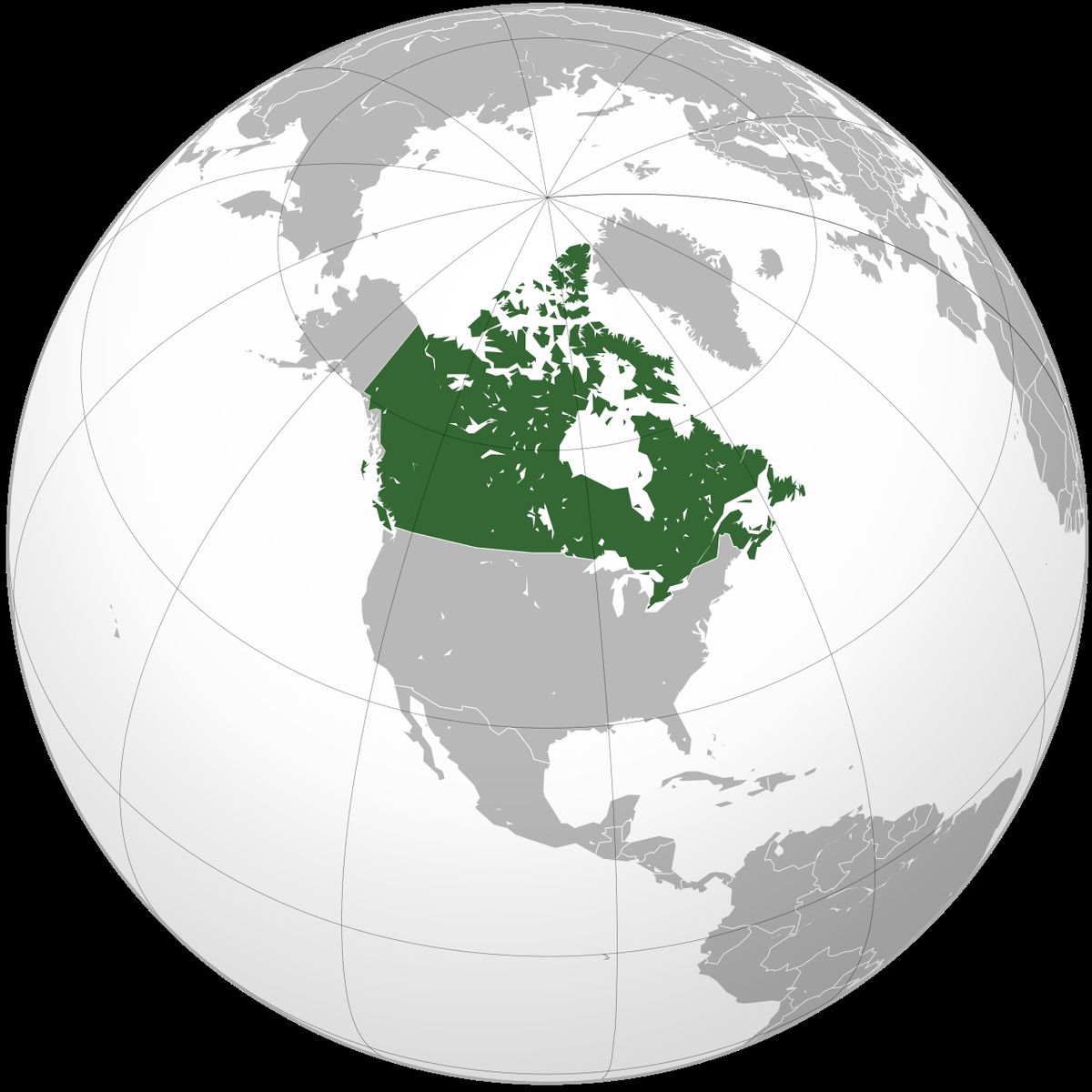
Canadian nationalism is a political ideology focused on advancing Canada's sovereignty and distinct identity, historically in relation to the United Kingdom and the United States. Since the 1960s, its dominant form has been a civic nationalism seeking to unite the country's multicultural population, including English and French-speaking Canadians, who have historically faced discrimination. The ideology has shaped critical national debates, such as the 1988 federal election fought over the Canada-United States Free Trade Agreement and the 1995 Quebec referendum on sovereignty. It continues to influence discussions about Canada's independence and national unity.
Historical Foundations and Evolution
The roots of Canadian nationalism stretch back to the colonial era, with early movements in Upper and Lower Canada seeking independence from the British Empire, culminating in the failed Rebellions of 1837 which had republican and pro-American tendencies. Following Confederation in 1867, the ideology crystallized around the pursuit of self-government within the British Empire and economic independence from the United States. This policy advocated for protective tariffs, western expansion, and immigration to build a transcontinental economy insulated from American influence, and it was very popular in the industrialized Canadian east. The debate over Canada's relationship with Britain intensified during the World Wars, with some historians arguing that the shared sacrifice of the First World War, particularly at battles like Vimy Ridge, fostered a stronger sense of Canadian nationhood separate from British imperial identity. Other historians, like Phillip Buckner, dispute that the war destroyed a hybrid imperial-national identity, arguing most English-speaking Canadians continued to see Canada as a 'British' nation within the Commonwealth.

The Free Trade Debate and Economic Nationalism
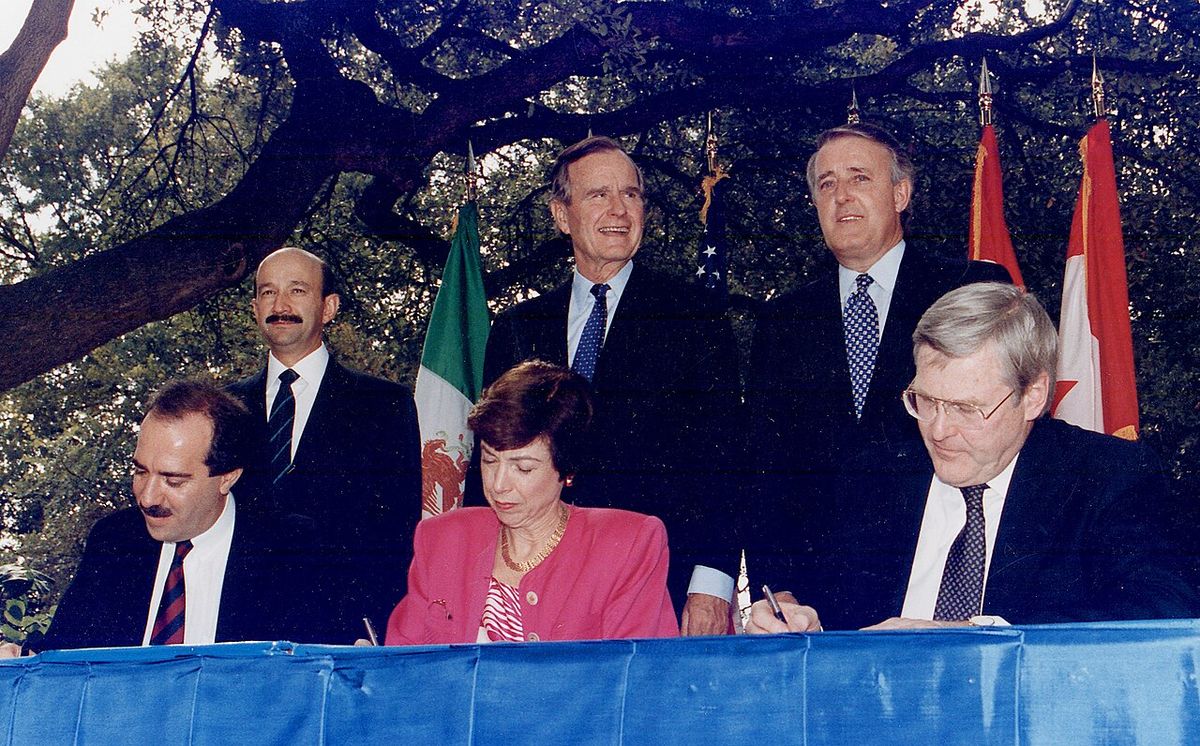
The conflict between free trade and economic protectionism has been a defining feature of Canadian nationalist politics since before Confederation. For over a century, nationalists opposed free trade or reciprocity with the United States, fearing economic and cultural assimilation, a stance exemplified by the Conservative Party's populist, anti-free trade position. This stance was central to Conservative electoral success, notably defeating Liberal proposals for closer trade ties in the late 19th and early 20th centuries. The debate was dramatically revived in the 1980s when Progressive Conservative Prime Minister Brian Mulroney reversed his party's traditional position and negotiated the Canada United States Free Trade Agreement, believing it would address unemployment and a growing deficit. The 1988 federal election became a referendum on the deal, with the Liberals under John Turner and the New Democratic Party opposing it. Although the Tories won a parliamentary majority with 43 percent of the popular vote, the opposing parties together won 51 percent of the popular vote, illustrating deep public division. Opponents argued the agreement threatened Canadian sovereignty and social programs, concerns that later advocacy groups like the Council of Canadians would continue to voice against subsequent integration initiatives like the Security and Prosperity Partnership. The nationalist argument against free trade, rooted in a fear of assimilation, was a key theme in George Grant's 1965 book Lament for a Nation, which argued that Canada had succumbed to American continentalism.
Quebec Nationalism and the Sovereignty Movement
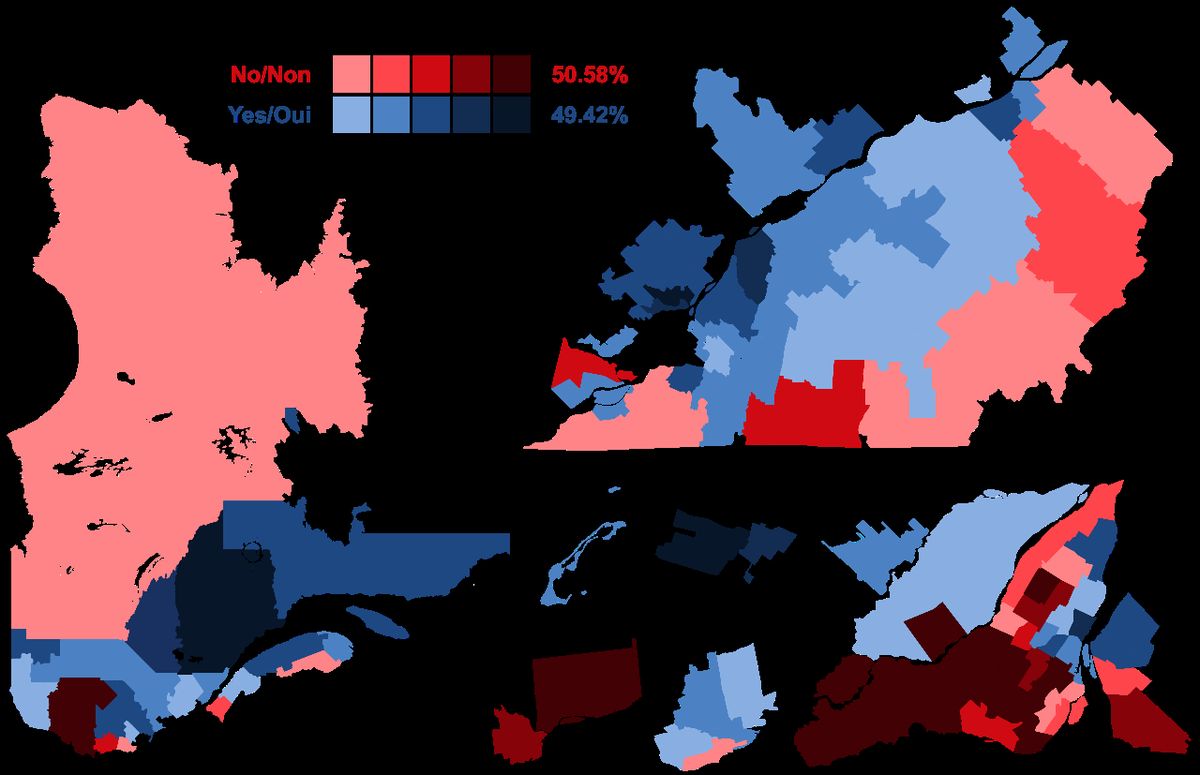
French Canadian nationalism, with its focus on preserving Québécois language and culture, has existed since the conquest of New France in the mid-eighteenth century. In the early 20th century, Henri Bourassa, founder of the Canadian Nationalist League, advocated for a bi-cultural, sovereign Canada less dependent on Britain or the United States and for complete economic autonomy, inspiring both pan-Canadian and Quebec nationalist thought. Following the Quiet Revolution of the 1960s, this nationalism evolved into a modern Quebec sovereignty movement. The radical Front de libération du Québec sparked the October Crisis in 1970 by kidnapping provincial minister Pierre Laporte and British diplomat James Cross. The movement later pursued democratic referendums on separation, with the federalist side winning the 1980 referendum by 59.56 percent to 40.44 percent and narrowly winning the 1995 referendum by 50.58 percent to 49.42 percent. The 1995 vote marked the peak of the sovereignty movement's popular support. The secessionist Parti Québécois returned to power as a minority government after the October 2025 provincial election, but support for a new sovereignty referendum remains low at around 20 percent according to recent polls, and leader Paul St. Pierre Plamondon has promised not to hold one while Donald Trump is U.S. president.
Modern Political Expressions and Groups
Attempts to form a successful electoral party purely around Canadian nationalism have largely failed, a trend lamented by philosopher George Grant. The National Party of Canada, led by former publisher Mel Hurtig, won 1.38 percent of the vote (over 183,000 votes) in the 1993 election before dissolving due to infighting. The Canadian Action Party, founded in 1997 by former Liberal Defence Minister Paul Hellyer, also failed to gain significant traction. Activism has instead often channelled through non-partisan advocacy groups. The Council of Canadians, founded in 1985, is a prominent progressive organization campaigning against deep integration with the U.S. and for protecting public services, and it took a leadership role in protesting the Security and Prosperity Partnership. In contrast, a newer strand of right-wing and ethno-nationalist groups has emerged, including the People's Party of Canada founded in 2018 by Maxime Bernier.
- Council of Canadians (1985 to present): A progressive, left-leaning advocacy organization focused on sovereignty, democracy, and social justice.
- Canadian Action Party (1997 to 2017): A minor federal political party promoting economic nationalism and anti-globalization.
- People's Party of Canada (2018 to present): A right-wing federal party led by Maxime Bernier, critical of current immigration levels and multiculturalism.
- Dominion Society of Canada (2025 to present): An ethno-nationalist and anti-immigration group advocating for 'remigration' or mass deportation.
- National Party of Canada (1993 to 1997): A short-lived federal party founded by publisher Mel Hurtig.
- The Waffle (1969 to 1974): A far-left faction within the New Democratic Party advocating for an independent socialist Canada, later purged by leader David Lewis.
- Committee for an Independent Canada (1970 to 1981): An earlier political advocacy organization.
- Canada First (1868-c. 1896): A political advocacy organization which was briefly a minor federal political party.
- National Citizens Alliance (2014 to 2023): A minor federal political party.
- Progressive Canadian Party (2004 to 2019): A minor federal political party.
The Dominion Society of Canada, founded in 2025 by former People's Party of Canada executive Daniel Tyrie, represents a significant development in far-right nationalist organizing. It promotes the 'great replacement' conspiracy theory and plans for the deportation of five to nine million people, including temporary foreign workers and people born in Canada to non-citizens. The group gained attention for organizing the DomCon 2026 conference in Hamilton, Ontario, which drew criticism from anti-hate networks and local officials like Mayor Andrea Horwath. The Canadian Anti-Hate Network states the group has neo-Nazi members and shares members with groups like Diagolon and Second Sons, and director Evan Balgord describes it as the political arm of the white nationalist movement seeking to make its ideas mainstream.
Contemporary National Unity Challenges
In the 2020s, national unity faced tests from secessionist sentiments in Alberta and a resurgence of sovereigntist politics in Quebec. In October 2025, Alberta held a referendum on whether to begin the constitutional process for a binding vote on separation, a vote arranged by Premier Danielle Smith who herself opposed secession. The proposal was defeated decisively, with about 75 percent of voters choosing to remain in Canada, a result that aligned with pre-vote polling expectations. This result allowed Prime Minister Mark Carney's government to focus on other priorities like securing trade partners and nation-building projects, though Western alienation and grievances over areas like energy and immigration policy persist. In Quebec, the Parti Québécois won a minority government in October 2025 but with only 28 percent of the popular vote, the lowest for any winning party in Canadian provincial history, translating to 59 seats, five short of a majority. PQ leader Paul St. Pierre Plamondon has stated he will not hold a sovereignty referendum while Donald Trump is U.S. president, citing the trade war and geopolitical uncertainty, a stance many see as bolstering national unity. Polls consistently show a majority in Quebec opposes a new referendum, with one recent Léger poll putting support at only 20 percent, and the minority government makes passing referendum legislation difficult without support from Québec Solidaire's nine seats. These developments have temporarily reduced the immediate threat of separation, but underlying regional grievances in both Alberta and Quebec ensure national unity remains a perennial issue for the federal government, compounded by urban-rural divides and Indigenous political mobilization.
Public Sentiment and National Pride
Surveys indicate that a strong majority of Canadians express pride in their national identity, reflecting the strength of an inclusive, civic national identity. Nearly nine out of ten individuals (87 percent) report feeling proud to be Canadian, with over half (61 percent) stating they are very proud. This pride is highest in Canada's history as a dominion of the British Empire (70 percent), the armed forces (64 percent), the healthcare system (64 percent), and the Constitution (63 percent). Pride is lowest concerning Canada's global political influence, at 46 percent. There are notable regional variations, with pride in Canadian identity outside Quebec ranging from 91 percent in British Columbia to 94 percent in Prince Edward Island. In Quebec, 70 percent express pride, though residents there are consistently less likely to express pride in specific Canadian accomplishments. Sentiments of pride are most pronounced among seniors and women, and first and second-generation immigrants show the highest levels of pride in both their Canadian identity and national achievements. This data shows that for many Canadians, national identity is not tied to an exclusive ethnicity but to shared history, institutions, and the civic model of citizenship that has been promoted since the 1960s.
The Rise of Ethno-Nationalism and Societal Response
A distinct and controversial strand of Canadian nationalism has gained visibility with the formation of groups like the Dominion Society of Canada. Founded in 2025, the organization advocates for severe immigration restrictions and the 'remigration' or deportation of an estimated five to nine million people, including temporary foreign workers, permanent residents, and some naturalized citizens. The Canadian Anti-Hate Network describes the group as the political arm of a white nationalist movement, noting it shares members with more extreme groups like Diagolon and uses coded language like the number 88, which is used by white supremacists. The Dominion Society's planned DomCon 2026 conference in Hamilton, featuring international speakers, drew widespread condemnation from officials and anti-hate groups. Hamilton Mayor Andrea Horwath wrote to local businesses urging awareness of the group's ideology, and former Alberta Premier and federal immigration minister Jason Kenney criticized its race-based policy proposals as categorically different from legitimate debates on immigration levels. Founder Daniel Tyrie has stated the group has no interest in 1930s foreign political movements and is focused on Canadian heritage, but experts like Barbara Perry of Ontario Tech University state the group's arguments are inherently racist and xenophobic because they blame immigrants for the country's problems. This emergence highlights a tension within modern nationalism, between a historically dominant civic, multicultural model and an exclusive ethno-nationalist vision that seeks political power to enact its agenda, and it represents a challenge to the inclusive national identity that surveys show most Canadians embrace.
Questions about Canadian nationalism
How did the free trade debate relate to Canadian nationalism?
The debate over free trade with the United States has been a core nationalist issue for over a century. Nationalists traditionally opposed free trade, fearing it would lead to economic dependency and cultural assimilation. This was central to Sir John A. Macdonald's National Policy. The debate climaxed in the 1988 federal election, which was fought over the Canada-U.S. Free Trade Agreement. While the pro-agreement Progressive Conservatives won, the opposing Liberal and NDP parties together won a majority of the popular vote, reflecting deep nationalist concerns about sovereignty that persist in debates over economic integration.
What is the difference between Canadian nationalism and Quebec nationalism?
Canadian nationalism typically seeks to strengthen the unity and sovereignty of Canada as a whole, often encompassing a bilingual, multicultural vision. Quebec nationalism, or Québécois nationalism, prioritizes the preservation and promotion of the French language and unique culture of Quebec. While some Quebec nationalists are autonomists seeking greater powers within Canada, sovereigntists aim for Quebec to become an independent country. The two nationalisms have often been in tension, most dramatically during the 1980 and 1995 Quebec sovereignty referendums.
What happened in the 2025 Alberta secession referendum?
In October 2025, Alberta held a referendum asking whether the provincial government should start the constitutional process for a binding vote on separation. The proposal was soundly defeated, with approximately 75 percent of voters rejecting the path to independence. The result was a major setback for the Alberta secession movement and provided relief to the federal government, allowing it to focus on other national priorities. However, the vote revealed a persistent minority of about 25 percent in favour, indicating that feelings of Western alienation continue.
Who is the Dominion Society of Canada?
The Dominion Society of Canada is an anti-immigration, ethno-nationalist group founded in 2025 by Daniel Tyrie, a former executive of the People's Party of Canada. It advocates for 'remigration,' a policy of mass deportation targeting millions of people, and promotes the 'great replacement' conspiracy theory. The group, which the Canadian Anti-Hate Network links to white nationalist movements, gained notoriety for planning the DomCon 2026 conference in Hamilton. Its ideology represents a stark departure from the civic, multicultural nationalism that has been predominant in Canada since the late 20th century.
Is support for Quebec sovereignty growing today?
No, support for Quebec sovereignty is not currently growing. While the sovereigntist Parti Québécois formed a minority government after the October 2025 provincial election, it did so with a historically low share of the popular vote (28 percent). Public opinion polls consistently show a strong majority in Quebec opposes holding a new sovereignty referendum, with one recent poll indicating only 20 percent support. PQ leader Paul St. Pierre Plamondon has pledged not to hold a referendum while Donald Trump is U.S. president, citing economic and geopolitical risks, making a near-term vote highly unlikely.
What is the main goal of Canadian nationalism?
The central goal of Canadian nationalism has historically been to achieve and maintain Canadian sovereignty, first from the British Empire and later from perceived economic and cultural domination by the United States. This goal was pursued through movements like the Rebellions of 1837 and later through policies like the National Policy of economic protectionism. It seeks to encourage a unified national identity, particularly between English and French speaking Canadians, as seen in the vision of figures like Henri Bourassa. In its modern civic form, it aims to promote a multicultural, equal citizenship within a strong, independent Canadian state, while also protecting Canadian economic interests and cultural institutions from external control.
Sources and further reading
- Canadian nationalism (Wikipedia)
- Alberta, Quebec, and the Perpetual Work-in-Progress of ... (policymagazine.ca)
- Update on Canada's Two Secession Movements (reason.com)
- Hamilton mayor asks businesses to be aware of anti- ... (ici.radio-canada.ca)
Checked by the Nosy Mag desk. Last updated 2026-10-30.