Upper Canada
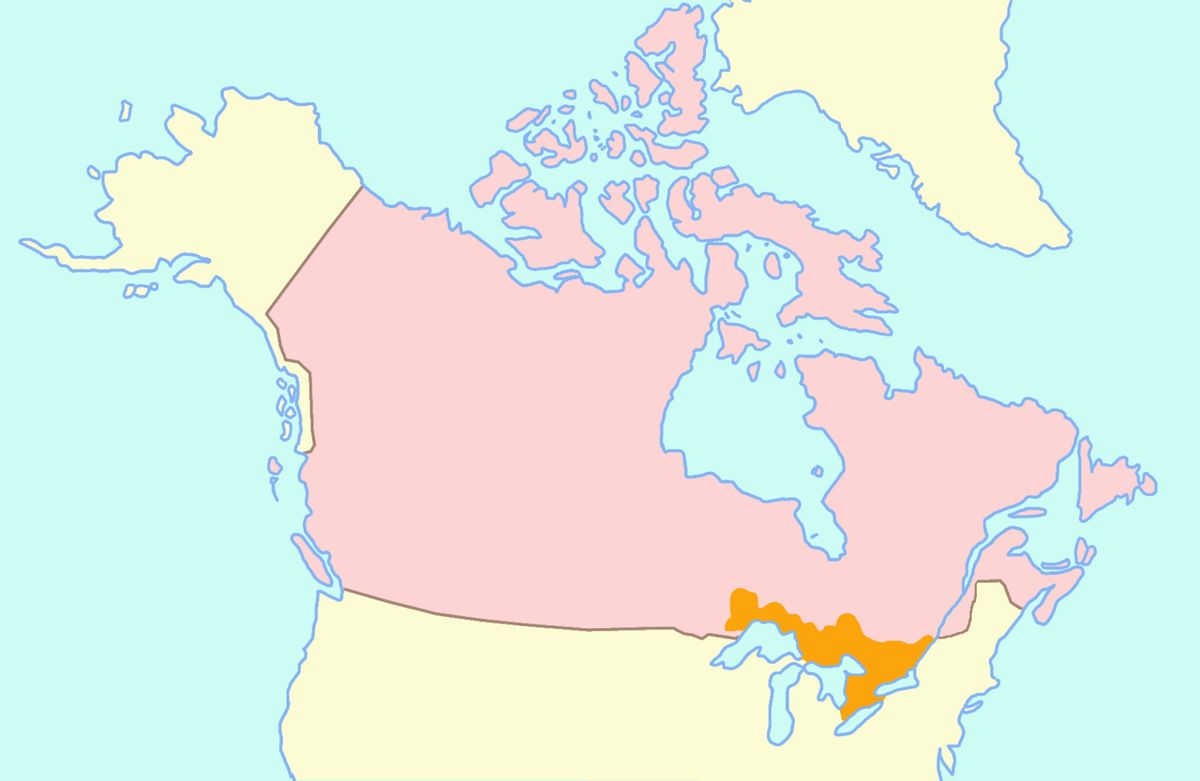
The Province of Upper Canada was a British colony in North America established in 1791, encompassing what is now the southern portion of Ontario. Created by the Constitutional Act of 1791, it was formed from the western part of the former Province of Quebec to accommodate Loyalist settlers from the United States who sought British laws and institutions. Upper Canada was a central theatre of the War of 1812 and was later marked by political tensions that culminated in the unsuccessful Upper Canada Rebellion of 1837. The colony existed until 1841, when it was united with Lower Canada to form the Province of Canada.
Establishment and Early Years
The creation of Upper Canada was a direct result of the influx of United Empire Loyalists following the American Revolutionary War. Britain sought to provide these English-speaking Protestant settlers with a colony governed by British law and customs, distinct from the French civil law and Catholic traditions maintained in Lower Canada. The Constitutional Act of 1791, passed by the British Parliament on 26 December of that year, formally divided the old Province of Quebec into the two new provinces. The first lieutenant-governor, John Graves Simcoe, arrived in 1792 and began organizing the colony's administration. The initial capital was at Newark, present-day Niagara-on-the-Lake, but concerns over its vulnerability to American attack prompted a move to the more defensible site of York, now Toronto, on 1 February 1796. The colony's borders with the United States were officially defined by the Jay Treaty in 1795, solidifying British control north of the Great Lakes and St. Lawrence River.
Early settlement was actively encouraged by the colonial government through generous land grants. The head of a family could receive 100 acres, with an additional 50 acres per family member, while soldiers received larger parcels. This policy was designed to rapidly populate the territory and strengthen British claims against American expansion. The first townships, such as Royal and Cataraqui, were surveyed along the St. Lawrence River and eastern Lake Ontario in 1784, primarily for decommissioned soldiers and their families. The territory that became Upper Canada was not empty land but the homeland of numerous Indigenous nations, including the Anishinaabeg (Ojibwe, Odawa, Algonquin) and the Haudenosaunee (Iroquois Confederacy). Settlement proceeded through a series of treaties where First Nations ceded land to the Crown, often in exchange for one-time payments or goods, beginning with a treaty with the Seneca in 1764.
Government and Administration
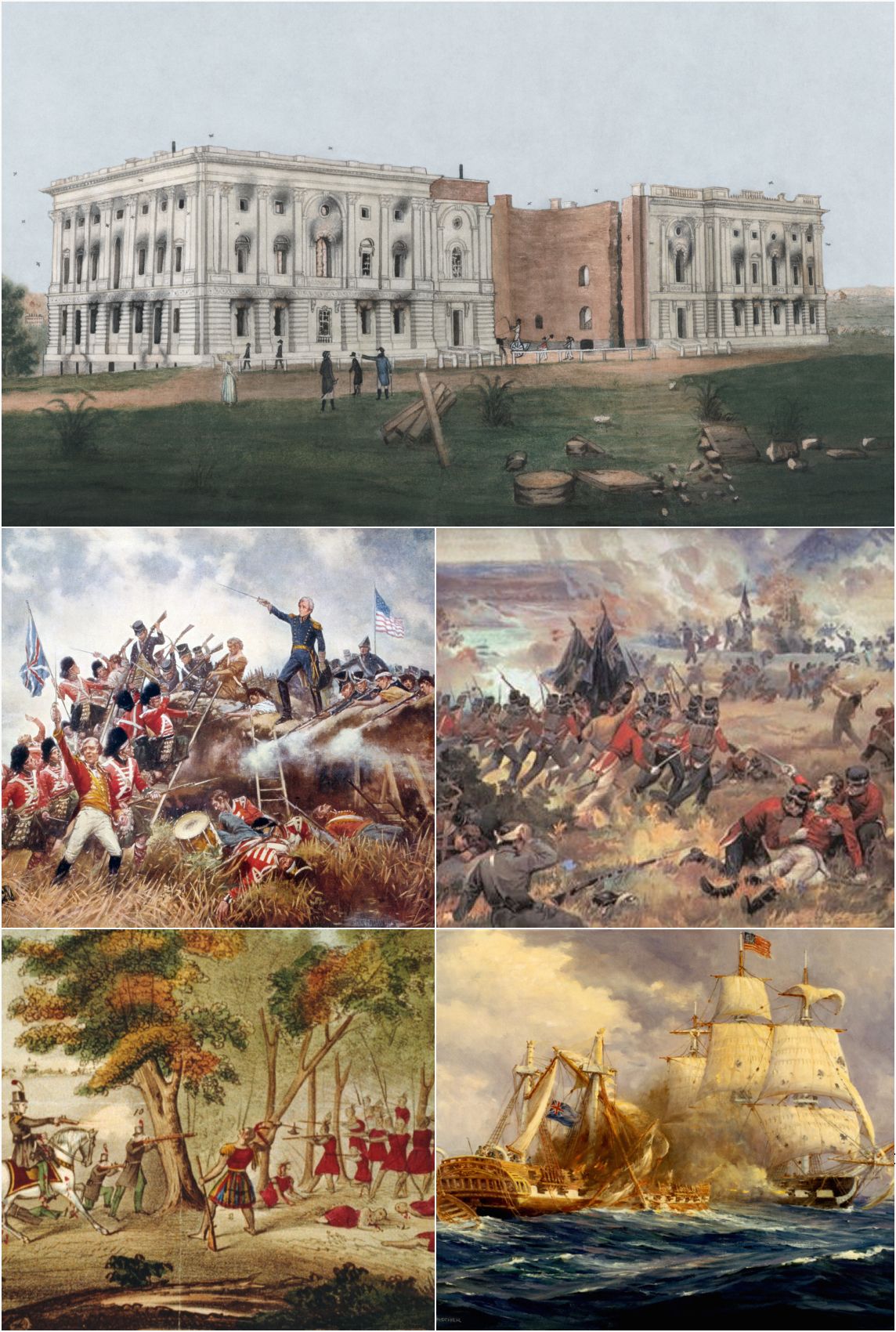
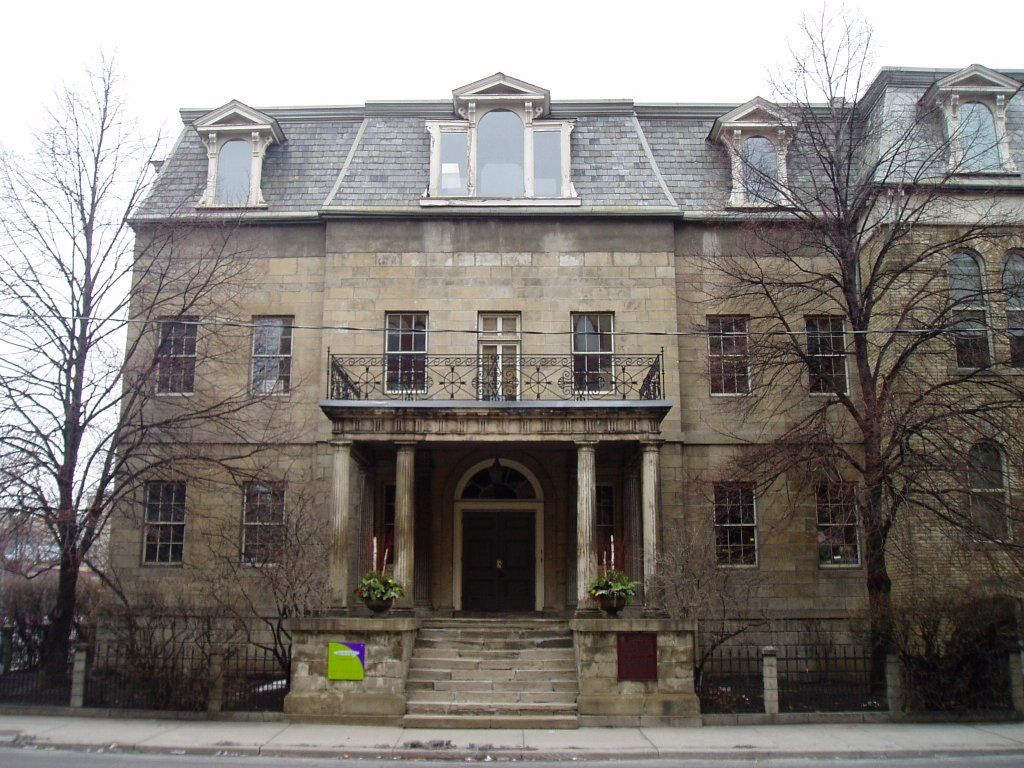
The government of Upper Canada was modelled on the British constitution, described as a balance of monarchy, aristocracy, and democracy. Executive power rested with the lieutenant-governor, who was advised by an appointed Executive Council. This council functioned similarly to a cabinet but was not responsible to the elected legislature. The legislative branch consisted of a bicameral parliament with an appointed upper house, the Legislative Council, and an elected lower house, the Legislative Assembly. The Legislative Assembly's power was limited, as its laws could be vetoed by the lieutenant-governor, the Executive Council, or the Legislative Council. The first parliament buildings in York were located at the corner of Parliament and Front Streets, but they were burned by American forces during the War of 1812, rebuilt, and then destroyed by an accidental fire in 1824.
Local administration was initially organized around districts. In 1788, Lieutenant-Governor Guy Carleton created four districts: Lunenburg (later Eastern), Mecklenburg (later Midland), Nassau (later Home), and Hesse (later Western). As the population grew, these were subdivided, and by 1800 there were eight districts. For electoral and militia purposes, Simcoe proclaimed the creation of nineteen original counties in 1792. Local governance was carried out by appointed justices of the peace, who could form Courts of Request or meet four times a year as a Court of Quarter Sessions to administer the district and handle legal cases. This system functioned as the municipal government until police boards or city incorporations began after 1834. Several communities were incorporated as cities during the Upper Canada era, including its capital, York (Toronto), as well as Kingston, Brockville, and Hamilton.
- York (now Toronto), capital of Upper Canada.
- Kingston, important military and commercial centre.
- Brockville, incorporated during the Upper Canada period.
- Hamilton, emerged as a significant settlement.
- Cornwall, Prescott, Port Hope, Picton, Cobourg, and London were also incorporated before 1841.
The Family Compact and Political Reform
By the 1810s, political and economic power in Upper Canada became concentrated in a small, interconnected oligarchy known as the Family Compact. This group, which included figures like John Beverley Robinson and John Strachan, dominated the appointed Legislative Council and key judicial offices. The Compact was united by Loyalist tradition, a hierarchical class structure, and adherence to the Anglican Church. It was staunchly conservative and opposed to democratic reforms, viewing itself as a bulwark against the disorder it associated with American-style democracy. The Compact's control over land grants, banking, and government patronage created widespread resentment among farmers, recent immigrants, and political reformers who were excluded from power.
Organized political opposition began with Robert Fleming Gourlay, a Scottish emigrant who in 1817 criticized government mismanagement and called for an inquiry. His activism led to his trial and banishment under sedition laws in 1819, making him a martyr for reformers. A more sustained reform movement emerged in the 1830s in Toronto, led by figures such as William Lyon Mackenzie, Dr. John Rolph, and Dr. Thomas Morrison. They organized Political Unions, modelled on British groups, to petition for change. This movement evolved through several organizations.
- The Canadian Alliance Society (1835) advocated for secret ballots and universal suffrage.
- The Constitutional Reform Society (1836) was led by the more moderate Dr. William W. Baldwin.
- The Toronto Political Union (1837) ultimately called for a constitutional convention and organized the local committees that planned the 1837 rebellion.
In the 1830s, reformers established joint-stock banks to challenge the financial monopoly of the Family Compact's Bank of Upper Canada. The Bank of the People, founded by Toronto reformers, provided a loan to William Lyon Mackenzie to establish his newspaper The Constitution in 1836. During the financial panic of 1836, the Family Compact sought to protect its interests by making joint-stock banks illegal. This action was part of the ongoing political conflict between the conservative oligarchy and reform movements in the province.
Rebellion and Union
The Upper Canada Rebellion broke out in December 1837, led by William Lyon Mackenzie. Grievances included political corruption, economic distress following financial panics, and the unresponsive oligarchic government. The rebellion was also inspired by the simultaneous Lower Canada Rebellion led by Louis-Joseph Papineau. Mackenzie's forces were quickly defeated by colonial militia near Toronto, and he fled to the United States. Resistance continued into 1838 through support from the Hunters' Lodges, a secret American militia, which launched cross-border raids known as the Patriot War. In response to the rebellions, the British government sent Lord Durham to investigate. His 1839 report recommended the union of Upper and Lower Canada and the introduction of responsible government, where the executive would be accountable to the elected legislature.
The task of implementing aspects of Durham's report fell to the new governor, Charles Poulett Thomson, Baron Sydenham. A utilitarian reformer, Sydenham oversaw the union of the two Canadas through the Act of Union 1840, which was proclaimed on 10 February 1841, creating the United Province of Canada. Sydenham also expanded the state's role by introducing a system of municipal government through District Councils, centralizing administrative control. While the union was achieved, full responsible government was not realized until the late 1840s under the leadership of Reformers Robert Baldwin in Canada West (formerly Upper Canada) and Louis-Hippolyte Lafontaine in Canada East. The period marked the transformation of the old Compact Tories into a more modern Conservative political force.
Settlement and Indigenous Relations
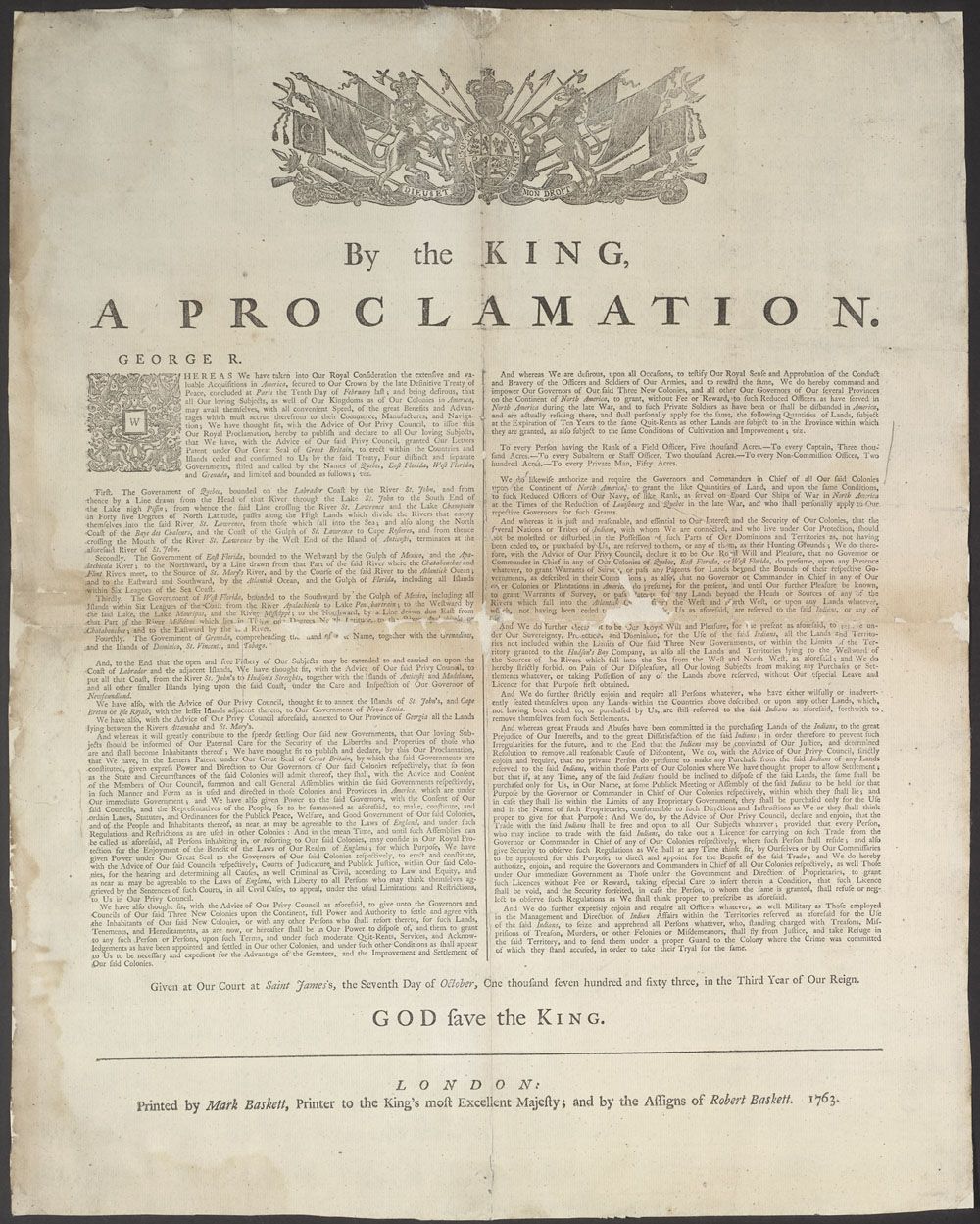
The settlement of Upper Canada was predicated on the dispossession of Indigenous lands through treaties. Prior to 1791, land cessions had begun under the framework of the Royal Proclamation of 1763. The first treaty in the region was with the Seneca in 1764 for lands near the Niagara River. Many Haudenosaunee (Iroquois) who had allied with the British during the American Revolution became refugees after American campaigns destroyed their villages in New York. They relocated permanently to British territory, and some were granted land along the Grand River by the Haldimand Proclamation of 1784. Between 1783 and the War of 1812, fifteen land surrender treaties were signed in Upper Canada, typically involving one-time payments of money or goods to First Nations, with some treaties designating reserve lands.
Following the War of 1812, European immigration increased dramatically. The colonial government's Indian Department shifted its policy towards encouraging Indigenous peoples to adopt agriculture and abandon traditional lifeways. The treaty process also changed, moving from one-time payments to promises of annual annuities from the sale of surrendered lands. Between 1825 and 1860, treaties were concluded for nearly all the land in what would become Ontario. In 1836, Manitoulin Island was designated as a reserve for Indigenous peoples. This period of rapid treaty-making facilitated the massive transfer of land to settlers and the colonial government, fundamentally altering the landscape and lives of First Nations.
Upper Canada Village: A Living Legacy
Upper Canada Village, a major living-history museum in Morrisburg, Ontario, serves as a direct link to the colony's past. The site is operated by the St. Lawrence Parks Commission, an agency of the Government of Ontario. In 2026, the village celebrated its 65th anniversary, marking decades of bringing history to life for visitors. The 2026 main season opened on May 9, with expanded learning opportunities and continued interpretation highlighting the diverse communities that shaped Upper Canada. The site is one of the largest living-history museums in Canada and a premier cultural attraction in Eastern Ontario.
The village hosts a wide array of annual events that connect to historical themes. These include a Celebration of Canadian Music, Horse Lovers' Weekend, and an 1860s Fall Fair & Quilt Show. A particularly popular seasonal event is Pumpkinferno, held on select nights in October, which features thousands of hand-carved illuminated pumpkins. The village also commemorates significant historical events, such as Emancipation Day on August 1, which marks the abolition of slavery in the British Empire in 1834. The 2026 Emancipation Day event included a Black History Exhibit, guest speakers, live music, and vendors, offering reflection and celebration of Black resilience and contributions. Special programming, like workshops on Black history offered in February 2026, further deepens the educational mission. The village's operations are part of a broader network of historic sites along the St. Lawrence River, including Fort Henry in Kingston and Kingston Pen Tours.
Demographic and Economic Development
The population of Upper Canada grew steadily from its founding, driven initially by Loyalist settlement and later by immigration from Britain and the United States. The economy was predominantly agricultural, with wheat being the staple crop. The colony developed a network of mills, distilleries, and small-scale manufacturing to support local needs. The construction of roads, such as Yonge Street and Dundas Street, opened up the interior for settlement. By the 1830s, towns like York, Kingston, and Hamilton were becoming commercial hubs, with banks, newspapers, and a growing professional class. The following table illustrates the growth in the number of districts, which corresponded to population increase and the expansion of settlement.
| Year | Number of Districts | Notes |
|---|---|---|
| 1788 | 4 | Lunenburg, Mecklenburg, Nassau, Hesse |
| 1800 | 8 | Addition of Johnston, Niagara, London, Newcastle |
| 1841 | 20 | Prior to the switch to county-based government in 1849 |
The colony's economic life was heavily influenced by its political structures. The Family Compact and its associates controlled much of the banking capital and received large land grants, which they often held for speculation rather than immediate settlement. This practice contributed to the reform movement's complaints about land policy. Despite these tensions, the colony developed a diverse economic base that included timber, potash, and shipbuilding, particularly in the Great Lakes region. However, economic cycles of boom and bust, such as the financial panic of 1837, fueled social unrest and were a direct factor in the rebellion that year. The Ottawa River timber trade became a major industry after 1806 due to Napoleon's Continental Blockade, providing squared timber for the British navy and shipbuilding.
Questions about Upper Canada
What was Upper Canada and where was it located?
Upper Canada was a British colony in North America established in 1791. It encompassed all of modern-day Southern Ontario and those parts of Northern Ontario within the watersheds of the Ottawa River, Lakes Huron, and Superior that had been part of New France. The 'upper' in its name referred to its position upstream along the St. Lawrence River relative to Lower Canada, which is present-day Quebec. Its capital was initially Newark (Niagara-on-the-Lake) before moving to York (Toronto) in 1796.
What was the Family Compact?
The Family Compact was a nickname for a small, powerful oligarchy that dominated the political, judicial, and economic life of Upper Canada from the 1810s to the 1840s. Composed of wealthy, Anglican, Loyalist families and their allies, they held most appointed positions in the Legislative Council and the executive. The group, which included figures like John Beverley Robinson and John Strachan, was known for its conservatism, opposition to democracy, and control over land and patronage. Their rule was a major cause of the political grievances that led to the 1837 Rebellion.
What happened in the Upper Canada Rebellion of 1837?
The Upper Canada Rebellion was an armed insurrection in December 1837 led by reformer William Lyon Mackenzie against the oligarchic rule of the Family Compact. Inspired by similar unrest in Lower Canada and driven by long-standing political and economic grievances, rebels gathered near Toronto but were quickly defeated by colonial militia. Mackenzie fled to the United States. Sporadic resistance, supported by American sympathizers in the Hunters' Lodges, continued into 1838 through raids known as the Patriot War, but the rebellion was ultimately unsuccessful in its immediate goals.
Where can I learn about Upper Canada's history today?
Upper Canada Village in Morrisburg is a premier living-history museum dedicated to this era. It recreates a 19th-century rural community with over 40 historic buildings, costumed interpreters, and demonstrations of period trades and farming. The village hosts annual events like Pumpkinferno in October and an Emancipation Day celebration on August 1. Operated by the St. Lawrence Parks Commission, it opened for its 2026 season on May 9, celebrating 65 years of operation. Other related historic sites in the region include Fort Henry in Kingston and Kingston Pen Tours.
Why was Upper Canada created?
Upper Canada was created primarily to accommodate the thousands of United Empire Loyalists who fled the United States after the American Revolution. The British Parliament passed the Constitutional Act of 1791 to divide the Province of Quebec into Upper and Lower Canada. This division ensured that Loyalist American settlers and British immigrants in Upper Canada could have English laws and institutions. Meanwhile, the French speaking population of Lower Canada could maintain French civil law and the Catholic religion. The act took effect on 26 December 1791, establishing the new political entity.
When and why did Upper Canada end?
Upper Canada ended on 10 February 1841 when it was united with adjacent Lower Canada to form the Province of Canada. This union followed the passage of the Act of Union 1840 by the British Parliament on 23 July 1840. The merger was a direct result of the political instability highlighted by the Rebellions of 1837. Lord Durham's report on the causes of the rebellions recommended the administrative unification of the Canadas. The aim was to address the oligarchic rule of groups like the Family Compact and to assimilate the French Canadian population, though responsible government was not fully implemented until the late 1840s.
Sources and further reading
- Upper Canada (Wikipedia)
- Upper Canada Village Comes to Life, Cornwall, theseeker.ca (theseeker.ca)
- Step into Canada's History: Immersive Experiences Await (parks.on.ca)
- Emancipation Day Celebration (uppercanadavillage.com)
Checked by the Nosy Mag desk. Last updated 2026-10-20.