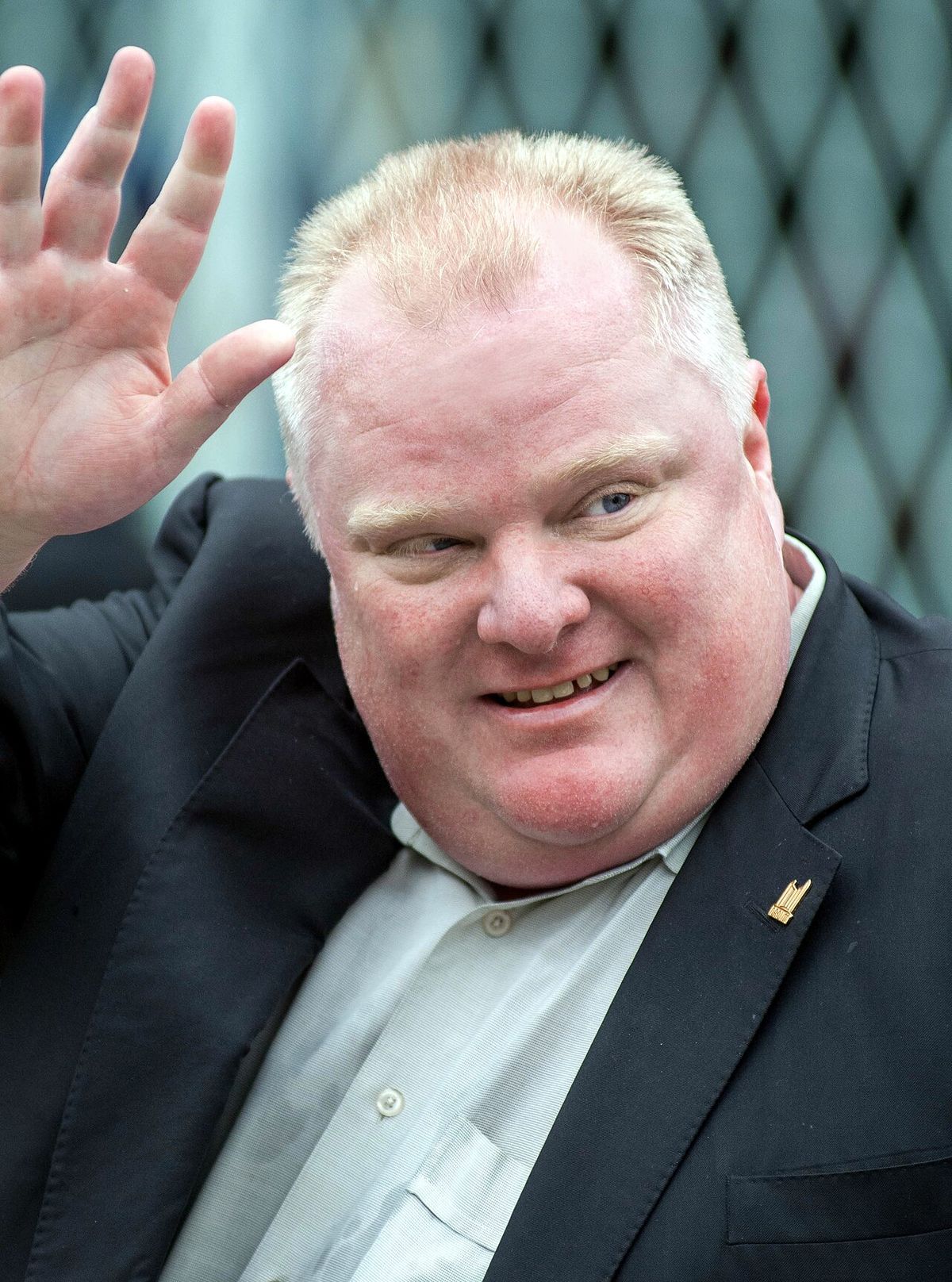
Jean Chrétien
Joseph Jacques Jean Chrétien served as the 20th prime minister of Canada from 1993 to 2003, leading the Liberal Party to three consecutive majority governments. His tenure was defined by a centrist economic agenda that eliminated the federal deficit, a staunch defence of national unity against Quebec separatism, and a foreign policy that included signing the Kyoto Protocol and opposing the Iraq War. Known as le petit gars de Shawinigan, Chrétien's political career spanned over four decades, beginning under Prime Minister Lester B. Pearson and including key cabinet roles under Pierre Trudeau. He remains a significant figure in Canadian politics, active in public life and recognized for his leadership.
Early Life and Family Background
Jean Chrétien was born on January 11, 1934, in Shawinigan Falls, Quebec, the 18th of 19 children born to Wellie Chrétien and Marie Boisvert. Ten of his siblings did not survive infancy, reflecting the family's working-class poverty. His father was a machinist and a staunch Liberal who idolized Sir Wilfrid Laurier, while his mother hoped her children would escape manual labour through education. The family's political allegiance made them targets in a community dominated by the Union Nationale, the provincial party led by Maurice Duplessis. The local parish priest, Father Auger, spread rumours about the Chrétien family and later refused to marry Jean in his church, declaring only Union Nationale supporters were welcome. This early experience fostered Chrétien's lifelong skepticism of institutional authority and shaped his political identity as an outsider.
During the Second World War, Wellie Chrétien's public support for conscription and the war effort made the family social outcasts in a Quebec where many French Canadians opposed overseas service. This period, known as the Grande Noirceur, saw the Union Nationale's patronage machine exclude Liberal families like the Chrétiens. Jean's education was entirely within the Catholic school system, which he attended at a private boys' school in Joliette and later at the Séminaire Saint-Joseph de Trois-Rivières. He recalled an extremely strict regime where priests used corporal punishment and rote learning, which he described as unnatural. Despite this, he achieved excellent grades, focusing on Catholic theology, the classics, philosophy, and French. Upon his graduation, Premier Duplessis himself addressed the class and, upon learning Chrétien's lineage, dismissed him as a damn rouge.
Education, Early Career, and Entry into Politics
Chrétien studied law at Université Laval, the traditional training ground for Quebec's francophone elite. There, he protested against the faculty providing free copies of the Revised Statutes of Quebec only to Union Nationale students, a confrontation that led to a meeting with Premier Duplessis. Duplessis told him the party only rewarded those with faith and that there were no rights in Quebec as he was Le Chef. At Laval, Chrétien became president of the Young Liberals, a position few wanted due to fear of antagonizing the Union Nationale. He was called to the bar in 1958 and practised law in Shawinigan with the firm of Alexandre Gélinas and Joe Lafond. In 1963, he won the Liberal nomination for the riding of Saint-Maurice, Laflèche after the incumbent retired. He won the election by portraying the Social Credit incumbent, Gérard Lamy, as a buffoon who made French Canadians look stupid. This victory began his representation of the Shawinigan-based riding, renamed Saint-Maurice in 1968, for all but eight of the next 41 years.
Early in his parliamentary career, political commentator Dalton Camp condescendingly described Chrétien as looking like the driver of the getaway car, a label that followed him for years. He requested and obtained a seat on the Finance Committee during his first term. Shortly before the 1965 election, he served very briefly as parliamentary secretary to Prime Minister Lester B. Pearson. He was disappointed when Pearson recruited the Three Wise Men, Jean Marchand, Gérard Pelletier, and Pierre Trudeau, into cabinet ahead of him. Starting in 1966, he served a more substantial term as parliamentary secretary to Finance Minister Mitchell Sharp, who became his mentor and patron, guiding his rise through the ranks.
Cabinet Minister Under Pierre Trudeau
Chrétien joined the cabinet as a minister without portfolio in April 1967 and was promoted to minister of national revenue in January 1968. During the 1968 Liberal leadership race, he campaigned for Mitchell Sharp, but when Sharp withdrew, Chrétien supported Pierre Trudeau. After Trudeau won a majority in the June 1968 election, he appointed Chrétien minister of Indian affairs and northern development. Though never personally close, the intellectual Trudeau and the decidedly non-intellectual Chrétien were separated by a wide gulf, Trudeau valued Chrétien as an extremely loyal, competent minister and a tough guy troubleshooter. Trudeau's advisors in the Prime Minister's Office held Chrétien in some contempt for his working-class French accent and unpolished manners, but appreciated his effectiveness.
At Indian Affairs, Chrétien introduced the contentious 1969 White Paper, which proposed abolishing the Indian Act and treaties, aiming to make First Nations people equal citizens. The proposal was denounced by Indigenous leaders as assimilationist and a form of cultural genocide, as argued by Cree activist Harold Cardinal in his book The Unjust Society. At a press conference, Chrétien clashed with Indigenous activists, telling one woman she lost her identity when you signed the treaties. The policy was eventually abandoned. During a 1970 visit to the Northwest Territories, Chrétien adopted an Inuk boy from a local orphanage. He also intervened in the early 1970s on the side of Cree bands opposing Quebec's James Bay Project, telling Premier Robert Bourassa he could go to hell and hiring lawyers for the Cree.
In 1974, Chrétien was appointed president of the Treasury Board. He earned the nickname Doctor No for his brusque refusal of other ministers' spending requests. He later served as minister of industry, trade and commerce from 1976. In that role, he advocated for trade diversification away from the United States and often complained a high Canadian dollar hindered exports. He cultivated a populist, tough enforcer image that garnered significant media attention. This occurred during a period when the Trudeau government was seen as adrift.
Minister of Finance and the Road to Party Leadership
Following the resignation of Donald MacDonald, Chrétien became minister of finance in 1977, the first francophone to hold the post. His tenure highlighted his role as an executor rather than a formulator of Trudeau's economic policy, as he was largely excluded from high-level financial planning. He focused on controlling inflation and clashing with public sector unions over wage demands. After the Liberals lost power in 1984, Chrétien ran for the party leadership, placing second to John Turner. He served as deputy prime minister in Turner's short-lived government, which was defeated in the 1984 election. Tensions with Turner led Chrétien to briefly leave politics in 1986 for the private sector. He returned after the Liberals lost again in 1988 and successfully won the party leadership in 1990, becoming leader of the Official Opposition. His victory was framed around his humble origins and plain-speaking style, using his Bell's palsy, which partially paralyzed the left side of his face, to joke he was one politician who didn't talk out of both sides of his mouth.
Prime Minister: Economic Management and Fiscal Policy
Chrétien led the Liberals to a landslide majority in the 1993 election, taking office as Canada faced an unsustainable budget deficit and mounting debt. Adhering to a centrist Third Way approach, his government, with Finance Minister Paul Martin, produced a series of austere budgets that sharply cut program spending across most departments. These measures eliminated the deficit by 1997, producing Canada's first budget surplus in nearly three decades. The government recorded consecutive surpluses for the remainder of Chrétien's tenure, which were used primarily to fund broad-based tax cuts and pay down the federal debt. This fiscal turnaround is widely considered the central economic achievement of his premiership. Other significant economic policies included the privatization of the Canadian National Railway and the introduction of the harmonized sales tax (HST) in participating provinces.
National Unity and the Clarity Act
National unity was a defining issue of Chrétien's tenure. He campaigned vigorously for the federalist side during the 1995 Quebec referendum on sovereignty, which resulted in a narrow victory for the No side. In the referendum's aftermath, his government launched the federal sponsorship program, aimed at promoting Canadian identity and federal presence in Quebec. This program later became the centre of a major scandal involving mismanagement and fraud, though Chrétien denied personal wrongdoing. His government's most lasting legislative response was the Clarity Act, passed in 2000. The act established that the federal House of Commons would determine if a referendum question on secession was clear and what constituted a clear majority for such a vote. It also asserted that secession would require constitutional negotiations involving all provinces and the federal government, a direct challenge to unilateral declarations of independence.
Domestic Legislation and Social Policy
Beyond economics and unity, Chrétien's government passed several significant pieces of legislation. It enacted updated environmental laws, including the Canadian Environmental Protection Act and the Species at Risk Act. It created the controversial long-gun registry through the Firearms Act. In justice, it passed the Youth Criminal Justice Act to replace the Young Offenders Act. After the 9/11 attacks, Chrétien oversaw Operation Yellow Ribbon, which coordinated the landing of dozens of diverted international flights in Canadian communities. His government also began the legal and political process that ultimately led to the legalization of same-sex marriage under his successor, Paul Martin. These policies reflected a blend of liberal social initiatives and crime control measures.
Foreign Policy and International Affairs
Chrétien's foreign policy was marked by multilateralism and an independent streak. His government signed the Kyoto Protocol on climate change in 1997 and was a leading force behind the 1997 Ottawa Treaty banning anti-personnel landmines, for which Foreign Affairs Minister Lloyd Axworthy received much credit. His most consequential foreign policy decision was to refuse Canadian participation in the US-led invasion of Iraq in 2003, citing a lack of United Nations sanction and questionable evidence. This stance was popular domestically but caused diplomatic friction with the United States. In a 2026 speech, Chrétien reiterated this independent posture, telling an American audience never to mistake Canadian generosity for weakness.
Scandals, Internal Struggle, and Retirement
Despite three election victories, Chrétien's final years were clouded by controversy and internal party strife. He faced allegations of conflict of interest in the Shawinigate affair, related to a loan to a hotel in his riding. The larger sponsorship scandal, which erupted after he left office, involved the misuse of program funds for partisan purposes, though a commission found no evidence of his direct involvement. More damaging was the protracted leadership struggle with his finance minister and long-time rival, Paul Martin. A powerful faction within the Liberal Party pressured Chrétien to step aside. Facing the likelihood of losing a leadership review, he announced his retirement in 2003 and resigned as prime minister that December. He was succeeded by Paul Martin, ending a decade in power and a political career that began in 1963.
Post-Political Life and Legacy
Since leaving office, Jean Chrétien has remained an active elder statesman. He has practised law, authored memoirs, and frequently participates in public forums. In September 2026, he joined former Prime Minister Stephen Harper and others at a national investment summit in Toronto aimed at attracting capital to Canada. That same year, he received the IPA Humanitarian Leadership Award. He continues to engage in political endorsements, backing Mark Sutcliffe's re-election bid for mayor of Ottawa in 2026. Now in his nineties, he is the oldest living former Canadian prime minister. Historians often rank him highly among prime ministers, citing his electoral success, deficit elimination, and management of national unity crises as key elements of his legacy.
Questions about Jean Chrétien
How long was Jean Chrétien prime minister of Canada?
Jean Chrétien served as prime minister for just over ten years, from November 4, 1993, to December 12, 2003. He led the Liberal Party to three consecutive majority government victories in the 1993, 1997, and 2000 federal elections. His tenure is the fifth longest in Canadian history. He resigned in 2003 amid an internal party leadership struggle.
What was Jean Chrétien's role in the 1995 Quebec referendum?
Jean Chrétien strongly opposed the Quebec sovereignty movement. He led the federalist campaign during the 1995 Quebec referendum. The campaign resulted in a narrow victory for the federalist side. After the referendum, he launched a federal sponsorship program to promote Canada in Quebec. He also pioneered the Clarity Act, which established the conditions for future referendums on secession.
What major economic policy is Chrétien's government known for?
The Chrétien government is best known for eliminating the federal budget deficit. Facing a debt crisis upon taking office, his government, with Finance Minister Paul Martin, implemented significant spending cuts and austerity measures. These policies produced a budget surplus by 1997, the first in nearly 30 years. Subsequent surpluses were used to reduce taxes and pay down the national debt.
What was the sponsorship scandal under Jean Chrétien?
The sponsorship scandal involved a federal program created after the 1995 referendum to promote Canadian identity in Quebec. A public inquiry later found that millions of dollars were funnelled to advertising agencies with Liberal ties for little or no work. While the program was established under Chrétien, much of the mismanagement occurred later. Chrétien denied any personal knowledge of wrongdoing.
Sources: Wikipedia and current public reporting, checked by the Nosy Mag desk. Last updated 2026-10-18.