24 Sussex Drive
24 Sussex Drive is the official residence of the prime minister of Canada, located in the New Edinburgh neighbourhood of Ottawa, Ontario. Built as a private home between 1866 and 1868, the limestone-clad mansion on the banks of the Ottawa River became the prime minister's official home in 1951. For over six decades, it housed every prime minister from Louis St. Laurent to Stephen Harper, serving as a private residence and an occasional venue for informal diplomacy. The residence has been vacant and in a state of severe disrepair since 2015, leading to a major national competition announced in 2026 to restore and modernize the property for future generations.
Historical Origins and Architectural Evolution
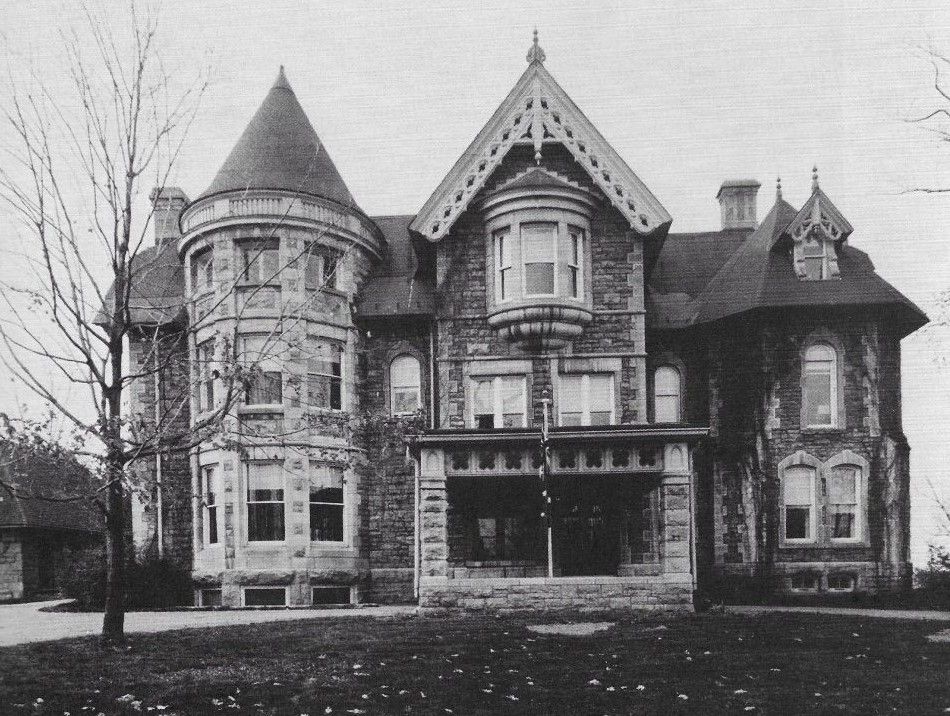
The house at 24 Sussex Drive was commissioned in 1866 by lumber baron and member of Parliament Joseph Merrill Currier as a wedding gift for his wife, Hannah Wright. Designed by Currier's brother, Massachusetts architect James Currier, the Victorian Queen Anne-style home was completed in 1868 and named Gorffwysfa, Welsh for 'place of rest'. The original structure featured high gables, extensive verandahs, and decorative gingerbread trim. In 1870, a ballroom was added to accommodate a visit from Prince Arthur, the future Duke of Connaught. After Hannah Currier's death, the property was sold in 1901 to William Edwards, another lumber manufacturer and MP, who undertook a major renovation in 1908, adding a round tower, a porte-cochére, and an ornate bay window. The house passed to Edwards's nephew, Gordon Edwards, in the 1920s, who later also became a member of Parliament.
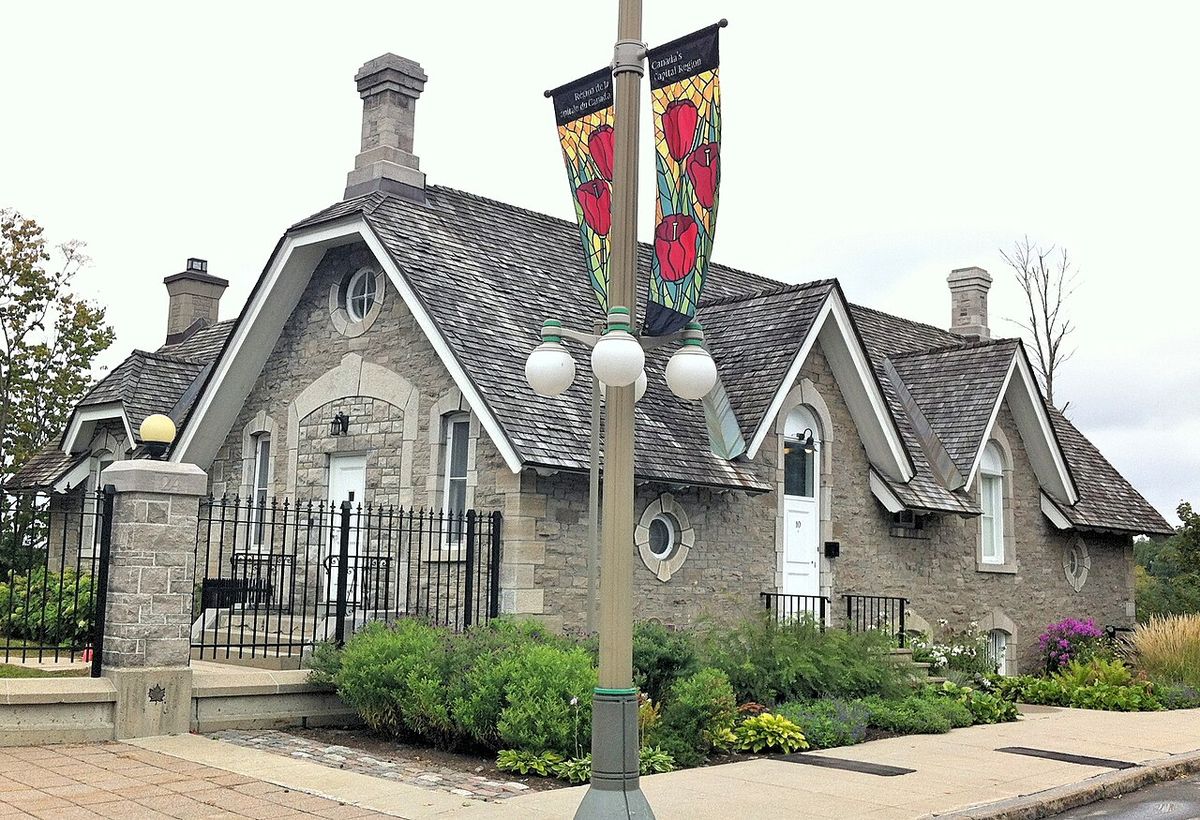
In 1943, the Government of Canada expropriated the property to consolidate Crown ownership along the Ottawa River, a legal dispute Gordon Edwards lost in 1946 and died at the house later that year. The house was used by the Australian High Commission between 1946 and 1947 before the government decided to refurbish it as the prime minister's residence. Between 1949 and 1950, the Department of Public Works hired the Toronto architecture firm Allward & Gouinlock for a major renovation costing just over $500,000. This transformation removed the turret, widow's walk, verandahs, and porte-cochère, simplified the arches, and added an extension to the east, creating a fusion of château and Georgian revival styles. The interior was largely gutted, with only part of the dining room preserved from the original structure.
Life as the Prime Minister's Residence
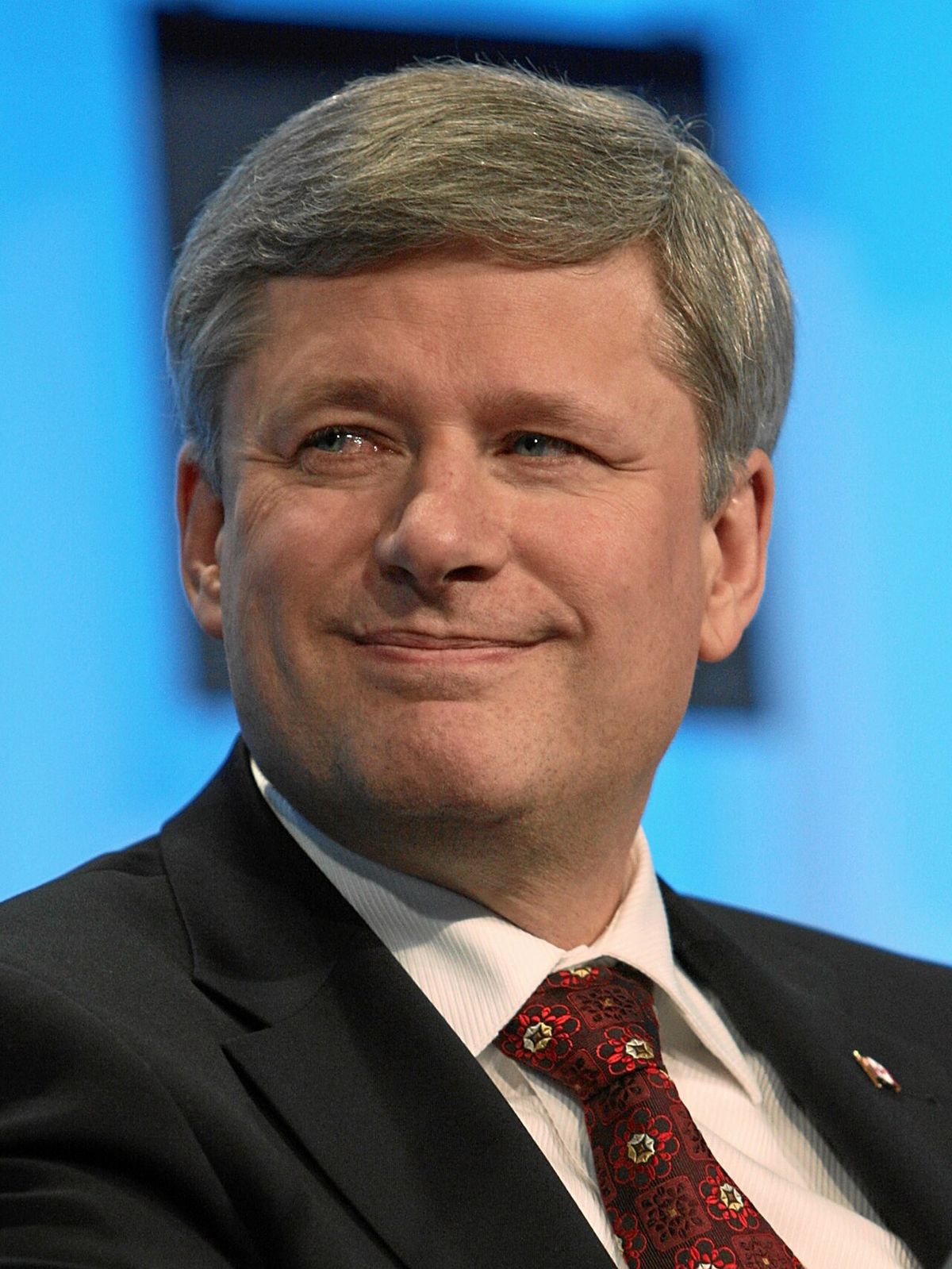
Before 24 Sussex Drive was designated, Canadian prime ministers lived in various private residences around Ottawa. Wilfrid Laurier and William Lyon Mackenzie King, for instance, lived at Laurier House in Sandy Hill. Louis St. Laurent became the first prime minister to move into the newly renovated house in 1951. From that point until 2015, every prime minister resided there during their term, with one brief exception. Kim Campbell lived at the Harrington Lake retreat during her short tenure in 1993 because her predecessor, Brian Mulroney, remained at 24 Sussex temporarily while his Montreal home was renovated. Stephen Harper was the last prime minister to live at the address, departing in 2015. His successor, Justin Trudeau, chose to reside at Rideau Cottage on the grounds of Rideau Hall, citing the need for a review of the extensive repairs required at 24 Sussex. Upon taking office in 2025, Prime Minister Mark Carney also opted to live at Rideau Cottage.
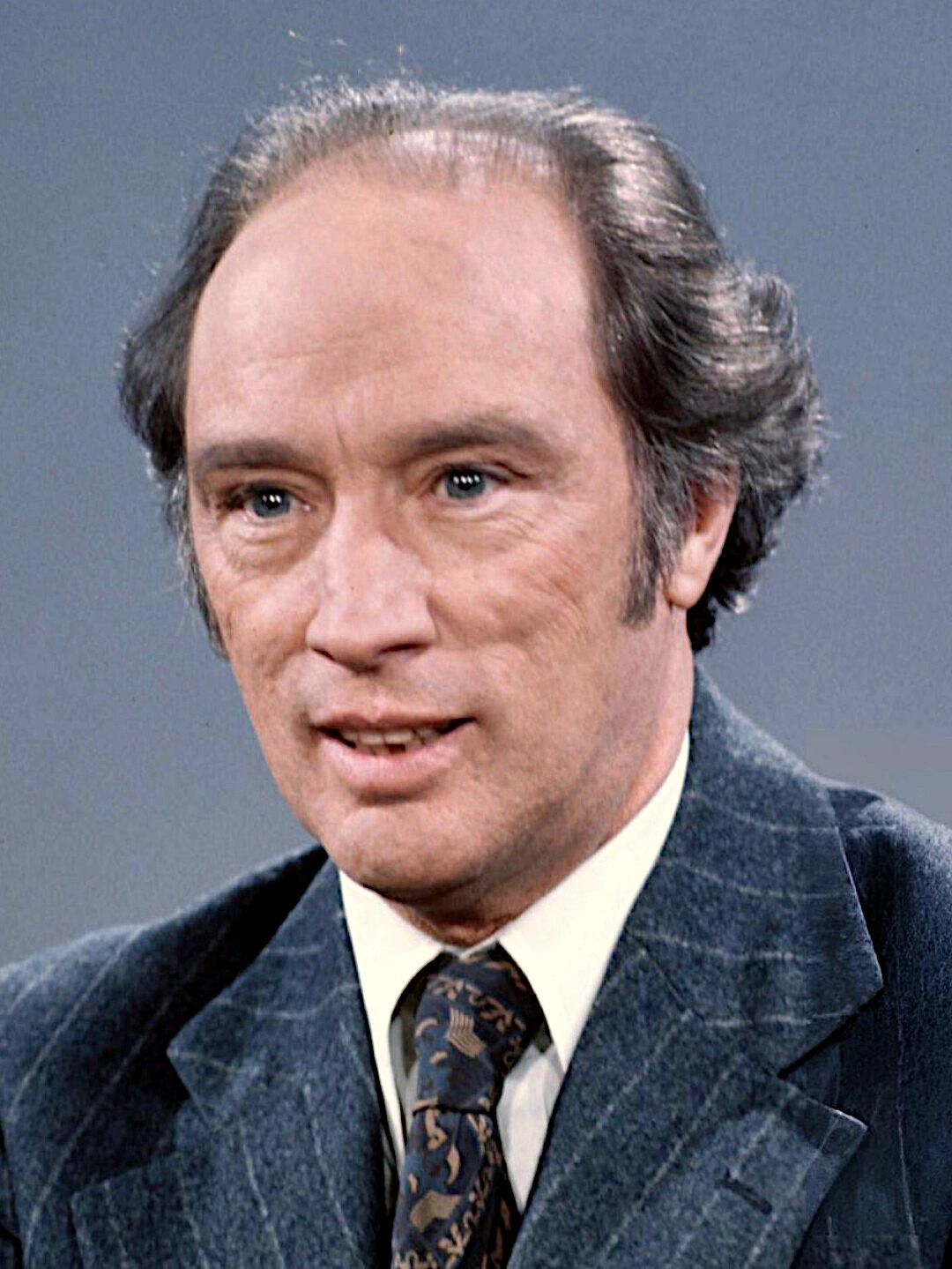
While primarily a private home, 24 Sussex Drive has witnessed significant historical moments and personal modifications by its occupants. Prime ministers and their families have left their marks on the property over the decades. Lester B. Pearson winterized the rear patio, and his wife, Maryon, created the Canadiana Room in the basement to display Canadian antiques and crafts. Joe Clark and his family oversaw a redecoration that included applying gold leaf to the dining room ceiling. Pierre Trudeau had an indoor swimming pool installed in a separate building on the grounds in 1975, a project funded through a private donation drive. Security was significantly enhanced after an attempted assassination on November 5, 1995, when an intruder, André Dallaire, entered the grounds and was confronted by Prime Minister Jean Chrétien and his wife, Aline.
- 1951: Louis St. Laurent becomes the first resident prime minister.
- 1975: Pierre Trudeau adds an indoor swimming pool.
- November 5, 1995: Security breach leads to major security upgrades.
- 1993: Kim Campbell resides at Harrington Lake instead.
- 2015: Stephen Harper is the last prime minister to reside there.
- 2006: Farmers drive a convoy of tractors past the property.
- March 2007: Greenpeace activists chain themselves to the front gates.
Decades of Deferred Maintenance and Disrepair
Despite its status, 24 Sussex Drive suffered from chronic underfunding for maintenance and upgrades for decades. A 2008 report by the Auditor General highlighted the residence's poor condition, estimating that about $10 million in repairs were needed for outdated heating, cooling, electrical, and roofing systems. By 2015, renovation estimates had risen to $15 million. The National Capital Commission (NCC), which maintains the property, developed plans for a major renovation projected to take 18 months. In 2021, the NCC released a new cost estimate of $36.6 million to bring the house to a state of good repair, a figure that included a proposed 370-square-metre expansion to improve accessibility and functionality.
The condition of the building deteriorated sharply after it was vacated. By 2023, the residence was infested with rodents, and its walls, attic, and basement were contaminated with carcasses and excrement. The building was deemed a fire hazard due to obsolete mechanical, heating, and electrical systems. That same year, work began to strip the property of asbestos and remove these hazardous systems, leaving the interior completely gutted. The debate over the building's future intensified, with some, like former prime minister Joe Clark's wife Maureen McTeer, arguing it lacked architectural value and was not worth saving. Others, including heritage advocates and former prime ministers Stephen Harper and Jean Chrétien, advocated for its restoration, noting its historical significance and the precedent set by other nations that maintain their official residences. The Royal Canadian Mounted Police is concerned that the address is too close to a busy road and lacks a buffer zone.
The 2026 Restoration Plan and National Competition
On June 26, 2026, Prime Minister Mark Carney announced a formal plan to restore 24 Sussex Drive through a national design-and-build competition. The objective is to rehabilitate and modernize the property as a secure, accessible, sustainable, and functional official residence and working venue while preserving its heritage character. The competition is open to eligible Canadian firms and will be adjudicated by an independent jury of distinguished experts in architecture, heritage conservation, and design. The jury is chaired by renowned Canadian architect Moshe Safdie and includes members Carol Bélanger, Nicolas Demers-Stoddart, Omar Gandhi, Mamie Griffith, Patricia Kell, and Brigitte Shim. The Royal Architectural Institute of Canada (RAIC) is providing advice on the competition framework.
The winning proposal is expected to be announced by Canada Day, July 1, 2027. The selected team will be responsible for both the design and construction under a design-build model, with each proposal required to include its projected cost. While price is a factor, the lowest-priced submission will not automatically win. The process requires the use of Canadian materials and encourages Indigenous participation. To minimize costs to taxpayers, the Rideau Hall Foundation (RHF) is leading a national, non-partisan fundraising campaign with a goal of raising $50 million to cover the restoration costs. The federal government will cover security-related expenses. As of late 2026, more than 3,300 Canadians had donated $735,000 toward the project.
Architecture and Layout of the Residence
Set on 1.6 hectares of land on the south bank of the Ottawa River, 24 Sussex Drive is a large limestone-clad structure overlooking Governor Bay, adjacent to the French embassy and opposite the main gates to Rideau Hall. Prior to being gutted, the house contained 35 rooms spread over four floors, including a basement, connected by an elevator and multiple staircases. The basement housed support rooms, while the main floor contained the formal dining room, living room, kitchen, main stair hall, the prime minister's library, and a sun room. The second floor was primarily dedicated to bedrooms, including the master bedroom, a family room, and an office for the prime minister's spouse. The third floor held additional bedrooms and a private study for the prime minister.
The exterior presents a mid-century modern interpretation of Norman Revival architecture, a result of the 1950 renovation that stripped away most Victorian features. The National Capital Commission maintains the property and a selection of historic furnishings from the Crown Collection for use in the public rooms, including musical instruments, furniture, and paintings by famous Canadians. However, the residence's function has been almost exclusively residential, unlike 10 Downing Street or the White House. The prime minister's official work is conducted from the Office of the Prime Minister and Privy Council building near Parliament Hill, though informal meetings have occasionally been held at 24 Sussex.
Security Concerns and the Future Precinct
The location of 24 Sussex Drive has long raised security concerns for the Royal Canadian Mounted Police (RCMP). The residence is situated very close to a busy section of Sussex Drive, lacking a sufficient buffer zone against potential threats from the road. This vulnerability was starkly illustrated in 2020 when an armed individual drove a truck off Sussex Drive and into the grounds of Rideau Hall with the intent to harm the prime minister. The constant traffic also creates noise and pollution directly in front of the property. Some security experts and commentators have suggested that the long-term solution may involve closing the section of Sussex Drive adjacent to the residence to create a more secure and tranquil precinct, potentially transforming the area into a public space dubbed 'Canada Place'.
The future of the site extends beyond the main house. Architect Moshe Safdie, chair of the design competition jury, has indicated that significant changes to the residence and its grounds are inevitable. He stated the goal is not a strict historical restoration but to create a site capable of multiple functions, including housing the prime minister's family, providing ceremonial space, and accommodating social events. Safdie noted that, at a minimum, a separate building would likely be required on the property to host social functions. The redesign aims to produce a 'timeless design' that reflects the site's commanding view of the Ottawa River and its role in Canada's national identity.
Political Debate and Public Perception
The state and future of 24 Sussex Drive have been subjects of ongoing political debate. The high cost of necessary renovations has often clashed with public sentiment, especially during times of economic strain. In 2026, Conservative Leader Pierre Poilievre criticized the restoration project as a low priority given the national housing and cost-of-living crises. Conversely, Prime Minister Carney framed the restoration as an act of national stewardship, arguing that institutions must be renewed by each generation. The project's funding model, which relies heavily on private donations coordinated by the Rideau Hall Foundation, is intended to alleviate the burden on taxpayers. Donation rules stipulate that no individual donor can cover more than 10 per cent of the final project cost, and the list of donors will be made public.
The residence has also been a focal point for public protest over the years, reflecting its symbolic stature. In 2006, farmers drove a convoy of tractors past the property, and in March 2007, Greenpeace activists chained themselves to the front gates. These incidents show how 24 Sussex Drive, while a private home, occupies a unique space in the public consciousness as a symbol of the prime ministership and the Canadian state. The decision to launch a national design competition represents an attempt to make the restoration process more transparent, inclusive, and reflective of Canadian design excellence, ultimately aiming to return a renewed 24 Sussex Drive to service as a source of national pride.
Questions about 24 Sussex Drive
Who lives at 24 Sussex Drive now?
As of 2026, no one lives at 24 Sussex Drive. The residence has been vacant and uninhabitable since Prime Minister Stephen Harper left in 2015. Prime Minister Justin Trudeau and, subsequently, Prime Minister Mark Carney have both chosen to reside at Rideau Cottage on the grounds of Rideau Hall while plans for the restoration of 24 Sussex are developed and executed. The building was stripped of hazardous materials and gutted in 2023, leaving it as an empty shell awaiting renovation.
How much will it cost to fix 24 Sussex Drive?
The total cost of the restoration project will be determined through the national design-and-build competition announced in 2026. Previous estimates varied widely. The National Capital Commission estimated $36.6 million in 2021 for repairs and an expansion. The Rideau Hall Foundation is leading a fundraising campaign with a goal of raising $50 million to cover the project's costs, minimizing the expense to taxpayers. The federal government will cover security-related costs separately. The final budget will be part of the winning proposal selected by the independent jury.
Why is 24 Sussex Drive in such bad condition?
24 Sussex Drive fell into severe disrepair due to decades of deferred maintenance and underfunding for essential upgrades. Very little was spent on upkeep after a renovation in 2001, leading to the failure of critical systems like heating, cooling, wiring, and roofing. By 2023, the building was infested with rodents and deemed a fire hazard due to obsolete mechanical and electrical systems. The prolonged vacancy after 2015 accelerated the decline, as the empty structure was not maintained as a functional residence.
When will the restored 24 Sussex Drive be ready?
A definitive completion date is not yet set. The national design competition was announced in June 2026, with the winning proposal expected to be selected by Canada Day, July 1, 2027. After the design is chosen, a multi-year construction period will follow. The design-build model, which pairs architects with builders from the start, is intended to help keep the project on schedule. The full timeline will become clearer once the winning team and detailed plans are approved.
Can the public donate to the restoration?
Yes, the public is encouraged to donate to the restoration through a national, non-partisan fundraising campaign led by the Rideau Hall Foundation (RHF). The campaign aims to raise all or most of the project's cost, with a target of $50 million. Donations are tax-deductible, and the list of donors will be made public. To prevent undue influence, rules cap individual donations so that no single donor can fund more than 10 per cent of the total project cost.
What will happen to the original design of the house?
The 2026 restoration plan emphasizes preserving the property's defining heritage character while modernizing it for the 21st century. However, the chair of the design jury, architect Moshe Safdie, has stated that significant changes to the residence and its grounds are inevitable. The goal is not a pure historical restoration but to create a functional site that can serve as a home, workspace, and venue for ceremonies. The competition requires teams to respect the site's heritage while proposing ambitious new designs, which may include new structures on the property.
Sources and further reading
- 24 Sussex Drive (Wikipedia)
- A modest proposal for 24 Sussex Drive (deanbeeby.substack.com)
- PM Carney says 24 Sussex to be restored with fundraising ... (canada.constructconnect.com)
Checked by the Nosy Mag desk. Last updated 2026-10-27.