Canadian Army
The Canadian Army is the land force component of the Canadian Armed Forces, responsible for conventional ground operations and the defence of Canada. As of 2024, it consists of about 22,500 Regular Force personnel and 21,500 reservists, including 5,300 Canadian Rangers. Headquartered at NDHQ Carling in Ottawa, the army is commanded by a lieutenant-general who reports to the Chief of the Defence Staff. Its history stretches from colonial militias in New France and British North America through two world wars and a period of unification, with its current structure undergoing a significant mission-based reorganization to meet modern defence challenges.
Historical Foundations and Evolution
The Canadian Army's origins lie in the colonial militias of New France and British North America, where community-based forces supported imperial military actions. Prior to Confederation in 1867, various militia acts required males to serve in local, largely untrained sedentary militias. The modern army's institutional birth is traced to the Militia Act of 1855 in the Province of Canada, which created a trained volunteer Active Militia. Following Confederation, the Militia Act of 1868 integrated colonial forces into a federal framework, and by 1873 the Sedentary Militia had fallen into disuse, leaving the Active Militia as Canada's sole military force. The late 19th century saw the Active Militia repel Fenian raids from 1866 to 1871, defeat the North-West Resistance in 1885, and undertake its first official overseas deployment during the Second Boer War from 1900 to 1902. Reforms under Minister Frederick Borden from 1896 to 1911 introduced engineering, medical, and signalling corps, and in 1904 the position of General Officer Commanding was replaced by a Canadian-appointed Chief of the General Staff.
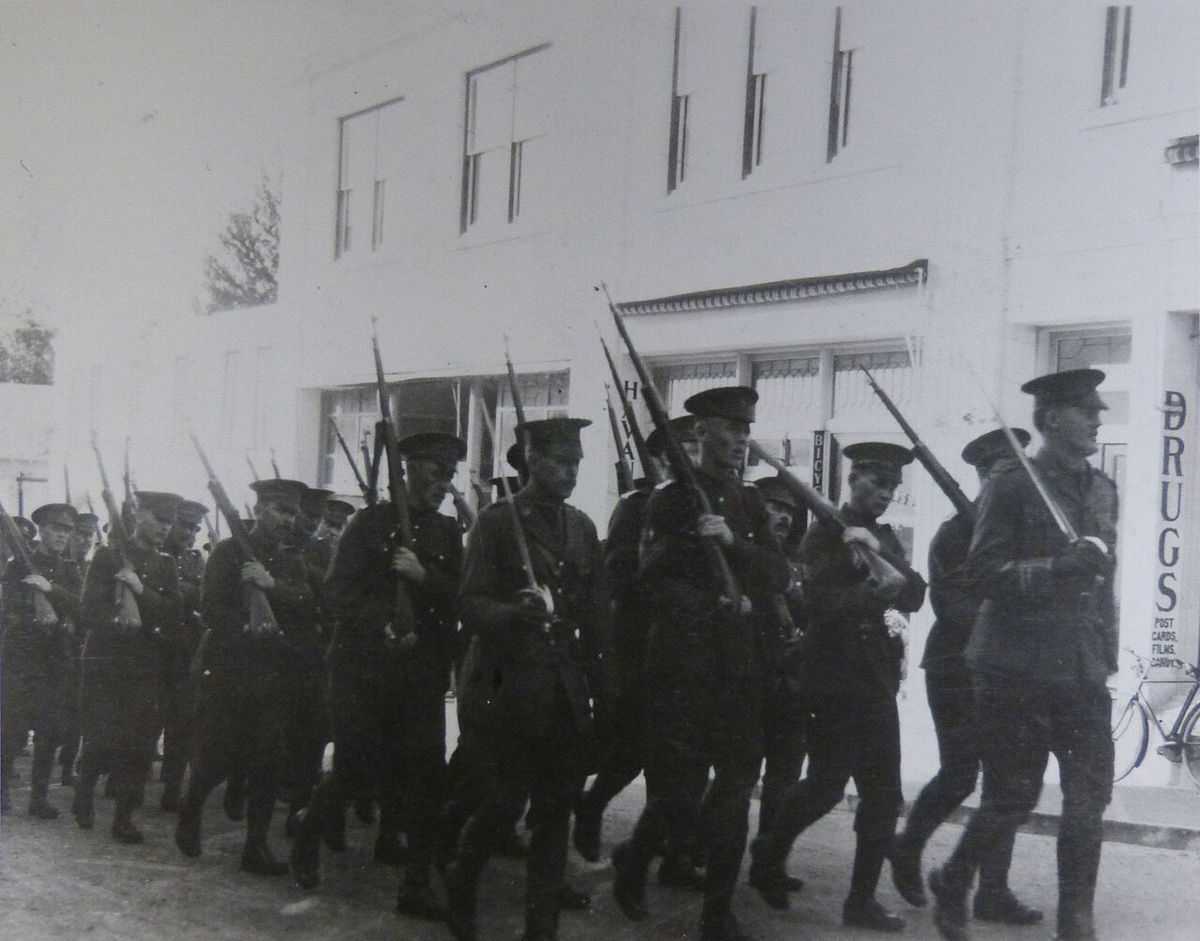
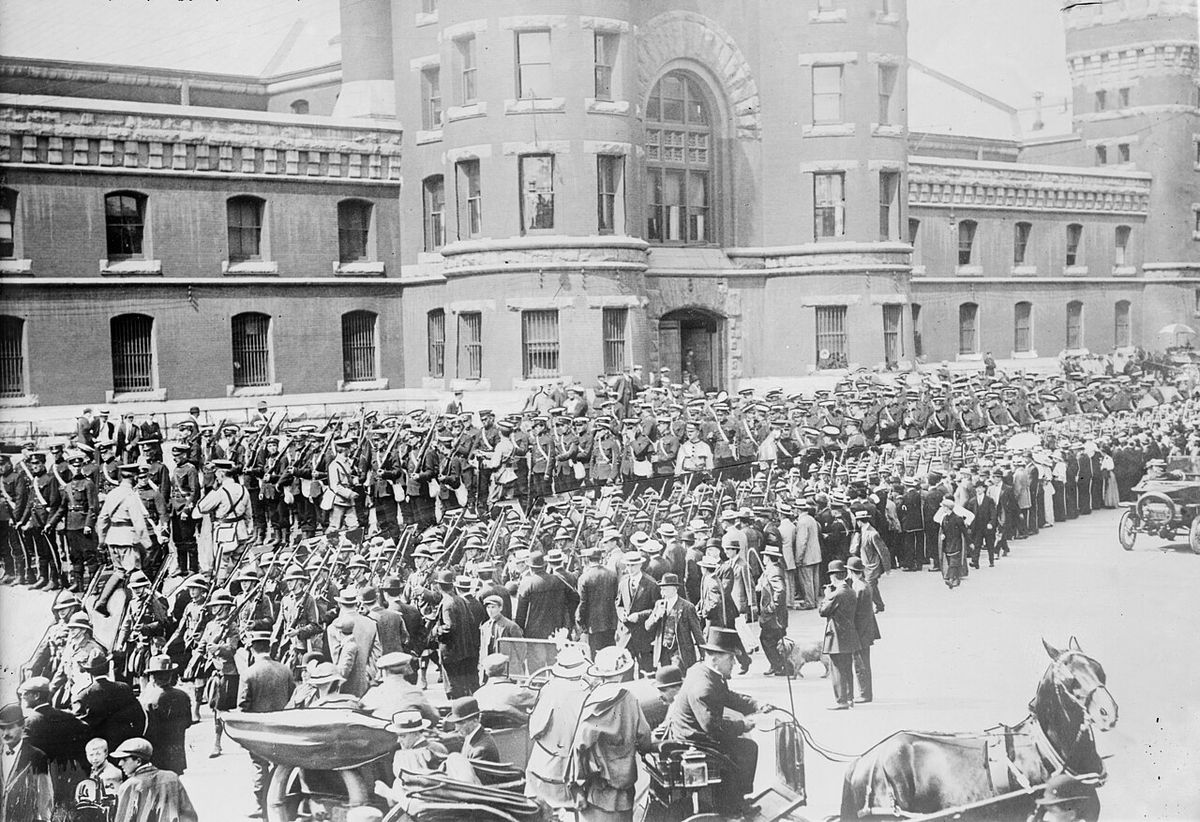
At the outbreak of the First World War, the militia was not mobilized due to slow plans, leading to the creation of the Canadian Expeditionary Force (CEF). The militia provided the administrative foundation and most officers for the CEF, which grew to over 620,000 personnel. The Canadian Corps, commanded by Lieutenant-General Arthur Currie from 1917, became a renowned striking force. More than 60,000 Canadians died during the war. After the war, steps were taken to preserve CEF battle honours within the militia structure. The interwar period saw consolidation under a single Minister of National Defence in 1923 and limited rearmament, though the militia remained a budget low priority. The Second World War triggered full mobilization of militia battalions, which were formally retitled as the Canadian Army in November 1940. The First Canadian Army, commanded by General Henry Crerar and exceeding 450,000 personnel, played major roles in the Italian campaign, the Battle of Normandy, and the liberation of the Netherlands. During this war, 730,000 people served in the Canadian Army, with 24,500 deaths.
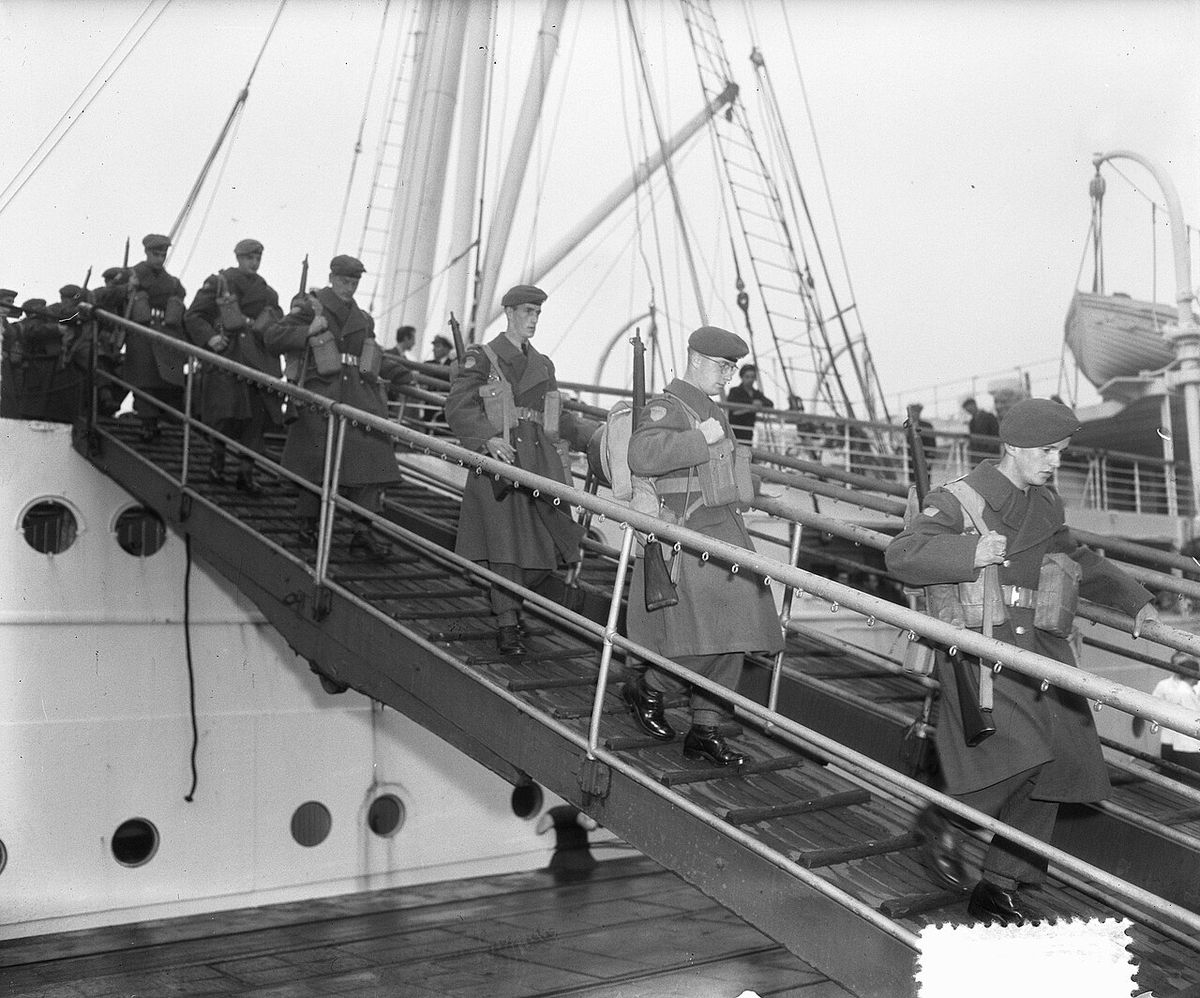
Post-war, the army maintained larger peacetime numbers, contributed to NATO with detachments in Europe, and pioneered United Nations peacekeeping. The 1960s brought unification of the armed forces, and in 1965 the army was reorganized into Force Mobile Command ahead of the 1968 creation of the single-service Canadian Armed Forces. This move faced resistance from regiments fearing loss of identity. Regimental ethos was gradually restored in the 1970s and 1980s. In 1992, as part of post-Cold War restructuring, it was renamed Land Force Command. The historic name, Canadian Army, was officially restored in 2011. The army hit its lowest enlistment numbers in decades in 2001, before rebounding during the War in Afghanistan, its longest campaign.
Contemporary Structure and Command
The Canadian Army is the land component of the Canadian Armed Forces, and the CAF's largest element. Command is held by the commander of the Canadian Army, a lieutenant-general, with a major-general serving as deputy. The commander reports to the Chief of the Defence Staff, who in turn reports to the Minister of National Defence. In a major reorganization beginning in 2025 and formally adopted in October 2026, the army transitioned from regionally aligned divisions to a new functional, mission-based structure comprising four principal formations. This change was directed by Lieutenant-General Michael Wright following the Inflection Point 2025 document to enhance defence capabilities. The new structure is designed to create task-specific formations for more effective force generation and operational readiness. The four formations reporting directly to Army Headquarters are the Manoeuvre Division, the Defence of Canada Division, the Support Division, and the training formation known as the Canadian Army Doctrine and Training Centre. This reorganization involved standing down the former 5th Canadian Division based in Halifax.
The army's personnel are divided into the full-time Regular Force and the part-time Canadian Army Reserve, also traditionally called the Militia. The Reserve provides a basis for mobilization and supports both domestic and expeditionary operations, with its units organized within the Defence of Canada Division. A small cadre of Regular Force personnel provides administrative and training support to Reserve units. Reservists may volunteer for full-time service, and Regular Force units can augment their capabilities with Reserve personnel. The army also includes the unique Canadian Rangers, a group of approximately 5,300 personnel who provide a military presence in remote, coastal, and northern regions. The Rangers conduct surveillance, sovereignty patrols, and community liaison, operating in patrol groups across northern Canada and seven provinces. In addition to military personnel, the Army employs 3,500 civilian personnel to support its operations.
Major Formations and Their Roles
The 1st Canadian Division, headquartered at Canadian Forces Base Edmonton, is the army's high-readiness formation for conventional warfare. It is responsible for building and maintaining a force capable of full-spectrum combat and expeditionary operations. Its core combat power resides in three mechanized brigade groups composed of Regular Force personnel: the 1 Canadian Mechanized Brigade Group, 2 Canadian Mechanized Brigade Group, and 5 Canadian Mechanized Brigade Group. Each brigade group, commanded by a colonel, includes mechanized infantry battalions, support battalions, and units from the Royal Canadian Armoured Corps, Royal Regiment of Canadian Artillery, Canadian Military Engineers, and Communications and Electronics Branch. The division also contains several specialized brigades and regiments for artillery coordination, logistics, light infantry, combat support, and signals.
The 2nd Canadian Division, headquartered in Montreal, integrates Regular and Reserve forces for domestic operations south of the 60th parallel. It leads Canadian joint domestic operations, responding to emergencies, contingency operations, and threats to territory and critical infrastructure. Its structure includes several regional Canadian Brigade Groups (CBGs) that maintain readiness for domestic emergencies and augment expeditionary forces. The division also commands the Canadian Ranger Group for Arctic operations. The regional brigade groups are geographically distributed across the country.
- 31 Canadian Brigade Group: 13 units in southwestern Ontario.
- 32 Canadian Brigade Group: 14 units in Ontario's Greater Golden Horseshoe.
- 33 Canadian Brigade Group: 16 units in eastern and parts of central/northeastern Ontario.
- 34 Canadian Brigade Group: 15 units in western Quebec.
- 35 Canadian Brigade Group: 12 units in eastern Quebec.
- 36 Canadian Brigade Group: 11 units in Nova Scotia and Prince Edward Island.
- 37 Canadian Brigade Group: 9 units in New Brunswick and the island of Newfoundland.
- 38 Canadian Brigade Group: 13 units in Manitoba, Saskatchewan, and northwestern Ontario.
- 39 Canadian Brigade Group: 11 units in British Columbia.
- 41 Canadian Brigade Group: 9 units in Alberta and the Northwest Territories.
The Canadian Army Support Division, based in Kingston, Ontario, provides unified command for infrastructure, technical services, and support functions. It operates four geographically based Canadian Support Groups: Atlantic, Central, East, and West. Its responsibilities encompass equipment maintenance, sustainment, training support, and infrastructure development to enable army operations and future modernization. The Canadian Army Doctrine and Training Centre (CADTC), also headquartered in Kingston, forms the army's training division. CADTC is responsible for doctrine development, managing the army's intellectual growth, and overseeing all individual and collective training. It publishes the peer-reviewed Canadian Army Journal and houses the Canadian Army Land Warfare Centre for advanced warfighting doctrine.
Training Modernization and Consolidation
A central pillar of the army's recent transformation is the consolidation of training under the Canadian Army Doctrine and Training Centre. This process, underway through 2026, involves amalgamating training organizations previously dispersed across the former regional divisions. The new Army Training Centre (ATC), headquartered at Canadian Forces Base Gagetown, New Brunswick, and led by a colonel and chief warrant officer, officially became a headquarters in June 2026. The ATC now oversees common training for both the Regular and Reserve Force, while the longstanding Combat Training Centre in Gagetown retains authority for specific trade training. The consolidation aims to standardize training, improve efficiency, and address personnel backlogs. Four division training centres were absorbed into the ATC in April 2026, followed by nine Canadian Brigade Group battle schools in September 2026.
The ATC operates through four regional locations, each developing a centre of excellence for specific training domains. ATC-West in Edmonton focuses on uncrewed and counter-uncrewed aerial systems, effectively becoming a new drone school. ATC-Central in Meaford, Ontario, is the steward for the Canadian Army Soldier First Course, a new program designed to provide fundamental skills to recruits awaiting trade school, thereby improving their employability. ATC-East in Valcartier, Quebec, delivers all courses and courseware in French. ATC-Atlantic in Gagetown serves as the centre of excellence for leadership development programs. This structure allows the army to ramp up training capacity, with the potential to run courses for 44 Regular Force candidates monthly at each of the four locations. The battle schools retain a dotted reporting line to their respective brigade groups to service local training needs while falling under the ATC's command for standardization. Newly enrolled non-commissioned members undergo Basic Military Qualification, while officers undergo Basic Military Officer Qualification, both at the Canadian Forces Leadership and Recruit School.
Current Challenges and Mobilization Planning
The Canadian Army and the broader Canadian Armed Forces face significant challenges in recruitment, training, and readiness. A report from the Office of the Auditor General in October 2025 highlighted that the CAF's inability to recruit and train enough personnel is severely hindering operational readiness. In the 2025 to 2026 fiscal year, nearly 192,000 people applied to the CAF, but only about 1 in 13 completed the process, resulting in roughly 15,000 new recruits. Training backlogs have been exacerbated by years of underfunding. A leaked report from the Canadian Forces Leadership and Recruit School indicated that changes to entry standards, such as opening recruitment to permanent residents and removing the aptitude test, correlated with a decline in Basic Military Qualification completion rates from 85 percent to 77 percent. These systemic issues complicate efforts to expand the force.
In response to a deteriorating global security environment, the Department of National Defence under General Jennie Carignan began preparing large-scale mobilization scenarios in December 2025. These plans reflect a NATO-wide shift toward enhanced readiness. A 2025 mobilization proposal, if enacted, would dramatically expand CAF manpower by adding approximately 85,000 personnel to the Regular Force, establishing a supplementary civilian force of about 300,000, and increasing the Reserve Force by 100,000 members. The legal framework for mobilizing reserves exists under section 31 of the National Defence Act, which permits activation during national emergencies, for defence, or to fulfill international obligations. However, executing such an expansion would require massive financial investment and a solution to existing recruitment and training bottlenecks. Canada met NATO's two percent defence spending target in March 2026 and has committed to a five percent target by 2035, which may provide necessary resources.
Equipment and Future Directions
The Canadian Army operates a diverse fleet of equipment sourced from domestic production and international allies. Its main battle tanks are the Leopard 2 series, including the 2A4, 2A4M, and 2A6M variants. Infantry fighting vehicles include the LAV 6, while reconnaissance uses the Coyote armoured vehicle and the Textron tactical armoured patrol vehicle. Other vehicles include the Bandvagn 206, G Wagon, and various support and logistics vehicles like the Medium Support Vehicle System. The army's standard issue rifle is the 5.56 mm Colt Canada C7 and C8, with the C22 pistol as the standard sidearm. Artillery systems are the C3 105mm howitzer and the M777 155mm howitzer, the latter capable of firing up to 40 kilometres.
The army's future direction is heavily influenced by its ongoing structural reorganization into functional divisions, which is intended to optimize force generation for specific missions like high-intensity manoeuvre warfare and domestic defence. This new model, with its dedicated support and training divisions, is designed to create a more agile and responsive institution. The creation of a dedicated light infantry regiment from existing light battalions within the Manoeuvre Division is one example of this tailored approach. Doctrine development continues at the Canadian Army Land Warfare Centre, ensuring intellectual readiness for future conflict. The army's role within national defence is also evolving alongside Canada's international commitments. Having concluded its longest campaign in Afghanistan, the army continues to contribute to NATO deployments, including enhanced forward presence in Latvia, and supports United Nations and other multilateral peace operations. Domestically, the army is frequently called upon to assist provincial and territorial authorities during natural disasters like wildfires and floods, a task coordinated through the Defence of Canada Division. The integration of the Canadian Rangers into this division shows the importance of Arctic sovereignty and surveillance. The future effectiveness of the army depends on successfully managing its current transformation, overcoming personnel shortages, and leveraging increased defence spending to modernize both its human capital and its material capabilities.
Questions about Canadian Army
What is the new structure of the Canadian Army?
Following the document Inflection Point 2025, Lieutenant-General Michael Wright ordered a reorganization from regionally configured divisions to four task specific formations. These are the 1st Canadian Division, which is the Manoeuvre Division for conventional warfare, and the 2nd Canadian Division, which is the Defence of Canada Division for domestic operations. The other two formations are the Canadian Army Support Division and the Canadian Army Doctrine and Training Centre for training and doctrine. This new structure is designed to create a force configured for specific tasks rather than regional alignment.
What is the Canadian Army Reserve?
The Canadian Army Reserve, also traditionally called the Militia, is the part-time component of the army, consisting of approximately 21,500 personnel. Reservists train on evenings and weekends and provide a vital basis for mobilizing additional forces. They support both domestic emergency response and expeditionary operations abroad. Reserve units are organized within ten regional Canadian Brigade Groups under the 2nd Canadian Division.
Who are the Canadian Rangers?
The Canadian Rangers are a unique sub-component of the Army Reserve, numbering about 5,300 personnel. They are citizens, often Indigenous, who live in remote, coastal, and northern communities. Their role includes conducting surveillance, sovereignty patrols, and providing a military presence and liaison in areas where regular forces are not permanently stationed. They are organized into patrol groups across northern Canada and seven provinces, under the Canadian Ranger Group within the 2nd Canadian Division.
What major changes are happening in army training?
The army is consolidating all common individual training under the Canadian Army Doctrine and Training Centre. A new Army Training Centre (ATC) was established in Gagetown, New Brunswick, in June 2026, absorbing four former division training centres and nine brigade battle schools. The ATC operates four regional locations with specialties: drones in Edmonton, the Soldier First Course in Meaford, French-language training in Valcartier, and leadership development in Gagetown. This aims to standardize training and increase capacity.
Is the Canadian Army planning to expand?
Yes, the Department of National Defence has prepared large-scale mobilization plans. A proposal from 2025 envisions expanding the Regular Force by approximately 85,000 personnel, adding 100,000 to the Reserve Force, and establishing a supplementary civilian force of about 300,000. However, this ambitious expansion faces significant hurdles, including chronic recruitment shortfalls and training backlogs that must first be resolved. The army's ability to meet these targets will depend on overcoming these existing challenges.
How many people serve in the Canadian Army?
As of 2024, the Canadian Army includes about 22,500 Regular Force personnel and 21,500 reservists, with the reservist total encompassing 5,300 Canadian Rangers. The army is the land component and largest element of the Canadian Armed Forces. It is headquartered at NDHQ Carling in Ottawa and maintains bases across Canada. These personnel figures represent the army's composition before any future reorganization or expansion.
Sources: Wikipedia and current public reporting, checked by the Nosy Mag desk. Last updated 2026-10-19.