New Democratic Party
The New Democratic Party (NDP) is a federal social democratic political party in Canada, founded in 1961 through a merger of the Co-operative Commonwealth Federation and the Canadian Labour Congress. The party sits on the centre-left to left-wing of the political spectrum and has historically been a significant force in Canadian politics, particularly during periods of minority government. While it has never formed a federal government, the NDP has served as the Official Opposition and has used its balance of power to influence major social policy, most recently through a confidence and supply agreement with the Liberal Party. As of 2026, the party holds five seats in the House of Commons and its new leader is Avi Lewis, elected in March 2026.
Founding and Early Leadership
The New Democratic Party was born from a process of negotiation between the Co-operative Commonwealth Federation (CCF) and the newly formed Canadian Labour Congress (CLC). In 1958, they established the National Committee for the New Party, a joint committee with ten members from each group tasked with creating a new social democratic political force. Over the next three years, the committee laid the party's foundations and established New Party Clubs across the country, adding six club representatives to the National Committee. The founding convention took place over five days in 1961, where the party's principles, policies, and structures were finalized, and the name New Democratic Party was adopted. Tommy Douglas, the long-serving CCF Premier of Saskatchewan, was elected as the party's first leader. Supporters of the party are sometimes referred to as Dippers. The party's first federal secretary was Ervin (Ernie) Hall in 1961.
Evolution and Electoral Performance in the 20th Century
The NDP's early decades were defined by its role as a principled opposition and a catalyst for progressive policy, often holding the balance of power in minority parliaments. Under David Lewis, who became leader in 1971 after defeating the activist Waffle group, the party supported Pierre Trudeau's Liberal minority government from 1972 to 1974. This cooperation led to significant legislative achievements, including pension indexing and the creation of the state-owned energy company Petro-Canada. In 1974, the NDP helped pass a non-confidence motion, forcing an election where it lost half its seats. Lewis resigned the following year. The party's strategy shifted under Ed Broadbent, who led from 1975 to 1989 and focused on populist, pocketbook issues. Broadbent's leadership saw the NDP play a decisive role in ending Joe Clark's Progressive Conservative minority government in 1979 by moving a non-confidence motion on the budget. The party achieved a then-record of 43 seats in the 1988 election. During Broadbent's tenure, the party's federal secretary was Robin Sears from 1974.
The 1990s proved challenging, beginning with Audrey McLaughlin becoming the first woman to lead a major federal party in 1989. Under McLaughlin, the party won its first seat in Quebec in the 1990 Chambly by-election, won by Phil Edmonston. The party was devastated in the 1993 federal election, winning only nine seats and 7 percent of the vote. This collapse was attributed to voter dissatisfaction with NDP provincial governments in Ontario and British Columbia and the rise of the right-wing Reform Party in Western Canada. McLaughlin resigned in 1995 and was succeeded by Alexa McDonough, former leader of the Nova Scotia NDP. McDonough led a partial recovery, with the party making a breakthrough in Atlantic Canada by winning eight seats in 1997. However, support ebbed again, and the party finished with just 13 seats in the 2000 election, barely maintaining official party status. McDonough resigned in June 2002.
The Layton Era and Breakthrough to Official Opposition
Jack Layton, a Toronto city councillor and former President of the Federation of Canadian Municipalities, was elected leader in January 2003. The 2004 election saw the party increase its popular vote by more than a million votes but gain only five seats for a total of 19. In the subsequent Liberal minority government, Layton skillfully used the NDP's balance of power to extract concessions on healthcare and environmental policy. He ultimately supported a Conservative motion of non-confidence in November 2005, triggering an election. The 2006 election resulted in a Conservative minority, and the NDP increased its seat count to 29. The party won 37 seats in the 2008 federal election, its best performance since 1988. This included a breakthrough in Edmonton-Strathcona, only the second federal NDP seat ever won in Alberta.
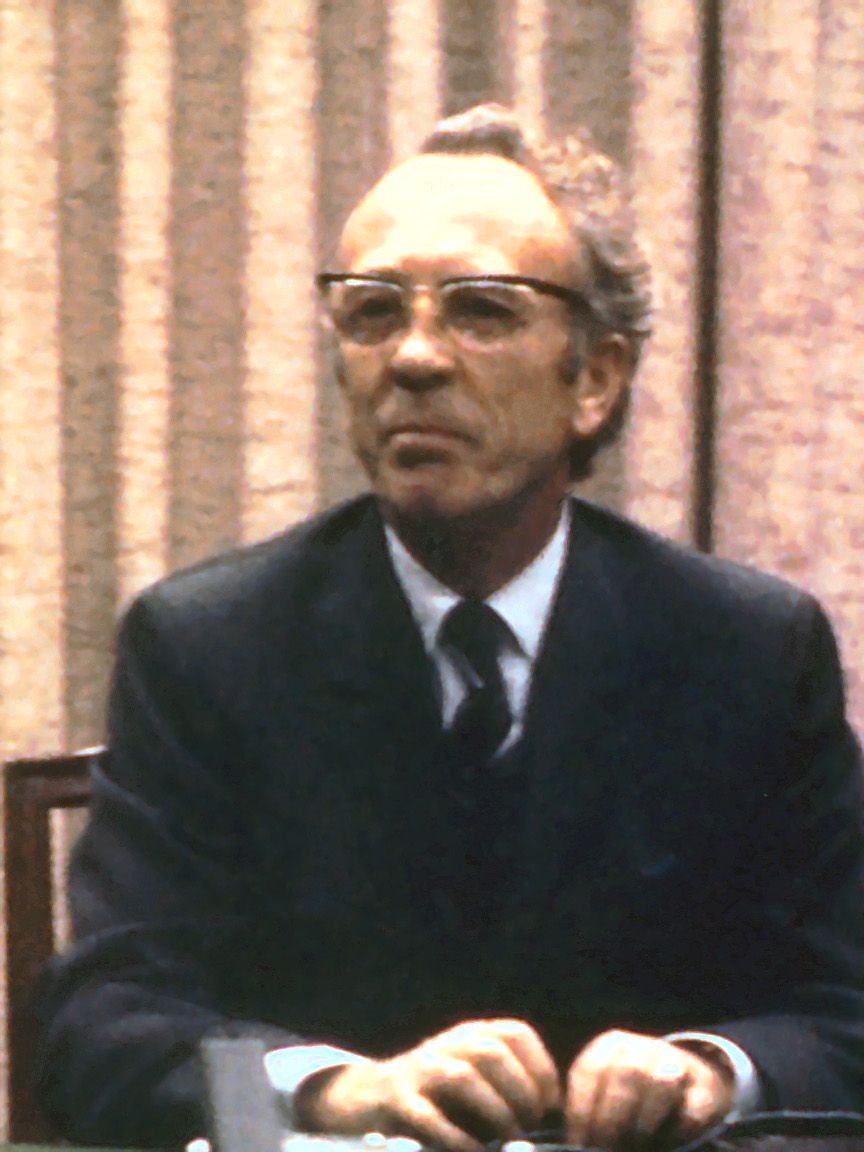
The party's fortunes transformed dramatically in the 2011 federal election. Under Layton's charismatic leadership, the NDP achieved a historic breakthrough in Quebec, winning 59 out of 75 seats in the province. This surge, combined with gains elsewhere, gave the party a record 103 seats nationwide, making it the Official Opposition for the first time in its history. The result also marked the collapse of the Bloc Québécois, which was reduced to four seats, and relegated the Liberal Party to third place with 34 seats. Tragically, Layton announced a leave of absence due to cancer in July 2011 and died on August 22, 2011. In a final letter, he called for a leadership election to be held in early 2012. During his leave, Hull, Aylmer MP Nycole Turmel served as interim leader.
Recent Leadership and Electoral Challenges
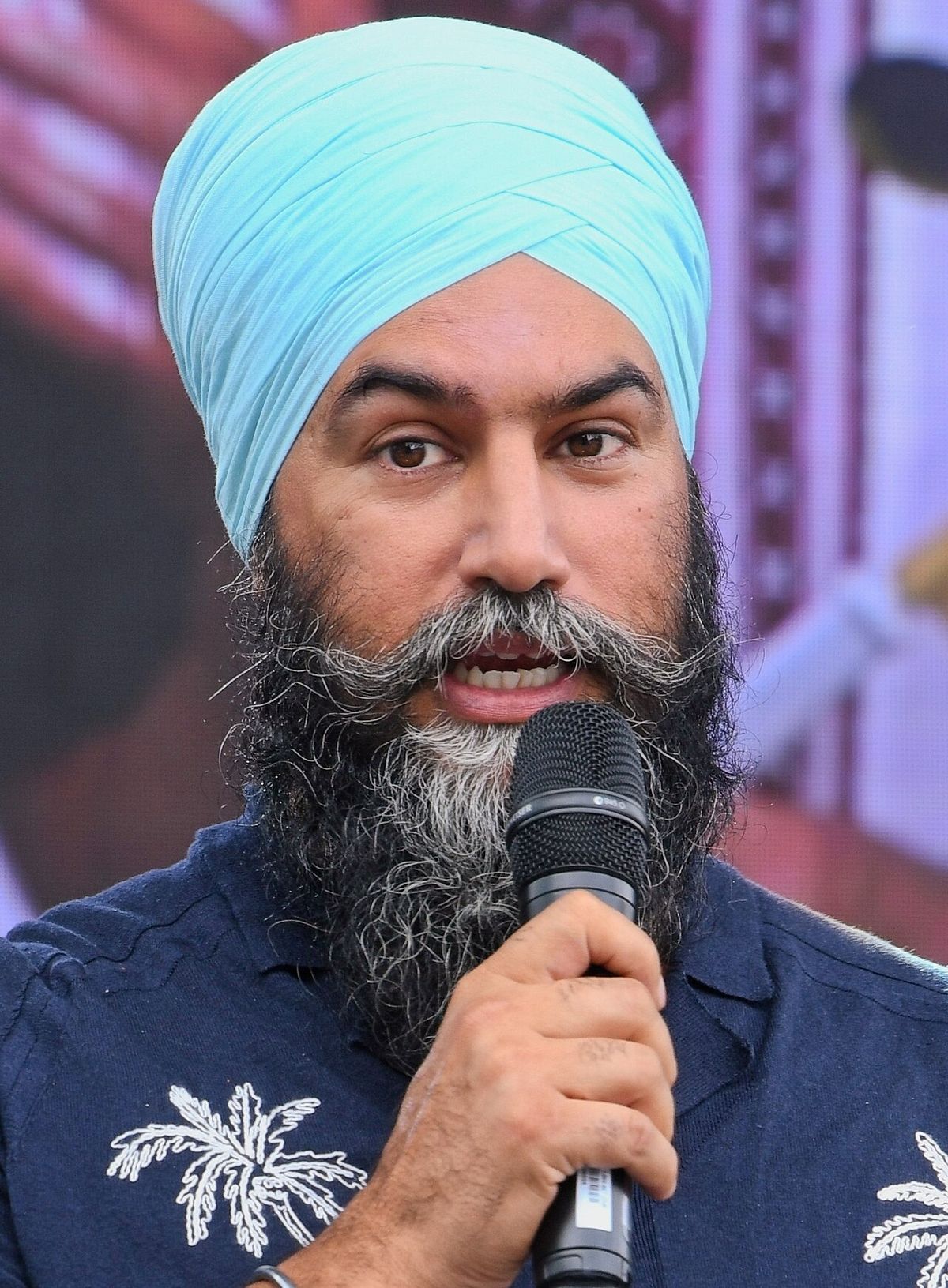
Tom Mulcair was elected leader in March 2012. Despite leading in polls early in the 2015 campaign, the NDP lost 59 seats in that election, falling to 44 seats and third place in Parliament. The historic Quebec caucus was largely lost to the Liberals, Conservatives, and Bloc Québécois. Following the disappointing result, Mulcair's leadership was rejected in a confidence vote at the party's 2016 convention in Edmonton, the first time a federal party leader had been defeated in such a manner. Jagmeet Singh won the subsequent leadership election on October 1, 2017, becoming the first person from a visible minority to permanently lead a major federal party. Singh entered Parliament by winning a by-election in Burnaby South in February 2019.
The 2019 election was another setback, with the NDP winning only 24 seats, its worst result since 2004. The party was nearly wiped out in Quebec, holding just one seat there, won by Alexandre Boulerice. However, the Liberal minority government that resulted placed the NDP in a balance-of-power position. During the COVID-19 pandemic, the party used this leverage to push for more generous financial aid, including extensions to the Canada Emergency Response Benefit. In the 2021 snap election, the NDP made minor gains to 25 seats, including winning a second seat in Alberta with Blake Desjarlais in Edmonton Griesbach. In March 2022, the party entered a formal confidence and supply agreement with Prime Minister Justin Trudeau's Liberal government. This agreement was ended by the NDP in September 2024, nine months before its scheduled conclusion. Following the 2025 election, Singh resigned and was replaced as interim leader by Don Davies. The party's national director as of 2026 is François Picard.
Policy and Ideological Stance
The New Democratic Party is widely described as a social democratic and democratic socialist party, advocating for a mixed economy with a strong welfare state and strong public services. The party's constitution states that both social democracy and democratic socialism are influences. A core and enduring principle is the expansion of Canada's universal healthcare system. The party's platform has long called for the inclusion of dental care, mental health care, pharmacare, and coverage for eye and hearing care under the public system. On economic issues, the NDP supports broader social welfare programs, labour rights for workers, and increased taxation on financial institutions and wealthier Canadians. The party is a staunch advocate for environmental stewardship and action on climate change, having historically pushed for Canada to meet its obligations under the Kyoto Protocol. On democratic reform, the NDP officially supports the abolition of the unelected Senate. The party is also known for its strong advocacy of LGBTQ rights, international peace, and progressive social policies. In March 2024, the House of Commons passed an NDP motion on Palestine, calling on the government to work towards a two-state solution. The NDP is a member of the Progressive Alliance international.
The 2025 Election and Current Status
The 2025 federal election resulted in the worst seat result in the NDP's history, with the party losing 17 of its 24 seats held at dissolution. This collapse left the party with just five seats in the House of Commons as of 2026, placing it as the fourth-largest party and without official party status. The dramatic decline coincided with the appointment of Mark Carney as prime minister and a steep drop in the party's polling numbers. In the wake of this defeat, Jagmeet Singh resigned as leader after failing to be elected in Burnaby Central. A leadership election was held, with voting taking place from March 9 to March 28, 2026. On March 29, 2026, Avi Lewis was elected as the new party leader at the national convention in Winnipeg, held at the RBC Convention Centre. The grandson of former leader David Lewis and son of former Ontario NDP leader Stephen Lewis, he won on the first ballot. Following his election, Alberta NDP leader Naheed Nenshi and Saskatchewan NDP leader Carla Beck criticized the federal party's oil and gas policy under Lewis. During the interim period, the party's parliamentary caucus was led by interim leader Don Davies.
Provincial and Territorial Success
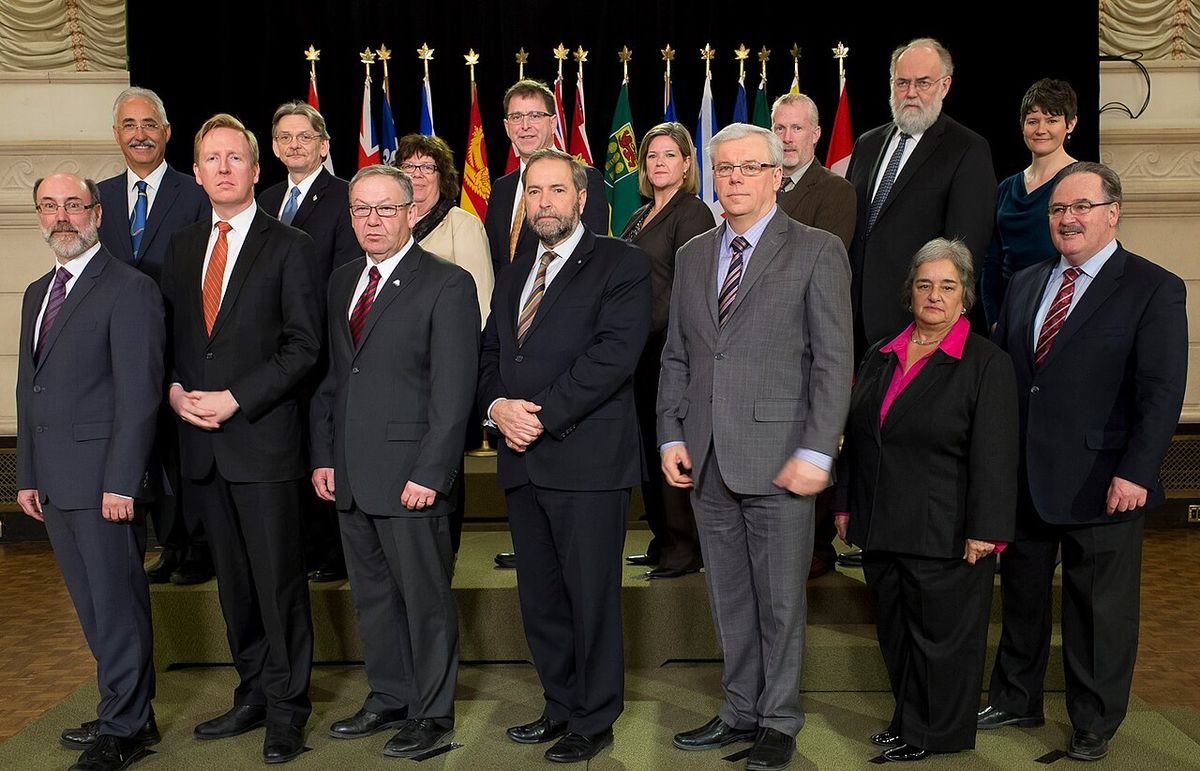
While the federal NDP has never formed government, its integrated provincial and territorial branches have a substantial record of electoral success. These branches have formed the government in six provinces across Canada, as well as in the northern territory of Yukon. The party's provincial wings operate with a high degree of integration with the federal party, often sharing membership lists and organizational resources, which is a unique feature among Canadian political parties. As of 2025, the NDP forms the government in British Columbia and Manitoba, and is the Official Opposition in Alberta, Nova Scotia, Ontario, and Saskatchewan. The party has sitting members in every provincial legislature except those of New Brunswick, Prince Edward Island, and Quebec. On May 3, 2025, the Alberta NDP voted to end automatic joint membership with the federal NDP.
- British Columbia: The BC NDP has formed government multiple times, most recently under Premier David Eby.
- Alberta: The Alberta NDP, led by Rachel Notley, formed government from 2015 to 2019.
- Saskatchewan: The Saskatchewan NDP, successor to the CCF, governed for much of the province's history, beginning with Tommy Douglas.
- Manitoba: The Manitoba NDP has had several periods in government, including a long tenure under Premier Gary Doer.
- Ontario: The Ontario NDP, led by Bob Rae, formed a government from 1990 to 1995.
- Nova Scotia: The Nova Scotia NDP formed government from 2009.
- Yukon: The Yukon New Democratic Party has formed government in the territory.
Federal Election Performance (2004 to 2025)
The NDP's electoral performance at the federal level has experienced significant peaks and valleys since the turn of the 21st century. The 2011 election under Jack Layton is the clear high watermark, tripling the party's seat count and achieving a historic breakthrough in Quebec. The subsequent elections saw a retreat from this peak, with the 2025 result representing a nadir for the party's parliamentary representation. Throughout these fluctuations, the party has consistently played a critical role in minority parliaments, holding the balance of power and influencing government policy during the Liberal minorities of 2004 to 2006 and 2006 to 2011, and the Liberal minority from 2019.
| Election | Leader | Seats | Position |
|---|---|---|---|
| 2004 | Jack Layton | 19 | Fourth Party |
| 2006 | Jack Layton | 29 | Fourth Party |
| 2008 | Jack Layton | 37 | Fourth Party |
| 2011 | Jack Layton | 103 | Official Opposition |
| 2015 | Tom Mulcair | 44 | Third Party |
| 2019 | Jagmeet Singh | 24 | Fourth Party |
| 2021 | Jagmeet Singh | 25 | Fourth Party |
| 2025 | Jagmeet Singh | 5 | Fourth Party |
Questions about New Democratic Party
Has the NDP ever won a federal election in Canada?
No, the New Democratic Party has never won the largest share of seats in a federal election and therefore has never formed the government in Ottawa. Its highest achievement was in the 2011 election when it won 103 seats and became the Official Opposition for the first time. The party has, however, formed governments in six provinces and the Yukon territory. The NDP's peak period of policy influence at the federal level was during the minority Liberal governments of Lester B. Pearson and Pierre Trudeau.
Who is the current leader of the NDP?
As of March 29, 2026, the leader of the NDP is Avi Lewis. He was elected at the party's leadership convention in Winnipeg, winning on the first ballot. He is the grandson of former NDP leader David Lewis and the son of former Ontario NDP leader Stephen Lewis. He succeeded Jagmeet Singh, who resigned after the 2025 federal election.
What are the main policies of the NDP?
The NDP advocates for social democratic policies centred on expanding Canada's social safety net and public services. A flagship policy is the expansion of universal healthcare to include dental care, pharmacare, mental health care, and coverage for eye and hearing care. The party supports a mixed economy, stronger labour protections, increased taxes on financial institutions and the wealthy, and strong action on climate change. It also supports democratic reforms like abolishing the Senate, LGBTQ rights, and international peace. The party supports working towards the establishment of a Palestinian state as part of a two-state solution.
What was the NDP's confidence and supply deal with the Liberals?
In March 2022, the NDP entered a confidence and supply agreement with Prime Minister Justin Trudeau's Liberal minority government. The deal guaranteed NDP support on key votes to maintain the government's stability in exchange for progress on shared policy priorities. Key elements included the establishment of a national dental care program for low-income Canadians, advancing a national pharmacare program, labour reforms for federally regulated workers, and new taxes on financial institutions. The NDP ended this agreement in September 2024, nine months before its original scheduled conclusion.
How did the NDP perform in the 2025 federal election?
The 2025 federal election was the worst in the NDP's history in terms of seats won. The party lost 17 of the 24 seats it held at the dissolution of Parliament, leaving it with only five seats in the House of Commons and without official party status. This result made it the fourth-largest party. The collapse coincided with a steep decline in the party's polling following the appointment of Mark Carney as prime minister.
When and where is the next NDP leadership convention?
The most recent NDP leadership convention was held from March 27 to 29, 2026, in Winnipeg, Manitoba at the RBC Convention Centre at 375 York Avenue. At this convention, Avi Lewis, the grandson of former leader David Lewis, was elected as the new party leader on the first ballot. The convention's theme focused on inclusive and fair democracy, and delegates debated and voted on various policy resolutions. This event followed the party's leadership election process initiated after Jagmeet Singh's resignation following the 2025 federal election.
Sources: Wikipedia and current public reporting, checked by the Nosy Mag desk. Last updated 2026-10-30.