Jack Layton
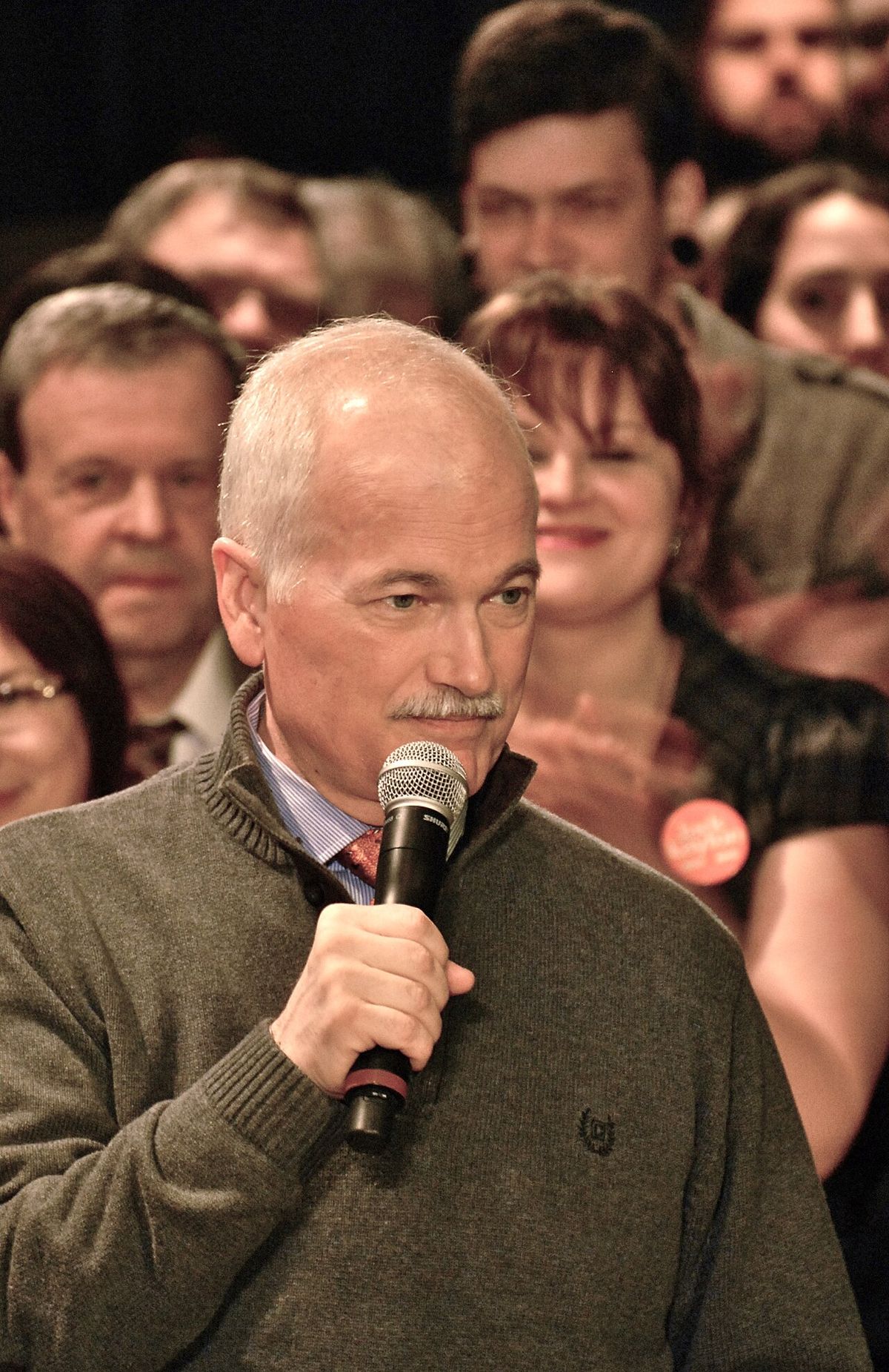
John Gilbert "Jack" Layton was a Canadian politician and academic who served as the leader of the New Democratic Party from 2003 until his death in 2011. He led the NDP to a historic electoral breakthrough in the 2011 federal election, securing 103 seats and forming the Official Opposition for the first time in the party's history. A former Toronto city councillor and president of the Federation of Canadian Municipalities, Layton was a prominent national advocate for progressive policies on housing, the environment and social justice. His death from cancer at the height of his political influence cemented his legacy as a significant figure in Canadian politics.
Early life and academic career
John Gilbert Layton was born on July 18, 1950 in Montreal, Quebec, to Doris Elizabeth Steeves and Progressive Conservative MP Robert Layton. He was raised in the largely Anglophone suburb of Hudson, Quebec, where he served as student council president at Hudson High School. His political lineage was notable, as he was the maternal great-grandnephew of Father of Confederation William Steeves and his grandfather, Gilbert Layton, served as a minister without portfolio in Quebec's Union Nationale government under Premier Maurice Duplessis. In 1969, Layton was appointed prime minister of the Quebec Youth Parliament, a role he held until 1970. He graduated from McGill University in 1970 with an honours Bachelor of Arts in political science and economics, and was a member of the Sigma Chi fraternity. His political views were shaped at McGill by professor and philosopher Charles Taylor, whose mentorship led Layton to switch his major from science to arts and later pursue graduate studies in Toronto.
Layton moved to Toronto to attend York University, where he earned a Master of Arts in political science in 1972 and a Doctor of Philosophy in the same field in 1983 under the supervision of David Bell. He joined the New Democratic Party in 1970, citing Tommy Douglas's opposition to the War Measures Act during the October Crisis as a key influence. Layton began his academic career in 1974 as a political science educator at Ryerson Polytechnical Institute, now Toronto Metropolitan University. He also taught at York University and served as an adjunct professor at the University of Toronto from 1978 to 1994. Alongside his teaching, Layton was an active writer and activist, authoring books such as Homelessness: The Making and Unmaking of a Crisis and Speaking Out. His intellectual foundation was rooted in Canadian idealism, a tradition he explored in a foreword for the book Canadian Idealism and the Philosophy of Freedom.
Toronto municipal politics
Jack Layton entered municipal politics in Toronto, first being elected to Toronto City Council in the 1982 municipal election in a surprise upset against incumbent Gordon Chong. He quickly became one of council's most outspoken left-wing members, advocating for progressive causes. Layton was a vocal opponent of the SkyDome project and an early advocate for the rights of AIDS patients. In 1984, he was fined for trespassing while distributing leaflets at the Toronto Eaton Centre during a strike, though the charge was later dismissed on free speech grounds. He also opposed Toronto's bid for the 1996 Summer Olympics. In 1985, Layton moved to the Metropolitan Toronto Council following the first direct elections for that body. During the 1988 municipal elections, he swapped roles with ally Dale Martin, returning to Toronto City Council where he won comfortably against former high school teacher Lois MacMillan-Walker. That election was a major victory as the reformist coalition he led gained control of city council for the first time.
On July 9, 1988, Layton married Hong Kong-born Toronto District School Board trustee Olivia Chow in a ceremony on Algonquin Island. Chow later joined him on Toronto City Council and would become a federal MP and, as of 2023, the mayor of Toronto. In 1990, the couple faced public scrutiny over their residence in a federally subsidized housing cooperative despite their combined income of $120,000. They had lived in the Hazelburn co-op since 1985 and, after the controversy, began voluntarily paying an additional $325 per month. The city solicitor cleared them of any wrongdoing, and they soon purchased a house in Toronto's Chinatown. Layton's profile continued to rise, and in February 1991 he became the first official NDP candidate for mayor of Toronto, running after incumbent Art Eggleton chose not to seek re-election.
Layton's 1991 mayoral campaign faced a coalesced right-wing opposition behind candidate June Rowlands. He was also hurt by the unpopularity of the provincial NDP government under Bob Rae and his past opposition to the Olympic bid. Despite polls in October showing him only four points behind, the withdrawal of candidate Susan Fish shifted support to Rowlands, and Layton lost the November 12 election by a considerable margin. Following the loss, he co-founded the White Ribbon Campaign in November 1991, an organization of men working to end violence against women. He returned to academia and founded the Green Catalyst Group Inc., an environmental consulting business. Layton returned to Metropolitan Toronto Council in 1994 and, after the municipal merger, was re-elected to the new Toronto City Council, serving until he pursued federal NDP leadership. He also gained national prominence as president of the Federation of Canadian Municipalities. In June 1999, as chair of Toronto's environmental task force, the Toronto Atmospheric Fund, he was instrumental in the early phases of the WindShare wind power cooperative in Toronto through the Toronto Renewable Energy Co-operative.
- Toronto City Councillor (1982 to 1985, 1988 to 1991, 1994 to 2003).
- Metropolitan Toronto Councillor (1985 to 1988, 1994 to 1997).
- NDP candidate for Mayor of Toronto (1991).
- President of the Federation of Canadian Municipalities (late 1990s).
- Chair of the Toronto Atmospheric Fund (1999).
Federal politics and NDP leadership
Jack Layton was elected leader of the federal New Democratic Party at its leadership convention in Toronto on January 25, 2003. He won on the first ballot with 53.5 percent of the vote, defeating candidates Bill Blaikie, Lorne Nystrom, Joe Comartin and Pierre Ducasse. His campaign focused on reinvigorating the party and was prominently endorsed by former leader Ed Broadbent. Unlike tradition, Layton did not seek a seat in the House of Commons via a by-election, instead waiting for the 2004 federal election to contest the riding of Toronto, Danforth. In the interim, he appointed runner-up Bill Blaikie as parliamentary leader. Layton immediately worked to raise the party's profile, attacking Prime Minister Paul Martin's policies as conservative and arguing the Liberal Party had shifted rightward. A key strategic focus was improving the NDP's standing in Quebec, where he appointed leadership rival Pierre Ducasse as his Quebec lieutenant.
The 2004 federal election was Layton's first campaign as leader. It was marked by controversy when he accused Prime Minister Paul Martin of responsibility for homeless deaths due to a lack of affordable housing funding. Layton also suggested removing the Clarity Act, a position not shared by all party members, which he later reversed by the 2006 election. Despite these controversies, Layton led the NDP to a popular vote of 15 percent, the party's highest in 16 years, though it won only 19 seats. He personally won the Toronto, Danforth seat, defeating Liberal incumbent Dennis Mills by a narrow margin. His wife, Olivia Chow, lost a tight race in another Toronto riding.
In the resulting minority Parliament, Layton leveraged the NDP's position to influence the Liberal government. In May 2005, he negotiated amendments to the federal budget in exchange for NDP support, cancelling corporate tax cuts and increasing social spending. The amendments passed on June 23, 2005. Later that year, following the Gomery Commission report, Layton set conditions for continued support, focusing on controlling privatization in health care. When those conditions were not met, the NDP joined other opposition parties in a non-confidence vote that defeated the Liberal government in November 2005. Layton's effective negotiation and conduct during this period boosted his credibility, with polls showing him as a major second-choice leader nationally and even polling second in Quebec after Gilles Duceppe.
Electoral breakthroughs and Official Opposition
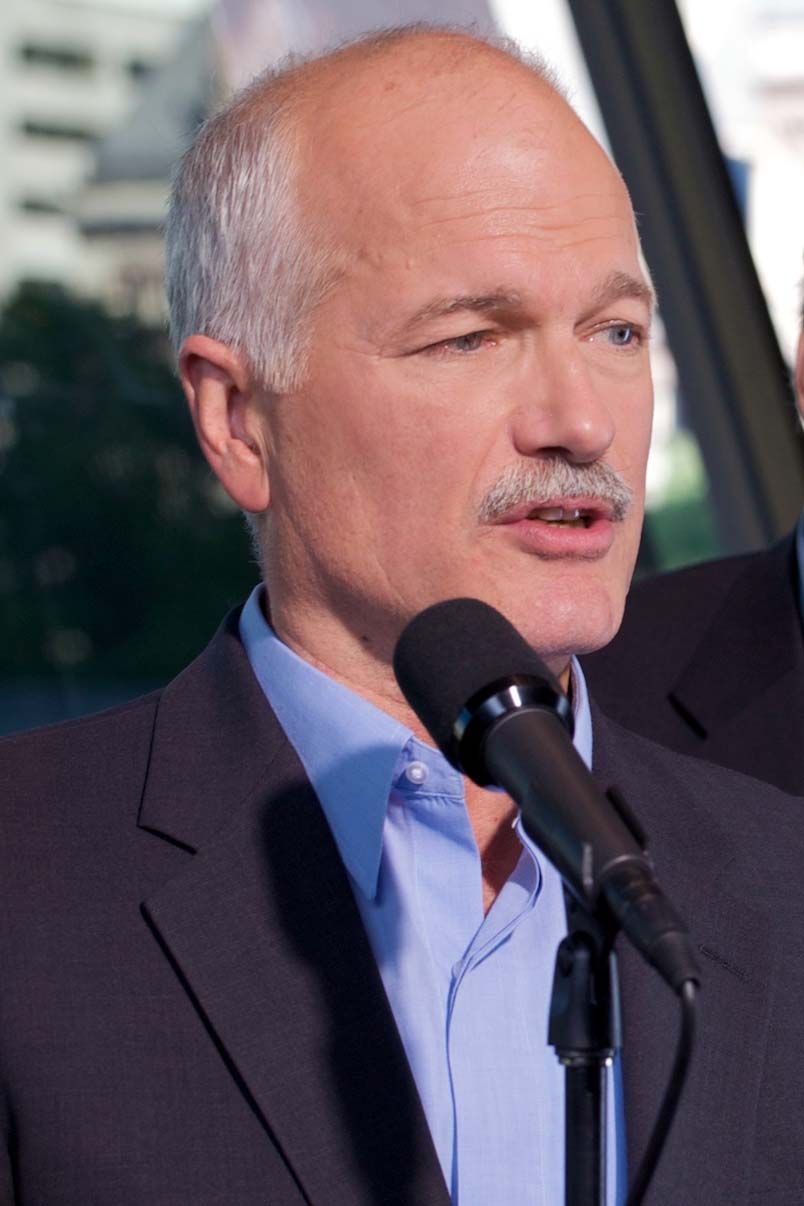
Under Jack Layton's leadership, the NDP's support grew steadily through three consecutive elections. The party increased its seat count in each contest, building towards the historic breakthrough of 2011. Layton's persistent focus on Quebec and his personal appeal, including his ability to speak colloquial Québécois French, began to erode the Bloc Québécois's dominance in the province. The 2006 election saw the NDP win 29 seats, a gain of 10 from the previous election. In the 2008 election, the party further increased its representation to 37 seats. These gains set the stage for the dramatic surge of the 2011 federal election, which occurred after Layton had successfully battled prostate cancer and a hip fracture, appearing resilient and energetic on the campaign trail.
The 2011 election was a watershed moment for the NDP. Layton led the party to win 103 seats, making it the Official Opposition for the first time in its history. This result more than doubled the party's previous seat count. The breakthrough was particularly pronounced in Quebec, where the NDP won 59 of the province's 75 seats, decimating the Bloc Québécois. Layton's personal popularity was a significant factor, with his optimistic campaign message resonating across the country. On May 2, 2011, he became the Leader of the Official Opposition, a position he held for only a few months before his health declined. During the campaign, Layton's performance in the leaders debates, particularly a critique of Liberal leader Michael Ignatieff's attendance record, was seen as a turning point.
Illness, death and succession
On February 5, 2010, Jack Layton was diagnosed with prostate cancer and took a temporary leave from his duties, returning to work after treatment. In July 2011, shortly after becoming Official Opposition leader, he announced he was battling a new, unspecified form of cancer and would take another leave, nominating MP Nycole Turmel as interim leader. His health deteriorated rapidly, and he died at his home in Toronto on August 22, 2011 at age 61. The specific type and spread of the cancer, along with the exact cause of death, were not publicly disclosed. In a poignant letter to Canadians released posthumously, Layton expressed gratitude for the public's support and outlined his hopes for the country's future.
The succession process for the NDP leadership was set in motion by Layton himself with his nomination of Nycole Turmel. Layton's passing was marked by an extensive public mourning period, including a lying-in-state on Parliament Hill and a state funeral at Roy Thomson Hall in Toronto attended by political figures from across the spectrum. His body was cremated, with ashes scattered on Toronto Island, at a family plot in Hudson, Quebec, and at the Toronto Necropolis. Tom Mulcair won the subsequent leadership election to succeed him as party leader. His legacy continues to be honoured through initiatives like the Jack Layton Progress Prize, awarded by the Broadbent Institute.
Personal life and family
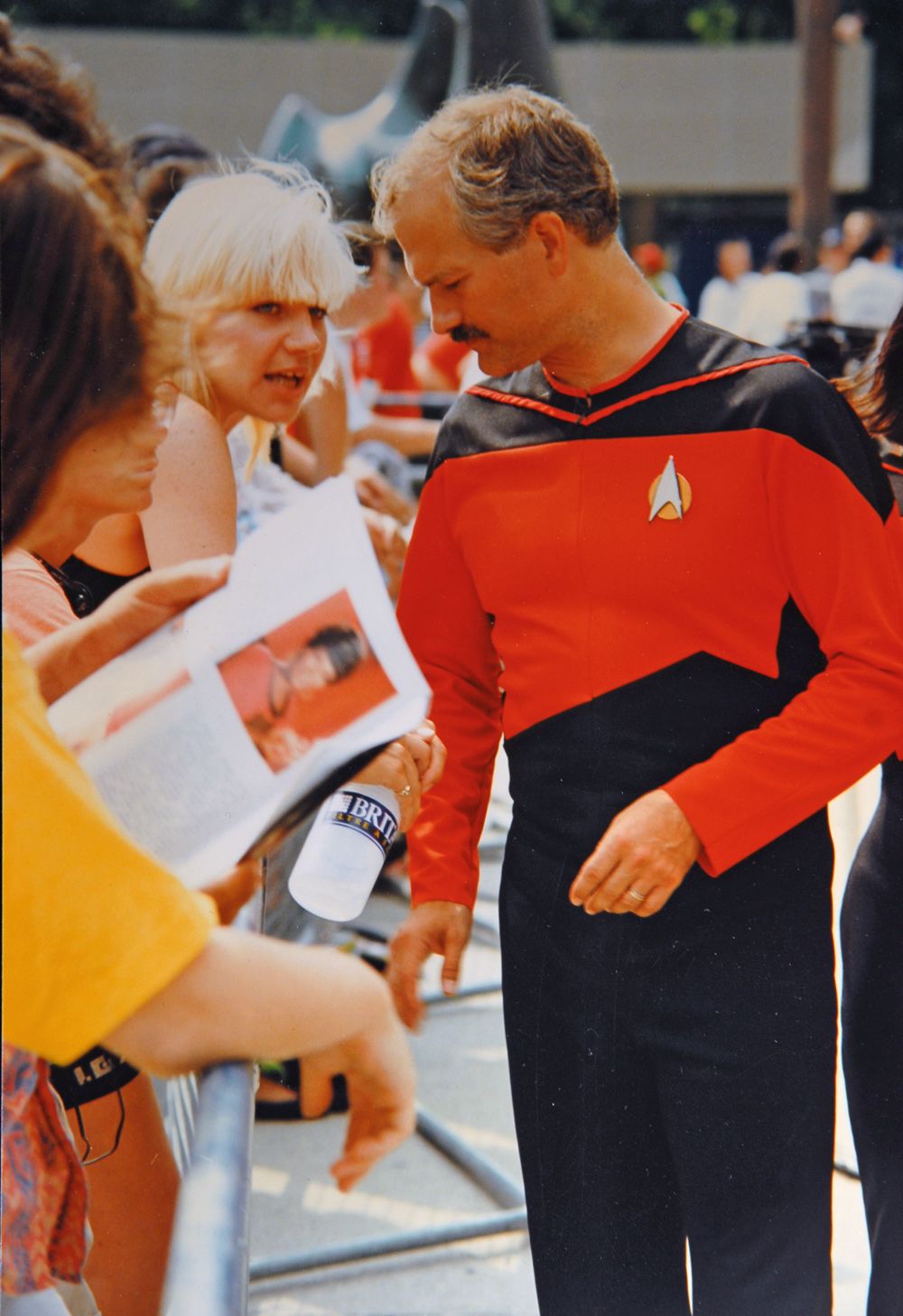
Jack Layton was married to Olivia Chow, a fellow Toronto city councillor and later a federal MP. They married on July 9, 1988, and were known as a political power couple. Chow was elected as the 66th mayor of Toronto in the 2023 mayoral by-election. Layton had two children from a previous marriage to Sally Halford: Sarah and Mike Layton. His son, Mike Layton, followed in his father's footsteps in municipal politics, serving as a Toronto city councillor from 2010 to 2022 where he advocated for climate action and cycling infrastructure. After leaving city council, Mike Layton worked on sustainability at York University and for the food rescue charity Second Harvest. Layton was raised in the United Church of Canada and was a member of Bloor Street United Church in Toronto. He was known for his energetic personality, which included playing the mandolin and guitar, and was a fan of Star Trek. He was also a keen cyclist.
Honours and legacy
Jack Layton's legacy is that of a politician who achieved the NDP's greatest electoral success. His tenure as NDP leader is remembered for its optimism, strategic growth and the historic 2011 breakthrough. He is credited with making the NDP a credible contender for government and a potent national force, particularly through his groundbreaking gains in Quebec. His advocacy on issues like affordable housing, environmental sustainability, public health care and ending violence against women left an imprint on Canadian policy debates. The White Ribbon Campaign, which he co-founded, remains a significant organization.
Numerous posthumous honours keep his memory alive. The Jack Layton Ferry Terminal and Jack Layton Way in Toronto were renamed in his honour. Ryerson University, now Toronto Metropolitan University, established the Jack Layton Chair in the Department of Politics and Public Administration. The Broadbent Institute awards the annual Jack Layton Progress Prize. Parc Jack-Layton was named in his hometown of Hudson, Quebec. The national headquarters of the federal NDP was named the Jack Layton Building. On January 7, 2017, he was posthumously awarded the Meritorious Service Cross by the Canadian government.
- Co-founder of the White Ribbon Campaign (1991).
- Lying-in-state on Parliament Hill and state funeral in Toronto (2011).
- The Jack Layton Progress Prize (awarded annually by the Broadbent Institute).
- The Jack Layton Fellowship for leadership.
- Annual memorial gatherings on August 22.
- Commemorative events organized by the Douglas Coldwell Layton Foundation.
Questions about Jack Layton
Was Jack Layton ever the prime minister of Canada?
No, Jack Layton never served as prime minister of Canada. He was the leader of the New Democratic Party from 2003 to 2011. Following the 2011 federal election, he became the Leader of the Official Opposition. He was the second leader of the Official Opposition to die while in office, after Sir Wilfrid Laurier.
What is the Jack Layton Prize?
The Jack Layton Progress Prize is an award presented by the Broadbent Institute. It recognizes the person or organization that has created and fielded an exceptional and successful campaign for progressive change. This prize is part of Layton's ongoing legacy. It honours his lifelong commitment to activism and social justice.
Is Mike Layton, Jack Layton's son, in politics?
Yes, Mike Layton served as a Toronto city councillor from 2010 to 2022. After leaving city council, he worked on sustainability initiatives at York University. He also worked for the charity Second Harvest. He is the son of Jack Layton and his first wife, Sally Halford.
What was Jack Layton's famous letter to Canadians?
Jack Layton wrote an open letter to Canadians two days before his death, and it was released after he passed away. In the letter, he expressed his wishes regarding the NDP's interim leadership, nominating Nycole Turmel. He also addressed various segments of the Canadian population. Layton urged continued work toward social justice and equality.
How did Jack Layton change the NDP?
Jack Layton changed the NDP by dramatically increasing its electoral support and national stature. Under his leadership, the party's seat count grew in every election from 2004 onward. This culminated in the historic 2011 result of 103 seats and Official Opposition status. He also focused strategically on building support in Quebec, where the party won 59 out of 75 seats in 2011.
What was Jack Layton's cause of death?
Jack Layton died on August 22, 2011, after being diagnosed with cancer. He had previously been treated for prostate cancer in 2010. In July 2011, he announced a new, unspecified cancer. Details of the type and spread of the cancer were not released to the public.
Sources and further reading
- Jack Layton (Wikipedia)
- Mike Layton considers run for NDP in Toronto byelection (thestar.com)
Checked by the Nosy Mag desk. Last updated 2026-10-20.