Maurice Duplessis
Maurice Le Noblet Duplessis, popularly known as "Le Chef," was a Canadian lawyer and politician who served as the 16th premier of Quebec. A conservative, nationalist, populist, anti-communist, anti-unionist, and fervent Catholic, Duplessis and his Union Nationale party dominated provincial politics. With a total of 18 years and 82 days in office, he remains the longest-serving premier in Quebec's history. His tenure was characterized by staunch provincial autonomy, pro-business policies, a close alliance with the Catholic Church, and authoritarian measures against perceived enemies.
Early life and education
Maurice Le Noblet Duplessis was born on April 20, 1890, in Trois-Rivières into a politically active and religious family. His father, Nérée Le Noblet Duplessis, was a Conservative member of the Legislative Assembly for Saint-Maurice and later a judge. His mother was Berthe Genest, who had Scottish and Irish origins on her maternal side. The family maintained close ties with influential figures like Bishop Louis-François Richer Laflèche of the Diocese of Trois-Rivières, who baptized the infant Maurice. In 1898, Duplessis left home to attend the Collège Notre-Dame in Montreal, a school run by the Congregation of Holy Cross, where he formed a close relationship with the porter, Brother André, and developed a lifelong devotion to Saint Joseph.
He continued his classical studies at the Séminaire de Trois-Rivières starting in 1902, where he sharpened his rhetorical skills in the debate club and became the top student in his year. His interest in politics emerged very early, and he later gained practical experience working for Conservative MP Joseph-Arthur Barrette. After considering a career in the priesthood, Duplessis ultimately chose law. He enrolled in the law faculty at the Université Laval in Montreal in the autumn of 1910, articling at the firm of nationalist conservative lawyers Rodolphe Monty and Alfred Duranleau. He was admitted to the Bar of Quebec in September 1913 after three years of study. While a student, he was noted for his liveliness and was a star in the university's model parliament.
Legal career and entry into politics
After being called to the bar, Duplessis returned to Trois-Rivières to practice law, first briefly with his father until Nérée was appointed a judge of the Superior Court of Quebec on June 15, 1914. He then founded his own successful legal consultancy, Duplessis, Langlois & Lamothe, Avocats et Procureurs, with his old friend Édouard Langlois, who married his sister Gabrielle, and another lawyer, Léon Lamothe. Practicing primarily civil law, Duplessis developed a large client base among ordinary people and became a popular figure in the town. He was exempt from conscription and did not serve in the Canadian Armed Forces during the First World War. His law practice was suspended in early 1934 due to his mounting political duties, though he remained a member of the bar until his death.
Duplessis made his first foray into electoral politics as a Conservative candidate in the 1923 provincial election, seeking the Trois-Rivières seat held by Liberal incumbent Louis-Philippe Mercier. He campaigned vigorously over the next four years. Following his father's death in 1926, his resolve strengthened, and in the 1927 election, he flipped the seat for the first time in 27 years, winning 2,622 votes to Mercier's 2,496. In his maiden speech to the Legislative Assembly on January 19, 1928, the freshman MLA decried overemphasis on industrial development, called for protecting rural interests and respecting Sundays, and proposed an inventory of the forest industry. His rhetorical skill immediately impressed Premier Louis-Alexandre Taschereau.
Rise to party leadership and formation of the Union Nationale
Duplessis's political ascent accelerated as the Conservative Party struggled internally. After the party's poor showing in the 1931 election, where Duplessis was reelected by a razor-thin margin of 41 votes, dissatisfaction grew with leader Camillien Houde. When Houde attempted to designate Charles Ernest Gault as parliamentary leader in November 1932, the party caucus overrode him and chose Duplessis as leader of the Official Opposition instead. This choice was formally confirmed at a party congress in Sherbrooke on October 4-5, 1933, where Duplessis defeated the more moderate Onésime Gagnon. As opposition leader, Duplessis engineered a key coalition with Paul Gouin's Action libérale nationale (ALN), a group of dissident Liberals, which they called the Union Nationale.
The coalition lost the 1935 election but, with Gouin retiring from politics, Duplessis took full control of the Union Nationale. In the 1936 provincial election, the new party won a landslide victory, capturing 76 out of 90 seats and breaking nearly 40 years of uninterrupted rule by the Quebec Liberal Party, making Maurice Duplessis premier for the first time. The Union Nationale under his leadership would become an all-powerful electoral machine. Duplessis also served as attorney general and briefly held other ministerial posts in addition to his premiership duties.

Premiership: policies and governance
Duplessis's first term from 1936 to 1939 was difficult, as his government struggled to address the ongoing hardships of the Great Depression. While it introduced several key welfare policies, including a universal minimum wage and old-age pensions, his attempt to strengthen his rule by calling a snap election in 1939 backfired. His campaign focused on opposing Canadian involvement in the Second World War, but this stance failed to resonate, and his government was defeated by the Liberals under Adélard Godbout. The Conscription Crisis of 1944, however, propelled him back to power, and he served as premier continuously from that year until his death in 1959. Duplessis presided over a period of strong economic growth driven by resource demand, which the province used to develop regions like the Côte-Nord.
His governance was defined by a staunch commitment to provincial autonomy, economic liberalism, and social conservatism. He implemented pro-business policies by keeping taxes low, refraining from regulation, and adopting pro-employer labour policies, often cracking down on trade unions. He fiercely resisted federal government initiatives, viewing them as encroachments on Quebec's jurisdiction. In the social domain, Duplessis maintained and protected the traditional role of the Catholic Church in healthcare and education. He was ruthless towards perceived enemies of the Church, most notably authoring the Padlock Law in 1937 to persecute communists and harassing groups like the Jehovah's Witnesses. His rule was also marked by clientelism and corruption, as his government courted Anglophone and out-of-province businessmen for investment.
- Padlock Law (1937): Allowed the government to padlock any building used for "communist propaganda," a loosely defined law used against unions and dissenters until ruled unconstitutional by the Supreme Court of Canada in 1957.
- Provincial Autonomy: Consistently resisted federal spending and policy initiatives, asserting Quebec's exclusive jurisdiction in social and cultural fields. He refused to participate in many federal-provincial welfare programs.
- Pro-Business Stance: Kept corporate taxes low, provided subsidies to private industry, and opposed most forms of economic regulation to attract outside capital.
- Labour Relations: Supported employer rights, frequently intervened against strikes, and used the police to break up union activities, as in the Asbestos strike of 1949. He passed regulations banning closed shops and union shops.
- Church-State Relations: Delegated authority for health, education, and social services to Catholic religious orders, providing them with government funding. He opposed the Liberal government's introduction of compulsory schooling in 1943.
- Infrastructure Development: Oversaw the construction of hospitals, schools, highways, and rural electrification projects through the Rural Electrification Office.
Electoral dominance and political machine
Duplessis's political longevity was supported by a powerful and often authoritarian electoral machine. He won eight consecutive elections from 1927 onward, demonstrating an unmatched ability to secure rural and small-town votes. The Union Nationale organization was centralized under his personal control, earning him the nickname "Le Chef." The party maintained power through a combination of patronage, strategic public works spending in key ridings, and the support of the Catholic clergy. Duplessis himself was a masterful campaigner, known for his folksy charm, sharp rhetoric, and ability to connect with voters on a personal level during extensive tours of the province.
His government's spending was closely tied to electoral advantage. Infrastructure projects like roads, bridges, and hospitals were frequently announced just before elections and located in constituencies held by government members or targeted for takeover. The practice of buying votes with small bribes or promises of government jobs was also widespread. This clientelist system created a deep network of loyalty and dependency. Malapportionment in favour of rural areas, which were the party's stronghold, further cemented his long reign. The party secured steady income from kickbacks from business entities, funding lavish campaigns.
| Election Year | Party | Seats Won | Result |
|---|---|---|---|
| 1927 | Conservative | 9 (of 85) | Opposition |
| 1931 | Conservative | 11 (of 90) | Opposition |
| 1935 | Union Nationale (coalition) | 42 (of 90) | Opposition |
| 1936 | Union Nationale | 76 (of 90) | Won majority |
| 1939 | Union Nationale | 15 (of 86) | Lost to Liberals |
| 1944 | Union Nationale | 48 (of 91) | Won minority government |
Controversies and the 'Grande Noirceur'
Duplessis's legacy is deeply controversial, with his critics labelling his era the "Grande Noirceur" or "Great Darkness," a term popularized during the Quiet Revolution of the 1960s. This critique focuses on his government's authoritarianism, social conservatism, and resistance to modernization. The Padlock Law exemplified his government's willingness to violate civil liberties. His administration's close alliance with the Catholic Church is seen as having stifled secular social progress. His pro-business policies and courting of outside capital are argued to have entrenched the economic disadvantage of French Canadians, who remained worse off than the Anglophone minority in the province.
One of the most tragic and enduring scandals of his tenure involved the "Duplessis Orphans." Thousands of children born to unwed mothers were wrongly classified as mentally ill and institutionalized in psychiatric hospitals, where they suffered abuse and neglect, often to secure increased federal subsidies for the church-run institutions. His government's harsh treatment of Jehovah's Witnesses, including police raids and the denial of permits, highlighted its intolerance. He lost a key Supreme Court case, Roncarelli v Duplessis (1959), for abusing his power against a Witnesses' restaurateur. Since the 1990s, some academics have revisited this assessment, arguing for a more nuanced understanding that acknowledges his infrastructure achievements and popular support, while others advocate outright rejection of the pejorative "Grande Noirceur" label. Historians note that his rule shared characteristics with contemporary governments in Ontario and Manitoba.
Death and legacy
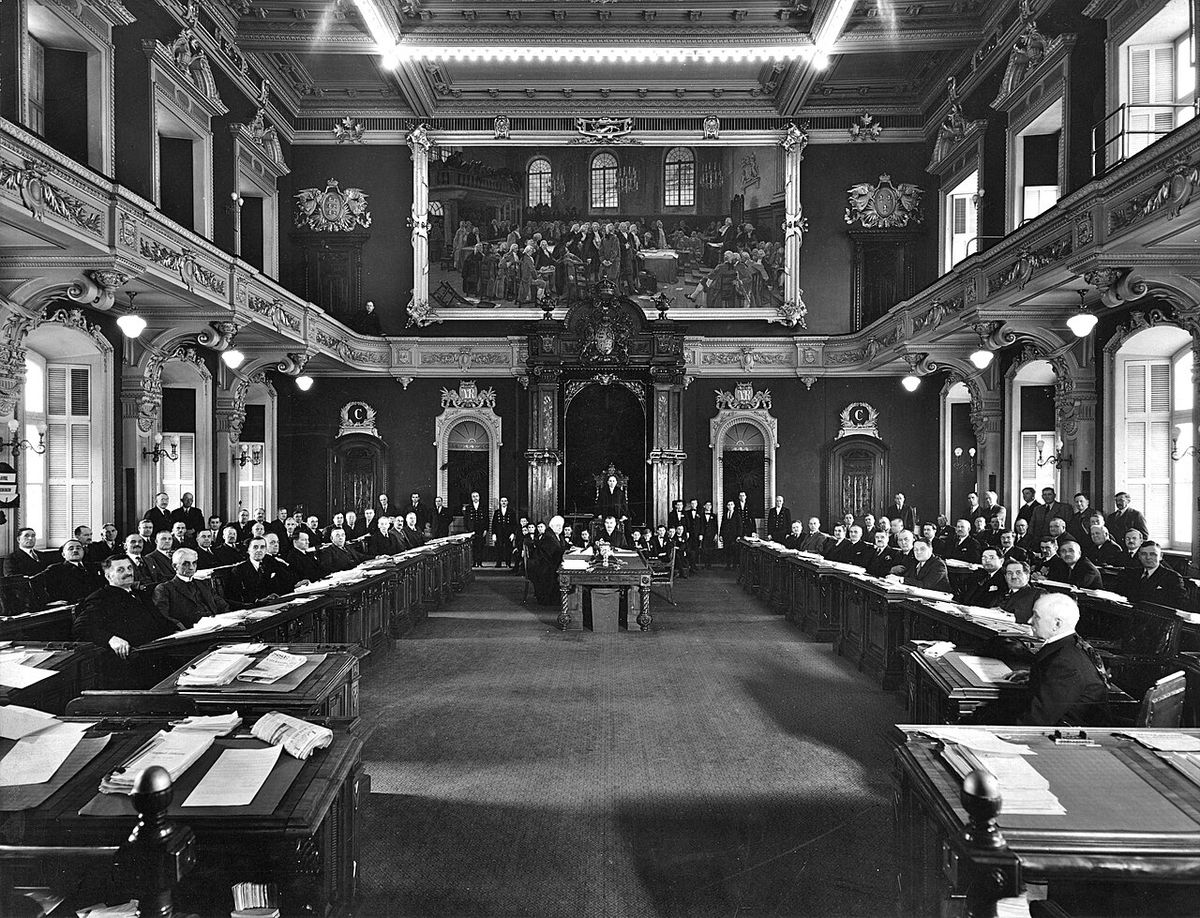
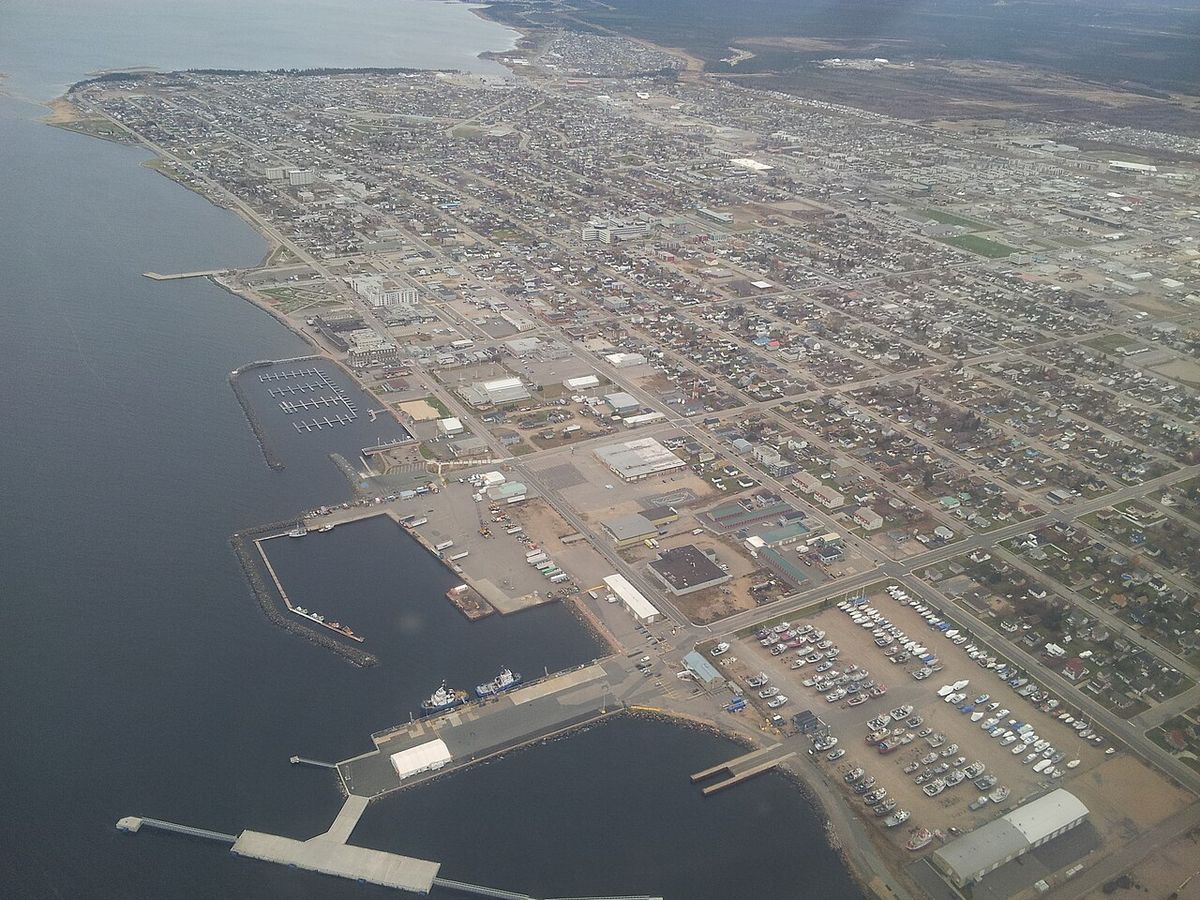
Maurice Duplessis died in office on September 7, 1959, in Schefferville, Quebec, while on a tour of the province's mining regions. He had suffered a series of strokes. He had never married and had no children. His death created a political vacuum in the Union Nationale. Paul Sauvé succeeded him but died after a brief tenure in January 1960. Antonio Barrette then became premier but was defeated by Jean Lesage's Liberals in the 1960 election, ushering in the Quiet Revolution. Duplessis's body lay in state at the Legislative Assembly, where about 100,000 people paid homage. He was buried in his hometown of Trois-Rivières after a funeral officiated by Cardinal Paul-Émile Léger.
His legacy remains a potent and divisive subject in Quebec historiography and political discourse. The Coalition Avenir Québec (CAQ) has been described as governing in the ethnic nationalist tradition of Duplessis's Union Nationale. The electoral district of Duplessis, named in his honour, exists in Quebec. In 1974, Parks Canada designated Duplessis as a Person of National Historic Significance. A statue of him was unveiled near the Quebec Parliament Building in 1977. The debate over his tenure reflects deeper tensions in Quebec society between conservatism and liberalism, nationalism and federalism, and clericalism and secularism.
Questions about Maurice Duplessis
What was the Padlock Law?
The Padlock Law was a statute enacted in 1937. It allowed the Quebec government to padlock any building used for the propagation of communism or Bolshevism for up to one year. The law's vague definition was used to harass trade unions and political opponents. The Supreme Court of Canada declared the Padlock Law unconstitutional in 1957 in the case of Switzman v Elbling.
Why is Duplessis's era called the 'Grande Noirceur'?
The term "Grande Noirceur" was popularized by critics during the Quiet Revolution to describe Duplessis's tenure. It refers to the perceived authoritarianism and social conservatism of his government. Critics point to the suppression of unions under the Padlock Law, the alliance with the Catholic Church, the mistreatment of Duplessis Orphans, and economic policies that favoured outside business interests. The term symbolizes the backwardness his successors sought to overcome.
What was Duplessis's relationship with the Catholic Church?
Duplessis maintained a close and mutually supportive relationship with the Catholic Church in Quebec. His government protected the Church's traditional role, delegating to it the primary responsibility for healthcare, education, and social services, which were funded by the state. In return, the Church, particularly in rural parishes, often encouraged its faithful to support the Union Nationale at the polls. This alliance was a fundamental element of his conservative social policy.
Did Duplessis ever marry or have children?
No, Maurice Duplessis never married and had no children. He remained a bachelor throughout his life, dedicating himself entirely to his political career. He lived a relatively modest personal life, primarily residing in the Château Frontenac hotel in Quebec City during his premiership. He was a godfather to a daughter of his minister of roads, Antonio Talbot.
How did Duplessis die?
Maurice Duplessis died on September 7, 1959, in Schefferville, Quebec, while visiting mining regions. He suffered a series of strokes after his health had been deteriorating due to diabetes. His body lay in state at the Legislative Assembly in Quebec City, where about 100,000 people paid homage. He was buried in Trois-Rivières after a funeral attended by Prime Minister John Diefenbaker and other dignitaries.
What were Duplessis's personal interests and hobbies?
Maurice Duplessis had a few personal interests outside of his political and legal work. While studying law at the Université Laval in Montreal, he followed professional baseball standings and occasionally attended the opera. In his later years, he was a fan of the Montreal Canadiens hockey team and the New York Yankees baseball team. Duplessis also engaged in the leisurely game of croquet but did not participate in more strenuous sports himself.
Sources and further reading
- Maurice Duplessis (Wikipedia)
- Duplessis, Electoral division information sheet (electionsquebec.qc.ca)
- Maurice Duplessis | History | Research Starters | EBSCOhost (ebsco.com)
- DUPLESSIS, MAURICE LE NOBLET (biographi.ca)
Checked by the Nosy Mag desk. Last updated 2026-10-24.