Rupert's Land
Rupert's Land was a vast territory in British North America, encompassing the entire Hudson Bay drainage basin. Established by royal charter in 1670, it was granted as a commercial monopoly to the Hudson's Bay Company (HBC) and named for the company's first governor, Prince Rupert of the Rhine. For two centuries, until its transfer to Canada in 1870, Rupert's Land was the centre of the North American fur trade and a private continental estate covering approximately 3.9 million square kilometres. Its acquisition by the young Dominion of Canada was the largest land transaction in the country's history, fundamentally reshaping its geography and incorporating the lands that would become the Prairie provinces and parts of northern Ontario, Quebec, and the territories.
Formation and the Royal Charter
The creation of Rupert's Land was rooted in European exploration and the commercial potential of the Hudson Bay region. Following the successful 1668 to 1669 expedition of the ship Nonsuch, which returned to England with a valuable cargo of furs, interest in establishing a permanent trading enterprise grew. King Charles II, persuaded by a group of entrepreneurs and his cousin Prince Rupert, granted a royal charter on 2 May 1670 to the 'Governor and Company of Adventurers of England trading into Hudson's Bay'. This charter granted the company 'the sole Trade and Commerce' over all lands whose rivers drained into Hudson Bay, an area not already possessed by subjects of another Christian prince or state. The charter declared the territory 'one of our Plantations or Colonies in America' and named it Rupert's Land. It made the HBC the 'true and absolute Lords and Proprietors' of the territory, with the authority to build forts, garrisons, and settlements. The granted area spanned an estimated 3,861,400 square kilometres, representing more than a third of modern Canada's landmass.
Geographic Scope
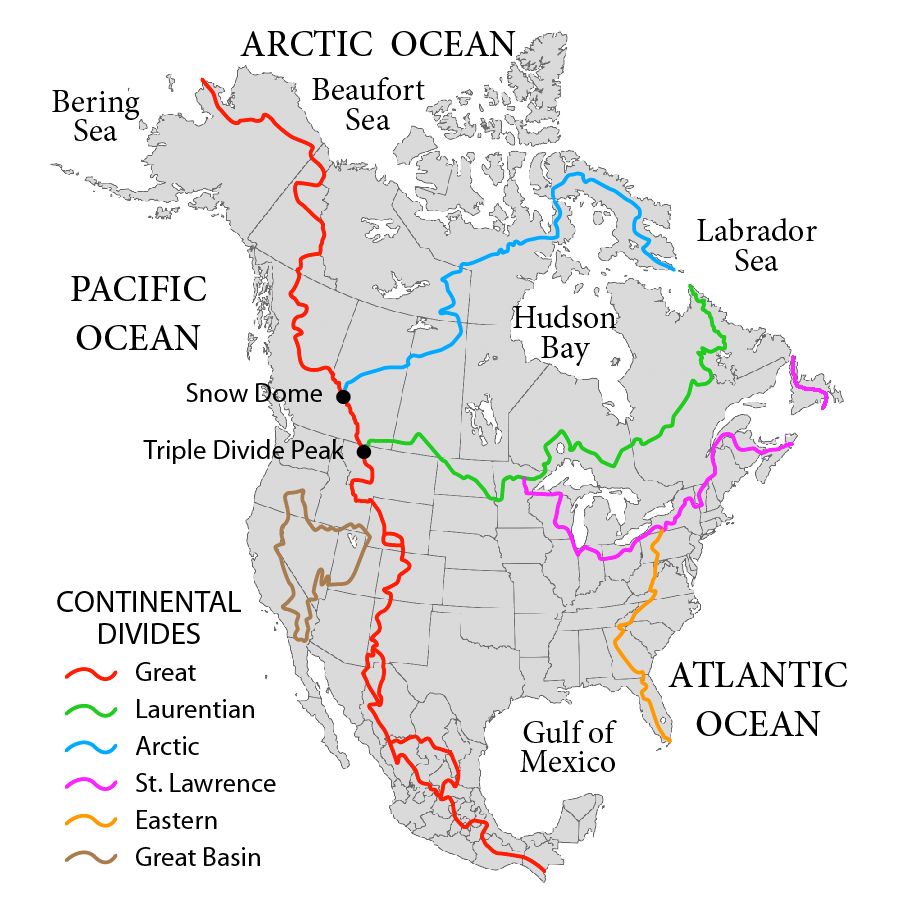
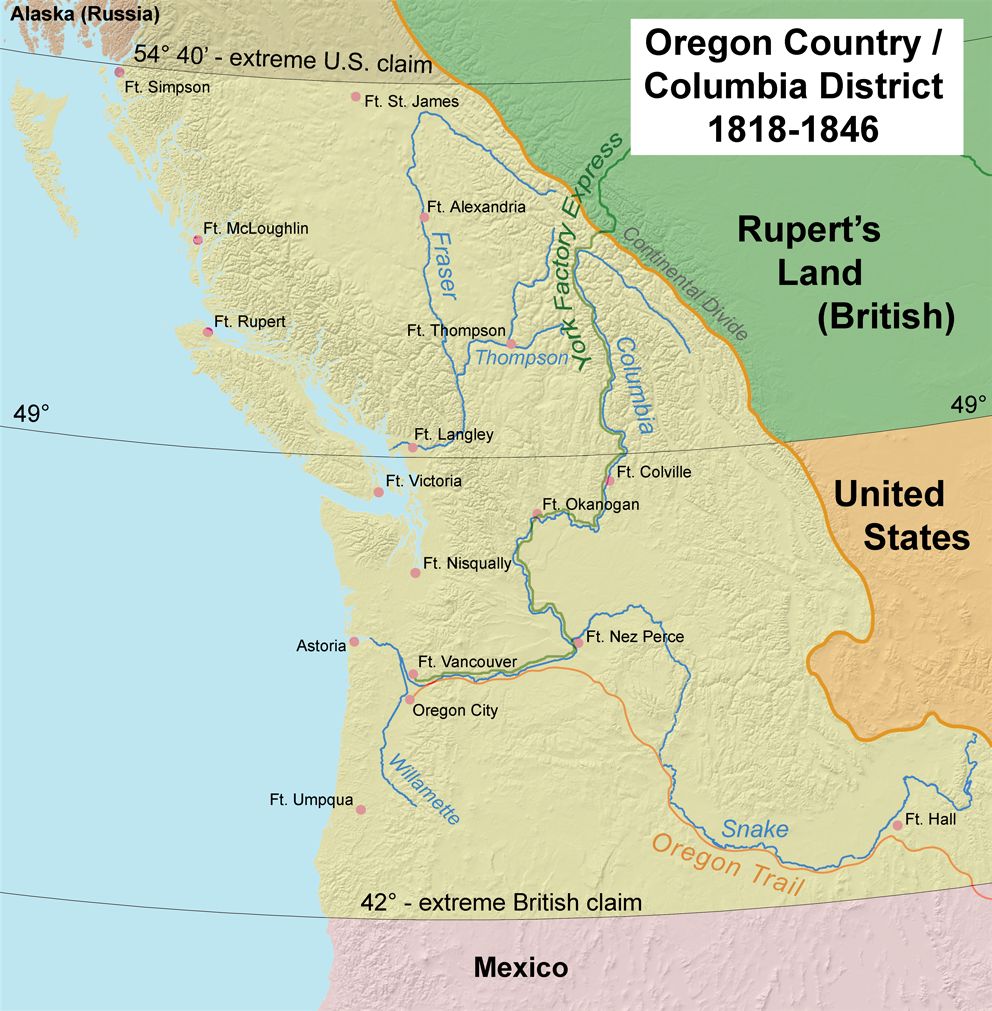
The territory of Rupert's Land was defined by hydrology, encompassing the entire watershed of Hudson Bay. This immense area lay mostly within what is now Canada, but also extended into present day United States. Its core components included the whole of modern Manitoba, most of Saskatchewan, southern Alberta, southern Nunavut, and northern sections of Ontario and Quebec. It also included parts of what are now Minnesota, North Dakota, and Montana. The southern boundary west of the Lake of the Woods was originally the continental divide between the Mississippi and Red/Saskatchewan watersheds. This border was formalized and altered by the Anglo American Convention of 1818, which established the 49th parallel as the boundary from the Lake of the Woods to the Rocky Mountains.
Economic and Social Life under the HBC
For two hundred years, the economy of Rupert's Land was dominated by the fur trade, operated under the HBC's monopoly. The company established a network of trading posts, such as York Factory, and relied heavily on Indigenous and Métis labour for its operations. First Nations and Métis people worked as trappers, guides, interpreters, and provisioners, forming the backbone of the trade. The HBC's governance initially included no formal legal system, with disputes handled on an ad hoc basis by the governor and his council. Following the merger with the rival North West Company in 1821, which ended the Pemmican War and the conflict culminating in the Battle of Seven Oaks, the British Parliament applied the laws of Upper Canada to Rupert's Land and empowered the HBC to enforce them. The company's focus was maintaining peace for the benefit of the fur trade, which, alongside a balance of power among Plains Indigenous nations and the internal organization of the Métis, provided a period of relative stability. This order began to break down in the 1860s due to the HBC's decline, smallpox epidemics, the arrival of American whisky traders, and the disappearance of the bison.
The social fabric was also shaped by religious missions. Anglican missionaries, often from the Church Missionary Society, were active across the prairies from the Winnipeg area to the Mackenzie River delta. The first Protestant missionary was Reverend John West, who arrived in 1820. Notable figures included David Anderson, the first Bishop of Rupert's Land, and Indigenous Anglican priests like Henry Budd, James Settee, and Robert McDonald. Roman Catholic missions were also present, with missionaries such as Alexandre Antonin Taché working in Saint Boniface, Île à la Crosse, and other northern posts.
Governance and Law
Before 1835, the Hudson's Bay Company administered justice in Rupert's Land through informal, ad hoc courts as outlined in its charter, with few recorded cases. The merger with the North West Company and subsequent British legislation led to a mandate for more formal courts. In 1839, the HBC established a court at the Red River Colony in the District of Assiniboia. The first recorder was Adam Thom, who served until 1854, followed by John Black as President of the Court from 1862 to 1870. This court was responsible for rationalizing the judicial system. Historical research, such as that by H. Robert Baker, suggests the legal system that developed in Red River was less an imposition of authoritarian company control and more a hybrid adapted from English common law that required local support to function. The rule of law was maintained by the HBC until the territory's transfer, after which it was enforced by the newly formed North West Mounted Police.
The Transfer to Canada
The sale of Rupert's Land to Canada was a complex, three cornered transaction that transformed the nation. The British Parliament passed the Rupert's Land Act in 1868, authorizing the surrender of the territory by the HBC to the Crown and its subsequent admission to Canada. The HBC formally surrendered its charter on 19 November 1869. The British government admitted the territory to Canada by an order in council on 23 June 1870, effective 15 July 1870, under section 146 of the Constitution Act, 1867. The Government of Canada compensated the HBC £300,000 for the surrender of its charter. In return, the company retained its most successful trading posts and one twentieth of the lands surveyed for settlement. The planned transfer date of 1 December 1869 was disrupted when the people of Red River, led by Louis Riel, formed a provisional government in response to the premature actions of the new lieutenant governor, William McDougall. This period, known as the Red River Resistance, led to negotiations and the creation of Manitoba as a province. The transfer, which also included the adjacent North Western Territory, is considered the largest land purchase in Canadian history by area.
The transaction had deep consequences. It immediately doubled the size of the young Dominion, providing a new frontier for settlement and fulfilling a central policy of Prime Minister John A. Macdonald. However, the Indigenous nations, including the Inuit, First Nations, and Métis who inhabited the territory, were not consulted in the sale. The lack of consultation and the threat to Métis lands and rights directly triggered the Red River Resistance. The transfer was executed with the understanding that treaties would subsequently be made with Indigenous nations to provide their consent to the Crown's sovereignty, initiating the era of the Numbered Treaties on the Prairies.
Key Figures and Legacy
Several individuals played roles in the history of Rupert's Land. Prince Rupert of the Rhine, the nephew of King Charles I and cousin of Charles II, was the driving force behind the HBC's founding and its first governor. Within the company, Governor George Simpson was a dominant 19th century administrator, though he held prejudiced views toward mixed blood employees. Later administrators like James Anderson and Donald Ross sought better advancement for Indigenous workers. Missionaries such as John West, Bishop David Anderson, and Alexandre Antonin Taché left a religious imprint. The territory's legal history was shaped by recorders like Adam Thom and John Black.
- Geographic Legacy: The territory forms the core of the Canadian Prairies and large parts of northern Ontario and Quebec.
- Métis Homeland: The region is the historic homeland of the Métis Nation, central to their identity, culture, and history.
- Treaties and Land Claims: The transfer initiated the treaty making process, while the unresolved issue of Aboriginal title continued into the 20th century, acknowledged in cases like Calder v British Columbia (AG) in 1973.
- Ongoing Study: The Centre for Rupert's Land Studies at the University of Winnipeg promotes scholarly work, hosting biennial colloquiums.
- Cultural Memory: The name persists in geography, including Prince Rupert, British Columbia, the Rupert River in Quebec, and the ecclesiastical Diocese of Rupert's Land.
Aboriginal Title and Legal Challenges
The royal charter and the 1868 Rupert's Land Act were based on the Crown's assumption of sovereignty, viewing Indigenous possession as a 'personal and usufructuary right, dependent upon the good will of the Sovereign'. This perspective ignored the pre existing sovereignty of Indigenous nations. In 1927, the Supreme Court of Canada ruled that the HBC charter had granted the company ownership of all land in the Hudson Bay drainage basin, including mineral rights. This ruling, however, did not extinguish the underlying issue of Aboriginal title. The landmark case of Calder v British Columbia (Attorney General) in 1973 was the first in Canadian law to acknowledge that Aboriginal title to traditional territories had never been lawfully extinguished. This recognition opened the door for modern treaty negotiations and land claim settlements across the former Rupert's Land, a process that continues today as Canada grapples with the legal and moral implications of the 1870 transfer.
Questions about Rupert's Land
How did Rupert's Land become part of Canada?
Rupert's Land was transferred to Canada in 1870 through a complex process. The British Parliament passed the Rupert's Land Act in 1868. The Hudson's Bay Company surrendered its charter to the British Crown in November 1869, and the British government then transferred the territory to Canada, effective 15 July 1870. Canada paid the HBC £300,000 in compensation. The company retained its most successful trading posts and one twentieth of the lands surveyed for settlement.
What is the significance of Rupert's Land to the Métis people?
Rupert's Land is the historic homeland of the Métis Nation. Métis communities developed along the riverways and trading posts throughout the territory, where they played vital roles as intermediaries, guides, interpreters, and provisioners in the fur trade. The region's history, culture, and kinship networks are foundational to Métis identity. The transfer of Rupert's Land to Canada without Métis consent directly led to the Red River Resistance as they fought to protect their rights and land.
What was Rupert's Land?
Rupert's Land was a vast territory in British North America based on the Hudson Bay drainage basin. It was granted as a commercial monopoly to the Hudson's Bay Company by a royal charter from King Charles II in 1670. The territory operated for 200 years, from 1670 to 1870, and covered an area of approximately 3,861,400 square kilometres. This area represented more than a third of present day Canada and its primary economic activity was the fur trade.
Why is it called Rupert's Land?
The territory was named after Prince Rupert of the Rhine, who was a nephew of King Charles I and a cousin of King Charles II of England. Prince Rupert was a key advocate and investor in the early fur trade expeditions to Hudson Bay following the successful 1668 voyage of the ship Nonsuch. In recognition of his role, the royal charter of 1670, which created the Hudson's Bay Company, appointed him as the company's first governor. The charter explicitly stated that the granted lands 'be from henceforth reckoned and reputed as one of our Plantations or Colonies in America, called Rupert's Land,' thereby establishing the name in his honour.
Which modern Canadian provinces were part of Rupert's Land?
The areas formerly belonging to Rupert's Land lie mostly within modern Canada and included the whole of present day Manitoba and most of Saskatchewan. It also encompassed southern Alberta, southern Nunavut, and northern sections of both Ontario and Quebec. The territory extended into regions that are now parts of the northern United States, specifically sections of Minnesota, North Dakota, and Montana. The southern border west of Lake of the Woods was originally the drainage divide between the Mississippi and Red or Saskatchewan watersheds, but was later adjusted to the 49th parallel north by the Anglo American Convention of 1818.
What was the Red River Resistance and how was it connected to Rupert's Land?
The Red River Resistance, also known as the Red River Rebellion, was a key event directly connected to the transfer of Rupert's Land from the Hudson's Bay Company to Canada. When the transfer was initiated in 1869, the Métis and other residents of the Red River Colony feared the loss of their lands and rights without consultation, particularly with the premature actions of the new lieutenant governor, William McDougall. In response, they formed a provisional government that took control of the area, delaying the official transfer originally planned for December 1869. This resistance led to negotiations between the provisional government's leaders and the newly formed Canadian government. As a result of these negotiations, Canada asserted control on 15 July 1870, and the province of Manitoba was created, addressing some of the settlers' concerns.
Sources and further reading
- Rupert's Land (Wikipedia)
- Rupert's Land (thecanadianencyclopedia.ca)
- Rupert's Land (canadashistory.ca)
- What is Rupert's Land (rupertsland.org)
- The Sale of Rupertsland, Dawson Trail Art & Heritage Tours (dawsontrailtreasures.ca)
Checked by the Nosy Mag desk. Last updated 2026-10-21.