Red River Rebellion
The Red River Rebellion, also known as the Red River Resistance, was a major political and military conflict from 1869 to 1870 that led directly to the creation of the province of Manitoba. Sparked by the Canadian government's purchase of Rupert's Land from the Hudson's Bay Company without consulting the local population, the Métis of the Red River Colony, led by Louis Riel, mounted a resistance to protect their land, culture, and political rights. The Métis established a provisional government, negotiated terms with Canada, and secured the passage of the Manitoba Act, which brought the province into Confederation. The rebellion's aftermath, marked by the execution of Thomas Scott and the arrival of a Canadian military expedition, created lasting divisions.
Background and Rising Tensions
For decades, the Métis had developed a distinct culture centred on the fur trade, buffalo hunting, and river-lot farming, with their land holdings organized under the French seigneurial system. The political scene began to shift dramatically when the new Dominion of Canada, seeking to expand westward and forestall American annexation, negotiated the purchase of Rupert's Land from the HBC. The sale was finalized on December 1, 1869, for $1.5 million, with the HBC also receiving nearly seven million acres in the Fertile Belt. This transaction was conducted without any consultation with the Métis and other Indigenous inhabitants, treating the territory as if it were uninhabited. In anticipation of the transfer, the Canadian Minister of Public Works, William McDougall, a known francophobe, was appointed lieutenant-governor designate of the North-West Territories on September 28, 1869. In August 1869, McDougall dispatched a survey party under Colonel John Stoughton Dennis to the Red River Colony to re-plot the land according to the square township system of the Dominion Land Survey. The arrival of these surveyors on Métis farmland, such as that of André Nault on October 11, 1869, without consent and threatening the traditional river-lot system, ignited immediate fear and anger. The Métis, who often lacked clear legal title to their homes, perceived the survey as the first step toward mass Canadian immigration, cultural domination, and the potential confiscation of their property.
Louis Riel and the Métis National Committee
Louis Riel, a young, educated Métis man who had returned from schooling in Montreal, emerged as the articulate leader of the resistance. On October 11, 1869, he and other Métis disrupted the surveyors' work. This act of defiance galvanized the community, leading to the formation of the Métis National Committee on October 16, with John Bruce elected as president and Riel as secretary. The committee's first major action was to block William McDougall from entering the territory. Despite a written order from Riel, McDougall reached the border, where on November 2, under the command of Ambroise-Dydime Lépine, a Métis force turned his party back to Pembina in the Dakota Territory. On that same day, Riel led roughly 400 Métis men to seize Upper Fort Garry, the HBC's main administrative post at the forks of the Red and Assiniboine Rivers, without bloodshed. Control of the fort gave the Métis command over the settlement's supplies and symbolically asserted their authority. Riel consistently stated his loyalty to Queen Victoria and sought to negotiate terms directly with Canada, not to instigate an American annexation. He made conciliatory gestures to the anglophone community, inviting them to select parish delegates for a convention. However, the existing governing body, the HBC's Council of Assiniboia under Governor William Mactavish, was paralyzed, and McDougall's premature proclamation on December 1 that the HBC was no longer in control created a legal and political vacuum. This chaos set the stage for the Métis to declare their own governing authority.
Establishment of the Provisional Government
With no clear authority in place, the Métis National Committee declared a provisional government on December 8, 1869. John Bruce resigned as president on December 27, and Louis Riel was elected in his place. The Canadian government, now aware of the unrest, had postponed the official transfer of Rupert's Land and dispatched envoys Abbé Jean-Baptiste Thibault and Charles-René d'Irumberry de Salaberry, followed by special commissioner Donald Alexander Smith of the HBC, to negotiate. Smith, realizing the strength of Métis unity, bypassed the committee and addressed large public meetings on January 19 and 20, 1870, with Riel acting as translator. Smith conveyed the government's willingness to hear grievances, which bolstered Riel's standing. A new convention, known as the Convention of Forty, was formed with 20 French-speaking and 20 English-speaking delegates. This convention drafted a comprehensive List of Rights, which was accepted on February 3, 1870. Key demands included provincial status, representation in Parliament, a bilingual legislature and judiciary, and recognition of land claims. On February 10, the convention ratified a constitution for a more formal and inclusive provisional government, establishing an elected assembly with 12 representatives from anglophone parishes and 12 from francophone parishes. This government then empowered a delegation to travel to Ottawa to negotiate Manitoba's entry into Confederation based on their List of Rights.
The Execution of Thomas Scott
While political negotiations progressed, a pro-Canadian faction known as the Canadian Party, led by Dr. John Christian Schultz, Charles Mair, and supported by Colonel Dennis and Major Charles Boulton, actively opposed the provisional government. Several of its members, including Schultz, Mair, and an Orangeman from Ontario named Thomas Scott, had been imprisoned by Riel after a failed uprising but later escaped or were released on parole. In mid-February 1870, Boulton led a party from Portage la Prairie intending to join with Schultz's men to overthrow the Métis government. Riel, seeking to assert his government's authority, initially sentenced Boulton to death. After intercessions by Donald Smith, Boulton was pardoned on the condition that Smith persuade the English parishes to elect representatives to the provisional assembly. Thomas Scott, however, remained defiant and contemptuous of his Métis guards. He was tried by a tribunal overseen by Ambroise-Dydime Lépine on charges of insubordination, insulting the president, and defying the provisional government. Scott was found guilty and sentenced to death. Smith and Boulton pleaded for clemency, but Riel refused, reportedly stating he needed to make an example to ensure the Métis were taken seriously. Thomas Scott was executed by a firing squad on March 4, 1870. This act became the rebellion's most controversial event, inflaming public opinion in Ontario, where it was seen as murder, and ensuring lasting hostility toward Riel and the Métis cause.
Negotiations and the Manitoba Act
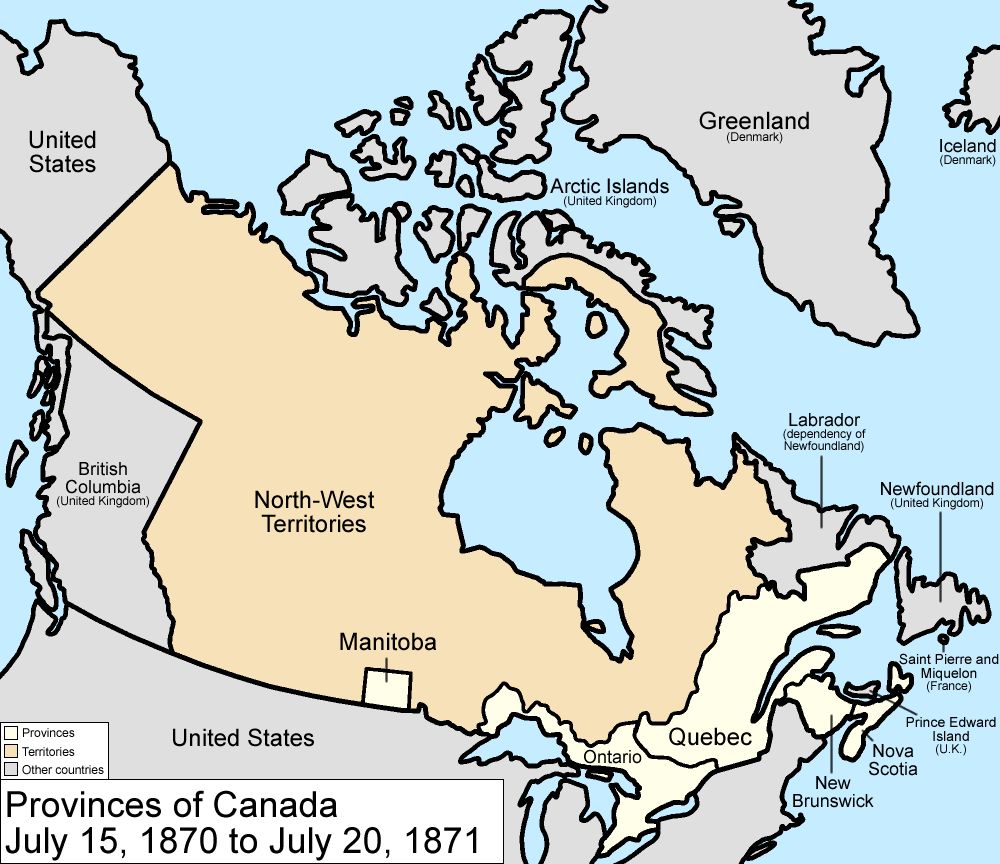
The execution of Scott complicated but did not derail the ongoing negotiations. Bishop Alexandre-Antonin Taché, who returned to the colony on March 8, mistakenly assured Riel that an amnesty proclaimed in December would cover his actions. The delegation from the provisional government, which did not include Riel, travelled to Ottawa and, with the support of Quebec politicians, negotiated directly with Prime Minister John A. Macdonald and George-Étienne Cartier. The result was the Manitoba Act, which received royal assent and became law on May 12, 1870. The act created the province of Manitoba, Canada's fifth, which officially entered Confederation on July 15, 1870. The legislation incorporated many of the Métis demands from the List of Rights.
- It established Manitoba as a bilingual province, with official status for both English and French in the legislature and courts.
- It provided for a denominational, Catholic and Protestant separate school system.
- It addressed Métis land title through Section 31, which granted 1.4 million acres of land to the children of the half-breed heads of families for their settlement.
- It provided for representation in the federal Parliament.
The Manitoba Act of 1870 was a political victory that recognized the Métis role in founding the province. However, the act enshrined individual property rights rather than collective Métis rights. This limitation would lead to future disputes over land and rights. The promised amnesty for Riel and his followers remained ambiguously unresolved. This lack of clear amnesty left Riel in a precarious position.
The Wolseley Expedition and Aftermath
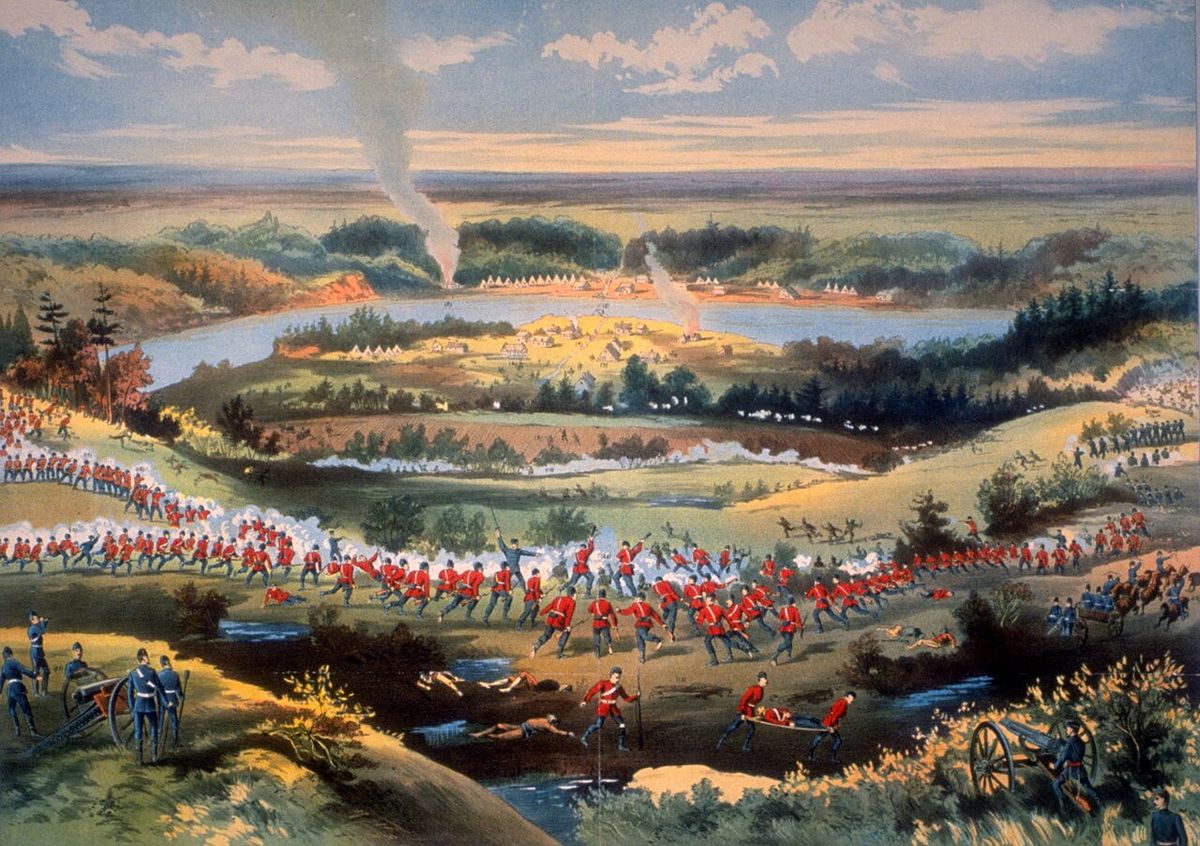
Despite the peaceful political settlement, the Canadian government dispatched a military force, the Red River Expedition, under Colonel Garnet Wolseley, to assert federal authority in the new province. The expedition of over 1,000 Canadian militia and British regulars arrived at Fort Garry on August 24, 1870. By then, Louis Riel, warned that the troops intended to arrest him for the murder of Thomas Scott and denied a clear amnesty, had fled peacefully to the United States. The arrival of the expedition marked the effective end of the Red River Resistance but began a violent and traumatic period for the Métis community. Soldiers of the 1st (Ontario) Battalion of Rifles initiated a reign of terror, committing acts of violence including the rape of Métis women and the murder of Métis men. One prominent victim was Elzéar Goulet, who was stoned to death while fleeing soldiers. This climate of intimidation and persecution, coupled with the influx of hostile settlers from Ontario, led to a rapid demographic shift. Within a few years, more than half of the Métis population of Manitoba left their homeland, dispersing westward into the North-West Territories and south into the Dakota Territory. The dispersal undermined the community's political power and the protections promised in the Manitoba Act, many of which were eroded by the provincial government in the 1890s. The unresolved issues of land, identity, and justice would resurface dramatically in the North-West Rebellion of 1885.
Historical Significance and Legacy
The Red River Resistance is a foundational event in Canadian history. It was the first major crisis faced by the new Canadian federation after 1867 and demonstrated the perils of westward expansion without regard for existing populations. For the Métis Nation, the resistance is a central chapter in their story of nationhood, political assertion, and struggle for recognition. Louis Riel is celebrated as the Father of Manitoba and a heroic defender of Métis rights, though he was vilified as a traitor and murderer in Ontario for decades. The resistance successfully forced Canada to negotiate, resulting in the creation of Manitoba as a province with unique constitutional protections for language and religion. However, the subsequent military occupation and dispersal of the Métis population revealed the limits of that victory. The event established a pattern of broken promises and cultural conflict that would characterize Indigenous-settler relations for generations. Today, the Red River Métis, also known as the Manitoba Métis, continue to assert their identity as the founders of the province and pursue land claims and self-government based on the promises of the Manitoba Act that remain unfulfilled.
- October 11, 1869: Métis, led by Louis Riel, stop government surveyors on André Nault's land.
- October 16, 1869: The Métis National Committee is formed with John Bruce as president.
- November 2, 1869: Métis seize Upper Fort Garry without bloodshed.
- December 8, 1869: The provisional government is declared.
- March 4, 1870: Thomas Scott is executed by firing squad.
- May 12, 1870: The Manitoba Act becomes law.
- July 15, 1870: Manitoba enters Confederation as Canada's fifth province.
- August 24, 1870: The Wolseley Expedition arrives at Fort Garry.
Questions about Red River Rebellion
What caused the Red River Rebellion?
The rebellion was caused by the Canadian government's purchase of Rupert's Land from the Hudson's Bay Company in 1869 without consulting the Métis inhabitants. The government appointed an English-speaking governor, William McDougall, and sent surveyors to plot the land according to the square township system used in the Dominion Land Survey. The Métis, who held their land in long narrow river lots and feared confiscation, saw this as a direct threat to their land tenure, culture, and political autonomy. Led by Louis Riel, they prevented McDougall from entering the territory and organized resistance.
Who was Louis Riel and what was his role?
Louis Riel was a formally educated Métis leader who emerged as the political leader of the Red River Resistance. He denounced the Canadian land survey and helped form the Métis National Committee to represent Métis interests. Riel's forces seized Fort Garry without bloodshed, and he became president of the provisional government established in December 1869. He negotiated directly with Canadian government envoys and oversaw the creation of a List of Rights. His leadership was instrumental in the negotiations that led to the Manitoba Act and the creation of the province of Manitoba.
Why was Thomas Scott executed?
Thomas Scott, an Orangeman from Ontario and a member of the pro-Canadian faction, was a prisoner of the provisional government. He was repeatedly insubordinate and contemptuous toward his Métis guards. He was tried for insubordination, insulting the president, and defying the government's authority. Scott was found guilty and sentenced to death. Riel allowed the execution by firing squad on March 4, 1870, to demonstrate the seriousness and authority of the Métis provisional government.
What did the Manitoba Act accomplish?
The Manitoba Act, passed by the Parliament of Canada on May 12, 1870, created the province of Manitoba, which entered Confederation on July 15, 1870. The act incorporated many demands from the Métis List of Rights. It established Manitoba as a bilingual province with official status for English and French. It provided for a denominational separate school system. It granted 1.4 million acres of land to Métis children through Section 31. It also provided for representation in the federal Parliament.
What was the Wolseley Expedition?
The Wolseley Expedition, also known as the Red River Expedition, was a military force of over 1,000 Canadian militia and British soldiers led by Colonel Garnet Wolseley. It was dispatched by Ottawa to enforce federal authority in Manitoba after the province's creation. Arriving at Fort Garry on August 24, 1870, its arrival caused Louis Riel to flee. Soldiers from the 1st (Ontario) Battalion of Rifles then committed acts of violence against the Métis population, including rape and murder, leading to a reign of terror that forced many Métis to leave the province.
What is the legacy of the Red River Resistance today?
The legacy is significant and continues to shape Canada. The resistance led directly to the creation of Manitoba and is a fundamental part of Métis national identity and history. Louis Riel is now widely recognized as a Father of Confederation and a Manitoba founder. However, the aftermath of violence, broken land promises, and the dispersal of the Métis population created lasting injustices. In 1875, Riel was formally exiled from Canada for five years. The Métis Nation continues to pursue land claims and self-government based on the unfulfilled commitments of the Manitoba Act.
Sources and further reading
- Red River Rebellion (Wikipedia)
- Red River Resistance (indigenouspeoplesatlasofcanada.ca)
- Red River Resistance (thecanadianencyclopedia.ca)
- The Red River Métis, La Nouvelle Nation (mmf.mb.ca)
- 150th anniversary of the Red River Resistance, Parks Canada (parks.canada.ca)
Checked by the Nosy Mag desk. Last updated 2026-10-26.