Red River Colony
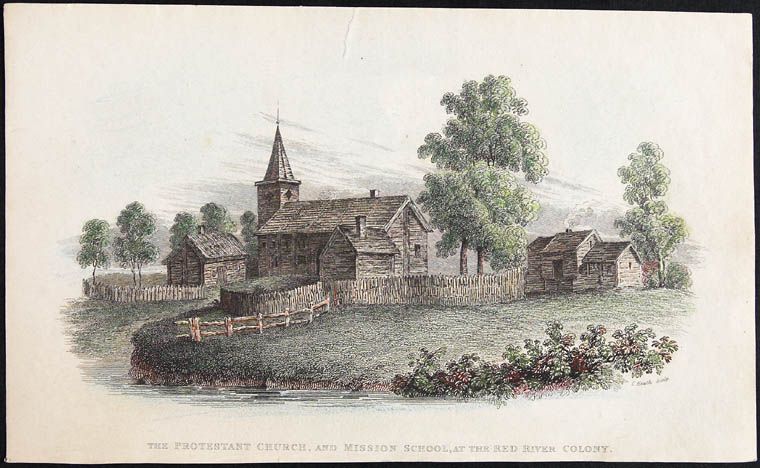
The Red River Colony, also known as the Selkirk Settlement or Assiniboia, was a private colonization project established in 1811 by Thomas Douglas, 5th Earl of Selkirk, on a vast tract of Hudson's Bay Company land in present-day southern Manitoba. Founded in 1812, the settlement endured severe hardships, including the Pemmican War and ecological disasters, to become a multicultural hub and the first permanent European agricultural colony in the North-West. Its history is inextricably linked to the rise of the Red River Métis Nation, for whom the settlement area is the cultural and political homeland. The colony was the site of the Red River Resistance of 1869-70, which led directly to the negotiation of the Manitoba Act and the creation of the province of Manitoba within Canadian Confederation.
Conception and establishment
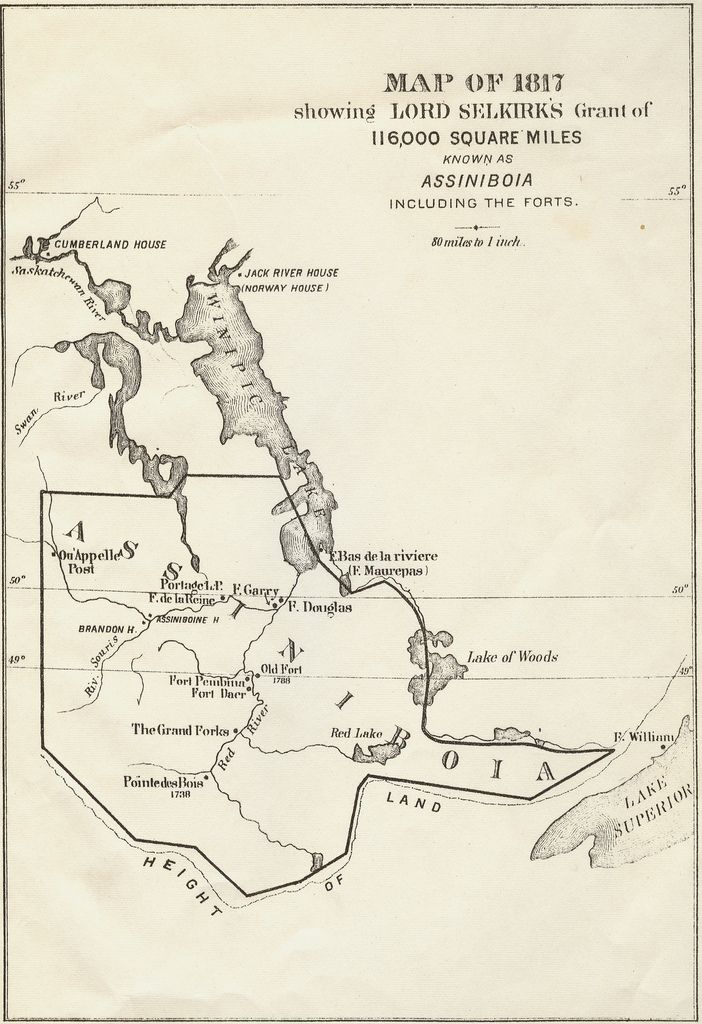
Motivated by the displacement of Scottish Highlanders during the Clearances, Thomas Douglas, the 5th Earl of Selkirk, sought to establish a new agricultural colony for Scottish emigrants in North America. After reading Alexander MacKenzie's accounts of the continent, Selkirk became interested in the Red River region. His initial proposal in 1802 was rejected by the Hudson's Bay Company over fears it would disrupt the fur trade. By 1811, the company had reconsidered and granted Selkirk approximately 300,000 square kilometres of land in the District of Assiniboia, an area five times the size of Scotland. The concession required Selkirk to provide 200 men annually to the company and to keep the colony out of the fur trade. The primary aim was to create a source of affordable provisions like flour and pemmican for the HBC, reducing costly shipments from Britain. The Red River Colony was the only significant HBC-sponsored settlement within the company's vast territory of Rupert's Land at the time of its founding.
Early struggles and the Pemmican War
The colony's first decade was marked by a series of crises that threatened its survival. The first party of settlers, led by Governor Miles Macdonell, sailed from Yarmouth, England in July 1811. Only 18 arrived at Red River in August 1812, too late for planting. Unprepared for 120 additional settlers who arrived that October, the community relied heavily on hunting the region's already declining bison population. A poor harvest in 1813 and the arrival of more settlers in 1814 led Macdonell to issue the Pemmican Proclamation in January 1814, banning the export of pemmican from the colony. This edict was a direct attack on the provisioning system of the rival North West Company, which depended on pemmican from the region to supply its voyageurs. The proclamation ignited the Pemmican War, a violent extension of the long-standing fur trade rivalry between the HBC and the NWC.
The conflict escalated rapidly. In the summer of 1815, NWC employees destroyed the colony's Fort Douglas and burned surrounding buildings, capturing Macdonell and about 150 settlers. The fort was rebuilt under new governor Robert Semple. On June 19, 1816, a party of Métis and North West Company men clashed with Semple and his men at the Battle of Seven Oaks. The skirmish left Governor Semple and 20 of his party dead, along with one Métis fighter. The colony was abandoned once more. Lord Selkirk, en route with a private force of about 100 soldiers from recently disbanded Swiss and German regiments, captured the NWC headquarters at Fort William in 1816. This action, along with the merger of the two companies in 1821, finally ended the armed conflict. Selkirk also worked to stabilize the colony by signing a treaty with local Cree, Assiniboine, and Ojibwa leaders in 1817 to address Indigenous land claims.
Growth and development of a multicultural society
Following the 1821 merger of the HBC and NWC, the Red River Colony entered a period of relative peace under the appointed Assiniboia Council. The council included representatives from the settlement's diverse segments, including francophone and anglophone residents, Roman Catholics and Protestants, and Métis, Scottish, Irish, and French-Canadian communities. Agriculture expanded commercially, with wheat becoming a primary crop. Flour production rose from over 9,100 kilograms annually between 1823 and 1829 to over 23,000 kilograms by the mid-1830s. This growth led to new tensions as farmers, numbering over 1,000 by 1827, complained about deflating prices paid by the HBC and a lack of external markets for their surplus. In 1841, James Sinclair guided 200 settlers from the colony west in an attempt to retain the Columbia District for British North America.
The rise of the Red River Métis Nation
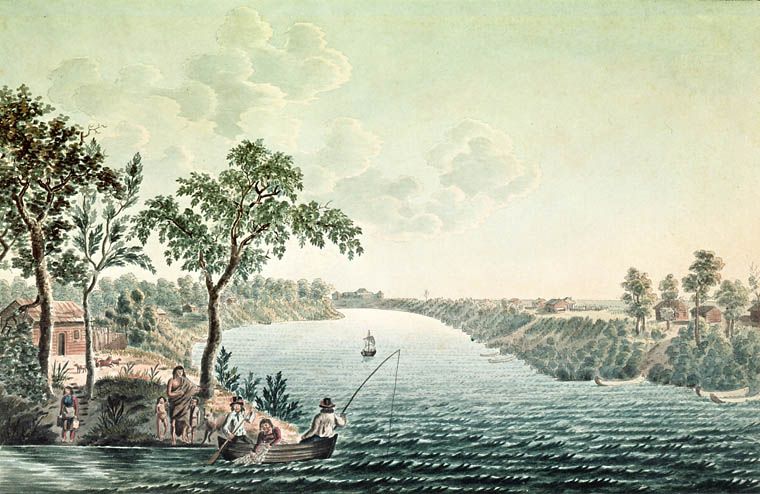
The Red River Settlement is the undisputed birthplace and heart of the Métis Nation Homeland. The Métis community, with roots in the fur trade, developed a strong distinct identity centred in the Red River Valley. They refer to themselves in their language as Michif, which is also the name of their unique ancestral language. The colony was the hub for the development of distinctive Métis cultural expressions, including fiddle music, the Red River Jig, and detailed flower beadwork. The Métis consider the 1816 Battle of Seven Oaks, which they call the Victory of Frog Plain, as the moment their nation was born. The community solidified its identity through events like the 1851 Battle of Grand Coteau against the Sioux and through economic independence won in the 1849 Sayer trial. The mixed ethnicity people were not always called Métis, sometimes being referred to as Brules, Metifs, or half-breeds.
The Red River Resistance and creation of Manitoba
The catalyst for crisis was the 1869 sale of Rupert's Land by the Hudson's Bay Company to the Dominion of Canada without consulting the region's inhabitants. When Canadian surveyors began surveying Métis land in October 1869, it provoked immediate action. Métis leader Louis Riel and others formed the National Committee of the Red River Métis, electing John Bruce as president. The committee blocked the entry of Canadian minister William McDougall and, on November 2, 1869, seized the strategic Upper Fort Garry. The Métis established a provisional government on December 8, 1869, with Riel as its leading figure. This government sought to negotiate the terms of the region's entry into Canada. From January to February 1870, the Convention of Forty, with equal English and French Métis delegates, drafted a List of Rights that demanded provincial status, protection for land claims, and official bilingualism.
The resistance took a dark turn with the March 4, 1870, execution of Canadian agitator Thomas Scott by the provisional government's tribunal. Despite this, negotiations with Ottawa proceeded. The Métis demands formed the basis of the Manitoba Act, which received royal assent on May 12, 1870. The Red River Resistance successfully forced Canada to negotiate and established the Métis as founders of Manitoba. However, the subsequent arrival of Canadian troops and violence against the Métis led to the dispersal of many families westward, setting the stage for the later North-West Resistance of 1885. After the rebellion, Riel fled to the United States but returned in 1885 to lead the North-West Resistance, after which he was tried and executed.
American annexation ambitions
During the Red River Resistance, American expansionists saw an opportunity to annex the fertile territory. Led by Minnesota Senator Alexander Ramsey and backed by Michigan senators Zachariah Chandler and Jacob M. Howard, the plan aimed to make the Red River Valley a commercial adjunct to the United States. American consul in Winnipeg, James W. Taylor, worked to shape events toward this goal. Annexationists attempted to align themselves with Louis Riel and the Métis cause, using propaganda like the New Nation newspaper to promote Manifest Destiny ideology. Their strategy was to encourage local resistance against Canada, hoping the region would seek independence and then American protection. However, this overtly acquisitive approach backfired, creating hostility among the Red River inhabitants who were negotiating their own future with Canada. The Métis had no desire to exchange one external authority for another, and their successful establishment of a provisional government and negotiation of the Manitoba Act ultimately thwarted American annexation plans.
Key cultural and historical milestones
The history of the Red River Colony and the Métis Nation is marked by several major events that defined their struggle and identity. The 1816 Battle of Seven Oaks was a clash between Métis supporters of the North West Company and HBC men under Governor Robert Semple, and it is regarded by the Métis as the Victory of Frog Plain and the birth of their nation. In 1817, Lord Selkirk signed a treaty with local Cree, Assiniboine, and Ojibwa leaders in an attempt to address Indigenous land claims to stabilize the colony. The 1849 Guillaume Sayer Trial resulted in a verdict of guilty with no punishment for the Métis trader, effectively breaking the HBC's trade control. The 1851 Battle of Grand Coteau in present-day North Dakota was a battle between Red River Métis buffalo hunters and the Sioux. In 1869, the Red River Métis formed the National Committee with John Bruce and Louis Riel to oppose the Canadian takeover, leading to the seizure of Fort Garry. The 1870 Convention of Forty was an assembly of 20 English and 20 French Métis delegates who drafted the List of Rights that became the foundation of the Manitoba Act. Finally, the 1870 Manitoba Act was the federal legislation that created the province of Manitoba, incorporating Métis demands for language, education, and land rights.
Demographic and economic development
The Red River Colony evolved from a struggling agricultural outpost into a diverse settlement with a growing economy, though one often constrained by its isolation and HBC control. The population was a mix of Selkirk's Scottish and Irish settlers, French-Canadian voyageurs, and a growing Métis majority, creating a multicultural foundation. Agriculture, particularly wheat farming, became the economic mainstay after the fur trade conflicts subsided. The following table illustrates the colony's agricultural growth through flour production, a key metric of its success and subsequent challenges with market saturation. This agricultural surplus, while a sign of success, created friction as farmers had little market beyond the HBC, which paid decreasing rates. Despite these challenges, the settlement persisted as the primary commercial and social centre in the North-West, its demographics and economic patterns directly shaping the society that would confront Canada in 1869.
| Period | Annual Flour Production | Notes |
|---|---|---|
| 1823 to 1829 | Over 9,100 kg (20,000 lb) | Establishment of commercial agriculture. |
| Early 1830s | Over 14,000 kg (30,000 lb) | Steady increase in yields and farming population. |
| Mid-1830s | Over 23,000 kg (50,000 lb) | Production peak leading to price deflation and farmer complaints. |
Women in the colony
The position of many women in the Red River Colony was determined within the Hudson's Bay Company's 1670 Charter, which gave legislative and judicial powers in Rupert's Land to the company. This document stated the legal status of women as dependents of a male authority, which included fathers, husbands or brothers. In an extremely rare example, Maria Thomas, a 16-year-old Métis domestic servant, took her employer, Rev. Owen Corbett, to court for repeatedly raping her and subjecting her to illegal abortions. Thomas won the case citing British law, but Corbett was freed from jail shortly after by a group of settlers. When female settlers eventually started emigrating to the settlement, tensions between the European and indigenous communities were heightened due to the restrictive gender norms these women brought from Europe.
Questions about Red River Colony
Who founded the Red River Colony and why?
The Red River Colony was founded by Thomas Douglas, the 5th Earl of Selkirk, in 1811. Motivated by the plight of Scottish farmers displaced during the Highland Clearances, Selkirk sought to establish an agricultural settlement in North America. He secured a massive land grant of approximately 300,000 square kilometres from the Hudson's Bay Company to create the colony, which he named the District of Assiniboia. The HBC supported the project hoping it would produce affordable provisions like flour and pemmican for its fur trade operations, reducing reliance on expensive shipments from Britain.
What was the Pemmican Proclamation and what conflict did it cause?
The Pemmican Proclamation was issued in January 1814 by Red River Colony governor Miles Macdonell. It banned the export of pemmican, a vital dried meat staple, from the colony's district. This was an attempt to secure food for the struggling settlers, but it directly targeted the supply lines of the rival North West Company, which depended on pemmican to feed its voyageurs. The proclamation ignited the Pemmican War, a violent chapter of the larger fur trade rivalry. The conflict included the destruction of Fort Douglas in 1815 and culminated in the Battle of Seven Oaks on June 19, 1816, where NWC-supported Métis clashed with HBC men, killing Governor Robert Semple and 20 others.
Why is the Red River Colony important to the Métis Nation?
The Red River Colony area is the birthplace and heart of the Red River Métis Nation Homeland. The settlement became the central hub for Métis culture, politics, and community development. It was here that distinct Métis cultural expressions like Michif language, fiddle music, and flower beadwork flourished. The Métis consider the 1816 Battle of Seven Oaks, fought near the colony, as the founding moment of their nation. The colony was the site of the 1869-70 Red River Resistance, where the Métis, under Louis Riel, established a provisional government and negotiated Manitoba's entry into Canada, cementing their role as founders of the province.
What was the Red River Resistance?
The Red River Resistance was a political movement and conflict led by the Red River Métis in 1869-70. It began when the Hudson's Bay Company agreed to sell Rupert's Land to Canada without consulting the Métis inhabitants. When Canadian surveyors arrived on their lands, the Métis, led by Louis Riel, formed a National Committee, seized Upper Fort Garry, and established a provisional government. This government negotiated with Ottawa, resulting in the Manitoba Act of 1870. The resistance successfully forced Canada to recognize Métis rights and create the province of Manitoba, though it was marred by the execution of Thomas Scott and followed by a violent backlash against the Métis community.
How did the Red River Colony lead to the creation of Manitoba?
The Red River Colony was the direct precursor to the province of Manitoba. The Métis resistance to Canada's annexation of the colony's territory in 1869 led to the formation of a provisional government and the Convention of Forty in early 1870. This assembly drafted a List of Rights demanding provincial status, land rights, and bilingual institutions. These demands were negotiated with the Canadian government and were enshrined in the Manitoba Act, which received royal assent on May 12, 1870. The act created the postage-stamp province of Manitoba, with the Red River Settlement at its core, formally bringing the colony and the surrounding region into Canadian Confederation on July 15, 1870.
Were there American attempts to take over the Red River Colony?
Yes, during the Red River Resistance, American expansionists saw an opportunity to annex the fertile territory. Led by politicians like Minnesota Senator Alexander Ramsey and supported by American consul James W. Taylor in Winnipeg, they hoped to take advantage of the disruption. They attempted to associate themselves with Louis Riel's cause and promoted annexation through propaganda, hoping the region would seek independence and then American protection. However, their overtly acquisitive plans backfired, creating hostility among the Red River inhabitants who were focused on negotiating their own terms with Canada. The success of the Métis provisional government and the resulting Manitoba Act ultimately thwarted these American annexation ambitions.
Sources and further reading
- Red River Colony (Wikipedia)
- The Red River Métis, La Nouvelle Nation (mmf.mb.ca)
- Red River Colony (thecanadianencyclopedia.ca)
- Selkirk Settlers: Multiculturalism in the Red River Colony (canadashistory.ca)
- Red River Resistance (indigenouspeoplesatlasofcanada.ca)
Checked by the Nosy Mag desk. Last updated 2026-10-26.