Pemmican War
The Pemmican War was a series of violent confrontations between the Hudson's Bay Company and the North West Company in the Canadas from 1812 to 1821. Centred on the Red River Colony, the struggle was ignited by the Pemmican Proclamation of 1814, which sought to restrict the export of the vital dried meat staple, pemmican, from the region. The war pitted the HBC-backed settlers against the NWC and its allied Métis suppliers, culminating in the deadly Battle of Seven Oaks in 1816. This conflict was a decisive chapter in the consolidation of the Canadian fur trade and shaped the political identity of the Métis people in Western Canada.
Origins in Fur Trade Rivalry and Selkirk's Ambition
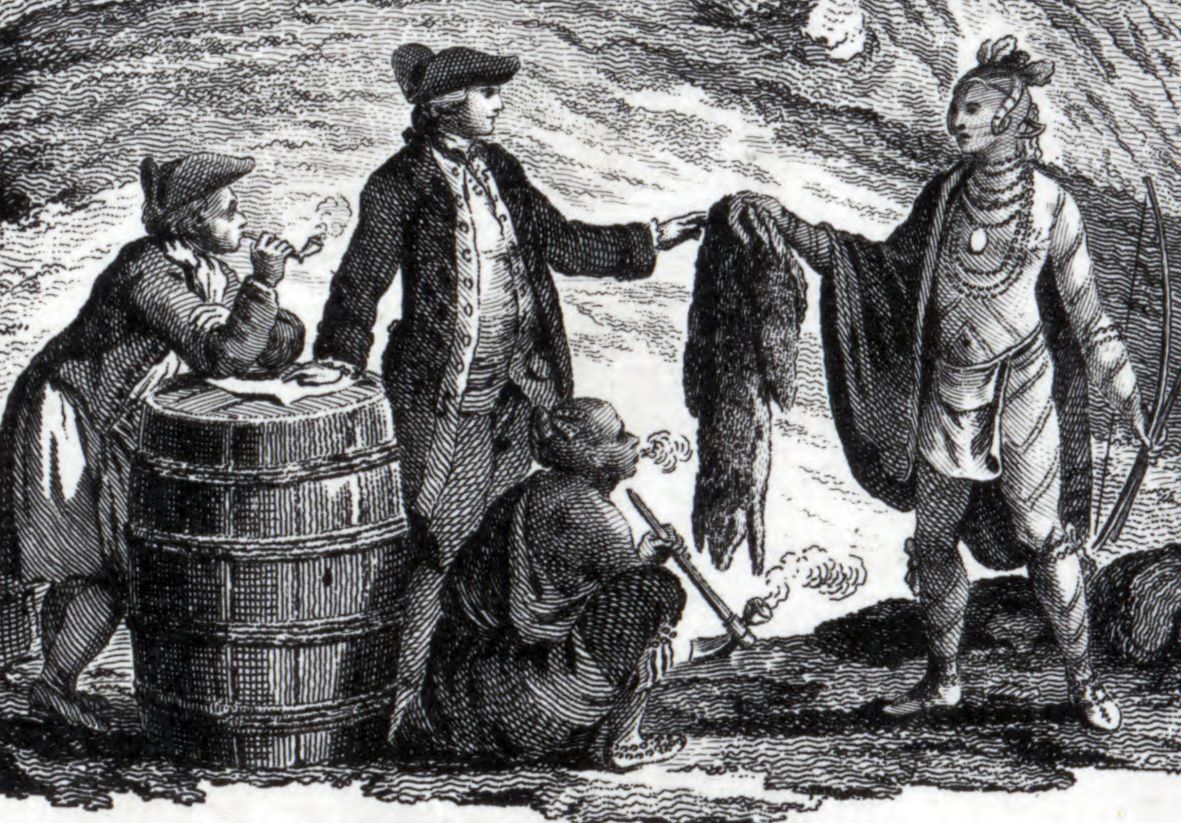
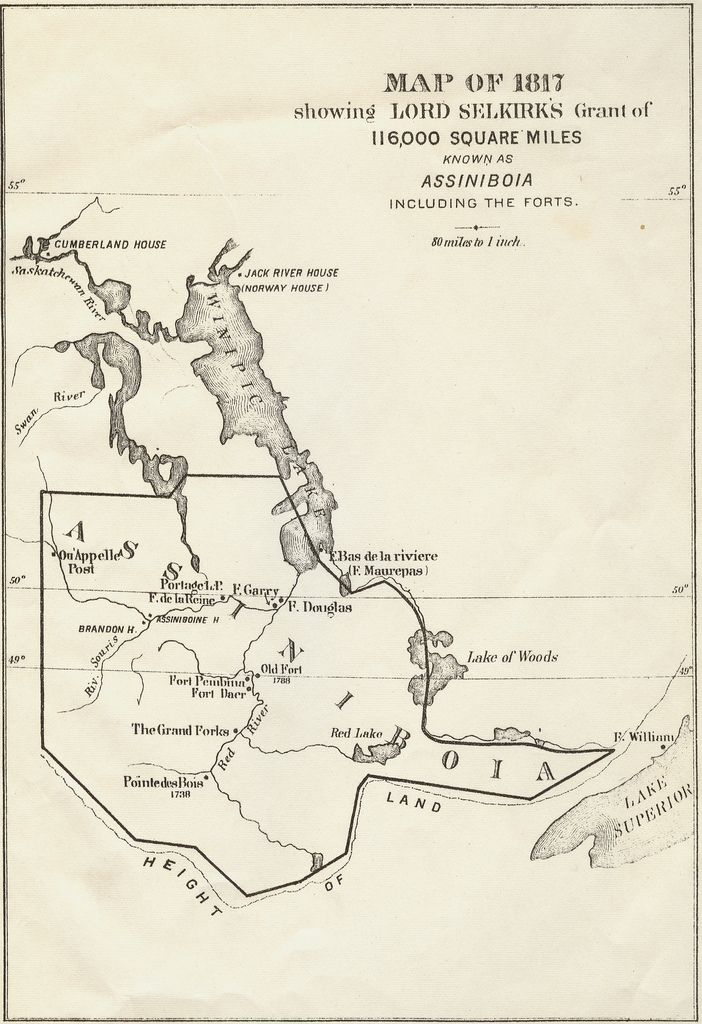
The Pemmican War emerged from decades of intense competition between two corporate giants of the North American fur trade. The London-based Hudson's Bay Company, operating under a royal charter from 1670 granted by Charles II, traditionally conducted its trade from posts on Hudson Bay. The Montreal-based North West Company, a partnership of Scottish and English merchants, aggressively expanded its trade network inland. To compete, the HBC itself moved inland, founding its first interior post, Cumberland House on the Saskatchewan River delta, in 1774 and soon establishing outposts throughout the northwest, often directly opposite NWC forts. This rivalry created a tense and often violent commercial landscape across the territories that would become Western Canada. The Red River region, at the confluence of the Red and Assiniboine rivers, became a critical flashpoint because it was not only fertile land but also home to the NWC's essential provisioning depots, including the Bas de la Rivière depot on Lake Winnipeg. The North West Company relied entirely on locally sourced food, particularly pemmican, to sustain its far-flung operations, making control of the Red River's resources a matter of corporate survival. Thomas Douglas, the 5th Earl of Selkirk, a Scottish philanthropist, entered this volatile situation with a plan to resettle displaced Highlanders. By 1808, he had already founded colonies on Prince Edward Island and at Baldoon in Upper Canada and sought a third, larger tract. He began buying HBC shares in 1808, acquiring a majority stake worth £100,000 at a time when the company's stock value was depressed due to NWC competition. In May 1811, the HBC granted Selkirk 116,000 square miles of land encompassing most of the Red River watershed, a region already occupied by First Nations, Métis, and both fur companies. This land grant, known as Assiniboia, was located within the HBC's exclusive trading territory called Rupert's Land.
Establishment of the Red River Colony
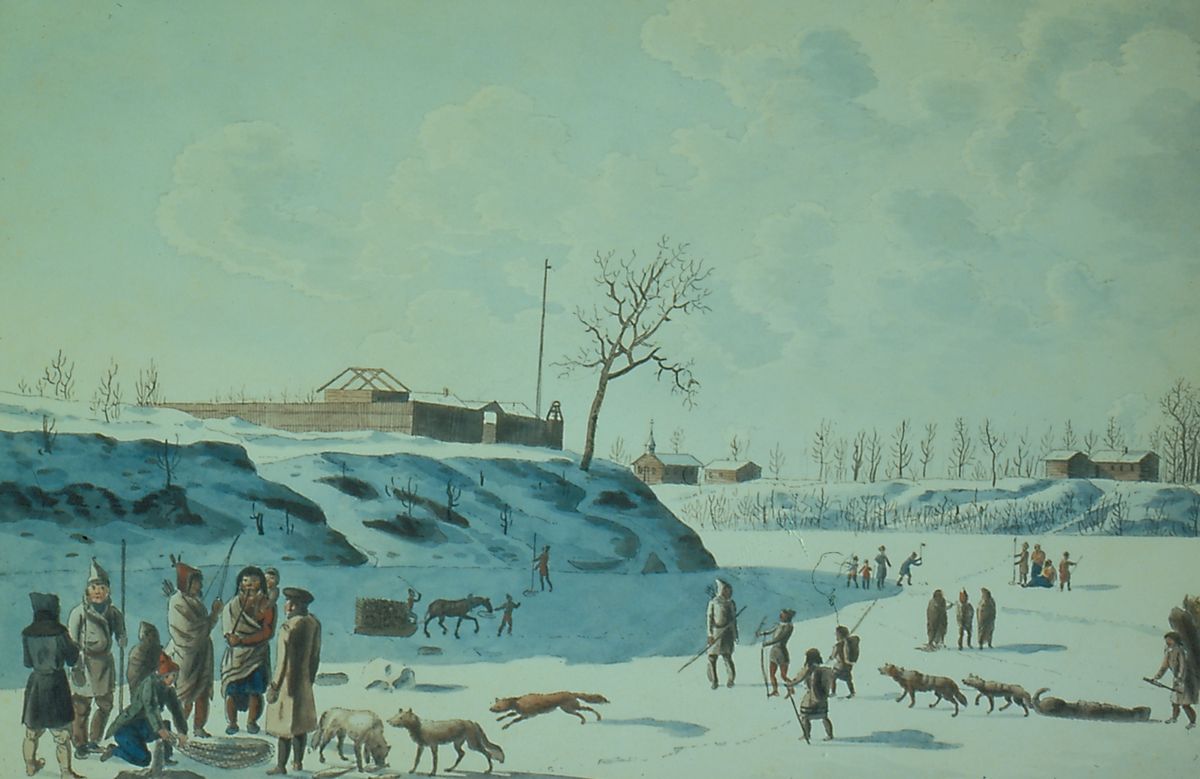
The first contingent of Selkirk's settlers, consisting of 25 Scottish and Irish families, set sail in July 1811 under the leadership of the appointed governor, Miles Macdonell, whom local First Nations would later call 'chief of the gardeners'. The colonists brought extensive supplies for building the colony, as well as 200 muskets, four brass 3-pound field pieces, one howitzer, and three swivel guns provided by the British Colonial Department for protection. They arrived at York Factory in September 1811 and wintered there, building four wooden boats before finally departing for the interior in the summer of 1812. The settlers arrived in the fall at a bend in the Red River about half a mile north of the forks of the Red and Assiniboine rivers. There they constructed Fort Douglas, named for Lord Selkirk, which housed company storehouses and the governor's residence, known as Government House. The late season forced many settlers to winter at nearby HBC posts, which had insufficient provisions, leading to near-starvation despite some aid from the NWC. Additional settlers arrived in the spring of 1813, allowing for the planting of crops and the construction of proper houses. The colony's presence was immediately seen as a direct threat by the NWC, which first protested to the HBC, hired lawyers to dispute the HBC charter, and published newspaper articles to dissuade settlers by warning of hardships and potential massacres. Concurrently, the NWC's John Wills, anticipating trouble, ordered clerk John Pritchard to buy as much Red River pemmican as possible in 1813, and Pritchard succeeded in securing a third more than the usual quantity. The Métis, who produced most of the pemmican, were often called Bois-Brûlés, a French translation of an Ojibwe term.
The Pemmican Proclamation and Initial Confrontations
Provisions remained scarce in the colony at the start of 1814, prompting Governor Miles Macdonell to issue the Pemmican Proclamation on 8 January. The full order stated that no person trading in furs or provisions within the territory for the HBC, NWC, or any individual trader or persons whatever, shall take out any provisions, either flesh, dried meat, grain, or vegetable. Macdonell justified it as a necessary duty to support the families at Red River and those expected to arrive. Both companies formally protested, but Selkirk, as majority HBC shareholder, managed his company's complaints internally. A government investigator later, Special Commissioner Coltman, suggested Macdonell timed the proclamation to exploit the NWC's vulnerability after the British loss of Lake Erie to the Americans in September 1813, which threatened NWC transport routes on the Great Lakes. The NWC disregarded the proclamation, and Macdonell moved to enforce it. On 14 March 1814, colony clerk John Warren and about 16 armed colonists travelled to a Métis hunting camp at Turtle River, where they later forced several NWC sleighs seeking provisions to leave empty-handed. Soon after, Macdonell sent Warren with fifty men and two field pieces to blockade the Assiniboine River and seize an expected NWC pemmican boat from Qu'Appelle, with orders to fire on and sink any boat that refused to land. The colonists refused the order to sink boats, but they eventually discovered and confiscated a cache of 96 bags of pemmican. The HBC next blockaded the high-road used to circumvent the river, detaining one Indigenous family, which prompted local Métis to offer the NWC aid for an attack, an offer the Nor'Westers declined.
Escalation to Open Hostilities and the Fort William Council
The conflict intensified through the spring and summer of 1814. On 29 May, Governor Macdonell sent Sheriff John Spencer to the NWC's post at Rivière la Souris, where he confiscated 500 bags of pemmican, 96 kegs of grease, and 9 bales of dried meat, along with two chests of NWC-owned guns to prevent their sale to the Métis. Part of this haul was taken to Brandon House and the rest to Fort Douglas under armed guard. Macdonell also seized 200 bags of pemmican from an HBC trader named Stett who was transporting 300 bags to York Factory. In response, the NWC's Duncan Cameron led an armed party to arrest an HBC trader named House who had aided in the Rivière la Souris seizure. Macdonell constructed additional batteries on the Assiniboine and Red Rivers, with the Red River blockade soon capturing two NWC light canoes carrying two clerks, twenty men, and two chests of arms. A temporary peace agreement was brokered on 18 June 1814 between Macdonell and the NWC's John Macdonald. Macdonell would keep 200 bags of pemmican and return the rest, and in exchange, the NWC would release Mr. House and supply the colony with provisions that winter, terms that were largely followed with some minor deviations. That summer at the NWC's annual rendezvous at Fort William, partners officially agreed to reinforce the Red River District, issue arrest warrants for Spencer, Warren, and Macdonell, and offer settlers free passage to Upper Canada to reduce the colony. Unofficially, evidence indicates partners plotted to attack the colony by first disarming it and then paying Indigenous groups from Lac Rouge and Fond du Lac to destroy it. Daniel Mackenzie, the NWC officer in charge of the Fond du Lac District, received orders to destroy the colony, and later offered goods to Indigenous chiefs to 'make war on the English,' an offer that was refused.
The Battle of Seven Oaks and Its Immediate Aftermath
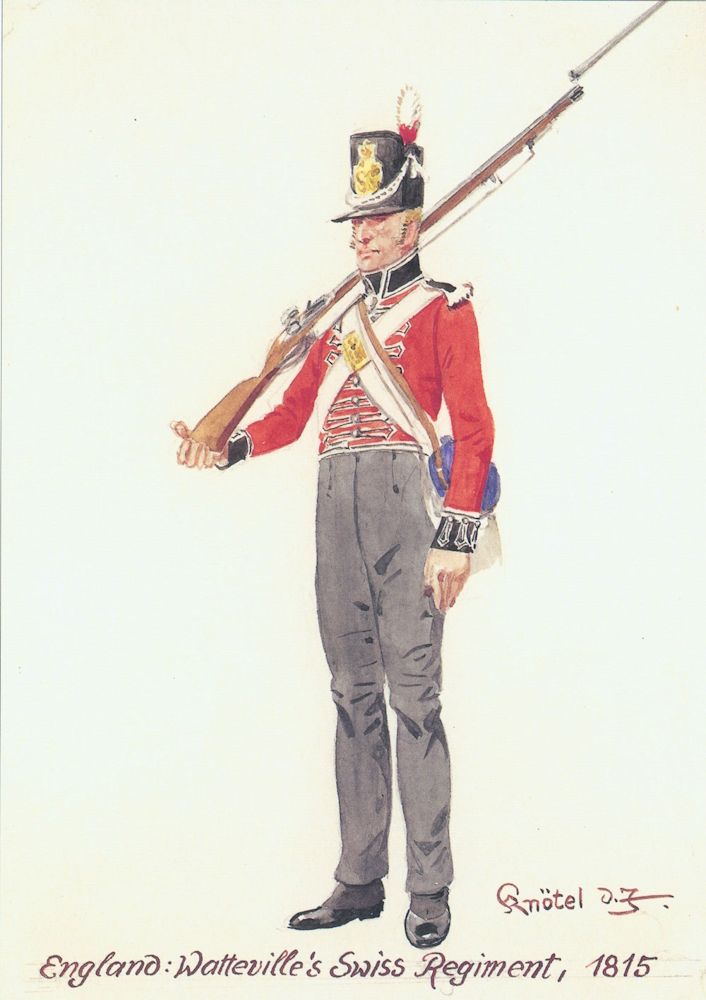
The violent culmination of the Pemmican War occurred on 19 June 1816, at a place known as Frog Plain or La Grenouillère, north of the forks of the Red and Assiniboine rivers. A party of Métis, mostly affiliated with the NWC and led by Cuthbert Grant, was transporting pemmican to the NWC's Bas de la Rivière depot when they were encountered by a group of HBC men and Selkirk settlers led by the new colony governor, Robert Semple. The circumstances of the initial confrontation remain debated, but the encounter quickly turned into a violent exchange. Semple and approximately 20 of his men were killed, while Grant's party suffered a single fatality. The event, known as the Battle of Seven Oaks, was a devastating blow to the Red River Colony and the HBC. For the Métis, it was remembered as the Victory of Frog Plain, a successful defence of their rights and economic autonomy. The battle did not immediately end the war, but it marked a bloody turning point. In the wake of the battle, Lord Selkirk began raising a private force in Montreal, first petitioning the British government for regular troops before recruiting his own men, including discharged soldiers from the Swiss De Meuron and De Watteville regiments. He eventually raised a force of about 180 HBC employees and 150 former soldiers.
Selkirk's Counterattack and Capture of Fort William
Following the Battle of Seven Oaks, Lord Selkirk took decisive military action. In August 1816, Selkirk arrived at the North West Company's inland headquarters, Fort William, with his private force. He informed NWC head William McGillivray that he was under arrest. Selkirk's men, upon a signal, rushed into the fort and occupied it, placing cannons in the courtyard. The Nor'Westers had planned to retake the fort but were prevented when a cache of hidden arms was discovered. Selkirk seized control of the post, arrested several NWC partners including McGillivray, and sent them to Montreal as prisoners. He also confiscated NWC papers, trade goods, and furs, and disrupted the company's trade for the ensuing year. Selkirk dispatched parties to capture other NWC posts at Lac la Pluie, Fond du Lac, and Michipicoton. The capture of Fond du Lac later caused legal trouble as it was on American soil. In January 1817, a detachment of Selkirk's force under Captain Proteus D'Orsonnens recaptured Fort Douglas for the HBC without firing a shot.
Legal Proceedings and the Path to Corporate Merger
The aftermath of Seven Oaks involved continued violence, legal battles, and the eventual corporate merger that ended the conflict. Lord Selkirk's private force captured the NWC's headquarters at Fort William in 1816 and briefly reoccupied Fort Douglas. The legal fallout was complex and protracted. In 1818, initial court proceedings were held in Montreal, with indictments issued against employees of both companies for charges including grand larceny, riot, false imprisonment, stealing boats on a navigable river, and the murder of Governor Robert Semple, Surgeon James White, and Captain John Rogers. A significant collection of these trial manuscripts was acquired and made available for public research at the Hudson's Bay Company Archives. The University of Manitoba Archives also acquired four printed books related to the HBC charter and the extension of Canadian court jurisdiction into Rupert's Land to try these cases. The devastating competition, exacerbated by the violence, legal costs, and external pressures like climate-induced famine, pushed both companies toward a resolution. In 1821, the North West Company was merged into the Hudson's Bay Company, ending the Pemmican War and creating a fur trade monopoly under the HBC's name that would dominate the region for decades. This merger was formalized by a Deed of Covenant.
Environmental Stress and the Global Climate Context
The Pemmican War unfolded against a backdrop of significant environmental stress that compounded the conflict over food resources. The colossal eruption of Mount Tambora in Indonesia in April 1815, the largest recorded eruption in history, caused global climate anomalies. This followed several smaller global eruptions in the preceding eight years and led to 1816 being dubbed the 'Year Without a Summer' in the Northern Hemisphere, with extreme weather, decreased sunlight, and lower temperatures. While the direct impact on events at Red River is not fully documented, the period saw prolonged winters, cold weather, and droughts that ruined agricultural crops and caused livestock deaths across North America. A famine in parts of northern Ontario in the winter of 1815 to 1816 was exacerbated by these global conditions throughout 1816 and into 1817. This climate-induced scarcity intensified the desperation surrounding control of pemmican supplies. The Hudson's Bay Company reported losing 20 percent of its men in the Athabasca territory to famine in 1816, and nine cases of cannibalism were recorded in the Nelson River District. These conditions showed the absolute necessity of pemmican for survival in the fur trade economy and added a severe environmental dimension to the economic and political tensions of the war.
Historical Significance and Archival Legacy
The Pemmican War holds deep significance in Canadian history, extending beyond a corporate feud. It was a foundational event in the ethnogenesis of the Métis nation, as the conflict galvanized a distinct political identity among the mixed-ancestry communities of the Red River. Their collective action in defence of the pemmican trade, culminating at Seven Oaks, is a central pillar of Métis heritage and memory. The war also highlighted the clash between settler-colonial agricultural ambitions and the existing Indigenous and fur trade economies of the plains, where the local Saulteaux (Plains Ojibwa) generally maintained neutrality despite NWC attempts to sway them. Today, the Battle of Seven Oaks is memorialized in Winnipeg, with the area's name preserved in neighbourhoods and institutions like Seven Oaks School Division. The release of trial manuscripts provides historians and the public with new primary sources to understand the complex legal and personal dimensions of this formative conflict. These archives, supported by the Hudson's Bay Company History Foundation, offer a clearer window into the prosecutions that followed the violence.
Key Figures and Their Roles in the Conflict
The Pemmican War involved a diverse cast of characters whose actions defined the struggle. Key figures included Thomas Douglas, the 5th Earl of Selkirk, who founded the Red River Colony in 1812. Governor Miles Macdonell, appointed by Selkirk, issued the contentious Pemmican Proclamation in 1814. Opposing them were North West Company partners like William McGillivray and field officers such as Duncan Cameron and Alexander Macdonell, alongside Métis leader Cuthbert Grant.
- Thomas Douglas, 5th Earl of Selkirk: The Scottish nobleman and HBC majority shareholder who founded the Red River Colony, providing the settlement's impetus and financial backing, and who later raised a private army in response to Seven Oaks.
- Miles Macdonell: The first governor of the Red River Colony, whose issuance of the Pemmican Proclamation in January 1814 directly triggered the armed conflict and who led the initial confiscations and blockades.
- Robert Semple: The HBC governor of the Red River Colony who succeeded Macdonell and was killed along with roughly 20 of his men at the Battle of Seven Oaks on 19 June 1816.
- William McGillivray: A leading partner of the North West Company who testified in court that the NWC could not function without Red River pemmican, showing the conflict's economic stakes. He was arrested by Selkirk at Fort William.
- Cuthbert Grant: A prominent Métis leader and NWC clerk who led the Métis party at the Battle of Seven Oaks, becoming a central figure in Métis collective memory.
- Duncan Cameron: A NWC partner tasked with opposing the Red River Colony, who arrested HBC personnel like Sheriff John Spencer and was implicated in plans to destroy the settlement.
- John Pritchard: An NWC clerk ordered in 1813 to buy unprecedented quantities of Red River pemmican, securing a third more than usual as tensions rose. He later became a settler and witness to Seven Oaks.
- Colin Robertson: An HBC trader who helped rebuild Fort Douglas in 1815, captured Fort Gibraltar, and opposed the NWC in the Athabasca district.
- Archibald Norman Macleod: A NWC partner who commanded NWC forces and was involved in the Athabasca campaigns against the HBC.
- Chief Peguis: A Saulteaux (Ojibwa) leader who offered to protect the Red River settlers and whose band generally maintained neutrality throughout the conflict.
Questions about Pemmican War
What was the Pemmican Proclamation?
The Pemmican Proclamation was an order issued on 8 January 1814 by Miles Macdonell, the governor of the Red River Colony. It forbade the export of pemmican, dried meat, grain, or vegetables from the Red River District. Macdonell argued this was necessary to secure food for the struggling Selkirk settlers. The proclamation was fiercely opposed by the North West Company and the Métis, who relied on the pemmican trade, and it is widely considered the immediate trigger for the armed conflict. Special Commissioner Coltman later suggested Macdonell issued it to exploit NWC weakness after the British loss of Lake Erie in 1813.
What happened at the Battle of Seven Oaks?
The Battle of Seven Oaks occurred on 19 June 1816 near the Red River Colony. A party of Métis, led by Cuthbert Grant and associated with the North West Company, was transporting pemmican when they encountered a group of Hudson's Bay Company men and settlers led by Governor Robert Semple. The confrontation turned violent, resulting in the deaths of Semple and approximately 20 of his men, with one fatality on the Métis side. The battle lasted about 25 minutes. The site was known as Frog Plain or La Grenouillère. The different names for the event reflect the contested memory of the HBC, settlers, and Métis.
Who were the Métis and why were they involved?
The Métis were people of mixed Indigenous and European ancestry, primarily from French Canadian, Scottish, and English fur traders and their Indigenous wives. By the early 1800s, they had formed distinct communities around Red River, often referred to as Bois-Brûlés. They were essential to the buffalo hunt and the production and trade of pemmican, which was absolutely vital to the North West Company's operations. The Pemmican Proclamation and the HBC colony directly threatened their livelihood and autonomy, leading them to actively oppose the colony and fight alongside the NWC. Their involvement was central to the conflict's economic and cultural dimensions.
Are there new historical records about the Pemmican War?
Yes, significant primary sources are available for research. The Hudson's Bay Company Archives in Winnipeg holds a collection of Pemmican War trial manuscripts from the 1818 court proceedings in Montreal. These documents include indictments and records related to charges against HBC and NWC employees for grand larceny, riot, false imprisonment, and murder. The University of Manitoba Archives acquired printed books related to the HBC charter and the extension of Canadian court jurisdiction into Rupert's Land. These collections provide fresh insight into the legal aftermath of the conflict.
What is the legacy of the Pemmican War today?
The Pemmican War's legacy is varied. It is a foundational event in Métis history, cementing a distinct political identity through collective action in defence of their economy and rights. The conflict exemplifies the violent struggle between settler-colonial projects and existing Indigenous and fur trade societies. The merger of 1821 reshaped corporate control of the West for generations. Geographically, the name Seven Oaks endures in Winnipeg's neighbourhoods and institutions. Historically, the war remains a critical subject for understanding the complex origins of Manitoba and the Canadian West.
How did the Pemmican War end?
The Pemmican War ended in 1821 with the merger of the North West Company into the Hudson's Bay Company. This conclusion followed nearly a decade of violent confrontations, economic strife, and costly legal battles. The conflict, intensified by events like the Battle of Seven Oaks and Selkirk's capture of Fort William, had caused severe hardship for both companies. Economic pressures, compounded by climate-related famines in 1816 and 1817, made the competition unsustainable. The merger created a single fur trade monopoly under the HBC charter, finally ending the armed hostilities and restructuring the trade under a unified company.
Sources and further reading
- Pemmican War (Wikipedia)
- The Battle of Seven Oaks: When the Pemmican War Came ... (mbgenealogy.com)
- HBC Archives unveils new collection (canadashistory.ca)
- Food Fights and Pemmican Wars, 1790 to 1816 (Chapter 3) (cambridge.org)
Checked by the Nosy Mag desk. Last updated 2026-11-01.