Numbered Treaties
The Numbered Treaties are a series of eleven historic agreements signed between the Crown (representing the Government of Canada) and various First Nations between 1871 and 1921. These treaties facilitated the westward and northern expansion of Canada, transferring vast tracts of Indigenous land to the Crown in exchange for promises of reserve lands, annuities, and other benefits. They cover the entirety of modern-day Alberta, Manitoba, and Saskatchewan, as well as parts of British Columbia, Ontario, the Northwest Territories, Nunavut, and Yukon. The treaties are foundational to the political and legal relationship between Canada and many First Nations. Their interpretation and implementation remain central to ongoing discussions about Indigenous rights, land claims, and reconciliation in Canada.
Historical and Legal Background
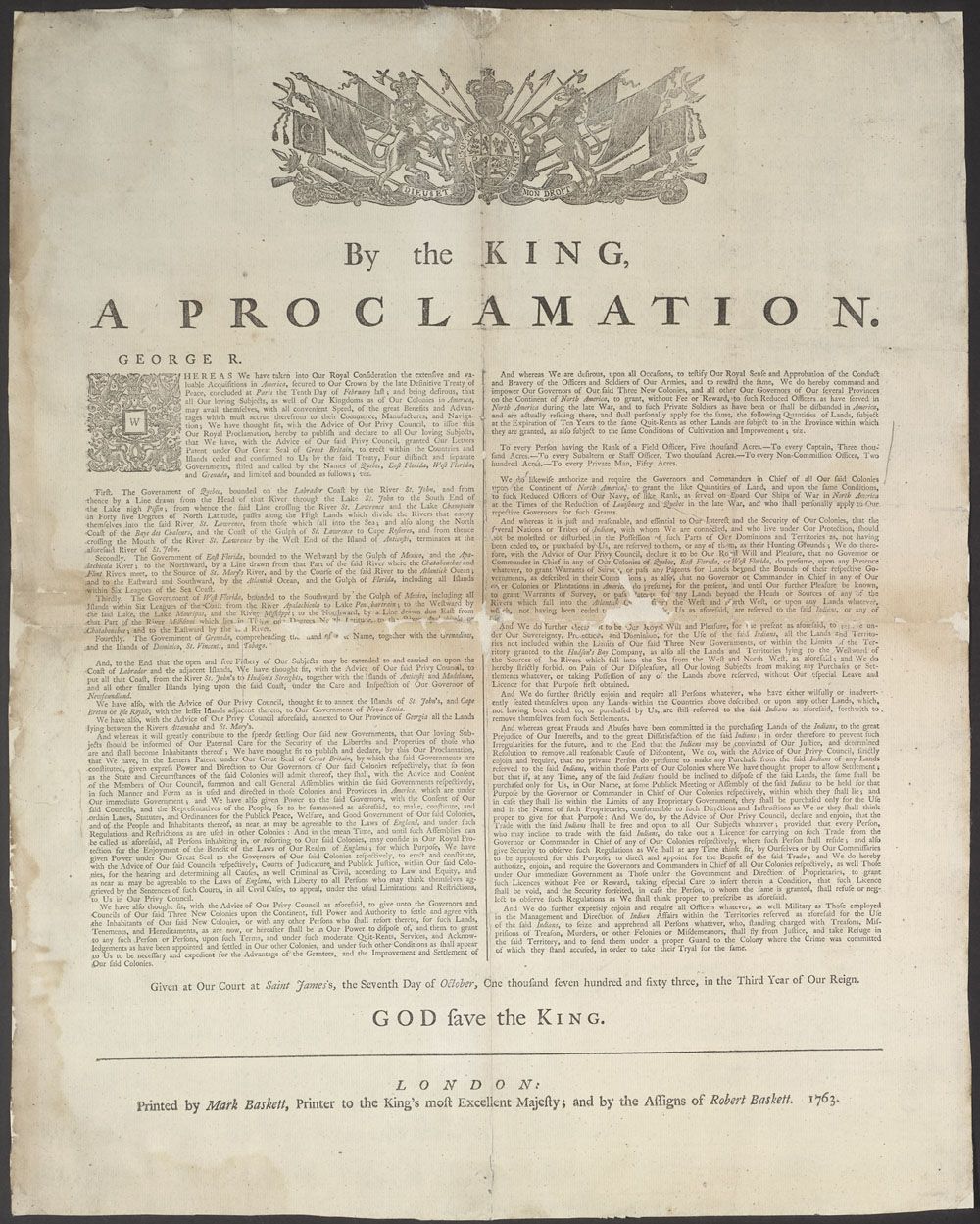
The legal and historical foundations for the Numbered Treaties stretch back to the earliest colonial interactions in North America. The Royal Proclamation of 1763, issued by King George III, is widely considered the foundation of treaty-making in Canada. It established the principle that Indigenous title to land existed and could only be extinguished through negotiation with the Crown, prohibiting private purchases from First Nations. This proclamation was a direct response to conflicts like Pontiac's War and aimed to prevent future disputes by formalizing a Crown monopoly on land acquisition. The British North America Act, 1867 further shaped the process by assigning constitutional responsibility for First Nations and their lands to the federal government. This act transferred the treaty-making authority from the British Crown to the newly formed Dominion of Canada, setting the stage for the systematic negotiations that would follow.
Following Confederation in 1867, the Canadian government was driven by a powerful expansionist vision. A primary motivator was the fear of American encroachment and the desire to secure arable land and economic opportunities for a growing nation. The government arranged to acquire Rupert's Land and the North-Western Territory from the Hudson's Bay Company in 1870, gaining sovereignty but not the consent of the Indigenous nations living there. A key condition for British Columbia joining Confederation was the construction of a transcontinental railway, which required access to these newly acquired lands. Canadian law, as informed by the Royal Proclamation, recognized that First Nations held title to these territories. Therefore, to enable settlement, resource extraction, and national projects like the Canadian Pacific Railway, the government began a treaty-making process to legally secure the land.
Negotiation Process and Motivations
The negotiation of the Numbered Treaties occurred in two distinct waves, driven by different government priorities. The first wave, Treaties 1 through 7, was signed between 1871 and 1877 primarily to open the Prairie regions for agricultural settlement and to secure a path for the railway. The second wave, Treaties 8 through 11, was negotiated from 1899 to 1921, motivated largely by the discovery of valuable resources like gold in the Klondike and oil in the Mackenzie River Valley. Government officials lobbied for treaties in the north only when potential economic development justified it. Each treaty was unique, with terms negotiated based on the specific geographic and social conditions of the territory and the nations involved.
For many First Nations, the decision to enter treaty negotiations was born of necessity and a desire for security during a period of deep crisis. Communities on the Plains were suffering catastrophic population declines due to introduced diseases like smallpox and tuberculosis. The near extinction of the buffalo, a vital source of food, shelter, and cultural sustenance, led to widespread famine. In this context, many First Nations leaders saw treaties as a way to secure much-needed assistance, including food aid, medical help, and tools for a new agricultural life. Some also sought explicit promises of education for their children. Despite these hopes, there was also significant resistance and anxiety about the treaties enabling a flood of settlers that would displace their peoples and ways of life. The Tsuu T'ina, for example, saw their population fall from several thousand to only 300 to 400 in the 1800s due to disease.
Key Treaties and Their Provisions
The eleven Numbered Treaties each covered specific territories and involved distinct First Nations signatories. While the core promises were similar, the specific terms varied. Common provisions across many treaties included the surrender of Indigenous title to vast tracts of land in exchange for the creation of smaller reserve lands for First Nations use. Other typical promises included one-time presents, annual cash payments known as annuities, provisions for farming tools and animals, and the right to hunt and fish on unoccupied Crown land. The treaties also often included commitments from the Crown to build schools on reserves or provide teachers. The following list outlines the basic details of each treaty.
- Treaty 1 (1871): Signed at Lower Fort Garry, covering parts of southern Manitoba. Key signatories included Chippewa and Swampy Cree nations.
- Treaty 2 (1871): Signed at Manitoba Post, covering areas of Manitoba and Saskatchewan. Affected Chippewa nations.
- Treaty 7 (1877): Signed at Blackfoot Crossing, covering southern Alberta. Involved the Blackfoot Confederacy (Siksika, Piikani, Kainai), Stoney-Nakoda, and Tsuu T'ina.
- Treaty 8 (1899): Covered northeastern British Columbia, northern Alberta, northwestern Saskatchewan, and southern Northwest Territories. Involved Cree, Beaver, Chipewyan, and other Dene nations.
- Treaty 11 (1921): Covered parts of the Northwest Territories, Yukon, and northern British Columbia. Involved Dene nations including the Gwich'in and Sahtu.
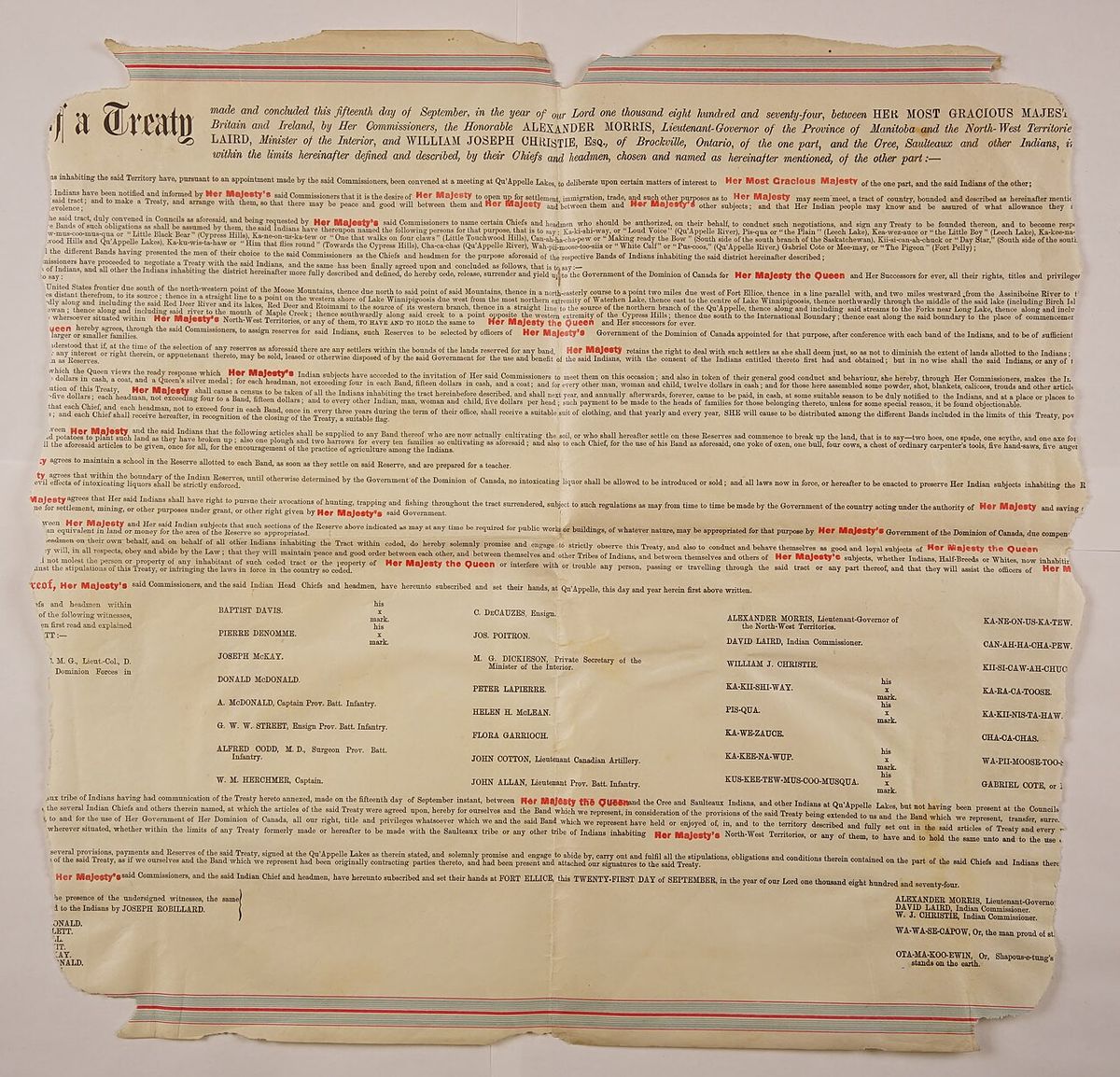
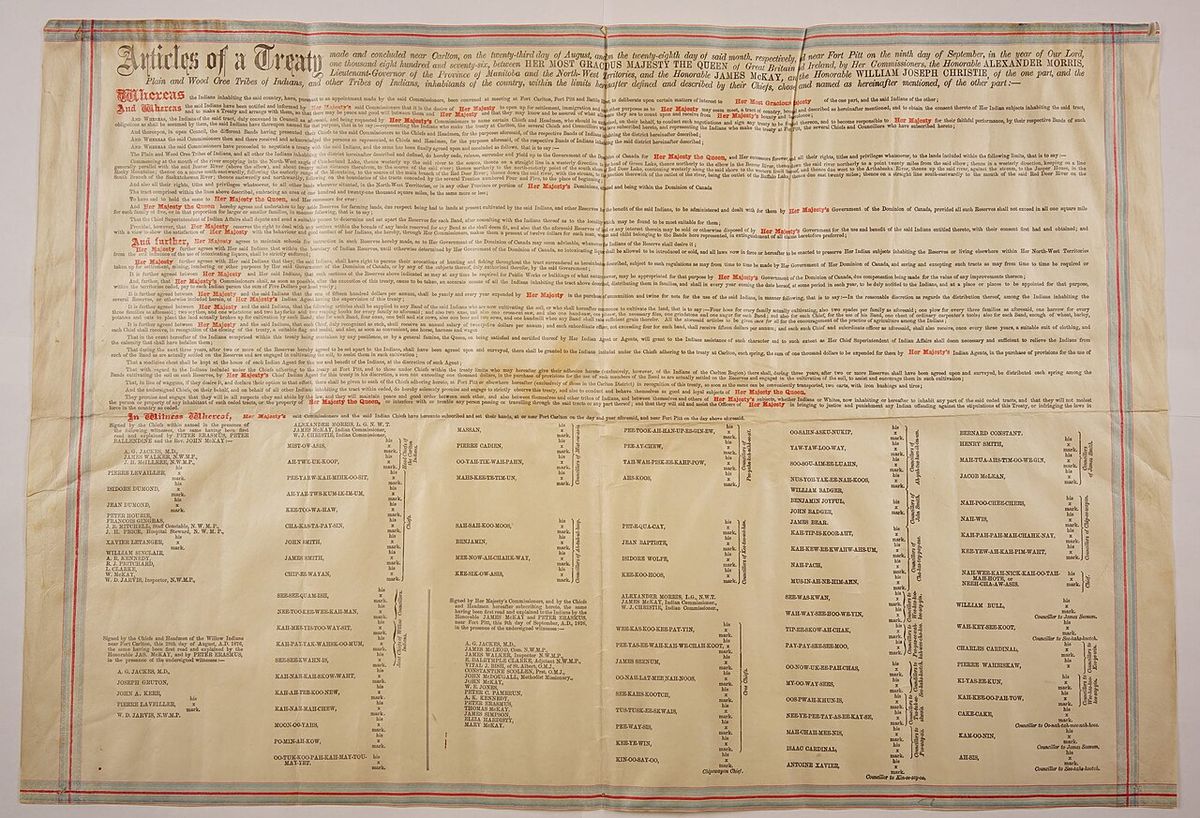
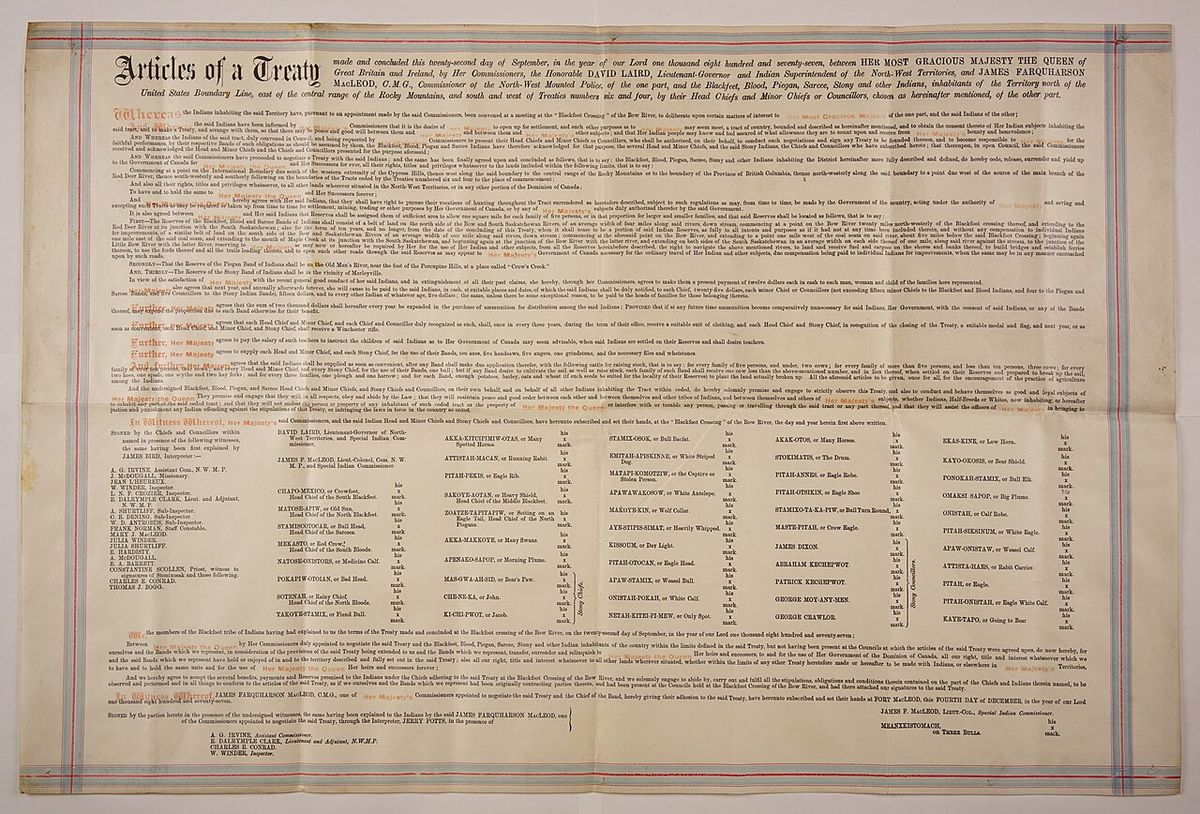
The written treaty texts were prepared by government officials and presented for signature. These agreements were created after oral discussions that included ceremonial protocols like pipe ceremonies. The original presentation copies are held in the Bruce Peel Special Collections at the University of Alberta Library. Each treaty presentation copy is printed on parchment with text in black and red and a blue and red border.
Divergent Perspectives and Understanding
A fundamental and enduring issue surrounding the Numbered Treaties is the deep difference in understanding between the Crown and First Nations regarding their spirit and intent. The government viewed the treaties primarily as commercial land transactions, a necessary step to acquire territory for settlement and resource development while offering assistance to First Nations in transitioning to a sedentary, agricultural lifestyle. From this perspective, First Nations became wards of the state under the government's protection. In contrast, First Nations saw the treaties as sacred, nation-to-nation agreements intended to establish frameworks for respectful coexistence and sharing of the land. They understood the treaties as everlasting covenants, often sealed with spiritual ceremonies like the pipe ceremony during Treaty 6 negotiations, which invoked the Creator as a witness to the truth of the discussions.
The language and process of negotiation created significant barriers to mutual understanding. Treaties were negotiated in English through translators, with the final written documents composed in a British diplomatic style that did not capture the nuance of oral discussions or First Nations diplomatic traditions. There are documented instances, such as during Treaty 6 negotiations, where First Nations leaders asserted that key clauses, like the full meaning of land surrender, were not properly explained. Commissioners used paternalistic language, referring to First Nations as children and the Crown as the Queen Mother, which the government interpreted as establishing a relationship of dependency, while some First Nations understood it as a promise of perpetual care and protection. During Treaty 3 negotiations, Chief Powasson took detailed notes that show differences in understanding because of the language barrier.
Treaty Violations and Ongoing Disputes
Almost from their inception, First Nations argued that the Crown repeatedly failed to honour the terms of the Numbered Treaties. One of the most significant breaches was in education. While treaties promised schooling, the federal government's establishment of the compulsory residential school system, which aimed to assimilate Indigenous children and suppress their cultures and languages, was a deep violation of the treaty relationship and caused generational trauma. Another major area of dispute involved land. Many First Nations were allocated reserve lands smaller than what was promised in the treaties, leading to numerous specific land claims. The government also imposed restrictive policies beyond the treaty terms, such as controlling movement and the sale of seeds and livestock by Indian agents, which further eroded Indigenous autonomy and economic self-sufficiency.
| Treaty Promise | Common Grievance |
|---|---|
| Reserve land of specified size | Allocated reserves were often smaller than promised. |
| Right to hunt and fish on unoccupied Crown land | Restricted by provincial game laws and resource development. |
| Provision of education and teachers | Replaced by the abusive residential school system. |
| Agricultural tools, livestock, and seed | Supplies were inadequate or of poor quality. Sales were controlled. |
| Annual annuities (cash payments) | Payments were small and did not increase with time or inflation. |
| Medical supplies (Treaty 6) | Inadequate or not provided as promised. |
| Famine relief (Treaty 6) | Not provided during times of need. |
First Nations leaders like Plains Cree chiefs Pitikwahanapiwiyin (Poundmaker) and Mistahimaskwa (Big Bear) actively resisted the treaties and the government's failure to uphold them. This resistance resulted in their arrest and imprisonment. Their actions highlighted the ongoing struggle to have the original agreements respected.
Modern Legacy and Constitutional Recognition
The legacy of the Numbered Treaties was fundamentally reshaped by the patriation of the Canadian Constitution in 1982. Section 35 of the Constitution Act, 1982, recognizes and affirms the existing treaty rights of the Indigenous peoples of Canada. This constitutional protection gave treaty rights the force of supreme law, providing a powerful legal tool for First Nations to defend their rights in court, as seen in landmark cases like R v Sparrow. However, Section 35 did not define these rights, meaning their specific meaning and scope have had to be determined through ongoing litigation and negotiation. The government has a legal duty to consult, and where appropriate accommodate, Indigenous groups when contemplating actions that might impact their treaty rights.
In the decades since, treaties have become a focal point for reconciliation and political action. Independent treaty commissions have been established in Manitoba and Saskatchewan to facilitate public education and discussions on treaty issues. The federal specific claims process provides a mechanism to address past grievances related to treaty implementation, such as unfulfilled land obligations. Annually, Treaties Recognition Week is observed in the first week of November to honour treaty relationships and promote public understanding. In 2010, Canada signed the United Nations Declaration on the Rights of Indigenous Peoples. The Numbered Treaties remain living documents, central to the ongoing journey of defining a just and respectful relationship between Canada and the First Nations that signed them.
Questions about Numbered Treaties
What are the Numbered Treaties in Canada?
The Numbered Treaties are a series of eleven historic agreements signed between First Nations and the Crown (representing Canada) between 1871 and 1921. They were created to allow the Canadian government to pursue settlement, railway construction, and resource extraction across the Prairies and northern Canada. In exchange for sharing their land, First Nations were promised reserve lands, annual payments, tools, education, and hunting rights. These treaties cover large portions of modern-day Alberta, Saskatchewan, Manitoba, Ontario, British Columbia, and the territories.
How many Numbered Treaties are there?
There are eleven Numbered Treaties, signed over a fifty-year period. They are numbered sequentially from 1 to 11. The first seven treaties (1 through 7) were negotiated from 1871 to 1877, primarily to open the Prairies. A gap followed, and the final four treaties (8 through 11) were signed from 1899 to 1921, largely driven by discoveries of gold, oil, and other resources in northern Canada. Each treaty involved different First Nations and covered a specific geographic region.
What did First Nations get from the Numbered Treaties?
According to the treaty texts, First Nations received a variety of promises in exchange for sharing their land. Common benefits included the creation of reserve lands for their exclusive use, annual cash payments known as annuities, and one-time presents of tools, livestock, and seed for farming. Many treaties also included promises of schools on reserves or teachers, and the right to hunt and fish on unoccupied Crown land. Specific promises varied. For example, Treaty 6 included a clause for medical supplies and famine relief.
Why are the Numbered Treaties still important today?
The Numbered Treaties are constitutionally protected living documents that continue to define the relationship between many First Nations and the Canadian state. Section 35 of the Constitution Act, 1982 recognizes and affirms existing treaty rights, giving them the force of supreme law. They are the basis for ongoing land claims, resource revenue sharing discussions, and legal cases about hunting and fishing rights. Understanding these treaties is essential for reconciliation, as their implementation and interpretation remain central to addressing historical injustices and building a shared future.
What is Treaties Recognition Week?
Treaties Recognition Week is an annual event held in the first full week of November to honour the importance of treaties and educate the public about treaty rights and relationships. First established by Ontario in 2016, it is now recognized more widely as a time for students and all residents to learn about the historical and contemporary significance of treaties, including the Numbered Treaties, and their relevance to all Canadians.
How are the Numbered Treaties protected in Canadian law?
The rights established by the Numbered Treaties are protected under Section 35(1) of the Constitution Act, 1982, which recognizes and affirms the existing treaty rights of the Indigenous peoples of Canada. This constitutional protection means that federal and provincial laws cannot unjustifiably infringe upon these rights. Treaty rights are also a key part of Canada's commitment to implement the United Nations Declaration on the Rights of Indigenous Peoples, which it signed in 2010. The treaties are administered under Canadian Aboriginal law and overseen by the Minister of Crown-Indigenous Relations.
Sources and further reading
- Numbered Treaties (Wikipedia)
- About treaties (rcaanc-cirnac.gc.ca)
- The Numbered Treaties (canadashistory.ca)
- Historic & Numbered Treaties, Indigenous Treaties (guides.library.ubc.ca)
- Treaties Recognition Week (ontario.ca)
Checked by the Nosy Mag desk. Last updated 2026-10-23.